
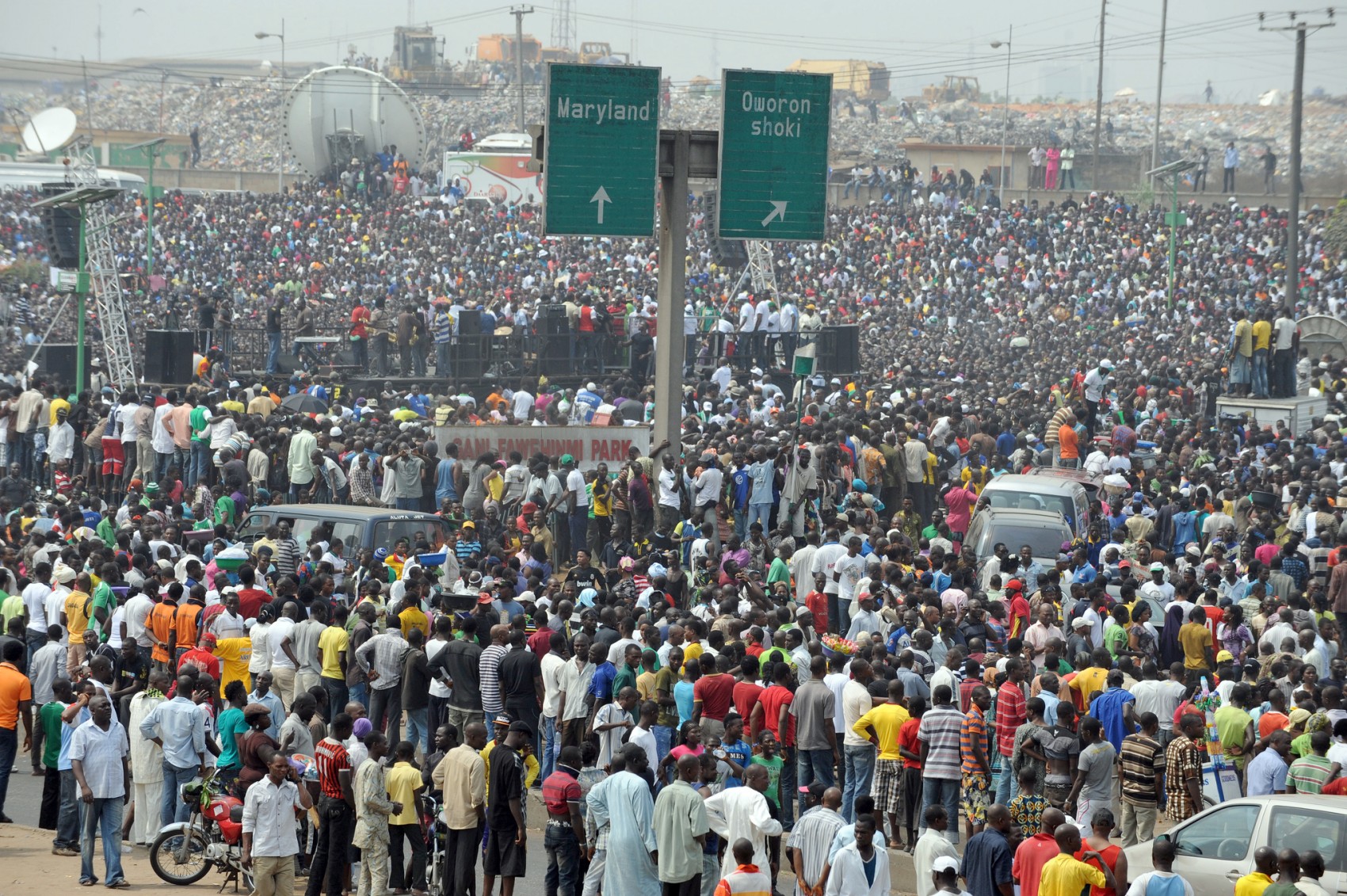

AS Nigeria’s population approaches 237.5 million in 2025, with an annual growth rate exceeding 2.1 per cent and a median age of 18.1, according to the World Population Review, the strain on public infrastructure has become a source of concern.
Population analysts believe that Nigeria’s gross domestic product (GDP) is not growing at the same pace as Nigeria’s population expansion.
While this demographic momentum could unlock a demographic dividend, research experts believe public infrastructure, including electricity, roads, schools, and healthcare, is currently not receiving the expected attention from the government.
Nigeria is not certain to see a serious financial commitment from the government towards the expansion of its largely inadequate infrastructure in 2024, PwC said in its Nigeria Economic Outlook 2024 report issued recently.
“The government will also struggle with the maintenance of the few infrastructures that exist as it stakes much hope on other funding sources rather than financing projects from its purse.
“Infrastructure funding may remain insufficient in 2024,” PwC noted
A recent data report by Dataphyte shows that infrastructure investments currently make up only about 30–35 per cent of Nigeria’s gross domestic product (GDP), below the World Bank benchmark of 70 per cent for developing economies. This development some analysts say put pressure on Nigeria’s public infrastructure and causes congested transport systems, overcrowded classrooms and housing deficits.
Also, the National Bureau of Statistics (NBS) recent report showed 133 million Nigerians in different categories of poverty and lacking access to basic public services like education, healthcare, housing, and sanitation issues directly tied to underinvestment in infrastructure.
As World Population Day prompts global reflection, analysts believe that unless strategic, data-driven investments are made, the hopes tied to Nigeria’s burgeoning youth population risk slipping away.
The ICIR looks further into areas that the government could work on to address the strain on public infrastructure as a result of the growing population.
Traffic gridlocks
Major Nigerian cities such as Lagos, Abuja, and Port Harcourt are increasingly paralysed by severe traffic congestion. With population growth far outpacing infrastructure development, average commute times in Lagos have surged to 3–5 hours daily, according to the Lagos Metropolitan Area Transport Authority (LAMATA).
The absence of efficient mass transit systems has forced millions to rely on private vehicles and informal transport options, leading to high risks of robbery. According to a 2023 report by the National Bureau of Statistics (NBS), over 60 per cent of Lagos residents face daily transport challenges due to poor road networks and inadequate public transit. The World Bank also notes that urban infrastructure in Nigeria is not keeping up with the pace of urbanisation, which is growing at 4.2 per cent annually, one of the highest in the world.
Without urgent investment in modern transit systems, expanding roads alone will not solve the deep-rooted urban mobility crisis, experts say.
Overcrowded classrooms
Nigeria is grappling with a severe infrastructure crisis in its education sector, currently facing a staggering shortage of 43,456 classrooms nationwide. Even among the existing facilities, only about 75 per cent are reported to be in good or usable condition. This structural inadequacy has led to extreme overcrowding in many public schools, particularly in the Federal Capital Territory (FCT) and other urban and rural areas.
While UNESCO recommends a maximum of 30 to 35 students per classroom to ensure quality learning, the reality in many Nigerian schools paints a much bleaker picture. Classrooms in several government-owned schools are often packed with between 80 to 100 pupils, a situation that significantly compromises the learning environment.
Educational experts have repeatedly raised concerns about the long-term implications of these conditions. They argue that overcrowded classrooms limit student engagement, increase teacher fatigue, and make it nearly impossible to cater to individual learning needs. Ultimately, the lack of adequate classroom infrastructure continues to deepen the crisis in Nigeria’s public education system, undermining efforts to deliver inclusive and quality education for all.
Failing power grid
Despite having an installed electricity generation capacity of approximately 13,500 megawatts (MW), Nigeria struggles to deliver consistent power to its citizens, with only about one-third of that capacity being effectively generated and transmitted to end users.
The country’s national grid continues to be plagued by systemic inefficiencies, including dilapidated infrastructure, fuel supply issues, and poor coordination among power sector stakeholders.
The ICIR reports that in 2024 alone, the grid suffered frequent collapses, averaging at least one major outage per month, disrupting lives and businesses across the nation. These persistent outages have led to an estimated annual economic loss of nearly $29 billion, further straining Nigeria’s already fragile economy.
As a result, many households, institutions, and commercial operators have turned to alternative power sources. While these provide a temporary solution, they come with significant costs: high fuel prices, ongoing maintenance expenses, and environmental consequences due to carbon emissions and noise pollution.
Housing shortages
Rapid urbanisation across Nigeria has outpaced infrastructure development, leading to a staggering housing deficit estimated at over 17 million units. With cities like Lagos, Abuja, and Port Harcourt experiencing continuous population surges, the demand for affordable and adequate housing far exceeds the supply.
Formal housing remains inaccessible to a large portion of the population due to high construction costs, bureaucratic hurdles, and limited access to mortgage financing. As a result, many Nigerians are left with few options but to reside in overcrowded informal settlements, often lacking basic amenities such as clean water, sanitation, and proper drainage.
The ICIR reports that many middle-income earners are still struggling to access affordable homes, citing financial difficulties, rising inflation, and the weakening of the naira as major concerns.
Others resort to renting poorly built or decaying apartments at exorbitant prices, stretching their incomes and exposing them to unsafe living conditions. Urban planning experts warn that this crisis not only increases the risk of homelessness but also contributes to rising public health concerns, as densely populated and unsanitary environments become breeding grounds for diseases.
Speaking to The ICIR, Stephen Jagun, a housing expert, argued that the government should not focus on building houses, as such efforts rarely meet public demand and often benefit only top officials. Instead, he advised that the government should prioritise making land accessible and investing in infrastructure development across the country.
Utilities and waste management under strain
Frequent blackouts, inconsistent water supply, and growing piles of uncollected waste have become a daily reality for many Nigerians, particularly in densely populated urban centres. Experts say these failures are not isolated but rather interconnected symptoms of deeper systemic problems.
The ICIR reports that communities in Nyanya and Karshi, within the Abuja Municipal Area Council (AMAC), remain burdened by heaps of decaying waste due to inadequate evacuation. Despite the health risks, the responsible agency, the Satellite Town Development Department (STDD), failed to intervene.
Waste management systems struggle to operate efficiently amid crumbling infrastructure.
Emmanuel Kilaso, an expert in environmental and sustainable development, emphasised that effective waste management depends on strategically placing waste collection bins to ensure proper disposal while limiting exposure to harmful emissions. He noted that poor waste handling poses serious risks to both public health and the environment.
According to him, one of the major concerns is air pollution resulting from the burning of mixed waste such as plastics and hazardous materials, which releases toxic chemicals into the air and contributes to respiratory illnesses and other health complications.
Bridging the gap
Unchecked population growth does not inherently hinder national development; however, without corresponding infrastructure and services, the strain on essential systems becomes evident. Experts have identified key areas requiring urgent attention to address this imbalance.
These include increased investment in infrastructure such as roads, housing, schools, and utilities; the adoption of data-driven urban planning methods to better anticipate and manage population expansion; and the decentralisation of utilities through approaches like mini solar grids and state-led power solutions to reduce the burden on the national grid.
They argued, there is a need to scale up funding for education and healthcare to meet growing demand and improve national planning.
“We cannot conceal the fact that with the current inadequate awareness on consequences of population at citizenry and policy levels as well as the unattended impact on national planning, Nigeria has not efficiently harnessed its population to achieve development goals,” the Executive Director of Civil Society Legislative Advocacy Centre(CISLAC), Auwal Ibrahim Musa, said.

Fatimah Quadri is a Journalist and a Fact-checker at The ICIR. She has written news articles, fact-checks, explainers, and media literacy in an effort to combat information disorder.
She can be reached at sunmibola_q on X or fquadri@icirnigeria.org