
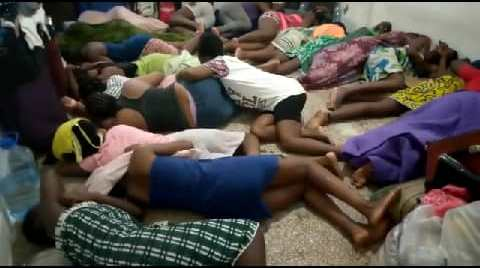
NIGERIANS stranded in Qatar are seeking help after the country temporarily closed its airspace due the ongoing conflict between the United States, Israel, and Iran.
One of the victims who requested for help on X narrated the plights of elderly passengers and children at Hamad International Airport.
“Never been this helpless before in my life. Nine days stuck in Qatar with my family and other Nigerians who were on transit. Countries have picked up their citizens from here, it’s mostly Nigerians that are left! We have called Embassy and Consulate, yet no positive response”.
Qatar Airways had said it was offering rebooking for affected passengers, while the National Emergency Management Agency (NiDCOM) and other authorities urged stranded Nigerians to remain calm.
Officials confirmed that emergency protocols were in place to ensure the safety and repatriation of citizens affected by the ongoing conflict in the Middle East.
With partial reopening of airspace on March 9, there are hopes that more flights will depart soon, allowing stranded Nigerians to return home safely.
There are concerns that more Nigerians are trapped in other Middle East nations due to the conflict.
The ICIR reported that Iran appointed Mojtaba Khamenei as its new supreme leader, replacing his father Ali Khamenei, who was killed in a US–Israeli strike on February 28.
The appointment, announced on Monday by Iran’s powerful clerical body known as the Assembly of Experts, signals that hardline factions remain firmly in control of the Islamic Republic even as the conflict intensifies.
Before the appointment was confirmed, Trump had opposed the emergence of 56-year-old Mojtaba, a Shi’ite cleric with a power base among the security forces and their vast business empire.
Israel had warned that it would kill whoever replaces the late Khamenei unless Iran changes what it describes as hostile policies, as Trump repeated on Sunday in an interview with ABC News that Washington should have a say in Iran’s leadership.
“If he doesn’t get approval from us, he’s not going to last long,” Trump said, adding that ending the war would be a ‘mutual’ decision with Israeli Prime Minister Benjamin Netanyahu.
THE ICIR reported on Wednesday, March 3 – the fifth day of the conflict – that casualties were mounting across the Middle East.
Fresh strikes were widening the conflict beyond the original battle lines.
The Iranian Red Crescent Society said that at least 787 people had been killed, including 165 schoolgirls and staff in a strike on a primary school in Minab, southern Iran, on the first day of the war.
It noted that it remained unclear whether the toll included members of the Islamic Revolutionary Guard Corps (IRGC).
According to ambulance service Magen David Adom, ten civilians were killed in Israel including nine in an Iranian missile strike on Beit Shemesh near Jerusalem on March 1.
Meanwhile, global crude prices have surged above $100, up from about $60 on Friday, February 27, as the conflict continues.
The sharp rise is due to disruptions in global supply and attacks on several oil facilities in the Middle East.