
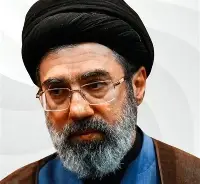
THE world is awaiting a formal response from United State President Donald Trump after Iran appointed Mojtaba Khamenei as its new supreme leader, replacing his father Ali Khamenei, who was killed in a US–Israeli strike earlier in the escalating Middle East war.
The appointment, announced on Monday by Iran’s powerful clerical body known as the Assembly of Experts, signals that hardline factions remain firmly in control of the Islamic Republic even as the conflict between Iran, Israel and the United States intensifies.
Before the appointment was confirmed, Trump had opposed the emergence of 56-year-old Mojtaba, a Shi’ite cleric with a power base among the security forces and their vast business empire.
Israel had warned that it would kill whoever replaces the late Khamenei unless Iran changes what it describes as hostile policies, as Trump repeated on Sunday in an interview with ABC News that Washington should have a say in Iran’s leadership.
“If he doesn’t get approval from us, he’s not going to last long,” Trump said, adding that ending the war would be a ‘mutual’ decision with Israeli Prime Minister Benjamin Netanyahu.
Following the announcement, Fox host Brian Kilmeade said he spoke with the president and quoted him as saying “I’m not pleased,” but Trump has not yet issued a formal public statement on the new leadership.
Meanwhile, Iranian institutions quickly moved to pledge allegiance to the younger Khamenei after the announcement, as officials from the government, parliament and security forces issued statements backing the new leader as the war entered its second week.
Reuters quoted the Defence Council as saying “We will obey the commander-in-chief until the last drop of our blood.”
A Senior cleric, Sadeq Amoli-Larijani, was quoted as saying Mojtaba Khamenei’s appointment was “a balm for the spiritual suffering of our people and an emphasis on the need to continue the luminous path of the late Imam (the elder Khamenei).”
The appointment makes Mojtaba Khamenei the third supreme leader of the Islamic Republic, a position that holds ultimate authority over the military, judiciary and government.
The succession marks a historic moment in Iranian politics. It is the first time since the 1979 Islamic Revolution that leadership has passed directly from father to son, raising debate among analysts about whether the Islamic Republic is moving toward a dynastic model of power.
The ICIR reported that Mojtaba Khamenei, a mid-ranking cleric who studied in the religious city of Qom, has long wielded influence behind the scenes, particularly within the powerful Islamic Revolutionary Guard Corps.
The leadership change comes as military strikes continue across the Middle East. Israel has launched new attacks in central Iran and targeted infrastructure linked to the Lebanese militant group Hezbollah in Beirut.
Iran and its allies have also responded with drone and rocket attacks targeting US and allied positions in Iraq and elsewhere in the region.
Meanwhile, Pope Leo XIV warned that the escalating violence could become “a tragedy of enormous proportions,” calling for dialogue and an end to the “climate of hatred and fear” spreading across the region.

Nanji is an investigative journalist with the ICIR. She has years of experience in reporting and broadcasting human angle stories, gender inequalities, minority stories, and human rights issues. She has documented sexual war crimes in armed conflict, sex for grades in Nigerian Universities, harmful traditional practices and human trafficking.