
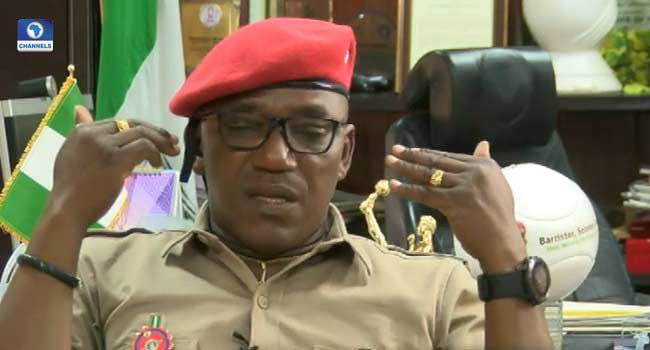
A FORMER Minister of Youth and Sports, Solomon Dalung, has alleged that a committee of the National Assembly demanded a N200 million bribe from him during his first budget defence. Dalung, who served as Minister between November 2015 and May 2019, claimed his refusal to comply led to his exclusion from subsequent detailed budget deliberations.
The former minister made the allegation on his Facebook handle on Wednesday, describing the practice as an entrenched culture of corruption within Nigeria’s public institutions.
“I remember vividly my first budget defence before the National Assembly. After presenting the summary of my ministry’s budget, I expected questions about the figures, the programmes and our implementation strategy. Instead, I was confronted with a demand that had nothing to do with governance. I was asked to raise ₦200 million.
“I looked through the budget documents before me and replied that I had not seen any budget line titled ‘bribe.’ I told the committee that since no such provision existed in the ministry’s appropriation, I had no idea where they expected me to obtain ₦200 million to satisfy their demand,” Dalung stated.
Without mentioning names, the former minister wrote that the committee was dissatisfied with his response and ended his appearance, alleging that from that point onward, his participation in budget defence sessions became largely symbolic.
“Rather than continue the discussion, they told me, ‘Okay, Mr Minister, you are excused. We will take it up with the permanent secretary.” From that day onward, my role in budget defence became largely ceremonial,” he recalled.
According to him, he was only invited to present an overview of the ministry’s budget before being asked to leave. Consequently, committee members continued detailed discussions with the permanent secretary behind closed doors.
“I would only be invited to present the broad highlights of the ministry’s budget; after which I would be asked to leave while the committee continued discussions with the permanent secretary behind closed doors. I was deliberately excluded from the detailed budget sessions because I had refused to participate in an illegal arrangement,” he said.
He further alleged that a committee chairman later informed him that some ministers, particularly those perceived to enjoy close ties with the Presidency, often met such financial demands to ensure the smooth passage of their budgets.
“This experience opened my eyes to how corruption can become institutionalised. When oversight is transformed into an avenue for extortion, accountability is compromised, public resources are diverted, and the integrity of governance is eroded,” he added.
He noted that many government corruption scandals persist because the institutions responsible for accountability have themselves become compromised by illicit financial interests.
“That is precisely why I continue to argue that many of the scandals we witness today do not emerge in isolation. They flourish because institutions that should serve as checks and balances have themselves become vulnerable to illicit financial interests. When the budget process is driven by kickbacks instead of national interest, fraud, abuse and institutional failure become almost inevitable,” he explained.
The allegations have reignited debate over transparency and accountability in Nigeria’s budget approval process, particularly the relationship between ministries, departments and agencies and legislative committees responsible for appropriation and oversight.

Nanji is an investigative journalist with the ICIR. She has years of experience in reporting and broadcasting human angle stories, gender inequalities, minority stories, and human rights issues. She has documented sexual war crimes in armed conflict, sex for grades in Nigerian Universities, harmful traditional practices and human trafficking.