
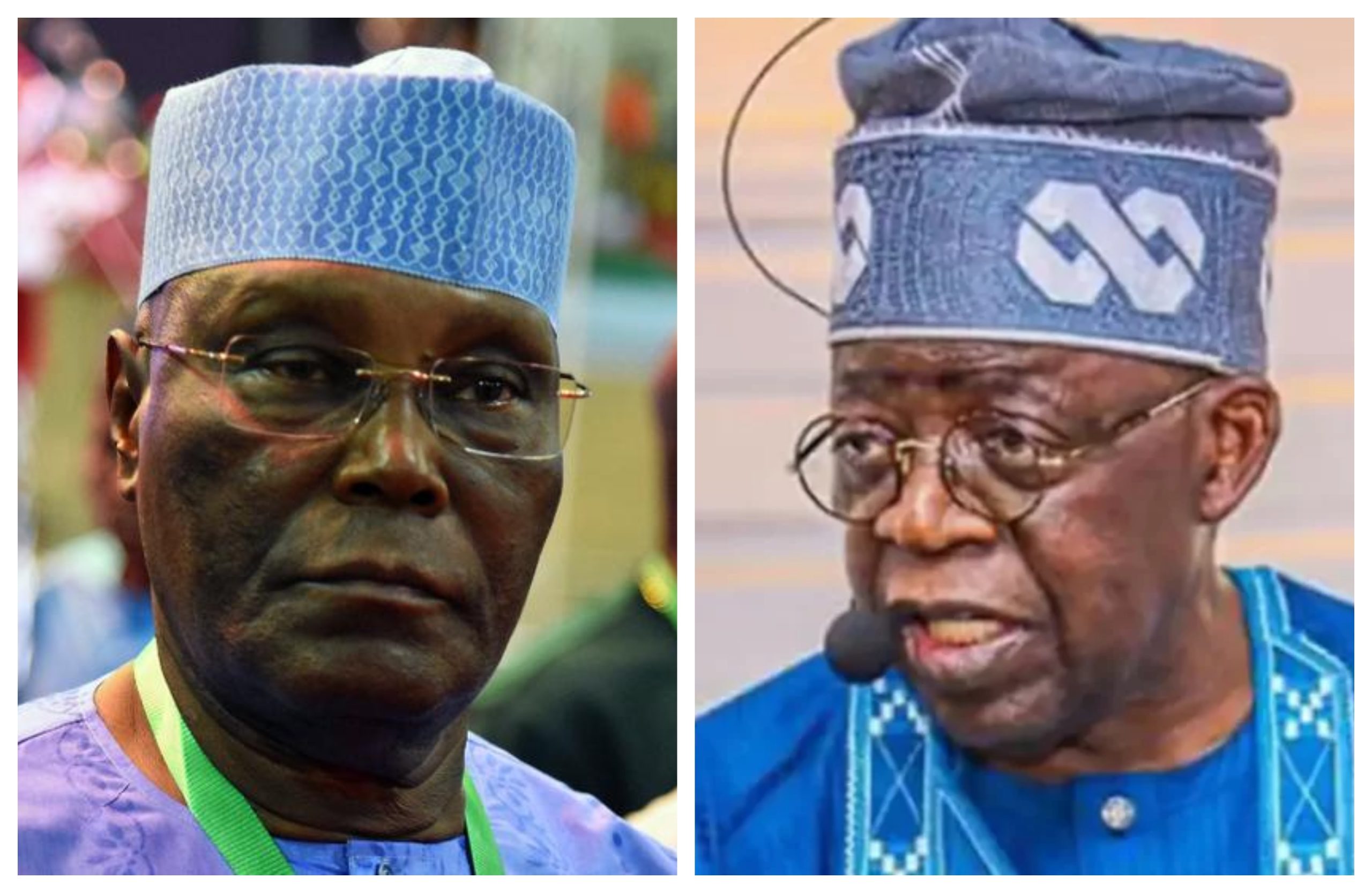
PRESIDENT Bola Ahmed Tinubu has asked a United States federal court to reject a request for the release of records relating to alleged investigations involving him by US law-enforcement agencies in the 1990s, arguing that their disclosure would violate his privacy rights.
The request was contained in a 16-page filing submitted on Tinubu’s behalf in the ongoing Freedom of Information Act lawsuit brought by American transparency activist Aaron Greenspan against several US government agencies.
The case, Greenspan v. Executive Office for U.S. Attorneys et al., is pending before the United States District Court for the District of Columbia under case number 1:23-cv-01816-BAH.
Greenspan has been seeking records from the Federal Bureau of Investigation (FBI), Drug Enforcement Administration (DEA) and other US agencies concerning Tinubu and an alleged international drug-trafficking and money-laundering investigation dating to the early 1990s.
His requests include what he describes as the FBI’s entire file on Tinubu and FBI Form 302 interview records concerning Tinubu from an FBI case covering 1992 and 1993.
The litigation has not established that Tinubu committed drug trafficking or any other crime. Rather, Greenspan is seeking access to government records that he says could shed light on investigations involving the Nigerian president.
According to the court filing reported by Channels Television, Tinubu’s lawyers, Christopher W. Carmichael, Victor P. Henderson and Oluwole O. Afolabi, argue that the records should remain redacted or withheld.
The lawyers contend that the fact that some information connected to Tinubu may have appeared in publicly accessible court records does not eliminate his privacy interest in the contents of confidential investigative files.
They rely in part on the US Supreme Court’s decision in US Department of Justice v. Reporters Committee for Freedom of the Press, arguing that a person’s privacy interest in a government investigative file can survive even where fragments of information from the file have previously become public.
Tinubu’s lawyers further cite US court decisions holding that the public disclosure of a person’s association with an investigation does not necessarily amount to disclosure of the contents of the investigative file.
The FOIA dispute also concerns records associated with a 1993 civil forfeiture proceeding in the United States involving approximately $460,000 that Greenspan links to Tinubu.
The existence of the forfeiture proceeding is not merely an allegation created by Greenspan’s FOIA lawsuit. Earlier court records in the litigation discuss a 1993 civil forfeiture case and the parties’ competing arguments over what those public records establish.
In a 2025 ruling, US District Judge Beryl A. Howell examined Greenspan’s requests for records concerning Tinubu and Abiodun Agbele, in the context of records Greenspan said arose from a federal investigation into an international drug-trafficking and money-laundering ring in the early 1990s.
However, the court’s discussion of the allegations and the existence of investigative requests should not be interpreted as a judicial finding that Tinubu participated in drug trafficking, which he has denied wrongdoing.
Greenspan filed multiple FOIA requests with US federal agencies beginning in 2022 and 2023, seeking records concerning Tinubu and other individuals.
The requests were directed to agencies including the FBI, DEA, CIA, Department of State, Internal Revenue Service and the Executive Office for US Attorneys. The case was filed in June 2023 after Greenspan challenged the agencies’ responses to his requests.
The FBI and DEA initially invoked what is known as a Glomar response, under which an agency neither confirms nor denies whether responsive law-enforcement records exist where acknowledging their existence could implicate protected interests.
Greenspan challenged those responses, arguing, among others, that previous official disclosures and court records had already established the existence of investigations involving Tinubu.
In April 2025, Judge Howell issued a ruling addressing the FOIA dispute and the agencies’ reliance on privacy exemptions. The court’s ruling examined Greenspan’s claims concerning alleged official acknowledgments and publicly available information.
The controversy has continued into 2026.
On August 20, the FBI asked the court for permission to submit sensitive information privately and under seal to support its renewed position concerning records connected to the Nigerian president .
The agency sought to file declarations ex parte and in camera meaning material submitted privately for the judge’s review rather than placed on the public docket in support of its renewed motion for summary judgment.
The FBI argued that publicly explaining the basis for certain redactions could expose law-enforcement methods or potentially endanger individuals, according to reports on the filing.
Greenspan has continued to challenge the withholding of the records.
In an August 2026 status report cited by US media, Greenspan complained that, despite years of litigation, he had not received a produced page from the FBI or DEA containing Tinubu’s name.
In the latest filing, Tinubu’s legal team argues that Greenspan’s central objective is to obtain government documents bearing Tinubu’s name, and that this objective does not override the privacy protections contained in US FOIA law.
The lawyers specifically invoke FOIA Exemption 7(C), which protects law-enforcement records where disclosure could reasonably be expected to constitute an unwarranted invasion of personal privacy, as well as protections under the Privacy Act.
They also challenge Greenspan’s arguments concerning the adequacy of the FBI’s search, the DEA’s Vaughn Index, segregability of records, document-specific withholdings and the application of FOIA exemptions.
They asked the court to deny Greenspan’s motion for summary judgment and permit the FBI and DEA’s existing redactions and withholdings to remain in place.

Nanji is an investigative journalist with the ICIR. She has years of experience in reporting and broadcasting human angle stories, gender inequalities, minority stories, and human rights issues. She has documented sexual war crimes in armed conflict, sex for grades in Nigerian Universities, harmful traditional practices and human trafficking.