
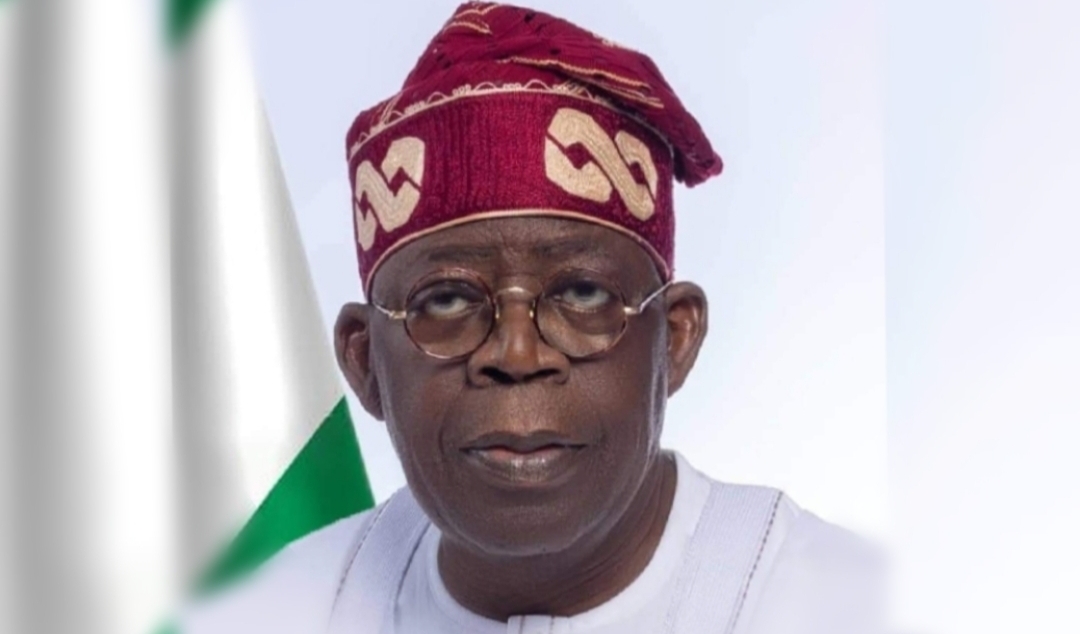
A coalition of civil society organisations (CSOs) and non-governmental groups in Nigeria has expressed concern over what it described as the silence, absence and abdication of responsibility by Nigeria’s political and military leadership, particularly President Bola Ahmed Tinubu, following a recent United States military strike on Nigerian territory.
The concerns were raised after the strike carried out on Thursday, December 25. In a statement titled: “Where is Nigeria’s President” and signed by nearly 90 organisations and individuals, the groups said the incident raised serious questions about Nigeria’s sovereignty, constitutional order, civilian safety and the integrity of the country’s social contract.
According to the signatories, the situation reflects a twin crisis of leadership and security, with allegation that President Tinubu has effectively abandoned his constitutional responsibility as Commander-in-Chief of the Armed Forces. They argued that involving a foreign government in what they described as an internal security matter amounted to a surrender of sovereign authority and weakened Nigeria’s constitutional framework.
“By inviting a foreign government to manage what is fundamentally an internal security challenge, the president ceded sovereign authority in a manner that undermines Nigeria’s constitutional order. Even more disturbing is that during and after the operation, the president, the service chiefs, and the leadership of the National Assembly were either on vacation or completely silent, leaving the Minister of Foreign Affairs, Ambassador Yusuf Tuggar, to publicly rationalise decisions that strike at the core of national sovereignty and democratic accountability.
“This silence reflects a profound breakdown of institutional accountability mechanisms. Section 14(2)(b) of the 1999 Constitution (as amended) is unequivocal: ‘the security and welfare of the people shall be the primary purpose of government.’ This provision represents a central pillar of Nigeria’s social contract. Any security action, especially one involving foreign military forces, must be grounded in transparency, civilian protection, and democratic oversight. None of these standards were met,” the statement read in part.
While acknowledging the importance of international cooperation in counterterrorism, the groups said the US operation on Nigerian soil underscored the need for a critical review of Nigeria’s National Counter Terrorism Strategy, its policy framework and national action plan for preventing and countering violent extremism. They said such a review was necessary to determine whether the operation aligned with these frameworks or exposed significant gaps.
The organisations also expressed concern over what they described as a severe lack of information regarding the collaboration between the Nigerian and US governments, including its scope, legal basis and rules of engagement.
“We are particularly troubled by the severe deficit of information regarding the nature, scope, legal basis, and rules of engagement governing the collaboration between the Nigerian and US governments. Since the incident, Nigerians have not been informed of the basis for authorising the strikes, under what legal framework they were conducted, what safeguards were in place to protect civilians, or what accountability mechanisms exist for harm caused. This opacity fuels mistrust and undermines public confidence in government at a time when trust is already dangerously low,” the statement added.
They further noted that as of the time the statement was issued, there was no confirmation that any legitimate militant targets had been hit. Instead, they cited reports that debris from expended munitions landed on farmlands in Jabo, Tambuwal Local Government Area of Sokoto State, and near a hotel in Offa, Kwara State, as evidence of risks posed to civilians and property.
Although the Nigerian Air Force inaugurated a Civilian Harm Mitigation and Response (CHMR) Board in July 2025, the groups said no clear or publicly articulated civilian harm mitigation procedures were presented for the operation.
They argued that modern military operations, particularly air strikes, required transparent standards for target verification, proportionality assessments and post-strike evaluations, as well as clear mechanisms for civilian complaints, investigations, compensation and redress. The absence of such safeguards, they said, constituted a serious failure of governance.
The groups warned that poor handling of the situation could inflame religious and communal tensions in an already fragile national environment, stressing that Nigeria’s security challenges should not be addressed in ways that deepen division or stigmatise communities, but through an inclusive, rights-based approach that promotes peace, social cohesion and long-term stability.
They also said civilians harmed by the strike must be accounted for through transparent investigations, public disclosure, support for affected communities and compensation, warning that failure to do so would further erode public trust.
The signatories criticised the president and security leadership for permitting a foreign military operation without public justification or legal clarity, arguing that the continued silence of key institutions undermined sovereignty, accountability and constitutional governance.

Fatimah Quadri is a Journalist and a Fact-checker at The ICIR. She has written news articles, fact-checks, explainers, and media literacy in an effort to combat information disorder.
She can be reached at sunmibola_q on X or fquadri@icirnigeria.org