

Recently, two rape allegations dominated Nigerian social media, triggering outrage and sympathy. However, both stories turned to be false. In this report, The ICIR examines false rape allegations, and how justice should respond without silencing genuine survivors.
A TikTok user, Abigail Nsuka, known as Mirabel, posted a tearful video alleging she had been raped and mutilated in her apartment in the early hours of Sunday, February 15. In subsequent posts, she claimed she was being threatened and intimidated to remain silent, sharing worrying screenshots to back it up.
Her videos went viral with users reposting them across TikTok, X, and other social media platforms. The videos tugged at the hearts of everyone who watched due to the pain etched in her voice which had thousands of people demanding justice for her while others began attempting to identify the alleged perpetrator just so he could be punished.
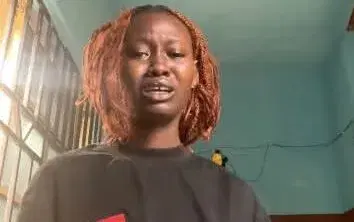
In the video, Mirabel tearfully recounted how the gory day started.
“I have insomnia. If I’m not drunk or high, I can’t sleep. On Saturday, I drank, and it wasn’t working. But I needed to be high enough so I could sleep,” she said.
She claimed she slept around 6am and woke up at about 9am to a knock on her door.
“I slept around 6am but around 9am, I heard a knock on my door. I thought it was my neighbour because it’ was Sunday morning and some of them would have gone to Church, so maybe the one knocking wanted to ask me for something.”
Within days, cracks began appearing in her narrative. Online commentators highlighted inconsistencies in the timelines and screenshots she shared, some of the messages allegedly sent by the rapist contained phrases that also appeared in her messages. Questions mounted about the authenticity of her story.
She didn’t just gain the sympathy; she also received financial supports from sympathisers according to videos posted online. Mirabel with the help of her friend shared her bank details for people to support.
Social media influencer known as VeryDarkMan, claimed he transferred N100,000 to her, while others voiced out. Her videos also pulled celebrities like the singer known as Simi to voice out about the pain women go through.
Under mounting public scrutiny from influencers and users, Mirabel later admitted to VeryDarkMan that the rape claim was fabricated. Recordings circulating online captured her acknowledging that she had created threatening messages herself and pleaded for insanity and hallucination.
“I used to masturbate, and I’m a lesbian. I often self-harm when I have panic attacks. It might be a hallucination,” she said.
It was during this point that she also confessed to have created a TikTok account separately from the one she uses, just to message herself to portray that a rapist has truly been messaging her.
The Ogun State Police Command confirmed it had opened an investigation. While the Public Relations Officer, Oluseyi Babaseyi noted on his social handle X that knowingly providing false information to law enforcement agents is a criminal offence.
The case shifted from a viral story of victimhood to a possible case of false reporting.
That’s not all, around the same time, a female student at Obafemi Awolowo University, Adewale Adeola Adeife, publicly accused Ojuko Adefesobi, known as David on X for rape.
The allegation circulated widely within campus networks and online communities. As often happens in digital spaces, reactions formed quickly. Opinions were drawn.
Adeola accused Adefesobi due to their different opinions regarding Mirabel’s case, and while Adeola was quick to tag Adefesobi as a rapist. According to Adefesobi, she also circulated his contact in group chats in a bad light just to garner attention.

Soon after, she issued a public apology video stating that the claim was false and it was a spur of the moment action.
“He is never a rapist. I’ve never caught him raping anybody. So, I am sorry, David, I’m sorry for calling you a rapist, and this is just to clear the air. He is not a rapist. David is not a rapist.”
Adefesobi, known as David subsequently filed a ₦15 million civil lawsuit, alleging defamation, reputational harm, and emotional distress. The Guardian reported that in court filings, his legal team, Anekwe & Associates, Barristers & Solicitors, also demanded a written apology and full retraction, to be published prominently on all platforms including all social media platforms and any other medium where the defamatory allegation was originally published. They argued that the allegation caused significant personal and reputational damage.
Unlike the TikTok case, this matter transitioned into civil litigation rather than immediate criminal prosecution.
These incidents have revived debate over how Nigeria’s justice system should respond when rape allegations are proven false, and whether such responses risk discouraging genuine survivors from reporting.
False rape accusations
The two recent Nigerian cases illustrate the speed at which allegations now travel and the slower pace at which truth is established. They also reveal the delicate balance between ensuring accountability for intentional falsehoods and protecting the rights of genuine survivors whose experiences already face scrutiny and doubt.
A false accusation of rape happens when a person states that they or another person have been raped when no rape occurred. It is the deliberate, fabricated reporting of sexual assault where no crime occurred.
Globally, research consistently indicates that false rape allegations represent a small minority of reported cases, often estimated between 2 and 10 percent. Meanwhile, sexual violence remains widespread and significantly underreported. According to the World Health Organization, approximately one in three women worldwide experience physical or sexual violence in their lifetime. In Nigeria, surveys from the National Bureau of Statistics have documented high levels of gender-based violence.
How should the justice system respond?
To understand the legal and social implications of such cases, The ICIR reached out to a human rights advocate, Kiyenpiya Mafuyai.
Asked whether Nigeria’s existing laws are enough to address false reporting, she said, “The existing laws are sufficient to address false reporting. Section 8 of Violence Against Persons Prohibition Act (VAPPA) addresses the issue directly within the context of gender – based violence. In addition the Penal Code law makes the giving of false evidence or perjury an offence. This could also be applied as false reporting and it is considered a serious offense against the administration of justice.
However, the challenge may arise in proving the offence beyond reasonable doubt. It would be necessary to prove that the person is legally bound to tell the truth, that the person made a false statement and that they actually knew or believed that the statement was false. Then there must be corroboration which is additional evidence or a witness to confirm the statement was false.”
On how should the justice system responds to false rape allegations without creating fear for survivors, she explained that women’s rights advocates have long insisted that rape reports must be taken seriously to counter stigma and underreporting.
“In order to encourage survivors of rape to speak up, in spite of the stigma, and report, women’s rights advocates have always insisted that when such reports are made, they should be taken seriously and pursued vigorously,” she said.
“Therefore when an individual subverts the system and makes a false accusation which is proven to be false the justice system strongly condemns it. This is because it undermines any progress that has been made in demanding that authorities treat every report of rape with the seriousness it deserves.” she stressed.
She pointed to Section 8 of the VAPP Act, which directly addresses false allegations within gender-based violence proceedings.
The section provides that any person who wilfully makes a false statement whether oral or documentary, in a judicial proceeding under the Act, or with the aim of initiating criminal proceedings against another person, commits an offence. Upon conviction, the offence is punishable by a fine of ₦200,000 or imprisonment for a term not exceeding 12 months.
She emphasised that accountability and survivor protection are not mutually exclusive.
“We can hold individuals accountable for intentional falsehoods by reporting it and following up to ensure that they are prosecuted under the laws provided,” she said.
She also cautioned against media sensationalism.
“Social media can be sensational and conduct media trials without following due process or upholding human rights standards such as fair hearing. Activists should discourage media trials rather than fanning the flames. They should follow due process, report to constituted authorities, and monitor cases while reporting only verified facts.”
She concluded that data must be collated and publicised to underscore that only an infinitesimal fraction of rape reports are false allegations.
Zainab Abdulrasaq ia a reporter and a fact-checker with The ICIR. She believes that accountable citizenship starts with an accountable government, which is why she highlights injustice and everyday struggles through her reporting, one story at a time. She adores reading and can be reached via zabdulrasaq@icirnigeria.org and @blackbookishgirl on Instagram/Medium