

By Sunday Michael Ogwu
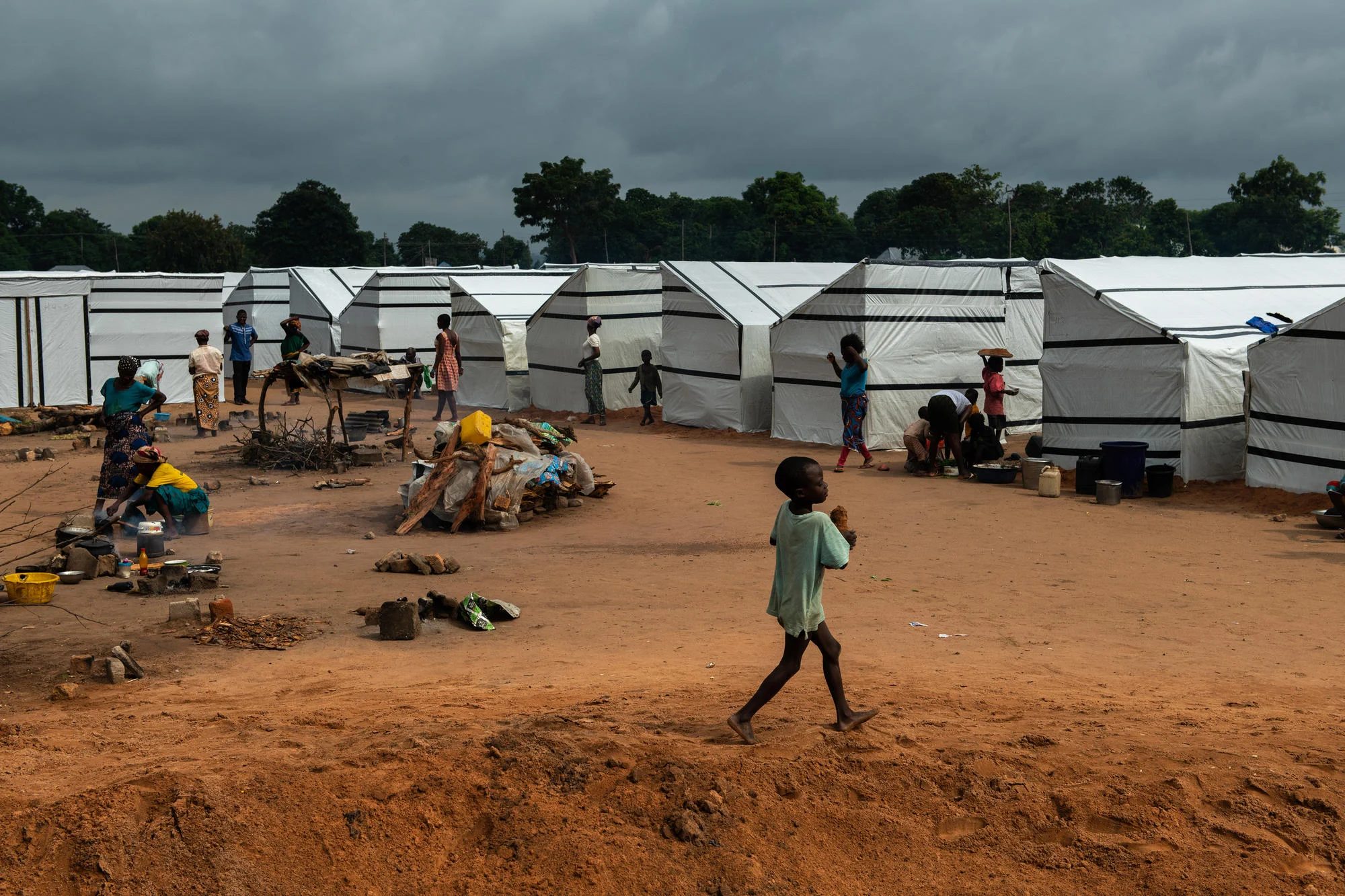
Tesu has not been home in eight years. She fled her community in Guma Local Government Area (LGA) of Benue State sometime around 2014 or 2015, after gunmen attacked her village, killed her husband, and left her with three children and nowhere to go. She ended up at Mega camp, one of the Internally Displaced Persons (IDP) camps in Makurdi, the state capital. One of her children, the youngest, was born inside that camp.
Today, Tesu still lives there. She does not know when she will leave. “I want the opportunity to leave the camp, return home, and solve my problems myself instead of remaining here year after year,” she said.
They escaped the bullets—but not the suffering.
More than **500,000 displaced people** in Benue are trapped in overcrowded camps, struggling to survive without adequate food, healthcare, or hope of returning home. This ICIR investigation tells the stories behind the numbers.… pic.twitter.com/VI0TmNFdvj
— The ICIR (@TheICIR) July 8, 2026
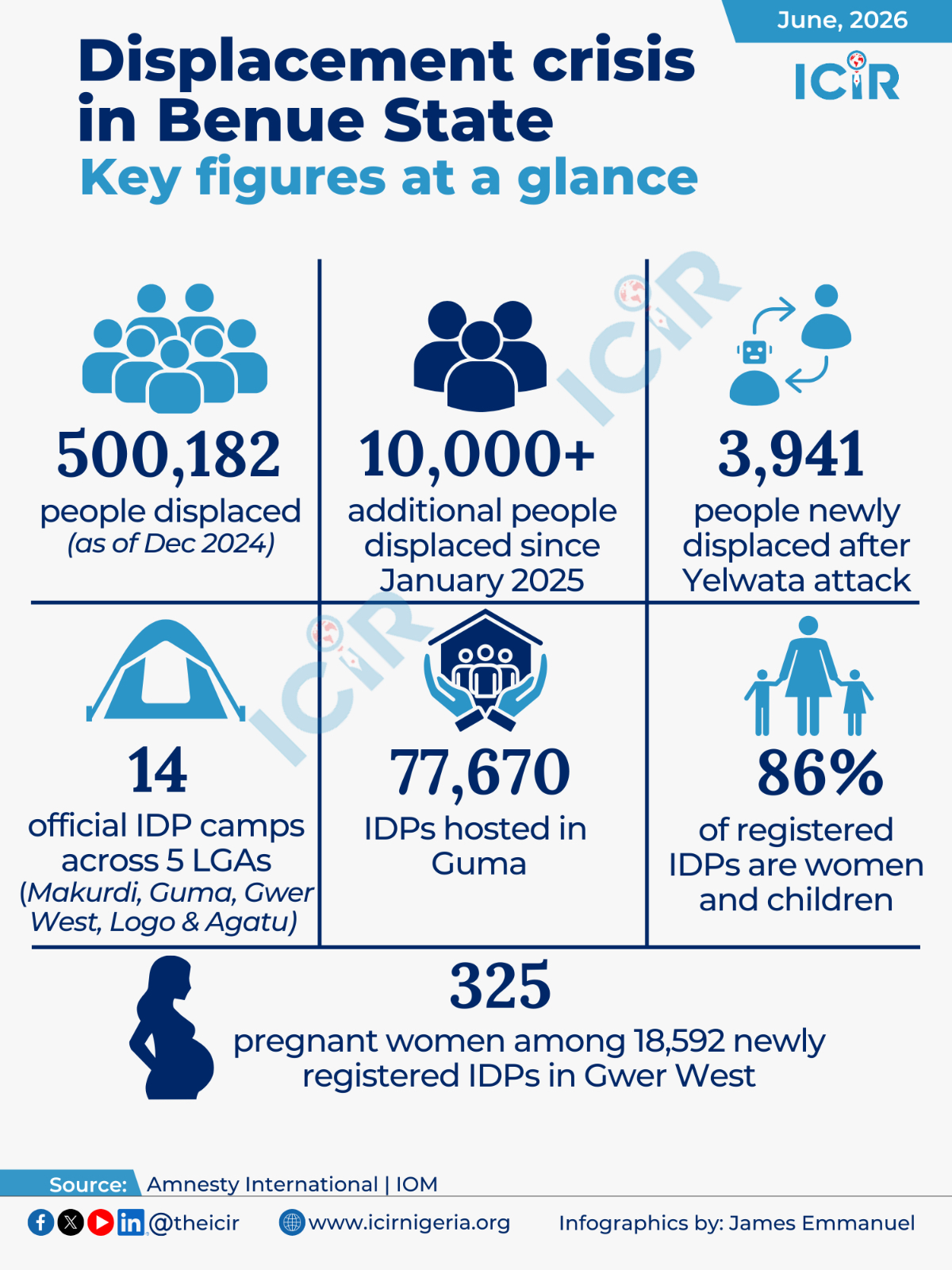
Her story is not unusual. It is, in fact, the everyday reality of more than 500,000 people displaced across Benue State, Nigeria’s self-described ‘Food Basket of the Nation,’ now struggling to survive in overcrowded camps, cut off from the farmlands, livelihoods and communities they once called home.
A crisis deepening by the week
Benue State has the highest number of IDP camps of any state in Nigeria’s North Central region. The violence driving displacement follows what Amnesty International, in a July 2025 report, described as a brutal and recurring pattern: gunmen strike at night, open fire indiscriminately, and in many cases follow up with machetes and knives, inflicting grievous injuries, including hand amputations.
The most recent large-scale attack before this report was filed took place on June 14, 2025, when gunmen raided Yelewata town in Guma LGA, killing more than 100 people. The smell of decomposing bodies was still in the air days later when Amnesty International investigators visited. Mass graves had been freshly dug. Bullet shells littered the ground. Survivors fled carrying bags of grain and bundles of firewood, whatever they could grab, as they joined the already-swelling population of displaced persons in Makurdi.
Benue State Emergency Management Agency’s (BSEMAs) data shows the scale of the emergency: in June 2025 alone, a new camp was established at NKST Primary School in Naka, Gwer West, to accommodate 18,592 freshly displaced individuals — 8,650 women, 4,147 men, and 5,795 children. Among them were 325 pregnant women and 637 breastfeeding mothers.
“If people keep quiet, the problems continue. Telling these stories is one way of pushing for change,” One of the victims in the camp told our reporter.
Inside the camps: Hunger, sickness and broken promises
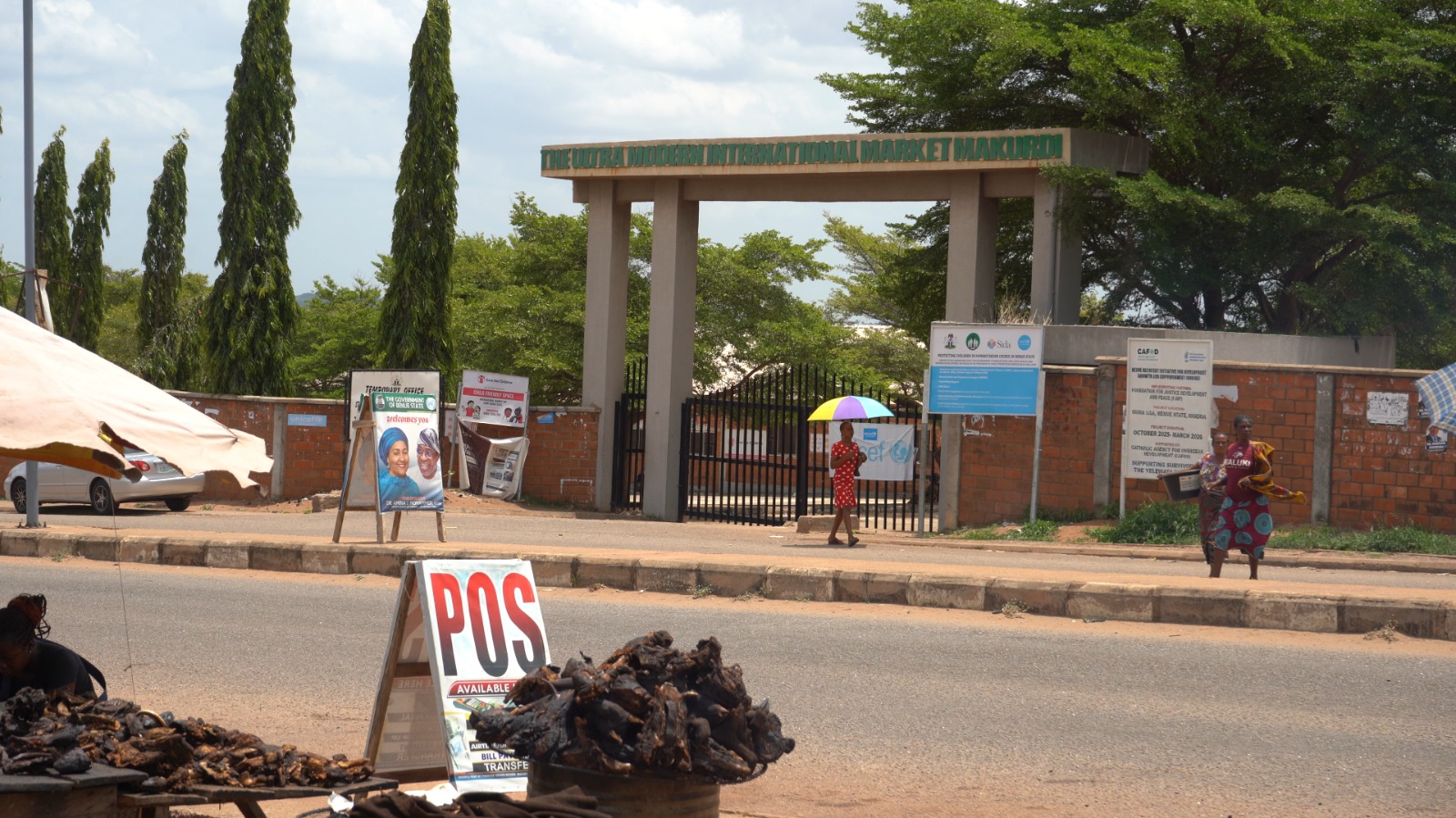
When a Pinnacle Daily team arrived in Makurdi to investigate conditions in the IDP camps, the first thing encountered was not displaced persons; it was security. The camps stretching from the Makurdi International Market area through the University of Agriculture corridor to Abagena were heavily guarded. The sight of a camera was enough to alarm security personnel.
The team eventually gained access through alternative means, details of which cannot be disclosed for the protection of those involved. What the reporters found inside was a humanitarian emergency hiding in plain view.
One woman, a widow raising her children alone after her husband died in the camp, described daily life with quiet devastation: “There is no hospital in the camp. If you fall sick, you have to find a way to buy drugs yourself. The government has not provided medical services for us. When someone becomes ill, the problem is left for that person to solve,” she said.
She described how camp residents survive economically: “We go to nearby villages to work so that we can get money to buy food. Sometimes we work and are not paid immediately. Right now, I have worked for someone who has not paid me, and I am hungry.”
Food distribution, she said, is neither regular nor sufficient. When residents protested over hunger, the government responded with a one-off distribution. Then silence.
“The protest happened because people were hungry. We wanted the government to hear our problems. After the protest, food was provided. Since then, there have been only occasional distributions.”
Children born into displacement
Perhaps the most distressing dimension of the Benue IDP crisis is what it is doing to the next generation. Tesu’s youngest child, who is eight years old, has never known any home other than a displacement camp. The child was born inside the camp and has grown up within its boundaries.
Both Tesu and other residents interviewed confirmed that while a makeshift learning structure has been introduced in some camps, it falls far short of what children need.
“The children go to school, but it is not the kind of education we would like for them. We simply manage with what is available.”
“There is no proper school in the camp. Recently, a place was introduced for children to learn, and people have put up a tent for classes. But the teaching is not adequate.”
Our investigation revealed that most of the teachers are volunteers who could not cope with the rising cost of transportation to the camps on a daily basis. They said anonymously that they were initially supported by some non-governmental organisations but the support was not sustained. Teaching is often done in a non-structured manner as there are no provisions for classrooms or teaching aids.
Amnesty International’s July 2025 field report confirmed this pattern across Benue’s camps, raising alarm about thousands of children whose education had been disrupted or ended altogether, and about pregnant women contracting infections due to inadequate hygiene facilities.
At the Yelewata camp, newly created after the June 2025 attacks, BSEMA recorded 15 births and 122 pregnancies among the registered population — yet the camp had no electricity and was receiving just six trucks of water per day.
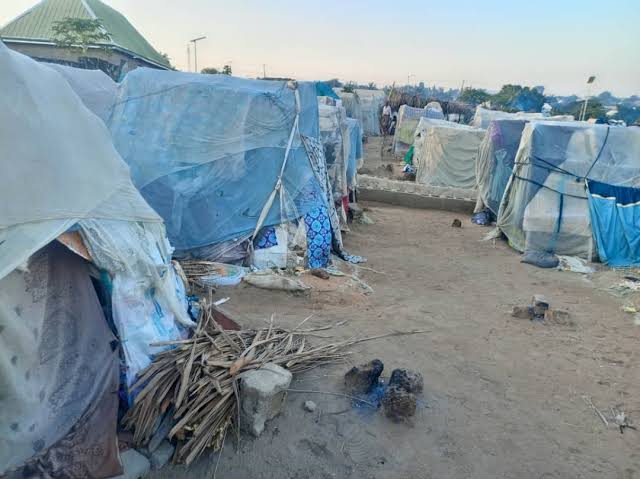
There are a few makeshift pit toilets, but most people in the camp told our reporter that they would rather use the bush. They have to walk to the general borehole points to source water in the community.
When asked how they cope with menstruation, Dooshima, a 21-year-old, said: “Sometimes we get some donations of sanitary pads from visitors like you. At other times, when we get paid for working at people’s farms, we buy some quantity and keep it at home.”
Aid that never arrives — Or disappears along the way
Multiple displaced persons interviewed by Pinnacle Daily raised concerns about the management of humanitarian assistance. One resident made a pointed allegation: “The food we receive is often not enough. Sometimes we see people responsible for distributing aid benefiting more than the displaced persons themselves.”
When our reporter reached camp officials at the Abagena camp to confirm some of the allegations, they simply said they had no clearance to speak with the media.
The resident described how camp communities manage scarcity by sharing: “If I get a small amount of food and I know my neighbour has nothing, I share with them because we understand each other’s suffering.”
This account aligns with a broader pattern documented by humanitarian watchdogs. A June 2025 IOM Displacement Tracking Matrix socio-economic survey, the most comprehensive recent assessment, found widespread economic vulnerability, limited access to essential services, and high dependency on public support systems across 18 IDP sites in Benue. The survey reached 910 households in five LGAs.
Meanwhile, the international safety net is fraying. In April 2025, UNOCHA announced it would scale back operations in Nigeria due to a nearly $60 million funding shortfall — a decision that has directly worsened food security in Benue’s camps at the worst possible time.
The government’s wall of silence
Pinnacle Daily’s attempt to formally document conditions in the camps ran into a bureaucratic wall. The reporting team sent a formal letter to BSEMA on 13th May 2026, requesting permission to visit camps and speak to residents about their welfare, access to education, healthcare and prospects for resettlement.
The Executive Secretary of BSEMA, Dr James Iorpuu, initially asked for a request letter, which the team provided. He then requested to see the questions that would be put to the IDPs. After reviewing them, he said the agency’s lawyers would need to evaluate the request further. He also said that a staff member would need to accompany the team and approve which questions could be asked.
He was direct about his motivation. He said he did not want to look stupid before the governor and noted that it was a sensitive period due to political campaign activity. He asked the team to return the following day, as the agency was preparing for the governor’s birthday celebrations.
As of the time of filing this report, BSEMA had not responded to the formal letter.
In January 2025, Governor Rev. Fr. Hyacinth Alia of Benue State launched a five-year action plan that included the establishment of 210 farmers’ cooperatives across all camps, designed to benefit more than 4,200 IDPs. Displaced persons interviewed said they have seen no evidence of this initiative in the camps they live in.
‘I do not want to depend on anyone forever’
What strikes a visitor to these camps, beyond the hunger, the overcrowding, and the absence of basic services, is that the people inside are not asking for charity. They are asking for the chance to go home.
Every person interviewed by Pinnacle Daily expressed the same core desire: to return to their community, reclaim their land, and rebuild their lives without permanent dependence on aid.
Esther said, “What I want is not to continue waiting for food aid. I want to return to my community and rebuild my life. I want to work for myself and provide for my children. Nobody can be fully satisfied depending on what other people give them.
“My greatest wish is to return home and continue my life there.”
But return requires security and, in Benue, this remains a distant promise. The IOM’s Intention Survey, conducted in mid-2025 across 18 sites in five LGAs, found that IDPs are caught between the desire to return and the fear that doing so would cost them their lives. It found that 25% of the current displaced population in Benue camps was displaced in 2025 alone, a sign of how rapidly the crisis continues to grow.
BSEMA’s own Dr Iorpuu acknowledged in October 2025 that 17 of Benue’s 23 local government areas are currently experiencing attacks. Only six LGAs have been spared. These are not the conditions under which 500,000 people can safely go home.
What must happen now?
Amnesty International, in its July 2025 report, called on Nigerian authorities to take urgent steps to avert what it described as a looming humanitarian catastrophe. It demanded that all displaced persons be provided with adequate relief, including shelter, food, clean water, sanitation and healthcare and that perpetrators of violence be held accountable.
The Manufacturers Association of Nigeria, in a parallel crisis affecting those trying to rebuild livelihoods, has called for a stabilisation fund.
Speaking on the call by manufacturers, the national president of the National Association of Nigerian Traders ( NANTS), Barrister Ken Ukaoha, said: “In Benue, what displaced persons need is a resettlement framework — transparent, time-bound and funded that treats return not as a political promise but as a legal obligation.”
Until that happens, Ukaoha argues that Tesu and her children will keep waking up in a camp that was never supposed to be home. Her youngest child, the one born inside those walls, has never seen the community her mother once farmed, once loved, once built a life in.
And the government, for now, is busy preparing for the 2027 re-election bid.
The names of some displaced persons have been withheld or limited to first names to protect their safety.