
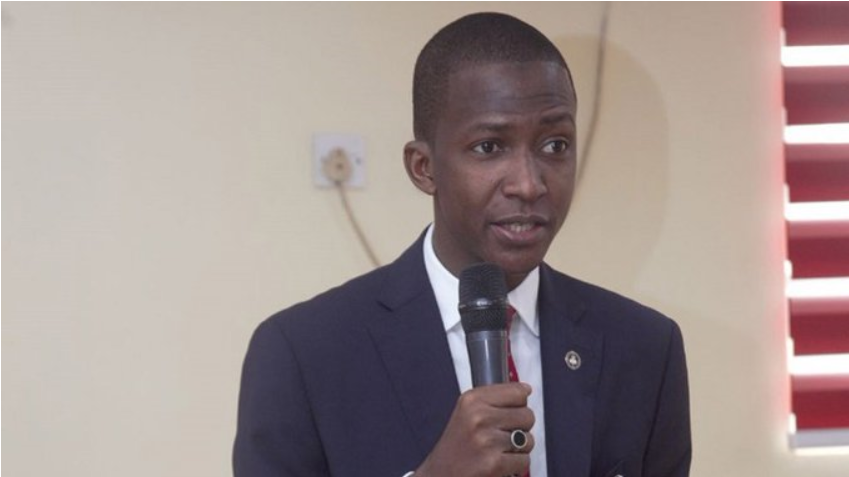

A FORMER chairman of the Economic and Financial Crimes Commission (EFCC), Abdulrasheed Bawa, has, in a new book, exposed fraudulent activities that characterised Nigeria’s fuel subsidy regime.
The book titled ‘The Shadow of Loot & Losses: Uncovering Nigeria’s Petroleum Subsidy Fraud’ is set for release on Thursday, June 5.
Published by Cable Books, the book will be distributed nationwide by Roving Heights Bookstore.
In the book, Bawa provides an exposé of the most authoritative account of Nigeria’s multi-trillion-naira fuel subsidy scandal.
He unravels the inner workings of one of the country’s most pervasive financial crimes.
“Drawing from his firsthand experience as a key investigator on the EFCC’s special team that probed the 2012 subsidy fraud, Bawa reveals the staggering scale, complexity, and audacity of the schemes used to siphon public funds under the guise of fuel subsidy payments.
“His insider narrative chronicles how billions of naira were recovered and several culprits brought to justice, while also shedding light on how entrenched corruption allowed the fraud to flourish for years,” a statement seen by The ICIR read.
According to the statement, Bawa detailed multiple fraudulent strategies, including ghost importing and over-invoicing, companies’ submission of claims for fuel that was never imported, and inflation of shipment volumes to receive excessive subsidy payouts.
He revealed the activities of the fraudsters in the manipulation of bills of lading by altering shipping documents. Fraudsters exploited international price fluctuations to claim higher subsidies.
He further exposed other fraudulent activities on round-tripping and double claims, where single shipments were often used to obtain multiple subsidy payments, diversion and smuggling, where subsidised fuel was frequently diverted to black markets or smuggled out of Nigeria for profit.
These practices were enabled by forged documents, weak regulatory oversight, and systemic collusion between corrupt government officials and private sector actors, Bawa explained in the book.
“The Shadow of Loot & Losses is not just a chronicle of fraud,” he was quoted to have said. “It is a call to action — a demand for transparency, accountability, and reform in Nigeria’s public finance management, especially in the oil sector.”
The book will be made available for policymakers, civil society advocates, journalists, and citizens interested in understanding how systemic fraud undermines development and how it can be confronted.
The ICIR reports that Bawa served as EFCC chairman from 2021 to 2023.
Upon assuming office on May 29, 2023, President Bola Tinubu declared that “fuel subsidy is gone,” arguing that the country could no longer sustain the subsidy regime due to dwindling resources.
This is not the first time a senior government official has raised concerns about Nigeria’s corrupt-ridden fuel subsidy.
In October 2021, The ICIR reported that the former Emir of Kano, Sanusi Lamido Sanusi, described Nigeria’s petrol subsidy regime as a scam, expressing regret over the nationwide protest that halted former President Jonathan’s planned removal of the subsidy in 2012.
Sanusi, who was the Central Bank of Nigeria governor at that time, said Nigerians made a huge mistake by protesting against subsidy removal despite efforts to explain its negative impact on the quality of life of the people.
Sanusi further said that subsidies in themselves were not bad, but many people made a kill from the spiralling figure and exploited the government.