
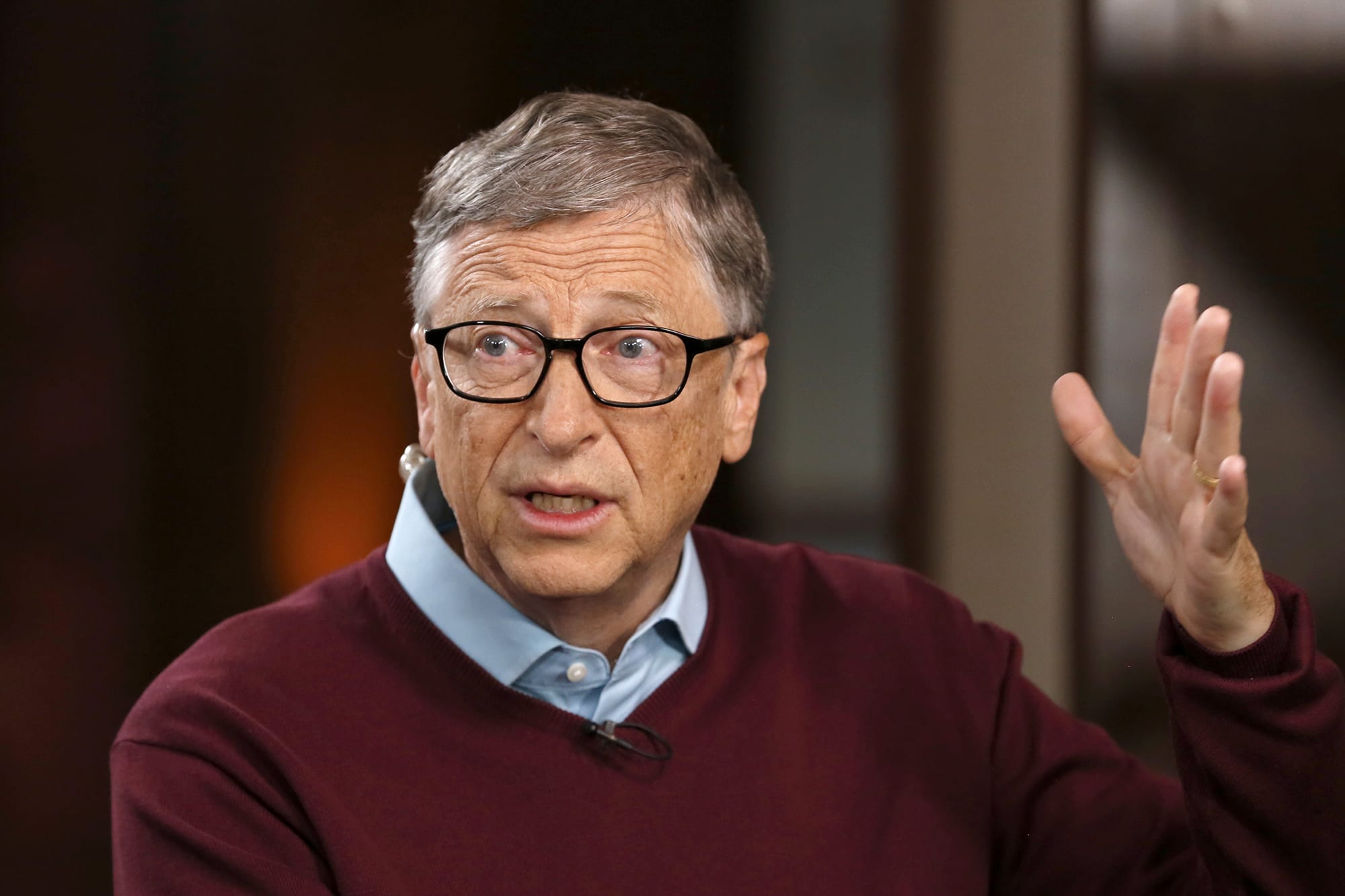

THE Bill & Melinda Gates Foundation has committed $912 million to support the Global Fund’s efforts to combat AIDS, tuberculosis, and malaria in the next three years.
Bill Gates, the Foundation’s chair, made the announcement on Monday at the 2025 Goalkeepers event, held alongside the 80th United Nations General Assembly in New York.
Gates hailed the Global Fund as one of the most impactful lifesaving initiatives, highlighting that it had saved over 70 million lives since its establishment in 2002 and had reduced deaths from AIDS, TB, and malaria by more than 60 per cent, while also strengthening global health security.
“With millions of lives on the line, the level of investment in the Global Fund over the next three years will determine whether the world saves lives, curbs HIV, TB, and malaria, and bolsters economies and global health security.
“An entire generation is alive today thanks to the world’s generosity, smart investments, and the hard work of governments and Global Fund partners. Now, we must go further so the next generation grows up in a world where no child dies from preventable causes,” Gates said.
He noted that every dollar invested in the Global Fund yielded an estimated $19 in health and economic benefits.
“Humanity is at a crossroads. With millions of children’s lives at stake, global leaders have a once-in-a-generation chance to do something extraordinary. The choices they make now, whether to cut health aid or to give children the chance to live healthy lives, will shape the future,” he said.
Gates said the pledge aimed to rally governments, philanthropists, and the private sector to make strong contributions to Global Fund’s Eighth Replenishment, co-hosted by South Africa and the United Kingdom.
The Goalkeepers event, which brought together over 1,000 leaders from government, philanthropy, and the private sector, centered on renewing a collective commitment to saving children’s lives.
He also called on leaders to take decisive action to ensure that some of the deadliest childhood diseases are eradicated by 2045.
He pointed out that several donor nations had cut back on global health funding because of domestic pressures, mounting debt, and ageing populations.
“We have a roadmap for saving millions of children and making some of the deadliest childhood diseases in history by 2045. I urge world leaders to invest in the health of all people, especially children, to deliver this future,” Gates said.
The ICIR reported that United State President Donald Trump signed stringent executive orders on his inauguration day on January 20, reversing several policies of his predecessor, Joe Biden.
Some of the orders included pulling out the US from the World Health Organisation (WHO), and health aid to developing countries, a move that shattered the hope of millions of Nigerians and those of other nations living with HIV/AIDS who rely on the programme for life-saving treatment and support.
The US President’s Emergency Plan for AIDS Relief (PEPFAR) programme faced major disruptions as the Trump administration slashed foreign aid budgets, including funding to the United States Agency for International Development (USAID), PEPFAR’s primary implementing agency.
In July, the US Senate took steps to shield PEPFAR from the sweeping foreign aid cuts proposed by the Trump administration, a move that offers hope to millions of Nigerians living with HIV/AIDS.
Quoting data from the Institute for Health Metrics and Evaluation (IHME), Gates disclosed in his latest remark that global Development Assistance for Health (DAH) dropped by 21 per cent between 2024 and 2025, hitting its lowest level in 15 years.
He cautioned that continued funding cuts could reverse decades of progress, which has reduced annual child deaths by half since 2000 from 10 million to under five million.
Research by the Gates Foundation and IHME indicates that sustained investments and expanded innovations could reduce child deaths by another half within the next two decades.

Nanji is an investigative journalist with the ICIR. She has years of experience in reporting and broadcasting human angle stories, gender inequalities, minority stories, and human rights issues. She has documented sexual war crimes in armed conflict, sex for grades in Nigerian Universities, harmful traditional practices and human trafficking.