

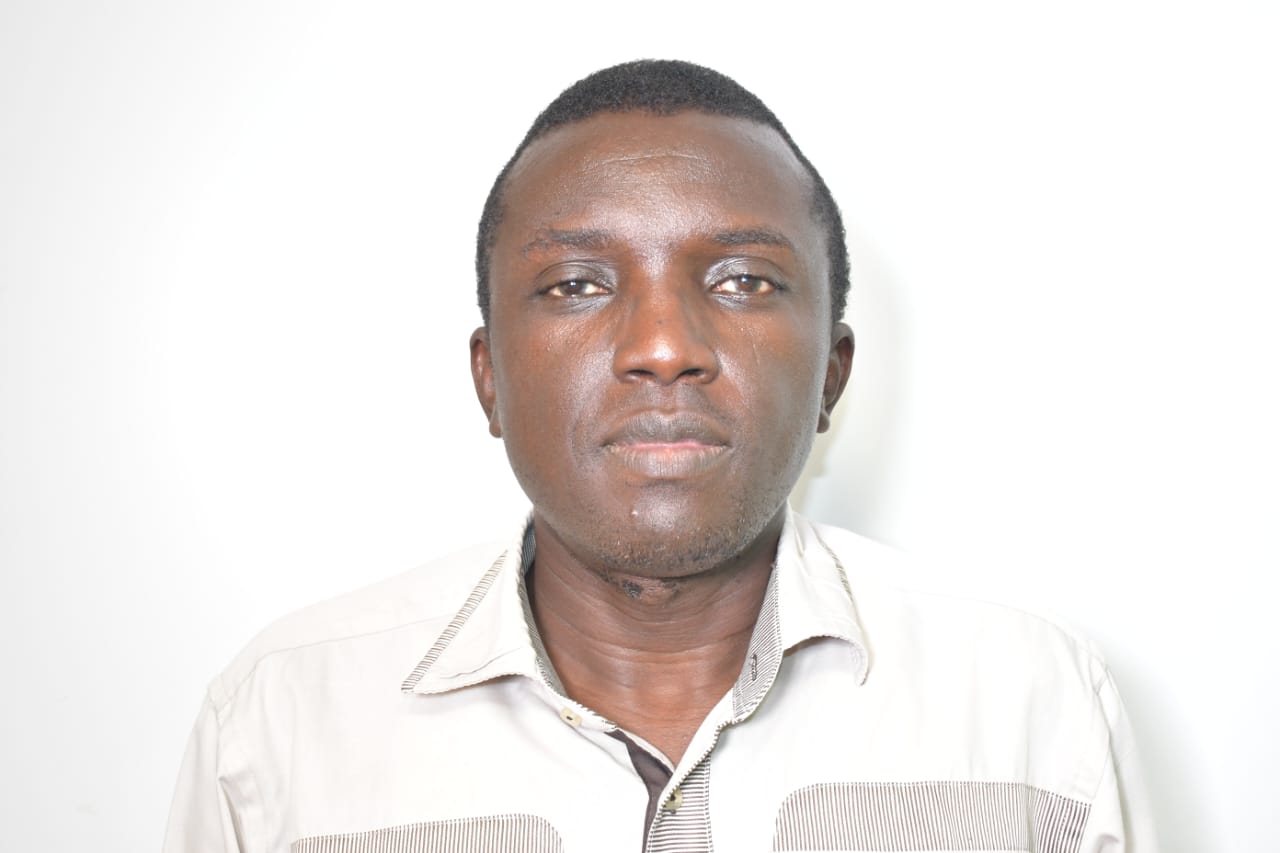
Chairman of the Independent Corrupt Practices and Other Related Offences Commission (ICPC), Musa Adamu Aliyu, a senior advocate, has called on the National Assembly to expedite the passage of the Whistleblower Bill to empower citizens to report corruption without fear.
Aliyu made the call in Kano on Thursday, September 11, at a one-day engagement with select media practitioners from the North-West and North-East, with the theme “From Resistance to Results: Citizens and Media Leading the Anti-Corruption Fight.”
The ICPC boss noted that the two regions, comprising 13 states, faced unique challenges of insecurity and humanitarian pressures that made the fight against corruption urgent and essential.
He described corruption an offshoot of high cost of living, crime and insecurity, and unemployment.
Citing the July 2024 Nigeria Bureau of Statistics (NBS) and United Nations Office on Drugs and Crime (UNODC), he said, “Corruption is not just another problem; it is the most dangerous challenge we must frontally address as a nation.”
Aliyu proposed a multi-pronged approach to tackling corruption, including deeper community engagement, stronger ICPC presence, expanded use of technology and intelligence tools, capacity building in financial forensics and procurement monitoring, and partnerships with civil society, traditional leaders, and international actors.
“Preventing corruption in these regions is not just about governance; it is about peace, trust, and development,” he said.
He urged the media to support anti-corruption work with investigative reporting, rooted in facts rather than sensationalism. He insisted that empowering citizens through a whistleblower law remained critical to sustaining progress in the fight against corruption.
The ICPC chairman emphasised his appeal to the National Assembly to pass the Whistleblower Protection Bill, pointing out that it would help the work of anti-corruption agencies.
He noted that the ICPC Act had a whistleblower protection provision but argued that it was not enough and that an act that covers the full gamut of whistleblowing was needed.
He observed that whistleblowers who exposed corruption in public service suffered a lot of backlash and victimisation, and that only a law that guarantees their protection could encourage them and others to.
Contradictions in government’s stance
However, Aliyu’s call for whistleblower protection comes against the backdrop of Federal Government policies that critics say could undermine such efforts.
In July 2024, the government warned that unauthorised disclosure of official documents would attract prosecution. The Secretary to the Government of the Federation (SGF), George Akume, speaking at a workshop in Abuja, said such leaks amounted to felony under the Official Secrets Act and were not defensible under the Freedom of Information Act.
At the workshop themed “Renewing Hope and Strengthening National Unity through Effective Communication and the Role of the Official Secret Acts in Maintaining Confidentiality and National Security,” Akume argued that civil society organisations had exploited the FOI Act to harass public officers with “fake and unfounded information.”
Similarly, the Nigerian Cybercrimes (Prohibition, Prevention, etc.) Act of 2024 criminalises the unauthorised leaking of official or classified documents. Section 6 of the act prescribes up to seven years’ imprisonment or a ₦7 million fine for offenders. The Criminal Code also recommends imprisonment of up to one year for public servants who copy or abstract official documents without authority.
These measures, analysts warn, could discourage whistleblowers and contradict the ICPC’s push for citizen-driven accountability.
Nigerians resist corruption, says ICPC chairman
Despite the burden of corruption, Aliyu commended Nigerians in the North-West and North-East for their resilience. He cited the 2024 NBS and UNODC survey, which showed that the North-West recorded the highest bribe refusal rate in the country at 76 per cent, while the North-East recorded 60 per cent.
Reports of bribery from the regions rose from 4.7 per cent in 2019 to 13.4 per cent in 2023, with the share of reports leading to formal action nearly tripling from 16 per cent to 43 per cent within the same period.
“These are not just statistics; they tell real stories of Nigerians refusing to be exploited,” he stressed.
Aliyu emphasised the role of the media as “powerful channels for spreading anti-corruption messages” and bridging the gap between citizens and the Commission.
ICPC interventions in North
The ICPC chairman outlined a series of interventions carried out in the North-West and North-East between 2022 and 2024. He said the Commission conducted 311 sensitisation sessions in the two regions, reaching more than 229,000 people, and establishing 142 anti-corruption clubs across secondary schools and tertiary institutions to strengthen civic awareness among young people.
On project tracking, Aliyu disclosed that the ICPC monitored 1,440 projects valued at about ₦271 billion, with ₦112.7 billion worth of projects in the North-East and ₦158.3 billion in the North-West. According to him, citizens and journalists played crucial roles in exposing abandoned projects, which enabled the commission to intervene and ensure resources reached the intended beneficiaries.
He also revealed that the commission recovered ₦7.269 billion and $1.066 million in the North-West, while ₦43.3 million in the North-Wast. In addition, the ICPC seized assets in the North-West, including 14 buildings, 25 plots of land and three farmlands.
On enforcement, Aliyu explained that the commission investigated 171 cases in the period under review, including 117 in the North-West and 54 in the North-East. Out of these, 15 cases were filed in court, nine from the North-West and six from the North-East, leading to four convictions in the North-West.

A reporter with the ICIR
A Journalist with a niche for quality and a promoter of good governance