
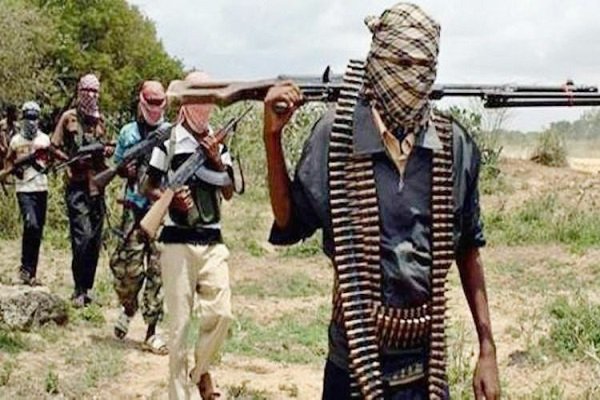

ON January 2, 2026, a letter from the Katsina State Ministry of Justice indicated that the state government had approved the release of 70 suspected bandits who were in custody and standing trial for banditry-related offences.
The letter, classified as secret and addressed to the state’s Chief Judge, Musa Abubakar, requested the intervention of the Administration of Criminal Justice Monitoring Committee (ACJMC) to facilitate the release of the suspects.
It stated that the move was a condition for the continuation of an existing peace accord between affected communities in many local government areas of the state and armed groups operating in those areas.
The letter drew public attention and backlash, with concerns raised over the implications of releasing suspects facing criminal trials.
Despite public ire that trailed the decision, the government defended the decision. On January 12, the state Commissioner for Internal Security and Home Affairs, Nasiru Danmusa, said the planned release was aimed at consolidating peace and securing the freedom of abducted persons.
According to him, the peace pact had already led to the release of more than 1,000 people previously held captive by armed groups across the state.
The government argued that similar peace deal had been adopted in conflict situations globally, adding that the process fell within the statutory powers of the ACJMC under Section 371(2) of the Administration of Criminal Justice Law of Katsina State, 2021.
Over 1,500 civilians killed by bandits in five years in Katsina
However, data shows that deadly attacks on civilians have continued in Katsina despite years of negotiations and peace arrangements.

Data obtained from the Armed Conflict Location & Event Data Project (ACLED) indicated that at least 1,591 civilians were killed in the state between 2021 and 2025, with fatalities rising sharply in the last two years.
According to the data, 246 civilians were killed in 2021, followed by 179 deaths in 2022 and 138 in 2023.
The figures rose sharply thereafter, with 495 civilian deaths recorded in 2024 and 533 in 2025, the highest annual toll within the five-year period.
The rise in fatalities occurred despite ongoing negotiations and peace deals between state authorities and armed groups operating in Katsina and the wider North-West region.
Past negotiations with bandits
Negotiations and amnesty-style agreements with armed groups in Katsina and across Nigeria’s North-West have a long record, but multiple investigations suggest they have failed to deliver sustained security.
A June 2025 investigation by The ICIR found that hundreds of ‘repentant’ Boko Haram and ISWAP fighters who surrendered under government amnesty programmes in the North-East later returned to active combat. In exclusive interviews with ex-commanders, The ICIR reported that many surrendered fighters rejoined insurgent groups after government authorities failed to fulfil promises, including housing and livelihood support.
According to the investigation, some surrendered fighters received only a one-off payment of ₦100,000 before being left without sustainable means of survival, prompting many to return to the forests where armed groups retained access to resources, protection and income. Former commanders told The ICIR that the lack of “structured reintegration”, monitoring and accountability enabled insurgents to regroup, rearm and resume coordinated attacks on communities and military formations.
The report documented a resurgence of attacks across Borno, Yobe and Adamawa states in early 2025, including assaults on military bases and civilian communities, despite years of disarmament, reintegration programmes and dialogue-based counterinsurgency approaches.
In a September 2025 analysis, The New Humanitarian reported that peace talks and amnesty deals in states including Katsina, Zamfara, Sokoto and Kebbi was always a leverage for armed groups rather than pathways to disarmament. According to the report, bandit leaders frequently use negotiations to secure safe passage, regain freedom of detained members, collect taxes from communities, or create space to rearm, while retaining their weapons and operational capacity.
The outlet documented repeated cases where armed group leaders publicly declared repentance, released captives during staged ceremonies and surrendered a small number of weapons, only for attacks to resume within months. In Katsina, it recalled that a 2019 amnesty arrangement saw armed groups turn in just two rifles during a public ceremony, after which residents later reported renewed attacks.

Mustapha Usman is an investigative journalist with the International Centre for Investigative Reporting. You can easily reach him via: musman@icirnigeria.com. He tweets @UsmanMustapha_M