Home Blog Page 1014

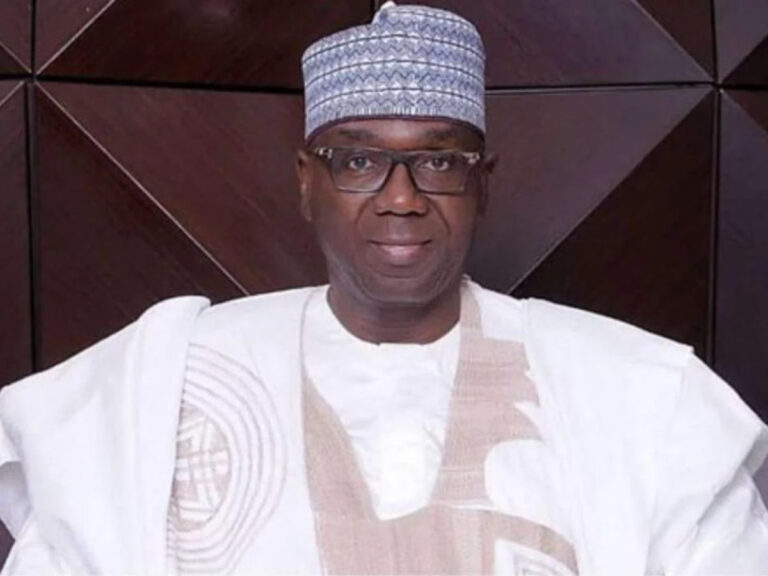
Sule reelected as Nasarawa governor

0

ABDULLAHI Sule has been reelected as the governor of Nasarawa State following Saturday’s governorship election in the state.

Sule contested on the platform of the All Progressives Congress (APC).

The Independent National Electoral Commission (INEC) announced Sule as the winner of the election on Monday, March 20.

The returning officer for the state Ishaya Tanko said Sule emerged the winner after polling 347,209 votes to edge his closest rival, David Ombugadu of the People Democratic Party (PDP), who secured 283,016 in the election.

He further stated that Abdullahi Maidoya of the New Nigeria Peoples Party (NNPP) scored 11,726 votes while the Social Democratic Party (SDP) candidate Mohammed Mustapha got 9,003.

According to the returning officer, the total number of registered voters in the state was 1,899,244 out of which 668,978 were accredited.

The total number of votes cast in the election was 660,805 out of which 6,934 were invalid.

“Having satisfied the requirements and having received the total votes of 347,209 by the APC with the candidate, Sule Audu, is hereby returned and declared the winner of the governorship election in Nasarawa State,” Tanko said while announcing Sule as the winner of the poll.

Nigeria had 93 million registered voters, but only a quarter voted, why?

By Chikodiri Nwangwu, Ph.D, University of Nigeria

NIGERIANS went to the polls in late February to vote for a new president, as well as representatives to two houses of the federal parliament.

The turnout was abysmal. There were over 93 million registered voters. But only a little over 25 million people voted. The Conversation Africa asked political scientist Chikodiri Nwangwu to unpack what happened.

Why was Nigeria’s voter turnout so low?

Firstly, there was insufficient voter education. Many Nigerians don’t understand the benefits of political participation, or don’t understand the electoral process. Little effort is made to explain it to them.

Although voter education is the statutory responsibility of both the electoral commission and political parties, their commitment to this task has been rather underwhelming. Many adult Nigerians – especially in remote areas where media access and literacy levels are low – lack adequate appreciation of the voting process. They also don’t know enough about political parties’ ideologies and internal workings.

Secondly, there were logistical challenges for the electoral body. Voting material was delivered late, even on election day.

Some voters got discouraged and left their polling centres because of the late arrival of materials.

Thirdly, there was a lack of confidence in the electoral commission’s capacity to conduct credible elections. This point was noted in the European Union election observer report after the election. The report says:

On election night, trust in the institution was seen to diminish due to information gaps and INEC’s failure to promptly respond to stakeholder disquiet over logistical and security lapses and later the failure of public access to presidential results on the IReV.

IReV is the online portal where polling unit-level results are uploaded directly from the polling unit, transmitted and made available for public monitoring. INEC is the country’s electoral agency, the Independent National Electoral Commission.

Fourthly, voters might have stayed away because they were scared. Nigeria has a long history of violence during elections.

Fifth is the issue of apathy. The failure to turn up could be read as a vote of no confidence in the Nigerian state. The government’s recurrent failure to arrest the country’s growing social problems, like the cash crisis and petrol scarcity, are reasons for voter apathy.

How low was the turnout compared to previous years?

Voter turnout refers to the percentage of people who actually take part in an election relative to the total number of registered voters. More broadly, it compares the total number of people of voting age in a country and those who cast their ballot during a particular election. A little over 25 million voters, about 28.63% of the registered voters, turned out for the 25 February 2023 elections. Over 93 million voters were registered to vote in the elections.

Data from the election management body shows that Nigeria’s voter turnout has been declining almost every year since 2007.

Voter turnout went up from 52.3% in 1999 – the first general election since 1993 – to 69% in 2003. But it’s been on the decline nearly ever since – 57.5% in 2007, 53.7% in 2011, 43.7% in 2015 and 34.8% in 2019. This year’s is 28.63%.

Increasing voter registration has failed to translate into more voters turning out.

Bola Ahmed Tinubu of the ruling All Progressives Congress was declared winner with fewer than 9 million votes. This is 36.61% of the votes cast to govern a country with a population of 220 million people.

.

What can be done to turn the tide?

The Independent National Electoral Commission and political parties should be more committed to educating the voting public on the importance of participating in politics.

Competent logistics companies should be used in the delivery of sensitive voting materials instead of an approach that has proved to incubate electoral disenfranchisement and voter apathy.

Relevant security agencies should be more proactive and intelligence-driven in quelling political thuggery and electoral violence.

Further, the electoral commission should deal firmly with politicians who aid political violence in Nigeria. Above all, the government should be unmistakably committed to delivering democratic goods to regain public trust and confidence in electoral processes.

Lastly, there should be a proper audit of the voter register. This has never happened, and in my view the register is largely inaccurate. The increasing use of voter accreditation technology since 2015 has shown that figures for previous voter turnouts are inaccurate. The new technology has thrown up attempts at fraud and the manipulation of registration processes.

Given the lack of an audit, it would not be surprising if the current register contained names of those who have died and other ineligible voters.The Conversation

Chikodiri Nwangwu, Ph.D, Senior Lecturer, Department of Political Science, University of Nigeria

This article is republished from The Conversation under a Creative Commons license. Read the original article.

2023 Elections: NSCDC condemns attack on journalist in Nasarawa, vows to punish perpetrators

0

THE Nigeria Security and Civil Defence Corps (NSCDC) in Nasarawa state has condemned the attack on a Breeze FM Lafia journalist, Edwin Philip, during the governorship and state Assembly elections.

The ICIR gathered that some officers of the NSCDC assaulted Philip while he was reporting the electoral process live on his news platform.

Philip, who is the head of News at the FM station, was said to have started reporting the proceedings after he received a call that voters at polling unit 061, Chiroma ward, in Lafia East were asked to return to vote by 2:30pm after being accredited, according to the News Agency of Nigeria.

The NSCDC, however, in a press statement by the state Public Relations Officer Jerry Victor, on Sunday, March 19, described the attack as a shameful act, vowng it would punish the perpetrators.

The statement read, “Commandant Bappa condemned this act in its totality, as it is not a true reflection of the character and attributes of the command’s personnel. He vowed to investigate the incident to fish out the perpetrators of the attack on the journalist.

“He harped on the need for officers and men of the command to exhibit high standards of professionalism in the discharge of their duties.

“The state commandant had directed that the injured journalist be immediately given medical attention with a promise to settle all bills incurred in order to avoid any health complications.”

NNPP wins Kano governorship seat

0

THE gubernatorial candidate of the New Nigeria Peoples Party (NNPP) Kabir Abba Yusuf has won the Kano governorship election.

Yusuf won the election by defeating the candidate of the All Progressives Congress (APC), who is the current deputy governor of the state, Nasir Gawuna, and 16 other contestants.

The Independent National Electoral Commission (IINEC) declared Yusuf winner of the keenly contested election after the collation of results from the 44 local government areas (LGAs) in the state.

According to the returning officer, Ahmad Dokko, Yusuf won the election with 1,019,602 votes, while Gawuna got 890,705 votes.

However, there were arguments between party agents that lasted for a long time and led to the postponement of the result till this morning.

Yusuf slugged it out with the incumbent governor, Umar Ganduje, in 2019 in what was regarded as a very controversial election, which went into supplementary polls.

Yusuf, candidate of the Peoples Democratic Party (PDP) at that time, lost to Ganduje after the supplementary election was conducted by INEC in 28 LGAs of the state.

The just concluded Kano State gubernatorial election generated a lot of controversy before, during, and after the poll.

Sanwo-Olu retains Lagos gov seat, promises to unite Lagosians

0

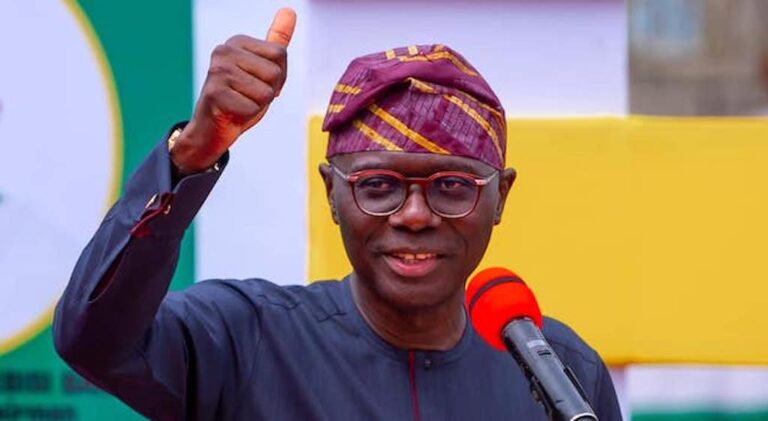
RE-ELECTED Lagos state governor, Babajide Sanwo-Olu, has promised not to tolerate political, tribal or religious coloration in his second term administration, saying he would rather enthrone the spirit of solidarity and oneness among Lagosians.

Sanwo-Olu made the promise at the Lagos House Marina, while giving a victory speech for his re-election.

The Independent National Electoral Commission (INEC) had on Monday, March 20 declared Sanwo-Olu winner of the governorship poll.

He polled 762,134 valid votes to defeat his closest rival, Gbadebo Rhodes-Vivour of the Labour Party (LP), who got 312,329 votes.

The ICIR reports that there were pockets of suppression, ethnic discrimination, political thuggery, and physical attacks on voters, electoral staff and security personnel during the election.

However, the re-elected governor said, “Now that the elections are over, we must reaffirm the spirit of solidarity and togetherness that binds us as Lagosians.

“As I said in my final pre-election address, we have a lot of work to do in working and moving past the divisive rhetoric that has shaped the course of this election cycle.

“Lagos is what it is today because of each and every one of you, regardless of ethnicity, religion, political affiliation, gender or age.

“We saw hateful and hurtful ethnic profiling by fellow citizens – which is totally out of place for us as Lagosians, the proud residents of West Africa’s pre-eminent melting pot.”

The governor stressed that what united all as residents of the state was far more important and substantial than whatever differences existed among all, adding that the true Lagos spirit remained a welcoming, embracing, liberal one, and not divisive or exclusionary.

“In the days and weeks and months ahead, we will continue to do everything to demonstrate and amplify this,” he said.

While admitting that there were skirmishes in some local government areas where some citizens were reported to have been injured, Sanwo-Olu said, “We strongly condemn these reprehensible incidents – that is definitely not who we are as a people.

“The relevant law enforcement and security agencies have been directed to investigate these breaches of the law, and to ensure that those found culpable face the full wrath of the law.”

2023 Governorship Election: INEC records low turnout in VGC, releases results

0

THERE was low turnout of voters on Sunday, March 19 at the 10 polling units in Victoria Garden City (VGC) Lekki, Eti-Osa local government area, Lagos state, where  governorship and Assembly elections held.

The elections had been shifted from Saturday March 18 till Sunday after  staff of the Independent National Electoral Commission (INEC) set up voting materials outside the VGC estate gate but the estate residents refused to vote there, arguing hoodlums might disrupt the process.

Polling units (PU) affected included PU 032, 033, and 119-124.

A check by The ICIR on INEC’s portal on these affected polling units showed that from a total of 2,356 registered voters at PU 032, only 374 voters were accredited. There, the Labour Party (LP) got 287 votes, while the All Progressives Congress (APC) scored 66 votes.

Of the 2,097 registered voters at PU 033, only 325 voters were accredited as LP polled 212 votes, and APC, 88. In PU 119, of the 92 registered voters, 33 voters were accredited as LP polled 27 votes, and APC, four.

Uploaded results at the INEC’s portal also showed that of the 750 registered voters in PU 120, only 105 were accredited, with the LP polling 79 votes, and APC, 21 votes, while from 151 registered voters in PU 121, APC got 13 votes and LP, 45 of the total number of 64 accredited voters.

At the PU 122, APC scored seven votes, and LP, 51 of the 58 accredited voters from a total of 184 registered voters. Also at PU 123, APC got two votes, and LP, 51 of the total number of 59 accredited voters from 180 registered voters, while from the 214 registered voters at PU 124, only 84 voters were accredited that gave APC eight votes and LP, 73.

This indicated that of a total number of 6,024 registered voters in the eight polling units, only 1,102 people came out to cast their votes, representing about 18 per cent of total registered voters in the polling units.

The ICIR recalls that the INEC Resident Electoral Commissioner, Segun Agbaje, had told journalists, “We have eight polling units here with 6,024 registered voters, out of which 5,624 people have their PVCs.”

Former Enugu governor Chimaroke Nnamani loses Senate election

0

FORMER governor of Enugu State, and leader of the Ebeano political group, Senator Chimaroke Nnamani has lost his bid to return to the Senate.

He lost to the Labour Party candidate, Sir Kelvin Chukwu.

Chukwu polled 69, 136 to beat Nnamani of the Peoples Democratic Party (PDP), who scored 48, 701 votes.

The LP candidate replaced his brother, Oyibo Chukwu, who was murdered few days to the February 25 Presidential and National Assembly elections.

The former Enugu State governor has been enmeshed in several controversies in the build up to the election.

He was listed as a member of the All Progressives Congress (APC) Presidential Campaign Council (PCC) for the just concluded 2023 presidential election, despite being a PDP senator.

As a result, he got himself into trouble as the National Working Committee (NWC) of PDP expelled him from the party.

But he was able to contest the Senatorial election through a court ruling, after he challenged the PDP’s decision to withdraw him from the poll.

Expert seeks hold on monetary rate as CBN holds two-day MPC meeting

AS the Monetary Policy Committee (MPC) of the Central Bank of Nigeria (CBN) meets this week, an agro economist, Ikechi Agbugba, has suggested that the apex bank should retain the current monetary policy rate (MPR) to lessen hardship on Nigerians.

The CBN had in a notice on March 14 announced that the 290th MPC meeting would be holding on Monday, March 20 and Tuesday, March 21.

The MPC, had at its last meeting in January 2023, further raised the MPR by 100 basis points to 17.5 per cent to rein in inflation, which currently stands at 21.91 per cent.

The MPR has been on the rise since April 2022, when it was 11.50 per cent. The rate impacts lending and inflation rates, and, when jacked up, consequently affects upward movement of prices of good and services.

Agbugba, a senior lecturer at the Rivers State University, Port Harcourt, told The ICIR that there is the need to retain the MPC to see how the re-circulation of the naira would affect the economy before increasing, or perhaps decreasing it.

“On a sad note, every policy that will result in increasing the interest rate will further bring about hardship to industries and Nigerians.

“Truly, this move by the CBN was intended to raise the rates and at the same time reduce money supply in the economy and rein in inflation. As an agro economist and policy maker, I must say that this action is not just risky but will slow down economic growth. A higher interest rate will raise the cost of borrowing for businesses, and may make goods and services even more expensive,” Agbugba said.

The lecturer also noted that the introduction of new banknotes was meant to reduce inflation by limiting money supply, but that old banknotes re-entering circulation, could raise inflation risks.


READ ALSO:


According to him, the Stanbic IBTC Bank Purchasing Managers’ Index, which measures the performance of the private sector, dropped to 44.7 per cent in February, from 53.5 per cent in the previous month, indicating a sharp decline in business conditions (mostly due to cash shortages and fuel scarcity) which might be needed for more borrowing also.

“Rising interest rates will have a direct or indirect impact on farms and agribusinesses. Farm operating loans will be affected first for most farms leading to higher interest expense. As farms acquire machinery, land and buildings with debt, more non-current debt will have higher rates, leading to larger interest expenses for many years.

“In addition, high energy costs will raise fuel and fertilizer prices, boosting food production costs, but they also divert output from food to biofuels. Fertilizer prices are double what they were before the pandemic, even after a pullback in recent months,” Agbugba added.

Election: Police arrest ‘many’ suspected criminals in Ondo

0

THE Ondo state police command has arrested many suspected criminals for different electoral irregularities during the Saturday March 8 governorship and Assembly elections.

The command spokesperson, Funmilayo Odunlami, said in a statement she issued on Sunday, March 19, that the suspects were arrested in different parts of the state during the election.

Odunlami said they were arrested in connection with cases of unlawful possession of firearm, snatching of ballot boxes, attempted murder and serious assault.

She stated, “All cases relating to electoral offences will be harmonized and dealt with in accordance with the Electoral Act after completion of investigation.

“The Command appreciates the collaboration of sister agencies and that of the law abiding citizens in the state for the maintenance of law and order throughout the election period.”

The police spokesperson, however, did not disclose the number of suspected criminals arrested during the exercise.

She stressed that the command was committed to serving the people of the state with a high sense of “responsibility, professionalism and universal policing best practices.”

Gov. AbdulRahman retains seat in Kwara

0

THE Independent National Electoral Commission (INEC) has declared Governor AbdulRazaq AbdulRahman winner of the Saturday March 18 governorship election in Kwara State.

AbdulRahman, who contested on the platform of the All Progressives Congress (APC), polled 273,424 votes to edge his closest rival, Peoples Democratic Party’s Yaman Abdullahi, who scored 155,490 votes.

The result is as announced on Sunday, March 19, by the INEC Returning Officer for the state in the governorship/Assembly elections, Professor Isaac Itodo.

Itodo, who is also the Vice-Chancellor of the University of Agriculture, Makurdi, declared AbdulRahman winner of the election, having scored majority votes in the election.

According to him, AbdulRahman won in all the 16 local government councils in the state.