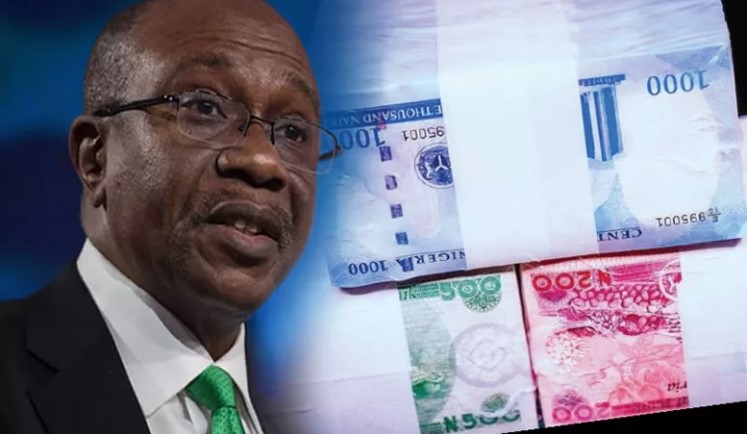
FOUR days after the Central Bank of Nigeria (CBN) gave the nod that old and new N200, N500 and N1,000 notes can circulate simultaneously till December 31, scarcity of the currencies has persisted across the country.
Checks by The ICIR today showed that acceptance of the old notes as legal tender was slowly picking up, just as was supply of the notes through commercial banks.
It would be recalled that on March 3, 2023, the Supreme Court ruled that the CBN should extend the validity of the old notes till December 31, 2023.
It, however, took the CBN 10 days to issue a statement directing the banks to comply with the judgment, as individuals and businesses waited in anxiety for that official directive and people refused to accept the old notes.
Even official statements by some state governors like Nasr el-Rufai of Kaduna and Babajide Sanwo-Olu of Lagos to residents of their states to start accepting the old notes as legal tender following the Supreme Court judgment failed to sway the people.
Observations are that commercial banks have resumed dispensing the old notes, but in agonisingly low amounts where available.
At the United Bank of Africa, Wuse Zone 2 branch, Abuja, each customers received payment across the counters for N5,000 only.
Bank customers queue to receive rationed N5,000 each from the counter at UBA Bank Wuse Zone 2
In Lagos, The ICIR saw hordes of customers at many bank branches struggling to gain entrance into the hall to withdraw funds. There were also long queues at automated teller machine (ATM) points.
Along Ogunnusi Road, Ojodu Berger, Lagos State, where different banks have branches, many customers were seen waiting for hours, and could withdraw barely N10,000 each.
One of the security men at a UBA branch on the stretch told our reporter that the branch had closed as early as 2pm because of cash scarcity, and that it was unlikely the branch would have cash to pay to customers on Thursday, March 16.
Another security man at Zenith Bank, on the same road, said the branch could pay cash to customers tomorrow if it received cash inflow from its head office.
A food vendor at the Ojodu-Berger complex, Ojodu, Lagos, Madam Jennifer, told The ICIR that the situation had not improved.
“We are not getting customers now like before the naira problem started, even though we have started to collect the old N500 and N1,000 notes. Our customers are still complaining they don’t have naira,” she said.
A softdrink seller at Ipodo market, Ikeja, Lagos, told The ICIR she has started collecting the old notes
A commercial bus driver in Lagos, who gave his name as Godwin Shaapera, also told our reporter that passengers’ patronage had not improved because there was not enough money in the banks to withdraw.
“Some people do come to me requesting they transfer money to my account so I can give them cash. But I don’t have any. We have been on loading queue at this bus stop for many minutes. Business will not pick up until next week,” Shapeera added.
An economist and Executive Director of the Centre for the Promotion of Private Enterprise (CPPE), Muda Yusuf, told The ICIR that the CBN needed to supply more money to the system to stop the current crisis.
Muda Yusuf: wants CBN to improve circulation of maira notes.
Yusuf said, “We need to continue to prevail on the CBN to release the old notes, as directed by the Supreme Court. It took the CBN and the Presidency 10 days to respond to the judgement.They may need to do an audit to know how much they have in their banking vaults as banks are complaining of lack of money for circulation.”
Bank customers struggle to get funds at the counter at Diamond Bank in Kubwa FCT.
The economy is gradually grinding to a halt because of cash crunch, and the collapse of payment systems across all platforms, which has been affecting funds transfer.
At the Ikeja Computer Village, Lagos, point-of-sale (PoS) operators are still sharply marking up their profit margins beyond the normal charges, citing scarcity of both old and new naira notes.
“The PoS operators here collect N200 on every N1,000 withdrawal as they maintain that naira is still scarce,” a dealer in phone accessories at the Computer Village told The ICIR.
Available data showed that since the onset of the cash crisis, the Nigerian economy has lost an estimated N20 trillion. These losses arose from the deceleration of economic activities, the crippling of trading activities, the stifling of the informal economy, contraction in the agricultural sector and the paralysis of the rural economy.
There are also corresponding job losses in hundreds of thousands.
A NIGERIAN boy Anthony Mmesoma Madu, who was offered multiple scholarships after a video showing him at the age of 11 years dancing ballet barefoot in the rain in Lagos State went viral, has met with the Queen Consort Camilla.
Madu received scholarship offers from the prestigious Jacqueline Kennedy Onassis School at American Ballet Theatre in the United States, Ballet Beyond Borders and the Elmhurst Ballet School in Birmingham.
Camilla met Madu who is now 13 years old during a visit to the Elmhurst Ballet School in Birmingham, Central England on Tuesday, March 14, as part of the school’s centenary celebrations and wished him luck with a forthcoming Disney documentary telling his unlikely story to the British dance academy, which was announced last September.
The Nigerian boy from a lowly background dubbed by newspapers as the ‘Nigerian Billy Elliot’, was offered a scholarship after a 44-second video of him pirouetting in the rain went viral in 2020, and was viewed more than 16 million times.
He told reporters after his meeting with the Queen Consort: “My dancing’s going well. It’s really, really great and I’m really enjoying it.”
Madu added that he was adapting to life and the weather in the UK and hoped his story can spur on others around the world.
“I just hope to inspire them to pursue their dreams and never give up,” he said.
Prior to the scholarship, Madu was one of a dozen students between the ages of 5 and 12 at Daniel Owoseni Ajala’s Leap Academy of Dance in Badagry.
Inspired by the movie – Save the Last Dance – Ajala, a self-taught ballet fan turned instructor, founded the Academy in late 2017 after studying dance moves from YouTube tutorials online and in books.
“I basically learned all the fundamental principles of ballet through YouTube tutorials,” Ajala said in an interview with Vogue.
However, his hopes for an international career were dashed when he applied to several schools across Eastern and Southern Europe, including one in Zagreb, Croatia and was told that as an African, he was not eligible for an international scholarship.
“It just seemed like blatant discrimination,” Ajala said. Yet he continues to teach the art to children for free.
THE Independent National Electoral Commission (INEC) has debunked reports that it has dropped ad-hoc staff from the South-East and South-South from election duties for the March 18 governorship and House of Assembly elections in Lagos State.
Reports that the Commission dropped ad-hoc staff from the two zones have been circulating on various social media platforms, including Twitter, leading to concerns about the integrity of the electoral process.
#JUSTIN: The @inecnigeria office in Lagos has removed all Igbo and South-South staff in the State from sensitive election duties for the March 18th election.
They did not give any reason, but it was said that the INEC leadership which takes directives from the Tinubu political… https://t.co/JJ6kz2wJZK
But in a statement on Wednesday, March 15, INEC Resident Electoral Commissioner for Lagos State, Olusegun Agbaje, described the allegations as fake news and urged the public to ignore them.
The statement, signed by the Head of Department, Voter Education and Publicity, Adenike Tadese, explained that the ad-hoc staff engaged during the Presidential and National Assembly Elections on February 25 in Lagos State were 738 in number.
However, the forthcoming governorship and House of Assembly elections would only require the services of 427 collation officers, as only two elections were involved.
Agbaje noted that members of staff who were of Igbo origin were all returned to work as collation officers in the forthcoming elections, while Supervisory Presiding Officers (SPOs) maintained their positions.
He also denied engaging in any phone conversation with any politician and called on anyone with information concerning the alleged phone conversation to make it public.
The INEC commissioner stressed the importance of accurate and reliable information in the electoral process and called on the public to disregard fake news and rumours that could cause confusion and undermine confidence in the electoral process.
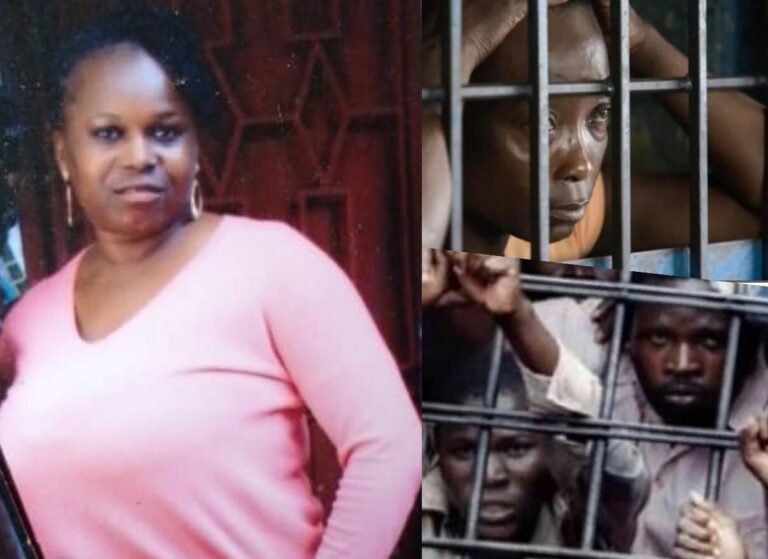
THE Nigerian Government has demanded a full investigation into the circumstances that led to the death of a Nigerian inmate Chizoba Favor Eze, in an Ethiopian prison.
This was disclosed in a statement issued by the Nigerians in Diaspora Commission (NiDCOM) on Wednesday in reaction to reports of Chizoba’s death in Kaliti Prison, Addis Ababa on Sunday, March 12, following alleged physical assault.
It was gathered that Chizoba fell sick after she was brutalised by prison officials and was subsequently forced to receive an injection which she had previously reacted to negatively.
Her corpse was also reportedly left inside the cell for over 36 hours by the prison management who allegedly prevented other inmates from informing the Nigerian embassy about the incident, before a protest by the inmates.
Chairman and Chief Executive Officer of NiDCOM Abike Dabiri-Erewa, said the Commission was in contact with the Nigerian Mission in Ethiopia and the circumstances that led to the unfortunate incident will be thoroughly looked into.
Chizoba’s death comes nearly four years after another Nigerian Odemu Efe, died of an undisclosed ailment and poor medical attention at the same prison facility.
It would also be recalled that in January, some Nigerian inmates locked up in the maximum security Kaliti Prison had called on the Federal Government to facilitate their transfer of sentence to Nigerian prisons, alleging grave human rights abuses in the Ethiopian prison; including starvation, lack of medical care, corporal and capital punishment and overcrowding.
Similar appeals were also made in 2021 and 2019. “We ask that the government come to our aid urgently. We lack access to water, food and medical care. We are asking the government to intervene so we can serve the rest of our jail terms in Nigeria,” the inmates pleaded.
The NiDCOM boss expressed concern over the condition of the inmates, explaining that the Nigerian Mission in Ethiopia has proposed a Memorandum of Understanding (MoU) for the transfer of sentenced Nigerians to serve their respective jail terms in the country.
She however, noted that while the Commission awaits a response from Ethiopia, a number of persons held for drug-related offences who had benefitted from an amnesty granted to Nigerian prisoners in 2019 by the Ethiopian government, had regrettably found their way back to the country and have now been allegedly re-arrested for fresh crimes also relating to drugs.
More than 200 Nigerians are estimated to be languishing in the Ethiopian prison facility and many are awaiting trial over allegations of possession of hard drugs and money laundering.
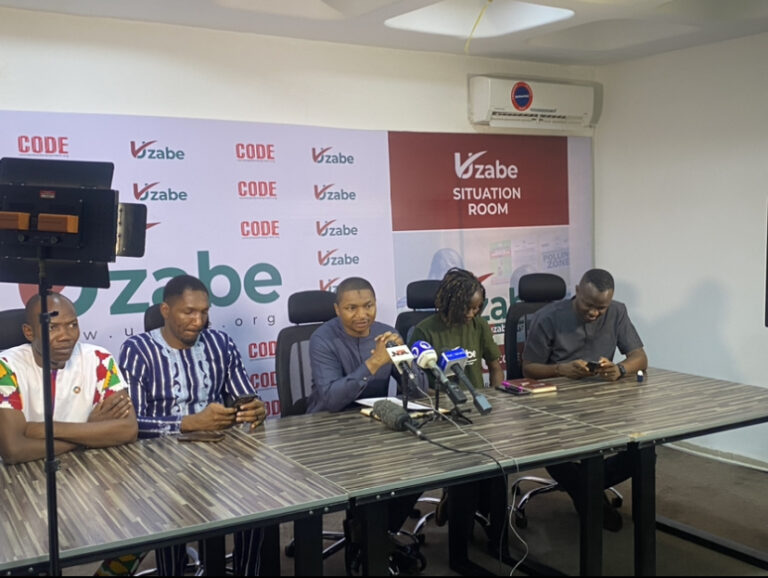
CONNECTED Development (CODE), a non-profit organisation, has called on the Independent National Electoral Commision (INEC) to restore Nigerians’ confidence in the electoral process and democracy.
The Chief Executive of CODE Hamzat Lawal made the call on Thursday, March 16, during a pre-gubernatorial and state election press conference organised by the organisation in Abuja.
Lawal said there are high expectations from INEC to deliver a free, fair and credible election on March 18.
Speaking on the previous presidential election, he noted that there were many cases of widespread irregularities in the process, adding that the forthcoming election is another opportunity for the electoral body to redeem its image.
“As we count down the hours, it’s important to highlight some of the lessons learned from INEC’s conduct and management of the presidential and NASS elections. With the deployment of Uzabe technology for election observation, we recorded many cases of widespread irregularities. We hope that these issues have been tackled by INEC and come March 18th, citizens will be allowed to exercise their civic duty without unnecessary hitches and glitches.
“There’s also cause to point out that the BVAS and IREV technologies put a lot of faith in the electorate and this forthcoming election is another opportunity for INEC to redeem its image and ensure that their technology is functional and INEC’s guidelines on its usage are adhered to. This is a call to INEC to restore the citizens’ confidence in our democracy.”
Lawal also noted that the country recorded its lowest ever voter turnout during the presidential election despite 87.2 million PVCs collected.
He listed late arrival of INEC officials, BVAS malfunction, and failure to deploy materials to many polling units across the country as the causes of low turnout during the presidential election.
“From our reports, there were many cases of technical disenfranchisement where materials were not deployed to many Polling units across the country, and many other cases, INEC officials arrived late to polling stations while in some cases, the BVAS machine failed, with no replacement provided, and for these reasons, thousands or perhaps millions of Nigerians were not able to cast their ballot.
“While we expect INEC to have addressed these issues, it’s important to drum the fact that the general outcome of the 2023 elections will determine citizen’s engagement and participation in our democratic processes in the future and so it is pertinent that INEC led by Chairman Yakubu Mahmood step up and ensure a seamless gubernatorial and state assembly election. It’s the first step towards rebuilding trust in the electorate and it’s important to save our democracy.”
He further explained that naira redesign policy, fuel scarcity and insecurity contributed to the low turnout.
“Many factors including currency and fuel scarcity, insecurity played a role in disrupting election preparation for the presidential and NASS elections. In many polling units across the country, voter access was compromised causing unnecessary delays and poor election conduct.
“We call on INEC to adhere to its guidelines and effect adequate measures to tackle these issues as we vote come Saturday,” he said.
CODE and her partners, therefore, appealed to INEC to “ensure that the many challenges that marred the credibility of the Presidential election should be handled; ensure a swift deployment and early opening of polls is put in place, professional conduct of security personnel, and INEC’s strict adherence to the use of VAS for biometric accreditation, and electronic transmission of results from polling unit as stipulated by the Electoral Act 2022 and INEC 2023 Election guidelines for the conduct of election.”
“Following the trends; Lagos State has declared Or festival when there’s an election. Typically there’s no supposed to be any activity during elections because of the curfew. We suspect that this might be strategy to further disenfranchise voters and call on the Lagos State government and law enforcement agencies to address and put a stop to any activity that threatens the participation of the electorates in the and this elections. We also call on security agencies to also pay attention to identified volatile states and curb any stem of violence,” he added.
The program aims to support young media professionals in the development of their projects in France or abroad.
There are three types of grants: the photographer grant: EUR10,000 (US$10,716) intended for photographers ages 35 and younger; the print journalist grant: EUR10,000, for reporters under age 30, and the documentary filmmaker grant: EUR15,000 (US$16,074) for documentary filmmakers under age 30.
The organiser says applicants do not have to be nationals of a French-speaking country but must be able to present their project in French, both orally and in writing.
French-speaking journalists, documentary filmmakers, and photographers can apply.
The deadline for the submission of the application is June 7, 2023. Interested applicants can apply here.
A Nigerian based in South Africa Onyehani Dumkele, has been sentenced to life imprisonment for the murder of an upcoming South-African music artist Shaun Douglas Chabalala.
Dumkele was found guilty of luring the artist and his friend Given Mzamane to an apartment in East Pretoria through a fake luxury camera advertisement sometime in May 2018, according to MSN.
“Upon entering the apartment, the victims were attacked by a group of men, and Chabalala succumbed to injuries and was declared dead at the scene,” spokesperson of the South African Police Service Daniel Mavimbela said.
Mavimbela further said Chabalala and Mzamane had about R14,000 cash on them at the time of the ambush.
The friend of the artist told the court that he barely managed to escape after he witnessed two men who had participated in the robbery lift Chabalala up from the ground and throw him out of the window from the same apartment.
Dumkele, who was arrested 15 months after the murder, blamed the act on his friend, Obienna Ofoegbuliwe, another Nigerian who is currently on the run after he was bailed with R3000 following his initial arrest.
He was convicted by a Pretoria Magistrate Court which also handed him additional 15-year and 12-month separate sentences.
THE Labour Party (LP) candidate, Peter Obi, has expressed faith in the judicial system and its ability to properly judge the presidential election petition.
He said this during a live appearance on Channels Television’s Sunrise Daily this Thursday, March 16.
Obi lost the February 25 election to the All Progressives Congress (APC) candidate, Bola Tinubu, who won with 8.8 million votes.
The former Anambra governor is contesting the result of the election, insisting that he won. He also vowed to reclaim his ‘mandate’.
The former Anambra governor asked the Presidential Election Petition Tribunal for permission to inspect election materials deployed for the presidential election, including the Bimodal Voter Accreditation System (BVAS).
Speaking on the development, Obi said he has confidence in the judiciary and has no reason to doubt the integrity of the judges.
He described the Nigerian judiciary as one of the finest in the world, noting that politicians are attempting to taint it with corruption.
Obi said the legal sector can see that the country is “collapsing” and that “they know they have to help to build a better place for their children.”
“I am confident in the judiciary. I am because I had stayed in court for three years when people said you couldn’t become a governor through the court and I became the first. Remember, I was impeached, and again, the court brought me back.
“And I went for an interpretation where I said my tenure is incomplete. People said it was impossible because somebody else had been elected, but I changed it. So having gone through several courts, I have not had any course to doubt the court.
“I believe Nigeria has one of the best judiciaries globally, but it is we, politicians, because of our transactional nature, that is trying to ensure that everywhere is corrupted and that I wish can start reversing, even with this case.
“They see globally what is happening. Africans are surprised that the giant of Africa can no longer deliver. Even Ghana will soon have elections and they will do all without the BVAS, and it will go smoothly,” he said.
The nation was shell-shocked in April 2017 when operatives of the Economic and Financial Crimes Commission (EFCC) discovered $43.4m, among other currencies, in the wardrobe of a four-bedroom apartment in Ikoyi, Lagos.
Videos and photos of the sting operation shared by the anti-graft agency were similar to scenes from a raid of the stash house of a drug cartel. The EFCC credited a whistleblower’s confidential alert for the huge recovery. That moment represented a shift in the anti-corruption efforts of the federal government and encouraged whistleblowers to come forward with valuable information. But while the government has made several recoveries, how have the whistleblowers fared?
In this report, Dyepkazah Shibayan examines how the fight against corruption has put the lives of whistleblowers at risk and why a policy meant to encourage and protect them is failing in Nigeria’s long-drawn-out war against graft.
Blow the whistle, face persecution
Citizens aspiring to get into public service seek to have a successful career and earn a living to take care of their families. Most intend to spend either 35 years in service or attain 60 years of age to retire from their careers in line with the public service rules.
However, those who have the guts to fight corruption openly within their organisations are often persecuted, dismissed and left in a state of despair. Joseph Akeju, a former bursar at the Yaba College of Technology in Lagos state, found himself in this boat when he travelled the lonely road of whistleblowing a few years ago.
Akeju would have loved to be able to adequately support his family and have a fulfilling career before retiring from service – but that was not his lot.
The former bursar said he first ran into hot waters when he first refused to partake in a “loot” in 2009. Akeju said he was eventually dismissed for his “principled stance” and after seven and half years of despair, he was reinstated by Adamu Adamu, the minister of education, in 2016.
He said during the process of trying to get his job back, providing for his family became herculean while some people benefited from his plight.
“This story was quite sensational. Some press people were using my name to eat. Some of them went to my then-boss to go and collect money from him,” Akeju told TheCable.
“They twisted my position, my words and it became a lot of crisis. They were pursuing me with juju up and down. I just thank God that those things are past.”
After he was reinstated, Akeju was transferred from the college to the Federal Aviation Authority of Nigeria (FAAN). The lecturer said the college was financially healthy when he left for FAAN and upon his return after two years, he found out that the institution was broke and borrowing.
“I left for another assignment at FAAN, I was taken there as the director of finance and I had to leave Yaba College of Technology as bursar,” he said.
“Before I left there was a lot of money. After two years when I came back to the college, we were borrowing. Students were suffering and I looked into our finances [and saw] that frivolous contracts were given.”
The former bursar said he then raised the alarm that the staggering sum of N1.6 billion was missing, prompting his second dismissal from service. The sum, he alleged, was diverted between 2008 and 2014.
‘I lost everything’
Before his second dismissal, Akeju said his life was threatened through diabolical means by the people connected to the alleged fraud that he blew the whistle on.
“The threat to life was there and it did not come physically but you know the Nigerian way of making you scared, I became very sick,” he said.
“I was always sick. It is through the grace of God [that I survived]… I lost everything.”
Amidst the ordeal, Akeju said he lost his mother, a wife, and could not afford to pay the school fees of his children.
“I lost my mother, I could not bury her in the [morgue]. Up till now I have not been able to balance up [payment], it was around that time I lost my junior wife. I had to stop the education of my children. I couldn’t fund their schools, and it is still affecting me till today,” he said.
“The governing council didn’t want to listen to me. They just cooked up stories and dismissed me.”
Court battle… then soft landing
While out of a job yet again, the debts piled up for Akeju, especially because he was in court for more than eight years trying to get justice.
“A new person was elected as rector and gave me a soft landing. They paid me depreciated money. The money they gave to me had already lost value and I was paying debts that I had already incurred,” he said.
“After I was reinstated, some of the people that persecuted me were still there.
“They wanted to deal with the woman who brought me back, I resisted, and they dismissed me.”
He said the letter conveying his third dismissal was delivered to him while he was temporarily bedridden in the hospital. The letter came at the time when Lateef Fagbemi, a senior advocate of Nigeria (SAN), was head of the governing council of the college.
“People are wicked. I was in the hospital when they dismissed me. They brought the letter to me in the hospital. God saved me,” the former bursar said.
Akeju said one of his former students helped him file a petition at the school’s senate, and he was subsequently reinstated, but it was too little too late as he was almost due for retirement.
“I do not have anything. I haven’t recovered from it,” he said.
‘Sacked for exposing fraud’
In 2020, an architect with the Federal College of Education (Technical), Asaba, Delta state,Joseph Ameh, was sacked after petitioning the Independent Corrupt Practices Commission (ICPC) about alleged contract fraud in the institution.
Until his sack, Ameh was head of the physical planning division at the institution, where he had worked for 10 years.
In his petition to the anti-graft agency, the architect alleged that over N60 million – voted for 12 projects – was diverted by the management of the institution.
“One of the members of the visitation panel from the federal ministry of education said what they had put into that institution in the past three years was over N15 billion but he did not see anything that looks like N3 billion there,” Ameh said.
The architect said he got wind that the college was planning to sack him over his petition and he informed the ICPC so he could be protected.
Ameh said Mohammed Lawal, ICPC’s lead investigator on his case, advised him to seek the intervention of the Architect Registration Council of Nigeria (ARCN).
He was fired after the ARCN weighed in on the case.
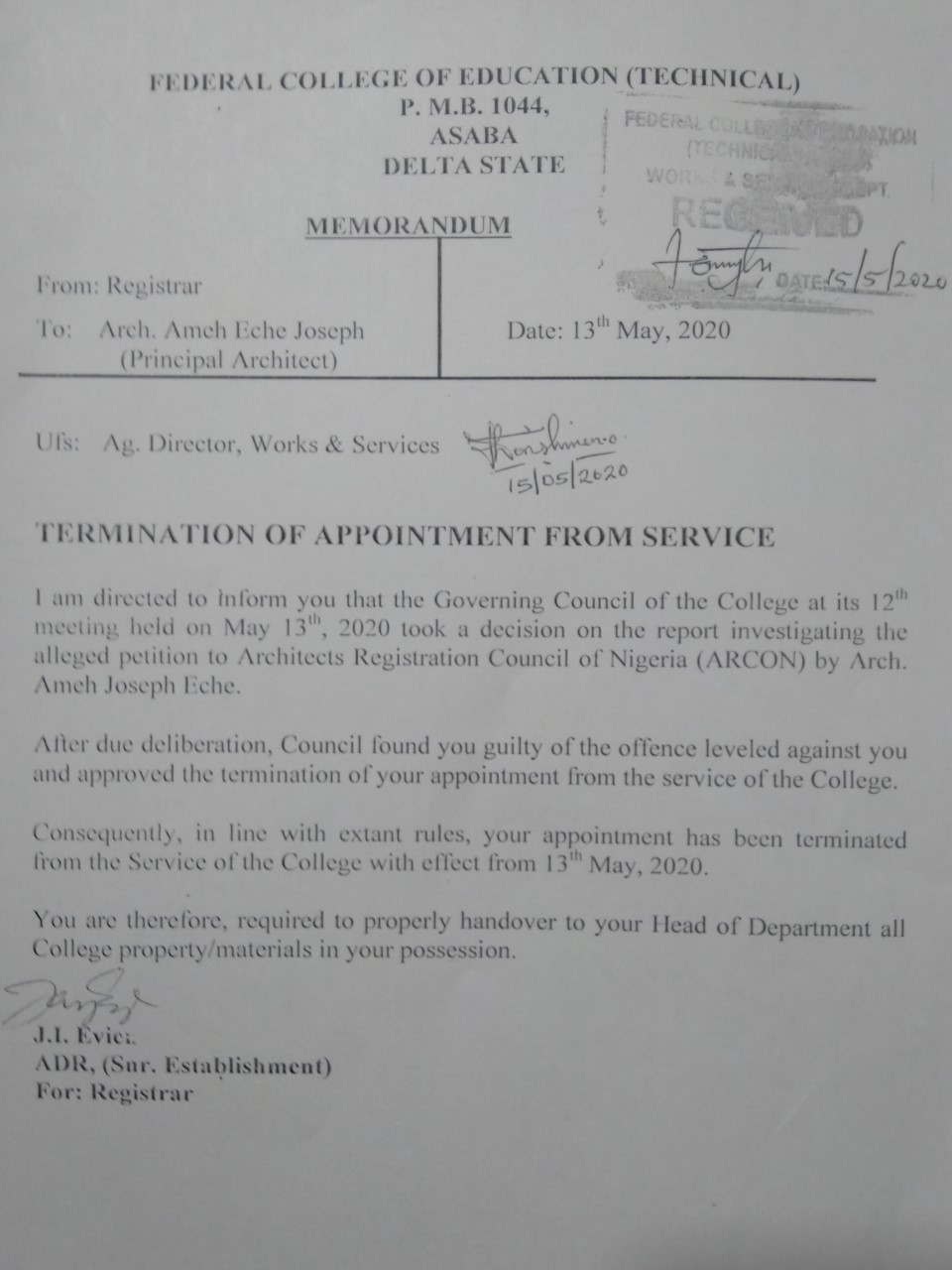
His sack letter reads in part: “I am directed to inform you that the Governing Council of the College at its 12th meeting held on May 13th 2020, took a decision on the report investigating the alleged petition to Architects Registration Council of Nigeria (ARCON) by Arch. Ameh Joseph Eche.
“After due deliberation, the Council found you guilty of the offense levelled against you and approved the termination of your appointment from the service of the College.
“Consequently, in line with extant rules, your appointment has been terminated from the Service of the College with effect from 13th May, 2020.”
A copy of the sacked termination letter.
‘ICPC failed to protect me’
Ameh did not hide his identity when he petitioned ICPC, but he, however, wonders how those he accused of malpractice got to know of the petition and eventually forced him out of the system.
“ICPC exposed me. The petition I did, I did not hide my identity. I gave my identity because I’m 100 percent sure of what I am saying,” he said.
“The ICPC is not supposed to put my name out there but the people I accused already knew me and that was how I was victimised.”
Members of college management who were found culpable of malpractice were arraigned by the ICPC but they were later discharged over “faulty prosecution”.
“Concerning me having to testify, they refused,” he said.
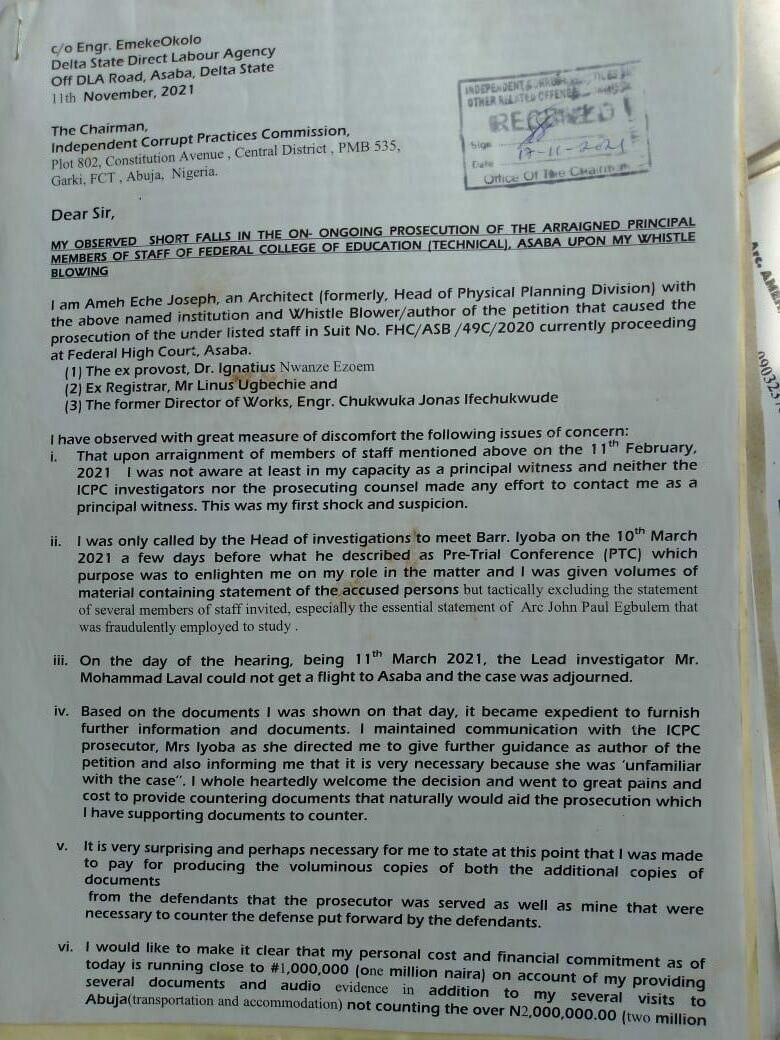
“Until the last day of entertaining witnesses, the SAN, Femi Falana, put a call to the ICPC office to say that it was wrong. I wrote a letter to ICPC that since they refused to allow me to testify in court, I would testify in public.”
A letter from Ameh to the ICPC
Ameh claimed that the documents he gave the ICPC lawyers were rejected and never tendered in court as exhibits.
The accused – Ignatius Ezoem, provost; Ugbechie Linus, registrar; and Chukwuka Jonas, director of works – continued their duties while the case was ongoing.
They would later retire from service.
Letters written to President Muhammadu Buhari and the Federal Civil Service Commission by Ameh did not yield any result.
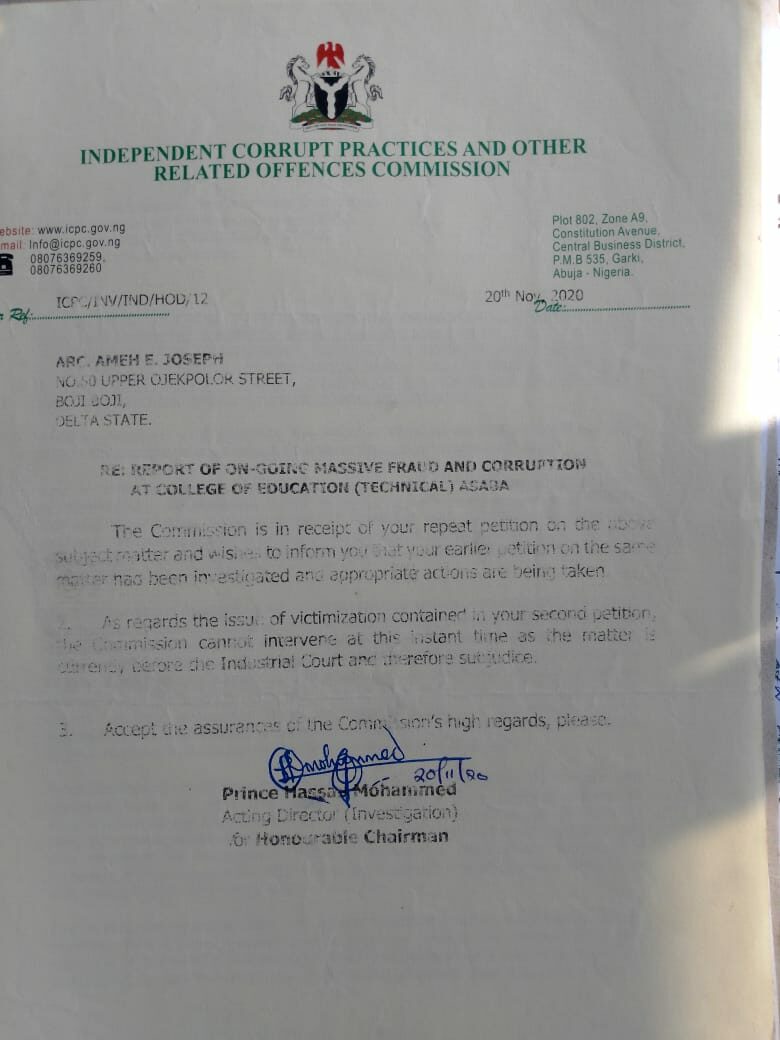
In a correspondence seen by TheCable, the ICPC said it could not intervene in Ameh’s claim of victimisation because the matter was before the industrial court, “thereby subjudice”.
When contacted Azu Ogugua, ICPC spokesperson, asked that a message be sent. After that was done, Ogugua never reverted.
The ordeal also took a toll on Ameh’s relationship with his wife after she got in contact with a cleric over his plight.
While Ameh was battling his sack, his wife Rosemary got introduced to Israel Ogaga, a prophet, who allegedly told her that if she returned home, either she or her husband would die in three days.
The architect said the prophet claimed that his ordeal was “spiritual”.
“I still wonder what and where lies the interest of the pastor in breaking and putting a family and marriage asunder,” Ameh, a father of three, said in a petition dated August 11 and addressed to the Delta state commissioner of police.
When contacted, Ogaga denied the allegations levelled against him.
“I’m a clean man. I don’t have anything in my cupboard,” he said.
“The way you are now, somebody says he takes your wife. It is even shameful for you to cry that someone took your wife from you and you are a man. I am a happily married man and I have a wife.”
‘Nigerians losing interest in whistleblowing’
In 2016, the federal government launched a whistleblowing policy, domiciled in the federal ministry of finance, in an effort to tackle corruption.
The policy seeks to compensate whistleblowers for exposing corruption.
Notably, in 2017, the policy brought in some influx of cash after the Economic and Financial Crimes Commission (EFCC) said it discovered $43 million, £27,000 and N23 million stashed away at a flat in Ikoyi after a tip-off from a whistleblower.
In June 2022, the president said around $386 million was recovered in 2021 through the whistleblowing policy.
However, the number of willing whistleblowers is said to be on the decline.
The EFCC chairman, Abdulrasheed Bawa, attributed the drop to “false whistleblowers who were prosecuted for wanting to turn a serious programme to memes, unnerved some other would-be informants”.
Similarly, the minister of finance, budget and national planning, Zainab Ahmed, said Nigerians are losing interest in whistleblowing. “After about two to three years of the implementation of the policy, the interest of the public and the policy began to nosedive,” the minister said in July 2022.
Experts believe that apathy towards whistleblowing might encourage sustained corruption in the civil service.
In September 2022, the Independent Corrupt Practices and Other Related Offences Commission (ICPC) said the biggest cases of corruption are allegedly perpetrated by civil servants.
A suspended accountant-general of the federation, Ahmed Idris, is currently being prosecuted by the Economic and Financial Crimes Commission (EFCC) for alleged N109 billion fraud. Also, the trial of Abdulrasheed Maina, a former civil servant who is accused of embezzling billions of naira in pension funds, is still ongoing after several years.
Failed legislations
Questback, an online survey and feedback software company, said many people believe that the global best practices for whistleblowing must have protection, incentives, legislation and an easy way to report or expose corruption in place for those interested in ridding society of malpractices.
It said the anonymity of the whistleblowers – who might be afraid of the loss of their jobs or the threat to life – is valuable in the fight against corruption.
The eighth senate, led by Bukola Saraki passed the Whistleblower and Witness Protection Bills separately.
But the whistleblower bill got stuck during the second reading in the house of representatives and did not make it through to a third reading by the time that assembly wound down.
The legislation sought to protect whistleblowers against victimisation and loss of jobs.
In 2019, under the senate led by Ahmad Lawan, the Whistleblower and Witness Bills were consolidated and reintroduced as one single legislation.
However, Benjamin Uwajumogu, senator representing Imo north and sponsor of the bill, died a month after he reintroduced it.
After his demise, nothing has been heard about the bill.
In December 2022, the federal executive council (FEC) approved a new whistleblowing bill to be sent to the national assembly for consideration and subsequent passage.
With only a few months to the end of the ninth national assembly, the prospect of having a whistleblower bill materialise is not encouraging.
The African Centre for Media & Information Literacy (AFRICMIL), a civil society organisation (CSO) dedicated to the protection of whistleblowers through its Corruption Anonymous programme, has been working to obtain justice for Akeju and Ameh.
In a survey published in 2021, AFRICMIL said whistleblowing has had little impact in tackling corruption owing to some challenges – lack of legal protection for whistleblowers, prolonged periods of investigation and delay/miscarriage of justice.
AFRICMIL programme manager, Kola Ogunbiyi, said adequate legislation would better protect whistleblowers and encourage them to expose corruption. He said the national assembly should ensure that it works on the bill and transmit it to the president for assent before it winds down in June.
“Having realised the challenges faced by whistleblowers and having realised the decline in whistleblowing because of the absence of legislation, I think the way forward is to advocate rigorously for legislation before the end of this administration,” he said.
“When they come back [from the elections] we still have about two months before the end of the administration.”
Amnesty International also believes that the absence of a law protecting whistleblowers has rendered the policy weak.
“It is imperative that the legislators pass the Whistleblower Protection Bill into law and present it for the president’s assent before this administration’s cycle ends,” Osai Ojigho, director of Amnesty International Nigeria, told TheCable.
“Anti-corruption human rights defenders – journalists, members of civil society organisations, whistleblowers, and others – play a crucial role in the prevention of and in the fight against corruption and the promotion of human rights.
“Over the years, they have been instrumental in investigating and exposing corrupt practices and in demanding transparency and accountability and the protection of human rights.
“The government has a responsibility in line with international standards to protect human rights defenders and foster an environment that allows them to thrive.”
Although Akeju and Ameh do not have regrets about exposing corruption at the organisations they worked for, the ripple effects of their actions have adversely affected them and altered the course of their lives.
**This story is funded by Centre for Journalism Innovation and Development under the Media Freedom Project through Justice for Journalists Foundation.**
THE Federal Government has shifted the 2023 population and housing census earlier scheduled for March 29 to May.
The Minister of Information and Culture Lai Mohammed disclosed this while briefing the State House correspondents at the end of the Federal Executive Council (FEC) weekly meeting in Abuja on Wednesday, March 15.
The minister explained that the decision to shift the census was necessitated by the postponement of the gubernatorial and state assembly elections to March 18.
Mohammed also disclosed that the council approved N2.8 billion for the National Population Commission (NPC) to procure some software to be used for the conduct of the census.
“There was a memo presented by the National Population Commission, seeking some software to allow them to conduct the census in May this year.
”I believe because of the rescheduling of the elections, they cannot commence the census as scheduled.
“They sought council’s approval for a contract to procure software for the census at the sum of N2.8 billion,” he said.
On March 11, the Chairman of the National Population Commission, Nasir Kwarra, hinted that the rescheduling of the governorship and state assembly elections may affect the commencement of the 2023 national housing and population census.
Kwarra, who said this on March 7, in Abuja, maintained that the census was sacrosanct.
The Minister of State Budget Clement Agba, had also disclosed that out of the N889 billion required to conduct the census, only N291.5 billion had been committed by the government.
Agba made this known while speaking during a ‘high level partners’ engagement’ on the 2023 population and housing census on March 7, in Abuja.
“The total requirement for the Census (including post Census activities) is N869 billion.
“Census requirement is N626b, which is about $6 per capita (just slightly above the threshold of up to $5 per capita). Post-Census (up to 2025) – N243b ($527m).
“So far, the government has committed N291.5 billion ($632m) to the census, making it 46 percent of total funding for the census. An additional (immediate) sum of N327.2bn ($709.9m) is required to complete the census,” Agba said.