THE candidate of the Peoples Democratic Party (PDP), Atiku Abubakar, has hired the services of 19 Senior Advocate of Nigeria (SANs) to challenge the result of the February 25 Presidential Election.
In a statement issued by the Atiku Media Office in Abuja on Wednesday, March 7, the former vice president mandated the legal team to establish the claim of manipulation in the February 25 presidential election.
He stressed the need to “reclaim the mandate of the Nigerian people”.
Atiku further insisted that the result declared by the Independent National Electoral Commission (INEC) does not reflect the will of Nigerians.
“Apart from reclaiming the mandate from those who undertook the electoral heist that was not a reflection of the will of Nigerians, the legal team should also use the opportunity of the trial to strengthen constitutional democracy in the country,” Atiku said.
Urging the legal team to challenge the controversies regarding the election’s result, Atiku noted that reclaiming “the mandate” would strengthen democracy in Nigeria.
“It was imperative that they work assiduously in reclaiming the mandate not necessarily because of him and the PDP, but to strengthen democracy and the electoral process and for generations unborn,” the statement said.
The legal team is led by Joe K. Gadzama, SAN.
Members of the team include Chief Chris Uche (SAN), Paul Usoro (SAN), Tayo Jegede (SAN), Ken Mozia (SAN), Chief Mike Ozekhome (SAN), Mahmood Magaji (SAN), Joe Abraham (SAN), Chukwuma Umeh (SAN), Garba Tetengi (SAN) and Emeka Etiaba (SAN).
Others are Goddy Uche (SAN), Maxwell Gidado (SAN); the National Legal Adviser of the PDP, A. K. Ajibade (SAN), OM Atoyebi, (SAN), Nella Rabana (SAN), Paul Ogbole (SAN), Nuremi Jimoh (SAN), and Abdul Ibrahim (SAN).
The candidate of the Labour Party (LP) Peter Obi is also challenging the victory of the All Progressives Congress (APC) candidate Bola Tinubu.
The ICIR earlier reported that the Independent National Electoral Commission (INEC) declared Tinubu winner of the presidential election.
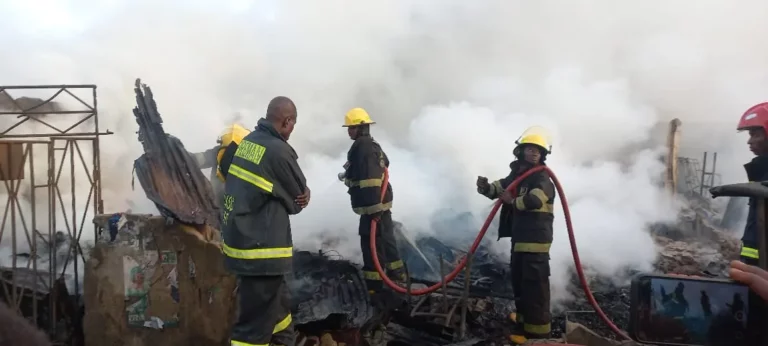
FIRE has gutted a spare parts market in the Ajegunle Area of Lagos State.
The cause of the inferno is yet to be identified at the time of filling this report. But eyewitnesses said the incident happened around midnight, Wednesday, February 8.
However, images and videos seen by The ICIR online show one of the buildings housing shops in the market was completely burnt down.
Director, of Lagos State Fire and Rescue Service, Margaret Adeseye, in a statement, said the fire destroyed rows of shops that traded in auto spare parts.
Adeseye said that the Ajegunle Fire Station of the Lagos State Fire and Rescue Service was the first to respond, followed by the Sari-Iganmu and Ilupeju fire crews of the agency.
She noted that the fire fighters were able to contain the fire and prevent it from spreading to nearby buildings, including a major market and a petroleum filling station with a fully loaded 33,000 litres PMS tanker.
However, Adeseye disclosed that a male adult was found dead with a gunshot injury in the rubble. She added that the Tolu Police Division in the area have recovered the corpse.
Lagos State Police spokesperson, Benjamin Hundeyin, who confirmed the incident to The ICIR on phone, said investigation has commenced into the incident at the State Criminal Investigative Department (SCID).
“Yes, it happened. An investigation has begun at the SCID.”
The recent fire incident in the spare parts market in the Ajegunle Area of Lagos State is not an isolated case.
Lagos, being a densely populated city, has experienced several fire outbreaks in the past that have resulted in loss of lives and properties.
In 2019, a fire outbreak occurred at the popular Balogun market on Lagos Island, which is known for its textile and fashion items. The inferno destroyed many shops and goods worth millions of naira.
Similarly, in 2020, a fire outbreak was recorded at the popular Abule-Egba pipeline area of Lagos, which led to the loss of lives and properties.
The cause of these fire incidents has often been attributed to factors such as poor safety measures, inadequate fire-fighting equipment, and poor infrastructure.
This was contained in a statement by Executive Secretary of the NHRC Tony Ojukwu, commemorating the 2023 International Women’s Day (IWD), on Wednesday, March 8.
Noting that women have contributed positively to societies around the world, he said gender inclusion should be a significant factor to be considered in governance and policy making.
“Women’s prudence in resource management and developmental skills cannot be overemphasized, therefore, they unarguably remain the pillars of our future. Given the enabling environment and opportunity, women have the potential to turn things around to make the world great and a better place for everyone to live in.
“Nigerian women and other women elsewhere have on different occasions proven that they can perform excellently in drawing policies and making decisions that could turnaround the society; therefore they should be encouraged to unleash their best potentials for the development of the entire society,” Ojukwu noted.
Meanwhile, the United Nations (UN) has also called for the prioritisation of gender equality, noting that progress made in attaining women’s rights were declining.
The UN Secretary-General Antonio Guterres made the call on Tuesday, March 7, adding that women are worst hit by conflicts in various countries and the global climate change emergency.
“As part of the global pushback against democracy, women’s rights over their bodies and autonomy over their lives are being questioned and denied. On International Women’s Day, we must commit to doing better. We need to reverse these horrific trends and stand up for the lives and rights of women and girls, everywhere,” Guterres noted.
Speaking on the theme for the 2023 IWD celebrations, “DigitALL: Innovation and technology for gender equality,” Guterres pointed out that centuries of patriarchy was resulting in discrimination against women in science and technology.
He also called for more efforts towards shrinking gender gaps.
A COALITION of human rights organisations under the aegis of Nigeria Civil Society Situation Room (NCSSR) and major opposition political parties have faulted a motion filed by the Independent National Electoral Commission (INEC) to reconfigure the Bimodal Voter Accreditation System (BVAS).
INEC had approached the Appeal Court to allow it reconfigure the accreditation machines used during the Presidential and National Assembly elections ahead of gubernatorial and State Houses of Assembly polls slated for March 11.
INEC’s motion is coming days after the court had granted presidential candidates of the Peoples Democratic Party (PDP), Atiku Abubakar and Labour Party (LP), Peter Obi permission to inspect the BVAS and other sensitive election materials after the duo alleged that the February 25 presidential election was mired with fraud and irregularities.
In press statements issued on Tuesday, March 7, the NCSSR, PDP and the New Nigerian Peoples Party (NNPP) said INEC’s move will pose additional credibility questions over the conduct of the 2023 general elections.
The Conveners of NCSSR, Ene Obi, Asma’u Joda and James Ugochuku said the Coalition was concerned about the preservation of data collected during the last poll.
“Reports indicating that the BVAS may need to be reconfigured or even erased for the upcoming State Governorship and State Houses of Assembly elections due on Saturday, March 11, 2023 is a serious cause for concern”, the statement said.
The PDP described the motion as a “desperate move by INEC to destroy and erase evidence of its intolerable rigging of February 25th presidential election”.
Speaking at a press conference in Abuja, PDP’s National Publicity Secretary, Debo Ologunagba, alleged that INEC was “frustrating the desire of Nigerians to get redress through the court”.
He said; “In the obnoxious motion, INEC admitted that the ‘BVAS application stores the accreditation data for all voters accredited on the device for the presidential, senatorial districts and House of Representatives elections conducted on the February 25” and that the reconfiguration of the BVAS devices ‘entails purging the accreditation data on the BVAS devices”.
Similarly, spokesperson of NNPP’s Presidential Campaign Council, Ladipo Johnson said the move by INEC would be subject to litigation.
He said: “It is on authority that INEC is trying to black out the evidence against them. Once they reconfigure the BVAS, there won’t be traces of the information with regard to the presidential election. And we said No to that.’’
He added that “the only time we will allow BVAS to be reconfigured is when they provide evidence of the February 25 election. INEC should be aware that their conduct would be subject to litigation”.
However, INEC’s lead counsel, Tanimu Inuwa dismissed the concerns raised that reconfiguration of the BVAS will affect data collected during the election.
Inuwa argued on Tuesday, March 7,at the Appeal Court that deploying the BVAS without reconfiguring it will affect the gubernatorial and State Houses of Assembly election slated for Saturday, March 11.
Justice Joseph Ikyegh adjourned ruling on the matter till Wednesday, march 8.
SIX months after the deadline for the incorporation of the Host Communities’ Development Trust (HCDT), Mobil Producing Nigeria Unlimited, a major oil company in Nigeria operating in Akwa Ibom State is yet to incorporate the Trust, thus denying communities its statutory social and economic benefits.
Background to Host Community Development Trust /Deadline
The Petroleum Industry Act (PIA) (2021) assented to by President Muhammadu Buhari on August 16, 2021, provided for the incorporation of Host Community Development Trust (HCDT) in oil and gas-producing communities.
According to the PIA, the Trust is aimed at fostering sustainable prosperity in the host communities, providing direct social and economic benefits from petroleum operations to the host communities, among other benefits.
Section 240 (2) of the Act provides that oil/gas companies are mandated to make an annual contribution to the Host Community Development Trust Fund of an amount equal to three per cent of the company’s actual annual operating expenditure of the preceding financial year.
Interestingly, Section 236 of the Act gives a time frame for the incorporation of the Trust as within 12 months from the time the law came into force. This implies that since the PIA became effective on August 16, 2021, the Trust is expected to be incorporated on or before August 15, 2022.
However, this has not been the case for the host communities of Mobil Producing Nigeria Unlimited in Akwa Ibom State
Mobil’s last-minute scramble drags incorporation of HCDT beyond deadline
Investigations reveal that Mobil Producing Nigeria Unlimited has yet to incorporate the Host Community Development Trust into its communities.
Mobil Producing Nigeria Unlimited operates four Oil Mining Leases (OMLs); OML 104, 67, 68 and 70. These are producing conventional oil fields located in the shallow waters of Akwa Ibom state territory. However, it has not kept to the 12 months deadline provided for by the PIA for the incorporation of the Trust.
Findings indicate that the oil company started the process at the eleventh hour. Documents and information accessed show that the company commenced the process of incorporation in July 2022 (11 months after the Act was signed into law).
The delay has only made the company execute preliminary demands for community mapping provided for by Nigerian Upstream Petroleum Regulatory Commission (NUPRC) for the setting up of the Trust in its communities.
An oil-producing community
Information from credible sources from Mobil, the communities and government officials reveal that Mobil had identified eight coastal communities of Ibeno, Eket, Onna, Esit Eket, Mbo, Eastern Obolo, Mkpat Enin and Ikot Abasi as host communities of its four assets.
However, credible information at our disposal has it that Ibeno had rejected being part of one Trust Fund that has all the eight local government areas on the grounds of being the host community of Mobil’s operational base coupled with concerns of being a minority within a Trust that will have local government areas which will be dominated by Ibibio communities, a major ethnic group in the State.
Although the Paramount Ruler of Ibeno,Owong Effiong Archianga had been unreachable during the period of this investigation even as the Council Chairman, Williams Mkpah had failed to keep to several interview appointments.
The Village Head of Inuaeyet Ikot, Ikot Bassey Essien – one of the villages that host Mobil terminal confirmed to The ICIR that Mobil Producing Nigeria Unlimited began engaging Ibeno on the Host Communities’ Development Trust in July 2022.
He told The ICIR that Ibeno had sent five nominees for the Board of Trustees.
Other credible stakeholders from Ibeno who refused name on print told The ICIR that Mobil had gone further to contract a Lagos-based consultant, Petrohauk Centrum limited to conduct a need assessment for the Trust which they said was concluded in January 2023.
The ICIR was also reliably informed that Ibeno had concluded their host community development plans and sent them to Mobil awaiting further approvals by the Nigeria NUPRC and the formal registration of the Trust at the Corporate Affairs Commission (CAC).
It is unclear whether final approval of the Trust has recently been given by NUPRC and if it has been registered by the CAC as of the time of filing this report.
Fund matrix shrouded in secrecy
The communities told The ICIR that among the preliminary demands, the fund matrix for the Trust has been unclear.
The communities within the planned Trust also informed The ICIR that they are not able to access data on what was the operating cost of Mobil in 2021 and 2022 which would have helped them understand the fund matrix for the trust.
As highlighted earlier, the PIA has provided that the company is mandated to pay an amount equal to three per cent of the company’s actual annual operating expenditure of the preceding financial year.
The ICIR could only access Mobil’s parent company’s (ExxonMobil) 2021 and 2022 financial reports but could not see the annual operating expenditure for its operations in Nigeria.
Through, a freedom of Information (FOI) request information was sought from Mobil, NURPC and CAC but they were not acceded to.
Sections 417 – 424 of the Companies and Allied Matters Act, 2020, provides for every company to make and deliver their annual returns to the CAC annually. Annual returns contain information on operating expenditures for companies.
Separate trust for Ibeno, a recipe for crisis
Findings reveal that the regulator, NUPRC has approved Ibeno local government area to have a Trust different from the other seven local government areas.
However, most of the leaders from other local government areas within the host communities of Mobil Producing Nigeria Unlimited have expressed displeasure on why what they described as preferential treatment should be given to Ibeno to have a different Trust from theirs.
Most of the leaders spoken with from other local government areas within the Trust insists that if the fund matrix favours Ibeno above each of the other local government areas, they will also demand they be given a separate Trust.
One of the leaders, Bassey Dan-Abia, a Former House of Representatives Member, nominated by the Council Chairman of Esit Eket, Iniobong Robson, to speak on issues of the Host Communities’Development Trust as it concerns Esit Eket said ” Without consultation with the proposed eight local government areas (Communities), Mobil had to set up a separate Trust for Ibeno. Up till now, no reason has been given for that.”
Abia, who is also the Board of Trustees nominee for Esit Eket in Mobil’s HCDT noted that Mobil only came up to claim that NUPRC instructed them to increase the number of the Board members to nine after Ibeno were provided with a separate Trust. He said the addition meant that five local governments had a nominee each, while Eket and Eastern Obolo had two each to make nine in total. He insists that the provision of a separate Trust for Ibeno is a decision that may further prolong the implementation of the Trust whenever it is incorporated, stressing that it is a recipe for crisis and litigation.
Yet, a Chairman of one of the Council who refused name on print claimed that the separate approval for Ibeno is a deliberate strategy designed by the settlor (Mobil) to cause disharmony within the region.
“The oil companies, just like colonial masters, have always had a history of causing a divide and rule tendency so that brothers will fight and attention divided so they continue to exploit us without the notice of all of us all. This is the situation in the separate Trust provided for Ibeno”, the Council Chairman said.
Mobil insists on non-disclosure of information on the Trust
Through a Freedom of Information request, sent via TheMail newspaper has Mobil for information and documents relevant to this investigation such as the Identity of the host Communities of Mobil Producing Nigeria Unlimited in Akwa Ibom State, Documents of Incorporation of the Trust which includes evidence of consultation with communities including date of consultation commencement, actual amount due for the Trust in Akwa Ibom State in 2021 and 2022, names of members of the Board of Trustees, Management Committee, and Advisory Committee, Evidence of application to register the Trust with Corporate Affairs Commission and Name of the Trust.
Other requested information included the company’s 2021 and 2022 Annual Returns filed at the Corporate Affairs Commission.
However, the company did not accede to the request. The Manager, Media and Communications of Mobil Producing Nigeria Unlimited, Oge Udeagha in a reply dated February 13, 2023, said that the company is not subject to the FOI and hence will not honour the request.
TheMail in a response on the same date, insisted that the request is in line with what the FoI provides for public record or document, is in public interest and also provides Mobil the opportunity for a fair hearing.
Mobil, in another reply, stressed that they stand by their earlier stance not to honour the request.
Yet, the newspaper went further to contact the company outside the FOI. The Manager, Media and Communications was contacted on phone on pertinent questions about the incorporation of the Trust, he requested the questions be sent through an mail for attention.
The information requested information on the effort and progress made on the incorporation of the Trust, when the process of engagement with the communities began, the local government areas that are the host communities for each of the four OMLs operated by Mobil.
Other information asked were where the host communities will access Mobil’s data on the annual operating expenditure for each of the four OMLs and what will be the actual amount paid to the communities as operating expenditure for 2021 and 2022 fiscal year of the company, if they had kept to the 12 months deadline as provided for in the PIA and the Regulations for the incorporation of the Trust, If not, what the reasons for the delay are.
It was also asked if it was true that Petrohauk Centrum Limited based in Lagos was contracted for need assessment and why the Mobil preferred the company against local content preference. The list of bidders for the need assessment contract was further requested.
In response, Mobil noted, ” We will not be providing any comment at this time.”
Mobil, NUPRC Culpable
Mobil Producing Nigeria Unlimited is culpable for not adhering to the timeframe for the incorporation of the Trust as provided for in Section 236 of the PIA.
For existing oil mining leases and existing designated facilities, the section requires the Trust to be incorporated within 12 months from the effective date of the Act which was August 16, 2021.
Interestingly, the regulator (NUPRC) has also been found wanting. The failure to incorporate the Trust is a breach of the PIA and brings dire consequences on the settlor according to Section 238 of the PIA and paragraph 9 of the Nigeria Upstream Petroleum Host Communities Development Regulations 2022 (the Regulation).
Section 238 of the PIA states that the failure to incorporate the Trust may be a ground for the revocation of the settlor’s licence after the settlor must have been informed of such failure by the Commission or the Authority as the case may be.
Yet, the NUPRC has a role to play before the sanctions. paragraph 9(1) of the Regulation provides that the Commission “may within 14 days issue such defaulting settlor or operator where applicable, a notice in writing of its failure to establish a trust and direct the settlor to register the trust within 45 days.” This implies from August 21, 2022, by law, the notice should have been sent out to Mobil Producing Nigeria Unlimited over its failure to incorporate the Trust.
If NUPRC had issued the notice on August 16, 2022, the 45 days period would have elapsed on October 10, 2022.
Interestingly, paragraph 9 (2) provides that where a settlor or operator fails to incorporate the Trust after the expiration of 45 days’ timeline contained in the Commission’s notice, the settlor or operator shall be liable to an administrative penalty of $2,500 or its Naira equivalent per day calculated from the date of expiration of the notice until the Trust in incorporated.
Paragraph 9 (3) further adds that the Commission has the option to make a recommendation to the Minister, for the revocation of the licence or lease of the defaulting settlor where the settlor fails to incorporate the Trust within 30 days after the expiration of the 45 days timeline.
Host Community Disrupts Oil Production in Bayelsa
An FOI request sent to the Chief Executive of the NUPRC, an Engineer, Gbenga Komolafe in Abuja, had requested information and documents about defaulting notice given to Mobil.
Although the Commission acknowledged the request on February 10, 2023, the Commission has not acceded to the request, thus raising suspicion that NUPRC has not generated the defaulting notice to the company.
A further visit was made to the Commission’s zonal office in Eket, Akwa Ibom state on February 22 and 28, 2023. The Human Resource Manager, Kingsley Ekuri who they directed the reporter to speak with was not on seat on both days. He also did not respond to calls and text messages sent to his phone line on the matter.
However, the late availability of all the relevant guides necessary for the incorporation of the Trust suggests that the Commission may not have taken the August 2022 deadline seriously.
The Nigeria Upstream Petroleum Host Communities Development Regulations 2022 was issued close to the deadline. It was issued on June 24, 2022 which is 58 days to the deadline. Leaders within Mobil’s host communities had told The ICIR that engagement with communities for the incorporation of the Trust began in July 2022, a month after the regulation had been published.
No justification for Mobil Breach of Deadline – Policy Alert Insists
A civil society organisation working to promote fiscal and ecological justice in the Niger Delta has said that there is no justification for Mobil Producing Nigeria Unlimited not to incorporate the Host Communities’ Development Trust within the timeframe prescribed by law.
Policy Alert’s Senior Programmes Officer, Mfon Gabriel insisted that with or without the Nigeria Upstream Petroleum Host Communities Development Regulations, Mobil should have incorporated the Trust especially as section 235 of the PIA has already granted the company the power to define who their host communities are.
He said by the insight and powers provided by the Act, Mobil should have commenced the process of engaging the communities they have determined as their host communities waiting for the regulation which he said can only shape the process already commenced.
Gabriel suggested that what may have preoccupied Mobil thus distracted them from commencing on time the process of incorporating the Trust must have been their effort to controversially divest their assets to Seplat.
The Senior Programme Officer who said NUPRC cannot be blamed for the late incorporation of the Trust and failure to recommend sanctions, noted, “The regulator would not be in a better position to know the companies that have not incorporated the trust because there are several assets that they are overseeing in the region.
“Someone needs to bring it to their attention. That is where the attention of the host communities and media comes in, specially to lay their complaints.
Hence, the communities should reach out to the regulators and escalate it when they don’t take action.
Gabriel recommended that the host communities should immediately engage the regulator and reach out to Mobil for the incorporation of the Trust not to be delayed further.
He pointed out that Mobil does not lose anything in delaying to establish the Trust, rather the communities will be shortchanged since very soon, their licences will expire, also the world is gradually transiting from fossil fuels to cleaner energy.
*This is supported by Connected Development in partnership with Oxfam Nigeria on the Power of Voices Partnership FAIR for All project
THE Lagos State Government has commenced the release of impounded vehicles to their owners without payment of fines less than three days to the March 11 Governorship and State Assembly Elections.
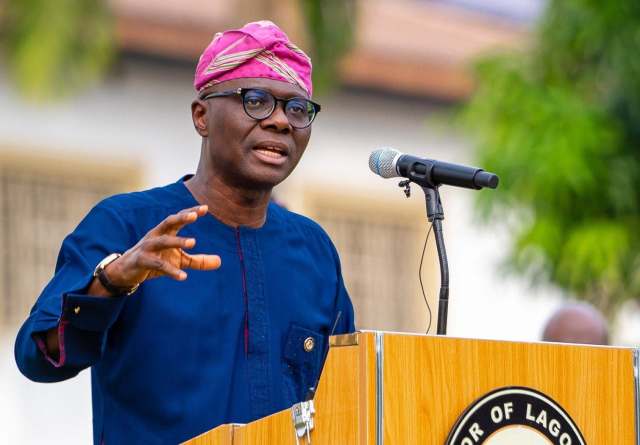
The incumbent governor, Babajide Sanwo-Olu, is seeking to be re-elected under the All Progressives Congress (APC).
His two major challengers are Labour Party (LP) candidate Gbadebo Rhodes-Vivour, and Peoples Democratic Party (PDP) flagbearer Abdul-Azeez Olajide Adediran.
The State Commissioner for Transportation, Frederic Oladeinde, who announced the release of the impounded vehicles in a statement on Tuesday, February 7, said that the gesture was due to the cash crunch that has hit the nation following the Central Bank of Nigeria’s Naira redesign policy.
He said that the move, including reducing public transport fares by 50 per cent and opening up food banks in certain areas in the state, is part of palliative measures introduced by Governor Sanwo-Olu to cushion the effect of the cashless policy on citizens.
While clarifying that some of the impounded and released vehicles were detained for minor traffic offences, he said the exercise commenced last Saturday and is still ongoing.
Oladeinde cautioned that releasing impounded vehicles to their owners without payment of fines did not include major crimes committed during the cash crunch period.
He noted that the government’s magnanimity was aimed at alleviating the suffering of the people who committed minor traffic offences during the period and couldn’t pay the fines due to the cash crunch.
The Commissioner stated that transportation would continue to be the backbone of the state’s economy, noting that the government had continued to test-run the Blue Line Rail system, which would begin full operation in April, as promised by the governor.
He explained that the government is trying to move away from diesel buses, which have been very expensive and made public transportation costs.
The commissioner added that the government was educating people on minor traffic offences and correcting them to ensure they do not commit an such offences again.
However, Oladeinde stressed that the law would take its course for major crimes committed during the cash crunch period.
THE Nigeria Police Force (NPF) has warned citizens against bringing pets, especially dogs, to polling units on election day.
According to the Police, bringing dogs to polling units is against the law, going by provisions of the 2022 amended Electoral Act.
The Force Public Relations Officer Olumuyiwa Adejobi issued the warning in statement released on Tuesday, February 7, via the Force Twitter handle.
The Police spokesperson noted that the electoral law classified dogs as offensive weapons because some people take them to the polling units on election days to harass voters who are exercising their constitutional rights.
He pointed out that the electoral act banned the possession of weapons calculated to intimidate voters at polling units.
“The provision of Section 126 (1) of the Electoral Act 2022 explains clearly those actions exhibited by electorates that constitute electoral breaches and are punishable under the law, and paragraph (f) mentions possession of weapons calculated to intimidate voters and electoral officers. Dogs could be classed as offensive weapons as their owners/handlers can use them to intimidate, harass and cause assault and bodily harm to others.
“The Dogs Act, CAP 55 Laws of the Federal Republic of Nigeria 1958 as domesticated in various States, and other Criminal Laws in Nigeria are trite.
“The conceived ideas and plans by certain individuals, electorates, and groups of people to go to the polls accompanied by pets are unacceptable, stand discouraged, and remain an act of electoral infraction as it will cause harassment and intimidation.
“The Nigeria Police Force, therefore, warns those who intend to display their pets, dogs specifically, for whatever purpose, at the polling units, to desist as such constitutes a violation of the electoral Act, 2022, as amended, and other extant laws,” the statement said.
THE Labour Party (LP) National Chairman, Julius Abure, has dissolved the party’s State Executive Council in Rivers State due to alleged anti-party activities and corruption in the management of party funds.
Abure’s statement, released on Tuesday, March 7, stated that the dissolution would take immediate effect.
He added that those who were in charge of the party’s affairs in the state when its presidential mandate was stolen in the just concluded election should step down until a thorough investigation is carried out.
Abure claimed that he had lost confidence in the ability of the compromised State Executive Council led by Deinye Pepple to lead the campaign for the governorship and State House of Assembly elections, scheduled to take place on March 11.
He urged all party members in the state to disregard all comments and actions by Pepple.
The LP national chairman also stressed that Beatrice Itubo remained the party candidate for Saturday’s governorship election in the state.
According to him, the Labour Party had not formed any alliance with any other political party.
Hours before Abure’s announcement, Pepple had endorsed the governorship candidate of the Peoples Democratic Party (PDP) in Rivers State, Siminialayi Fubara, for Saturday’s election.
Pepple, in a communique jointly issued with some of the party’s leaders in the state, stated that the South-East Zone of Rivers, where Fubara hails from, has never had the opportunity to produce a governor, which they consider to be a violation of the values of equity and fairness.
He urged the party’s supporters to vote for Fubara and LP candidates for state assembly positions.
THE All Progressives Congress (APC) has set up a legal team led by Lateef Fagbemi and twelve other Senior Advocates of Nigeria (SANs) to defend the victory of its candidate, Bola Tinubu, at the Presidential Election Petition Tribunal (PEPT).
This was disclosed in a statement posted on the party’s official Twitter handle on Tuesday, March 7.
The team also includes APC National Legal Adviser Ahmad El-Marzuq.
In the statement signed by El-Marzuq, the APC said the legal team, consisting of 13 Senior Advocates of Nigeria, will be led by Fagbemi, a prominent lawyer.
He stated the party’s confidence in the legal team’s ability to represent the APC successfully in the Presidential Election Petition issues since they have the necessary knowledge and experience.
El-Marzuq asked party members to assist the team in defending “the people’s will and mandate” secured in the presidential election held on February 25.
He also urged all parties to act with the utmost professionalism and respect for the rule of law.
The legal team includes Fagbemi (Lead Counsel); Ahmad El-Marzuq (Life Bencher); Sam Ologunorisa; Rotimi Oguneso; Olabisi Syebo; Gbotega Oyewole; Aliyu Saiki; Oluseye Opasanya; Suraju Saida, Tajudeen Oladoja; Pius Akubo; Kazeem Adeniyi and Muritala Abdulrasheed.
INEC, had, on Wednesday, March 1, declared the candidate of APC, Bola Ahmed Tinubu, winner of the Presidential Election.
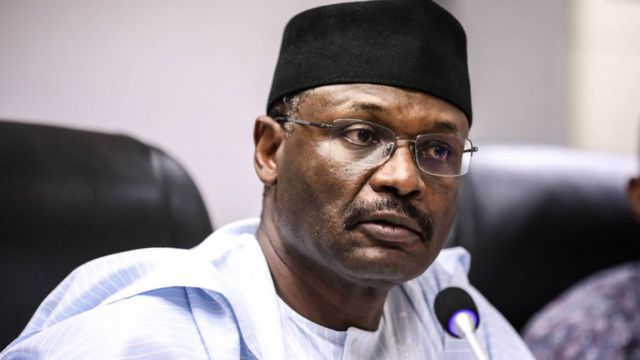
INEC chairman Mahmood Yakubu announced that Tinubu won with 8,794,726 votes followed by Atiku Abubakar of the Peoples Democratic Party (PDP) with 6,984,520 votes. Peter Obi of the Labour Party (LP) followed closely with 6,101,533 votes, according to the result released by INEC.
Obi and Abubakar have announced their intention to challenge the election results in court, claiming electoral fraud.
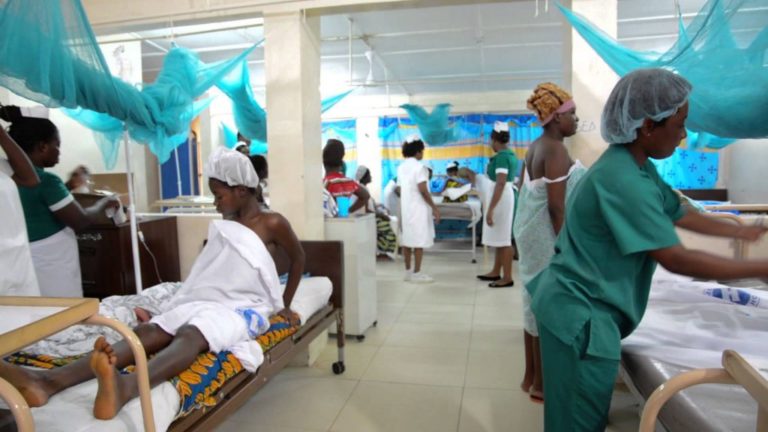
NIGERIA recorded additional 1.7 million undernourished adolescent girls and women of reproductive age between 2018 and 2021, according to a new report published on Tuesday, March 7 by the United Nations Children Fund (UNICEF).
Consequently, the country now has 7.3 million adolescent girls and women of reproductive age suffering from undernourishment – a sharp rise from 5.6 million in 2018.
The report, ‘Undernourished and Overlooked: A Global Nutrition Crisis in Adolescent Girls and Women’, shows that Nigeria is among 12 countries representing the epicentre of a global nutrition crisis, with a large malnourished population.
The nations are Afghanistan, Burkina Faso, Chad, Ethiopia, Kenya, Mali, Niger, Nigeria, Somalia, South Sudan, Sudan and Yemen.
The report blamed the challenge on the recent impacts of COVID-19, exacerbated by the war in Ukraine and ongoing drought, conflict and instability in some countries.
According to the report, undernutrition risks women’s and newborns’ lives.
The report, issued ahead of the International Women’s Day, warns that the ongoing crises, aggravated by unending gender inequality, are deepening a nutrition crisis among adolescent girls and women that had already shown slight improvement in the last two decades.
It reveals that more than one billion adolescent girls and women suffer from undernutrition (including underweight and short height), deficiencies in essential micronutrients, and anaemia, with devastating consequences for their lives and well-being.
At least 55 per cent of adolescent girls and women suffer from anaemia in Nigeria, while nearly half of the women of reproductive age in the country do not consume the recommended diet of at least five out of 10 food groups, namely grains and tubers, pulses, nuts and seeds, dairy, meat, poultry and fish, eggs, dark green leafy vegetables, other vitamin A rich fruits and vegetables, other vegetables and other fruits according to the 2022 National Food Consumption and Micronutrient Survey.
Inadequate nutrition during girls’ and women’s lives can lead to weakened immunity and poor cognitive development.
It also increases the risk of life-threatening complications – including during pregnancy and childbirth – risking mothers’ lives, with dangerous and irreversible consequences for their children’s survival, growth, learning, and future earning capacity.
The report notes that South Asia and sub-Saharan Africa remain the epicentre of the nutrition crisis among adolescent girls and women, home to two in three adolescent girls and women suffering from being underweight globally and three in five adolescent girls and women with anaemia.
The report further shows that global crises disproportionately disrupt women’s access to nutritious food. In 2021, there were 126 million more food-insecure women than men, compared to 49 million more in 2019, more than doubling the gender gap of food insecurity.
Since last year, UNICEF has scaled up its efforts in the countries hardest hit by the global nutrition crisis, including Nigeria with an acceleration plan to prevent, detect, and treat wasting in women and children.
The report calls on governments, development and humanitarian partners and donors, civil society organisations and development actors to transform food, health and social protection systems for adolescent girls and women by:
PrioritisingPrioritising adolescent girls’ and women’s access to nutritious, safe and affordable diets, and protecting adolescent girls and women from ultra-processed foods through marketing restrictions, compulsory front-of-pack labelling and taxation.
Implementing policies and mandatory legal measures to expand large-scale food fortification of routinely consumed foods such as flour, cooking oil and salt to help reduce micronutrient deficiencies and anaemia in girls and women.
Ensuring adolescent girls and women in low- and middle-income countries have free access to essential nutrition services, both before and during pregnancy, and while breastfeeding, including ante-natal multiple micronutrient supplements.
Expanding access to social protection programmes for the most vulnerable adolescent girls and women, including cash transfers and vouchers to improve girls’ and women’s access to nutritious and diverse diets.
Accelerating the elimination of discriminatory gender and social norms such as child marriage and the inequitable sharing of food, household resources, income and domestic work.