Home Blog Page 1046

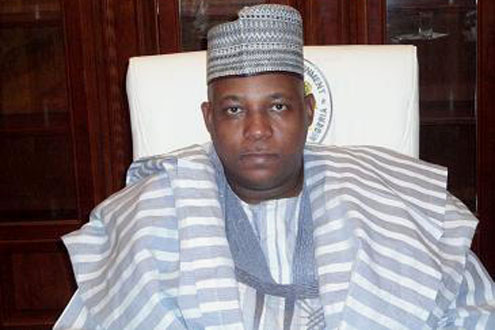
Kashim Shettima: Behold Nigeria’s incoming Vice President

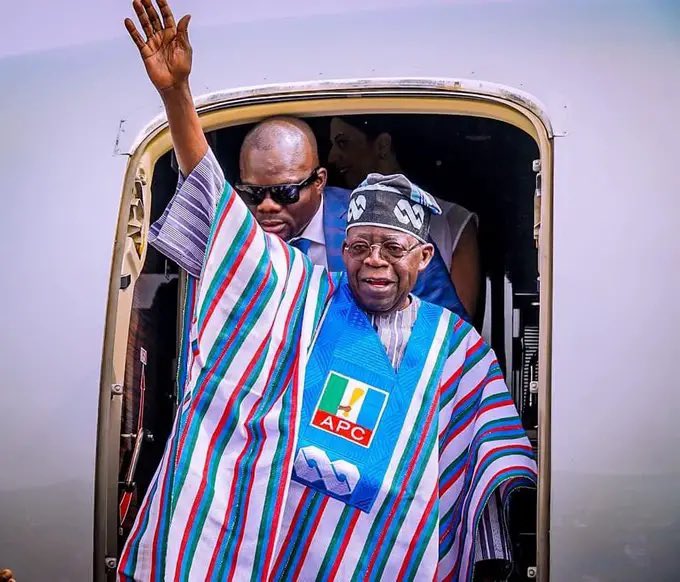
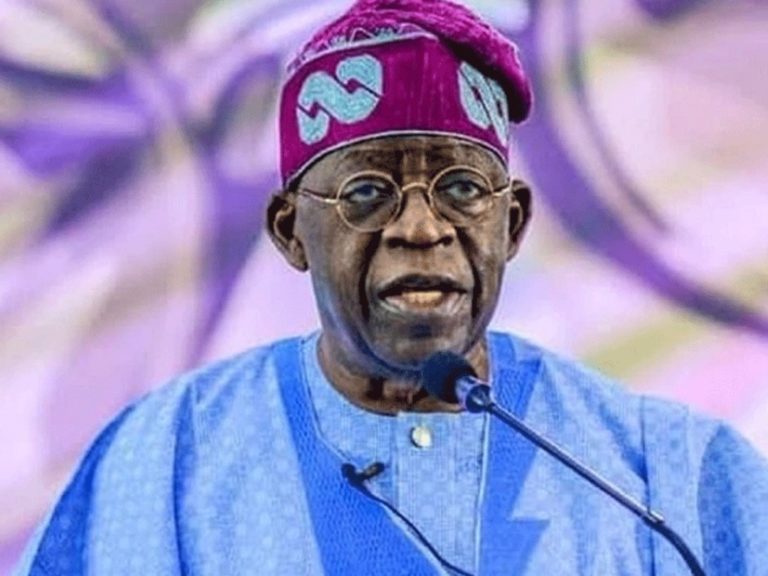
IN the early hours of Wednesday, March 1, the Independent National Electoral Commission (INEC) declared the All Progressives Congress (APC) candidate, Bola Ahmed Tinubu, winner of Saturday’s presidential election.

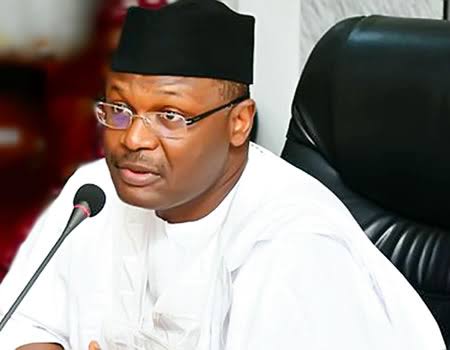
The Chairman of INEC, Mahmood Yakubu, announced the final result at exactly 4:10 am, after days of collating results from across the 36 states of the Federation and the Federal Capital Territory (FCT).

Tinubu polled 8,794,726 votes to defeat his closest rivals, Abubakar Atiku of the Peoples Democratic Party (PDP), who got 6,984,520 votes and Labour Party (LP) candidate Peter Obi, who scored 6,101,533 votes.


READ ALSO:

Nigerians should look beyond Tinubu’s age, health — Shettima

Shettima condemns attacks on INEC offices, IPOB activities

Muslim-Muslim ticket: APC youths protest, demand Shettima’s replacement

Clergymen at Shettima’s unveiling are not big names – Tinubu Campaign Organisation


Tinubu did not run the race alone; he ran with Kashim Shettima as his running mate.

Shettima is a former governor of Borno State in Nigeria’s North-East.

Here are some things to know about the Vice – President-elect.

Educational background

Shettima, now vice president-elect of Nigeria, was born on September 2, 1966

He attended Lamisula Primary School in Maiduguri from 1972 to 1978 before transferring to Government Community Secondary School, Biu, in Southern Borno, where he spent the following two years, from 1978 to 1980. 

After that, he relocated to the Government Science Secondary School in Potiskum, where he completed his secondary education in 1983.

Shettima thereafter attended the University of Maiduguri, where he obtained a Degree (BSc) in Agricultural Economics in 1989.

He did his National Youth Service Corps (NYSC) at the defunct Nigerian Agricultural Cooperative Bank, Calabar, Cross River, from 1989 to 1990.

Furthermore, he obtained a Master’s Degree (MSc) in Agricultural Economics at the University of Ibadan in 1991.

Shettima worked as a lecturer in the Department of Agricultural Economics at the University of Maiduguri from 1991 to 1993.

Banking career

Shettima joined the banking sector in 1993, where he worked for the now-defunct Commercial Bank of Africa as head of accounts. 

In 1997 he moved to the African International Bank (AIB) Limited as a Deputy Manager. He rose to become a Manager.

He also worked at Zenith Bank as head of its main Maiduguri Branch.

At Zenith Bank, he rose to various Senior Managerial positions before he left the bank as a General Manager in 2007.

Political career

Shettima was appointed as the Commissioner for Finance, Borno State, during the administration of Governor Ali Modu-Sheriff.

He was moved to the ministries of Local Governments and Chieftaincy Affairs, Education, Agriculture, and Health under Sheriff’s administration.

Following the fatal shooting of the initial candidate, Modu Fannami Gubio, by gunmen in February 2011, Shettima was named the All Nigeria Peoples Party (ANPP) governorship candidate for Borno in that year’s general elections.

On April 26, 2011, he defeated Mohammed Goni of the Peoples Democratic Party (PDP), who received 450,140 votes, to win the governorship race with 531,147 votes.

He was chosen in 2015 to lead the Northern States Governors’ Forum, an association of the governors of the 19 Northern Nigerian states.

He served as the Governor of Borno State from 2011 to 2019

However, because of his constant conflict with Boko Haram terrorists who frequently targeted the state, Shettima could not carry out most of his ambitions for the state during his time.

At one point, Boko Haram had control over a more significant portion of the state and was on the verge of taking over completely.

He was forced to confine his efforts to Maiduguri, the state capital, and a few other local governments due to Boko Haram constantly destroying anything he had constructed, and the crisis has not ended even after he left office.

After his governorship tenure in 2019, he contested and was elected as the Senator representing Borno Central at the National Assembly.

Road to the Presidency 

After winning the APC Presidential primary in June 2022, Bola Tinubu picked Shettima as his running mate for the 2023 presidential poll on the platform of the All Progressives Congress (APC).

He was among the first known persons to support Tinubu’s presidential ambition.

A few of his many controversial comments

At the Abuja launch of the Tinubu Support Groups Management Council (SGMC), he sparked controversy by claiming that Tinubu deserved the right of first refusal for his efforts in founding the APC and securing the 2015 presidential nomination for President Muhammadu Buhari. 

He also urged Buhari to reward the former Lagos governor for his loyalty.

Shettima also told Vice President Yemi Osinbajo that he would be better off working as an “Ice cream seller” during the party’s presidential nomination contest.

“Nobody has doubted the competence of Professor Osinbajo. He’s a very cerebral person, but we believe that in terms of intellect, capacity, reach, and the ability to move this nation forward, and most importantly, for us to win the upcoming election, the best candidate that the APC has is Asiwaju Bola Ahmed Tinubu.

“Mind you, the dynamics have changed with the emergence of Atiku as the candidate of the PDP. We need someone who can match and even overshadow him in terms of brand name recognition, in terms of capacity. 

“This is why we are championing the cause of Asiwaju Tinubu.

“Osinbajo is a good man; he’s a nice man. But nice men do not make good leaders because nice men tend to be nasty. Nice men should be selling popcorn, ice cream.

“But he’s a very decent person. I can’t doubt that. He’s my personal friend, and I’ll rather not comment on his person. But he’s a very decent man. That I can tell you,” Shettima said.

At one point, he compared Peter Obi, the presidential candidate for the Labour party, to the comic figure Giringori.

“Peter Giringori Obi. I call him Giringori. Giringori is my play, but Giringori has absolutely nothing to offer apart from dubious statistics.”

Giringori was a character in the now-retired TV comedy series New Masquerade.

In February 2023, Shettima advised northerners to reject PDP presidential candidate Atiku Abubakar because of his resistance to the implementation of Sharia law throughout the region.

“This person you call your own says you should not call him ‘Alhaji Atiku Abubakar, but rather Atiku Abubakar’,” Shettima told his audience in the Hausa language. “Your person says he is the only person that fights against Sharia in the North. Is that your person?”

In the Emir of Daura Palace in Katsina, he publicly challenged Atiku to name eight persons he had mentored in the North or the capital projects he had carried out there while he was Vice President of Nigeria from 1999 to 2007.

He told his audience that Atiku’s leadership would not be in the interest of the North.

Election: Group commends women’s resilience at the polls

THE Nigerian Women Trust Fund (NWTF) has applauded the resilience of women who participated in the just concluded presidential and National Assembly elections.

The group said despite the challenges recorded at the polls, the election witnessed “the resilience of many Nigerians, especially women who participated as voters, poll officials and candidates”.

Addressing journalists in Abuja on Wednesday, March 1, NWTF said it deployed 400 accredited observers across seven states and the Federal Capital Territory (FCT) with spread across Nigeria’s six geo-political zones through the Gender and Election Watch (GEW) Room, one of its initiatives.

The Chief Executive Officer of GEW Room, Mufiliat Fijabi who noted this at the post-election conference, said “Nigerian women are resilient and committed to a truly democratic process”.

She added that women’s participation in the democratic process of Nigeria “is critical to achieving a truly inclusive democratic process”.

However, Fijabi said NWTF was worried about reports of violence experienced by some female candidates and the electorates.

“We condemn it in a very strong terms while calling upon relevant security agencies to take action to forestall future occurrence”.

“GEW recommends stringent security measures to protect female candidates and full application of the Violence Against Persons Prohibition Act (2015) on all perpetrators of acts of violence”, she said.

Speaking on the conduct of the 2023 general election, Fijabi said “delay  in opening of polls, pockets of disruption and the untimely upload of results on the IREV remain strong concerns for Nigeria’s democracy”.

While  acknowledging efforts of the Independent National Electoral Commission – INEC, she said “we ask for stronger efforts to consolidate on the gains made so far in the Nigeria’s electoral space and to continue to guarantee Nigerian that their votes truly count”.


Fayose resigns from PDP, urges Lagosians to vote APC in guber poll

0

FORMER governor of Ekiti State Ayodele Fayose has resigned as a member of the Peoples Democratic Party (PDP).

He announced this on Wednesday, March 1, during an interview with Arise TV, hours after his party lost the presidential elections to the All Progressives Congress (APC).

He stated that the actions of the party’s National Chairman Iyorchia Ayu and the presidential candidate Atiku Abubakar led to the defeat of the party at the polls.


READ ALSO:
Fayose allies reject PDP presidential campaign committee appointments in Ekiti

INEC responds to calls by PDP, LP to cancel election results as ‘misplaced’

PDP says El-Rufai inciting Nigerians against Buhari’s order on naira notes

Election: Group commends women’s resilience at the polls


Fayose said he had earlier suggested that the presidential candidate should campaign for one term in office to win the support of some party members and Nigerians.

This advice was ignored, which contributed to the defeat, according to Fayose.

“I was invited by His Excellency Atiku Abubakar to a hotel in Lagos. I told him four things, that there were four demands they made of you. One, you are seventy-six as of last year.

“The G-5 said you are already a candidate, you can’t abort a child that has been given birth to. But let us go back and tell the Southerners that you will spend four years so that it would not look like it will be eight to eight years back to back for the North, because Buhari is leaving and he is representing the North irrespective of the party,” Fayose noted.

The ex-governor urged the party to concede defeat, and avoid sponsoring protests across the country.

Although Fayose said he is no longer involved in partisan politics, he urged residents of Lagos State to vote for the APC governorship candidate ahead of the gubernatorial elections.

“The PDP candidate in Lagos to me, they are people doing theatre. Lagos business is a serious business. There are lots of challenges in Lagos. So I enjoin everybody in Lagos to return Sanwo-Olu,” Fayose said.

Congratulatory messages pour in for Nigeria’s President-Elect from world leaders

WORLD leaders have sent congratulatory messages to Nigeria’s President-Elect Bola Tinubu over his victory in the February 25 presidential election.

The United States, through its State Department spokesman Ned Price, congratulated Tinubu and the people of Nigeria, saying the competitive election represents a new period for Nigerian politics and democracy.

Price acknowledged concerns among some Nigerians over the validity of the results, but called for calm and encouraged political leaders to register their grievances through established legal mechanisms.

“Nigerians are clearly within their rights to have such concerns and should have high expectations for their electoral process,” Price said, adding: “We call on all parties to refrain from violence or inflammatory rhetoric at this critical time.

Similarly, the British Prime Minister Rishi Sunak congratulated Tinubua and expressed willingness to work together to grow security and trade ties between both countries, opening up opportunities for businesses and creating prosperity.

While fielding questions from journalists after the presentation of his Certificate of Return to President Muhammadu Buhari in Daura Katsina on Wednesday, Tinubu acknowledged he had also received a congratulatory message from France President Emmanuel Macron.

In addition, the Economic Community of West African States (ECOWAS) has conveyed its congratulations to Tinubu and appealed to all stakeholders to promote peace and to use constitutional means to address any grievances they may have.

Back at home, some members of the House of Representatives have also congratulated the President-Elect, and charged him to focus on the economy, youth empowerment, education, insecurity, health and agriculture.

Chairman of the Independent National Electoral Commission (INEC) Mahmood Yakubu, declared Tinubu winner of the Presidential Election with 8.8 million votes.

However, a coalition of opposition candidates has rejected the result and called for a cancellation of the exercise, citing irregularities in the conduct of the election. They have also vowed to challenge Tinubu’s victory in the court of law.

Presidential Election: INEC Chairman in the eye of the storm

THE just concluded 2023 Presidential Election, which has produced the All Progressives Congress (APC) candidate, Bola Tinubu, as the winner, is one of Nigeria’s most contested elections.

The election was not a two-horse race between the APC and the Peoples Democratic Party (PDP) as earlier anticipated. Instead the entrance of the former Anambra governor and Labour Party (LP) presidential candidate, Peter Obi, and his former Kano counterpart, Rabiu Kwankwaso, the candidate of the New Nigeria Peoples Party (NNPP), threw up surprises.

The conduct of the election was marred by controversies, including the failure of the Bimodal Voter Accreditation System (BVAS), violence, and voter suppression in various parts of the country.

The three main opposition parties – PDP, LP and NNPP – have continued to make allegations of rigging.

The Independent National Electoral Commission (INEC), led by Mahmood Yakubu, a professor of political science, had assured Nigerians and the international community of the Commission’s readiness to conduct free, fair and credible elections.

The former Executive Secretary of the Tertiary Education Trust Fund (TETFund) assured that the INEC, which has been under his leadership since 2015, will leverage the 2022 Electoral Act to deliver the best poll Nigeria has ever had.

While speaking at a two-day capacity-building workshop in Lagos in November 2022, Yakubu assured INEC would not jettison the BVAS and electronic transmission of results for the general elections.

Yakubu’s assurance had come after the Coalition of United Political Parties (CUPP) alleged that some politicians had hatched plans to stop the use of BVAS and electronic transmission of results for the elections.

CUPP also alleged that a lawsuit has been instituted before the Federal High Court in Owerri, Imo State, to that effect.

Reacting to the allegation, the INEC boss noted that the goal of the Commission was electoral justice where every Nigerian would experience electoral fulfilment.

According to him, the Commission would continue to use technology to improve and enhance the credibility of elections in Nigeria.

Also, during his speech at the Chatham House in London, Yakubu had promised that INEC would deploy several technological tools to predict and mitigate election violence, verify political party spending and monitor electoral materials from procurement through storage to delivery.

Apart from the BVAS and INEC Results Viewing (IReV) portal to be used in voter accreditation and result viewing during the election, he said other technological innovations would be deployed by the Commission to ensure credible and transparent elections.

Yakubu’s promises and assurances gave a lot of confidence to voters, especially young Nigerians, who hoped their votes would count as they seek to install leaders they believe would provide solutions to the country’s problems.

However, INEC’s promises to leverage technology for the elections came under test during last Saturday’s polls.

Apart from the allegations of over-voting in Ekiti State, there were alleged riggings in Lagos, Rivers, Delta, Akwa-Ibom, Edo, Imo, etc. The rigging allegations were further fueled by the failure of INEC to open its IReV portal for the timely uploading of presidential results as promised. The BVAS failed to work effectively and electronic transmission, which was seen as the game changer before the election, was largely not possible.

A mild drama ensued at the National Collation Centre on Monday when some political parties and other stakeholders called for the suspension of the collation and declaration of results of the presidential election.

Led by the PDP collation agent, Dino Melaye, the parties, including the LP, staged a walkout from the Collation Centre in protest against INEC’s refusal to acknowledge and act on their complaints.

The walkout was due to INEC’s failure to upload the election results on its portal for public view and concerns about electoral manipulation and compromise. The political parties also demanded the resignation of the INEC chairman.

Melaye alleged that the entire electoral process had been compromised by INEC and sought the cancellation of the entire presidential election results. He accused INEC of rigging the 2023 elections and claimed that the electoral process had been politicized and commercialised.

“We as party agents having observed that the national chairman of INEC is determined to rig the election by making sure that results are not uploaded by vehemently making a presentation that makes it look as if we are all here to rubber stamp the fraud that has been cooked between INEC and APC,” Melaye had said.

“We are saying that we are not here to rubber-stamp the electoral fraud that has been prepared by INEC and APC. We are Nigerians and we all know that there is nowhere on the server that results have been uploaded and the INEC chairman is now saying we should wait for the process to be completed before he will review knowing full well that once a declaration is done, there can’t be any review but by the courts.

“So we completely disassociate ourselves and that’s why we staged a walkout. All the political parties here have staged a walkout to express the unfortunate politicisation and commercialisation of our electoral process.”

Reacting, Yakubu described the calls for his resignation as misplaced.

Yakubu, in a statement by his Chief Press Secretary, Rotimi Oyekanmi, also refuted the allegations made by the PDP that INEC allocated votes to parties, stating that the allegations were unfounded and irresponsible.

According to him, the results from the states indicate a free, fair, and credible electoral process.

He emphasized that there are established procedures for aggrieved parties or candidates to follow when they are dissatisfied with the outcome of an election, and such procedures do not involve calling on the INEC Chairman to resign or for the election to be cancelled.

The aggrieved parties were advised to approach the courts with their evidence to pursue their cases.

Appraising the outcome of the election, foreign observers, including the European Union Election Observer Mission (EU EOM) and the National Democratic Institute (NDI)/International Republican Institute (IRI), said that the polls lacked transparency.

EU EOM Chief Observer, Barry Andrews, noted that although INEC held the elections on schedule, the process lacked transparency.

Andrews said INEC lacked efficient planning and transparency during critical stages of the electoral process, while on Election Day, trust in the Commission was seen to further reduce due to delayed polling processes and information gaps related to much-anticipated access to the IReV.

The report also highlighted that polling procedures were not always followed. Also, election staff in the observed polling units struggled to complete result forms, which were later not posted online.

Despite introducing the BVAS and the IReV to ensure the credibility of the polls, Andrews said uploading the results using the BVAS did not work as expected, raising concerns.

The report also noted that INEC’s operational capacity was hampered by the recent cash crunch and the fuel crisis.

The observers commended the patience of voters and the commitment of youth, who have contributed hugely to the democratic process.

The aggrieved parties are yet to accept the results declared by INEC. It is likely that the credibility of the results will be challenged in court.

Ndigbo: Now that Mahmoud Yakubu has done his worst

0

By Ikechukwu Amaechi

NOW that Mahmoud Yakubu has done his worst, Ndigbo will be unfair to other Nigerians, particularly the Yoruba, who have championed this cause of a new, transcendental Nigeria under an Obi presidency if they descend into the arena of ethnic baiting because that is what the malcontents want.


In the early hours of Wednesday, March 1, 2023, the Independent National Electoral Commission (INEC) Chairman,  Mahmoud Yakubu, declared the result of the presidential election which held on Saturday, February 25.

Rather than jubilation, a pall of silence descended on the nation because many believe that their electoral will, freely expressed, has been subverted by suborned INEC officials. As the reality of what had happened dawned on all, many were speechless, others simply wore long faces, not believing that fellow citizens could execute such an unconscionable electoral heist.

Thirty years ago, precisely on June 12, 1993, I voted for the first time in my life in a presidential election. Of course, that wasn’t when I attained the voting age. I was already a graduate and staff of Guardian Newspapers Limited. But I was a minor, electorally speaking, when the 1983 elections took place and, therefore, couldn’t vote.

I still remember the excitement in the air on that fateful day. Nigerians trooped out in their numbers to exercise their inalienable right, which democracy affords them, to decide who superintends over the affairs of their country.

The enthusiasm of 30 years ago could only be rivalled by the zest on Saturday when patriotism beckoned on Nigerians to, once again, exercise their civic duty of electing their leaders.

Just like in 1993, expectations were high. Many were at their patriotic best, helping INEC officials in any way they could. Where there were no ink pads, they provided. They delivered ink, markers and other materials which INEC officials needed at the polling units but didn’t have despite the fact that the Commission collected well over N305b of the nation’s scarce resources from the Federal Government, not to talk of the unquantifiable help from international development agencies, to conduct the election.

In places where the election dragged into the night, Nigerians provided their personal generators to ensure there was light. Where that was not available, people used the headlights of their cars to illuminate the polling centres. The zeal of the youths was overwhelming. The Gen Z, those starry-eyed young men and women, born in the late 1990s and early 2000s, most of whom were voting for the first time, lit up the atmosphere with their democratic fervour. Being a generation seen as confident users of new technology, their passion was buoyed by the unequivocal promise by INEC that the elections would be the most technologically driven, ever, in Nigeria.

Last Saturday, the average Nigerian “big man” who would rather stay back home and watch cable television on election days, came out to vote. Teenagers that hitherto would convert empty streets to football arenas went to the polling booths to cast their ballots. Youths abandoned the ongoing Big Brother Titans, the reality television show, to queue up at voting centres for hours on end. In fact, in some places in Abuja, they spent more than 24 hours, to ensure that they voted.

But after all these sacrifices, the result Mahmoud Yakubu announced was grossly at variance with the votes cast by the electorate and duly counted and recorded at the polling booths. INEC whimsically aborted the beautiful democratic dream of the electorate. That is callous.

Just as many were deflated after a General,  Ibrahim Babangida-led junta annulled the June 12, 1993 election, Nigerians have once again been let down by those whose duty it is to uphold the sanctity of the ballot. They have been handed a poisoned chalice.

For too long, I had hoped that Nigeria would ultimately get it right despite the serial disappointments from leaders who continue to treat the citizens most contemptuously.

But this electoral heist, the worst since the return of democracy in 1999, is the axiomatic last straw that broke the camel’s back. Many Nigerian politicians are not prepared for democracy, and trooping out every four years in the name of elections is tantamount to legitimising their shenanigans. The ballot I cast on February 25, 2023, will be the last time I will ever do so in this country.

Now, those who have been declared winners will gloat that this is sour grapes. It is not. As Usman Dan Fodio, the progenitor of the Sokoto Caliphate once said: “Conscience is an open wound, only the truth can heal it.”

The retort from those who have benefitted from this evil will be that politics is not a morality game. Maybe! And it need not be in the same way that football, for instance, is not a game of morality. But politics, like football, is a game governed by rules. Victory must be secured within the parameters of the established rules.

The retort from those who have benefitted from this evil will be that politics is not a morality game. Maybe! And it need not be in the same way that football, for instance, is not a game of morality. But politics, like football, is a game governed by rules. Victory must be secured within the parameters of the established rules

A wanton violation of the rules of the game, as it is the case in the February 25 presidential election, detracts from the credibility of the exercise. If the integrity of the electoral process is compromised, an illegitimate government is delivered. This election has been fundamentally tainted, and Nigeria is worse for it.

There has been a gross violation of the 2022 Electoral Act, and the INEC chairman, apparently, has taken Nigerians for granted. This country deserves better.

Sometime in November 2022, a story made the rounds that the Commission had jettisoned the idea of uploading polling unit results in real time.

An apparently flustered Mahmoud Yakubu was forced to react to the “rumour.”

While addressing a group that came to seek assurance on the polls, he said: “Let me seize this opportunity to respond to a story emanating from a section of the media that the Commission has decided to jettison the uploading of polling unit level results in real time on Election Day. It should please be disregarded as fake news.

“The commission will upload polling unit level results, and citizens will have access to those results in real-time. This innovation was introduced by the Commission. The Commission cannot turn around and undermine itself. So, this technology has come to stay. We will upload polling unit results from the polling units.

“Citizens will have the right to view these results. After all, who are we serving? The citizens! How can we deprive citizens from access to the results of the process conducted by them at the level of polling units? So, I welcome you to the Commission. I want to assure you and reassure you that the 2023 general election is going to be our best ever elections. We are committed that votes cast by Nigerians will determine the outcome of the elections. Nothing more, nothing less!”

Yakubu reneged on this vow. Many of those who voted on Saturday did so because of the promise that the polling unit results will be uploaded real time and Nigerians will have unrestricted access.  That didn’t happen.

When some of the political parties complained at the Collation Centre, Mahmoud Yakubu pleaded for time to complete the collation, after which their complaints would be addressed before announcing the results. But that was another promise he never intended to keep. And he didn’t. How a man could lie so impulsively, without any qualms of conscience, beggars belief.

What happened on Saturday was not mere technical glitches, as some people are claiming. Mahmoud Yakubu deliberately dropped the ball and presided over the worst election since 1999.  In doing this, he not only brazenly violated the 2022 Electoral Act and the INEC guidelines but also reneged on the promise he made to the world at the Chatham House in London on January 17, 2023 that the Bimodal Voter Accreditation System (BVAS) and INEC Results Viewing (IReV) portal will be used in voter accreditation and result viewing during the election to ensure credibility and transparency.

The inability to upload the polling unit results in real-time and the resort to manual collation was a deliberate ploy to achieve a sinister, predetermined goal. That was why the INEC chairman ignored all entreaties to halt the process and address the fundamental issues of a flawed process and breach of the Electoral Act.

The question concentrating on many minds is: now that INEC chairman, Mahmoud Yakubu, has done his worst, what next?

People have mockingly asked those dissatisfied with the result to seek redress in court. Of course, those so inclined will. But when I hear that admonition, I chuckle because it reminds me of the East African proverb which says, “Whenever a thief encourages you to go to court, just know that his elder brother is the judge.”

It is a tragedy that in Nigeria’s so-called democracy, the two least trusted institutions are the Supreme Court and INEC.

Mahmoud Yakubu will go down in history as the man who conducted Nigeria’s worst election. It is a self-inflicted injury. After the no-server fiasco of 2019, he had an opportunity to redeem himself, but he chose not do. History will be harsh to him.

But I pity President Muhammadu Buhari who told the entire world that he wants to bequeath to Nigerians a legacy of free, fair and credible elections. He has blown that opportunity. He will now proceed to Daura on May 29, after eight years of misadventure in Aso Rock, bereft of any legacy. What a tragedy!

But the tragedy that is Buhari’s presidency does not bother me right now. It is a disaster foretold and, therefore, didn’t come as a surprise.

I am worried about Ndigbo. I don’t want this election to be about them because it is not. We have a Nigerian problem on our hands right now, not Igbo problem.

I am worried about Ndigbo. I don’t want this election to be about them because it is not. We have a Nigerian problem on our hands right now, not Igbo problem. Granted, Peter Obi, is Igbo but he didn’t contest the presidency as an Igbo candidate but candidate of the Labour Party (LP), one of the 18 political parties in the race. Labour Party membership is pan-Nigerian and Ndigbo should avoid the temptation of being lured into a battle with anyone or ethnic nationality.

Igbo detractors wanted to do that before the elections. They failed. There is no rift between Ndigbo and Yoruba. Labour Party shellacked the All Progressives Congress (APC) in Lagos. That couldn’t have been possible without the Yoruba. APC high priests lost elections in their polling booths.

Labour Party won in Plateau State where the APC Presidential Campaign Director General, Simon Lalong, is the sitting governor. The party carried the day in Nasarawa, the home state of APC National Chairman, Senator Abdullahi Adamu. Labour Party won in Delta. The governor, Dr Ifeanyi Okowa, is the Vice Presidential candidate of the Peoples Democratic Party (PDP). These spectacular victories prove the pan-Nigerian stature of the Labour Party.

Majority of the Obidients, a movement which actually started in Lagos are non-Igbo. The most fervent disciples are from Edo State and not Anambra, Obi’s home state. Long before any Igbo made any contribution to the Labour Party, many Nigerians from diverse ethnic groups had donated houses and cars.

While some Igbo elders were unsure of what to do with the Obi phenomenon, Yoruba elders, including a chief, Ayo Adebanjo and former President Olusegun Obasanjo, endorsed him. Yoruba youths including Folarin Falana (Falz), the musician son of human rights activist and Senior Advocate of Nigeria, Femi Falana, and popular skit maker, Adebowale Adedayo – Mr. Macaroni, are the real force behind Obi. They are Yoruba, not Igbo.

While some Igbo elders were unsure of what to do with the Obi phenomenon, Yoruba elders, including a chief, Ayo Adebanjo and former President Olusegun Obasanjo, endorsed him. Yoruba youths including Folarin Falana (Falz), the musician son of human rights activist and Senior Advocate of Nigeria, Femi Falana, and popular skit maker, Adebowale Adedayo – Mr. Macaroni, are the real force behind Obi. They are Yoruba, not Igbo.

Ndigbo will be unfair to other Nigerians, particularly the Yoruba, who have championed this cause of a new, transcendental Nigeria under an Obi presidency if they descend into the arena of ethnic baiting because that is what the malcontents want – to drive a wedge between them and other Nigerians who believe that a new Nigeria built on the foundation of fairness, equity and competence is possible.

That said, it behoves the government to protect Ndigbo and their businesses wherever they live, particularly Lagos. It will be a crime against humanity if Ndigbo are killed or maimed in any part of Nigeria and their businesses destroyed because of their electoral preferences, a freedom which the Constitution guarantees them. President Buhari, the man in search of a legacy, is obligated to do just that.

*Amaechi can be reached via Ikechukwuamaechi@yahoo.com or 08055069065

Tinubu sets up reconciliation committee to meet Obi, Atiku

0

THE President-Elect, Bola Tinubu, has set up a reconciliation committee to meet with his major opponents in the presidential race, including Atiku Abubakar of the Peoples Democratic Party (PDP) and Peter Obi of the Labour Party (LP).

This was disclosed by Ondo State governor Rotimi Akeredolu.

He said the committee comprises elders of the ruling All Progressives Congress (APC).

Akeredolu, who spoke on Wednesday, March 1, in Abuja during the presentation of the certificate of return to Tinubu and Kashim Shetima, vice president-elect, said the election was free and fair, and the votes of the electorate produced the President-Elect.

He noted that every aggrieved person would be met for reconciliation.

Akeredolu said Tinubu set up the committee to meet with other candidates and “start the healing process”.

“I belong to one of the committees. We are going to meet them and appeal to them to work together.

“This is an election that was not padded. People who voted were counted; that is the way I see it, not one which shows millions of votes. You can see the candidates; everyone won 12 states each. It has never been like that before.”

He added: “Ondo people are progressives and we will always, at least, be on the side of progressivism. From the onset, we were at the forefront of clamour for a Southern President and so we had to put everything we had into it, and we got the support. That is why we can make it.”

Police arraign Reps Majority Leader over election killings in Kano

THE Kano State Police Command has arraigned the Majority Leader of the House of Representatives Al-Hassan Ado Doguwa in connection with the killings that occurred in his constituency during last Saturday’s elections.

Doguwa is the lawmaker representing Doguwa/Tundun Wada Federal Constituency.

The police arrested Doguwa at Mallam Aminu Kano International Airport (MAKIA) on Tuesday, February 28 after he failed to honour an invitation.

According to the Police Public Relations Officer in Kano, Abdullahi Kiyawa, the Commissioner of Police in charge of the 2023 General Election, Kano State Command, Muhammad Yakubu, directed the State Criminal Investigation Department (SCID) to carry out a thorough investigation following complaints received on the gruesome murder of three persons and the alleged viral video of some victims with suspected gunshots in the social media.

On February 27th, the department extended a formal invitation to Doguwa for his alleged complicity in the incident, but he refused to honour the invitation, leaving the command with no other option but to activate a motion that would lead to his arrest.

Detectives from the State Criminal Investigation Department (SCID) Bompai Kano arrested him at the airport.

The police are continuing their investigation, and other suspects at large will be arrested, the Command’s spokesman said.

“The suspects arrested will soon be charged to court for prosecution, and the effort to get others at large is being intensified.

“The Commissioner of Police appreciated the good people of Kano State for their peaceful conduct in maintaining law and order during the concluded Presidential and National Assembly Elections and their aftermath.

“The Command is reiterating its commitment to safeguarding the lives and properties of the people of Kano State. The CP is willing to tame any subversive element(s) or actor(s) out to disrupt the peaceful atmosphere in the state. The police are intensifying their efforts to get other suspects at large and bring them to justice,” he added.

The Kano State Government has also expressed concern over the incident, and the Governor has promised to do everything possible to ensure that justice is served.

The government has called on the people of Kano State to remain calm and peaceful while the investigation is ongoing.

Reps majority leader arrested for murder, electoral violence

THE MAJORITY Leader of the House of Representatives, Alhassan Ado Doguwa, has been arrested over alleged involvement in the murder of three persons during Saturday’s National Assembly and presidential elections.

Doguwa is the incumbent legislator representing the people of Doguwa/Tudun Wada Federal Constituency of Kano State and a member of the All Progressives Congress (APC).

According to reports, the lawmaker is suspected to have led an attack on the Independent National Electoral Commission (INEC) office in his constituency, which resulted in the death of three people.

It was alleged that the INEC official declared Doguwa the winner of the election at gunpoint.

Speaking to journalists on Wednesday March 1, in Kano, the Police Public Relations Officer in the state, Abdullahi Kiyawa confirmed that Doguwa was apprehended at the Mallam Aminu Kano International Airport.

“Yes, we have arrested Hon. Alhassan Ado Doguwa, the Majority Leader of the House of Representatives in connection with a murder case. He is currently in our custody, and the investigation is ongoing,” the police spokesman said.

Kiyawa revealed that the investigation is focused on Doguwa’s alleged involvement in the attack on the INEC office.

The news of Doguwa’s arrest has raised concerns among Nigerians with many people calling for a thorough investigation into the matter.

Ghanaian lists 5 lessons African countries can learn from Nigeria’s presidential election

A GHANAIAN national Ebenezer Agbey Quist, who closely monitored the just concluded Nigeria Presidential Election, has listed five lessons other African countries should learn.

Quist, a copywriter, said many of his compatriots took particular interest in the election and what the verdict of this poll would be.

“For the first time, I wished the whole of Africa were allowed to vote in a Nigerian election. Whatever happens to the giant of Africa affects all of us,” he said.

The Ghanaian citizen went on to list the following five lessons that other African countries should learn from Nigeria.

Apparently referring to the impact made by Labour Party (LP) presidential candidate Peter Obi, he wrote:

  1. You do not need a coup to cause a revolution, you can do it at the polls.
  2. Do not compromise with a bad choice. That means if you have only party A and party B who keep changing hands in your country, you don’t have to always settle for them. There can always be a third option. Just choose different. You don’t have to choose the lesser of two evils.
  3. Take a personal decision to support who you want.
  4. Don’t look at political structures to make the choice. Don’t look at the parties that have the best structures. Look at the leader and the competence of that leader, because the right person would set up the right structures.
  5. Never give up. There were people who were injured when they went to the polls. They went home, cleaned up the blood and went back to vote and that inspired a lot of people to also insist on making their vote count.