Home Blog Page 1064

Solutions journalism network hosts webinar

THE Solutions Journalism Network is inviting registration for its webcast “Solutions Journalism 101” slated for April 11, 2023.

The webinar will explore the ins and outs of solutions journalism, talk about why it is important, explain key steps in reporting a solutions story, and share tips and resources for journalists interested in investigating how people are responding to social problems.

Participants will also learn about the Solutions Story Tracker, a database of more than 13,000 stories tagged by beat, publication, author, location, and more, a virtual heat map of what’s working around the world.

Journalists and others interested in solutions journalism can attend this webinar.

Registration is free and ongoing, interested applicants can apply here.

Obi condemns killing of Enugu LP Senatorial candidate

0

PRESIDENTIAL candidate of the Labour Party (LP), Peter Obi, has condemned the killing of the party’s senatorial candidate for Enugu East Senatorial District, Oyibo Chukwu, three days before the Presidential and National Assembly elections.

Obi also commiserated with the bereaved family, the Enugu East Senatorial Zone and the Labour Party family.

He reacted to the killing in a series of tweets on his official Twitter handle.

“I strongly condemn the killing of Barr Chukwu in all its entirety. Human lives must remain precious, irrespective of political affiliation. The mindless bloodletting that occurs in the nation is beyond depressing. We must not continue to toe this dangerous path.

“Enough of the killings; now is time for healing. I sincerely condole with the bereaved family, the Enugu East Senatorial Zone and our dear Labour Party family for this painful loss.

“I call on the law enforcement agents to fish out and bring to book the perpetrators of this crime and ensure that Nigerians freely exercise their civic duties without intimidation,” Obi said.

Chukwu, a lawyer, was shot dead on Wednesday evening.

According to several reports, Chukwu and other party members were killed in Amaechi Awkunanaw, Enugu South Local Government Area, Enugu State.

The reports say unidentified individuals approached them while they were travelling in a Sienna car, shot at them and set the vehicle on fire.

In a related development, also on Wednesday in Enugu, gunmen attacked the campaign convoy of Oforchukwu Egbo, the Peoples Democratic Party (PDP) candidate for Enugu North/South Federal Constituency.

It was gathered that the incident occurred at Eke-Otu in Amechi Awkunanaw, Enugu South Local Government Area of Enugu State.

Journalists recount election ordeals, offer advice on safe election coverage

As the 2023 polls hold on Saturdays, 25 February and March 11, journalists who have covered elections in the past shared their experience and fears of covering another general election, the eighth since the return to civil rule in 1999. IRETOMIWA DELE-YUSUFF reports.

Samson Adenekan, a Premium Times journalist, still cringes when he passes by a group of young, unruly men. He cannot help but remembers the sting of the successive slaps that landed on his face while he observed the 2020 Edo state election. Sometimes, he wonders what worse could have happened  had he not quickly given up his phone to his attackers.

He shudders when he remembers how he was assaulted and how a fellow journalist, Nathaniel Offel, was beaten up badly while security operatives looked on.


Read Also:

Like Adenekan and Offel, many other journalists and observers had suffered attacks while monitoring elections in Nigeria.

Election violence is not new in Nigeria. Since the return to  civil rule in 1999, elections have been volatile, often leading to the loss of lives. The Nigeria election violence tracker by the Centre for Democracy and Development and the Armed Conflict Location and Event Data Project revealed that there have been over 4,100 violent events and over 11,400 reported fatalities between January 2022 and February 2023. The International Press Centre (IPC) also reported that 250 journalists were harassed while covering the 2019 Nigeria general election.

Journalists are obligated  to promote transparency and accountability in society, as enshrined in section 22 of the 1999 Nigerian constitution. The Nigerian Media Code of Election Coverage also tasks the media to perform a watchdog role that “enables voters to make informed choices by providing information that enhances their knowledge of electoral processes” and aiding transparency for a free and fair election. Unfortunately, the law offers no protection for journalists. Oftentimes, they are part of the groups usually targeted for violence during poll.

Journalists criminalised

Accounts by two other journalists illustrate the danger faced by journalists on election assignments. Though Adenekan was physically assaulted, Deborah Coker of the News Agency of Nigeria (NAN) was arrested and detained while covering the Edo state Peoples’ Democratic Party (PDP) primary elections in May 2022.  She recalled being victimised because of an election report she published.

On May  23, 2022, Coker said she had first reported at the Dan Orbih parallel primary election when the Obaseki-led parallel primary election did not start early.

She and her colleagues, Sunny Inarumen of the African Independent Television (AIT) and Ogbomo Osamuyi of the Independent Television (ITV), later headed for an event centre near the Benin airport and covered the primary organised by another faction.

After the coverage,  she and her colleagues left to join the Obaseki-faction election at the Samuel Ogbemudia stadium. But they could get to their destination because of the crisis they encountered on the way.  They had to go into hiding at the nearby Benin airport on hearing the sound of gunshots in which one Tunde Igbinoba, the chairman of Ward Five of Oredo PDP, was killed.

When the gunshot stopped,  they ordered a taxi to continue their journey. As they were getting in, they were accosted by a gang of gun-wielding men of the Edo Security Network (ESN), members of the State Vigilance group and the Police.

“They  asked us why we went to cover an illegal gathering,” Inarumen recalled.

“Even after we told them that we were journalists doing our constitutional duty, they accused us of  providing coverage for an ‘illegal primary’, and that was why they took us to Oko Police Station,” Coker added.

At the Oko police station, the three journalists were forced to write statements. Luckily, Coker was allowed to reach out to her 9-year-old daughter’s school, which closed by 2 pm. She directed her daughter to stay at a shop, where she waited till she was finally picked up much later at night.

“…anyone could walk in and shoot me…”

A young journalist, Jeremiah Omoniyi, is yet to forget his experience during the last Ekiti election. He was deployed to the Irepodun Ifelodun local government by the Centre for Journalism Innovation and Development (CJID) during the state governorship election in June 2022. It was his second time observing elections, and he was eager to get on the field.

At the polling unit of ex-governor Ayo Fayose, a fight broke out among the voters, and Omoniyi recorded a video and sent it to his newsroom. Later, an official of the Department of State Services (DSS) officer asked for his identity. Despite identifying himself, the officer was unconvinced, and before long, he was surrounded by security operatives who slapped and kicked him.

They soon dragged him into a waiting Hilux vehicle and drove off to a police station in Iworoko Ekiti where he was further brutalised him.

“I was stripped of all I had on me, and I was down to my shorts that were already torn. I was practically naked. They put me in a stinking, isolated cell behind the station. I was very scared because anyone could walk in and shoot me,” he recounted.

Teargassed, slapped for covering an election

Yinka Adeniran, the Nation’s reporter attached to the Oyo state governor’s office, got his own baptism of fire last year.

Police officers kicked him in the stomach and sprayed teargas in his face while covering the Oyo state PDP governorship primaries, even though he was duly accredited. The event was held at the Lekan Salami stadium in Ibadan in May 2022, and he met a barricade at the entrance manned by a police officer with the name tag “I.O Niyi”.

Adeniran narrated his experience this way:

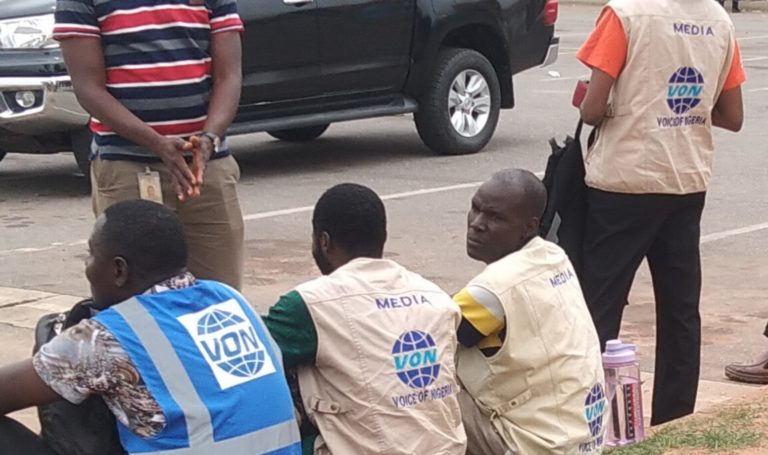
“We met a police officer that said everyone should identify themselves before being allowed to enter. I remember bringing out two ID cards. I showed him that of the Nation newspaper and another from the governor’s office. The other person with me was from the Voice of Nigeria (VON) and when we gave him the ID cards, it looked like he could not even read what was on them. We were also accredited to cover the governor’s office but he paid no regard to it.”

Despite presenting valid means of identification, the police officer denied them entry, arguing that “there are too many journalists inside the venue”.

Adeniran eventually entered without the police permission since other journalists also made their way in.

When the police officer saw that he had entered, he ordered other police officers to throw him out. They did not only evict him from the stadium, they also beat him and tore his cloth.

Yet Officer Niyi was dissatisfied with the assault, so he teargassed  Adeniran when he threatened to call someone in the governor’s office who invited him to cover the primaries.

Adenekan, Omoniyi, Adeniran and Coker are just a few of the journalists on duty who are constantly harassed and assaulted by security operatives in Nigeria. There are several others.

In May 2022, Toba Adedeji was shot by policemen attached to the Osun state command while covering a protest. The protest ensued as a result of the extrajudicial murder of one Abiola Afolabi by policemen.

In June 2022, the IPC expressed grave concern about the constant attacks on journalists in the line of duty. The IPC noted that the constant attacks on journalists signify a regime of repression.

A professor, Ernest Ojukwu, who is also a Senior Advocate of Nigeria (SAN),  expressed worry about the attack on journalists in a report published by the Vanguard. He said, “In all history, the introduction of dictatorship commenced with the harassment of journalists and citizens who spoke out against  wrongdoings by the government officials”.

Journalists offer advice, lessons

As the 2023 Nigerian general election draws closer, many journalists have expressed concerns about their safety while reporting the election.

Some are reluctant to put their lives at the mercy of unfeeling security operatives, murderous political loyalists and irate voters.

Notwithstanding, Adenekan, Omoniyi, Adeniran, and  Coker said they are ready to cover the 2023 elections if deployed. Adenekan believes being harassed is one of the hazards of the job and has learnt to be more discreet and cautious while on the field.

“This is the only job I have done my whole life,” Adeniran said.

He, however, noted that no story is worth dying for, and he has learnt to always work in a group with other journalists.

Omoniyi was lucky that Taiwo Adebulu of the Cable was around when he was arrested and alerted Omoniyi’s superiors as he was whisked away. Omoniyi agrees with Adeniran’s advice that a reporter  should always cover elections  in the company of other journalists  who can  raise an alarm in case of danger.

Coker advised journalists to always be conscious of their environment and utilise their sixth sense while reporting because this would alert them to problems early enough.

Jane Frances Onyinye Nweze, a veteran election reporter,  described election reporting as being similar to covering “guerilla warfare” and she advised journalists not to draw attention to themselves while on the field.

Media organisations like Radio Now have taken further steps by providing their reporters with safety kits which include pepper spray and press jackets.

Similarly, Daily Trust newspaper is investing in capacity-building  for their reporters on election coverage and how to keep safe.

In partnership with the Canada Fund for Local Initiatives (CFLI), the CJID also equipped journalists with vital skills and security tips to keep safe while reporting the 2023 general election.

Security agencies react

Oluwamuyiwa Adejobi, the Force Public Relations Officer of the Nigerian Police Force, has dispelled the fear of journalists interested in covering the 2023 election.

He said  the police personnel have been trained on the code of conduct for election security.

“We have considered adequate protection and cover for accredited journalists on essential duty, for the election period, and for all and sundry after the polls. Every accredited journalist is to work with the command police,” he said.

Also, the spokesperson of the Department of State Services (DSS), Peter Afunanya said that the security operatives face more danger than journalists, arguing that some of the journalists’ harassment experiences are “exaggerated.”

Security operatives in Nigeria indeed face great danger while carrying out their duties. Between January and June 2022, at least 157 security operatives, including police officers and soldiers, were killed.

But unlike journalists, security agents are armed by the government for personal defence. For example, ahead of the 2023 general election, the Nigerian government has purchased armoured vehicles, ammunition and riot control agents like teargas and pepper spray, to aid law enforcement agents to perform their duties and protect themselves.

Although journalists report in the same hostile situation, they are unarmed and vulnerable to the harsh realities of elections in Nigeria. And that is the difference that illustrates the danger faced by journalists.

However, Afunaya  stated that the agency has trained good officers and made great efforts to protect citizens better during elections.

In a matter of days, elections will hold again, and journalists will have another opportunity to cover the important democratic event. Will the security agencies keep their promise to protect people of the fourth estate of the realm? Time will tell.

*inde

NDLEA storms Edo forest, destroys 72.86 tons of skunk after gun battle

0

Operatives of the National Drug Law Enforcement Agency (NDLEA) have stormed the Ujiogba Forest Reserve in Esan West LGA, Edo State and destroyed 7,286 kilograms (72.86 tons) of warehoused skunk and five hectares of its plantation.

This is coming a few days before the general elections on Saturday, February 25.

The agency said the special operation was carried out on Wednesday, February 22, following credible intelligence that some cartels had warehoused hundreds of jumbo bags of the illicit substances inside the thick forest of the reserve for distribution to some states ahead of the general elections.

This was disclosed in a statement by NDLEA Spokesperson Femi Babafemi on Thursday, February 23.

The destroyed 7,286 kilograms (72.86 tons) warehoused skunk by the NDLEA

“The operation could, however, not go on immediately until after several roadblocks set up by armed guards of the drug lords were cleared and they were overpowered by the superior firepower of Strike Force officers of the Agency in a gun duel.

“After the initial resistance, two rifles spent cartridges of short guns and an empty shell of an AK47 rifle was recovered while a 24-year-old suspect, Calvary Essien, was arrested.”

According to the NDLEA, after the gunfight, operatives in their numbers successfully descended on a massive warehouse constructed with wood and zinc containing different consignments of drugs of various types.

“Seven bags of cannabis and one bag of its seeds were subsequently taken out of the warehouse for further investigation and prosecution of suspects while the rest was set ablaze.”

The anti-narcotic agency said this is coming on the heels of a similar operation on Wednesday, 18th January, in the Opuje forest in Owan West Local Government Area of the state where massive warehouses and tents storing over 317,417 kilograms (317.4 metric tons) of the psychoactive substance were destroyed and set ablaze in a two-day operation.

“At least, a police impersonator, Omoruan Theophilus, 37, who was parading as a Police Inspector to convey the drugs from the forests to the cities and three others: Aigberuan Jacob, 42; Ekeinde Anthony Zaza, 53, and Naomi Patience Ohiewere, 42, were arrested in connection with the drugs,” the agency added.

Chairman of NDLEA, Mohamed Buba Marwa, commended all the officers involved in the effort and urged officers deployed across the country for elections to clear every part of the country of illicit substances used by thugs and miscreants before, during and after the elections.


70% of global maternal deaths occur in Sub-Saharan Africa – UN

0

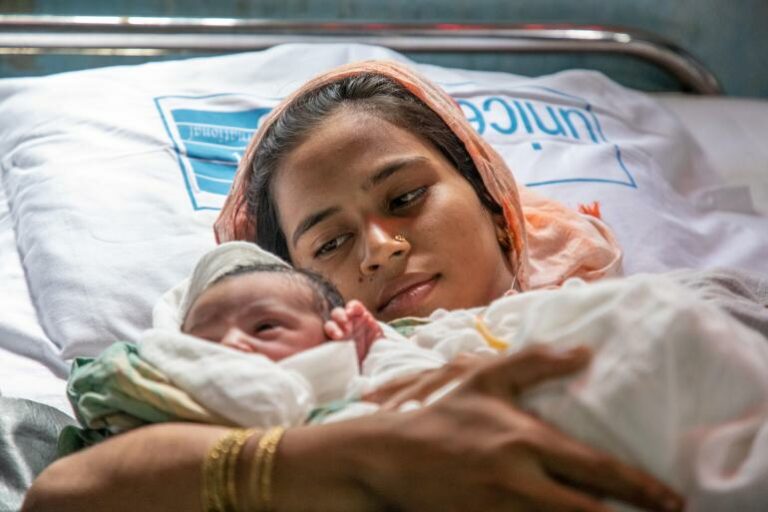
A NEW report by the Nations (UN) says 70 per cent of global maternal deaths occur in the Sub-Saharan Africa.

The report also notes that a woman dies every two minutes globally during pregnancy or childbirth.

The report “Trends in maternal mortality” tracked maternal deaths nationally, regionally and globally from 2000 to 2020.

According to the report, an estimated 287,000 maternal deaths occurred worldwide in 2020.

The report reveals alarming setbacks for women’s health in recent years, as maternal deaths either increased or stagnated in nearly all regions of the world.

It urges leaders to significantly accelerate progress to meet global targets for reducing maternal deaths or risk the lives of over one million more women by 2030.

The World Health Organization (WHO) produced the report on behalf of the United Nations Maternal Mortality Estimation Inter-Agency Group comprising WHO, United Nations Children Fund (UNICEF), United Nations Population Fund (UNFPA), the World Bank Group and the Population Division of the United Nations Department of Economic and Social Affairs. 

It used national data to estimate levels and trends of maternal mortality from 2000-2020.

The UN says that data in the new publication supersede all previous estimates published by WHO and the United Nations Maternal Mortality Estimation Inter-Agency Group. 

From the report, the new global maternal deaths data show a slight decrease from 309,000 in 2016 when the UN’s Sustainable Development Goals (SDGs) came into effect. 

The ICIR reports that maternal death occurs from complications from pregnancy during childbirth or within six weeks of the end of a pregnancy.

While the report presents some significant progress in reducing maternal deaths between 2000 and 2015, gains largely stalled or, in some cases, reversed.

In two of the eight UN regions – Europe and Northern America, and Latin America and the Caribbean – the maternal mortality rate increased from 2016 to 2020 by 17 per cent and 15 per cent, respectively. 

“Elsewhere, the rate stagnated. The report notes, however, that progress is possible. For example, two regions – Australia and New Zealand and Central and Southern Asia – experienced significant declines (by 35 per cent and 16 per cent, respectively) in their maternal mortality rates during the same period, as did 31 countries across the world,” a statement by the UN says on Thursday, February 23.

The UN explains that maternal deaths remain largely in the world’s poorest parts and countries affected by conflict.

“In 2020, about 70 per cent of all maternal deaths were in sub-Saharan Africa. In nine countries facing severe humanitarian crises, maternal mortality rates were more than double the world average (551 maternal deaths per 100,000 live births, compared to 223 globally).”

The report lists severe bleeding, high blood pressure, pregnancy-related infections, complications from unsafe abortion, and underlying conditions that could be aggravated by pregnancy (such as HIV/AIDS and malaria) as the leading causes of maternal deaths. 

The UN says the conditions are preventable and treatable with access to high-quality and respectful healthcare.

The report shows that a third of women do not have four of the recommended eight antenatal checks or receive essential postnatal care, while some 270 million women lack access to modern family planning methods. 

“Exercising control over their reproductive health – particularly decisions about if and when to have children – is critical to ensure that women can plan and space childbearing and protect their health.

“Inequities related to income, education, race or ethnicity further increase risks for marginalized pregnant women, who have the least access to essential maternity care but are most likely to experience underlying health problems in pregnancy,” the UN notes.

Reactions from UN agencies

Director-General of the WHO Tedros Ghebreyesus says while pregnancy should be a time of immense hope and a positive experience for all women, “it is tragically still a shockingly dangerous experience for millions around the world who lack access to high-quality, respectful health care.

“These new statistics reveal the urgent need to ensure every woman and girl has access to critical health services before, during and after childbirth, and that they can fully exercise their reproductive rights.”

UNICEF Executive Director Catherine Russell notes that the tragedy of maternal deaths often marred the miracle of childbirth for millions of families.

She argues that no mother should fear for her life while bringing a baby into the world, especially when the knowledge and tools to treat common complications exist. 

On her part, the Global Director for Health, Nutrition and Population at the World Bank and Director of the Global Financing Facility, Juan Uribe, opines that the report reminds the world of the ‘urgent’ need to double down on its commitment to women and adolescent health.

Similarly, UNFPA Executive Director Natalia Kanem, a doctor, says, “It is unacceptable that so many women continue to die needlessly in pregnancy and childbirth. Over 280,000 fatalities in a single year is unconscionable,” said . “We can and must do better by urgently investing in family planning and filling the global shortage of 900,000 midwives so that every woman can get the lifesaving care she needs. We have the tools, knowledge and resources to end preventable maternal deaths; what we need now is the political will.”

“Reducing maternal mortality remains one of the most pressing global health challenges,” said John Wilmoth, Director of the Population Division of the Department of Economic and Social Affairs. 

After ICIR report, THISDAY Editorial takes stance on abandoned fire trucks in Abuja stadium

0

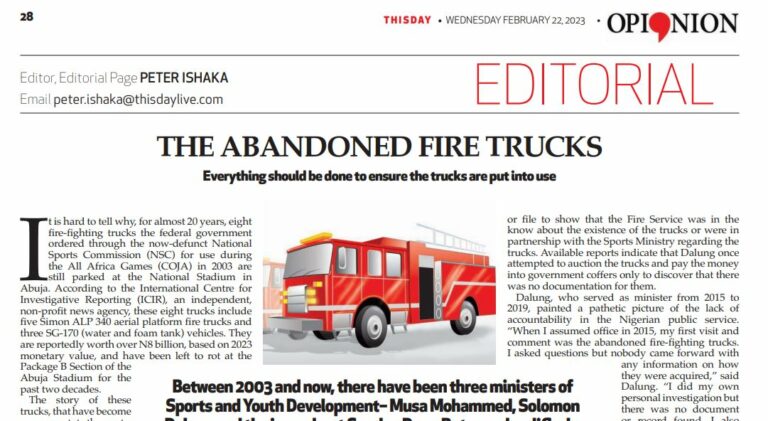
FOLLOWING an investigation published by The ICIR uncovering a multi-billion-naira worth of abandoned fire trucks at the Moshood Abiola Stadium, Abuja, the Editorial Board of the Thisday Newspaper on Wednesday asked the Federal Government to revisit the neglected project.

In its editorial titled: ‘The Abandoned Fire Trucks’, the national daily demanded that “everything should be done to ensure the trucks are put into use”.

It was published on Wednesday, February 22, 2023.

The ICIR, after a six-month in-depth investigation, had earlier exposed the process detailing the trucks’ procurement, the lackadaisical attitude of the government officials, whose responsibilities are to utilise the fire trucks years after it was procured.

The investigation also highlighted that the contractor who supplied the trucks was yet to be paid, as revealed by a top official from the sports ministry.

Regardless, research showed the trucks already lasted almost two decades at the same spot, with the tyres deflated and colours faded.

On ground findings also revealed the trucks were parked adjacent to the Nigeria Football Federation (NFF), the nation’s football body, but the rots still linger.

At least three Ministers of Sports had witnessed the wastage, including the incumbent Minister of Youth and Sports, Sunday Dare, but nothing significant appeared to have been done.

“The story of these trucks, that have become monuments to the waste, largely defines public conduct in Nigeria,” the editorial read in part.

“We commend the ICIR for the detailed report. But this is a shameful, almost criminal, neglect that deserves immediate intervention by relevant authorities.

“In a nation where many lives and property worth billions of Naira are being lost almost on daily basis to incessant fire outbreaks, not a few Nigerians would have wished that these trucks be overhauled and deployed for use where they are desperately needed.

“Whatever the situation, the federal government must find a closure to this disturbing saga. At the very least, the Federal Fire Service should be invited to take custody of the fire trucks to see if they can still be put to any use.”

Meanwhile, this is not the first time The ICIR would expose the rots, abandoned projects awarded by private entities and the State and Federal Governments. Some projects were captured under the Constituency or Zonal Intervention Projects (ZIP), which ultimately drew the attention of the Independent Corrupt Practices and Other Related Offences Commission (ICPC).

NPO sets up National Media Complaints Commission

The NIGERIAN Press Organisation (NPO) has announced the appointment of a nine-man board of the Ombudsman’s   National Media Complaints Commission (NMCC) to resolve ethical breaches in media content.

The media commission is a body of the Public Complaints Commission set up to promote, facilitate and resolve media disputes from a neutral, independent viewpoint.

The announcement was made in a statement signed by the President of the NPO, Kabiru Yusuf, who is also the President of the Newspaper Proprietors’ Association of Nigeria (NPAN) on Wednesday, February 22.

The statement stressed that the setting up of the Commission is a major step by the industry to strengthen public confidence in the media through the prompt resolution of issues bordering on ethical breaches in media content.

The members of the Commission who were drawn from the media, academia and civil society include former Managing Director of Guardian Newspapers, Emeka Izeze; former President of the Nigerian Bar Association, Abubakar Mahmoud; the Deputy Vice-Chancellor, (Academic) Paul University, Awka, Anambra State, Chinyere Stella Okunna; Country Director, Care International (Nigeria) Hussain Abdu; and the Founder of Diamond Awards For Media Excellence (DAME) Lanre Idowu.

Others include the Executive Director of Media Rights Agenda, Edetaen Ojo; an  Arbitrator, Dupe Ajayi-Gbadebo; a newspaper columnist and broadcast journalist, Eugenia Abu.

The Independent committee was set to resolve complaints about the press quickly, fairly, and free of charge; maintain high standards of Nigerian journalism and journalistic ethics; and defend the freedom of the press and the rights of the people to know.

The National Ombudsman would serve as an appellate body for the local Ombudsman which had been directed to institute the monitoring committee at the newspaper level.

Enugu LP senatorial candidate shot dead 3 days to election 

0

THE Labour Party (LP) senatorial candidate for Enugu East Senatorial District, Oyibo Chukwu, has been shot dead three days before the Presidential and National Assembly elections.

According to several reports, Chukwu and other party members were killed late Wednesday night in Amaechi Awkunanaw, Enugu South Local Government Area, Enugu State.


READ ALSO:
Ballot Series: Three important things voters should look for on the election day

Police restrict movement on election day

INEC begins distribution of election materials in Lagos

Ignore sit-at-home orders on election day – MASSOB


The reports say unidentified individuals approached them while they were travelling in a Sienna car, shot at them and set the vehicle on fire. 

The governorship candidate of the party in the state, Chijioke Edeoga, confirmed the incident to Punch Newspaper.

Edeoga added that political groups who feel threatened by the emergence of the Labour Party in the state and are concerned they would lose Saturday’s election are targeting the party’s candidates for assassination.

In a related development, also on Wednesday in Enugu, gunmen attacked the campaign convoy of Oforchukwu Egbo, the Peoples Democratic Party (PDP) candidate for Enugu North/South Federal Constituency.

It was gathered that the incident occurred at Eke-Otu in Amechi Awkunanaw, Enugu South Local Government Area of Enugu State.

The driver of one of the buses in the convoy was killed by the hoodlums.

When contacted by The ICIR, the Enugu State Police Command spokesperson, Daniel Ndukwe, promised to provide more details later.

Supporters of LP and other parties have been victims of attacks in the past few months.

The LP women leader in Kaduna, Victoria Chimtex, was killed by yet-to-be-identified gunmen in November 2022.

The incident occurred in the deceased’s residence in Kaura Local Government Area in Southern Kaduna.

The hoodlums also shot Chimtex’s husband in the leg. 

In November 2022, some hoodlums in various vehicles allegedly launched an attack on the crowd during a campaign rally by the All Progressives Congress (APC) in Ibadan.

Some members of the party were reportedly hurt during the attack.

In December 2022, the LP House of Assembly candidate for Onuimo Local Government Area in Imo State, Christopher Eleghu, was assassinated by yet-to-be-identified gunmen. His house and cars were set ablaze by the attackers.

In another incident, the Director-General of the PDP Presidential Campaign Council (PCC), Abiye Sekibo, reportedly escaped assassination on Thursday, February 9.

Data from the Armed Conflict Location & Event Data Project (ACLED) showed that 29 violent attacks occurred in Nigeria in 2023 alone.

Wole Soyinka Centre for Investigative Journalism offers leadership fellowship for women

THE Wole Soyinka Centre for Investigative Journalism (WSCIJ) is inviting applications for its 2023 Report Women! Female Reporters Leadership Program.

The program’s goal is to foster stories on girls and women issues by creating a strong community of women reporters with leadership prowess.

Successful applicants will be taught practical skills in investigative reporting, leadership, and skills to engage others and speak for the cause of women as leaders in the news and newsrooms.

The champions building engagement will include three days of physical training and three to six months of mentorship to produce investigative stories and leadership projects that address the equity gaps in the news, newsrooms, and society.

Women journalists with at least three years of experience can apply for this training.

Female journalists with disabilities and those who cover local issues are encouraged to apply.

The dates and locations have not been announced yet.

The deadline for the submission of applications is March 3, 2023. Interested applicants can apply here.

Ballot Series: Three important things voters should look for on the election day

AHEAD of the 2023 general elections, some stakeholders state three important issues voters should look out for.

Nigerians will be electing a new president and National Assembly members (Senate and House of Representatives), state governors – aside from states with off-cycle elections; Kogi, Anambra, Ekiti, Osun, Bayelsa, Imo, Edo, Ondo and members of State Assemblies.

The National Assembly will be held on February 25, 2023 same day as the presidential election, while governorship and the State Houses of Assembly will be held on March 11, 2023.

Watch the video below to see the three most important things voters should know ahead of the elections according to the different stakeholders.