Home Blog Page 1065

National Endowment for Democracy seeks proposals for media grants

THE National Endowment for Democracy (NED) is seeking proposals for projects that advance democratic goals and strengthen democratic institutions.

NED encourages applications from organisations working in diverse environments including newly established democracies, semi-authoritarian countries, highly repressive societies and countries undergoing democratic transition.

Grant amounts vary depending on the size and scope of the projects, but the average grant lasts 12 months and is around US$50,000.

NED is interested in proposals from organisations for nonpartisan programs that seek to promote and defend human rights and the rule of law, support freedom of information and independent media, and promote accountability and transparency.

Independent media organisations, civic groups and associations can apply.

The deadline for the submission of applications is March 20, 2023. Interested applicant can apply here.

Police restrict movement on election day

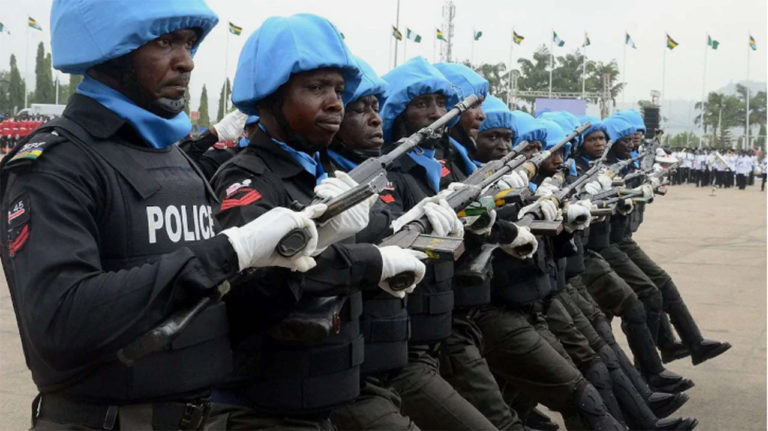
THE Nigeria Police Force (NPF) has announced the restriction of vehicular movement from 6:00 am to 6:00 pm on Saturday, February 25, for the presidential and National Assembly elections.

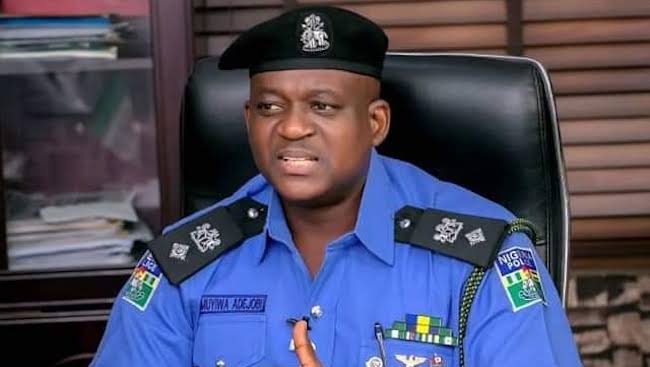
Force Public Relations Officer Olumuyiwa Adejobi announced the development in a statement released on Wednesday, February 22.

The measure is part of efforts by the police to maintain public order, safety and national security during the conduct of the weekend’s elections.


READ ALSO:

Enugu LP senatorial candidate shot dead 3 days to election 

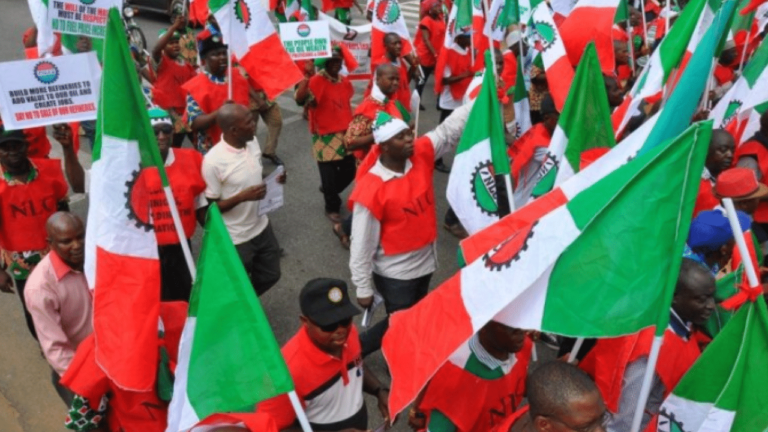
Election: NLC directs members to vote for LP, Obi

Ballot Series: Three important things voters should look for on the election day

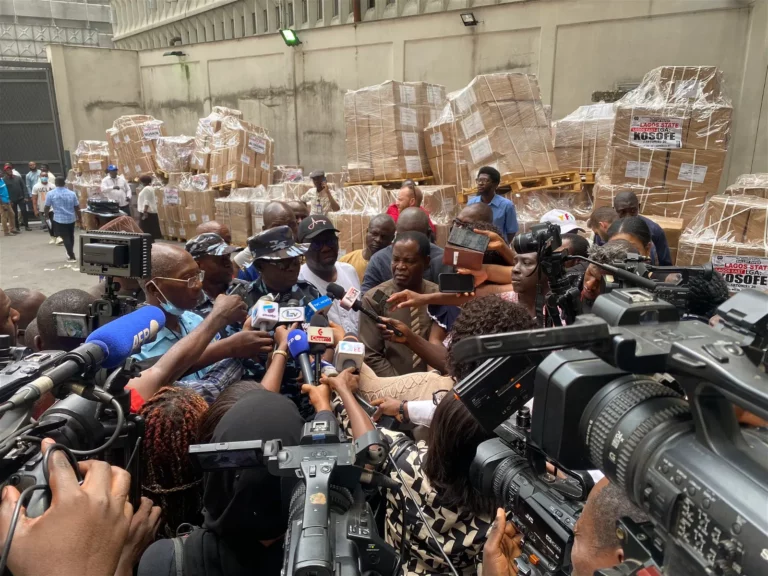
INEC begins distribution of election materials in Lagos


“Consequent to the first part of the 2023 general elections, the presidential and National Assembly elections scheduled to hold on Saturday, February 25, 2023, across all states of the Federation and the Federal Capital Territory, the IG, Usman Baba, has ordered a restriction of all forms of vehicular movement on roads, waterways, and other forms of transportation, from 12 am to 6 pm on election day with the exception of those on essential services such as INEC officials, electoral observers, ambulances responding to medical emergencies, firefighters, etc,” the statement said.

The restriction, according to the the statement, would enable the security agencies to  effectively police the electoral process, and also prevent hoodlums and criminals from hijacking and disrupting the election.

The IGP sternly warned all security aides and escorts to desist from accompanying their principals and politicians to polling booths and collation centres during the election, noting that anyone found flouting the directive would be severely sanctioned.

“He emphasises that only security personnel specifically assigned to election duties are to be seen within and around the designated election booths and centres.

“Also, the ban on the unauthorised use of sirens, revolving lights, covered number plates and tinted glasses is still in force, and violators would be sanctioned appropriately.

“All state-established and owned security outfits/organisations, quasi-security units, and privately-owned guard and security outfits are also barred from participating in election security management,” the statement added.

The Nigeria Police Force vowed that it would deal decisively with any individual or group(s) that might want to test its resolve to ensure a peaceful election.

“The IG, therefore, enjoins all citizens to shun vote buying, vote selling, hate speech, misinformation, and disinformation, snatching of ballot boxes, and other criminal act(s) as the Force and other security agencies will leave no stone unturned in ensuring that all violators of extant laws, most especially the Electoral Act 2022 (as amended), are brought to book.”

The statement further urged the public to contact the NPF and the Joint Election Monitoring and Operations Room domiciled at the Force Headquarters, Abuja, via the ‘NPF Rescue Me App’ available on Android and ios, or via the NPF Rescue Me Emergency Toll-free line on 08031230631, to report suspicious persons, activities or request security response.

In the same vein, other joint operations/election situation room numbers will be released by all state police commands respectively, for emergency contact.

Manufacturer recalls eye drug from global markets over flaws

0

THE WORLD Health Organization (WHO) has announced the recall of an eye drug administered on children from global markets.

Galentic Pharma Pvt Ltd, Maharashtra, India, manufactured the tetracycline hydrochloride ophthalmic ointment USP 1% drug.

In a statement on its website on Wednesday, February 22, the WHO said though the batches were yet to expire, they showed some unusual features when sampled in different countries. 

According to the WHO, the manufacturers initiated a voluntary recall for several batches of the product. They also indicated that they might include other batches in the recall.

The WHO said there was no established evidence of any adverse events from the affected batches yet.

Five international procurers of the product independently conducted visual examination of random stock samples on hand. They detected a range of quality issues with the random samples of the product batches.

“They observed particles ranging in colour, size and shape on the nozzle, in the cap and the ointment inside each tube, black spots and brown splotches on the inner foil layer of the tube, and phase separation.

“These issues were not uniform and varied from batch to batch and as reported by procurer to procurer.”

The product is used in bacterial blepharitis (red, swollen, irritated, and itchy eyelids), bacterial conjunctivitis (eye discharge, redness, and itching), bacterial keratitis (inflammation of the cornea), and trachoma (caused by Chlamydia trachomatis).

It is given as a treatment for infants and older children.

If not recalled, risks of using the product include redness and swollen eyes, the WHO noted.

The product has been supplied in bulk and as a component of various medical kits by some international organisations providing humanitarian assistance.

The WHO assured that the agencies and organisations would be contacted for further information and guidance.

At least 55 countries received the affected batches. 

“Out of abundance of caution, WHO advises regulatory authorities, healthcare professionals, and the public to detect and remove from circulation all batches of tetracycline hydrochloride ophthalmic ointment USP 1%.” 


READ ALSO:


The organisation promised increased surveillance and diligence within the supply chains of countries and regions likely to be affected by the affected batches of the product. 

It then urged the public: “If you are in possession of any of the affected products, WHO recommends out of abundance of caution not to use them. If you, or someone you know, has or may have used the affected product, or suffered an adverse reaction or unexpected side-effect after use, you are advised to seek immediate medical advice from a qualified healthcare professional who should, in turn, report the incident to the national regulatory authority and/or national pharmacovigilance centre.

“National regulatory/health authorities are advised to immediately notify WHO if any of the affected batches of the product are identified in their respective country. Please contact WHO via rapidalert@who.int.”

Naira scarcity: FCTA orders hospitals to explore POS payment options

0

THE Federal Capital Territory Administration (FCTA) has directed hospitals under its control to deploy the Point of Sale (POS) payment option in order to avoid denying residents healthcare services.

The directive was issued by the Secretary, Health and Human Services Secretariat, FCTA Abubakar Tafida during a press briefing on Wednesday, February 22.

He noted that patients were confronted with difficulties in making payments for medical services as a result of the scarcity of the naira.

“Worried by the challenges faced by patients in making payment in the hospital to receive medical attention, the Secretary has mandated all the medical directors to engage the service of Multiple Point of Sale operators in their various facilities as an alternative to pay the medical bills,” Tafida said.

He also said the naira scarcity was not an excuse to deprive patients of medical services, adding that officials who refuse to attend to patients for lack of cash would be sanctioned.

Nigerians in the FCT and across the country are faced with difficulty in conducting day-to-day activities following the scarcity of banknotes. The naira became scarce after the redesign of the N200, N500 and N1000 denominations.

This has led to protests in various parts of the country, attacks on bank facilities and staff, among others.

Some state governors, mostly members of the All Progressives Congress (APC), have challenged the Federal Government in court over the scarcity of the banknotes.

Pending the determination of the suit, the Supreme Court gave an interim order that the old and new notes should co-circulate and remain legal tender.

However, despite the ruling by the Supreme Court, Nigerian President Muhammadu Buhari ordered that only the N200 notes be recirculated.

He promised to end the scarcity, urging citizens to exercise patience.

But so far, the President is yet to resolve the crisis.

Election: NLC directs members to vote for LP, Obi

THE Nigeria Labour Congress (NLC) has directed its members to vote for the Labour Party (LP) in the general election.

The directive was issued in a statement signed by National Secretary of the NLC National Political Commission, Chris Uyot, on Tuesday, February 21.

The NLC mandated all its political committee members to intensify their work in mobilizing workers and other Nigerians to vote for the LP presidential candidate, Peter Obi, and all candidates of the party.

“This is a clarion call to all workers and working people that as we approach the final push towards the forthcoming presidential election come February 25, 2023, we should ensure massive turnout of votes for the success of the Labour Party in line with an earlier resolution of the National Executive Council (NEC),” parts of the statement read.

Members of the NLC political committee were also instructed to work with civil society organisations and students to safeguard votes and ensure that the electoral process is transparent, free and fair.

The NLC also directed its affiliate unions and state councils to provide a minimum of 10 ward coordinators and canvassers to strengthen their efforts at the grassroots level.

The labour union further urged the Independent National Electoral Commission (INEC) to ensure that the electoral processes are transparent and fair and reflect the wishes of the Nigerian people.

The NLC had earlier vowed to mobilise its members across the 774 local government areas in Nigeria to achieve victory for Labour Party presidential candidate, Peter Obi, in the presidential election.

Former NLC National President, Ayuba Wabba, made the vow at a National Retreat of the LP in Abuja in September 2022.

The ICIR reported that the NLC elected Joe Ajaero as its new National President on February 8.

Ajaero, who was previously the Deputy National President and General Secretary of the Nigerian Union of Electricity Employees (NUEE), was elected unopposed at the 13th National Delegates’ Conference in Abuja.

Policemen banned from escorting VIPs to polling units in Osun

THE Osun State police command has issued a directive banning police officers attached to governors, ministers, and other government officials from escorting their principals to polling units during the 2023 elections.

The State police spokesperson Yemisi Opalola made this known in a statement on Wednesday, February 22 in Osogbo.

According to the statement, any officer who flouted this directive would face disciplinary actions.

The police have also banned using sirens, revolving lights, and tinted car windows by unauthorized citizens during the election period. It warned that any individual who violated this directive would face sanctions in line with the extant laws.

The command has also warned other security organizations not constitutionally empowered to participate in the election duty to steer clear of the electoral process, warning that any group or organization that flouted this directive would face sanctions in accordance with the law.

The police have released hotlines for the public to report any election-related issues during the period. These numbers are 08039537995, 08075872433, and 08123823981.


INEC begins distribution of election materials in Lagos

THE Independent National Electoral Commission (INEC) has started the distribution of sensitive election materials to the 20 Local Government Areas in Lagos State.

The State police spokesperson, Benjamin Hundeyin, confirmed this on Twitter on Wednesday, February 22.

Hundeyin said that the distribution process was closely being monitored by the State Commissioner of Police, Idowu Owohunwa.

The Presidential and National Assembly elections are scheduled to take place on February 25, 2023.

The presidential election, scheduled for Saturday, is an eagerly anticipated event as many Nigerians hope it would produce new leaders who can tackle the country’s pressing issues like insecurity, poverty, unemployment, and inflation. Nigeria’s large population and position as the largest economy in Africa make the election significant for the country and the region as a whole.

The new president will face the daunting task of addressing these issues, which will require a comprehensive approach involving the government, private sector, civil society, and the citizens themselves. For instance, tackling poverty and unemployment will require creating jobs, empowering small businesses, and investing in education and skills development.

Similarly, tackling insecurity will require addressing the root causes of the conflicts, building strong institutions, and promoting peace and reconciliation.

Many Nigerians are hopeful their votes would count for the candidates of the choice, and INEC itself had promised to deliver a free and credible poll.

Also, the outgoing Muhammadu Buhari administration had assured that security would be provided so that Nigerians can freely exercise their voting rights without any fear of intimidation.

Ignore sit-at-home orders on election day – MASSOB

0

THE Movement for the Actualisation of the Sovereign State of Biafra (MASSOB) has urged residents of South-Eastern Nigeria to ignore sit-at-home orders to boycott the 2023 elections.

A statement by the group’s National Director of Information Samuel Edeson on Wednesday, February 22 advised residents of the region to participate in the elections to avoid leaders being imposed on them against their will.

“Do not allow anybody to deceive you in the name of Biafra, because we know the real Biafra agitators and those paid to create confusion in our land. MASSOB insists that election must hold in Igboland because we cannot allow the enemies of Ndigbo to destroy our God-given land.

“It is clear that some enemies of Ndigbo have bought over some of our brothers, brainwashed them and turned them against their own people. That’s why they went about killing our own people, destroying our economy and making life difficult for our people,” Edeson noted.

The statement also described those against elections in the region as enemies.

“MASSOB wish to make it clear that as we move on with the Biafra project, which is the restoration of the Independent State of Biafra, we will not allow Igboland to remain in vacuum. That is why we advise Ndigbo to go out and vote for their preferred candidates on the 25th day of February 2023,” he noted.

There have been heightened concerns in the South-East over the forthcoming elections, following sit-at-home orders declared ahead of the exercise by a Finland-based separatist group leader, Simon Ekpa.

However, the Indigenous People of Biafra (IPOB), also known for declaring and enforcing sit-at-home orders in the region, has distanced itself from plans to boycott the elections, and urged residents to ignore the sit-at-home orders.

Traditional rulers in the South-East have also warned against the order, and are encouraging residents to participate in the voting process.

New Naira Crisis: Again, Supreme Court adjourns case till March 3

0

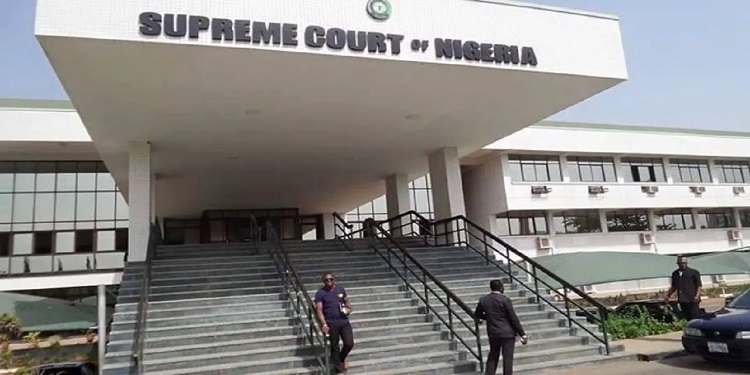
THE Supreme Court has today again adjourned judgment on the new naira policy suit to March 3, 2023.

The court had on February 8 restrained the Federal Government from implementing the February 10 deadline for swapping the old naira notes with new ones.

The injunction was a sequel to a suit filed by Zamfara, Kogi and Kaduna state governments against the Attorney-General of the Federation, Abubakar Malami.

In his arguments on Wednesday, counsel for the Federal Government, Kanu Agabi, said the Supreme Court held that all reliefs were rooted in section 20 of the Central Bank of Nigeria (CBN) Act.

Agabi argued that the apex court had no jurisdiction to hear the suit as the action cannot commence with an Originating Summons.

In addition, he argued that despite mentioning the CBN 32 times in their original summons, the plaintiffs thought it inappropriate to have the apex bank appear in court as a respondent.

He said Nigerians were already refusing the old notes in response to President Muhammadu Buhari’s order.

Agabi argued that President Buhari followed the court’s ruling when he asked Nigerians to deposit their old naira at CBN-designated locations, and that the President had the constitutional authority to reject any law.

He requested that the lawsuit be wholly dismissed.

Counsels for Edo and Bayelsa states also agreed that the suit be dismissed for lack of jurisdiction.

However, the Attorney General of Kano State, a co-plaintiff, claimed President Buhari ignored the National Economic Council’s members and only followed the CBN governor’s advice when implementing the monetisation strategy.

He stated that in contrast to what the law demanded, the President chose to act without consulting the state governments.

A nine-member panel led by Justice John Okoro adjourned the case and announced March 3 as the date after taking final arguments from lawyers to parties in the cases.

THE Supreme Court had on February 15 adjourned the suit challenging the naira redesign policy of the Central Bank of Nigeria (CBN) to February 22.

The court also held that it would hear the consolidated lawsuits filed by 10 states against the policy.

The ICIR had reported that the court had on February 8 stopped the plan by the Federal Government to ban the use of the old naira notes from February 10.

A seven-member panel of justices of the apex court led by Okoro ordered the suspension of the plan while ruling on an exparte motion filed by the Kaduna, Kogi and Zamfara state governments.

Three All Progressives Congress (APC) governors had dragged the Federal Government before the Supreme Court to halt the full implementation of the naira redesign policy that the CBN introduced.

Governors Nasr El Rufai of Kaduna State, Yahaya Bello of Kogi State, and Bello Matawalle of Zamfara State, who filed the suit, expressed concern about the impact of the CBN policy on citizens of their states.

Other states like Ekiti, Ondo and Kano have applied to join the suit.

Malami, the only defendant in the lawsuit, had in a counter-motion asked the Supreme Court to dismiss the suit filed by the state governments.

Mahmood Magaji, the lawyer representing the AGF, filed the government’s objection to the suit.

In the Notice of Preliminary Objection dated February 8, the Federal Government claimed that the Supreme Court lacked the necessary jurisdiction to entertain the suit in the first place.

The AGF argued that the plaintiffs should have commenced the suit before a Federal High Court and not at the Supreme Court.

He also stated that the Federal Government would take steps to vacate the order when the court resumes using the instrumentality of the law.

The CBN had earlier fixed February 10 for the expiration of the old N200, N500 and N1,000 banknotes.

But President Buhari, while, in a nationwide broadcast on Thursday, February 16, approving the use of the old N200 note till April 10, declared the old N500 and N1000 notes illegal tender from February 10.


READ ALSO:


However, the governors of Kaduna, Kogi and Zamfara states filed contempt proceedings against Malami and the CBN governor, Godwin Emefiele, over their alleged failure to comply with the Supreme Court order on old naira notes.

In the fresh documents filed before the court, the three states warned the AGF and the CBN governor of the consequences of their continued failure to comply with the apex court’s order made on February 8.

The forms filed by the lawyers for the three states will form part of the applications for consideration by the Supreme Court justices when the matter resumes.


2023 Elections: Police reassure Nigerians of adequate preparations

0

THE Nigeria Police Force (NPF) has reassured Nigerians of adequate preparations and safety during the forthcoming 2023 elections.

The Presidential and National Assembly elections are scheduled for February 25, while the Governorship and State Assembly elections will hold on March 11.

The insecurity rate in the last few months leading to the election has created fears among the electorate.

For instance, the Labour Party (LP) women leader in Kaduna, Victoria Chimtex, was killed by yet-to-be-identified gunmen in November 2022.

The incident occurred in the deceased’s residence in Kaura Local Government Area in southern Kaduna.

The hoodlums also shot Chimtex’s husband in the leg. 

Also in November, some hoodlums in various vehicles allegedly launched an attack on the crowd during a campaign rally by the All Progressives Congress (APC) in Ibadan.

Some members of the party were reportedly hurt during the attack.

The APC organised the rally to mobilise support for APC’s presidential candidate, Bola Tinubu, and the governorship candidate, Teslim Folarin.

In December of the same year, the LP House of Assembly candidate for Onuimo Local Government Area in Imo State, Christopher Eleghu, was assassinated by yet-to-be-identified gunmen on Friday, December 16, 2022, and his house and cars were set ablaze by the attackers.

In addition, data from the Armed Conflict Location & Event Data Project (ACLED) showed that 29 violent attacks occurred in Nigeria in 2023 alone.

Political violence has also been rampant during this period.

For instance, four persons were confirmed injured as hoodlums attacked supporters of the LP presidential candidate, Peter Obi, as he campaigned in Lagos State on Saturday, February 11.

The state police command confirmed the attack through its Public Relations Officer, Benjamin Hundeyin.

Gunshots also forced the Peoples Democratic Party (PDP) to suspend a campaign rally in Esan Central Local Government Area of Edo State on Wednesday, January 18.

In another incident, the Director-General of the PDP Presidential Campaign Council (PCC), Abiye Sekibo, reportedly escaped assassination on Thursday, February 9.

It was gathered that unidentified gunmen, dressed in police uniform, opened fire on Sekibo’s vehicle, a Toyota Landcruiser bulletproof jeep, at the Rainbow Town in Port Harcourt, where he went to inspect the venue ahead of a PDP presidential campaign rally in the state.

Sekibo, while confirming the incident, said his car was riddled with bullets.  

He linked Rivers State governor Nyesom Wike to the alleged assassination attempt.

However, despite all these incidents, the NPF spokesperson, Olumuyiwa Adejobi, in a chat with The ICIR, assured Nigerians that the force would provide adequate security for voters before, during and after the elections.

He assured that the election would be free, fair and credible.

“Every step has been taken to protect and secure the 2023 electoral process so as to have free, fair, and credible elections in Nigeria.

“We are optimistic that we will have a smooth process on 25th February and 11th March 2023,” Adejobi said.

The Inspector General of Police (IGP), Usman Alkali Baba, disclosed that the police and other security agencies would deploy over 400,000 personnel nationwide for the general elections.

The IGP added that an intelligence unit would be in place to track and apprehend those engaged in vote- buying and others who may want to disrupt the poll.