THE former Country Director, IPAS, Ejike Oji, has said only 6.5 million women in Nigeria use modern methods of contraception.
He also said using modern contraceptives in the country prevents over two million unintended pregnancies, nearly a million unsafe abortions and 15,000 maternal deaths.
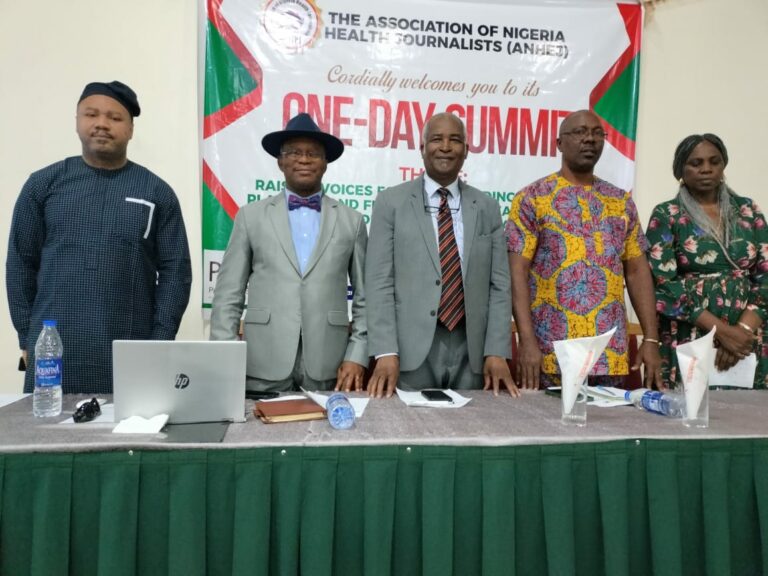
Oji stated these on Thursday at a one-day summit organised by the Association of Nigeria Health Journalists (ANHEJ) on the need for the government to raise adequate funds for family planning services and maternal and child health programmes in the country.
The summit, supported by the Partnership for Advocacy In Child and Family Health at Scale (PACFaH@scale), anchored by the Development Research and Projects Centre (dRPC), was to sensitize politicians seeking elective offices to the imperative of family planning services and maternal and child health.
It had the theme, ‘Raising Vocies for More Funding for Family Planning and Free Maternal Health Services by Incoming Political Leaders’.
Speaking on the dangers of not funding family planning in Nigeria, Oji, the chairman management committee of the Association for Family Planning and a senior special assistant to the Minister of FCT on Health and Hospital Management), said investment in family planning saves lives and boosts nation’s economy.
“Only 6.51 million women use a modern method of contraception in Nigeria. As a result of contraceptive use, 2.28 million unintended pregnancies will be prevented, 816,000 unsafe abortions will be averted, and 15,000 maternal deaths will be averted,” he said.
The United Nations notes that 40 million women are of child-bearing age (15 – 49 years) out of Nigeria’s over 200 million population.
Oji said gross underfunding for family planning services was dangerous because it would result in low family planning programmes and services, increased maternal and child deaths, worsening unemployment and insecurity, and further harm to the country’s economy.
“In Nigeria, mCPR (modern contraceptive prevalent rate) is 12 per cent, CPR (contraceptive prevalent rate) is 17 per cent, while the national mCPR target is 27 per cent.”
Speaking at the event, Co-founder, President and Chief Executive officer of the Association For Reproductive and Family Health (ARFH), Oladapo Ladipo, a professor of Obstetrics and Gynaecology, said government at all levels must take the health of mothers and children more seriously.
“Funding for maternal health should be free for every pregnant mother. That is, every pregnant mother should have free antenatal care, free intrapartum and free post-natal care. The reason is very simple. These women are producing the next generation of Nigerians and deserve access to quality and safe health care during their pregnancy.
“I believe if the government is committed, it can mobilize enough resources at the national and sub-national levels, and if not, through our health insurance schemes.”
He also said family planning commodities should be free, and couples should have a number of children they could cater to.
ANHEJ President, Hassan Zaggi, said the association convened the meeting because of the high maternal and child deaths in the country.
“We brought together health experts to raise our voice to alert the incoming government on the magnitude of the situation. Some of these leaders who are seeking election may not be conversant with these troubling indices around maternal and child health. It is our responsibility as the media to bring the issues to the fore so that they will understand and prepare their minds to tackle them when eventually assume office.”
He called on the incoming leaders to consider improving access to family planning commodities and making maternal health services free.
“I call on journalists to ensure that we present these issues as they are so that our incoming leaders will come to terms with the reality that Nigeria’s maternal mortality rate is estimated at 512 deaths per 100,000 live births, far from the Sustainable Development Goals (SDGs) target of 70 per 100,000 live births,” he added.
This report follows the stories of residents of Ogijo Town, Shagamu Local Government Area of Ogun state, who accused persons said to be working for ‘Ijaya,’ a federal lawmaker, of holding onto their PVCs slips. Olugbenga Adanikin, who visited the border town, reports.
*LASISI Omole was in his home in Ogijo, Shagamu Local Government Area (LGA) of Ogun State, when he got a notice on the early morning of July 5, 2021.
It was an offer to support the town’s residents who might be interested in registering their Permanent Voters Card (PVC). But the registration would have to take place at a location over 70 Kilometres (km) away from his residence in Ogun.
That was because previous efforts to partake in his ward’s PVC registration process failed.
Still, he vowed to exercise his voting right in the forthcoming general election, not because it was a must. But, he realised it was an obligation and the opportunity to elect a new leader who would pilot the affairs of the state and the country.
The Presidential election is scheduled for February 25, while the Governorship and State Assembly is fixed for March 11.
The popular contenders at the presidential level are Bola Tinubu, a former governor of Lagos state and presidential candidate of the All Progressives Congress (APC); Peter Obi of the Labour Party (LP); the former Vice President, Atiku Abubakar, who is contesting under the platform of the Peoples Democratic Party (PDP) and candidates of the New Nigeria Peoples Party (NNPP), Rabiu Kwakwaso.
Omole realised his determination might just be a wild goose chase, except he got registered and obtained his PVC.
Without a second thought, he jumped up and off to the meeting point where other interested persons in a similar situation had gathered – for the same purpose.
Meanwhile, the participants were offered N1,000 each upon their return from the registration centres, but their PVC slips were taken by the people who facilitated the free trip for the registration exercise.
Lasisi Omole is one of the aggrieved persons. Photo Credit: Olugbenga Adanikin, The ICIR.
Multiple sources confirmed to The ICIR that their voters’ registration slips were collected with the promise to get the PVCs and make them available in two weeks.
Since then, they were yet to get their PVCs, and the alleged persons have refused to respond to the aggrieved persons’ calls, nor have they provided them with any explanation on whether or not the victims would eventually get their PVCs.
“We asked for the slip, but the organiser promised to give us in two weeks. We expected it, I called him, but he did not return the slip,” Omole said.
“Up until now, he is still holding on to my right, my civil responsibility. People asked me about my PVC, but I don’t know what to tell them.”
“I am so ashamed.” He told The ICIR during a visit to the community.
Who is behind the Greek gift?
Earlier, a man, identified as ‘Alfa,’ was said to have been contacted by a notable individual in the town.
Alfa’s job was simple – to scout for persons in the category of Omole. That is, those who had tried registering for their PVCs but could not due to several reasons.
Based on field findings, Alfa was to persuade the victims while the people would reach out to more persons so they could all get registered for the PVCs. The people believed it was of good intentions.
Alfa’s number was subjected to a search on True caller, a mobile application used to identify unknown numbers; it displayed “Wale Vote Card.” This implied several persons must have saved the accused person’s name in that manner, or he did it himself.
Multiple sources who spoke to The ICIR said that the notable individual who they said contacted ‘Alfa’ was also engaged by Politically Exposed Persons (PEP) in the ruling All Progressives Congress (APC) state. He was described as Kunle Oloko. And the name ‘Ijaya’ repeatedly came up during interviews with other sources. She was said to have allegedly sponsored the trip alongside others for the registration exercise.
This reporter would later find out Ijaya is the nickname of Adewunmi Onanuga, the APC House of Representative candidate contesting for Ikenne/Sagamu, Remo North Federal Constituency, in the next election.
The ICIR cannot independently establish the reason for the seemingly generous gesture, but multiple sources believed the politicians had a special interest in the town. The lawmaker allegedly wanted to utilise the information sourced from the people being assisted through the registration process for personal gain, they said.
She did not respond to calls and a text message that was sent to her phone number sourced via her profile on the NASS website.
Yomi Onanuga, House of Rep Member Representing Ikenne/Shagamu/Remo North Federal Constituency: Photo Credit: NASS.
On February 15, an official email was sent to her seeking her reaction to the allegation, but she also did not respond. This was a day after The ICIR attempted to reach out to her via phone number and text message.
Residents said 18-seater Mazda buses were freely provided for interested individuals; The ICIR gathered.
Each bus had about 18 passengers, and about six (6) of the vehicles conveyed the people from Ogijo to at least two different INEC offices – Ikene LGA and Ijebu North East LGA, where the registrations were done.
The ICIR validated a few of the aggrieved persons’ details on the INEC’s portal – cvr.inecnigeria.org/voter_verification/index. It confirmed they actually registered. This was through the information collected from the them.
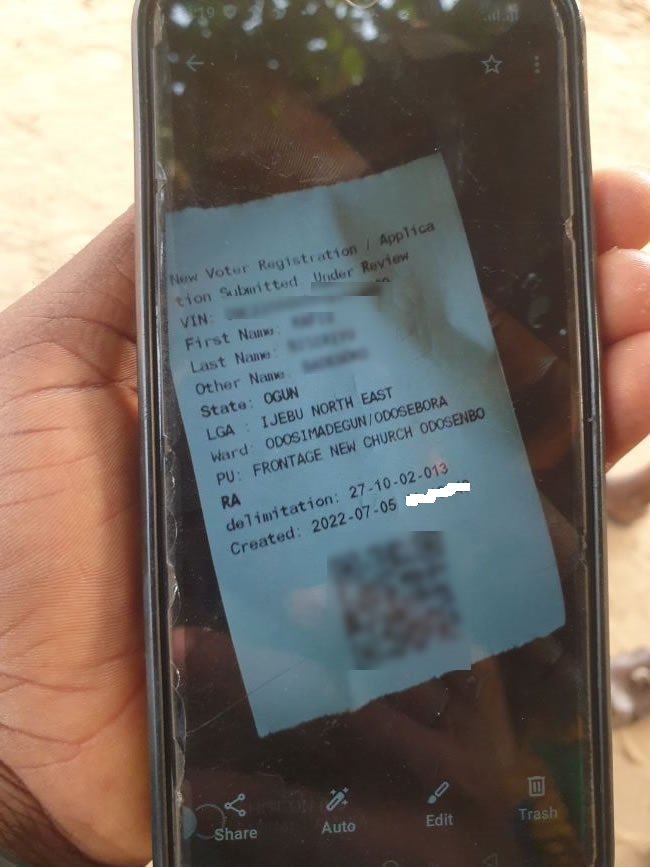
A snapped copy of the PVC slip belonging to one of the aggrieved persons. This victim took a photograph of the slip before it was collected from her. Photo Credit: Olugbenga Adanikin, The ICIR.
Meanwhile, Omole, who now appeared confused, disclosed that at the point of entering one of the buses to Atan Ijebu at Ijebu North-East, he realised that even if he decided to participate in the PVC registration, it would be difficult to vote on the day of the election.
The reason for the second thought was simple.
He resides in Ogijo, but his registration point is in Atan Ijebu, North-East LGA. The distance apart is between 77.5 km to 93.3 km, depending on the route taken according to google map. And usually, movements are restricted during election day, except a voter is walking a reasonably short distance to the polling unit within his ward. Thus, Omole queried ‘Alfa’ on the rationality of his support or that of his bosses.
He was more surprised when Alfa and his team collected his registration slip with a guarantee to retrieve his PVC through the PEPs he worked for.
“They assured us they will retrieve the cards on our behalf and give us,” he told The ICIR. But, as of the time of The ICIR visit to the community in February, none of them had gotten their PVCs.
He was not the only one. Nearly 100 others are affected. This is going on the estimate of 18 passengers in six Mazda buses.
“I have the prerogative as a citizen of Nigeria to vote for any candidate I like. Why should you be deploying clandestine methods to hold my PVC?” Omole fumed. “It is a big slap on my face,” he said during an interview.
Lost hope
*Nnamdi Chukwu prefers being addressed as a trader. He is a middle-aged man who wants his age hidden from the public.
A group of those affected strongly believed Chukwu would have more precise information as to the true identity of Alfa and the date they visited the registration centres, but they were wrong.
Nnamdi Chukwu, another aggrieved person whose slip was collected. Photo Credit: Olugbenga Adanikin, The ICIR.
He was busy attending to a client who had brought a car tyre for repair when the others summoned him.
“This man here could help regarding our PVCs,” Ifeanyi Duru, another person affected, said, pointing at The ICIR reporter. Suddenly, his face lit up, smiling.
Really? he asked.
The ICIR eventually engaged him, but his narration was no different from others. The same group held his registration slip; he had made several efforts to contact ‘Alfa’, but his efforts failed him.
The calls became more intense when he received a text message from the electoral umpire announcing February 5 as the deadline for PVC collection.
Text message sent to Nnamdi Chukwu’s mobile phone. Photo Credit: Olugbenga Adanikin, The ICIR.
The INEC had maintained without PVC, no voting could take place. This was the same message Obanilearo received as a text message.
On June 28, 2021, the Commission resumed the process for the continuous voters’ registration. As of September 20, 2021, INEC had captured 3,165,189 fresh registrations in its database. It has, however, shifted the deadline a few times until February 5.
Currently, there are 93,469,008 registered voters captured for the general election with 176, 846 polling units.
“How do I vote since I don’t have my PVC,” was the response from *Mariam Ayinla, another victim, who felt strongly disappointed.
Mariam Ayinla, another aggrieved person who might be disenfranchised. Photo Credit: Olugbenga Adanikin, The ICIR.
She responded when The ICIR asked her what her next line of action would be.
Just like others, she confirmed her PVC registration slip was withheld from her after the registration, not by the INEC officials but by the persons who facilitated the trip.
Why Ogijo?
Ogijo is a town of over 170, 000 people with a land size of about 923,768 Km square. It shares relative proximity with other settlements within Ikorodu LGA of Lagos. That is, about 10 km away from Ikorodu and 22.8 km to Sagamu in Ogun state.
More so, it is considered politically significant. Thus, politicians would often troop to it to canvass for votes even as the country draws closer to the poll.
Some Lagosians working in the city are also residents in Ogijo for reasons such as cheaper rent, even though it was challenged with over six months of power blackouts as of the time of the visit.
Alfa reacts
In the course of these findings, The ICIR reached out to ‘Alfa’. That was on Tuesday, February 14.
He told The ICIR he assisted a group of persons with registration but at Ijebu-Ode. Alfa did not disclose who his sponsor was; however, he confirmed the aggrieved persons had been pressuring him with calls.
The accused also affirmed he collected the PVC registration slips belonging to the concerned persons with a promise to return the hard copy as soon as possible. Indications, however, showed Alfa was working with other accomplices at the local governments where the registration was held.
“I have sent it (the slips), but I have not been given the PVCs,” he disclosed during a phone interview with The ICIR, “I led them to do the registration.”
Though PVC collection has already closed, The ICIR asked when exactly the affected persons should come for their PVCs; he said, “I was expecting they will call me, so I can come and pick it up at the INEC office, but I have not seen their call.”
“Last week, I still called them, but they said don’t worry, they will return everything to me so I can give them, or they will come there to vote. After voting, they will return their card,” he added.
The ICIR attempted to verify who he referred to as ‘they,’ and if he was referring to the Commission, he simply said, ‘yeah’. This reporter then demanded the contact of the supposed INEC officer, even though multiple persons The ICIR earlier spoke to exonerated officials of the Commission, he promised to make it available, but as of the time of filing this report, he was yet to send the contact for further verification.
No collection of PVCs by proxy – INEC
At about 2pm on February 6, The ICIR, visited the INEC office in Ikenne LGA. The mission was to verify if voters could retrieve their PVCs in proxy since it was already established the affected persons completed their registration exercise as provided by the commission.
INEC Office at Ikenne LGA, Ogun State. Photo Credit: Olugbenga Adanikin, The ICIR.
One affected person volunteered to visit the INEC office with this reporter. This reporter sighted about three security operatives from the entrance – two police officers and one official in mufti. In unison, they queried this reporter about his visit.
Shortly after, they announced the pickup of PVCs had closed.
The ICIR proceeded with the complainant to meet the electoral officers. A female official who later spoke re-emphasised the deadline for PVC pickup. She refused to disclose her identity. “It ended yesterday, and there is nothing we can do to help you,” she said.
Meanwhile, the likely alternative would be for the accused politician to retrieve the PVCs on behalf of the aggrieved persons.
In the course of the findings, The ICIR gathered part of the plans was to convey the registered voters to a hotel 24 hours before the election day, lodge them in a hotel, and present the PVCs to the respective individuals.
That implies, for the above argument to take effect, the accused politicians must have retrieved the PVCs from the respective INEC offices before the deadline.
But, multiple sources in the commission maintained that the INEC does not issue PVC through a third party.
State INEC HQ – No collection of PVC via proxy
The Administrative Secretary, Stephen Oyewande, a venerable at the INEC State Headquarters in Abeokuta, directed the reporter back to the LGAs where the aggrieved persons had their registrations.
Ogun State INEC HQ Public Affairs Department. Photo Credit: Olugbenga Adanikin, The ICIR.
He spoke on behalf of the Head, Department of Voter Education, Publicity, Gender and Civil Society Liaison (VEPGCL).
He stressed that collecting PVCs cannot be done via proxy.
Meanwhile, sources in the state INEC’s office exonerated the commission from the incident.
Regardless, a highly placed source disclosed that in the case of a father-to-son relationship, where the son was probably in a higher institution, and both had their registration at the same point, the restriction could be unofficially waived. Still, not in all cases, the source added.
*Names with asterisks were changed to prevent victimisation.
Produced in partnership with the Centre for Democracy and Development (CDD) with support from Foreign and Commonwealth Development Office (FCDO).
They will be electing the president and members of the National Assembly on 25 February and governors and members of the State Houses of Assembly on 11 March.
To vote in the elections, Nigerian citizens must be at least 18 years old and must have collected their permanent voter’s card by 5 February. The electoral commission has not yet released the number of people who have collected their cards. The number of collected cards will determine how many people that can be expected to vote.
The logistical challenges for the 2023 elections are huge, given the fact that 18 political parties are contesting, the security environment and the number of contestants at various levels. There are 18 presidential candidates, 1,101 candidates for the Senate and 3,122 candidates vying for federal constituencies in the House of Representatives. The elections will be conducted across 176,606 polling stations.
The Electoral Act 2022 has given legal backing for any voter accreditation technology that the electoral commission uses. If any technical device used in the election fails to function and isn’t replaced, the election will be cancelled for that voting station and another scheduled within 24 hours. The law also allows the commission to transmit election results electronically. These steps greatly reduce the ability to rig results, compared with manual methods.
The logistics
A total of 1,265,227 officials have been trained and will be deployed for the elections. They include presiding, collation and returning officers, as well as 530,538 polling unit security officials.
The Independent National Electoral Commission will issue 1,642,386 identification tags for the polling and collation officers, and provide 176,846 Bimodal Voter Accreditation System (BVAS) devices and 17,618 BVAS machines for back-up. These devices verify the identity of voters by checking fingerprints and facial features electronically.
In December 2022, the electoral commission signed a memorandum of understanding with transport unions that will help deploy over one million personnel and large quantities of election materials to 774 local government areas, 8,809 electoral wards and 176,846 polling units across the country.
Over 100,000 vehicles and about 4,200 boats, accompanied by naval gunboats, will be used.
These have to be deployed under the current state of insecurity as well as a scarcity of fuel.
Challenges of 2023 polls
The success of the 2023 general election will largely depend on the degree to which citizens can vote without impediments. But there are challenges.
Voter apathy: Nigeria has a history of voter apathy, where a significant number of registered voters fail to show up on election day. For the 2019 general elections, the country had 84 million registered voters. Voter turnout in the presidential election was only 35.66 per cent. In 2015 it was 43.65 per cent. These figures put Nigeria among the 10 countries with the lowest voter turnout in the world. Rwanda recorded 98.15 per cent voter turnout in 2017, the highest in the world.
Naira redesign and scarcity of fuel: The electoral environment has been bedevilled by scarcity of fuel and naira notes. The shortages have led to public demonstrations and heightened tension which might deter some voters from coming out on election day.
Insecurity: Fifty-two electoral commission offices were destroyed or burnt between 2019 and 2022. Secessionist movements and militants from the southern regions and religious extremists and bandits in the north have besieged electoral facilities. This may discourage prospective voters.
The voting process
There are four steps in the voting procedure to be followed on election day: accreditation, voting, sorting and counting, recording and announcement of results.
Accreditation: Voters, armed with their permanent voter’s card, must be present at the polling unit where they are registered between 8.30 am and 2.30 pm. They need to queue up in an orderly manner for accreditation. Voters will present their card to the assistant polling officer, who will use the BVAS device to check that voters match their cards. Where the fingerprint fails to confirm the match, the BVAS will be used to verify the facial identity of the voter.
Voting: After accreditation, voters will be given the ballot paper. They will go to the voting booth to make their choice on the ballot paper in secret by thumb printing. Then they put the ballot paper in the ballot box in full view of everyone present, without disclosing how they voted. Voting will be declared closed when the last voter in the queue has voted. Voters may remain at the polling unit to watch the vote.
Sorting and counting: The ballots will be sorted and counted in full view of everyone at the polling unit.
Recording and annoucement: The results will be filled into the result sheet and announced by the electoral commission officer at the polling unit. The results from the polling units will be taken to the various levels of collation. The sum of the results will be recorded and at the final level, the candidate who meets the criteria will be announced the winner.
Conclusion
To vote validly, the voter must be aware of the process of voting beyond being registered to vote and collecting the permanent voter’s card.
Invalid ballots during the vote count will widely be attributed to inadequate civic and voter education. Thus, voter education is central to increasing voter turnout and reducing incidents of invalid votes.
For these reasons, the Independent National Electoral Commission made a plan for voter education. It has a voter education manual and frequently asked questions. Observer organisations have also tried to help prepare voters.
For a peaceful, free, fair and credible election, citizens must stay up to date, including knowing the location of their polling place before election day, and contribute to keeping the peace.
PRESIDENT Muhammadu Buhari has said his administration successfully reduced poverty and built a sustainable economy within the last eight years.
Buhari said he delivered on his promise to end poverty, particularly among women in Nigeria.
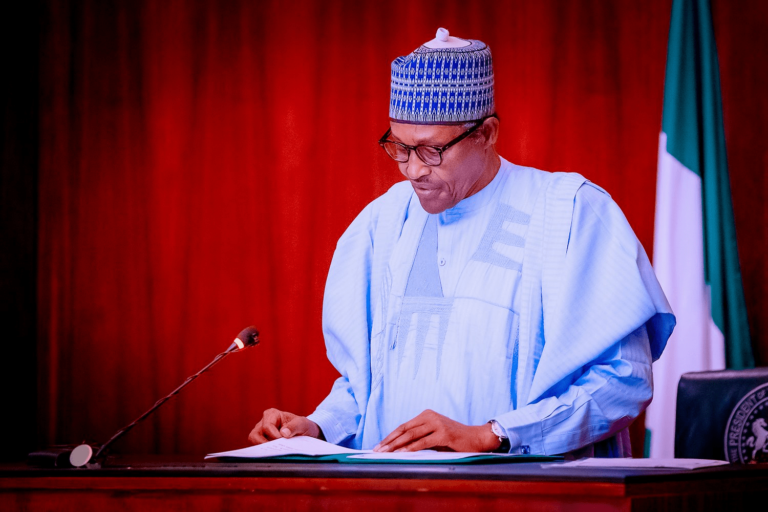
According to a statement by his Special Adviser on Media and Publicity, Femi Adesina, Buhari said this at the launch of the Advisory Council, Adolescent Girls’ Initiative for Learning and Empowerment Project and National Women’s Economic Empowerment Policy Dialogue.
Buhari said he recognises that women and girls are integral to development, noting that their well-being is a crucial indicator of how well any Nation is driving its developmental plans.
“This is what we promised to all Nigerians – including our women and girls when our party, the All Progressives Congress, was elected in 2015.
“I am proud to say that our government has delivered over the past eight years,” Buhari said.
The President also acknowledged the gap in harnessing the technical expertise of the country’s social and development partners to drive women’s and girls’ empowerment outcomes.
He also pointed out that coordination remained a crucial gap in the efforts to improve livelihoods and democratise opportunities for women and girls.
“It is expected that the High-Level Advisory Council on Nigeria’s Support for Women and Girls, which I am very proud to inaugurate today, therefore, comes as an answered prayer to bridge this identified gap,” he said.
THE National Oil Spill Detection and Response Agency (NOSDRA) has disclosed that Nigeria recorded 108 oil spills in the last three months.
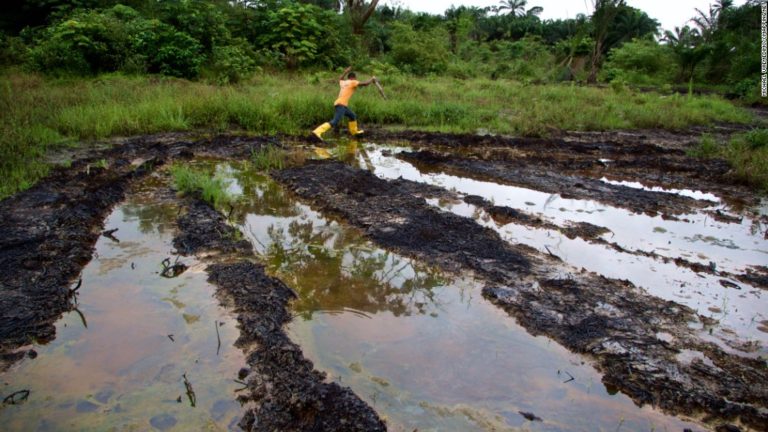
According to a report obtained from theNigerian Oil Spill Monitor, a total of 108 oil spill cases were reported between November 1, 2022 and February 2023.
The report showed that Shell Petroleum Development Company (SPDC) and Chevron Corporation have the highest number of oil spills with 29 and 17 incidents, respectively.
The report further revealed that the Nigerian Petroleum Development Company (NDPC) and Nigerian Agip Oil Company (NAOC) were involved in 16 oil spills each while Heritage Oil Limited has 10 incidents.
Other petroleum companies involved in oil spill incidents include Total (3), Midwestern (2), MPN (5), ERL (2), SEPLAT (6) and SEEPCO (1).
The report noted that 89 of the oil spills were confirmed, 18 are under review and one case is inconclusive.
Also, the report disclosed that 84 spillages were caused by sabotage and oil theft while eight incidents were as a result of equipment failure. Other incidents of oil spill resulted from corrosion, operation maintenance errors and yet-to-be-determined causes.
The report indicated that Delta State is the most affected state with 72 spillages in the last three months while Edo and Imo recorded one case of oil spill each.
Rivers, Akwa Ibom and Bayelsa recorded 27, four and two oil spills, respectively.
During the period under review, 81 pipelines and 16 flow lines were vandalized.
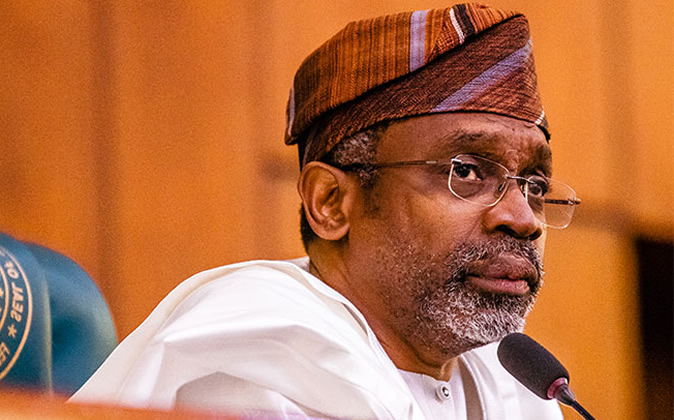
THE Speaker of the House of Representatives, Femi Gbajabiamila, has faulted the Central Bank of Nigeria (CBN) and the Federal government for ignoring the Supreme Court order that suspended the Central Bank of Nigeria’s February 10 deadline for circulation of the N500 and N1,000 notes as legal tender.
The court had on February 15 issued an order that the old N200, N500 and N1,000 notes remain legal tender until February 22 when it would continue hearing on a suit three state governors had filed against the Federal government on issues bordering on the naira redesign policy of the CBN.
Gbajabiamila, in a statement he personally signed in Abuja today, cautioned that the Federal government could not afford situations that “suggest a disregard for the rule of law.”
President Muhammadu Buhari had in a nationwide television broadcast this morning announced that the old N500 and N1,000 notes had ceased to be legal tender on February 10, while extending the circulation life of the old N200 note till April 10.
He flayed the decision of the federal government on maintaining silence on the Supreme Court order.
Gbajabiamila, a lawyer, said, “The decision of the Federal government still falls short of the order of the Supreme Court that the old currencies remain legal tender.”
He urged the citizens to bear the moment with equanimity for the sake of the country, urging them to work together to resist actions that can escalate tensions.
“In all things, let the well-being of our fellow citizens and the survival of our nation be foremost in our hearts and guide all the decisions we make in this historic moment.
“Citizens and visitors are experiencing grave and unnecessary hardship across the country. They spend hours and days queuing at banks and teller machines to receive stipends of their own money to afford life’s necessities.
“This situation is a consequence of the flawed implementation of the Naira redesign policy by the CBN. It is also the result of decisions made by the CBN Governor, Godwin Emefiele, to refuse counsel, be guided by precedent or abide by the decisions of superior courts,” the Speaker said.
He said it was disheartening that the CBN had refused to admit error and change course in the face of mounting evidence that the implementation of the policy had been a devastating failure.
Besides Gbajabiamila, a lawyer Rilwan Okpanachi, who spoke with The ICIR, described the action taken by the President to announce the extension as “a regrettable and avoidable contempt of court”, which he regarded as “contemptuous” of the order of the Supreme Court.
“The Supreme Court order is specific and restricted the CBN, Federal Government and even the commercial banks from countering the February 10 deadline. This means that by the order, the N200, N500 and N1000 notes remain legal tender, and the President lacks the power to extend such.
“The President lacks the power to override the order of the Supreme Court,” Okpanachi said.
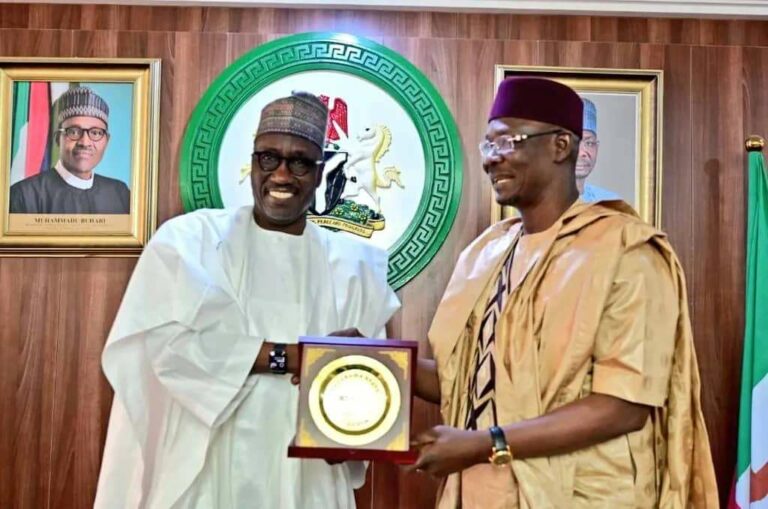
THE Nigerian National Petroleum Company Limited (NNPC Ltd) will begin drilling of the first oil well in Obi/Keana, Nasarawa State, on March 21.
The Group Chief Executive Officer of NNPC Ltd, Mele Kyari, gave the information today when he led the company’s management on a courtesy visit to the Governor of Nasarawa State, Abdullahi Sule, in Lafia, the state capital.
Kyari said the company began exploration activities in the state in 2010 and had technically found petroleum in the state.
“We have seen a great potential for finding hydrocarbon in Nasarawa State and to confirm this, we are going to start drilling on March 21.
“We are very optimistic that it will be a successful exercise. It will not end there; once you find oil, you do further works to develop it not just for the benefit of the community around it but for Nasarawa State and the country,” he stated.
He said the exploration would not be limited to the current location in Obi/Keana.
“Once we test this prospect, it opens new roads. And we have seen other great prospects across many parts of the state. This will herald history and bring value to all of us,” he added.
The Group CEO lauded the government and people of Nasarawa State for their cooperation and support so far and called for its sustenance.
“Peace and cooperation is essential in oil exploration and we have seen enormous cooperation in this respect. We have seen no danger, no risk to our operation from all stakeholders in our area of operation, and we thank them for that,” he said.
He said the company would continue to do its best to bring immediate value to the host community and, ultimately, to the wider society when oil was found in commercial quantity.
In his response, Governor Sule thanked the NNPC Ltd. boss and his team for the visit and for what they were doing in the state.
He also appreciated the people in the area for their support so far, while urging them to sustain the peace in the area and across the state.
Sule identified insecurity as a major challenge to oil exploration in the country, and called on the people of the state to ensure they maintain peace and support the company for the project to succeed.
He expressed optimism that the drilling of the oil well, named ‘Ebenyi-A’ would be the first in the North Central zone of the country and would bring lots of benefits to Nasarawa State.
The Emir of Lafia, retired judge, Muhammad Sidi-Bage, reassured the NNPC Ltd, on behalf of the people, of utmost support towards the success of the project.
“On behalf of our people, we want to say that you will find peace, we have been known for being peaceful, kind and loving. You will not have any reason to feel otherwise within the period of your operation in the state,” Sidi-Bage said.
The Managing Director, NNPC Energy Services Limited, Sophia Mbakwe, said the assurances from the government and stakeholders in Nasarawa State were critical to the company’s operation.
“For the right environment to operate, we need the cooperation, support and blessing of the Governor and the community, and that we have gotten today.
“The intent is that it’s going to benefit both parties and we want to go there to ensure no harm to people, no harm to the environment and be able to commence drilling as planned on March 21,” she said.
In a similar vein, the Executive Director, frontier exploration services of the company, Muktar Zanna, led a team of other executive directors on courtesy visits to various traditional rulers of areas with hydrocarbon prospects in the state to get their support.
Traditional rulers visited included Aliyu Dangiwa-Orume, the Osuko of Obi; Abdullahi Agbo, the Osana of Keana; and Umar Apeshi, the Osoho of Olosoho (Agwatashi), as well as retired justice Muhammad Sidi-Bage, the Emir of Lafia.
All the traditional rulers gave assurances of the peoples’ commitment to peace towards the company’s operations in the state.
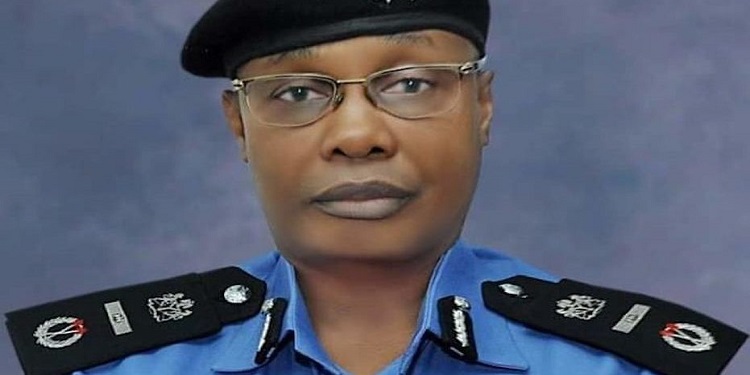
THE Inspector General of Police (IGP) Usman Alkali Baba has disclosed that the police and other security agencies will deploy over 400,000 personnel nationwide for the general elections.
The IGP added that an intelligence unit would be in place to track and apprehend those engaged in vote buying and others who may want to disrupt the poll.
Baba disclosed these while addressing a news conference at the State House, Abuja, on Thursday, February 15.
The police will be providing over 300,000 personnel, while the rest will be sourced from other security agencies in the country.
Noting that the unavailability of cash and the scarcity of petrol pose dangers to the success of the polls, he assured Nigerians that things would improve before election day.
“We are very sure the situation of cash and petrol will stabilise before the conduct of the election,” the IGP said.
Nigerians will go to the polls in February and March 2023 to elect new leaders.
The Presidential and National Assembly election will hold on February 25, while the Governorship and House of Assembly polls will hold on March 11.
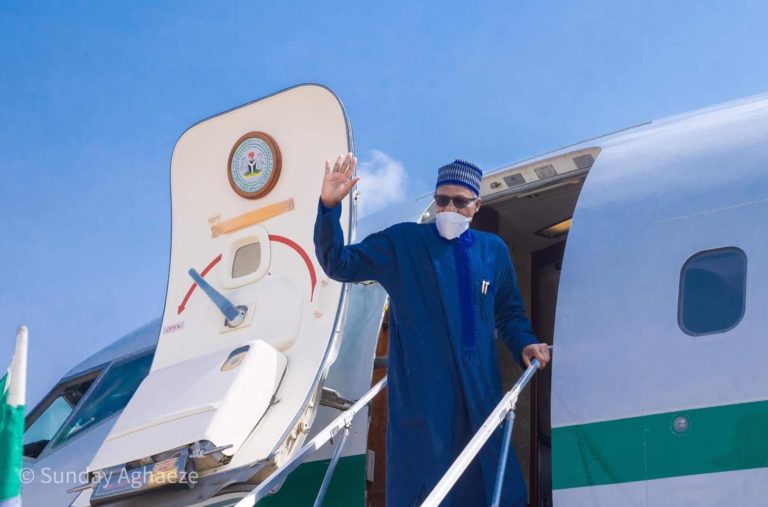
NIGERIAN President Muhammadu Buhari will on Thursday, February 16 leave for Addis Ababa, Ethiopia, for the African Union (AU) Summit.
This was disclosed in a statement by Senior Special Assistant, Media and Publicity to the President Garba Shehu.
Shehu noted that the President would be leaving for the summit o Thursday along with some ministers and top government officials.
The President will participate in three high level meetings on peace and security, climate change and the political situation in some West African countries.
First is the Peace and Security Council (PSC) meeting of Heads of State and Government on the situation in the Eastern Democratic Republic of Congo (AUPSC High Level AU), to be chaired by the President of South Africa, in his capacity as the Chair of the Council for the month of February.
“Second is the meeting of the Committee of the Heads of State and Government on Climate Change (CAHOSCC), currently chaired by the President of Niger Republic,” Garba noted.
Buhari would also attend a summit of the Authority of Heads of State and Government of the Economic Community of West African States (ECOWAS).
IN a determined effort to resolve the current cash crunch triggered by the currency redesign policy of the Federal Government, President Muhammadu Buhari again met with the embattled Central Bank of Nigeria (CBN) Governor Godwin Emefiele today at the Presidential Villa, Abuja.
Emefiele, who spoke to State House correspondents after the meeting, disclosed that his engagement with the President centred on the naira redesign, scarcity of the currencies, and how best to ensure that things normalise quickly.
He also spoke on efforts to flood the commercial banks with the old N200 note, as well as the other notes as approved by President Buhari in his nationwide broadcast today.
He disclosed he had earlier today held a crisis management meeting with no fewer than 15 chief executives of commercial banks in Abuja on the new strategies to resolve the scarcity crisis.
“Mr. President has given directives in a nationwide broadcast, so the CBN is favourably disposed to carrying out the directives to the latter. We are going to release the old naira notes back in circulation to ease the pressure.
“I have met with 15 commercial banks in Abuja on ways to ameliorate the sufferings of Nigerians due to the new policy, but it’s for the benefit of the country. I plead with Nigerians to give the policy the chance to succeed,” he said.
Emefiele further said safeguards had been put in place to ensure that the banks work closely with the apex bank to make both the redesigned naira notes and old notes available to customers.