SUPER Eagles’ captain, William Troost-Ekong, has acknowledged that facing the Democratic Republic of Congo in today’s final of the FIFA World Cup Africa Playoff Tournament will be a tough challenge.
However, he expressed confidence that the Super Eagles have what it takes to triumph at the Complexe Sportif Prince Moulay El Hassan.
The ICIR reports that both nations, with five African titles between them, will battle in a decisive encounter that will determine Africa’s representative at the Intercontinental Playoffs, where two additional spots for the 2026 FIFA World Cup in Mexico are up for grabs.
“There is no doubt that the Congolese will be a big challenge. They got here because they are tough and ambitious, and also want to go to the World Cup,” Ekong said.
“However, we have a large group of players here, 24 of them, out of which only about four of us have been to the World Cup (in 2018). There is that adrenaline flowing in their system to go to the World Cup, and I see it as a big motivation for us to conquer,” he added.
The national team advanced to the final playoff round to face the winner of the Cameroon–Democratic Republic of Congo clash after defeating Gabon 4-1 on Thursday, November 12.
Only four members of Nigeria’s current squad, William Troost-Ekong, Alex Iwobi, Wilfred Ndidi, and Chidozie Awaziem, were part of the team that competed at the 2018 World Cup.
Coach Éric Chelle’s side, however, boasts several outstanding players, including Spain-based Cédric Bakambu, France-based Nathaniel Mbuku, former Russia U21 star Theo Bongonda, and Egypt’s Pyramid-based Fiston Mayele. Midfield responsibilities are expected to be handled by English Premier League’s Noah Sadiki and Spain-based Charles Pickel. At the same time, attack-minded Aaron Wan-Bissaka leads a tight defensive line anchored by captain Chancel Mbemba, who is set to earn his 101st cap.
Chelle has all 24 players available for selection, including Iwobi, who will secure his 91st cap, and Moses Simon, on course for his 87th. Ekong confirmed that the squad is fully focused on securing victory on Sunday evening.
“We would have preferred to have taken the automatic ticket, but it didn’t work out. Now, we are here and we have a second chance and we do not intend to bungle it.” Ekong stated.
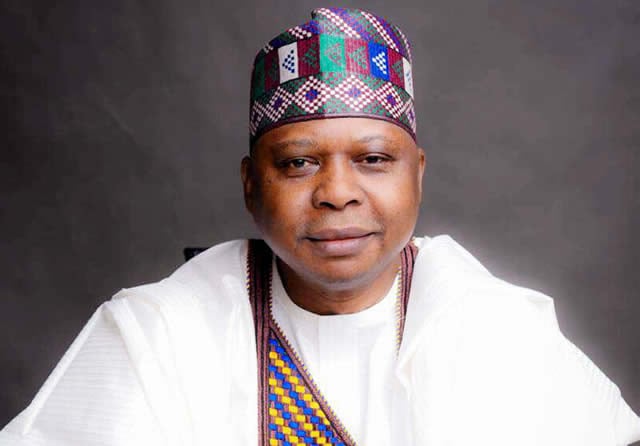
THE newly elected Chairman of the Peoples Democratic Party (PDP), Kabiru Turaki, has pledged that his administration will introduce reforms to restore internal democracy and curb impunity within the party.
Delivering his acceptance speech on Saturday, November 15, 2025, in Ibadan, the Oyo State capital, Turaki acknowledged the magnitude of the task ahead but expressed confidence in the party’s leadership and its ability to drive meaningful change.
“The cross you have given us means that you watch us also take it to the Nigerian people, and that we shall do. We are not under any illusion that the task placed on us is a simple one. Our party is at a crossroads now, but we are up to the task; we are up to the challenge,” he said.
The former Minister of Special Duties and Intergovernmental Affairs stated that the new executive team will soon release its operational blueprint to steer its leadership direction.
“Very soon, we shall be rolling out what our guiding principles will be and the modus operandi for achieving them. When we do that, we shall be hitting the ground running from day one,” he added.
Turaki also pledged not to take the mandate given to him for granted, emphasising that the PDP remains grounded in the will of the people. He said the party had retained its name over the years because it truly belongs to Nigerians and assured members that the party would be returned to them, adding that impunity would no longer be tolerated.
The ICIR reports that Turaki clinched victory at the party’s national convention, where delegates from 17 states convened to elect new national officers following the expulsion of former National Secretary Sam Anyanwu, FCT Minister Nyesom Wike, and other top members.
This came after the Peoples Democratic Party (PDP) expelled several prominent figures, including former Rivers State Governor Nyesom Wike, former Ekiti State Governor Ayo Fayose, and former National Secretary Senator Samuel Anyanwu, among others, over alleged gross anti-party activities, The ICIRreports.
At the convention held at the Lekan Salami Stadium, Turaki secured 1,516 votes.
The election, supervised by former Anambra Central Senator Ben Obi, saw Senator Yakubu Danmarke finish second with 275 votes.
He also announced that former Oyo State Deputy Governor, Taofeek Arapaja, emerged as the party’s new National Secretary.
Turaki is a seasoned legal practitioner with expertise spanning constitutional law, election petition matters, commercial arbitration, cross-border and international criminal law, intellectual property, oil and gas, as well as corporate mergers and acquisitions. He is also a certified Notary Public.
His professional background is reinforced by multiple fellowships and recognitions, including Fellow of the Chartered Institute of Arbitrators (FCIArb) and Fellow of the Institute of Corporate Administration, underscoring his depth of knowledge and prominence within the legal field.
In public service, Turaki has occupied notable positions such as Minister of Special Duties and Intergovernmental Affairs and Supervising Minister of Labour and Productivity.
Within the PDP, he serves as the Chair of the PDP Former Ministers’ Forum, a position that strengthens his network and influence within the party.
Turaki has also previously sought elective office, having contested for the governorship of Kebbi State and vied for the PDP’s presidential ticket, reflecting his long-standing involvement in national politics.
THE Peoples Democratic Party (PDP) has expelled several prominent figures over allegations of gross anti-party activities at the ongoing 2025 National Convention.
Those affected include former Rivers State governor Nyesom Wike, former Ekiti governor Ayo Fayose, former PDP National Secretary Senator Samuel Anyanwu, senior lawyer Adeyemi Ajibade (SAN), Austin Nwachukwu, and others listed in the motion adopted by delegates.
The expulsions were approved after the reading of a motion citing multiple breaches of the PDP Constitution, including alleged support for opposition candidates during the last election cycle.
Delegates voted overwhelmingly in favour of the disciplinary action, marking one of the party’s boldest internal decisions in recent years.
The motion, moved during the convention’s plenary, noted that the affected members were found to have engaged in conduct capable of undermining party unity, violating provisions of Articles 10, 58, and 59 of the PDP Constitution (2017 as amended).
Party leaders say the decision reflects a renewed push to reposition the PDP ahead of the 2027 general elections, with an emphasis on discipline, loyalty, and internal cohesion.
The crisis that culminated in the expulsion of several high-ranking PDP members has been years in the making.
Internal disagreements sharpened after the 2023 general elections, when key figures within the party openly disagreed over power-sharing arrangements, candidate selection, and campaign direction.
The fallout led to fractured loyalties, parallel structures in some states, and accusations of sabotage during the presidential and governorship elections.
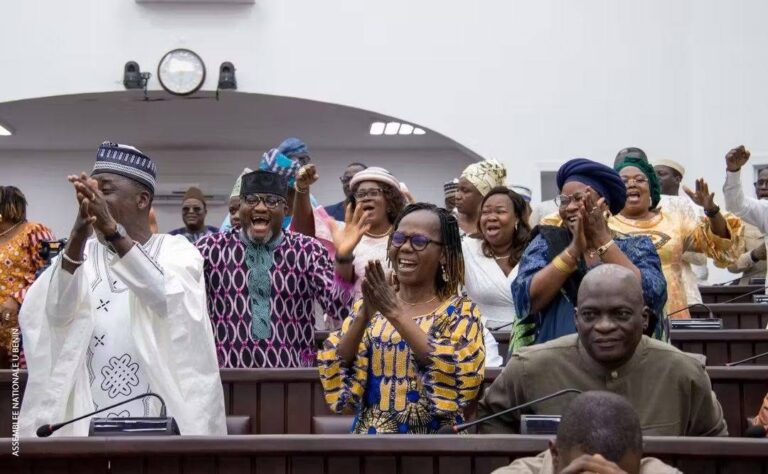
BENIN’S National Assembly has extended the presidential tenure from five to seven years and established a bicameral parliament.
The development was announced on Saturday, November 15, in a statement posted on the official Facebook page of the Assemblée Nationale du Bénin.
Lawmakers passed the bill during a plenary session held on Friday at the Palace of the Governors in Porto-Novo.
According to the statement posted in French, translated using Google Translate, 90 deputies voted in favour of the amendment while 19 opposed it, effectively altering the country’s 1990 Constitution, last revised in 2019.
“The Deputies of the 9th Legislature… adopted by 90 votes for and 19 against, the law modifying the Constitution of the Republic of Bénin,” the Assembly said.
The chamber explained that, in compliance with Article 154, the proposal first required a three-quarters majority in a preliminary vote. Legislators met this threshold with 87 votes for and 22 against before proceeding to the final secret ballot.
Fifteen new articles were introduced and 18 amended. One of the most consequential changes appears in the revised Article 42, which now provides: “The President of the Republic is elected by direct universal suffrage for a term of seven years, renewable only once. No one may, in his or her lifetime, serve more than two terms as President of the Republic.”
Another major reform is the creation of a bicameral parliament. Under the updated Article 79, legislative authority and oversight of the executive will now be exercised by two chambers — the National Assembly and a newly created Senate.
The amendment also sets a seven-year renewable term for deputies under Article 80. It further introduces an anti-defection clause mandating that any lawmaker who resigns from the party that sponsored their election automatically forfeits their seat.
Accordingly, Article 113.1 defines the Senate as an institution charged with regulating political life and safeguarding national unity, development, territorial defence, public security, democracy, and peace.
The law also extends the tenure of mayors and municipal councillors to seven years, renewable.
THE Academic Staff Union of Universities (ASUU), Bauchi Zone, comprising six universities, has announced its readiness to embark on a fresh strike, citing the Federal Government’s failure to address unresolved demands.
The zone includes the Federal University, Kashere (Gombe State); Abubakar Tafawa Balewa University, Bauchi; University of Jos, Plateau State; Bauchi State University; Plateau State University, Bokkos; and Gombe State University.
According to Punch, the Zonal Coordinator, Timothy Namo, while addressing reporters in Jos on Saturday, November 15, expressed disappointment that, despite previous warnings and a two-week strike notice, the government had made no substantial progress.
“The paltry increase proposed by the government is a drop in the ocean and far below expectations,” Namo said, noting that the union had rejected the offer.
He accused some government officials of undermining the renegotiation process and misrepresenting the proposals made.
The union leader questioned the government’s commitment to education, pointing to a significant rise in federal and state revenue allocations in recent years, yet education continues to suffer. “There is no sufficient evidence from the Government’s response so far to suggest that education is a priority in Nigeria and that the Government truly desires to avert crises in the universities,” he said.
Namo urged traditional rulers, students, civil society groups, and the National Assembly to pressure the government to meet ASUU’s demands, warning that failing to act could trigger a full-scale strike.
He also highlighted statistics showing that allocations to states rose from 3.92 trillion naira in 2022 to 5.81 trillion naira in 2024, while federal allocations increased from 3.42 trillion naira to 4.65 trillion naira over the same period. “This confirms that it is not lack of funds but lack of political will and misplaced priorities that make education suffer in Nigeria,” Namo said.
The national branch of the union abruptly ended its two-week warning strike, which commenced on Monday, October 13, after “useful engagements” with the Nigerian government.
ASUU’s long-standing demands include the release of revitalisation funds, payment of earned academic allowances and withheld salaries, settlement of promotion arrears, and payment of outstanding third-party deductions such as check-off dues and cooperative contributions.
The union has also criticised the unchecked establishment of new universities and alleged government interference in university autonomy.
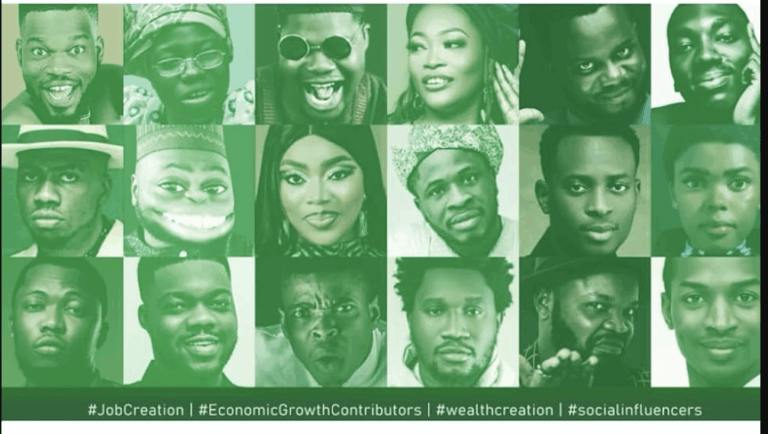
SHORT comedy videos circulating on social media have created a booming industry in Nigeria in the past few years. The country’s comedy creators put their skits out on platforms like YouTube, TikTok and Instagram to reach a massive audience.
As these online comedians gain followers they make their money from advertising, by endorsing brands as influencers, and through collaborations. In Nigeria the industry is popularly called the skit economy.
This phenomenon represents more than a major new entertainment trend. It highlights the ingenuity of young Nigerians in using technology to create livelihoods and influence culture. In the process, they contribute to national economic growth.
The skit industry has joined the likes of Nollywood film, Afrobeats music and local fashion to put the country on the entertainment map globally.
The rise of the industry is chronicled in the 2024 book Skit Economy: How Nigeria’s Comedy Skit-Makers Are Redefining Africa’s Digital Content Landscape, by entrepreneurship scholar and polling guru Bell Ihua. His work is supported by findings from the Africa Polling Institute.
As he explains:
“The Nigerian entertainment industry is undoubtedly creating job opportunities and contributing to the country’s diversification from oil … The industry is rated as the second most significant employer of youths in Nigeria after agriculture, employing over one million people.”
According to his book, skit-making is estimated to be Nigeria’s third largest entertainment industry sector, with a net worth of over US$31 million.
What becomes clear as you read it is that social media platforms have not only amplified the reach and impact of skits. Online platforms have allowed creators to reach global audiences while preserving the culture, language and stories unique to their communities. Skit creators prove the potential of comedy as a medium for both entertainment and cultural diplomacy.
However, as the industry grows, argues Ihua, the skit economy must navigate new challenges related to representation and ethics.
What’s in the book
The book’s eight chapters cover Africa’s digital content landscape, taking into account the continent’s youth bulge and the evolution of social media and content creation.
Ihua then explores Nigeria’s booming cultural and creative industries before homing in on comedy skit-making in chapter 4. It attempts to classify various types of digital content creation in Nigeria and outline the trends in online videos before embarking on an in-depth national study on comedy skit-making in chapter 7. He then considers implications for public policy and future research in the field.
What makes the book so compelling is that it recognises skit-making as an ecosystem on its own terms. It then defines what that ecosystem looks like in Nigeria. In the process Ihua makes it clear why books like this matter.
They are a call for taking entertainment seriously and investing future research in it. Social media and digital technology have reconfigured an unsung economic sector that’s capable of including the bulging youth population in the national conversation. This is despite limited institutional support.
What’s driving the boom
Ihua traces its boom to COVID-19 lockdowns that began in Nigeria in 2020:
“They provided a source of laughter and relief to many Nigerians, as most people found it safer to stay at home and get entertained with skits.”
Today, writes Ihua, two-thirds of Nigerians watch comedy skits frequently. According to his study they serve as stress relief and social commentary.
With 63 per cent of Nigerians under 25 and high social media uptake, skit-making taps into abundant creative energy and mobile-first audiences.
Value
The Skit-Economy highlights how skit comedians create direct and indirect jobs (editors, social media managers, brand consultants). They generate income through endorsements, platform monetisation (the revenue they get from advertising on a space like YouTube), and various partnerships and collaborations.
Their cultural value is not just measured in their global influence. Skits reflect everyday Nigerian realities with humour and satire, influencing local public opinion and reinforcing national identity.
As prominent Nigerian entrepreneur and cultural worker Obi Asika notes in the book’s foreword:
“Their success … stems from a combination of talent, creativity, innovation, an entrepreneurial spirit, and a deep understanding of their audience’s preferences and cultural nuances.”
Challenges
However, Ihua identifies a number of challenges facing the industry.
Financial rewards are unequal. Only top creators earn sustainably. For many skit-makers revenue is unstable.
Working from Nigeria means dealing with infrastructure deficits. Electricity supply is unreliable, the internet is expensive and there is limited access to digital production tools.
Nigerian skit-makers also operate in a climate where there are weak intellectual property protections. Piracy and unauthorised reuse undermine earnings.
The job can be an ethical minefield. Pranks can be harmful. They can perpetuate stereotypes and be insensitive to minorities.
These challenges are enhanced by a policy vacuum. There is little government recognition or support for digital creatives in Nigeria.
An African future?
For Ihua, skit-making is a good example of how new digital industries can aid in absorbing Africa’s growing youth workforce. With adequate support, skit-making can help provide dignified livelihoods.
So, for Ihua these creators are not merely entertainers. They’re also job creators, cultural ambassadors, and catalysts of digital transformation.
For Africa broadly, the rise of skit-making underscores the continent’s potential to innovate in ways that are uniquely aligned with its youthful demographics and digital future.
Nigeria’s skit economy offers a blueprint for the continent. Already, skit-making is spreading to other countries, like Ghana, Kenya and South Africa. The lines are blurring between stand-up or TV comedians and skit makers.
If nurtured with the right infrastructure, policy, and industry support, the skit economy could evolve from an informal hustle into a structured pillar of Africa’s creative economy. This could further solidify the continent’s role in the global cultural imagination.
TWO separate fire outbreaks have razed production facilities in Ilorin, Kwara State, destroying goods and equipment worth millions of naira within seven hours.
The first incident occurred late Friday at Kunzol Multi-Sector Nigeria Limited, a yam flour and crunchy garri processing factory in the Kilanko–Agbonka area of Ilorin South Local Government.
It was gathered that the fire started around 10:10 pm after heat remnants from a furnace used during production ignited combustible materials in the facility.
Confirming the incident in a statement on Saturday, November 15, the Head of Media and Publicity of the Kwara State Fire Service, Hassan Hakeem Adekunle, said firefighters arrived to find the factory’s entire production section already engulfed in flames.
“Preliminary investigation revealed that the fire was triggered by remnants of unquenched fire, which ignited combustible materials in proximity, leading to rapid escalation,” the statement quoted him as saying.
Adekunle added that operatives were able to stop the blaze from spreading to nearby buildings, preventing a wider industrial disaster.
The Director of the Fire Service, Prince Falade John, warned factory owners against improper shutdown of heat sources at the close of work, calling negligence with fire remnants a major cause of avoidable industrial incidents.
A second fire occurred in the early hours of Saturday, November 15, at Unik AJ Prints, a printing shop located along Opomalu Road in Ilorin East Local Government.
The fire, which eyewitnesses said began around 3:15 am, gutted a storey building housing printing machines, inverter units and other production materials.
Adekunle said firefighters responded swiftly despite the difficult hour and were able to stop the flames from spreading to other buildings in the congested area.
Preliminary reports indicated that a spark from the facility’s inverter system ignited nearby flammable materials.
Commenting on the incident, Prince Falade advised businesses using solar and inverter systems to install them in isolated, fire-protected spaces.
He urged residents and business owners to adopt fire-retardant materials and ensure proper installation of alternative power systems.
The Kwara State Fire Service reaffirmed its commitment to public safety and prompt emergency response across the state.
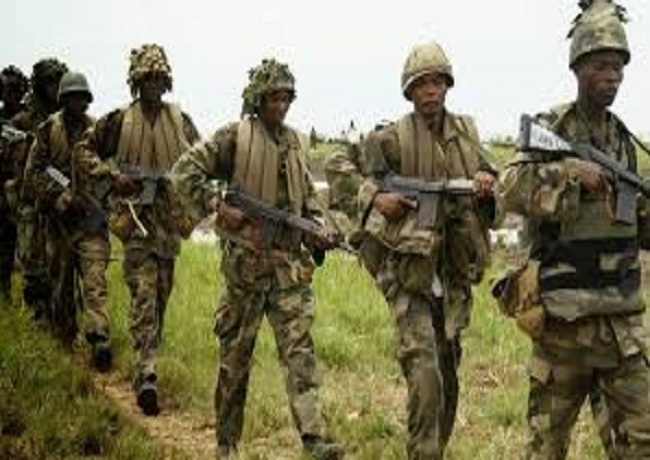
THE headquarters of the Joint Task Force Operation Hadin Kai in the Northeast says troops of the 232 Battalion (Tactical), under Sector 4 of the theatre, have recorded a breakthrough with the arrest of a key drug supplier to Boko Haram in Adamawa State.
The suspect, 45-year-old Zubairu Muhammed, was apprehended in the early hours of Thursday in Uba town.
In a statement, the Theatre Spokesman, Sani Uba, a lieutenant colonel, said, “The suspect is believed to be a major distributor of cannabis sativa and ‘ice’ substances to terrorists across Askira-Uba, Chibok, Michika, and Damboa areas of Adamawa and Borno states.”
Suspected terrorists drug supplier
Recovered items include 14 blocks of cannabis sativa valued at over ₦1 million, 43.9 grams of “ice” worth more than ₦3 million, and two Army camouflage T-shirts allegedly used while distributing the drugs.
According to the military, preliminary investigations indicate that the seized substances will be handed over to the National Drugs Law Enforcement Agency (NDLEA)Yola Command, for further action.
The Military High Command commended the troops for their performance and urged them to sustain the operational tempo.
In May, The ICIRreported that the arrest of four security personnel was aiding terrorist operations in the North-East.
The suspects include two personnel from the hybrid forces who had been working alongside troops to combat the insurgency.
According to the Director, Defence Media Operations, Markus Kangye, the hybrid forces were arrested during operations from April 26 to 29 across Bama, Kukawa, and Madagali LGAs.
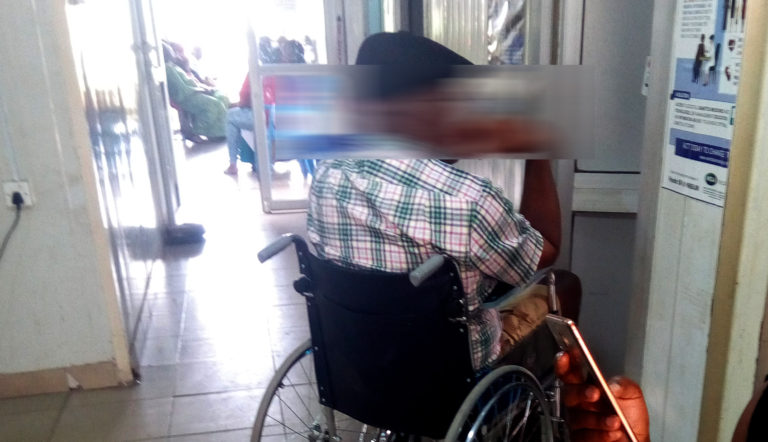
THE Corporate Accountability and Public Participation Africa (CAPPA) has urged the Federal Government to declare a national emergency on diabetes care.
The organisation, in a statement on Friday, November 14, also called on the government to increase taxes on sugar-sweetened beverages (SSBs) to curb the country’s growing diabetes crisis, as Nigeria joins the global community to mark World Diabetes Day.
The World Health Organisation defines diabetes as “a chronic disease that occurs either when the pancreas does not produce enough insulin or when the body cannot effectively use the insulin it produces.”
Symptoms may include intense thirst, frequent urination, fatigue, unintended weight loss and blurred vision. If untreated, the condition can lead to life-threatening complications affecting the eyes, kidneys, nerves and blood vessels.
Type 2 diabetes, the most common form, is strongly linked to obesity, sedentary lifestyles and diet while Type 1 diabetes, although less common, requires daily insulin treatment and currently has no known prevention method.
In its statement, CAPPA said recent data by Diabetes Association of Nigeria (DAN), showed that about 30,000 Nigerians die from diabetes yearly, while over 11 million people live with the disease.
The figures, according to the organisation, far exceeded the International Diabetes Federation (IDF) estimate of roughly three per cent prevalence, or about 2.99 million adults.
The group warned that the high cost of diabetes management, averaging ₦100,000 to ₦120,000 per month, made proper treatment impossible for most Nigerians and threatened the lives of many families struggling under economic hardship.
“This is yet another troubling statistic on the state of Nigeria’s non-communicable diseases (NCDs) burden, and the country’s public health system,” CAPPA stated.
It added, “It is no wonder that Nigeria’s life expectancy is the lowest globally, according to the latest United Nations’ (UN) global health report.”
The CAPPA Executive Director, Akinbode Oluwafemi, said unhealthy diets and the wide availability of sugary drinks and processed foods were driving the surge in diabetes and other non-communicable diseases.
He warned that without decisive policy action, Nigeria risked creating generations dependent on high-sugar beverages, leading to obesity, type 2 diabetes, cardiovascular disease, and early deaths.
Oluwafemi urged the government to implement strong prevention policies, including an SSB tax, front-of-pack nutrition labelling, sodium-reduction targets, and restrictions on marketing ultra-processed foods to children.
He added that the strongest prevention policies required a health system capable of supporting millions already living with diabetes.
The group welcomed the government’s efforts to channel revenues from taxes on tobacco, alcohol and other harmful products into health financing, saying dedicated funds could support NCD prevention and management while alleviating the financial burden on families.
“This is why the Federal Government’s ongoing effort to channel revenues from taxes on tobacco, alcohol, and other harmful products into health financing is significant.
“Dedicating these revenues to initiatives such as NCD prevention and management would provide the predictable funding Nigeria urgently needs, especially as the costs of treating diseases like diabetes continue to push families deeper into poverty,” it added.
The CAPPA stressed that increasing the SSB tax to at least ₦130 per litre and introducing mandatory nutrition labels would reduce consumption, encourage product reformulation, generate revenue for the health sector, and empower Nigerians to make healthier choices.
The ICIRreported that as part of this year’s commemoration, the WHO in a statement noted that diabetes increasingly affects people from childhood to old age.
With the theme, the organisation said every person living with diabetes should have access to supportive environments, policies and health services that promote dignity, effective self-management and long-term wellbeing.
AS the world marks World Diabetes Day today, November 14, the World Health Organization (WHO) has called for urgent improvements in access to care for the condition globally.
It said people living with diabetes at every stage of life deserved affordable and integrated healthcare services.
With the theme, “Diabetes Across Life Stages,” WHO in a statement noted that diabetes increasingly affects people from childhood to old age.
According to the organisation, every person living with diabetes should have access to supportive environments, policies and health services that promote dignity, effective self-management and long-term wellbeing.
The global health body defines diabetes as “a chronic disease that occurs either when the pancreas does not produce enough insulin or when the body cannot effectively use the insulin it produces.”
Symptoms may include intense thirst, frequent urination, fatigue, unintended weight loss and blurred vision. If untreated, the condition can lead to life-threatening complications affecting the eyes, kidneys, nerves and blood vessels.
Type 2 diabetes, the most common form, is strongly linked to obesity, sedentary lifestyles and diet while Type 1 diabetes, although less common, requires daily insulin treatment and currently has no known prevention method.
In 2021, diabetes and diabetes-related kidney disease caused over two million deaths, while high blood glucose contributed to 11 per cent of all cardiovascular deaths.
Rising Burden
Meanwhile, the 2024 data sheet released by WHO shows that the number of people living with diabetes surged from 200 million in 1990 to 830 million in 2022, with prevalence increasing faster in poorer countries.
Despite this rise, more than half of adults with diabetes were not on medication in 2022, a gap most pronounced in low- and middle-income regions.
“In 2022, 14 per cent of adults aged 18 years and older were living with diabetes, an increase from seven per cent in 1990. More than half (59 per cent) of adults aged 30 years and over living with diabetes were not taking medication for their diabetes in 2022. Diabetes treatment coverage was lowest in low- and middle-income countries.
“In 2021, diabetes was the direct cause of 1.6 million deaths and 47 per cent of all deaths due to diabetes occurred before the age of 70 years. Another 530,000 kidney disease deaths were caused by diabetes, and high blood glucose causes around 11 pet cent of cardiovascular deaths (1),” the report read.
The WHO noted that diabetes deaths had risen steadily since 2000, even though the overall risk of dying from the four major noncommunicable diseases (cardiovascular diseases, cancer, chronic respiratory diseases and diabetes) fell globally by 20 per cent among people aged 30 to 70 between 2000 and 2019.
Push for preventive measures
The 2025 World Diabetes Day, WHO said, was an opportunity for governments and communities to raise awareness and commit to policies that help reduce the growing burden of the disease.
The agency urged countries to “spread knowledge and create lasting change for all affected by diabetes.”
In 2022, the global health body said its member states endorsed five global diabetes coverage targets to be achieved by 2030 as part of efforts to strengthen early detection and treatment.
These targets include diagnosing 80 per cent of all people with diabetes; ensuring 80 per cent of those diagnosed have controlled blood sugar; and ensuring 80 per cent have controlled blood pressure.
Others are providing statins to 60 per cent of people aged 40 and above; and guaranteeing that 100 per cent of people with type 1 diabetes have access to affordable insulin and blood glucose self-monitoring tools.