VOTING has officially commenced across several polling units in Anambra State, with the elderly and persons with disabilities (PWDs) receiving priority as accreditation and balloting begin.
At Polling Units 016 and 017, located in Iba Okpunoeze Hall 2, Uruago Ward 1, Nnewi North Local Government Area, presiding officers began accreditation and voting at around 9:22 a.m.
Police officers were present to maintain order, while elderly voters were provided with plastic chairs to sit comfortably as they exercised their franchise.
As at the time of filing this report, The ICIR confirmed that the BVAS devices were functioning smoothly and that voting was progressing without any disruption.
Similarly, at Omaigwe Central School, Ward 2, Osumenyi, Nnewi South Local Government Area, voting was already underway by 9:20 a.m. across Polling Units 017, 018, and 019, with election materials properly deployed and voters participating peacefully.
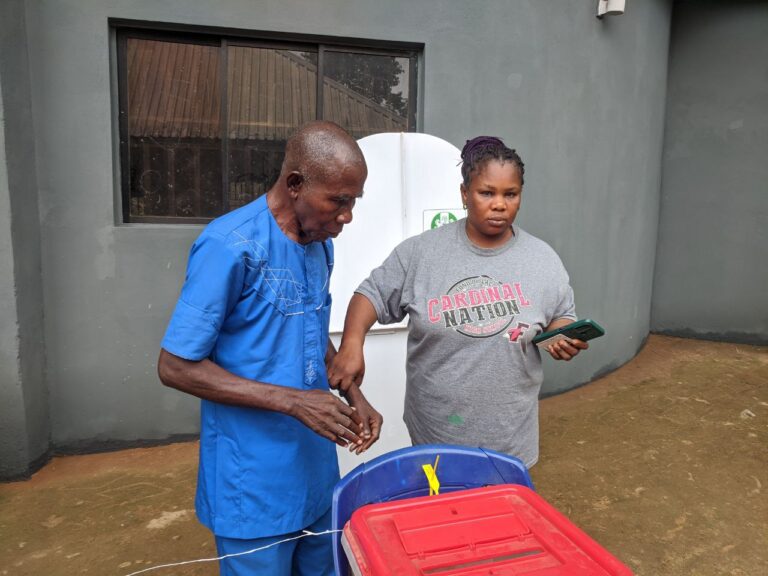
In Aguata Local Government Area, Julius Nwafor, a 74-year-old visually impaired man, cast his vote at 8:47 a.m. in Ward 13, Polling Unit 002, Ofili Square, Isuofia, assisted by his daughter, Ifeoma Nwafor.
He expressed optimism about the election being eventually adjudged to be very credible.
He also urged the incoming administration to prioritise the welfare and healthcare of senior citizens and persons living with disabilities.
“I believe in the unity of Nigeria and would want a hitch-free election devoid of any violence,” Nwafor told The ICIR after voting.
Although he is from the same town with Governor Charles Soludo, he noted that he would welcome the outcome of the election once it’s free and fair and devoid of criss.
“I believe in the unity of Nigeria and would want a hitch-free elections devoid of any electoral violence,” he said.
The ICIR reports that Nwafor was assisted to cast his vote by his daughter, Ifeoma Nwafor.
Presiding officers across the observed polling units confirmed that special consideration was being given to vulnerable groups, in line with INEC’s inclusion policy, which mandates priority voting for the elderly, pregnant women, and persons with disabilities.
The ongoing exercise has so far been peaceful, with no reports of BVAS failure or security breaches across the monitored areas in Nnewi North, Nnewi South, and Aguata LGAs.
According to the INEC data, 2,802,790 registered voters across 21 Local Government Areas, 326 political wards, and 5,718 polling units are expected to participate in the exercise.
The INEC data further shows that over 1.7 million voters collected their Permanent Voter Cards (PVCs), while more than 7,000 Bimodal Voter Accreditation System (BVAS) were deployed for the election.
The ICIR reported that the electoral body had cleared 16 candidates from various political parties to vie for the highest political office in the state, including the incumbent Governor Charles Soludo All Progressives Grand Alliance (APGA), Ukachukwu Nicholas, All Progressives Congress (APC), Ezenwafor Jude, Peoples’ Democratic Party (PDP), and Moghalu Nnadubem, Labour Party (LP).
Topic 1: #AnambraDecides2025: Four things to do after you cast your vote
As the Anambra Election continues, electorates are encouraged to remain actively engaged — not only by casting their ballots but also by participating fully even after the voting process is completed.
Here are four things you can do as an electorate after casting your vote:
1) Monitor the election: After casting your vote, you can stay around the polling unit and monitor ongoing activities peacefully. Monitoring election activities even after you have voted is important to ensure your vote is protected.
2) Encourage others to vote: While it is prohibited to campaign during the election, as an active citizen, you can go ahead to encourage registered voters who might not be interested in the process to cast their votes.
3) Wait for results collation: You should wait and observe the counting process. This is important to ensure transparency in the counting process and helps you know the outcome of your vote. The results sheet (Form EC8A) can also be recorded and kept for future use.
4) Report irregularities: One way to protect your vote is to report any form of irregularities during the election, even after you have cast your vote. When any form of irregularity has been observed, you can reach out to a security official around your polling unit, election observers, or the media.
It is important as an electorate to ensure that your votes are monitored and protected. With this, you are building a culture of transparency and accountability, making sure your votes count.
Topic 2: How to spot fake election results
As votes are being counted in the #AnambraDecides2025, social media will likely be flooded with fake, premature results as experienced in past elections.
Below is how to identify fake election results before you share them:
Verify the source: Trust only official updates from INEC and credible news outlets.
Wait for official announcement: Disinformation actors share fake election results claiming an early lead. The most effective way to get the correct information about the original election results is by waiting for the official announcement by INEC
Watch out for Fake Form EC 60E: People post manipulated EC60E forms, which are usually pasted on the walls after the election at a polling unit to claim an early lead. Look for spelling errors, inconsistent fonts, or blurry logos and do a reverse image search to check their origin.
Cross-check figures: Never rely on one source for election results. Check other credible platforms before sharing
Beware of anonymous sources: Some often claim to have insider information about who wins. Never trust them until the official results are out.
Topic 3: How the NFC exposed old video and how you can do that
A Facebook user posted a video displaying bundles of cash, claiming in the caption that it was “election-sensitive materials” delivered for the Anambra election.
The NFC quickly swung into action to fact-check and found the video had nothing to do with the election.
You can also do this. Here is how:
Observation
If the video involves humans, landscapes, license plates, currency, languages etc, observe for details.
In this case, we observed that the bundles are in the Nigerian Naira currency, so the video was most likely recorded in Nigeria, but this alone doesn’t prove it was recorded in Nigeria.
Reverse image search
There are different ways to do a reverse image search, depending on the available tools to you. You can take a screenshot of the image and upload it to Google to search for the exact images.
You can also download the Invid plugin for Chrome, break the video into frames and conduct a reverse image search on the search engine of your choice (Google, TinEye, Yandex, etc). Invid is a video verification platform that assesses the reliability of video content spread via social media.
When did it appear?
Click on the search results to see the posts with the same video. Don’t assume. Click on the posts you see in the results page to confirm the date it was posted.
In this case, the video mainly appeared in April 2025, months before the Anambra election. Meaning: The recent post was misleading.
Always prioritise official pages, verified accounts and journalists.
Add context
If a video displaying bundles of cash suddenly appears during an election, it could be a deliberate attempt to sabotage legitimate efforts to ensure a fair process or a confirmation bias of years of vote-buying and selling among Nigerians.
One more check
Captions often accompany images and videos. For this video, the posts claim it’s from the birthday celebration of a socialite. A keyword search of the birthday and the bundles of cash led to the same video on TikTok.
Stuck? Share with the NFC
We understand that fact-checking an old video, especially with limited tools or a low-quality image, can be tricky. If you are stuck or don’t know how to go about fact-checking a video you came across in the Anambra elections, reach out to the Nigerian Fact-Checkers’ Coalition (NFC) on WhatsApp: +234(0)9030785265
Topic 4: Where to check for the Anambra election result
Election results have started circulating after the end of the voting period in the Anambra election. It’s a common pattern after elections to see results from polling units circulate online, especially from partisan individuals who want to create a sense of victory at the polls. But some of these results can be fake, old or manipulated, which makes it essential to know the right place to check for a credible election result. Below are the credible places to monitor the outcome of the polls:
The Independent National Electoral Commission (INEC): INEC remains the primary and official source of election results. The Commission provides updates via its result viewing portal, where results are uploaded from every polling unit in the state. You can monitor the results being uploaded from the comfort of your home. DOn’t rely on random social media accounts.
Credible media organisations: You can also rely on them for live reporting. Some of these organisations have trained journalists and observers on the ground monitoring the collation of the votes as they trickle in from the hundreds of polling units in the state.
Nigerian Fact-Checkers’ Coalition (NFC): Voters can also follow the credible fact-checking organisations in the NFC. The NFC verify the election results and other claims circulating online to ensure they reflect the official results or the on-the-ground situation.
It is very important to avoid relying on random social media accounts for the Anambra election result. Always cross-check information with INEC’s official result webpage or credible media organisations. If you are in doubt about a claim you came across, reach out to the NFC about what you’d like to check.
Topic 5: Vote buying and other election day offences
By all accounts, vote buying was rife during the 2025 Anambra state governorship election.
Observers, journalists, and leading candidates in the election all complained about how blatantly agents of political parties induced voters with cash, sometimes in the presence of security agents.
It seemed those involved were unaware that giving or receiving money as an inducement to vote on Election Day could get them jailed for one year.
According to Section 127 of the Electoral Act 2022, anyone who pays money directly or indirectly to “corruptly influencing a person to vote or refrain from voting” at any time after the announcement of the date of an election, or ‘being a voter, corruptly accepts or takes money or any other inducement” commits an offence and is liable on conviction to a fine of N100,000 or imprisonment for a term of 12 months or both.
The Act also says that threatening voters or preventing a political aspirant from freely using the media, designated vehicles, mobilisation of political support and campaign at an election, attracts a fine of N1 million or imprisonment for a term of three years.
Here are other offences you could commit on Election Day:
Voting or attempting to vote in a constituency where your name is not on the register of voters. Anyone who does that commits an offence and is liable on conviction to a maximum fine of N100,000 or imprisonment for a term of six months or both.
Bringing to a polling unit a voter’s card that is not yours. The law says that any person who knowingly brings into a polling unit during an election a voter’s card issued to another person commits an offence and is liable on conviction to a fine of N100,000 or imprisonment for a term of six months or both.
Inciting others to act in a disorderly manner. This offence attracts a maximum fine of N500,000 or imprisonment for a term of 12 months or both.
Campaigning, canvassing or soliciting for votes less than 300 metres from a polling unit. The law prohibits the following within a distance of 300 metres of a polling unit on Election Day: canvassing for votes, soliciting for the vote of any voter, persuading any voter not to vote for any particular candidate, persuading any voter not to vote at the election, shouting slogans concerning the election, possessing any offensive weapon, dressing in way aimed at intimidating voters, displaying any notice, symbol, photograph or party card related to the election, using any vehicle bearing the colour or symbol of a political party by any means whatsoever, (i) loitering without lawful excuse after voting or after being refused to vote, or blaring siren. Doing any of these is an offence that attracts a fine of N100,000 or imprisonment for a term of six months.
Snatching or destroying election material or devices. This is an offence that is punishable by imprisonment for a term of 24 months.
Topic 6: Four tips to avoid falling for misinformation after voting
As Anambra voters complete their ballots, attention now shifts towards vote counting, results collation, and political reactions. In this period, emotions may run high, and party supporters may begin to flood social media with unverified claims, misleading images, or sensational videos. Knowing how to navigate this information is crucial in ensuring that you’re not misled.
Below are four tips to help you avoid falling for false narratives as you await the result
Check the source: Rely solely on information provided by the Independent National Electoral Commission (INEC), credible news platforms, or trustworthy fact-checking organisations.
Look for multiple confirmations: Genuine claims are often reported by multiple reliable sources. Exercise caution with information from a single post.
Pause before sharing: Don’t forward any message about Anambra election results without confirming first. Spreading unverified content will only fuel confusion.
Use fact-checking platforms: Tag DUBAWA, RoundCheck, FactCheckHub, AfricaCheck, or any member of the Nigerian Fact-checkers’ Coalition (NFC) on every post that appears suspicious.
To protect public trust and the integrity of our democratic process, it is essential to remain responsibly informed. By verifying claims, avoiding sensational content, and reporting false information, you also contribute to a calm and credible post-election environment.
Topic 7: How gubernatorial election votes are counted and declared
As votes are counted in the ongoing Anambra gubernatorial election, results follow a structured collation process designed to ensure accuracy and transparency before the winner is announced.
Below are processes that the results follow:
Polling Unit Level: After voting ends, the Presiding Officer counts the votes and records the results in Form EC60E, which is posted at the polling unit.
Registration Area (RA) Collation: Results from multiple polling units are sent to the RA Collation Officer, who compiles and forwards them to the Local Government Area (LGA) Collation Officer.
Local Government Area (LGA) Collation: The LGA officer aggregates results from all RAs within the LGA and submits the totals to the State Returning Officer.
State Collation: The State Returning Officer reviews all LGA results, declares the official state-level totals, and announces the winner as the Governor-elect.
ELECTORAL activities are underway in Anambra State as officials of the Independent National Electoral Commission (INEC) commenced preparations ahead of the 8:00 a.m. accreditation and voting exercise.
According to INEC’s deployment plan, ad-hoc staff are expected to arrive at their Registration Area Centres (RACs) a day before the election and move to their polling units before dawn for timely setup.
This includes arranging voting cubicles, configuring the Bimodal Voter Accreditation System (BVAS) devices, and displaying voter registers. The commission had assured that both sensitive and non-sensitive materials were distributed across all 21 local government areas on schedule.
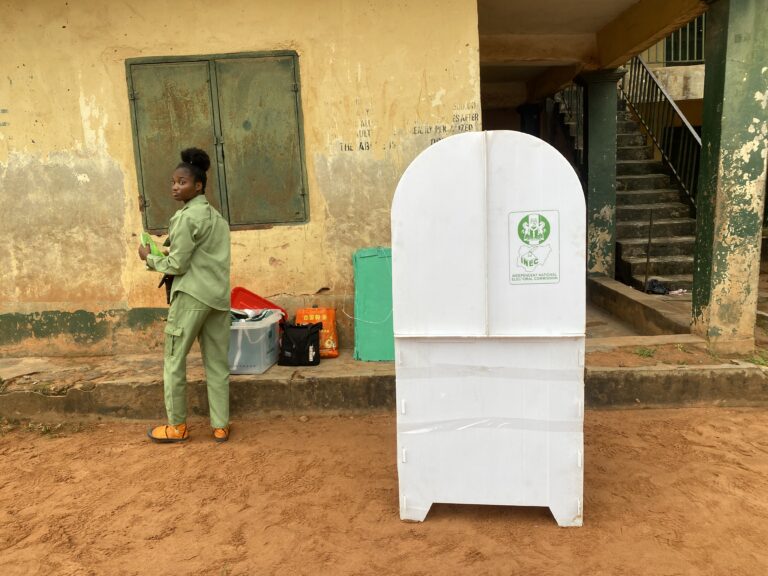
As of 7:18 a.m., presiding officers and assistant presiding officers, mostly National Youth Service Corps (NYSC) members, alongside police officers, were sighted at the RAC Centre in Akwudo Central School, Nnewi North Local Government Area.
The RAC, which serves three wards, Otolo I, II, and III had corps members already moving to their assigned polling units.
By 7:22 a.m., electoral officials were seen setting up polling booths at Polling Units 027 and 028 within Ward 1, Akwudo Central School, Nnewi North, in readiness for the commencement of accreditation.
Similarly, at Okpo Village Hall, Ekwulobia, in Aguata Local Government Area, INEC ad-hoc staff were setting up by 7:40 a.m. across Polling Units 029, 030, and 031 under Ekwulobia Ward 1, preparing materials and checking devices before the official start of voting.
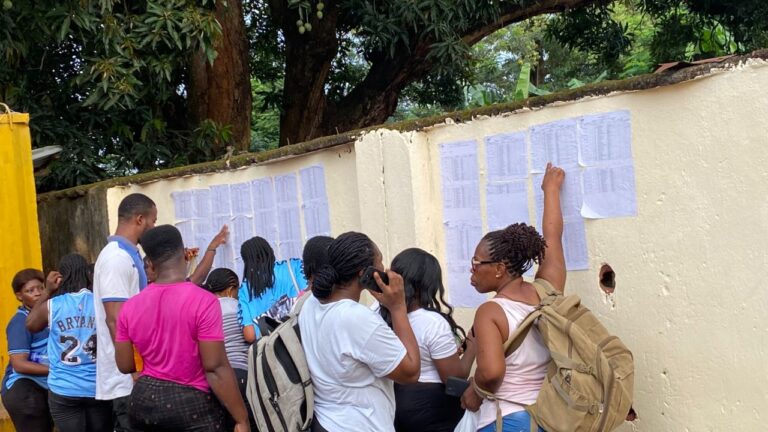
At First Hall Secondary School, Umuchima Village, also in Ekwulobia, voters began arriving early, searching for their names on the voter register and waiting for accreditation to begin at Polling Unit 018 by 7:57 a.m.
The ICIR reports that 2025 Anambra governorship election features 2,802,790 registered voters, out of which 1,790,982 have collected their Permanent Voter Cards (PVCs). The INEC deployed over 7,000 BVAS devices across 5,718 polling units in 326 political wards spread across 21 LGAs.
Sixteen candidates are contesting the election, including the incumbent Governor Chukwuma Soludo.
The election, according to INEC data, is being monitored by 121 domestic and international observers.
Additionally, 76 media organisations were accredited for its coverage, while over 50,000 security personnel were deployed to maintain order and ensure a peaceful voting process.
THE Centre for Democracy and Development (CDD–West Africa) and the Nigeria Civil Society Situation Room (Situation Room), have raised concerns over low electoral competitiveness, weak institutional confidence, and voter apathy ahead of the Anambra State governorship election holding today, Saturday, November 8.
In a statement on Friday, November 7, in Awka, the CDD-West Africa noted that while the election presents an opportunity for Anambra’s 2.8 million registered voters to shape the future of the state, internal crises within major political parties have weakened electoral competitiveness.
“A major concern in the Anambra governorship election is that the political parties have not demonstrated the capacity to mobilise and sensitise voters. The internal crisis within Nigeria’s major political parties at the moment has weakened electoral competitiveness in the Anambra governorship election,” it said.
The organisation warned of the fragility of electoral institutions, urging the National Independent Electoral Commission (INEC) and the judiciary to act decisively to restore public trust. It cited delayed court rulings and logistical lapses observed during the Continuous Voter Registration (CVR) exercise as worrying indicators.
The CDD further highlighted the spread of misinformation and hate speech as key threats to the credibility of the election.
It identified seven major patterns of manipulation, including disinformation about INEC’s competence, exploitation of insecurity narratives, and gendered hate campaigns targeting women in politics.
Similarly, the Nigeria Civil Society Situation Room, a coalition of over 70 civil society organisations, at a press conference on Friday, said it had deployed trained observers and was monitoring the process through its Election Reporting App.
The group acknowledged INEC’s assurances of readiness, noting that over 3,000 vehicles and 83 boats had been mobilised to transport election materials, including 6,879 BVAS machines and 24,000 ad-hoc staff, to RACs and polling units.
“Situation Room expects that the presence of security agencies in Anambra State will provide a level-playing environment for all parties, deter vote buying and selling, and uphold the sanctity of the election results,” the group said.
The Situation Room commended the relatively peaceful pre-election atmosphere in Anambra, contrasting it with the tense conditions surrounding previous polls in the state.
It, however, emphasised that INEC’s credibility would hinge on early deployment of materials, timely opening of polls at 8:30 a.m., and the real-time upload of results to the IReV portal.
PREPARATIONS for the Anambra State Governorship Election scheduled for Saturday, November 8, 2025, gathered momentum across the state on Friday as the Independent National Electoral Commission (INEC) continued the distribution of election materials and briefings for ad hoc staff ahead of the poll.
Reports from multiple Local Government Areas (LGAs) sent in by CJID election observers show that while most activities proceeded smoothly, a few logistical challenges were observed, particularly in the verification of deployment lists for ad hoc staff and the delivery of materials to Registration Area Centres (RACs).
INEC steps up distribution of materials
At the Awka North INEC Office, the distribution of election materials to Supervisory Presiding Officers (SPOs) began as early as 2:27 p.m. on Friday, in preparation for the poll. Similarly, in Awka South, SPOs were seen handing out non-sensitive materials such as ballot boxes, cubicles, and INEC bags to Presiding Officers (POs).
In Ogbaru, Dunukofia, and several other locations, some officials confirmed that both sensitive and non-sensitive materials had been distributed to the appropriate officers.
Smooth coordination in Dunukofia
At the Dunukofia INEC Office, the Electoral Officer (EO) confirmed earlier on Friday that the distribution of materials to SPOs had been completed. The officer also briefed several Presiding Officers (POs) and Assistant Presiding Officers (APOs). Many corps members ad-hoc staff were still within the compound awaiting deployment details.
Dunukofia
To aid coordination, the list of wards and their corresponding polling units was displayed outside the office, allowing ad hoc staff to easily confirm their polling stations.
Traffic in Dunukofia remained heavy due to ongoing construction on the expressway, forcing vehicles to move in a single lane and slowing down transportation logistics.
Following the EO’s earlier confirmation of the distribution of both sensitive and non-sensitive materials to RAC Managers and SPOs, further verification was conducted.
The RAC Manager for Akwa reported at 4:29 p.m. that he had yet to receive all materials in full but was receiving them gradually. He assured that he would confirm once the complete set of materials was delivered.
Other RAC Managers contacted confirmed that they had received their allocated materials from INEC and were fully prepared for the election. Although three RAC Managers could not be reached for confirmation, feedback from those contacted indicates that INEC has largely completed its distribution process and appears ready for the election.
Mixed experiences in Onitsha axis
In Onitsha South, several corps members from Delta State who arrived to serve as Presiding Officers faced challenges locating their names on the official ad hoc staff list. At the time, the EO was still at a meeting, and affected corps members were later reassigned to other LGAs across the state.
Earlier in the day, movement within the LGA was restricted as the council gate was closed, allowing only security personnel and INEC staff access. Many ad hoc staff members were seen moving around in search of the published posting lists, while security officers maintained a visible presence around the premises.
At the Onitsha North INEC Office, the EO held a closed-door meeting with SPOs before distribution of sensitive materials began. However, a minor altercation occurred between a television media crew and an SPO over alleged unauthorised recording without the EO’s consent. The matter was swiftly resolved through the intervention of INEC staff.
Activities in other LGAs
In Anambra East, ad hoc staff were seen checking the deployment lists pasted on the wall to confirm their postings. Non-sensitive materials had already been distributed and loaded into vehicles, while sensitive materials were scheduled for release the next day. Some corps members, however, complained about discrepancies between online postings and the physical lists displayed at the INEC office.
Similar scenes played out in Nnewi South, Nnewi North, Orumba North, and Ihiala, where corps members and other ad hoc staff verified their names on posted lists as security personnel maintained order. In Idemili South, scores of police officers were sighted patrolling the LGA field while awaiting the arrival of election materials.
Security tightened ahead of poll
Security presence across the state remained strong throughout the day. In Awka South, officers were seen distributing identification tags to INEC officials, while several buses conveying ad hoc staff and election materials departed the office later in the afternoon.
Observers also reported that both police and military personnel were strategically positioned around major INEC offices to ensure a safe and orderly pre-election environment.
This report is based on updates from CJID election observers.
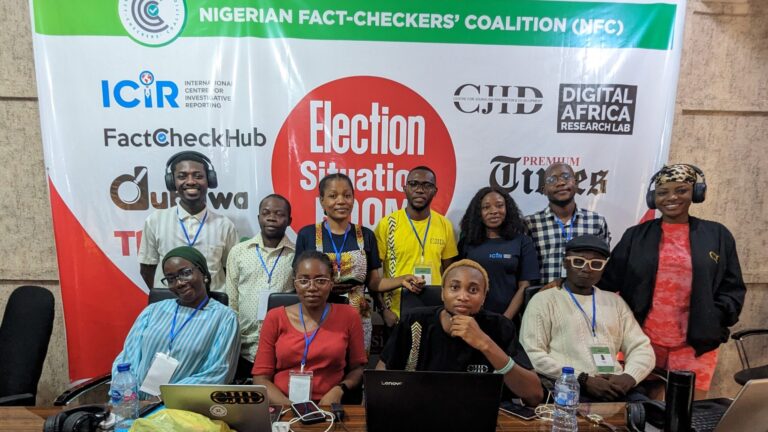
THE Nigerian Fact-Checkers’ Coalition (NFC) has launched situation rooms ahead of the Anambra State governorship election slated for Saturday, November 8, 2025.
This was made known in a statement by the coalition on Friday, November 7 2025.
According to the coalition, the situation rooms, located in Abuja and Lagos, will coordinate efforts to monitor, verify, and counter misinformation and disinformation that could trigger unrest, discourage voter participation, erode public trust, or influence the outcome of the election.
Operations will begin in Lagos and Abuja on Friday, November 7, continuing through Sunday, November 9, 2025.
Bamas Victoria, Acting Coordinator of the Nigerian Fact-Checkers’ Coalition (NFC) and Editor at The ICIR, emphasised the coalition’s vital role in combating misinformation in an era where false information can easily be weaponised. She commended the coalition’s efforts to promote media literacy and ensure a safer, more credible information space.
Commenting on the media literacy reports released by the NFC as part of its pre-election activities for the Anambra poll, she noted that the feedback so far underscores the importance of the coalition’s work.
“These reports, which were amplified by multiple media houses, had a real impact. Someone who read one of the articles on electoral offences told me they were not even aware of some of the issues highlighted in the report before reading it.
The NFC’s work helps enlighten citizens about the electoral process, thereby promoting civic participation. And for us to achieve good governance, we need an informed and active citizenry,” she said.
Bamas expressed confidence in the work that the NFC will do and its impact on this election.
David Ajikobi, Africa Check’s Nigerian editor, noted that the emergence of a new INEC leadership makes the upcoming election and the NFC’s role in it particularly significant.
“With the new leadership at the Independent National Electoral Commission (INEC) and other factors, we consider the Anambra state election significant. As a result, we as fact-checkers are paying close attention.
We are monitoring the media space, both online and offline, fact-checking and verifying the claims, and publishing reports to ensure the integrity of information surrounding the election,” Ajikobi highlighted.
Kemi Busari, DUBAWA Editor said the coalition aims to curb the spread and impact of election-related false information. He noted that misinformation has increasingly influenced recent elections and added that the NFC plans to counter such claims through coordinated fact-checking efforts during the Anambra poll.
“We’ve seen in recent years how election-related misinformation and disinformation significantly impact the process and outcome. We are trying to mitigate this by consolidating our resources to fact-check fraudulent claims during elections. We hope to do another solid job with the Anambra election,” he concluded.
Formed in June 2022, the coalition comprises three signatories of the International Fact-Checking Network (IFCN)—Africa Check, The FactCheckHub, and DUBAWA—alongside other partners including the International Centre for Investigative Reporting (The ICIR), the Centre for Journalism Innovation and Development (CJID), FactsMatterNG, Digital Africa Research Lab, Round Check, WikkiTimes, and FactWatch.
The NFC debunked dozens of false information about Nigeria’s 2023 general elections and off-cycle state elections in Ondo and Edo, leveraging effective collaboration among researchers, fact-checkers, editors, data analysts, and social media specialists.
The coalition’s model has been adopted in other countries like Ghana and South Africa.
While the NFC monitors the electoral process, members of the public can send claims on WhatsApp – +234 903 078 5265.
THE Governing Council of the University of Abuja has appointed Hakeem Babatunde Fawehinmi, a professor, as the new vice-chancellor of the institution.
The appointment was announced during the Council’s 80th Extraordinary Meeting held on Friday, November 7, and was approved under the leadership of Olanrewaju Tejuoso, a senator.
Tejuoso, the chairman of the 11th Governing Council of the university, said the appointment would take effect from Tuesday 10 February 2026, and would be for a non-renewable five-year tenure.
The institution revealed that the decision followed a rigorous selection process that had attracted calls for transparency and fairness from various stakeholders.
The ICIRreported that the university’s Alumni Association urged the Council to ensure a credible and merit-based process devoid of external interference.
It also noted that the Council had approved the extension of the tenure of the Acting Vice-Chancellor of the University, Mathew Adamu, till February 10, 2026.
Recall that Adamu was first appointed on August 11, 2025, by the Federal Government, following leadership changes at several other federal universities, in a sweeping leadership overhaul.
In February, President Bola Tinubu sacked the school’s vice-chancellor, Aisha Sani Maikudi, a professor, who was newly appointed. He also dissolved the institution’s governing council
The president consequently appointed Lar Patricia Manko, another professor, as acting vice-chancellor of the university for a six-month term.
Manko would not be eligible to apply for the permanent vice-chancellor position once the term expires, the president said.
The university’s governing council, chaired by Saddiq Ismaila Kaita, had on December 31,2024, announced Maikudi as the institution’s seventh substantive vice-chancellor.
The ICIRreports that the university has had three VCs in one year. The new VC is the fourth.
About the new VC
According to the institution, Fawehinmi is a professor of Clinical Anatomy and Biomedical Anthropology.
He is well-rooted in the finest academic traditions and has a wealth of experience in institutional administration having been two-time Head of Department of Anatomy (2005 – 2007; 2007 – 2009), Associate Dean (2010 – 2012) and Dean (2012 – 2014) Faculty of Basic Medical Sciences and two terms Deputy Vice-Chancellor (Academic) (2016 – 2020) of the University of Port Harcourt.
He has served in several statutory and ad–hoc committees and boards, attributes which the university said had equipped him with the requisite skills to provide leadership to a well-informed, articulate and growing academic community.
He has been an active member of national and international professional associations where he served as Secretary-General and Member of National Executive Council of the Nigerian Medical Association Rivers State from 1999 to 2000, Editor–in–Chief of the Journal of Anatomical Sciences and President of the Society of Experimental and Clinical Anatomists of Nigeria (2014-2016).
He has received many academic and community service awards and prizes, and he is a Fellow of the Royal Anthropological Institute of Great Britain and Ireland (FRAI). he is also a Fellow of the Academy of Medicine Specialties of Nigeria (FAMedS).
“Fawehinmi has over 100 articles in reputable peer reviewed mostly indexed journals, visible in conventional academic search engines and 37 conference abstracts, to his credit.”
He is married to Hadeezat O. a doctorate holder and lecturer at University of Port Harcourt. The family is blessed with five children.
He is currently the pioneer Vice-Chancellor of the Nigerian British University, a private University based in Asa, Abia State.
DESPITE days of intense political campaigns and security concerns, a sense of calm now pervades Anambra State as residents prepare to elect their next governor on Saturday, November 8.
The ICIRreportedthat the Independent National Electoral Commission (INEC) on Thursday, November 7, distributed sensitive materials across the 21 Local Government Areas (LGAs) of the state, signaling the final phase of preparation for the poll.
The materials, including ballot papers and result sheets, were moved from the Central Bank of Nigeria (CBN) branch in Awka under tight security, with officials of the Nigeria Police Force, Nigerian Army, and the Nigeria Security and Civil Defence Corps (NSCDC) providing escort.
According to INEC data, 16 candidates from different political parties will contest in the election, including incumbent governor Charles Soludo of the All Progressives Grand Alliance (APGA), Ukachukwu Nicholas (APC), Ezenwafor Jude (PDP), Moghalu Nnadubem (LP), and Geoffrey Onyejegbu (NNPP)
At least 10 of these candidates are from Anambra South Senatorial District, where major spotlight would be on Saturday.
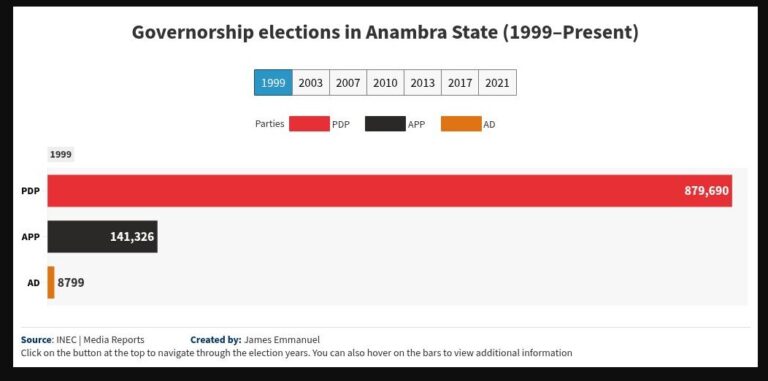
Since the creation of Anambra State in 1976, APGA has remained its most dominant political force, producing the only two governors to complete two full terms — Peter Obi (2006–2014) and Willie Obiano (2014–2022).
The PDP and APC have alternated between second and third positions across election cycles, while smaller parties like the Labour Party (LP), United Progressive Party (UPP), and Young Progressives Party (YPP) have largely struggled to make headway.
The INEC data shows that 2,802,790 voters were registered, while 1,790,982 Permanent Voter Cards (PVCs) were collected preparatory to the Saturday’s poll.
Initially, the election was meant to be conducted across 5,720 polling units and 326 political wards, there were no registered voters in two polling units, bringing the total of polling units where election will hold to 5,718.
Also, underlying fears about security and voter turnout continue to define the mood across communities.
Over 55,000 security deployed
On Thursday, November 6, the state Commissioner of Police Abayomi Shogunle, announced that the number of security personnel, which was 45,000 before, would be increased to 55,000 or 60,000.
Police officers monitoring distribution of sensitive materials in Awka
The officers were stationed across major cities and strategic locations, including major junctions, INEC offices and other government buildings in Awka, Onitsha, and Nnewi.
Armoured Personnel Carriers (APCs) were sighted moving around Aroma Junction and along Zik Avenue in Awka, while at the INEC headquarters, long rows of police vans and NSCDC trucks formed a visible ring of protection. Officers also carried out routine patrols around key facilities.
Some security personnel stationed at CBN, Awka branch
Despite the visible security presence, residents expressed fear of possible attacks in some areas. The ICIR reports that for years, security has long been a decisive factor in Anambra’s elections, with separatist agitations, cult clashes, and politically motivated killings shaping the outcome of the polls.
In 2021, several INEC facilities and police divisions were attacked by armed groups, including an assault on the B Division Police Station and the INEC office in Awka.
The attacks, which left parts of the facilities in flames, were among security breaches that heightened public anxiety during elections in the state.
In its final report on the 2021 governorship election, the Nigeria Civil Society Situation Room noted that while the election was largely peaceful, the months preceding it were plagued by violence, intimidation, and voter apathy.
While the state government insisted that violence has declined, some residents still cited killings and attacks by the “unknown gunmen” during the 2021 exercise.
Although the sit-at-home culture has dwindled, its fear still lingers.
Increasing voter apathy
Turnout has been significantly low over time in Anambra’s governorship elections, showing a deepening sense of voter apathy and mistrust in the political system.
The state saw voter participation declined from about 16 percent in 2010 to just 10 percent in 2021. The 2021 election, which brought Soludo to power, highlighted this troubling pattern.
Out of the 2,466,638 registered voters in Anambra in 2021, only 253,388 were accredited to vote. Ultimately, the total votes cast stood at 253,388, with 8,108 of them declared invalid. This indicated that barely 10 per cent of registered voters in the state participated in the election.
According to Premium Times analysis, only 1.02 million voted in the state in 1999 out of the 2.2 million registered voters, representing 46.4 per cent.
There was a slight increase in the voter’s turnout in the 2003 election, having registered 47.22 per cent turnout.
In the 2010 election, out of 1.84 million registered voters in Anambra, only 302,000 turned out to vote, representing roughly 16 per cent participation.
By 2013, voter turnout slightly improved, with 465,891 out of 1,770,127 registered voters casting their ballots. This was about 25 per cent of the electorate.
In 2017, out of the 2,064,134 residents registered as eligible voters for the election, only 448,711 – about 21 per cent cast their votes.
The decline could be attributed to deep-seated apathy rooted in mistrust of the system, poor governance outcomes, and persistent insecurity, according to reports.
Some analysts also cited intimidation, violence, and a lack of confidence in the fairness of elections as reasons for staying away from polling stations.
The rise of secessionist movements and sporadic attacks in the South-East also further heightened fears, discouraging turnout.
Residents react
A resident, Chisom Okeke, who lives in Awka, told The ICIR, “People are going about their businesses, but there’s anxiety. I will vote here in Ondoka, with the hope that there won’t be any violence or intimidation.” He added that there had been a heavy security presence in the state.
Okeke was among the several traders in Kwatta Market in Awka, where many residents crowded, making last-minute purchases ahead of the restriction of movement that usually accompanies election day. Stalls selling meat, fish, cow skin, and foodstuffs were surrounded by queues of buyers on Friday.
Residents and traders at Kwatta Market in Awka, purchasing meat ahead of Saturday’s election
However, some residents expressed fears of possible tension or violence, saying they would stay indoors once voting begins.
“I just came out today as usual to do my POS business. I won’t need to step out tomorrow,” said Ifeanyi Nwafor, a POS vendor in Kwatta market.
“The election period in this area can be unpredictable. I won’t be voting because I don’t really trust the government.” Nwafor added.
INEC reassures on readiness
INEC’s Resident Electoral Commissioner in the state, Queen Elizabeth Agwu, assured that all logistics had been completed and that the commission was committed to a credible process.
“Early in the morning, don’t forget that each LGA has their own RAC centres. In the morning as early as 6am, they will move to the polling unit to set up. Our election starts by 8:30 but we have mandated that by 7am, they will be there and set up fully so that the election will take place peacefully.
“That’s why we are here today. For everybody to see the sensitive materials which is the main material for election,” she stated while addressing journalists on Thursday.
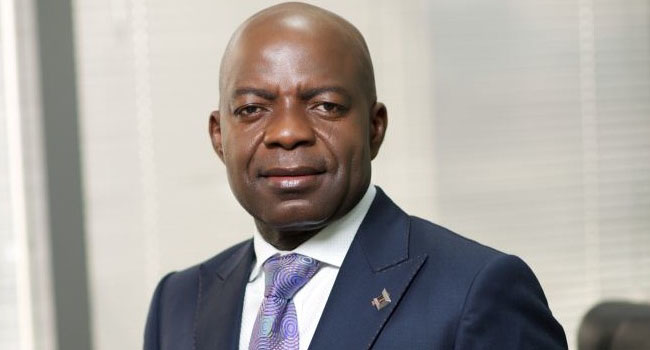
ABIA State Governor Alex Otti has raised monthly allowance of corps members serving in the state by as high as N50,000 from the current N4,000.
This was revealed in a statement by the Governor’s Chief Press Secretary, Ukoha Njoku, on Friday, November 7.
However, the approval is not across the board. Otti approved N20,000 for all corps members in the state. His government will also pay N10,000 to those serving in government’s institutions. Corps members serving in schools and hospitals will earn additional N30,000.
“In addition to the Federal Government’s increased monthly NYSC allowance of ₦77,000, all corps members serving in Abia State will now earn a base monthly allowance of ₦ 20,000, while those serving within State Government Establishments, and specifically Teaching/Medical personnel, will earn an additional discriminatory allowance of ₦10,000 and ₦30,000, respectively” Njoku said.
He noted that governor said that the decision was aimed at bridging the human capacity gap in critical sectors such as education and healthcare, while motivating young professionals to contribute to the state’s development.
“Governor Otti’s latest move sends a clear message: Abia State is serious about empowering youth, rewarding excellence, and building a future where service is truly valued. This is a continuation of the state government’s unwavering support for the NYSC members serving in Abia State.
“The government, under the leadership of Governor Otti, is committed to making life easier for these corps members by supplementing their monthly allowance from the Federal Government,” Njoku noted.
He said the governor’s commitment to corps members wellbeing was beyond financial incentives, stressing that the administration had renovated the NYSC Orientation Camp in Bende Local Government Area.
“From renovating the NYSC Orientation Camp in Bende LGA to providing logistics and power infrastructure, the state government has consistently demonstrated its value for the contributions of corps members in its transformational journey.
“Whether it’s fixing internal roads within the NYSC camp, installing power equipment, or upgrading dilapidated buildings, the governor’s Midas touch and hands-on approach is transforming the NYSC experience in Abia,” he said.
The ICIRreported that the Federal Government commenced the payment of N77,000 to corps members, nearly a year after the approval of the new minimum wage.
It is in this light that some state governments started increasing monthly allowance for NYSC members, fondly called corpers by many Nigerians.
In August, Adamawa State Governor Ahmadu Fintiri announced an increase of the monthly allowance for the corpers serving in the state from N20,000 to N30,000.