Home Blog Page 153

Protest: use of force, unlawful arrests will attract repercussions – Sowore tells Police

0

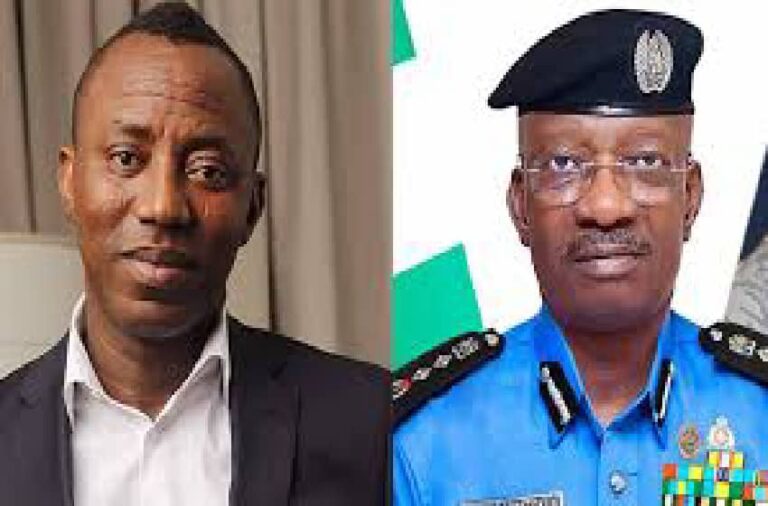
HUMAN rights activist and convener of the #RevolutionNow movement, Omoyele Sowore, has urged the Federal Capital Territory (FCT) Commissioner of Police (CP) Miller Dantawaye, and officers of the Nigeria Police Force to protect the rights of protesters ahead of Monday’s planned #FreeNnamdiKanuNow march in Abuja.

The demonstration is aimed at demanding the release of Nnamdi Kanu, leader of the proscribed Indigenous People of Biafra (IPOB), who has been in detention since June 2021 despite multiple court rulings ordering his release.

In a post on his X handle on Sunday, October 19, Sowore cautioned security agencies against using excessive force or carrying out unlawful arrests during the protest. He said any officer involved in brutality against peaceful demonstrators would be held accountable.

“Any use of excessive force or unlawful arrests will attract repercussions. The Nigerian people will hold accountable those who attempt brutality swiftly.

“We are calling on CP Dantawaye and every officer of the Nigeria Police Force to uphold their oath of allegiance to Nigerians, protect citizens, and respect the inalienable right to peaceful assembly,” Sowore said.

The warning followed a statement by the Inspector General of Police, Kayode Egbetokun, directing officers to enforce existing court orders and maintain order during the planned protest. Egbetokun also instructed all relevant commands to ensure visible deployments across strategic points in Abuja to prevent disruptions.

The Police Force had earlier reaffirmed its commitment to maintaining law and order, warning groups planning the protest to respect court directives and avoid any action that could lead to violence.

Nnamdi Kanu was first arrested in 2015 and later granted bail in 2017 before fleeing the country after a military operation at his home in Abia State. He was re-arrested and brought back to Nigeria in 2021 and has since remained in the custody of the State Security Service (SSS) on terrorism and treasonable felony charges.

Several human rights organisations have called for his release, citing prolonged detention and disregard for judicial orders.

The ICIR reported that prolonged adjournments, medical disputes, and legal wrangling over jurisdiction have marked Kanu’s case.

PSC reverses sanctions against police officers after disciplinary review

0

THE Police Service Commission (PSC) has reversed sanctions against several officers of the  Nigerian Police Force after reviewing multiple disciplinary cases against them.

In a statement on Sunday, October 19, the PSC spokesperson, Ikechukwu Ani, said the commission deliberated on at least 24 appeals and one pending disciplinary matter during its plenary session.

Ani noted that the decisions were made to promote fairness and justice in the handling of police disciplinary processes.

One of the reinstated officers is, Ejiofor Grace Obiageli, an assistance commissioner of police (ACP), who was compulsorily retired following an incident that occurred on September 8, 2023, at the Old Netim Division in Akamkpa, Cross River State.

“The Commission approved her reinstatement from the date of her compulsory retirement and to be properly placed to be at par with her mates,” Ani added.

He added that the commission lifted the “severe reprimand earlier issued to ACP Muhammad Yunusa, reinstated CSP Ihekandu Okwuonu, and restored his rank, pending his official retirement date.

“The commission also freed ACP Muhammad Awwal Yunusa from a punishment of severe reprimand, restored the rank of CSP Ihekandu Allwell Okwuonu and reinstated him, but subject to his date of retirement.”

Ani stated that approval was given for an adjustment to the reinstatement date of Clement Awoyemi, a superintendent of police, while Bamiselu Oluwaseun, an assistant superintendent of police, Ahmed Monday, and Imoohi Doora were all reinstated.

He also disclosed that the commission dismissed the petitions against Bzigu Dali, a deputy inspector-general of police (DIG), describing the allegations of falsified records against him as baseless.

According to him, the commission nullified the warning letter issued to the officer since it did not originate from the commission, and also overturned the change of his date of birth from April 10, 1967, to April 10, 1966.

Ani stated that the PSC Chairman, retired Hashimu Argungu, assured that the commission remained committed to ensuring timely justice in all disciplinary matters. He added that officers found innocent of any wrongdoing should not have their careers affected by administrative lapses or delays.

“The Commission will henceforth ensure that pending disciplinary matters are treated with despatch so that those found culpable are made to face the consequences, while those exonerated are freed to continue with their career progression.

“The commission will not at any time impede the career progression of any officer who is not found guilty of any misdemeanour,” Argungu was quoted to.have said.

Ani announced that during its second plenary meeting on Thursday, the PSC approved the promotion of several officers, including the appointment of a new Deputy Inspector-General of Police and the elevation of a Commissioner of Police to Assistant Inspector-General.

Among those promoted were Omenihu Obinna, a superintendent of police, Bankole Olajide, deputy superintendent of police, and several officers confirmed as Assistant Superintendents of Police (ASP). ASP Adeyemi Adeola, Chief of Staff to the Lagos State Task Force Chairman, was also promoted to DSP.

These promotions and reinstatements are part of the commission’s broader efforts to strengthen trust in its disciplinary system and address administrative injustices within the Nigeria Police Force — a move long sought by officers who have petitioned against unfair sanctions and flawed disciplinary actions – Ani said


Nigerians react to alleged foiled coup against Tinubu

0

NIGERIANS have taken to social media to express their opinions on the alleged foiled putsch against President Bola Tinubu.

Sahara Reporters, an online news medium, had on Saturday, October 18, claimed that 16 officers recently arrested and detained by the Nigerian Armed Forces planned to topple Tinubu’s government.

Another report by Premium Times also claimed that top intelligence sources provided insights into how the coup was to be hatched before the officers plotting it were apprehended.

The development reportedly created tension within the government, prompting the presidency to cancel the National Independence Day parade usually held on October 1.

The reports also alleged that key government officials, namely Tinubu, Vice President Kashim Shettima, Senate President Godswill Akpabio, and House Speaker Tajudeen Abbas, were targeted for assassination.

Reports on the alleged coup stemmed from the arrest of 16 military officers, including a brigadier general, by the military’s hierarchy over “indiscipline and breach of service regulations.”

In a statement on October 4, the Defence Headquarters explained that the officers were arrested during a routine military exercise for “indiscipline and breach of service regulations,” and not for political reasons.

The statement, signed by the Director of Defence Information, Tukur Gusau, a brigadier general, said investigations revealed that the officers’ grievances were linked to “perceived career stagnation” and repeated failure in promotion examinations. It added that some of the apprehended personnel were already facing disciplinary actions for various offences.

“Their conduct was deemed incompatible with the standards of military service. Upon completion of investigations, indicted officers will face the full military disciplinary process,” the statement read.

The military also stressed that the action was purely disciplinary and part of ongoing efforts to preserve order and professionalism within the ranks.

“The Armed Forces will not tolerate behaviour that undermines the integrity of the institution or threatens its constitutional role under democratic authority,” the statement added.

The Defence Headquarters reaffirmed its commitment to constitutional governance and reiterated that the Nigerian Armed Forces remained professional, loyal, and fully dedicated to protecting the nation’s democracy.

Reacting to an inquiry by The ICIR on Saturday, October 18, on the coup report, Gusau said the Armed Forces’ earlier statement never said the officers were arrested over a coup plot.

“We issued a press release on this weeks ago, and we never mentioned officers were arrested for a coup,” Gusau told The ICIR.

The DHQ also refuted claims that the cancellation of Nigeria’s 65th Independence Day events was linked to the alleged coup attempt.

Nigerians react

Meanwhile, Nigerians have expressed mixed reactions to the reports. While some described the claims as political propaganda and questioned the timing of the arrests, others called for transparency in the investigation.

@Stazingar wrote on X: Every single coup started as a hoax. During the 1985 Palace Coup against PMB, the coupists leaked the intel themselves as part of an elaborate hoax. The public dismissed it as not feasible. PBAT administration should take this seriously, we can’t go back to military regimes.

@altregor shared his thought: Except you’re so cooked in the head, why would you even want to plan a coup against a government that has even got the opposition in a chokehold? If true, probability that it happens successfully is close to zero.
@iamaguiyi shared on Instagram, saying “All these are warnings for our politicians to lead us well, things are truly bad and citizens are suffering.”
@josephonuorah wrote on X: “At this point, Nigerians must warn this government to face governance and STOP playing these silly pranks that will lead the country into unnecessary crisis. Everything about this so-called coup plot screams FAKE, HOAX!!! If this is their way of getting public sympathy, – SHAMEFUL.”
@Mic_Thighson also shared his thoughts: “There was no coup plot. This is pure theatrics. Watch them build and amplify a narrative from this nonsense.”
Similarly, some social media users recirculated an old tweet by President Tinubu’s media aide, Olusegun Dada, in which he appeared to call for a coup in Nigeria, as seen here, here, and here.

Pardon Me?

0

By Chidi Anselm Odinkalu

In September 1887, Harry Johnston, Acting Consul of the Oil Rivers Protectorate (Niger Delta) procured the arrest in the wharfs of the Niger Delta of King Jaja of Opobo on the rather dubious charge of “obstruction of trade”. He accused King Jaja of violating a trade treaty with the British, which did not, however, have any penal provisions. The previous year, a Royal Charter granted in the name of Queen Victoria had placed the territory under the rule of the Royal Niger Company (RNC) which empowered it to “undertake and carry on the government or administration of any territories, districts, or places in Africa….” Essentially, the company was government.

After arresting him, the RNC shipped King Jaja for trial over one thousand kilometres away to Accra, capital of what is today known as Ghana. The day before the beginning of his trial in November 1887, the company notified King Jaja that he would stand trial in what was effectively a court martial. Rear-Admiral Walter Hunt Grubbe of the Royal Navy presided. The notice was so short, King Jaja could not call any witnesses in his defence. Historian, Elvar Ingimundarsson, who researched the history of the RNC, called it a “a Kangaroo court.” It found King Jaja guilty and sentenced him to exile, from which he did not return alive.

Thirteen years later, the RNC lost its Royal Charter and Her Majesty’s Government took over direct administration of the territory that would later become Nigeria. It comprised the Colony in Lagos and two protectorates, one to the north and the other in the south of the country.

On the 108th anniversary of the show trial of King Jaja in a Kangaroo court, the regime of General Sani Abacha re-enacted a similar script leading to the execution on 10 November 1995 of Ken Saro-Wiwa, Saturday Dorbee, Nordu Eawo, Daniel Gbooko, Paul Levura, Felix Nuate, Baribor Bera, Barinem Kiobel, and John Kpuinene, together known today as the “Ogoni Nine”. Their crime was advocacy for responsible exploitation of the hydrocarbons in their communities in Ogoni-land. Unable to call witnesses in their defence, their fate was pre-determined before a tribunal headed by Ibrahim Auta, a kinsman of Alhaji Abacha Maiduguri, General Abacha’s father. Like King Jaja, they were not allowed any right of appeal.

On 12 October 2025, the Presidency announced that the Ogoni Nine were among 175 persons “who (had) received President Tinubu’s mercy.” The announcement followed a meeting of the National Council of State at which the Honorable Attorney-General of the Federation (HAGF), Lateef Fagbemi, a prince of the Offa Kingdom in Kwara State, who chairs the Committee on the Prerogative of Mercy, reportedly presented the proposal to grant them pardon.

While the Ogoni Nine were included among the beneficiaries of the President’s mercy, King Jaja was excluded. Some would think that is because the injustice he suffered happened so long ago that the reach of the president’s forgiving memory could not be expected to travel that far back in time. However, the list included Herbert Macaulay, the pioneer surveyor and nationalist, whose unfair conviction for theft occurred in 1913, a mere 26 years after the trial and exile of King Jaja. He was also a beneficiary of a post-humous pardon too.

The pardon to Herbert Macaulay raises at least three significant issues. One is the scope and reach of the pardon powers of the president. Section 175(1) of Nigeria’s Constitution empowers the president to “grant any person concerned with or convicted of any offence created by an Act of the National Assembly a pardon, either free or subject to lawful conditions.”

The trial and conviction of Herbert Macaulay occurred in the Colony of Lagos in 1913. The Amalgamation of the Colony of Lagos with the Protectorates of Southern and Northern Nigeria which created the territory now known as Nigeria, occurred the following year. Nigeria became a federation in 1951, 38 years after the trial of Herbert Macaulay. (How) was he convicted of a crime created by the National Assembly?

Second, there is an implicit procedural requirement in the process of the prerogative of mercy: prior to making a recommendation, the committee should have had access to and reviewed the transcripts and records of the proceedings leading to the conviction in respect of which it chooses to recommend the exercise of the presidential prerogative. In the case of Herbert Macaulay, it appears that the committee did not even bother to have access to the records. This is not difficult to understand given that the trial occurred so long ago. But it is a requirement.

Third, the purported pardon to Herbert Macaulay raises deeper issues about how best to immortalise and honour the heroes and sheroes of Nigeria’s colonial struggles. The Presidency chose to pardon Herbert Macaulay in a list which, by its own admission, comprised almost exclusively of “Illegal miners, white-collar convicts, ….drug offenders, foreigners,….capital offenders.”

Ninety three % of the 175 beneficiaries of the prerogative of mercy announced by the President involved the most serious crimes known to law anywhere: 29.2% were traffickers in serious drugs, such as cocaine. Another 1.8% were convicted for human trafficking; 24% were convicted for unlawful mining (itself the cause of insecurity in places like Zamfara State); 13.5% were murderers; 12:3% were convicted of looting the country and another 5.8% were convicted for the crime of hijacking. 4.6% were convicted for firearms and robbery respectively; and another 1.8% were convicted for kidnapping.

It is impossible to dream up a more squalid register of beneficiaries of the prerogative of mercy or a more criminally cynical exercise of presidential pardon. It is unthinkable that the government could persuade itself that the “labours of our heroes past” – among whose pantheon Herbert Macaulay is deservedly a doyen – are best honoured by festooning them with the company of drug-lords, murderers, kidnappers, gun-runners and human traffickers. It is entirely understandable that Herbert Macaulay’s descendants should feel scandalized by this.

It is no surprise that the publication of the list has been attended by credible allegations that certain insertions were oiled by generous inducements in the form of a quid pro quo. The list of beneficiaries is so seedy, it reads like a bazaar for mostly people in a position to purchase the pardon. Those who do not fit this description, such as Herbert Macaulay or Ogoni Nine appear to have been inserted to lend credibility to a seedy assemblage. It is a dreadful commentary on the Committee on the Prerogative of Mercy, the presidency, and indeed the participants in the last meeting of the Council of State that they could reduce the institution of presidential pardon to this level of abuse.

In addition to the requirement that presidential pardon is only available for crimes created by the National Assembly, the Constitution also imposes a procedural constraint on the presidential power of pardon. It is to be exercised after consultation with the National Council of State. The list was, therefore, only published after the Council of State meeting.

More than one week thereafter, the HAGF now claims, because of the scandal and stink unleashed by what they have done, that the list of beneficiaries is “still under review and had not been finalised.” The only reaction to this line is: pardon me?! The HAGF did not cite any law as empowering him to do this because there is none. Important and powerful as the office of HAGF is, he lacks any lawful powers to make these things up as he goes along in this way.

There is no way to diminish the damage that Lateef Fagbemi’s committee on the Prerogative of Mercy has done to the presidential pardon. There are clear elements of illegality in what it has done and in what it proposes to do. It is seedy and the immorality of it all plainly stinks.

Above all the damage to national security cannot be quantified. Law enforcement and security agents will be reluctant to break sweat in pursuit of serious offenders when they know that a president will cynically let the convicts loose to make prey of them. That is the ultimate crime in these presidential pardons. The biggest job a president does in to guarantee public safety and national security. In these pardons, President Tinubu retrenches and casualizes both.

A lawyer and a teacher, Odinkalu can be reached at chidi.odinkalu@tufts.edu

Kanu: Police warn Sowore, others against protesting at National Assembly, Villa, others

0

THE Nigeria Police Force has warned groups planning protests in Abuja to comply with a subsisting Federal High Court order restricting demonstrations around key government institutions, including the Presidential Villa and National Assembly Complex.

The caution comes amid renewed mobilisation by rights activist Omoyele Sowore for the #FreeNnamdiKanuNow protest scheduled for Monday, October 20, to demand the release of detained Indigenous People of Biafra (IPOB) leader, Nnamdi Kanu.

In a statement released on Saturday, October 18, by the Force Public Relations Officer, Benjamin Hundeyin, the police said an order issued on October 17 by a Federal High Court judge, M.G. Umar in Suit No. FHC/ABJ/CS/2202/2025 between the Federal Republic of Nigeria v. Omoyele Sowore & four others remained binding and enforceable.

According to the police, the court restrained Sowore and others from staging protests within and around Aso Rock Villa, the National Assembly Complex, Force Headquarters, the Court of Appeal, Eagle Square, and Shehu Shagari Way.

The police urged all groups involved, whether supporting or opposing the agitation for Kanu’s release to respect the court order, warning that any attempt to defy it would attract punitive measures.

“Any person or group that uses protests as cover to incite violence, carry or use offensive weapons, vandalise property, kidnap, or engage in acts likely to cause loss of life will be dealt with decisively,” the statement read.

The Force reiterated that it recognised citizens’ rights to peaceful assembly and expression but stressed that such rights must be exercised responsibly and within the law, especially where public safety and national security were at stake.

The police said the Inspector-General of Police, Kayode Egbetokun, had directed the FCT Commissioner of Police to enforce the order strictly and ensure visible deployments across identified flashpoints in the capital city.

According to the police, offenders would face prosecution under criminal laws relating to public order, violent conduct, and terrorism. The statement also cautioned those using social media to incite unrest, warning that digital evidence would be used in investigations and court proceedings.

The police assured Abuja residents of adequate security arrangements to protect lives and property and urged people not participating in the protest to go about their lawful activities without fear.

The warning follows a series of court and public exchanges surrounding the planned protest. On Friday, October 17, a Federal High Court in Abuja declined to grant an ex parte motion filed by the police to stop the demonstration, directing that Sowore be properly served before further hearing on October 21.

Following the ruling, Sowore reaffirmed his intention to proceed with the protest, describing it as a civil rights action to demand Kanu’s release.

Kanu, leader of the proscribed IPOB, has been in detention since his arrest and controversial repatriation from Kenya in 2021. Despite multiple court rulings ordering his release, he remains in the custody of the State Security Service while facing a seven-count charge bordering on terrorism and incitement.

The ICIR earlier reported that Kanu’s case has been marked by prolonged adjournments, medical disputes, and legal wrangling over jurisdiction.

Postecoglou fired as Nottingham Forest struggles worsen

0

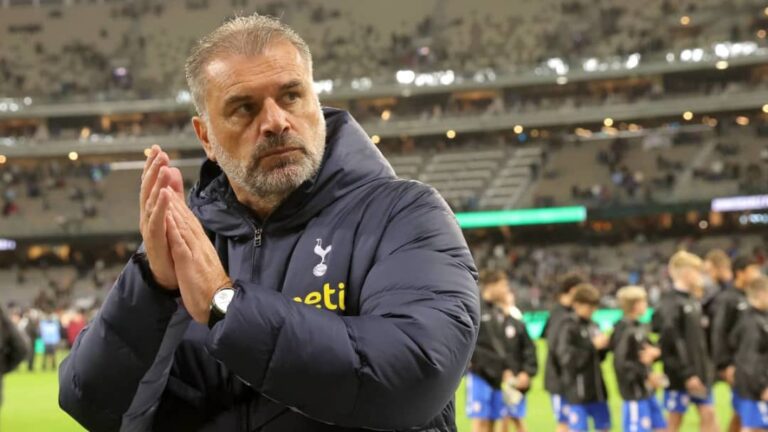
NOTTINGHAM Forest have dismissed head coach Ange Postecoglou after a string of poor results that left the club hovering near the relegation zone just eight games into the new Premier League season.

The announcement came less than 30 minutes after Forest’s 3–0 home defeat to Chelsea on Saturday, their sixth loss of the campaign. The club, in a brief statement, said Postecoglou had been relieved of his duties with immediate effect following “a series of disappointing results and performances.”

Postecoglou’s short spell at the City Ground produced no victories. His side managed only two draws against Burnley in the Premier League and Real Betis in the Europa League and were knocked out of the Carabao Cup by Championship side Swansea City after surrendering a 2–1 lead in stoppage time to lose 3–2.

The Greek-Australian tactician, who previously managed Tottenham and Celtic, lasted just 39 days in the role. His departure marks the second time in four months that he has been dismissed from a Premier League job.

Postecoglou joined Forest in September following the exit of Nuno Espírito Santo amid reports of strained relations with the club’s board. But Forest’s early-season campaign has been turbulent. With one win, two draws, and five losses, the club sits 17th in the league table — one point above the relegation zone.

This latest managerial change comes at a time when the Premier League has already delivered its trademark unpredictability. The ICIR reported that the 2025/2026 season kicked off amid high expectations and intense competition among top sides, including Liverpool, Arsenal, Manchester City, and Chelsea — all tipped by analysts as strong title contenders.

For mid-table teams like Nottingham Forest, however, early struggles can quickly spiral into crisis.

Forest said the process to appoint a new manager was underway, but declined to provide further details.

Defence Headquarters debunks coup claim against Tinubu

0

THE Defence Headquarters has dismissed reports alleging that some senior military officers were detained over a planned coup to overthrow President Bola Tinubu.

Reacting to an inquiry by The ICIR on Saturday, October 18, the Director of Defence Information, Tukur Gusau, a brigadier general, described the claim as false.

He said the statement issued by the Armed Forces over the arrest of some officers weeks ago never mentioned that the officers were being investigated for a coup plot.

“We issued a press release on this weeks ago and we never mentioned officers were arrested for a coup,” Gusau told The ICIR.

The clarification followed an online report alleging that sixteen senior officers were being held by the Defence Intelligence Agency (DIA) for planning to overthrow the Tinubu-led government.

The report also claimed that the alleged plot led to the cancellation of Nigeria’s Independence Day parade on October 1.

In its earlier statement on October 4, the Defence Headquarters explained that the officers were arrested during a routine military exercise for “indiscipline and breach of service regulations,” not for political reasons.

The statement, signed by Gusau, said investigations revealed that the officers’ grievances were linked to “perceived career stagnation” and repeated failure in promotion examinations. It added that some of the apprehended personnel were already facing disciplinary actions for various offences.

“Their conduct was deemed incompatible with the standards of military service. Upon completion of investigations, indicted officers will face the full military disciplinary process,” the statement read.

The military also stressed that the action was purely disciplinary and part of ongoing efforts to preserve order and professionalism within the ranks.

“The Armed Forces will not tolerate behaviour that undermines the integrity of the institution or threatens its constitutional role under democratic authority,” the statement added.

The Defence Headquarters reaffirmed its commitment to constitutional governance and reiterated that the Nigerian Armed Forces remained professional, loyal, and fully dedicated to protecting the nation’s democracy.

Sowore ready for #FreeNnamdiKanuNow after court quashed move to stop protest

0

THE #FreeNnamdiKanuNow protest organiser, Omoyele Sowore, has restated his readiness to lead Nigerians to Aso Rock Villa on Monday, October 20, to demand the release of the leader of proscribed Indigenous People of Biafra (IPOB), Nnamdi Kanu.

He stated this on Friday, October 17, and emphasised his call for the protest on Saturday, October 18, after a Federal High Court in Abuja rejected the Nigeria Police Force request to stop the planned protest.

The Inspector General of Police, Kayode Egbetokun, had dispatched police lawyers to file an ex parte motion against Sowore in a bid to block the demonstration.

However, the court declined to grant the motion without hearing from the former presidential candidate. The judge, Mohammed Umar, directed the police to properly serve Sowore with the application and adjourned the case to Tuesday, October 21, for a full hearing.

Reacting to the ruling, Sowore hailed the court’s decision as a victory for civil rights and reaffirmed that the protest would proceed as planned.

In a statement on his X account on Friday, October 17, Sowore revealed that the Inspector General of Police had attempted to stop the protest through legal means, describing it as part of a broader pattern of state suppression.

“With the court adjourning the case to Tuesday, the protest scheduled for Monday remains unaffected by any legal restrictions,” he stated.

According to him, the #FreeNnamdiKanuNow protest aims to draw attention to the continued detention and worsening health of the IPOB leader.

On Saturday, October 18, Sowore drew parallels between Kanu’s situation and the events surrounding the June 12, 1993, presidential election, recalling how the military regime at the time used the judiciary to delay justice and silenced dissents.

“I was deeply involved in the struggle for the validation of the June 12 election, and I remember vividly how the system weaponised the judiciary to buy time, deceive the public, and justify injustice,” he said.

“They kept saying, ‘Abiola’s case is in court,’ until they eventually killed him a day before his supposed release. It was a well-orchestrated tragedy disguised as legal processes,” he added.

He alleged that the same tactics were being deployed against Nnamdi Kanu, citing manipulation, propaganda, and abuse of legal processes as tools of oppression.

“The Nnamdi Kanu I saw in court on October 16 is very ill. We must rescue him before another citizen is sacrificed to the bloodthirsty Nigerian elite club,” Sowore stated.


Ebonyi Varsity expels 3 students for allegedly possessing firearms

0

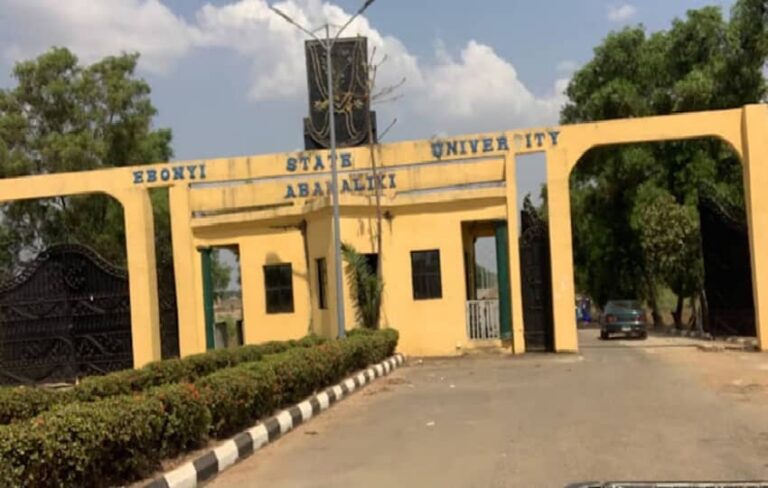
THE management of Ebonyi State University (EBSU) has expelled three students accused of unlawfully possessing firearms during the recent Students’ Union Government (SUG) elections on campus.

According to a media report, the Vice Chancellor, Michael Awoke, a professor, announced the expulsion during the inauguration of newly elected Student Union Government (SUG) executives at the university’s main campus at the weekend.

He said the decision was necessary to maintain discipline and discourage acts of violence among students.

University authorities said the expelled students were arrested by the police after being found with guns and live ammunition during the election. They were reportedly involved in a shooting incident aimed at dispersing voters and allegedly attempted to attack the Dean of Student Affairs.

The vice chancellor warned that the institution would not tolerate cultism, examination malpractice, or any form of intimidation involving weapons, adding that the case had been handed over to law enforcement for prosecution.

Awoke reaffirmed the university’s commitment to maintaining a safe learning environment and stated that anyone involved in criminal activities would face immediate expulsion and legal action.

The management described the disciplinary measure as a necessary step to preserve peace on campus and deter other students from engaging in similar misconduct.

In 2024, Kaduna State Governor Uba Sani claimed that there were about 200 million illegal firearms in Nigeria.

He further alleged that the number represented 80 per cent of 250 million illegal firearms in West Africa.

He argued that the widespread possession of firearms caused the country’s growing insecurity.


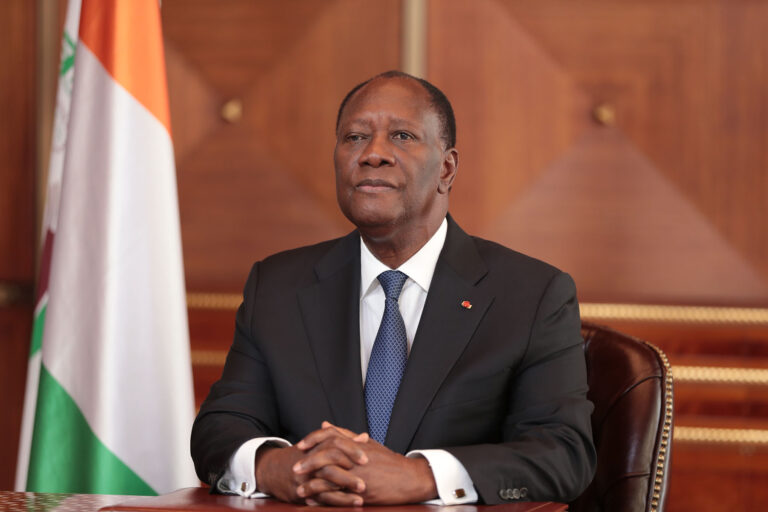
Ivory Coast bans protest ahead of presidential poll

0

AUTHORITIES in Ivory Coast have announced a sweeping two-month ban on political rallies and demonstrations just a week before the country’s presidential election, heightening political tension in the West African nation.    

The order, jointly issued by the interior and defence ministries on Friday, bars all political activities and protests except those organised by the five candidates officially cleared to contest the October 25 vote.

The decision comes amid mounting unrest over the exclusion of major opposition figures, including former president Laurent Gbagbo and former minister Tidjane Thiam, from the race.

Security forces dispersed several rallies in Abidjan last weekend, while sporadic unrest and road blockades were reported in other regions. Public prosecutor Oumar Braman Kone said about 700 people were arrested within the week, claiming phone data had linked some suspects to planning attacks on public institutions, which he described as “acts of terrorism.”

At least 26 protesters have been sentenced to three years in prison for public order offences, while 105 others are due to appear in court next week. The Justice Minister, Sansan Kambile, said the clampdown was necessary to preserve national security, even as rights groups, including Amnesty International, accused the government of repressing dissent.

The opposition coalition, which includes Gbagbo’s African Peoples’ Party – Ivory Coast (PPA-CI) and Thiam’s Democratic Party of Ivory Coast (PDCI), has denounced President Alassane Ouattara’s decision to seek a fourth term, calling it unconstitutional.

Ouattara, in power since 2011, faces four opponents in the upcoming election, among them former minister Jean-Louis Billon and ex-first lady Simone Gbagbo.

Protests sweep across Africa

The Ivorian unrest adds to a growing wave of political demonstrations across Africa in recent weeks. From Madagascar to Morocco, citizens have taken to the streets over governance failures, economic hardship, and electoral disputes.

In Kenya, anti-tax protests earlier in the month left several people injured as police clashed with demonstrators demanding better economic policies. Similar scenes were recorded in Sudan, where renewed protests erupted over food shortages and insecurity.

As the Ivory Coast prepares for its October 25 vote, observers warn that the ban on protests could further inflame tensions in a nation still grappling with memories of the 2010 post-election crisis that claimed more than 3,000 lives.