Home Blog Page 173

Several miners trapped as pits collapse in Zamfara

0

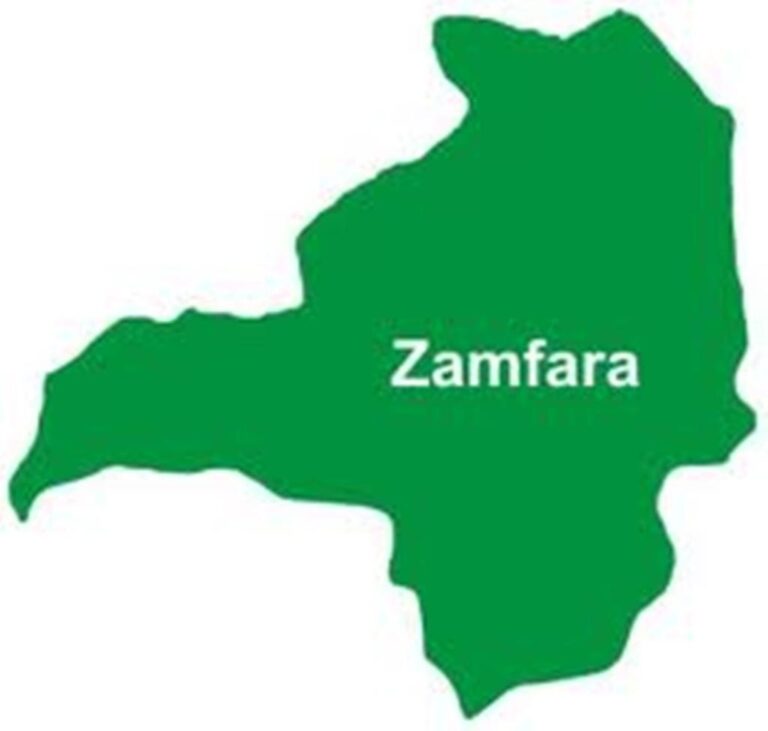
SEVERAL artisanal miners have been trapped following the collapse of mining pits in Kadauri community, Maru Local Government Area of Zamfara State.

The Executive Secretary of the Zamfara State Emergency Management Agency (ZEMA), Bala Ahmad, confirmed the incident on Friday, noting that it occurred on the night of Thursday, September 25.

According to the News Agency of Nigeria (NAN), the disaster followed hours of heavy rainfall, which caused the pits to cave in while miners were still inside.

Residents said that the number of casualties remains uncertain, but some of the injured are currently receiving treatment at Maru General Hospital.

Community members said they were working with emergency officials to rescue survivors who remain trapped.

The incident comes just days after a similar tragedy in the Dura community, Jos South Local Government Area of Plateau State, where four miners were killed after a pit collapsed on Thursday night.

World Tourism Day: Nigeria’s underutilised tourist destinations

EVERY September 27 marks World Tourism Day, set aside to foster awareness among the international community on the importance of tourism and its social, cultural, political, and economic value.

Globally, travel and tourism accounts for approximately 10  per cent of GDP and supported nearly 357 million jobs in 2024, underscoring their role as a key growth engine.

Tourism can contribute to the Sustainable Development Goals (SDGs) through quality training, which invests in education and skills. This can be achieved by investing in sustainable infrastructure and accelerating green transformation, including opportunities to decarbonise the sector and promote climate-resilient infrastructure. Also, it can be done through investing in innovative technology and entrepreneurship that can upskill tourism’s workforce.

Nigeria is blessed with many natural and human resources. Nature has endowed her with good design so attractive that it makes Nigeria one of the most naturally picturesque nations in the world. But the country is lagging behind its peers in tapping its tourism potentials.

While Kenya and South Africa welcomed millions of tourists, Nigeria attracted only about 1.2 million international visitors in 2023, despite its vast cultural and natural resources.

In Nigeria, many unique landscapes, sacred lakes, ancient war sites, and wildlife sanctuaries remain underutilised. Rather than creating jobs and attracting visitors, they struggle with neglect and lack of investment.

Ten underutilised tourist attractions in Nigeria include the following:

Iyake suspended lake (Oyo State)

Iyake Lake is located atop the Oke Ado Mountain in the town of Ado-Awaye, Oyo State, southwestern Nigeria. It is considered one of only two recognised suspended lakes in the world, the other being the Hanging Lake in Colorado, USA. Local folklore deepens its mystique, yet few outside the region have heard of it. Analysts argue that with improved infrastructure and branding, Iyake could rival the world’s natural wonders.

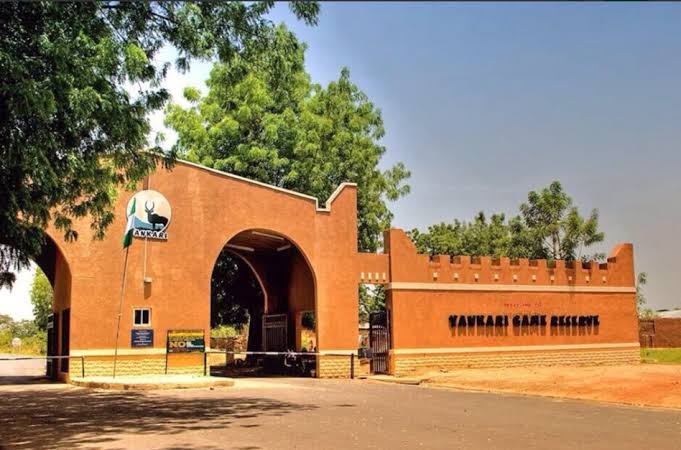
Yankari Game Reserve (Bauchi State)

Once celebrated as Nigeria’s top wildlife destination, Yankari Game Reserve is home to natural warm springs, roaming elephant herds, and rich biodiversity. Nestled in Bauchi State, it was envisioned as a safari haven capable of drawing visitors from across the world.

But in recent years, its promise has dimmed. Visitors frequently complain about unreliable electricity, deteriorating lodges, mosquito infestations, and poorly maintained facilities. Coupled with limited promotion and weak management, these challenges have steadily eroded its appeal. Today, despite its enormous potential to serve as West Africa’s flagship wildlife and eco-tourism hub, Yankari stands as a shadow of what it could be.

The ICIR reported that Yankari Game Reserve now harbours terrorists, poachers and other intruders, upending eco-tourism fortunes in the reserve. There are bare footprints of the negligence and maladministration by the successive governments of Bauchi State where the reserve sits on an estimated 2,244 square kilometres of land in Alkaleri LGA.

Sukur Cultural Landscape (Adamawa State)

A UNESCO World Heritage Site, Sukur is known for its terraced farmlands, iron-smelting history, and palace complex. Despite its global recognition, visitors patronage remains low. Studies cite remoteness, poor road access, and insecurity in the Northeast as key barriers. Scholars recommend community-led conservation and better infrastructure to unlock its tourism potential.

Afi Mountain Wildlife Sanctuary (Cross River State)

Home to endangered species like the Cross River gorilla and Nigeria-Cameroon chimpanzee, Afi Mountain is a biodiversity hotspot. Conservation reports, however, highlight poaching, snares, and underfunding that hinder eco-tourism. Without ranger support, eco-lodges, and guided tours, the sanctuary risks remaining a conservation challenge instead of a thriving tourism site.

A study titled, “Impact of Anthropogenic Activities on Vegetation Cover and Mammalian Herbivores in Afi Mountain Wildlife Sanctuary” shows that logging, farming, and forest burning by local communities are significantly reducing forest cover (using satellite imagery from 1985-2021) and threatening mammal populations.

Kanta Museum & Argungu Festival (Kebbi)

The Kanta Museum in Argungu, Kebbi State, is a historic fortress-turned-museum that tells the story of the Kebbi Kingdom. Its unique architecture and collection of traditional weapons and cultural artefacts make it a site of great significance. Equally important is the Argungu Fishing Festival, once a world-renowned cultural celebration featuring canoe racing and large-scale fishing competitions. 

However, the festival has not been held in over a decade, except in 2020. Meanwhile, the museum, though rich in heritage, has seen little modernisation. It lacks interactive features, digital presence, and upgraded facilities that could attract and sustain wider interest.

Kajuru Castle (Kaduna State)

This medieval-style castle, built in the 1980s, is unlike anything else in Nigeria. Yet its tourism value collapsed after a 2019 attack where tourists were kidnapped. Ongoing security fears and limited marketing mean Kajuru operates far below potential. With improved safety and targeted branding, it could serve as a premium heritage getaway.

In 2022, Punch reported how the security situation in the state is scaring people from visiting. The report showed how many tourists who have been visiting the state can no longer do so due to the fear of kidnapping.

Mandara Mountains (Adamawa State)

The Mandara Mountains, straddling the Nigeria–Cameroon border in Adamawa State, boast dramatic volcanic formations, terraced farming villages, and breathtaking hiking landscapes, yet they remain one of Nigeria’s most underutilised tourist treasures.

Despite their scenic and cultural value, poor infrastructure, low awareness, and security concerns have discouraged investment and large-scale visitation. Media and travel reports highlight the lack of access roads, visitor facilities, and promotion, while environmental degradation from overgrazing and deforestation further threatens the area’s appeal.

Oba Hills Forest Reserve (Osun State)

Spread across over 50 square kilometres, Oba Hills once harboured rich biodiversity, including chimpanzees. Today, studies document extensive deforestation, encroachment, and poor conservation.

In December 2024, the Osun State Government formally handed over Oba Hills Forest Reserve to the Federal Government so it can be managed by the Nigerian National Park Service, upgrading it to National Park status. Adeleke said the exposure to danger of some species of diverse plants and animals due to activities such as logging, hunting, and other human factors made the state government to reconsider inviting the Federal Government to take over the forest reserve.

Jos Wildlife Park (Plateau State)

Once a family favourite with picnic grounds and wildlife, Jos Wildlife Park has fallen into disrepair due to neglect and underfunding. Recent government efforts, such as fencing and rehabilitation, show attempts at revival. However, issues like illegal mining continue to discourage large visitor numbers, stalling its return to prominence.

In 2020, Daily Trust reported that the park was one of the tourist centres in Jos plagued by a dearth of animals and low patronage. Governor Caleb Muftwang also acknowledged that there are few animals in the park despite being one of the points of interest for his administration in the area of tourism.

Owu water falls( Kwara)

Owu Falls, nestled deep within Kwara State, tumbles dramatically over rocky cliffs, offering one of Nigeria’s most breathtaking natural sights. Yet, its vast tourism potential remains largely untapped. Visitors often struggle to reach the waterfall, as there are no clear pathways or signs, leaving many disoriented or straying into nearby villages.

The site suffers from poor upkeep, and it lacks essential facilities such as guided tours, safety measures, or even a formal entry system. Though Kwara State government has approved a contract for the construction of Phase I of the road to the tourism site.

Dangote Refinery halts petrol sales in naira as labour dispute deepens

0

THE Dangote Petroleum Refinery has announced the suspension of petrol sales in naira, even as a labour crisis escalates over the alleged dismissal of hundreds of Nigerian workers.

In a notice sent to its customers on Friday, September 26, the refinery said the suspension of naira transactions would begin on Sunday, September 28, citing the exhaustion of its crude-for-naira allocation.

According to Punch, the company explained that it had already exceeded its allocation under the programme and could no longer sustain local currency sales.

The refinery advised customers with ongoing naira-based transactions to request refunds.

Part of the message read, “We have sold petroleum products in excess of our naira-crude allocations and, consequently, cannot continue PMS sales in naira going forward. This suspension will be effective from September 28, 2025.”

Industry analysts warn that the decision could again raise pump prices, as the shift to dollar transactions may increase costs. In March 2025, a similar suspension pushed prices to within a few hundred naira of N1,000 per litre.

The suspension comes at a time of heightened industrial tension. The Petroleum and Natural Gas Senior Staff Association of Nigeria (PENGASSAN) has accused the refinery of victimising union members and terminating the appointments of over 800 workers.

The union alleged that the mass sack targeted employees who voluntarily joined PENGASSAN after a unionisation drive at the refinery. It also claimed that more than 2,000 Indian expatriates had been retained to take over the jobs of the dismissed Nigerians.

The General Secretary of PENGASSAN, Lumumba Okugbawa, told journalists that the termination followed the submission of the first batch of union members’ list to management. Over 800 workers agreed to join the union. Shortly after, we saw letters firing all Nigerian staff, while over 2,000 expatriates were retained,” he said.

PENGASSAN described the sack as a violation of workers’ constitutional rights to freedom of association. The union warned that it could picket the refinery if management failed to recall the affected workers, despite a subsisting court order barring unions from blocking operations at the facility.

In a separate statement, PENGASSAN urged the refinery to respect Section 7 of the Labour Act, which prohibits discrimination in employment, and the Trade Union Act, which guarantees workers the right to organise. The association said it had convened an emergency National Executive Council meeting to decide its next line of action.

Dangote Petroleum Refinery, however, dismissed the union’s allegations, insisting that the decision was part of an internal reorganisation. In a letter dated September 24, signed by Femi Adekunle, the Chief General Manager of Human Asset Management, the company stated that the dismissals followed repeated acts of sabotage in various units of the refinery, which raised safety concerns.

The refinery stated that the reorganisation was necessary to protect the facility, described as a “strategic national asset,” and claimed that only a small number of workers were affected. It added that over 3,000 Nigerians remain employed and that recruitment of new local staff is ongoing.

“The Dangote Petroleum Refinery recognises and upholds internationally accepted labour principles, including the right of every worker to freely decide whether or not to join a union. Our commitment to workers’ rights is unwavering,” the company said in a statement.

Police impose curfew on Madagascar after Gen Z violent protest

0

POLICE in Madagascar have declared a dusk-to-dawn curfew after violent protests by Gen Z on Friday, September 26, sparked by recurring power outages and water shortages.

In Antananarivo, hundreds of mostly young protesters took to the streets, but the demonstration was forcefully broken up as police fired rubber bullets and tear gas to disperse the crowd.

Unlike Thursday, when security forces patrolled the city to prevent gatherings, police presence on Friday was confined to the capital’s main central square.

Demonstrators expressed frustration over ongoing water and power outages that frequently leave homes and businesses without electricity for more than 12 hours a day in Madagascar, one of the world’s poorest nations.

Many have accused President Andry Rajoelina’s government of failing to improve citizens living conditions.

The unrest escalated after nightfall, leading police to enforce a dusk-to-dawn curfew as banks and shops were looted and set ablaze, the homes of three pro-government lawmakers were also torched.

One of the stations of the city’s newly launched cable car system, a flagship government infrastructure project, was also torched.

In the country’s capital, the streets were mostly empty on Friday evening as residents assessed the destruction left behind by a day of violent unrest.

A Gen Z activist who went back to help clean up a looted bookstore said they had left before the unrest intensified but admitted that others could have been behind the destruction.

“Maybe they were frustrated. Maybe they were sent to break things. They’re already poor and have nothing. So they take what little they see,” he said, requesting anonymity for fear of reprisals.

Although the city centre appeared calm, reports of looting persisted in a commercial area on the outskirts of Antananarivo.

The French embassy in Madagascar strongly advised against non-essential travel in the capital and in Antsirabe, the country’s third-largest city. The British embassy also urged caution, warning that “further protests and disorder are expected and may spread to other parts of Madagascar”.

Rajoelina, who is in New York this week for the UN General Assembly, denounced the violence and appealed for calm.

“Division and hatred are not the solution. Conflict leads to destruction and no one benefits from it except those who only look out for their own interests,” he posted on Facebook.

The 51-year-old secured a third term in office late last year in an election boycotted by the opposition, with fewer than half of registered voters participating.

He initially rose to power in 2009 in Madagascar, the world’s leading vanilla producer, after spearheading a popular movement and benefiting from a coup that toppled former president Marc Ravalomanana.

He did not run in the 2013 election due to international pressure but returned to win back the presidency in 2018.

Court directs Nigerian doctors to verify Nnamdi Kanu’s health status

0

THE Federal High Court (FHC) in Abuja has directed the Nigerian Medical Association (NMA) to set up a team of experts within eight days to evaluate the health condition of the detained leader of the Indigenous People of Biafra (IPOB), Nnamdi Kanu.

The judge, James Omotosho, in a ruling on Friday, September 26, ordered the NMA president to ensure that a panel of eight to ten medical professionals, including a cardiologist, a neurologist and the Chief Medical Director of the National Hospital, assess Kanu’s condition and report back to the court.

The panel is also mandated to examine the medical facilities available at the State Security Services (SSS) hospital where Kanu is being treated, to determine whether the facility is equipped to manage his ailments. The court further granted the committee liberty to make use of any hospital in the country during the process.

The order followed conflicting medical reports from Kanu’s private doctors and the SSS medical team.

The SSS counsel, Adegboyega Awomolo, informed the court that a team of experts had already visited Kanu in custody and insisted that the SSS hospital has the capacity to manage his condition.

He also alleged that Kanu’s private consultant, a retired professor of Medicine at the University of Nigeria, Nsukka, Martin Aghaji, unilaterally altered Kanu’s medication and exaggerated his condition by recommending treatment abroad.

Awomolo argued that transferring Kanu to the National Hospital would disrupt his medical services and pose a security risk.

He, however, maintained that the Federal Government remained committed to his safety and was willing to give him access to external medical experts within SSS facilities.

Kanu’s lead counsel, Onyechi Ikpeazu, countered Awomolo. He said the secret service lacked the capacity to manage his client’s health, stressing that the application for his transfer was based on Aghaji’s findings.

He added that Kanu must remain alive to defend himself against terrorism charges and said the defence team had no objection to the NMA’s intervention once it was court-ordered.

In a separate ruling, Omotosho dismissed Kanu’s no-case submission, holding that the Federal Government had established a prima facie case against him. He ordered the IPOB leader to open his defence on the terrorism charges.

Kanu faces a seven-count charge bordering on terrorism, treason, incitement through radio broadcasts, and defamation of Nigerian authorities.

In March, his legal team confirmed that his case had been reassigned to a new judge by the Chief Judge of the Federal High Court, John Tsoho.

His lawyer, Aloy Ejimakor, disclosed that the reassignment followed a petition to the Chief Justice of Nigeria, Kudirat Kekere-Ekun, after after another judge, Binta Nyako, who previously presided over the case, recused herself. Nyako had earlier stepped down in September 2024 following Kanu’s loss of confidence in her impartiality, a decision that left the case stalled for months.

The ICIR reported that Kanu’s legal troubles began in 2015 when he was first arrested by the SSS in Lagos. Though he was later granted bail, he fled Nigeria after a military raid on his home in September 2017.

He was re-arrested in Kenya in June 2021 and extradited to Nigeria, sparking protests and sit-at-home orders across the South-East. His trial, which began in October 2021, has since been marked by repeated adjournments, judicial recusals and controversies over his conditions in detention.

Shettima meets UN Secretary-General at UNGA over Nigeria’s Security Council bid

0

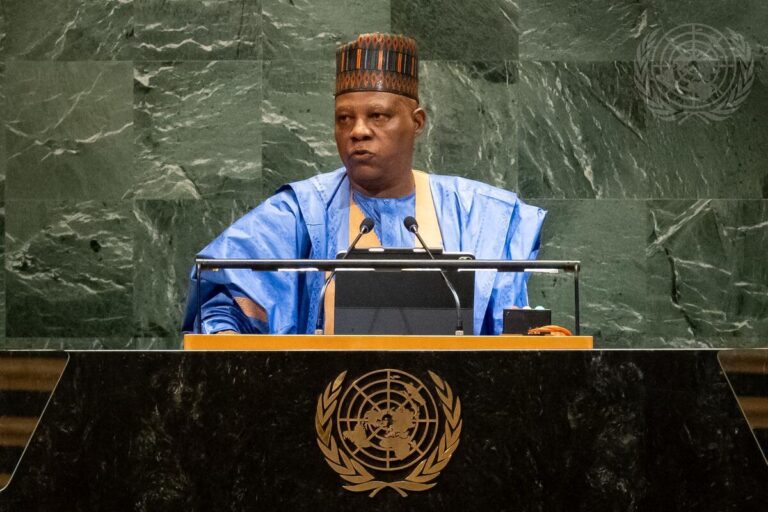
NIGERIA’S Vice-President Kashim Shettima has met with United Nations Secretary-General António Guterres at the UN headquarters in New York, where they discussed Nigeria’s push for a permanent seat on the UN Security Council alongside other matters of mutual concern.

Addressing newsmen after the meeting on Friday, September 26, Shettima’s  Media Assistant, Stanley Nkwocha, said the UN Secretary-General lauded his principal for underscoring Nigeria’s demand for a permanent seat on the UN Security Council.

Stressing the importance of the demand, he said “UN taking steps to support Nigeria even more so that we achieve more. We are aspiring to become a permanent member of the UN Security Council.”

The ICIR reported that Shettima, who delivered President Bola Tinubu’s address at the 80th UN General Assembly on Tuesday, demanded for a permanent seat on the United Nations Security Council, warning that the credibility of the world body depended on its ability to reflect current global realities rather than the post-Second World War order.

He urged member states to embrace sweeping reforms that would give Africa’s most populous country a stronger voice in international decision-making.

Nkwocha noted on Friday that both leaders engaged in bilateral talks centered on advancing the Sustainable Development Goals (SDGs), tackling climate change, fostering collaboration to strengthen democracy in Nigeria and across Africa, and deepening partnerships with the United Nations Development Programme (UNDP) on regional initiatives for democracy and security.

Providing further insight into the UN visit, Foreign Affairs Minister Ambassador Yusuf Tuggar also highlighted that the UN maintained a significant presence in Nigeria, with numerous agencies operating within the country.

The Minister of Communications, Innovation and Digital Economy, Bosun Tijani, noted that the Nigerian delegation held a highly cordial engagement with the UN Secretary-General.

Tijani pointed out Guterres’ remarks on artificial intelligence, noting his hope and expectation that Nigeria would maintain a leading role in the field.

“He was extremely happy when we mentioned that Nigeria, just a few days ago, released our first multilingual and multimodal large language model the first of its kind on the African continent, backed by any government.

“Even as we were leaving, he (Guterres) mentioned that he would love to see Nigeria support other African countries to ensure Africa is not left behind in artificial intelligence and that we can leverage it properly for development,” the minister said.

The Minister of State for Humanitarian Affairs and Poverty Reduction, Yusuf Sununu, who was also at the meeting noted that the meeting with the UN Secretary-General was highly productive, emphasising the Tinubu administration’s commitment to tackling humanitarian challenges and reducing poverty.

“We highlighted that we have one of the largest national social registers containing almost 18.9 million households, and we have reached over 8.1 million Nigerians through conditional cash transfers. We also highlighted the government’s efforts to promote inclusivity for people with disabilities,” he said.

Sununu further explained that funding cuts to UN agencies had impacted the humanitarian ministry, pointing out that the World Food Programme (WFP) was assisting about 1.3 million Nigerians with emergency food transfers.

He explained that both sides exchanged ideas on sustainable solutions to the prevailing challenges, stressing that the Federal Government was making concerted efforts to “fill the gap”.

He revealed that the UN Secretary-General pledged continued support for Nigeria to strengthen the ministry’s capacity, validate its national social register, and mobilise additional funding for intervention and poverty alleviation efforts.

“Generally, the Secretary-General thanked the Nigerian government, especially the president, for ongoing support to the United Nations and assured us that the UN would continue to support Nigeria’s wishes and aspirations,” Sununu said.

The ICIR reported that Minister of State for Petroleum Resources (Oil), Heineken Lokpobiri, called on global investors to embrace emerging opportunities in Nigeria’s oil sector while delivering a keynote address at the UNGA.

He cited strong reforms, enhanced production capacity, and regional influence as key drivers of growth in the sector, noting that all inactive blocks during the period of no investments into Nigeria were up for grabs. He explained that there were new opportunities for new investors, both in the upstream and other sectors.

PENGASSAN, Dangote Refinery disagree over sack of workers

0

THE management of Dangote Petroleum Refinery and Petrochemicals has disagreed with the Petroleum Natural Gas Senior Staff Association of Nigeria (PENGASSAN) over the mass sack of workers at the multi-billion-dollar refinery.

While Dangote attributed the mass sack of its staff to ‘internal sabotage”, the PENGASSAN’s branch at the refinery said there had been victimisation of staff who voluntarily joined the union.

In a statement issued on Thursday, September 25, signed by Abdullahi Muhammed, branch chairman, and Eseoghene Choice, the branch secretary, PENGASSAN said the workers who voluntarily joined the union body had received an email terminating their appointments.

The union noted that the dismissals came after the successful unionisation of Dangote Petroleum Refinery and Petrochemical workers, the appointment of the caretaker committee of the branch executive council and submission of batch one of the unionised members’ list to management.

It said the management physically attempted to verify whether the staff voluntarily consented to join PENGASSAN by circulating a list to confirm their membership, adding that, “a meeting was held with members, during which they were asked to indicate their membership in PENGASSAN. Overwhelmingly, the staff of the refinery affirmed yes.

The union also disclosed that it received management’s directive that buses meant for staff transportation were under maintenance and that workers should use their funds for transportation to work, which saw them spending about N4,000 to work daily.

It also disclosed that members observed that members who joined PENGASSAN were denied entry into the refinery from 6:30 p.m. to 7:00 p.m. on September 25, and were informed that it was on the orders of the refinery’s chairman, Aliko Dangote, while only expatriates, Pakistanis and other nationals were granted entrance access.

The union stated further that, “At about 9.59 pm, workers received a mass termination email, stressing that, “The termination letter was addressed to “all Staff” of Dangote Petroleum Refinery and Petrochemicals.

“This is a direct act of intimidation against union leaders,” PENGASSAN said.

According to PENGASSAN, “These actions by Alhaji Aliko Dangote are in direct violation of section 40 of the 1999 Constitution of the Federal Republic of Nigeria (as amended), which guarantees every citizen the right to freely assemble and associate, including forming or belonging to a trade union for the protection of their interests.”

Conversely, Dangote Petrochemical Refinery Company said it took the decision to reorganise its operations and workforce.

The refinery informed that the operational safety of the 650,000 barrels per day facility was threatened by repeated sabotage by some of its workers.

In a letter obtained by The ICIR on Friday, September 26, dated September 24, 2025, and signed by the Chief General Manager, Human Asset Management, Femi Adekunle, the refinery said it was “constrained to carry out a total reorganisation of the plant” following “many recent cases of reported sabotage in different units of the Petroleum Refinery leading to major safety concerns.”

The letter directed all affected staff to hand over all company property to their line managers and await clearance before receiving their entitlements, which the Finance Department would compute in line with their conditions of service.

The Chief Corporate Communications Officer, Dangote Group, Anthony Chiejina, did not respond to messages sent to him by our reporter on the development.

A copy of the disengagement letter was addressed to all staff of Dangote Petroleum Refinery & Petrochemicals FZE and Dangote Industries Free Zone Development Company.

It read in part, “In view of the many recent cases of reported sabotage in different units of the Petroleum Refinery leading to major safety concerns, the management is constrained to carry out a total re-organisation of the plant. As a consequence of this development, we wish to inform you that your services are no longer required, with effect from the eve of Thursday, the 25th September, 2025.

“Please surrender all the Company’s properties in your possession to your line manager and obtain an exit clearance accordingly, but the date for doing so will be communicated to you later. The Finance Department, by a copy of this letter, is advised to compute all your benefits and entitlements in line with your terms of employment and conditions of service and pay the amount due to you (less all indebtedness), subject to the condition that you have obtained the exit clearance certificate as mentioned above.”

The refinery, which commenced production in 2024 amid fanfare and expectations of ending Nigeria’s decades-long reliance on imported petroleum products, is already battling operational turbulence and industrial disputes.

Recently, the refinery was enmeshed in a bitter row with the Nigeria Union of Petroleum and Natural Gas Workers over labour practices and safety standards.

The oil workers’ union had accused the company of “high-handedness” and warned against what it described as an emerging pattern of unfair labour practices.

The plant also faced friction with the Depot and Petroleum Products Marketers Association of Nigeria over product pricing and distribution arrangements, with marketers alleging that Dangote imposed rigid conditions that could distort the downstream market.

Dangote Refinery and Depot and Petroleum Products Marketers Association of Nigeria (DAPPMAN) are currently intensifying fights over N1.5 trillion fuel subsidy.

The ICIR reports that there are also indications that the company’s reorganisation and staff dismissals may not be unconnected to the crisis with the marketers’ union, which has created tension with Dangote’s entrance to the distribution value chain in the petroleum industry – a sector largely dominated by the unions ab initio.


Ex-Oyo governor Ladoja crowned 44th Olubadan

0

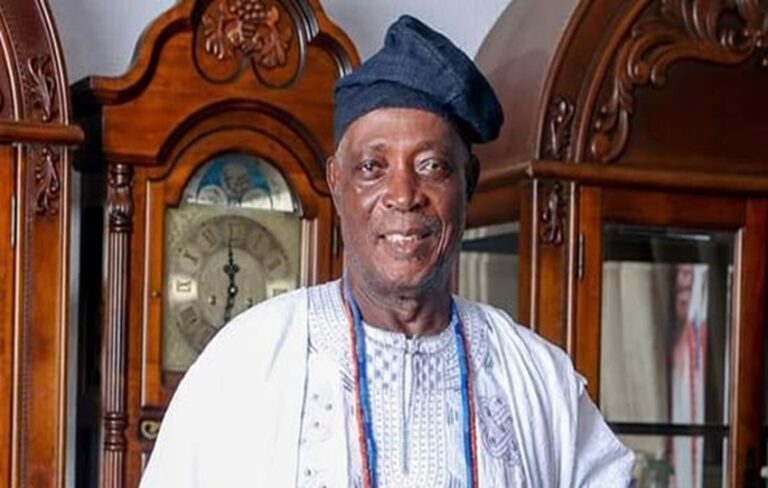
A FORMER Oyo State governor, Rashidi Ladoja, has been installed as the 44th Olubadan of Ibadanland in a colourful traditional ceremony attended by prominent personalities across Nigeria.

The coronation, which took place at the Mapo Hall on Friday, September 26, followed his symbolic adornment with the Akoko leaf at the Labosinde Compound, Oja’ba, and subsequent crowning at the Ose Meji Temple in Ibadan South-East Local Government Area.

Oyo State Governor Seyi Makinde is expected to formally present him with the staff of office.

The new Olubadan ascended the throne after the death of his predecessor, Oba Owolabi Olakulehin, who passed away on July 7, barely 15 months after becoming the 43rd Olubadan. Following the completion of the 21-day mourning period, the Olubadan-In-Council, led by Balogun Olubadan Oba Tajudeen Ajibola, unanimously nominated Ladoja in August.

The installation ceremony attracted a large turnout of residents and dignitaries, including the Alaafin of Oyo, Oba Abimbola Owoade; the Soun of Ogbomoso, Oba Ghandi Olaoye; former Ogun State governor Ibikunle Amosun; former Kano governor Rabiu Kwankwaso; former Osun governor Olagunsoye Oyinlola; and the Chief Imam of Ibadan.

To ensure order, operatives of the State Security Services (SSS), personnel from the Nigerian Army, and other security agencies provided tight security around the palace and major entry points to the city.

The Olubadan stool is widely revered for its unique succession system, which makes it one of the most organised traditional institutions in Nigeria. The system ensures that ascension to the throne is largely predictable and less contentious compared to other monarchies.

Ladoja, who governed Oyo State between 2003 and 2007, was impeached in January 2006 but reinstated later that year in December. His new role as Olubadan marks a return to prominence in Ibadan, this time in the traditional sphere.


2027: Kwankwaso denies joining APC

FORMER Kano State governor and leader of the New Nigeria People’s Party (NNPP), Rabiu Musa Kwankwaso, has dismissed reports claiming that he had defected to the All Progressives Congress (APC).

On Friday, September 26, media reports claimed that Kwankwaso had written to the APC national leadership, signaling his readiness to rejoin the ruling party. The reports suggested that discussions were ongoing between him and the party’s national chairman, Nentawe Yilwatda, a professor.

But in a swift reaction, Kwankwaso, in a statement on his X (formerly Twitter), described the claims as false.

“We have been alerted to some online statements suggesting that we have submitted a letter of intent to join a political party in the country.

“We would like to clarify that we have not made any such submission to any party. The public is therefore advised to rely only on information released through our official channels,” the statement read.

The clarification came amid a separate storm triggered by earlier comments credited to the NNPP leader that he might consider returning to the APC under certain conditions.

The Kano State APC, however, immediately rejected the idea. The party’s Public Relations Officer, Ahmed Aruwa, said Kwankwaso’s alleged conditions were “misleading and unacceptable.”

“He disregarded the fact that joining a party has proper channels and procedures and insisted that Kwankwaso knows how to formally convey his intention if he truly wants to return to the party.”

He also faulted Kwankwaso’s claim of being part of the APC’s founding structure in Kano, insisting that former governor Ibrahim Shekarau was the true pioneer of the party in the state.

“The conditions we are hearing, that our governorship ticket should be handed over to him or his candidate, are totally unacceptable. The APC already has strong aspirants. There is no vacancy for Kwankwaso’s conditions,” he added.

In response, Kwankwaso’s long-time ally, Buba Galadima, said the comments had been twisted. He maintained that the former governor had no immediate plan to join the APC.

Meanwhile, the rumoured defection has continued to unsettle the ruling party. On Thursday, September 25, key APC figures, including former national chairman, Abdullahi Umar Ganduje, Deputy Senate President Barau Jibrin, and House of Representatives member Abdulmumin Jibrin Bichi, held a closed-door meeting in Abuja.

Party insiders said the meeting touched on Kwankwaso’s alleged move and wider political strategy ahead of the 2027 elections.

Kwankwaso, a former defence minister and leader of the Kwankwasiyya movement, has remained an influential figure in northern Nigeria politics. His popularity in Kano and parts of the North makes his political alignment a matter of high interest within both the APC and other political parties.

While the APC insists it does not need Kwankwaso to win elections, his denial of defection has not silenced speculation about possible negotiations that could reshape alignments before the 2027 general elections.

True Story Award 2026 seeks long-form journalism entries

THE organisers of the prestigious True Story Award have opened submissions for its 2026 edition, inviting outstanding reportage from across the world.
Entries must have been published between October 1, 2024, and September 30, 2025, with a submission deadline of Friday, October 31, 2025, at 12 noon (UTC).

The competition celebrates in-depth, narrative journalism and accepts articles ranging from 3,000 to 17,000 words that meet rigorous reporting and ethical standards.

The winner of each category will receive a USD 20,000 cash prize.

The organisation noted that eligible works must appear in newspapers, magazines or online outlets. Books, manuscripts, essays, biographies, historical non-fiction, and visual or audiovisual pieces will not be accepted.

it further stated that journalists and editors could submit stories either in English or in their original language.

For non-English entries, a minimum 400-word English summary is required.

Selected pieces will be translated into English for the international jury’s review, and nominated works may later be published in English on the award’s website and in German in the annual festival publication, the organisers said.

Writers from every region, including Africa, the Middle East, South Asia, China & Taiwan, Europe, and the Americas, are also encouraged to apply.

The award honours reportage that documents “actually researched events” and exemplifies excellence in storytelling.

Applications can be submitted via truestoryaward.org before the October 31 deadline.