

EVERY September 27 marks World Tourism Day, set aside to foster awareness among the international community on the importance of tourism and its social, cultural, political, and economic value.
Globally, travel and tourism accounts for approximately 10 per cent of GDP and supported nearly 357 million jobs in 2024, underscoring their role as a key growth engine.
Tourism can contribute to the Sustainable Development Goals (SDGs) through quality training, which invests in education and skills. This can be achieved by investing in sustainable infrastructure and accelerating green transformation, including opportunities to decarbonise the sector and promote climate-resilient infrastructure. Also, it can be done through investing in innovative technology and entrepreneurship that can upskill tourism’s workforce.
Nigeria is blessed with many natural and human resources. Nature has endowed her with good design so attractive that it makes Nigeria one of the most naturally picturesque nations in the world. But the country is lagging behind its peers in tapping its tourism potentials.
While Kenya and South Africa welcomed millions of tourists, Nigeria attracted only about 1.2 million international visitors in 2023, despite its vast cultural and natural resources.
In Nigeria, many unique landscapes, sacred lakes, ancient war sites, and wildlife sanctuaries remain underutilised. Rather than creating jobs and attracting visitors, they struggle with neglect and lack of investment.
Ten underutilised tourist attractions in Nigeria include the following:
Iyake suspended lake (Oyo State)
Iyake Lake is located atop the Oke Ado Mountain in the town of Ado-Awaye, Oyo State, southwestern Nigeria. It is considered one of only two recognised suspended lakes in the world, the other being the Hanging Lake in Colorado, USA. Local folklore deepens its mystique, yet few outside the region have heard of it. Analysts argue that with improved infrastructure and branding, Iyake could rival the world’s natural wonders.
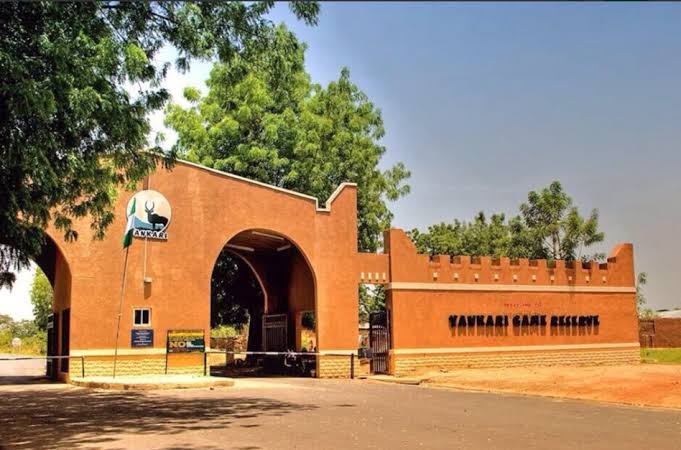
Yankari Game Reserve (Bauchi State)
Once celebrated as Nigeria’s top wildlife destination, Yankari Game Reserve is home to natural warm springs, roaming elephant herds, and rich biodiversity. Nestled in Bauchi State, it was envisioned as a safari haven capable of drawing visitors from across the world.
But in recent years, its promise has dimmed. Visitors frequently complain about unreliable electricity, deteriorating lodges, mosquito infestations, and poorly maintained facilities. Coupled with limited promotion and weak management, these challenges have steadily eroded its appeal. Today, despite its enormous potential to serve as West Africa’s flagship wildlife and eco-tourism hub, Yankari stands as a shadow of what it could be.
The ICIR reported that Yankari Game Reserve now harbours terrorists, poachers and other intruders, upending eco-tourism fortunes in the reserve. There are bare footprints of the negligence and maladministration by the successive governments of Bauchi State where the reserve sits on an estimated 2,244 square kilometres of land in Alkaleri LGA.
Sukur Cultural Landscape (Adamawa State)
A UNESCO World Heritage Site, Sukur is known for its terraced farmlands, iron-smelting history, and palace complex. Despite its global recognition, visitors patronage remains low. Studies cite remoteness, poor road access, and insecurity in the Northeast as key barriers. Scholars recommend community-led conservation and better infrastructure to unlock its tourism potential.
Afi Mountain Wildlife Sanctuary (Cross River State)
Home to endangered species like the Cross River gorilla and Nigeria-Cameroon chimpanzee, Afi Mountain is a biodiversity hotspot. Conservation reports, however, highlight poaching, snares, and underfunding that hinder eco-tourism. Without ranger support, eco-lodges, and guided tours, the sanctuary risks remaining a conservation challenge instead of a thriving tourism site.
A study titled, “Impact of Anthropogenic Activities on Vegetation Cover and Mammalian Herbivores in Afi Mountain Wildlife Sanctuary” shows that logging, farming, and forest burning by local communities are significantly reducing forest cover (using satellite imagery from 1985-2021) and threatening mammal populations.
Kanta Museum & Argungu Festival (Kebbi)
The Kanta Museum in Argungu, Kebbi State, is a historic fortress-turned-museum that tells the story of the Kebbi Kingdom. Its unique architecture and collection of traditional weapons and cultural artefacts make it a site of great significance. Equally important is the Argungu Fishing Festival, once a world-renowned cultural celebration featuring canoe racing and large-scale fishing competitions.
However, the festival has not been held in over a decade, except in 2020. Meanwhile, the museum, though rich in heritage, has seen little modernisation. It lacks interactive features, digital presence, and upgraded facilities that could attract and sustain wider interest.
Kajuru Castle (Kaduna State)
This medieval-style castle, built in the 1980s, is unlike anything else in Nigeria. Yet its tourism value collapsed after a 2019 attack where tourists were kidnapped. Ongoing security fears and limited marketing mean Kajuru operates far below potential. With improved safety and targeted branding, it could serve as a premium heritage getaway.
In 2022, Punch reported how the security situation in the state is scaring people from visiting. The report showed how many tourists who have been visiting the state can no longer do so due to the fear of kidnapping.
Mandara Mountains (Adamawa State)
The Mandara Mountains, straddling the Nigeria–Cameroon border in Adamawa State, boast dramatic volcanic formations, terraced farming villages, and breathtaking hiking landscapes, yet they remain one of Nigeria’s most underutilised tourist treasures.
Despite their scenic and cultural value, poor infrastructure, low awareness, and security concerns have discouraged investment and large-scale visitation. Media and travel reports highlight the lack of access roads, visitor facilities, and promotion, while environmental degradation from overgrazing and deforestation further threatens the area’s appeal.
Oba Hills Forest Reserve (Osun State)
Spread across over 50 square kilometres, Oba Hills once harboured rich biodiversity, including chimpanzees. Today, studies document extensive deforestation, encroachment, and poor conservation.
In December 2024, the Osun State Government formally handed over Oba Hills Forest Reserve to the Federal Government so it can be managed by the Nigerian National Park Service, upgrading it to National Park status. Adeleke said the exposure to danger of some species of diverse plants and animals due to activities such as logging, hunting, and other human factors made the state government to reconsider inviting the Federal Government to take over the forest reserve.
Jos Wildlife Park (Plateau State)
Once a family favourite with picnic grounds and wildlife, Jos Wildlife Park has fallen into disrepair due to neglect and underfunding. Recent government efforts, such as fencing and rehabilitation, show attempts at revival. However, issues like illegal mining continue to discourage large visitor numbers, stalling its return to prominence.
In 2020, Daily Trust reported that the park was one of the tourist centres in Jos plagued by a dearth of animals and low patronage. Governor Caleb Muftwang also acknowledged that there are few animals in the park despite being one of the points of interest for his administration in the area of tourism.
Owu water falls( Kwara)
Owu Falls, nestled deep within Kwara State, tumbles dramatically over rocky cliffs, offering one of Nigeria’s most breathtaking natural sights. Yet, its vast tourism potential remains largely untapped. Visitors often struggle to reach the waterfall, as there are no clear pathways or signs, leaving many disoriented or straying into nearby villages.
The site suffers from poor upkeep, and it lacks essential facilities such as guided tours, safety measures, or even a formal entry system. Though Kwara State government has approved a contract for the construction of Phase I of the road to the tourism site.

Nurudeen Akewushola is an investigative reporter and fact-checker with The ICIR. He believes courageous in-depth investigative reporting is the key to social justice, accountability and good governance in society. You can reach him via nyahaya@icirnigeria.org and @NurudeenAkewus1 on Twitter.