Home Blog Page 178

LAUTECH nurses commence indefinite strike over minimum wage, others

0

NURSES and midwives at the Ladoke Akintola University of Technology Teaching Hospital (LAUTECH-TH), Ogbomoso, Oyo State, have embarked on an indefinite strike to demand the implementation of Nigeria’s new national minimum wage and resolution of long-standing welfare issues.

In a statement on Saturday, September 20, the unit chairman of the National Association of Nigerian Nurses and Midwives (NANNM), Ojewumi Olutayo, and secretary, Adedokun Foluwake, accused the government of failure to heed repeated appeals for improved conditions of their members.

The action, which the association said began on Friday, September 19, followed the expiration of a 15-day ultimatum to the hospital management. 

The statement also noted that repeated engagements with management and the Oyo State government had failed.

Their demands include immediate implementation of the new national minimum wage and consequential adjustments backdated to January 2025, payment of promotion arrears from 2018 to 2024, urgent recruitment of additional nurses to address acute shortages, and renovation and proper furnishing of nurses’ stations and restrooms.

“LAUTECH Teaching Hospital workers have suffered systemic neglect, with their welfare consistently overlooked compared to counterparts in other state-owned health institutions in the state who already enjoy improved packages,” the group said.

The union noted that prolonged delay had created financial strain, low morale, and an exodus of skilled personnel, warning that the strike would continue until all demands are met.

While calling on the state Governor Seyi Makinde to intervene in the issue quickly, the association cautioned that the strike would severely disrupt services for thousands of patients, including pregnant women, children, accident victims, and other emergency cases.

Recall that President Bola Tinubu on Monday, July 29 signed the National Minimum Wage Act 2024 Amendment Bill into law, approving a minimum wage for civil servants from N30,000 to N70,000.

However, implementation has been weak and uneven, with several state governments and institutions yet to adjust salaries or release arrears.

DICON factory explosion ‘kills two’, injures four in Kaduna

0

AN explosion suspected to have originated from gunpowder production have rocked the Defence Industries Corporation of Nigeria (DICON) in Kaduna, leaving two workers dead and four others injured.

The explosion occurred at about 10 am on Saturday, September 20, at the corporation’s factory in Kurmin Gwari, a densely populated area of Kaduna metropolis.

Residents near the factory told journalists that the blast was so powerful that it rattled nearby buildings, causing panic as people scrambled for safety, while military personnel cordoned off the entire area around the factory afterwards.

An eyewitness told The Punch that the explosion occurred while gunpowder materials used in arms production were being manufactured.

“It was an explosion from the production of gunpowder—something called primer powder. It killed a military officer instantly, as well as one civilian worker. Four other civilian workers were critically injured. Their conditions are serious,” the source, who pleaded anonymity said.

Reports indicate that the injured were first taken to St. Gerard Catholic Hospital in Kakuri, about two kilometres from the factory, for emergency care before a military ambulance later transferred them to the 44 Nigerian Army Reference Hospital in Kaduna for further treatment.

Founded in 1964, the Defence Industries Corporation of Nigeria is the nation’s leading arms manufacturer, tasked with producing weapons and ammunition for the Nigerian Armed Forces.

Police arrest suspected fake security leader targeting luxury cars

0

THE Lagos State Police Command has arrested 46-year-old Jude Onouha, a suspected kingpin and leader of a notorious criminal syndicate accused of posing as security operatives in fake uniforms to hijack luxury cars from unsuspecting victims.

In a statement issued by the Deputy Police Public Relations Officer, Babaseyi Oluseyi, on behalf of the Commissioner of Police, the Command said the suspect used a Mercedes car jack, altered to resemble a firearm, to gain entry into estates across Lagos.

“Under the false pretense of conducting security investigations, they gained access to several residential estates. Once inside, the gang targeted high-end vehicles such as Toyota Hilux, Toyota Highlander, Lexus 650, Mercedes-Benz, and other SUVs, systematically vandalising them and removing vital and expensive components, including brainboxes, tapping glasses, wiring systems, side mirrors, and control devices,” the police said.

The command noted that efforts were underway to track down other members of the gang for investigation and prosecution.

“The kingpin arrested corroborated the crime, and he is assisting the police detectives in the further investigation of the case,” it added.

The command stated that items recovered from the suspect included a Mercedes-Benz car jack and a face cap bearing the inscription Special Force, which he allegedly used to pose as a security operative.

“Efforts are ongoing to apprehend other members of the gang and their accomplices. The command hereby wishes to advise residents, particularly estate management and security guards, to exercise vigilance and utmost caution whenever person(s) present themselves as operatives of any security agency and seek to gain entrance into their estates,” the command urged.

It further advised Lagos residents to go beyond basic verification by working closely with the police, urging them to contact the Divisional Police Officer (DPO) in their area to confirm the identity of any security personnel before granting them access to their estates.

“Where there is any doubt, such persons should immediately be referred to the nearest police division.”

The Lagos State Commissioner of Police, Olohundare Jimoh, also urged residents and estate managers to stay vigilant, work closely with their respective DPOs, and make use of the command’s emergency lines 08063299264, 09053872208, and 08087332678 for swift response and intervention.

He assured that with vigilance, cooperation, and prompt reporting, the safety and security of communities across Lagos State would be further reinforced.

NEMA repatriates 148 Nigerians from Sudan  

THE Kano Operations Office of the National Emergency Management Agency (NEMA) has received 148 Nigerian migrants from Sudan, as part of ongoing efforts to ensure the safe repatriation of citizens from abroad.

In a statement on Saturday, September 20, NEMA said the returnees landed at the Malam Aminu Kano International Airport around 2:30 p.m. on Friday aboard a chartered Tarco Aviation flight.

“The returnees were transported to the Chila Hotel for profiling and documentation by relevant stakeholders.

“The returnees were not enrolled in any reintegration programme and were discharged and given transport fare.. after the completion of documentation and profiling,” the statement explained.

The migrants’ return follows the ongoing conflict in Sudan, which has displaced millions of people and severely affected the nation’s infrastructure.

Describing the reintegration exercise as “well-coordinated and successfully executed,” NEMA stated that it would maintain collaboration with the Federal Government and international partners while continuing to monitor the situation in Sudan and providing support to affected Nigerian citizens.

“NEMA has been collaborating with international organisations to address the challenges faced by Nigerian migrants abroad. The National Agency for the Prohibition of Trafficking in Persons has been instrumental in rescuing Nigerian girls from traffickers’ camps in Libya,” it added.

The ICIR reported in July that NEMA received 139 Nigerians who were repatriated from Agadez, Niger Republic as part of its efforts to ensure the safe and dignified return of Nigerian migrants.

Osun joins Ondo, Imo, others, bans nursery, kindergarten graduation parties

0

THE Osun State government has banned graduation ceremonies for nursery and kindergarten pupils across public and private schools, warning that the elaborate events have become a financial burden on parents and a distraction from learning.

In a circular signed by the Permanent Secretary of the Ministry of Education, M. A. K. Jimoh, the state directed that graduation parties would be limited to pupils completing primary six and students finishing senior secondary school three (SSS3)

The state joins Imo, Anambra, Ebonyi, Ogun, Ondo and Ekiti states that have taken similar action in recent weeks.

“It has come to the attention of the Ministry of Education that the practice of organising elaborate graduation ceremonies for nursery and kindergarten pupils has become increasingly common,” the Osun State circular dated September 19 read.

The state government said the measure followed growing complaints that schools compel parents to pay for uniforms, souvenirs, and entertainment at early-childhood graduation parties, the costs it said many families could not afford. 

The ministry added that the practice often consumed teaching time that should be devoted to core instruction.

Alongside the ban, the state introduced guidelines aimed at curbing the frequent change of school textbooks, particularly in faith-based and private schools.

It directed proprietors to adhere strictly to approved list of textbooks.

“The textbooks must be used for a period of three years to allow siblings to benefit from them consecutively, while the practice of inserting workbooks inside textbooks should stop with immediate effect.

“To promote stability and consistency in education, proprietors of faith-based and private schools are required to adhere to the approved list of textbooks,” the circular read.

The government warned that violation of the directives would attract fines or suspension of school licence.

The ICIR reports that Osun’s action adds to similar crackdowns already in force in some South-East and the South-West states.

According to reports, the Imo State government in August, prohibited graduation parties for nursery pupils and junior secondary school three students. 

Commissioner for Education in the state, Bernard Ikegwuoha said only graduating primary six students and senior secondary school students would be permitted to hold such parties.

According to the commissioner, the new government policy was intended to reduce unnecessary expenses for parents.

It also noted that it would guide the parents to focus on their children’s academic achievement at the end of primary and secondary school cycles.

Similarly, the Ekiti State government prohibited graduation ceremonies for nursery pupils, lower-primary classes, and secondary schools, while directing all schools to use only an approved list of textbooks for at least three academic years to ease costs for families.

The policy, set to take effect from the 2025/2026 academic session, was announced in a circular signed by the Ministry of Education’s Permanent Secretary, Mike Omolayo

According to the circular, the measures aim to reduce what the government described as undue financial pressure on parents and to rein in the extravagance often associated with graduation parties organised by schools.

Similarly, on August 38, the Ondo State government banned graduation ceremonies for nursery pupils and junior secondary school (JSS) 3 students while also prohibiting the practice of compelling parents to buy new textbooks every academic session.

Trump raises H-1B visa fee to $100,000

0

UNITED States (US) President Donald Trump signed an executive order increasing the H-1B visa application fee to $100,000, a move that could have sweeping consequences for the tech industry, where the visas are widely used.

Trump told reporters while signing the order in the Oval Office on Friday, September 20, that “The main thing is, we’re going to have great people coming in, and they’re going to be paying,” Trump said.

Trump’s order states that effective Sunday, September 21, applicants will be required to pay the fee, though the Homeland Security secretary may grant exemptions to individuals, specific companies, or entire industries.

“I think it’s going to be tremendously successful,” Trump noted.

The new policy, expected to attract legal battle, was unveiled alongside a $1 million “gold card” residency programme that Trump had teased months earlier.

Trump also authorised a new order establishing an expedited pathway to US residency for individuals who pay $1 million, or for corporations that contribute $2 million as sponsors.

H-1B visas enable companies to hire foreign professionals with specialised expertise such as scientists, engineers, and computer programmers to work in the United States for an initial period of three years, with the option to extend up to six years.

Each year, the United States grants 85,000 H-1B visas through a lottery system, with Indians making up roughly three-quarters of the beneficiaries.

Major tech companies depend heavily on Indian workers, whether they relocate permanently to the United States or move between the two countries.

Tech leaders including Elon Musk, once Trump’s ally, have cautioned against restricting H-1B visas, arguing that the US lacked sufficient local talent to meet critical workforce demands in the tech sector.

“All the big companies are on board,” said Commerce Secretary Howard Lutnick, who joined Trump in the Oval Office.

Since his first term, Trump had set his sights on the H-1B programme but was met with litigations. The latest measure marks a new step in the sweeping immigration crackdown of his second term.

The order is set to expire in one year, but Trump retains the authority to extend it.

H-1B visa applications have surged in recent years, reaching their highest approval levels in 2022 under Democratic President Joe Biden.

By contrast, the highest number of rejections came in 2018, during Trump’s first term.

In 2024, the United States approved about 400,000 H-1B visas, with two-thirds of them being renewals.

The ICIR reported that the US Department of State introduced a new policy for non-immigrant visa applicants, mandating that they book their interviews at the US Embassy or Consulate located in their country of nationality or residence.

The policy was published on September 6, 2025, on the State Department’s official visa portal, stating that it took effect immediately.

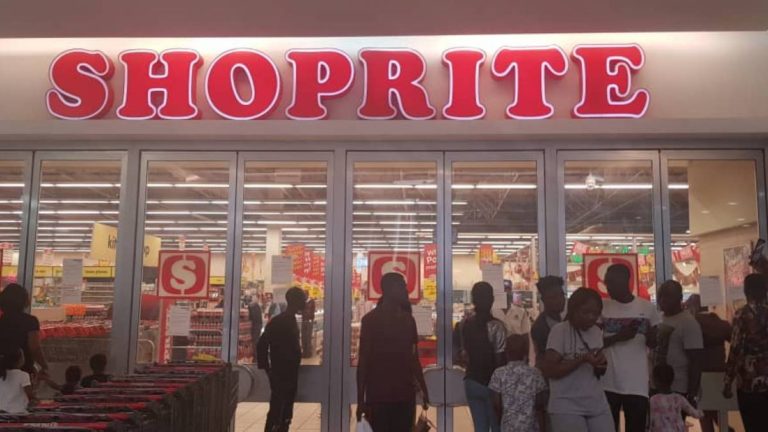
Shoprite undergoing ‘economic reset’, not exiting Nigeria – Official

AS Nigerians continue to raise questions over empty shops that dotted Shoprite branches across the country, Retail Supermarkets Nigeria Limited (RSNL), the operator of Shoprite franchise, said the company was undergoing an ‘economic reset’ while countering reports of a planned exit from Nigeria.

The company, in a statement on Friday, September 19, countered its purported exit from Nigeria as reported by some media outlets.

“The current development was not an exit move but part of a ‘reset’ of its business model aimed at stabilising operations and adapting to prevailing economic realities,” the company said, adding that “a turnaround programme backed by new investors to adapt to Nigeria’s economic realities is currently ongoing, including exchange rate volatility, rising inflation and liquidity constraints.

According to RSNL, its old model of operating large-format stores with heavy reliance on imports and high overhead costs was no longer sustainable.

The reset, it said, would focus on smaller, more efficient store formats, stronger local supply chains with over 80 per cent of products sourced in Nigeria, and private-label affordability options.

The outfit said the strategy would also include better liquidity management and efficiency improvements, such as energy optimisation and cost savings across stores.

The statement quoted the Chief Strategy Officer at RSNL, Bunmi Cynthia Adeleye, as saying, “Yes, it has been a tough period, but this is not a collapse; it is a reset. The old model did not work for Nigeria.

“With new investors behind us, we are rebuilding Shoprite to be more local, culturally relevant, more affordable, and more resilient. We are coming back bigger and stronger to serve Nigerian customers better than ever before.”

The company stressed that it remained committed to Nigeria and would continue to serve its millions of customers and suppliers as part of its long-term growth plan.

Sixteen years after opening its first outlet in Nigeria, Shoprite Holdings Limited, reputed to be Africa’s largest food retailer, finally packed up and sold its Nigerian operations to local investors, The ICIR reported.

The company sold its stake to Ketron Investment Ltd, a Nigerian company owned by a group of local investors led by Tayo Amusa of Persianas Investment Ltd, a property firm.

Amusan, in reaction to the acquisition in 2021, said the development ushered in a new era that called for expansion for greater impact.

“We are thrilled to complete the acquisition of Shoprite, ensuring the continued operations of one of the biggest retail success stories in Nigeria,” he said.

Fubara admits learning ‘hard lessons’ from emergency rule, promises peace, progress in Rivers

RIVERS State Governor Siminalayi Fubara has admitted learning ‘hard lessons’ during the emergency rule declared by President Bola Tinubu, which led to his suspension, his deputy, Ngozi Odu, and all members of the state House of Assembly in March.

Tinubu Appointed Ibok-Ete Ibas, a retired vice admiral, as the state administrator. The decision followed a looming anarchy occasioned by the unresolved feud between the governor and his predecessor and current Ministry of the Federal Capital Territory (FCT) Nyesom Wike. The crisis pitched over 90 per cent of the state House of Assembly, who were loyal to Wike, against the governor.

Following Tinubu’s intervention and subsequently expiration of the state of emergency on Thursday September 18, Fubara and other suspended leaders in the state were returned to their offices.

Addressing the state Friday evening, Fubara appreciated the people, the president and other stakeholders in the state.

He said he was ready to work harmoniously with other leaders to move the state forward, noting that all parties had sheathed their swords.

He described Wike as his leader and expressed loyalty to Tinubu. He said he resisted pressure to challenge the state of emergency when Tinubu declared it, believing the crisis would be resolved for the state’s good.

“This was why I also resisted the pressure to challenge the constitutionality of the declaration of a state of emergency, the suspension of democratic institutions, and all other actions that we endured during this difficult period.

“In the course of the six-month period, Mr. President graciously brokered the peace process with all the parties successfully. Our Leader, His Excellency, Nyesom Ezenwo Wike, CON, all members of the Rivers State House of Assembly and I, as your Governor, have all accepted to bury the hatchet and embrace peace and reconciliation in the best interest of our dear Rivers State.

“We believe the political crisis is now behind us and that peace and stability have once again returned to Rivers State, though not without the hard lessons learnt from the emergency rule,” he stated.

While calling on stakeholders to join hands and work for the progress of the oil-rich state, the governor said, “The responsibility now rests squarely on us: the Government, the State House of Assembly, political leaders and stakeholders to put aside our differences, work for the common good, and advance the interests of our people above all else. We have a duty to ensure that the peace we have all embraced remains permanent in our dear Rivers State.

“On behalf of the Government and the good people of Rivers State, I extend our heartfelt gratitude to Mr. President for his fatherly disposition and decisive interventions in resolving the political crisis and for graciously restoring full democratic governance to our State.

“Personally, I will never take Mr. President’s kindness for granted, and for that, I hereby reaffirm my utmost loyalty and eternal gratitude.

“To those who have expressed genuine fears, frustrations, and uncertainty over the nature of the peace process, I assure you that your concerns are valid and understood. However, nothing has been irretrievably lost; there remains ample opportunity for necessary adjustments, continued reconciliation, and inclusiveness. We must all remember the saying, ‘the costliest peace is cheaper than the cheapest war”.

He called on all people in the state to see the moment as a fresh beginning, urging them to work with renewed hope and determination to build a stronger, more peaceful and prosperous Rivers State. I assure you that we will continuously work towards ensuring that we carry everyone along.

“Despite the turbulence, you are aware of the credible milestones our administration achieved in infrastructure, education, healthcare, and other key sectors over the last two years.

“Our immediate responsibility is to return to the path of governance and development by completing the projects which we started by ensuring none of them is starved of funds or neglected, thereby reviving our economy, protecting lives and property, and improving the wellbeing of all Rivers people.

“I commit to working harmoniously with the Rivers State House of Assembly to recover lost grounds and accelerate the social and economic advancement of our dear State. I also renew my pledge to serve with the fear of God, humility and a high sense of duty. I wish to sincerely thank you, the resilient people of Rivers State, for your patience, courage, and peaceful conduct during the six months of emergency rule,” the governor added.

He also challenged people in the state, regardless of their political, religious, or ethnic affiliation, to join hands in rebuilding the state and securing a future of dignity and progress for all.

Recall that on Wednesday, September 17, Tinubu announced an end to six-month emergency rule in the state, declaring that Fubara, his deputy, and Speaker of the House of Assembly, Martins Amaewhule, would return to office from Thursday, September 18.

While announcing an end to the emergency rule, the president cited insecurity, the absence of a functional legislature, and threats to vital economic assets as reasons for suspending the state’s democratic institutions.

He acknowledged over 40 court cases that challenged the legality of his decision but insisted it was necessary to “arrest the drift towards anarchy.”

He added that fresh intelligence suggested “a new spirit of understanding” among the state’s political actors, making further federal oversight unnecessary.

In the build-up to the handover, attention shifted to Port Harcourt, where expectations of Fubara’s return grew stronger. Wike had declared on August 30 that the emergency would expire on schedule.

Sole administrator, Ibok-Ette Ibas, a retired vice admiral appointed by Tinubu, prepared for his exit with a thanksgiving service on September 14.

His six-month stewardship saw the removal of political appointees, the conduct of local government elections dominated by Wike’s allies, and a handful of projects, which he claimed included N5 billion saved from a civil service verification exercise.

On September 18, thousands of supporters thronged the Government House in Port Harcourt as early as 6 a.m. Armed with music, masquerades, and banners, they celebrated Fubara’s reinstatement. But by evening, the jubilation ended in disappointment as neither the governor nor his deputy appeared.

Security operatives restricted access to the Brick House, leaving it deserted. “Many workers were not allowed to enter. It is just empty, like during transitions,” a source at the complex said.

Close associates of the governor, including former Chief of Staff, Edison Ehie, and ex-council chairmen, were also sighted but departed without assurance of Fubara’s return.

By Friday morning, reports indicated that Fubara was unavailable, even as viral images showed crowds gathering at Port Harcourt Airport in anticipation of his arrival. The governor later arrived at the airport later that day.

Meanwhile, the Rivers State House of Assembly reconvened after six months of paralysis on Thursday, mandating Fubara to submit commissioner nominees and a fresh budget.

Lawmakers also resolved to scrutinise contracts and finances managed under the emergency rule. Speaker Amaewhule pledged commitment to the peace deal facilitated by Tinubu but stressed that oversight of past spending was unavoidable.

In the midst of all the drama, Wike publicly confirmed his reconciliation with Fubara. Speaking on Channels Television’s “Politics Today” on Thursday, Wike said, “I spoke with the governor yesterday. We have made peace. I am at peace with Governor Fubara.”

He dismissed suggestions of interfering in appointments, adding, “I have no candidate, and I will not.”


NDLEA Cross River commander found dead in Calabar hotel

0

THE National Drug Law Enforcement Agency (NDLEA) has lost its Cross River State Commander, Ogbonna Uzoma, a Chief Narcotics Officer.

He was discovered dead in a hotel room in Calabar, Cross River State, on Thursday, September 18.

The NDLEA spokesperson, Femi Babafemi, confirmed in a statement on Friday, September 19, that Uzoma, who only assumed office on August 18, failed to appear for a scheduled assignment and was later found lifeless after colleagues and hotel staff forced his room open.

According to Babafemi, the police were immediately notified and have since commenced investigations into the circumstances surrounding the death.

He added that NDLEA Chairman, Buba Marwa, a retired brigadier general, directed the Zonal Commander, Mathew Ewah, to relocate to Calabar to support the inquiry.

Although the cause of death is still unknown, the agency has pledged full cooperation with the police and expressed sympathy to Uzoma’s family.

“The Agency stands with the family in this trying moment, and we pray that God will comfort them and grant the departed eternal rest,” the NDLEA said.

Ogbonna’s tenure in Cross River was short but marked by some significant activities, as he had already begun coordinating operations upon assuming duty.

Cross River has, in recent years, been a critical base for NDLEA operations. In June 2025, the agency destroyed a 30-hectare cannabis farm in the state and recorded major drug seizures.

FCT resident doctors suspend strike

0

THE Association of Resident Doctors in the Federal Capital Territory (ARD-FCT) has suspended its indefinite strike and directed members to return to duty on Monday, September 22.

The association’s president, George Ebong, confirmed this on Friday, September 19, in a short message to The ICIR, noting that work would resume by 8am on Monday.

Meanwhile, Punch Newspaper reported that the decision followed mediation by the Senate Committee on Federal Territory Area Councils and Ancillary Matters, chaired by David Jimkuta.

Speaking with the newspaper, Ebong acknowledged the interventions of the FCT Minister Nyesom Wike on the suspension of the strike.

He, however, noted that none of the demands of the striking doctors had been met.

“We are suspending the strike to begin work at 8 a.m. Monday morning.

“The Senate Committee on Federal Territory Area Councils and Ancillary Matters, chaired by David Jimkuta, intervened. Even though none of our demands have been met yet, they assured us that they will talk to the minister, and the Congress has decided to believe what the Senate has said. We also appreciate the Minister of the FCT, Nyesom Wike, for his interventions,” Ebong was quoted to have said.

According to him, the congress will reassemble to reassess the interventions within the agreed timeframe.

He added that “if nothing is done, the Congress will take the next line of action.”

Background

The doctors began a seven-day warning strike on September 8, protesting what they described as years of systemic failure in Abuja’s health sector. 

Their grievances include severe manpower shortages, unpaid allowances, broken equipment, and unsustainable workloads.

The strike came eight months after a similar action in January 2025, which ended when Wike promised sweeping reforms.

At the time, Ebong revealed that the minister had approved the payment of six months’ salary arrears, outstanding accoutrement allowances, and pledged to reduce medical residency bonding to two years. 

He also noted that the minister authorised the recruitment of additional doctors and allied health workers to address staffing shortages and promised to ensure prompt payment of locum and other health workers.

The doctors resumed work on January 25. However, eight months later, the ARD-FCT gave the FCT administration a one-week deadline to begin implementing reforms, particularly on staffing and welfare, or risk further industrial action.