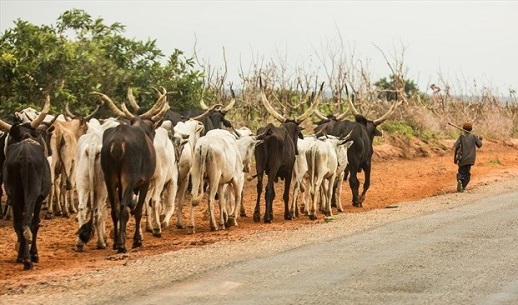
THE Amotekun Corps has announced that Fulani herders believed to be foreigners of Tuareg extraction are planning an invasion of communities within the South-West.
Chairman of the Oyo State Amotekun Corps Kunle Togun made this announcement on Wednesday while speaking at an annual lecture organised by students of the Institution of Peace and Strategic Studies at the University of Ibadan, Oyo State.
The retired military general advised the students to remain vigilant as foreign herders who had been residing in the surrounding forests for years might unleash mayhem on the region.
While delivering a speech on security challenges in Nigeria, Togun noted that the herders residing in the forest were Fulanis from Niger Republic, Chad and Burkina Faso.
“The Fulani that I grew up to know were the native Fulani. But these ones are non-Nigerians. They are from FutaJallon, Mali, Burkina Faso, Chad, and Niger Republic. Some of these people were Tuaregs who used to ambush traders in the olden days and robbed them of their money and property,” he said.
Criminality attributed to herders has become a major cause for concern within the south-western part of Nigeria.
Destruction of farms, kidnapping and attacks on residents have been major reasons for the rising tension within the region and other parts of the country.
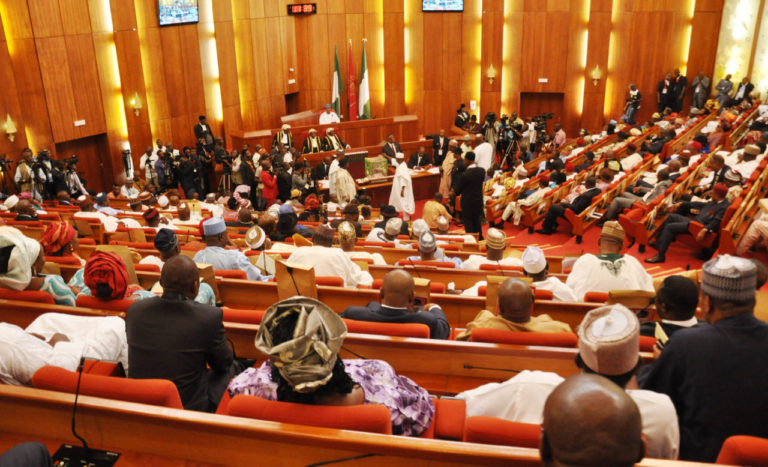
THE Nigerian Senate has passed a bill seeking to prohibit discrimination between bachelor’s degree and Higher National Diploma (HND) holders in the country.
The bill was passed following the consideration and adoption of the report by the Joint Committee on Establishment and Public Service Matters, and Tertiary Institutions and Tertiary Education Trust Fund (TETFUND) on Tuesday.
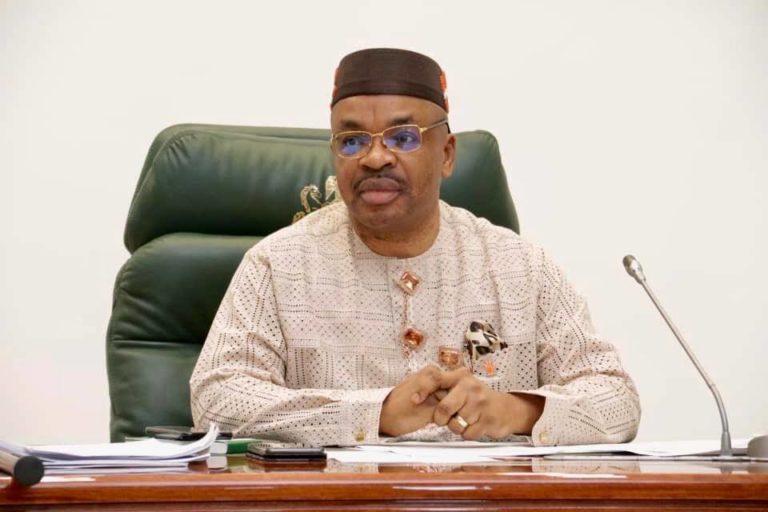
Chairman of the Committee Ibrahim Shekarau, while presenting the report, said that the bill would free holders of HND from stagnation and ensure balanced treatment with their counterparts from other higher tertiary institutions in Nigeria.
According to him, the abolishment of the existing dichotomy between HND holders and graduates of universities would meet the huge manpower needs of Nigerians, ensure social justice and enhance corporate governance, while encouraging patriotic contributions amongst HND employees in both public and private sectors.
In his remarks after the passage of the bill, Senate President Ahmad Lawan emphasised that the passage of the bill would serve as motivation for polytechnic graduates.
He, therefore, called on the public and private sectors to ensure the implementation of the bill’s provisions as soon as it was signed into law by President Muhammadu Buhari.
“This particular issue has been in the front burner for a long time. I recall that in the House of Representatives between 2003 and 2007, this was one bill that was so important, and is one way of encouraging our polytechnic graduates,” Lawan said.
“That should not take away from the kind of training they receive, but, in fact, it is supposed to be a motivation for our polytechnic graduates.
“[And] I pray that the Federal Government and all those government agencies and the private sector would start to implement this by the time the president assents to this bill.”
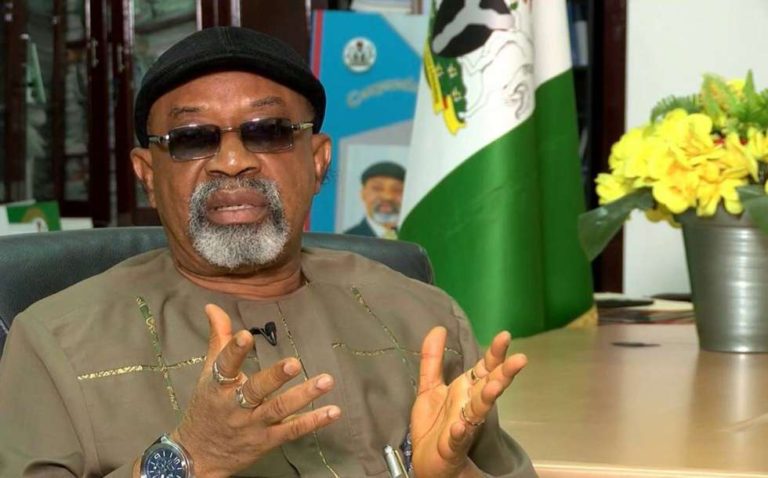
NIGERIA’S Minister of Labour and Employment Chris Ngige said the Federal Government had raised health workers’ hazard allowance by over 300 per cent.
He made the announcement on Wednesday after a closed door meeting with health workers at the Presidential Villa, Abuja.
He said the proposal was made by the Presidential Committee on Salaries and Wages that had been handling negotiations over the welfare of health workers, especially since the outbreak of COVID-19 pandemic.
The minister said the government had since spent up to N30 to 31 billion in payments of such allowances, especially since COVID-19 began.
“We moved from the N5,000… a month, which was long forgotten, until COVID came,” the minister said. He also gave estimates on what the government was offering the health workers.
The minister said the government “had offered things that are very reasonable” as it had improved the situation for both junior and senior workers.
He said in terms of allowance, there had been “about 350 per cent rise for junior workers and about 600 per cent rise for senior workers.”
Ngige cited a suffering national economy, a budget being funded by borrowing, and a gross drop in government earnings as reasons for the level of offer.
However, health workers are yet to accept the raise as the minister noted that a two-week adjournment had been called, to allow them to conclude negotiations with their colleagues before providing a feedback.
It has been three months since the minister of labour and employment threatened the National Association of Resident Doctors (NARD) with a ‘no-work no-pay’ clause during the recent strike.
The ICIR had reported that the association of doctors listed the ‘non-implementation of 50 per cent hazard allowance for all health workers’ as part of the reasons it took the industrial action.
In September 2020, The Joint Health Service Unions (JOHESU) had also gone on a seven-day strike over the non-payment of hazard allowance for treating COVID-19 patients, a report said.
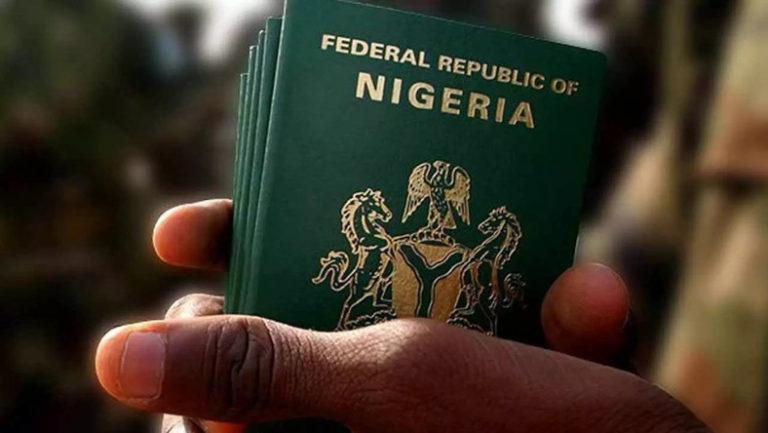
THE Nigerian government says it extended commencement of the new passport regime by one week from June 1st to June 8th to enable the Nigeria Immigration Service (NIS) to reposition itself for improved service delivery.
A statement signed by Assistant Comptroller Public Relations Officer of the Service Amos Okpu said the extension was also in furtherance of a directive by the Minister of Interior Rauf Aregbesola to clear all backlog of passport applications across issuing centres.
“The period shall be used to attend to applicants for collection, clear all remaining backlogs as well as improve systems automation for the take-off of the new passport regime,” the statement said in part.
Meanwhile, short message notifications sent out by passport control officers to applicants for the collection of ready passports is proving to be effective. Out of 230, 500 cleared passports, 187, 150 have been collected, but 43, 350 are yet to be taken.
Chika Obinna confirmed to The ICIR that he was captured on March 24 for his passport and had received an SMS for collection, just as Kelechi Chukwueke and other applicants posted on Twitter that they had collected their passports after receiving notifications from the NIS.
However, a lot more Nigerians who applied for renewal of their passports earlier this year said via the app that they were yet to receive the notification for collection and their names were missing on the list of ready passports published on the NIS website www.immigration.gov.ng.
“Please those of us outside the country are faced with similar situation. It’s been three months since I applied to renew my passport (Washington center) and we have not heard anything. Is there a way we can track status of our passport application also?? Please help!” Ogunbanwo Ayo inquired, tweeting @nigimmigration.
Another diaspora Nigerian Phemmy Psalm son tweeted: “Does this notice affect the mission abroad? It’s more than two months since I applied for my passport renewal at the Atlanta, GA embassy. No update from them, and they do not answer phone calls.”
The NIS said it was working to resolve these complaints as soon as possible and had been offering real-time responses to inquiries sent via social media.
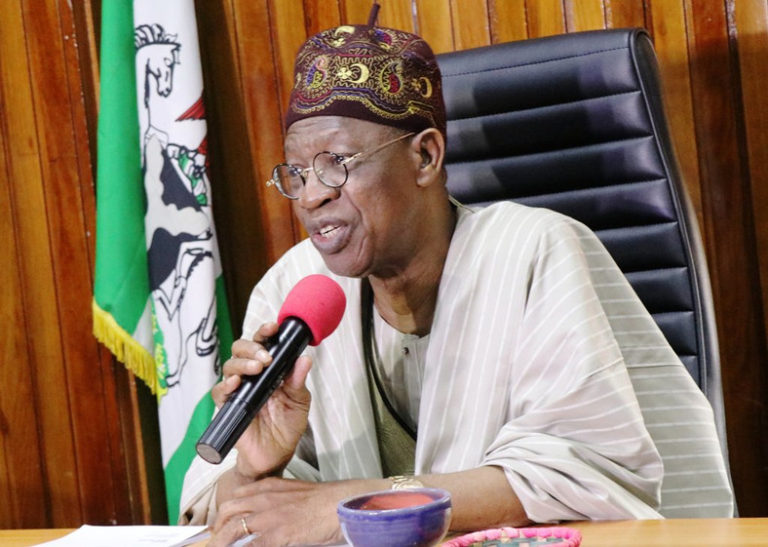
MINISTER of Information and Culture Lai Mohammed has said that Nigeria’s President Muhammadu Buhari has the liberty to express his views concerning the state of security in the South-East part of the country.
Mohammad said this on Wednesday while addressing journalists at the State House after a social media platform, Twitter, deleted the president’s post that threatened to unleash mayhem on South-East Nigeria.
The ICIR had reported that Twitter deleted Buhari’s post after Nigerians reported him of threatening genocide against South-East Nigeria that has recorded attacks on government facilities.
Responding to Twitter’s action, Mohammed said Buhari was free to express such views if he felt ‘very bad and concerned’ about a situation.
“…Any organisation that gives directives to its members, to attack police stations, to kill policemen, to attack correctional centres, to kill warders, and you are now saying that Mr. President does not have the right to express his dismay and anger about that? We are the ones guilty of double standards,” Mohammed said.
The minister also said the actions of Twitter in Nigeria was ‘suspicious,’ accusing the platform of playing double standards by ignoring the posts of the leader of the Indigenous People of Biafra (IPOB) Nnamdi Kanu.
He said he had not seen anywhere in the world where an organisation or someone outside Nigeria would direct his members to destroy and attack symbols of authority.
Recently, violence has reigned in South-East Nigeria, ranging from killing and attacks of police and Army officers to attacks on Independent National Electoral Commission (INEC)’s offices.
THE Ohanaeze Ndigbo Youth Council (OYC) has petitioned the United Nations and the United States over recent statements by President Muhammadu Buhari threatening to brutally deal with those he perceived as destabilising his administration in the South-East region of the country.
The group also petitioned the International Criminal Court (ICC), the United Kingdom and other international organisations over what it called ‘another subtle means of attacking the people of the region.’
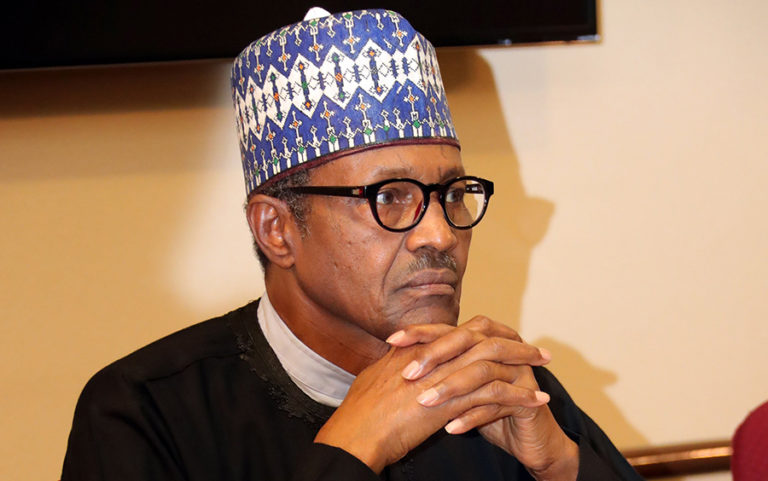
President Buhari had, in a series of tweets on Tuesday, threatened Biafra agitators, saying that those responsible for the destructions of the Independent National Electoral Commission (INEC)’s properties would be treated the way a secessionist group, Biafra, was treated during the Nigerian Civil war.
“Many of those misbehaving today are too young to be aware of the destruction and loss of lives that occurred during the Nigerian Civil War. Those of us in the fields for 30 months, who went through the war, will treat them in the language they understand,” Buhari said.
The president’s statement, which has now been deleted by Twiter, has stirred a lot of angry reactions.
However, in a statement on Wednesday, OYC President Okwu Nnabuike said the president’s statement had revealed the level of hatred he had for the Igbo people.
The statement accused Buhari of romancing with Boko Haram members, Fulani militias while trying to serve another medicine for people it said were agitating for the rights to have their own country.
“We write to alert the international community on another planned attack against Ndigbo,” the statement said.
“This is sadly coming few days after Ndigbo held a memorial in honour of over 5 million lives wasted, including children, during the civil war. We are more concerned that this is coming from the Commander in Chief of the Armed Forces and President of the Federal Republic of Nigeria.
“It is quite sad that while the same Buhari presidency is busy romancing with Boko Haram and other bandits in the North, it has in another stroke threatened massacre of Ndigbo simply for agitating to have their own country.
“We are, therefore, alerting the United Nations, the United States of America, the International Criminal Court, ICC, UK, and other international organisations of this looming attack in Igboland, as Mr. President has given the security agencies license to wipe our people out as can be deduced from his recent statement.”
While adding that several innocent Igbo youths had already been murdered under the guise of hunting for members of the Eastern Security Network (ESN) by security forces under Buhari, the OYC stressed that it was imperative to petition the international community as “Buhari’s hatred for Ndigbo has now reached extreme level.”
THE audited financial statements of Akwa Ibom State in 2015, 2016, 2018 and 2019 have revealed questionable spending by the Governor’s Office.
Scrutiny of the reports from the office of the state’s accountant-general, Pastor Uwem Andrew Essien, for four years showed that an item under the budget for the Governor’s Office tagged “Government Special Development Project” has been a conduit pipe for siphoning public funds by corrupt officials.
Although public funds have been voted and retired through this subhead, no known project on the ground show evidence and value for the billions of naira reported to have been spent.
Billions spent on ghost projects.
In 2015, ₦2.708b was spent on project unknown to anyone, including those in government. In 2016, ₦1.842b was allegedly spent on the same item. Although this newspaper could not access the financial statement for the 2017 fiscal year, findings showed that ₦3 billion was budgeted for the item. In 2018, the ₦3b, which was the approved budget, was spent. In 2019, there was 100 per cent project implementation, as the entire ₦3.06 billion appropriated for the project was expended. With the exclusion of the financial statement for 2017, the project gulped the sum of ₦10.61 billion in four years (2015, 2016, 2018, and 2019).
Efforts to know how much was expended on the project in 2017 through a Freedom of Information (FOIA) application to the Office of the Governor, Commissioner for Finance, and Accountant General were unsuccessful as they all did not respond. However, a source in the Government House who cannot be named due to safety concerns said the exact amount appropriated in 2017 for the project was retired at the end of the fiscal year. However, if the state government spent N3b on the item in 2017, it implies that between 2015 and 2019, ₦13.61 billion was expended on the project.
Akwa Ibom State Government fails to present evidence of project spending.
Surprisingly, the Office of the Governor, Accountant General and finance ministry could not explain and provide evidence on how the money for the project was spent. The FOI request, which was ignored, specifically asked for detailed information and documents on titles and locations of the project called “government special development project”, the list of bidders for the project, the contractors’ names, and approval letters for the project contracts.
The project was captured in the state’s Appropriation Act under the governor’s office budget, with the Accountant General disbursing the required funds under the supervision of the finance ministry. The accountant general is responsible for safekeeping account books and ensures internal control procedures are maintained to safeguard the assets, detect and prevent fraud and other irregularities. A follow-up reminder sent to these offices at the expiration of seven working days provided for in the FOI Act was ignored to date.
The failure of the governor’s office, accountant general and finance ministry to respond to the FOI request is a familiar behaviour of public institution in Akwa Ibom State. The governor’s office and the finance ministry, especially, are notorious for ignoring FOI requests.
This trend caused the Nigeria Union of Journalists (NUJ), Akwa Ibom State Council, to issue a communiqué on September 30, 2020, calling on the state government to stop disregarding FOI requests. The communiqué noted: “Congress notes the consistent refusal of MDAs in Akwa Ibom State to provide certain information requested by journalists, thereby flouting the provisions of the Freedom of Information Act, and called on the MDAs to do the needful to avoid a resort to legal action to get the required information”.
Meanwhile, sources within the government who craved anonymity disclosed that the funds for the project have, over the years, been diverted. The source claims that the state government has chosen to use hazy description for this item to bleed state funds without raising suspicions.
More so, checks into state government executed project booklets show no project executed in the state under such budget line item. This newspaper went further to find out why the spurious item found its way into the budget. When the Mail Newspaper contacted the Head of Budget Office, Mr. Otu Asuquo, whose office is tasked with preparing, coordinating, monitoring and facilitating the execution of the state’s budget policies, he declined to comment.
“This Office is under the Ministry of Finance. As a civil servant, I can’t speak on the matter. Please, channel all your questions to the Ministry of Finance,” he said.
Pastor Uwem Andrew Essien/ File Copy
Project funds used for emergencies- Commissioner for Economic Development
The Commissioner for Economic Development and Ibom Deep Seaport, Mr. Akan Okon, agreed that his ministry takes charge in deciding on capital projects that would make up proposed budgets when inputs are received from various Ministries, Departments and Agencies (MDAs).
He noted that the item tagged “Government Special Development Project” is coined and designed to take care of emergencies in the state. “The item is for things that were never planned. There must be a buffer somewhere”, he said.
Explaining further, Okon said: “As the name implies, it is special. In each fiscal year, things come up. For instance, who would have known that we will have this crisis level that we are having? How would Government have known to budget for it? So, things like this fall under it. Unforeseen events have to be taken care of. Like when police officers were killed and the police station burnt down, the governor had to intervene.
“There are certain projects which have to be in the Governor’s Office. Even in the Presidency, there is Government Special Development Project. It is not restricted to Akwa Ibom State alone.”
The commissioner argued that N3.060b spent in 2019 for the item is a paltry sum.
“N3 billion is not much for Government Special Development Project. A whole governor’s office! Do you know what is involved in the Office of the Governor? Do you know the responsibility of the Governor? There are a lot of things the Governor does. If you are not there, you will be suspicious.
“Take, for instance, like last year, when Covid-19 struck, we needed to address it. It wasn’t planned for. If there was no provision for a special project, what do you think we could have done?”
The argument canvassed by the Commissioner for Economic Development and Ibom Deep Seaport is misleading and incorrect. Experts on public finance and fiscal governance who appraised the item insist that the item is strange to the principle of budgeting and cannot be said to represent provisions for exigencies.
A professor of finance at the Federal University, Otuoke, Bayelsa State, Prof Emmanuel Bush, said budgeting in the public sector is guided by the mnemonic; R-PEACE. He explained that R is for Regularity, P-Publicity, E-Exclusiveness, A-Adequacy, C-Comprehensiveness, and E-Estimates.
In the context of the project, Bush noted that exclusiveness implies that items in the budget are not supposed to be ambiguous or confusing; rather, items have to be specific. “If you look at R-PEACE, is an opaque item allowed? Clearly no! You have to be specific. Someone cannot say I’m budgeting for something that is not in existence. You have to specify in the budget what you mean by special. The area of coverage must be clear.”
He pointed out that instead of using a cryptic item on the pretext of addressing emergencies, the law allows the government to make specific provision for emergencies in the budget. He also noted that budgeting in Nigeria is problematic because those who engage in budgeting do not have the requisite skills.
“A lot have corruption in mind from the onset. The special development project expenditure can be likened to collecting money to buy a car, and without showing me the car you bought, you said you spent the money on emergency transport fare.
“Meanwhile, when you collected money, you did not specify the type of car you want to buy. That means we believe that you could, even at worse, buy an old beetle car. And now, you are not showing evidence of even a car tyre. That’s fraudulent. That’s misappropriation. That’s a criminal offence. How can you use the money on something that was not budgeted? That’s a misapplication of fund. We have misappropriation and misapplication of fund. Both are impeachable offences,” he said.
Besides Bush’s explanation, the state has institutional provision for addressing emergencies through the State Emergency Management Agency (SEMA), which is domiciled in the Deputy Governor’s Office.
Further checks into the budgets and financial statements of the state revealed that there are numerous budgetary provisions and spending in the deputy governor’s office still on emergencies. For instance, some of the multi-million naira items provided for emergencies in the deputy governor’s office in 2019 are purchase of equipment for emergency; security arrangement to crisis areas in the three senatorial districts; provision of cash/relief materials/ medication to victims of emergency cases in Eket senatorial district; research study on boundary crisis and emergency/disaster issues; post-crisis management; intervention to pre-crisis situations; and disaster emergency warning signal dissemination among others.
Furthermore, Mr. Okon’s claim that the Government Special Development Project funds are also used to take care of security personnel who may be affected in times of trouble is rather puzzling. Checks into the audited financial statement of the state for 2015, 2016, 2018 and 2019, showed that expenditure for security personnel, among other security logistics, was captured under “State Security Services Expenses” domiciled in Governor’s Office. For these four fiscal years, the sum of N43.42 billion was expended.
Again, Okon’s argument that the President’s office has budgetary provision for the Government Special Development Project is faulty. A careful analysis of the 2015 through 2019 budget of the President’s office did not show provision for an item under the said appellation.
In addition, the commissioner’s defence that funds for the Government Special Development Project were used to address the exigency of Covid-19 is erroneous. The world was yet to be plunged by Covid-19 during the fiscal years under the consideration of this investigation. In 2020, the State House of Assembly reviewed the budget to accommodate inconveniences caused by Covid-19. Checks into the revised 2020 approved budget showed that about N3 billion was budgeted for capital expenditures on Covid-19 response under the Ministry of Health alone.
No-Go-Area for audit
Section 125 (2) of the 1999 Constitution as amended gives the State’s Auditor-General the responsibility to conduct preliminary oversight after the Accountant General presents government expenditures. The section states that: “The public accounts of a State and of all offices and courts of the State shall be audited by the Auditor-General for the State who shall submit his reports to the House of Assembly of the State concerned…”
Consequent upon this provision, this newspaper, through FOIA request to the office of the Auditor-General, specifically asked for a detailed audit report of the project called government special development project with supporting documents on titles and locations of project, observations and recommendations with supporting documents on the cost of the project, observations and recommendations with supporting documents on the list of bidders for the project, and observations and recommendations with supporting documents on the name of the contractors and approval letters for the contracts.
The Deputy Director (Audit), Mr. Isaiah Ntekim, responded to the request and asked that it be channelled to the MDA with direct responsibility to the information requested.
“The responsibility of the State Auditor- General under section 125 of the 1999 Constitution as amended to date does not accommodate the above request. It is suggested that you kindly direct your request for information to any MDA that has direct responsibility as to the information required by you”.
The excuse for not acceding to the request is evasive since the office in its yearly reports notes its observations and recommendations on MDAs found wanting in public transactions. Even so, when an institution refuses to give access to information applied for, the FOI Act 2011 gives the Auditor-General’s Office the obligation to state whether the information requested exists. This was not done.
The Act in Section 7(3) states: ” Where the government or public institution refuses to give access to a record or information applied for under this Act, or part thereof, the institution shall be required to indicate under subsection (1) of this Section whether the information or records exists”.
Besides, if it determined that the information sought is domiciled with another ministry, the Act also gives the Auditor General the responsibility to transfer the request to the concerned ministry, not the journalist.
Section 5 (1) reads, ” Where a public institution receives an application for access to information, and the institution is of the view that another public institution has greater interest in the information, the institution to which the application is made may within 3 days but not later than 7 days after the application is received, transfer the application, and if necessary, the information, to the other public institution, in which case, the institution transferring the application shall give written notice of the transfer to the applicant, which notice shall contain a statement informing the applicant that such decision to transfer the application can be reviewed by the Court.” When the Deputy Director (Audit) was contacted and reminded that his office had breached the provision of the Act, he insisted that they stand by their response. “We stand by our response. The Auditor-General’s report is in the public domain; please access it”, he said. When he was informed that the newspaper has gone through the reports but has not seen an audit query on Government Special Development Project, he declined to comment and said the office stands by its response to the FOIA request.
Analysis of the Auditor-General’s report from 2015 to 2019 revealed no query on the item. However, many other MDAs were fingered in doubtful expenditure, irregular expenditure, insufficient expenditure, salary over-payment, among other irregularities. A source at the Auditor-General’s office who cannot be named in this report for safety reasons disclosed that there is a conspiracy against the Auditor-General’s office, which has made exposing fraud in Governor’s Office a no- go- area for them.
The source said: “This administration already feels the Auditor-General, Mr. Monday Akpan, has a strong affinity with the immediate ex-Governor, Godswill Akpabio, which is why the office is underfunded to dampen its effectiveness in auditing.
“If some irregularities in the Governor’s Office are exposed, it may affirm the fears of this administration. Moreover, how do you expect us to carry out our audit effectively when we are not properly trained and funded?”
The information provided by the source is partly public knowledge. For instance, in Part V of 2019 published the auditor-general’s report, the office complains of poor staff strength, accommodation problems, and staff training.
Part of the demand states: “The Government should, as a matter of urgency, approve the employment of more junior staff to enable the office function effectively. The State Auditor-General’s office is still confronted with accommodation problem. The office space of this rented building continues to be congested and inadequate for the effective performance of work. Many officers do not have offices to work in, thus impacting staff morale and productivity negatively.
“There is a need for training and retraining of staff to keep itself abreast with the current changes in the Accounting Profession. It is hoped that His Excellency will approve the release of funds for this purpose in the subsequent year.”
Analysis of the state’s financial statements shows that funding of the Auditor-General’s office nosedived under Governor Udom Emmanuel’s administration. For instance, in 2015, Governor Akpabio and Governor Emmanuel respectively served as Governor, the office received N920m as capital expenditure out of N1.9b budgeted.
It was a reverse when Governor Emmanuel took over fully in 2016. The Financial statement for the fiscal year shows that funding for capital expenditure dropped in the Auditor-General’s office to N35m out of N1.2b budgeted. In 2018, the office received N50m, while in 2019, it received N50m.
House of Assembly withholds oversight
When the Chairman, House Committee on Intergovernmental Affairs, Mr. Ifiok Udoh, was contacted to explain the level of knowledge and oversight carried out on the said project, he declined to comment.
“Sorry, no comment”, was his response to the question posed.
Meanwhile, the Chairman of the State House of Assembly Committee on Appropriations and Finance, Mr. Uduak Odudoh, whose committee has oversight powers on the Ministry of Finance, argued that it was not the committee’s responsibility alone to perform oversight on government’s expenditure.
“My duty is primarily to work for budget passage. After that, various chairpersons of committees would carry out oversight with MDAs that relate to their committee. However, I also work during quarterly appraisal.
“If you have any project you doubt when we resume, the clerk will issue a letter, we will invite them, and they will shed light on the project, and we will go for an assessment.”
When contacted, the Chairman, Committee on Appropriations and Finance during the 6th Assembly (June 2015 through June 2019), Mr. Usoro Akpanusoh, said he could not remember whether his committee undertook implementation appraisal on the said project. He, however, added that legislators could not carry out their oversight responsibility on all projects due to the paucity of funds and lack of cooperation by relevant ministries.
Yet, he argued that once the audited financial statement is submitted to the House of Assembly, the committee’s oversight responsibility moves to the public account committee.
But the Chairman of the Public Account Committee, Ms. Charity Ido, disagrees. She noted that oversight on the project is not the committee’s responsibility since the Auditor-General did not query it in his report to the committee.
“In 2019, there was no issue on the said item. When the Auditor-General note issues worth addressing, that is when it comes to my office for oversight. I only act on the Auditor-General’s report and not the Accountant General’s report and Audited Financial Statements of the State.
Regardless, sources within the State House of Assembly confirmed that most House members are aware that the project, among other spurious items in the Office of the Governor and Secretary to the State Government, is avenues to siphon public funds.
One lawmaker said: “There are consultants who assess the budget and Accountant General’s report. They see those things. When there was an opportunity, and some lawmakers raised questions, just like in the constituency project that came to the fore last year, the governor said the funds were used to fund the party. And we are party men too. So, we are held by the balls. Although we know funding the party is only a front, we can’t argue with him. We can absolutely do nothing.
“If you push further and appear to be too wise, you will be blacklisted, and you will be punished politically. Your constituents at home will tell you they did not send you to go and fight the governor. So, we simply keep shut and watch.”
CSO charges citizens to be vigilant
Meanwhile, Policy Alert, a Civil Society Organisation (CSO) working on fiscal justice, said that yearly spending on the “Government Special Development Project” must not be ignored by citizens.
The Executive Director of Policy Alert, Mr Tijah Bolton-Akpan, said the amount of money voted and spent a year in year out on this project are huge sums that should cater to many alternative socio-economic development priorities health, education, entrepreneurship, among others.
Bolton-Akpan challenged the Akwa Ibom State government to stop using ambiguous name in its budget if it has nothing to hide.
“To hear that this item is for emergencies is worrisome. Emergencies have names. They are not anonymous. There are clear budget lines for emergencies in the budget. Such a response doesn’t reflect thoroughness. It is important that government needs to take its citizens seriously. Sometimes the responses you get from state actors show they assume that citizens are clueless. But that’s very far from the reality,” he said.
Bolton-Akpan queried the role of the auditor-general of the state whom he said his reports over the years have not been comprehensive in addressing questionable spending of the executive.
He said there are questionable budget items; it is the place of the House of Assembly to correct matters through their oversight role. Bolton-Akpan added, “Do we have any report from the House of Assembly that can tell exactly what these Government Special Development Projects are? We don’t have them. That means the House of Assembly has been wanting in its oversight role.
“The successive report of Public Account Committee has remained watery, to say the least. They don’t address effectively the queries raised in the Auditor-General’s report and even the gaps in the report.
“The House of Assembly has the power to summon anyone to explain questionable issues, and they also have the powers to demand public documents. It is a smack of indolence for a legislator not to take the extra trouble of getting documents to aid the report that is before its Committee.”
Curiously, even with the huge acclaimed expenditures on the “Government Special Development Project”, the state struggles with alarming unemployment.
Recent data published by the National Bureau of Statistics (NBS) shows that Akwa Ibom is among the top 5 states plagued by a high unemployment rate in Nigeria. In the second quarter and fourth quarterof 2020, Akwa Ibom State recorded 45.2% and 51.00% unemployment rates, respectively.
Calls for the state government to disburse interest-free loans or business grants to promising youths-led businesses has remained a top-burner issue in the state. Ironically, the state government complains of a lack of funds to carry out the initiative, among other crucial projects, even as the governor’s Office keeps retiring money unjustifiably through a nebulous budget subhead without direct impact on the state’s economy.
* This investigation is supported by the John D. and Catherine T. MacArthur Foundation and the International Centre for Investigative Reporting
A US-based social media company, Twitter, has deleted President Muhammadu Buhari’s post for violating the platform’s safety rule.
President Buhari in a series of tweets on Tuesday threatened Biafra agitators, saying those responsible for the destructions of INEC properties would be treated the way a secessionist group, Biafra, was treated during the Nigerian civil war.
“Many of those misbehaving today are too young to be aware of the destruction and loss of lives that occurred during the Nigerian Civil War. Those of us in the fields for 30 months, who went through the war, will treat them in the language they understand,” Buhari said.
According to Twitter’s rule, a user can violate its rule if he violates the safety rules of the platform, under the safety rules, the platform listed violence, terrorism/violent extremism, child sexual exploitation, abuse/harassment, hateful conduct, suicide or self-harm, sensitive media, including graphic violence and adult content, among others.
The Twitter violence rule states that a user must not threaten an individual or a group of people. The rule also states that a user must not glorify violence.
“Violence: You may not threaten violence against an individual or a group of people. We also prohibit the glorification of violence. Learn more about our violent threat and glorification of violence policies,” the rule states.
The 1967 civil war in Nigeria killed more than one million people including women, children and military officers as many were said to have died of hunger.
Nigerians on social media have condemned the President’s statement saying it was divisive to the unity of Nigeria.
A civil society organisation, Concerned Nigerians reported the President’s tweet to the founder of Twitter saying that the president was ‘threatening to kill innocent Nigerians’.
The group also encouraged other Nigerians to report the President’s tweet.
In reaction to Buhari’s tweet, a Human Rights Activist, Aisha Yesufu who condemned the President’s statement said no Nigerian was more Nigerian than any other.
“Any threat to Igbo people is a threat to me. An attack to Igbo people is an attack on me. I condemn the 1967 threats from President Buhari to the Igbo people. No Nigerian is more Nigerian than any Nigerian,” Yesufu said.
Another Twitter user Somto Okonkwo ♊︎ @General_Somto also faulted Buhari’s statement saying his government had been negotiating with Fulani bandits and granting amnesty to Boko Haram but he is threatening the Igbos.
“This Is the Same Buhari Who Said, A War Against Boko Haram Is A War Against The North. While His Govt Has Continued To Negotiate With Fulani Bandits, Granted Boko Haram Terrorist Amnesty, Protects Killer Fulani Herdsmen Yet He Threatens Igbos With a 2nd Genocide,” the user said.
DESPITE reports of the existence of COVID 19 in Nigeria, many Nigerians are still doubtful and sceptical of the existence of the coronavirus. Additionally, a significant population of Nigerians are resisting the administration of the COVID 19 vaccine.
Therehas been a steady expression of concerns about the vaccine by many people in cities and rural communities across Nigeria. These concerns are often triggered by misconceptionsgenerated through the information that is not supported by science.
Thereis a misconception surrounding the uptake of the COVID 19 vaccine across status and classes of members of the society. Our investigation, however, found out that the growing misconception is heavily pronounced among young people.There is a general assumption among this population demographics that the pandemic had not been as deadly among young people as it has been with the elderly.
This investigation also found out that social media platforms now serve as a serious vector in the spread of COVID-19 related misinformation.There has been an aggressive spread of information intended to ignite fear in the minds regarding the vaccine and how those who have received the jab have become prone to “Bluetooth” connector signals.
Some of the major vectors of misinformation on the COVID 19 vaccine are incidentally social media influencers.These influencers leverage their popularity on social media platforms to spread misleading information about COVID 19 vaccinations.Noticeable was the trending post on Twitter by a well-known former senator, Dino Melaye, who went online to spread misleading information on Covid 19 vaccine. (https://bit.ly/3fHuX9f)
According to him, “for one hundred years we could not fund vaccine for cancer, for over forty years we are yet to find any vaccine for HIV/AIDS, for over hundred years, researchers have been going on, finding a vaccine for diabetes, we are yet to find a vaccine. How is it possible on earth that in one year, we find a vaccine for COVID 19? An intelligent gathering has reviewed that some of those who took that vaccine died within three days (https://bit.ly/3fHuX9f)
Wider acceptance of these misconceptions often informed young people’s decision to join the bandwagon in spreading misinformation without any form of a check to authenticate further and validate the information.
There are alsomany “conspiracy theories” surrounding COVID 19 and the vaccine presently in use. The trending misconception on COVID 19 vaccine making the rounds on the social media platforms are highlighted as follows:
COVID 19 vaccine was hurriedly released into the market
The question making the rounds is why COVID 19 vaccine was hurriedly released into the market while the development of other vaccines takes years. Health experts said the trial process had been fast–tracked and prioritized due to emergencies on the ground. The bottlenecks were removed so that testing and evaluation could be done quickly. Theystate that irrespective of the speed of its development, the vaccine has been going through careful evaluation.
The vaccine will further induce COVID 19 virus
Some believe that the vaccine creates the avenue to further proliferate COVID 19 to anyone administered with the vaccine. Some have attributed this misconception to the body reaction to the vaccine in some people who took it. Health experts have, however, debunked this claim assuring that the vaccine cannot induce a spread. According to health experts, the vaccine does not contain any live virus.
It’s my choice to either accept or reject
The notion that the vaccine administrationis an individual choice without compulsion may have instigated a feeling of laxity among Nigerians. This seems to create a dilemma in making significant coverage across the society and may pose a greater danger to Nigerians.
Long–term side and adverse effects
Health experts have countered the misconception that the vaccine has a long-term adverse effect on humans. According to health experts, “vaccine side effects manifest very quickly; allergic reaction, injection site inflammation, fever and muscle aches, mRNA, have a short transition period and breakdown very fast; hence there is no need for concern about serious long term side effects”. (https://bit.ly/2SiVqlq)
High survival rate
The misconception that the survival rate from COVID 19 is high could pose a greater danger in spreading the virus, as people who decline the vaccine uptake could stand as potential carriers and spread the virus.
Scholars have debunked several of the misconceptions.Health experts saythe vaccine being used have passed through rigorous clinical trials and certified safe for human use. (https://bit.ly/3fcj7F3).
In a swift reaction, the presidential task force has debunked claims and counter disinformation on the Covid vaccine before its arrival and usage in Nigeria. (http://bitly.ws/duY8)
Vaccines have been a front-line strategy used in the protection and prevention of emerging diseases. Though the vaccination schedule in Nigeria is in phases with a specific target group at each phase, dissemination of the right information to correct the wrong impression against the COVID 19 vaccine has not been as emphatic as expected.The vaccine requires wider acceptance and coverage to meet the desired objective.
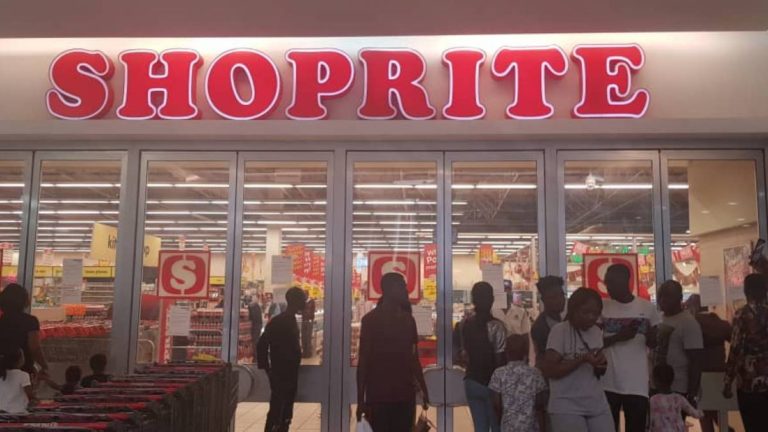
SIXTEEN years after opening its first outlet in Nigeria, Shoprite Holdings Limited reputed to be Africa’s largest food retailer finally packed up and sold its Nigerian operations to local investors.
The company sold its stake to Ketron Investment Ltd, a Nigerian company owned by a group of local investors led by Tayo Amusa of Persianas Investment Ltd, a property firm.
The Chairman, Ketron Investment Limited, Tayo Amusan said the development ushers in a new era that calls for expansion for greater impact.
“We are thrilled to complete the acquisition of Shoprite, ensuring the continued operations of one of the biggest retail success stories in Nigeria.
“We look forward to building an even stronger company following our acquisition and are excited about the greater impact we will achieve to the benefit of our customers and other stakeholders now and well into the future,” he said.
Shoprite is changing its strategy from an ownership model to a franchise model,” as the acquisition of the company was approved by the Federal Competition and Consumer Protection Commission, FCCPC.
Ketron holds a 100 per cent stake in Shoprite Nigeria and would continue operations across all existing outlets.
However, the listed directors/owners of Ketron Investment Ltd, a company registered on 26 February 2019, include Oluwatoyin Bashir, Toyosi Alasi and Sandra Marume.
Alasi and Marume are both associate lawyers with Banwo & Ighodalo, while Alasi was director and shareholder, Marume was designated as the deponent.
With the sale, Shoprite becomes the latest South African retail business to exit the country in the last decade joining Woolworth Holdings Ltd, Truworths International Ltd and Mr Price Group.
The retailer operated 25 outlets in eight states across the country but had been struggling due to recent disruptions.
“We look forward to building an even stronger company following our acquisition,” Amusan, affirmed.
Shoprite operates 2,843 supermarkets in 15 countries, serving 35 million customers in Africa and the Indian Ocean Islands, but now struggles due to supply-chain disruptions.