Home Blog Page 1792

Explainer: Why ECOWAS suspended Mali till 2022

THE Economic Community of West African States (ECOWAS), on Sunday, suspended the Republic of Mali until February 2022.

The ICIR explains the reasons for the suspension.

The decision to suspend Mali was reached on Sunday during an Extra-Ordinary meeting to review the crisis in the country.

The Summit, which was held in Accra, Ghana, was attended by all 15-member states, including the ECOWAS Special Envoy and Mediator to Mali Goodluck Jonathan.

According to ECOWAS, following the report presented by Jonathan, the member states decided to suspend Mali from its institution.

In nine months, there have been two coup d’etats in Mali.

Earlier in August 2020, Former Malian President Ibrahim Boubacar Keita had been detained by military personnel and forcefully made to resign.

Before his resignation, there had been demonstrations across the country as citizens trooped out to protest against Mali’s bad economy and corruption in Keita’s government.

Following Keita’s exit, an interim and transitional government was constituted through the intervention of ECOWAS.

The interim government brought in President Bah Ndaw and Prime Minister Moctar Ouane, who were to ensure transitional government by February 2022.

Malians protest against President Keita

However, eight months into Ndaw and Ouane-led transitional government, the military, again, staged another coup that led to the resignation of Malian interim leaders, upsetting the country’s March to civilian rule.

The second coup was carried out by Assimi Goïta, a colonel in the Malian military, who had also led the coup against Keita.

Goita on Wednesday declared himself the interim president of Mali after the resignation of the transitional government.

After the repeated coup, ECOWAS has now decided that it is time to suspend Mali from the institution.

ECOWAS also decided that it was important for Mali to respect the democratic process for ascending to power, in conformity with the 2001 ECOWAS Protocol on Democracy and Good Governance as well. The group condemned actions that led to ongoing instability in the country.

It also urged that a new civilian prime minister be nominated with immediate effect, adding that a new inclusive government should be formed to proceed with the transition programme.

ECOWAS further stated that an earlier decision made in Accra for a transition period of 18 months should be maintained, meaning that the date of 27th February 2022 already announced for the presidential election should be maintained.

During the election, ECOWAS said the head of the transition, the vice president and the prime minister of the transition should not, under any circumstance, be candidates for the forthcoming presidential election.

What does the suspension mean?

Checks by The ICIR shows that Article 77 of the ECOWAS Treaty provides that the institution has the power to suspend a member state that violates its rules.

According to the treaty, sanctions on member states could include suspension of new ECOWAS loans or assistance, suspension of disbursement on ongoing projects or assistance programmes.

Other sanctions include: exclusion from presenting candidates for statutory and professional posts, suspension of voting rights, and suspension from participating in the activities of ECOWAS.

Nigerians condemn shooting of Omoyele Sowore

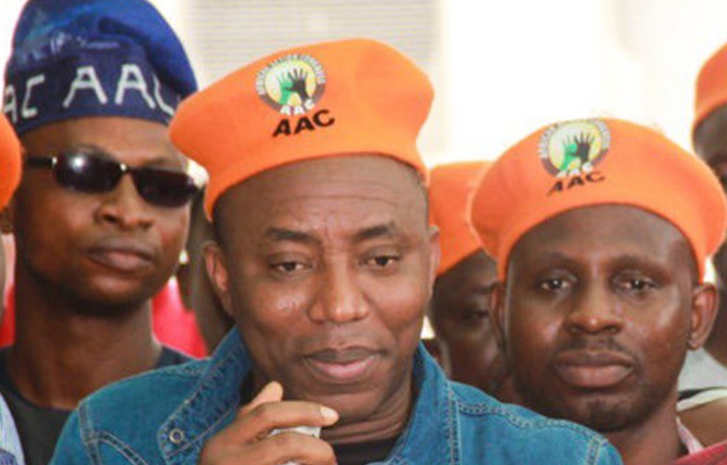
SEVERAL Nigerians have condemned the shooting of journalist and human rights activist Omoyele Sowore during a peaceful protest held in Abuja on Monday.

Sowore had announced on his Twitter account that he was shot by the police while protesting with other civil society personages on Monday. It was not clear whether he sustained a gunshot or teargas canister wound due to conflicting reports. 

“Just been shit by a police officer, ACP Atine at the Unity Fountain in Abuja. #RevolutionNow Let the struggle continue even if they take my life!,” he tweeted on Monday morning. 

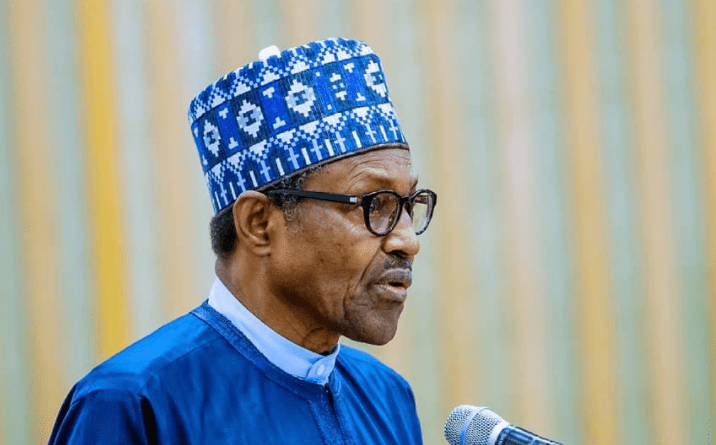
In a statement, Senior Advocate of Nigeria Ebun-Olu Adegboruwa urged Nigerians and the international community to hold the government of President Muhammadu Buhari responsible if Sowore came to harm while exercising his fundamental rights.

“Mr. Sowore has been the target of criminal prosecution, on account of his non-violent campaign for good governance and accountability. In consequence, he has been restricted to the city of Abuja, outside his home and work place, away from his family and loved ones. I urge the government to allow Mr. Sowore be and not to deploy the instruments of state coercion against a single individual, all in the attempt to break and silence him,” he said.

The SAN stressed that the police should accord full respect to the fundamental rights of Nigerian citizens and engage universal rules of civil engagements as these were lessons to be learnt from the #EndSARS protests of 2020.

Convener of the Concerned Nigerians Group Deji Adeyanju said on his Twitter page that Nigerians had stopped believing in peace as a result of the unfair treatment meted out to unarmed protesters by the present government.

“This is Buhari’s Nigeria where protesters are treated like criminals. This is why many no longer believe in peace,” he said.

The Socio-economic Rights and Accountability Project (SERAP) has also taken to Twitter to condemn the shooting and has called on the Nigerian authorities to investigate the allegation and punish the offenders accordingly.

“We condemn reports that Omoyele Sowore, a journalist, and activist was shot at by the police in Abuja this morning during a peaceful protest at the Unity Fountain. Nigerian authorities should promptly, thoroughly, and transparently investigate the allegation and ensure that anyone suspected to be responsible is brought to justice,” it read.

The FCT Police Command has, however, issued a statement denying the shooting, stating that police operatives professionally restored calm at the protest ground after attempts by the protesters to incite public disturbance.

  • “The protesters who went on the rampage were resisted by the Police Operatives in order to prevent them from causing a breakdown of law and order. There is no record of such incident as at the time of this release,” the police said.


Police confirm kidnapping of Taraba State University lecturer

THE Taraba state police command has confirmed the kidnapped of Umar Buba, a lecturer and Head of the Department of Forestry and Wildlife Management, Faculty of Agriculture in Taraba State University by some armed men.

Buba was said to have been kidnapped from the staff quarters of the university in the early hours of Sunday morning.

The Vice-Chancellor Vincent Ado-Tenebe told newsmen that the armed men fired gunshots sporadically to displace the security officials attached to the staff quarters before going away with the lecturer.

He lamented that despite the heavy presence of military and civil security operatives mounting surveillance around the school premises Buba was still kidnapped.

“This is a very sad story, and it has not happened in the past two to three years ago when we had our Director of Information kidnapped after which we put so many strategies on the ground to prevent ugly situations in the future.

“I am so surprised that this happened again, and I know that we have police personnel, that of NSCDC, our security outfit, and vigilante group members hired by the institution to keep the place safe and despite all of these, the former Dean of Students Affair has been kidnapped,” he said.

The vice-chancellor, however, gave an assurance that more efforts would be put in place for more security operatives to be deployed, and stressed the need for more arms and ammunition to fight criminals.

He stated that staff and students living on campus cannot challenge armed men with bare hands, noting that the management would engage concerned authorities to grant licences for staff to have their guns for their protection and that of the students.

Confirming the incident, the Police Public Relations Officer in Taraba, David Misal, said the police were on the trail of the kidnappers to rescue the lecturer.

He also called on the residents to provide the police with useful information that would aid the rescue of the abducted lecturer.

Special Report: How Nigeria’s foreign relations have fared under Buhari

AS President Muhammadu Buhari marks six years in office, The ICIR, in this Special Report, takes a look at events and activities that have shaped the country’s foreign relations, including trade promotion, economic relations and bilateral security cooperation. Section 19 of the 1999 Constitution places Africa at the centre of Nigerian’s foreign policy.

Nigeria, with an estimated population of 200 million people, is Africa’s most populous country and the 7th most populous in the world. It is a regional power in Africa and a middle power in international affairs.

Bilateral economic relations

Nigeria partially closed its borders in August 2019 owing to lack of compliance by its neighbouring countries to the rules governing cross-border trade, but the country began reopening them in December 2020.


You may wish to read

Buhari’s lopsided appointments in six years continue to generate controversy

Analysis: Nigeria health sector after Buhari’s six years in office

Police arrest 1173 suspects since April, yet crime prevails in Nigeria

Six years in office, Buhari’s power reforms yet to ‘light up’ Nigeria


International trade between Nigeria and the neighbouring countries has always been beneficial. Nigeria’s signing of the African Continental Free Trade Area (AfCFTA), projected to become world’s second largest free trade area,  is set to expand this, analysts say.

Nigeria earned $823.06 million  from export to ECOWAS countries and $2.72 billion  from shipping out products to Africa in the first quarter of 2020. In the second quarter of 2020, export to the whole of Africa was estimated at N401.4 billion, while goods worth N149.3billion were exported to ECOWAS. This, according to analysts, is set to expand owing to the AfCFTA.

Besides AfCFTA, Nigeria has signed a number of bilateral agreements and memoranda of understanding aimed at strengthening its relations with other countries and driving Foreign Direct Investment (FDI) to the country to accelerate development and improve the lives of citizens.

Some bureaucratic constraints to doing business in Nigeria have also been addressed by the unveiling of the Nigerian Visa Policy (NVP 2020) by the Nigeria Immigration Service. It began on February 4, 2020, in line with reform activities of the Presidential Enabling Business Environment Council (PEBEC) and AfCTA.

To further promote international trade and attract FDIs, the Nigerian government recently declared four international airports Special Economic Zones (SEZs), bringing the total number of such designated areas within the country to 38.

Highlights of Bilateral Agreements/ Memorandum of Understanding (MoU) signed by Nigeria since 2019

S/N Type Parties Involved Benefit(s) Date Signed Monetary Value
1 Free Trade Agreement 55 African countries Enhance competitiveness of member states within Africa and in the global market, facilitate investment. July 7, 2019 Combined gross domestic product valued at US$3.4 trillion.
2 Bilateral agreement Nigeria  and Israel Green energy development July 29, 2020
3 Bilateral agreement Nigeria and India Space cooperation: planning and implementation of joint space projects of mutual benefit and interest August 13, 2020
4 Memorandum of Understanding Nigeria and Bangladesh Bilateral Consultations between the Ministry of Foreign Affairs of Bangladesh and the Ministry of Foreign Affairs of Nigeria September 28, 2020
5 Bilateral air service agreement Nigeria, India, Morocco, Rwanda and the US Enable free movement of commercial flights among the countries involved. October 6, 2020
6 Memorandum of Understanding Nigeria and the Gambia Deepen collaboration in information sharing and technical skills deployment that will assist the Gambia institutionalise the Treasury Single Account for public financial management reforms. November 18, 2020
7 Memorandum of Understanding Nigeria and Niger Republic Transportation and storage of petroleum products. November 19, 2020
8 Memorandum of Understanding Nigeria and the United Arab Emirates (UAE) Provides a platform for both countries to engage each other bilaterally in many areas – legal, commercial, etc December 1, 2020
9 Memorandum of Understanding Nigeria and China Establish an inter-governmental committee that will coordinate the cooperation and relations between both countries January 5, 2021
10 Memorandum of Understanding Nigeria and the US Provide technical assistance to the NLNG-led Bonny Island Malaria Elimination Project and bring malaria deaths within the community to zero March 23, 2021


The Visa on Arrival Application Process is open to all business travelers and African Union countries for short visits, except ECOWAS member countries who do not require visas to visit Nigeria and other countries which Nigeria has entered into visa abolition agreements with.

Citizen Diplomacy

Nigeria has become one of the most sought-after markets for student recruiters in major destination countries, including Australia, Canada, China, Ireland, the US, and the UK. Nearly 100, 000 Nigerian students were enrolled abroad in 2020 and the number of professionals migrating from Nigeria in search of greener pastures abroad is on the increase.

President Muhammadu Buhari shortly after a reelection in 2019 approved the establishment of the Nigerians in Diaspora Commission (NIDCOM) to encourage diaspora Nigerians to be good ambassadors of the country and mediate relations between the Nigerian government and Nigerians in the diaspora for mutual developmental benefits.

The commission has, through this time, shown commitment towards the welfare and well-being of the estimated 17 million diaspora Nigerians, by organising town-hall meetings, interventions during xenophobic attacks on Nigerians in Ghana and South Africa, evacuation of thousands of stranded citizens back home and response to petitions from Nigerians abroad.

The commission is working with the National Assembly and other stakeholders towards an amendment of the Electoral Act, just as it is partnering with the National Identity Management Commission (NIMC) for diaspora mapping and has commenced the data capturing of Nigerians in parts of West Africa, Europe, Asia and Americas for effective planning purposes, especially in view of the much anticipated diaspora voting.

Diaspora Remittance

Annual remittance from Nigerians abroad in 2019 peaked at $25 billion, representing over  8 per cent of the country’s Gross Domestic Product (GDP), with the United States sending about one-thirds of the total volume of remittances to Nigeria, followed by the UK’s 20 per cent, and then Cameroon with 12 per cent.

Remittances for 2017 and 2018 were $22 billion and $23.6 billion respectively, with the PwC projecting $29. 8 billion and $34.8 billion for 2021 and 2023 respectively.


Source: IMTC

Governor of the Central Bank of Nigeria (CBN) Godwin Emefiele said that initiatives such as the new Diaspora Foreign Exchange Remittance policy and the Naira 4 Dollar scheme, targeted at boosting forex in the country, were already yielding the desired results and the bank was targeting to hit $2 billion monthly from diaspora remittances. In March, Emefiele said weekly diaspora remittance surged up to $30 million from $5 million.

“We believe this measure (provide remitters with the option of sending foreign exchange to beneficiaries in Nigeria) will help to significantly boost inflows of forex and create much more liquidity in that space,” the CBN  governor said during a press conference in December 2020.

However, family support gulps 70 per cent of total foreign remittances inflow while local investment, particularly real estate, account for 30 per cent of these funds.

NIDCOM, in collaboration with the Debt Management Office (DMO), plans to re- launch diaspora bonds first introduced in 2017 which gave a $300 million boost to the Nigerian economy. The Nigerian government sees this move as an alternative to external borrowing as Nigeria’s public debt hit N32.9 trillion in December 2020.

“We are finalising the framework and the objectives of issuing a Diaspora bond. Those who are investing in the bond will know that the proceeds are billed to develop specific projects that have been designed and that will be projects that are part of national priority either in terms of real sector or in terms of infrastructure,” Director-General of DMO Abraham Nwankwo disclosed in March.

In addition, the Federal Executive Council, on April 23, adopted and approved the National Diaspora Policy that would promote trade, FDI and guarantee diaspora Nigerians their right of participation in the socio-economic development of their homeland.

Local and foreign financial aids received since 2017

Nigeria has received $4.1 billion foreign support in the last six years, according to data obtained from the United Nations Office for the Coordination of Humanitarian Affairs (UNOCHA). The highest amount, $943 million, was received in 2017, while $159 million – which is the lowest -was received in 2015.

The second highest amount during this period was $927 million in 2018, just as the country prepared for general elections the following year and the country’s security situation became fragile. However, total funding for 2019 fell by $164 million but rose to $801 million in 2020 amidst the Covid-19 pandemic.

S/N Year Total Incoming Funding
1 2015 $159 million
2 2016 $468 million
3 2017 $943 million
4 2018 $927 million
5 2019 $763 million
6 2020 $801 million
Total                                                   $4.1 billion

Table showing at a glance international funds received by Nigeria since 2015

As at April 2020, US funding for the management of Covid-19 in Nigeria reached $21.4 million. Leading financial institutions such as Access Bank, Zenith Bank, Guaranty Trust Bank and some wealthy individuals, including Aliko Dangote, Tony Elumelu, Femi Otedola, Abdulsamad Rabiu, Herbert Wigwe, Segun Agbaje, Tim Ovie and Emmanuel Lazarus, also donated over N14 billion, while the Nigerian National Petroleum Corporation (NNPC) gave N11 billion.

A lot of of the funds received between 2015  and 2020 were geared towards combating terrorism and post-insurgency recovery – improving the living conditions of the North-East population, safe school initiatives and rebuilding basic and social services. These capital transfers, however, have not been followed up by the necessary technology transfer vital for development.

As part of initiatives to accelerate the country’s digital economy, the Nigerian government entered into partnership with Microsoft Corporation to upskill five million citizens over the next three years.

The recent summit on the Financing of African Economies, convened by the French President Emmanuel Macron, was committed towards developing a new Alliance for Entrepreneurship in Africa, which would focus on mobilising financial and technical resources, with explicit support towards African Micro, Small and Medium Enterprises (MSMEs).

Bilateral Security Cooperation

Since 2009, Boko Haram has carried out a regular string of attacks against Nigerian security forces and civilians. The group has killed more than 30,000 people in its effort to establish an Islamic caliphate.

In the early months of Buhari’s first term, Nigeria partnered with the European Union Strategy for Security and Development in the Sahel to respond to the threat of Boko Haram, strengthen African economies and to reduce poverty on the continent.

Instability and conflicts in Africa pose a range of threats and security challenges for Europe in terms of illegal cross-border movements, as the continent remains top choice for African migrants seeking to escape hard economic situations back at home.

Nigeria is an important regional economic partner for the European Union (EU)’s economic investments. The EU is a major importer of Nigerian oil and gas (around 20 per cent of crude oil and 80 per cent of gas) and a major investor in Nigeria.

An agreement on defence and security partnership between Nigeria and the United Kingdom was signed in August 2018 as a way of enhancing cooperation in tackling corruption and reducing poverty while curbing terrorism. Nigeria is also a vital member of the Defeat ISIS (D-ISIS) coalition and in October 2020, hosted a virtual D-ISIS conference with the United States.

In January, the country signed a MoU with China after reaching seven important consensuses to, among other things, deepen military and security cooperation in an effort to enhance its capacity in safeguarding national security.

At the regional level, a Multinational Joint Task Force (MNJTF) was approved by the African Union on March 3, 2015 to coordinate military operations between Nigeria, Cameroon, Chad, and Niger to fight Boko Haram extremists. In spite of these collaborations, Boko Haram and other armed groups continue to carry out unprovoked regular string of attacks against Nigerian security forces, facilities and civilians, almost unchallenged.

In recent times too, kidnapping for ransom has become rampant. At least $18.3 million was paid to kidnappers as ransom (mostly by families and the government) between June 2011 – March 2020, according to a report by SB Morgen (SBM) Intelligence, a Lagos-based political risk analysis firm.

Commander of Operation Safe Corridor (OPS) Bamidele Ashafa disclosed that 1,000 Boko Haram members had so far been prosecuted with 500, jailed.

“The jailed are serving various jail terms for up to 60 years. The minimum term is five years. Arrangements are also being concluded to begin the trial of another set of Boko Haram suspects. That will start between now and June,” Ashafa said at the National Defense and Security Summit held in Abuja in February.

The 2011 Terrorism (Prevention) Act amended in 2013 allows law enforcement agencies to detain and prosecute terror suspects and permits the death penalty for those found guilty of committing, attempting to commit, or facilitating acts of terror. In reality, terrorist suspects are rarely arrested and where they are, the process of getting a conviction is very slow.

Nigeria’s Membership in International Organizations

In September 2017, the Nigerian government took a decision to withdraw membership of 90 international organisations as a result of a backlog of $120 million in membership dues and other financial commitments, which were causing embarrassment to the country.

Nigeria is currently a member of 324 international organisations, among them are: the United Nations, International Monetary Fund, World Bank, and World Trade Organization, African Union (AU) , Economic Community of West African States (ECOWAS) and Organization of Petroleum Exporting Countries (OPEC).

Nigeria remains active and holds several positions across a number of these organisations. For example, President Muhammadu Buhari, in August 2018, was elected by his West African peers to chair the ECOWAS for a one-year term, while Arunma Oteh was treasurer and vice president of the World Bank from 2015-2018.

Tijjani Muhammad-Bande was elected in 2019 as president of the 74th session of the UN General Assembly, just as the current Deputy Secretary-General of the United Nations Amina Mohammed was appointed to the position since 2017.

Ngozi Okonjo-Iweala, in March, became the first woman and the first African director-general of the World Trade Organization a year after she was appointed to serve as a member of the newly established External Advisory Group of the International Monetary Fund.

At the African Union (AU), Bankole Adeoye was elected commissioner of political affairs, peace and security in February and is expected to take full control of peace and security priorities, and activities at the AU Commission.

Similarly, at the 26th Meeting of the Joint Ministerial Monitoring Committee (JMMC) held on February 3, Minister of State for Petroleum Resources Timipre Sylva was mandated to undertake a mission as special envoy to Congo, Equatorial Guinea, Gabon and South Sudan.

Also, a number of Nigerians have been appointed into the service of foreign governments for their outstanding track records. The UK government, for instance, appointed Helen Grant as the prime minister’s special envoy on girls’ education and trade envoy to Nigeria; Kemi Badenoch as junior minister for children and families, and Chinyelu Onwurah as minister for science, research and digital.

In the US, Funmi Olorunnipa Badejo serves as an associate White House counsel; Osaremen Okolo as a member of the Presidential COVID-19 Response Team; Adewale Adeyemo as deputy treasury secretary and Enoh Ebong as acting director of the US Trade and Development Agency (USTDA). Kaycee Madu is justice minister and solicitor general of Alberta, a province in Canada.

Nigeria seems to have made laudable achievements in its foreign relations but still faces the challenge of redeeming its image battered by corruption and human rights violations, among others, and return to the path of global reckoning. The articulation of better image for Nigeria internationally, which is one of the foreign policy objectives prescribed in the vision 20:2020, remains a goal for the government.  However, there is no love lost between Nigeria and the United Arab Emirates owing to the type of Covid-19 test Nigerian passengers are expected to take. The US under Donald Trump had banned Nigerians from migrating to the country on permanent basis, but President Biden has reversed it. Many Nigerians in the diaspora are frustrated by the Immigration when they plan to have new passports. Complaints of lack of passport leaves have been a major source of worry for the diasporans.

Gunmen kidnap 200 Islamiyya students in Niger State

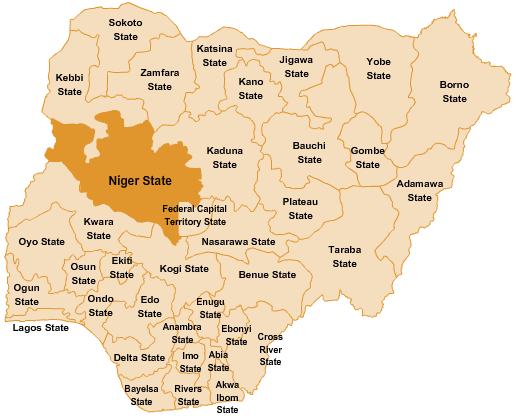
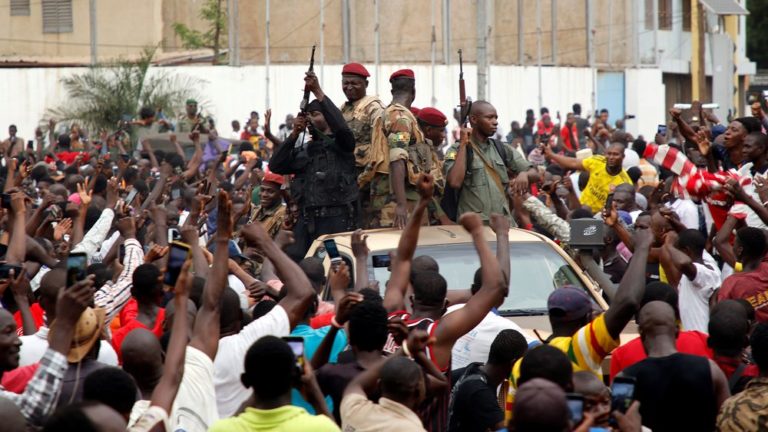
GUNMEN have kidnapped at least 200 students of an Islamiyya school located at Tegina in Rafi Local Government Area of Niger State.

According to Channels Television, one person was shot dead while another was critically injured during the incident.

A resident of the area Zayyad Mohammed, who confirmed the development, said the incident happened around 4 pm on Sunday.

According to him, the Salihu Tanko Islamiyya School, where the incident took place, was built by a retired Immigration officer.

READ ALSOBuhari, El Rufai commend release of 14 Greenfield students, silent on N180m ransom

Details of the attack are still sketchy, but according to sources, the Islamiyya school is not the usual Sangaya boarding Islamic school, but a conventional one where parents send their children on a daily basis for the purpose of acquiring Islamic education.

The State Police Spokesperson Wasiu Abiodun told The ICIR reporter that the police were still carrying out investigations and would get back to him as soon credible information was available.

BMO claims former president is plotting to overthrow Buhari, but fails to provide proof

THE Buhari Media Organisation (BMO) claims it has uncovered a plot by a former civilian president to overthrow President Muhammadu Buhari.

BMO, a group of Buhari’s supporters, in a statement issued on May 30, claimed that the former president was working with a gang of conspirators operating under the guise of ’eminent persons.’

The former president and the conspirators plan to instigate an uprising to force Buhari’s resignation from office, according to a statement signed by BMO Chairman Niyi Akinsiju and Secretary Cassidy Madueke.

The group warned that the plot could drag the country into avoidable constitutional crisis and civil unrest.

Describing the alleged plot as unconstitutional, reckless and anti-Nigeria, BMO said, “Our highly reliable security sources have informed us of the determination of the former President to go ahead with a plan to cause disaffection in the country through a planned conference of so-called eminent Nigerians.

“While the conference ostensibly aims to review the state of the nation, we can authoritatively confirm that it is actually a premeditated plan to create confusion in the polity by calling President Buhari to resign after a supposed vote of no confidence.”

The group added that its security sources revealed that there was an ‘anarchical mindset’ behind the plot, a development which it described as worrisome “especially given the growing resurgence of military putsch in the West African sub-region.”

The pro-Buhari group appealled to Nigerians to be wary of manoeuvres by “elites besotted with power to the point that they are ready to throw the country into a contrived pandemonium to remain relevant.”

The statement did not name the concerned former president leading the alleged plot.

When contacted by The ICIR, the Buhari Media Organisation did not verify the claim that a former civilian President was plotting to overthrow Buhari.

The ICIR‘s correspondent had in a message sent to the BMO, asked the pro-Buhari organisation if it has any proof to back up the allegation.

The centre also asked if the BMO was privy to any security report concerning the claim, and asked the group to disclose the identity of the particular former civilian President that was involved in the plot.

But the BMO failed to respond to any of the questions.

However, The ICIR observed that the two former civilian presidents in Nigeria are Olusegun Obasanjo and Goodluck Jonathan.

Obasanjo was president from 1999 to 2007, while Jonathan served in the same position from 2010 to 2015.

Buhari took over from Jonathan after defeating him in the presidential election in 2015.  Although the Buhari administration has continued to blame the country’s challenges on Jonathan’s government, the two men appear to have a friendly relationship.

On May 28, Jonathan met Buhari in the Presidential Villa over the political crisis in Mali. Jonathan does not openly criticise Buhari, though both are in different political parties.

On the other hand, Buhari and Obasanjo may be described as political enemies.

Obasanjo had supported Buhari of the All Progressives Congress against the incumbent Jonathan of the Peoples Democratic Party in the 2015 elections.

Buhari went ahead to win the election but Obasanjo, in an open letter before the 2019 election, roundly criticised Buhari’s inability to address insecurity, particularly his administration’s seeming refusal to take action against Fulani herdsmen who were attacking and killing farmers and other defenceless Nigerians in various parts of the country.

“Nigeria is on the precipice and dangerously reaching a tipping point where it may no longer be possible to hold danger at bay,” Obasanjo said in the letter.

Obasanjo went ahead to withdraw his support for Buhari in the 2019 presidential election after accusing the president of incompetence and nepotism, turning around to back the main opposition candidate Atiku Abubakar, who was his vice president from 1999 to 2007. 

But Buhari was re-elected for a second term in office.


Obasanjo has continued to criticise Buhari over perceived poor performance of his administration.

Speaking during a virtual interview with historian Toyin Falola in January 2021, Obasanjo said it was pathetic that despite being the commander-in-chief of the armed forces, banditry still occured at Buhari’s backyard.

Obasanjo said he was disappointed with Buhari’s performance in office, and observed that Buhari had changed from the person he used to know.

“I thought I knew President Buhari because he worked with me. But I used to ask people that is it that I have not read him well or read him adequately or is it that he has changed from the Buhari that I used to know? I am not subscribing to the people who say we have a new Buhari from Sudan and all that nonsense.”

Obasanjo noted that Buhari had failed to live up to expectations that he would do well in security and in fighting corruption.

He added, “I know what I believed was his limitations and I have written about it – he wasn’t strong in economics, not all of us are strong in anything but you need to have sufficient knowledge of it for you to direct the affairs.

“He wasn’t particularly too strong in foreign affairs, but I thought he was strong enough in the military.

“From his performance in his first outing as head of state, I thought he would also do well in fighting corruption.

“I did not know the nepotistic tendencies of President Buhari, maybe because he was not exposed to that sort of situation when he worked with me.”

It is not known whether either of the two former presidents is planning to convene a conference of eminent Nigerians, which is the platform through which the plot disclosed by the BMO is to be executed.

The statement by the BMO is coming on the heels of the alarm raised by the Presidency that the Department of State Services (DSS) had alerted it of a plot to overthrow Buhari’s government.

“Championed by some disgruntled religious and past political leaders, the intention (of the plot) is to eventually throw the country into a tailspin, which would compel a forceful and undemocratic change of leadership,” Special Adviser on Media and Publicity Femi Adesina said of the alleged plot earlier this month.

In response to the alarm raised by the Presidency, the military said it had no intention of taking over power again in Nigeria.

“We shall continue to remain apolitical, subordinate to the civil authority, firmly loyal to the President, Commander-in-Chief of the Armed Forces of the Federal Republic of Nigeria, President Muhammadu Buhari and the 1999 Constitution as Amended,” Acting Director Defence Information Onyema Nwachukwu said in a statement.


*This report was updated after several attempts to get proof from BMO failed.

How gunmen killed former presidential aide, Ahmed Gulak

An aide to former President Goodluck Jonathan  Ahmed Gulak was shot dead on Sunday in Imo State.

Gulak was killed along Sam Mbakwe Airport by unidentified gunmen. According to an eyewitness, Gulak was shot while sitting in his car at a place called Obiangwu, Ngor-Okpala Local Government Area, close to the airport.

According to the source, before the incident, there was an attempt by non-state actors to take over the airport on Sunday morning.

The Imo State Police Command has  confirmed the killing, saying that Gulak was intercepted and attacked in a Toyota Camry cab carrying him and two others heading for Sam Mbakwe Airport to catch a flight.

Spokesperson for the Imo State Police Command Bala Elkana said Gulak left his room at Protea Hotel without informing the police nor sister agencies.

“He left without any security escorts and while the cab driver took irregular route to the airport, six armed bandits who rode in a Toyota Sienna intercepted, identified and shot at Ahmed Gulak at around Umueze Obiangwu in Ngor-Okpala Local Government Area close to the Airport,” Elkana said in a statement.

Elkana said Commissioner of Police Abutu Yaro had directed a discreet investigation into the matter, noting that tactical and special forces had been deployed to cordon the area and arrest perpetrators.

Gulak was chairman of the All Progressive Congress (APC) committee that conducted the primaries for the Imo governorship election in 2019.

He declared Governor of Imo state Hope Uzodinma winner of the  APC primaries in the state in 2018 during the electioneering period.

Before he defected to the APC, Gulak had been a member of the People’s Democratic Party and Special Adviser to Jonathan on Political matters. He was sacked in 2014.

During the crisis in PDP, Gulak had declared himself  national chairman of the party.

There have been several reports of violence in Imo State with public facilities torched.  Police headquarters and the Nigeria Correctional Service were recently attacked by hoodlums in Imo State.

Last week, there was a face-off between some unknown gunmen and the Nigeria police.

Meanwhile, a secessionist group in the Southeast, Indigenous People of Biafra (IPOB), has denied responsibility for the attacks, alleging that it was a political assassination.

A spokesperson for IPOB Emma Powerful, in a statement, said IPOB did not know about Gulak’s movement, nor did the group know that he was ever in the state.

Buhari, El Rufai commend release of 14 Greenfield students, silent on N180m ransom

NIGERIAN President Muhammadu Buhari and the governor of Kaduna State have commended the release of 14 students kidnapped from Greenfield University but remained silent on the payment of N180 million for their release.

The ICIR reported on Saturday that the parents of the kidnapped students said they paid a ransom of N180 million and provided 10 motorcycles to the kidnappers before 14 of the students were released.

The parents also lamented that there was no help whatsoever from government officials and security operatives in the state.

However, in separate statements, Buhari and El Rufai welcomed the ‘release’ of the students but did not comment on the payment of ransom.

Buhari said he was ‘relieved’ that the students had been released after spending 40 days in kidnappers’ den.

The president stated that the Federal Government would continue to work with “State Governments to step up the protection of lives and property across the country, including educational institutions and other vulnerable targets” even though the parents said the release was not with the aid of the government.

“Kidnapping is a serious crime and a gross violation of the rights of fellow citizens; President Buhari assures that kidnapping and all other forms of criminality will continue to be met with zero tolerance by security agents,” the statement read.

For the Kaduna state government, El Rufai, after welcoming the release of the students, said he wished them and their families recovery from the trauma and ‘reiterates’ condolences to the families who lost children.

Similar to the same rhetoric by Buhari, the Kaduna State government also said it was ‘working with the FG and other states for military operations’ to secure the residents of the state.

When The ICIR contacted the Presidential Spokesperson Garba Shehu concerning the payment of ransom, he did not respond to a text message sent to him.

Similarly, Press Secretary to El Rufai Muyiwa Adekeye also did not respond to the same question from The ICIR.


Nigerian indicted for unemployment fraud attempted to steal $900, 000 tax returns – IRS

A Nigerian national Abidemi Rufai, who was arrested in the United States and charged with  aggravated identity theft and conspiracy to commit wire fraud, also sought to defraud the Internal Revenue Service (IRS) of nearly $1.6 million, federal prosecutors said Friday.

Prior to his arrest on May 14, Rufai, an aide to Governor Dapo Abiodun of Ogun State, had been under investigation by the IRS for years, according to the U.S. Attorney’s Office. 

The indictment in a case jointly investigated by the FBI, with assistance from the Department of Labor Office of Inspector General (DOL-OIG), alleges that Rufai, now suspended by Ogun State governor, used the identities of more than 100 Washington residents to steal over $350,000 in unemployment benefits from the Employment Security Department (ESD). 

On Friday, federal prosecutors alleged that Rufai filed 652 fraudulent tax returns on behalf of taxpayers whose identities he had stolen. He nearly netted $900,000, but many of the returns were rejected by the IRS.

Prosecutors on Wednesday asked U.S. District Judge Benjamin Settle to order Rufai detained and transported to the Western District of Washington for arraignment on the indictment. New discoveries of his attempt to defraud the IRS would make it harder to consider his application for bail.  He would likely remain in custody until trial. 

“Now that the loss and attempted loss associated with Rufai’s conduct has grown substantially, Rufai faces an even longer prison sentence, and therefore an even stronger incentive to flee,” the new filing said. 

Rufai is charged with conspiracy to commit wire fraud, nine counts of wire fraud and five counts of aggravated identity theft. He was alleged to have used variations of a single e-mail address in a manner intended to evade automatic detection by fraud systems.  

“By using this practice, Rufai made it appear that each claim was connected with a different email account,” the U.S. Attorney’s Office said. 

He also caused the fraud proceeds to be paid out to online payment accounts such as ‘Green Dot’ accounts, or wired to bank accounts controlled by ‘money mules.’  Some of the proceeds were then mailed to  Jamaica and New York address of Rufai’s brother.  

Rufai was residing at his brother’s home during part of the period of the fraud.  Law enforcement determined more than $288,000 was deposited into an American bank account controlled by Rufai between March and August 2020.

The U.S. Attorney’s Office noted that the charges contained in the indictment were only allegations and that a person was presumed innocent unless and until he or she was proven guilty beyond a reasonable doubt in a court of law.

The cases are being prosecuted by Assistant United States Attorneys Seth Wilkinson, Cindy Chang, and Benjamin Diggs of the Western District of Washington, and Trial Attorney Jane Lee of DOJ’s Computer Crime and Intellectual Property Section (CCIPS).

We paid N180m for release of our children -Greenfield students’ parents


PARENTS of kidnapped students of Greenfield University in Kaduna State have said that they paid N180 million  for the release of 14 of their children from kidnappers’ den.

According to reports, 14 students were released on Saturday evening.

In a video seen by The ICIR, two of the parents disclosed that N180 million was paid to the kidnappers.

“One hundred and eighty million naira, that is what they collected, without the help of government. None of the government officials have come to address us since 20th of April,” the man in the video said.

A woman, also a parent of one of the abducted students, said the parents also gave 10 motorcycles to the kidnappers.

The ICIR had reported that five of the kidnapped students had been found dead after the kidnappers threatened to kill them if ransoms were not paid.

An unspecified number of students were kidnapped by gunmen on April 20 from the Greenfield University in Kaduna.

Governor of Kaduna State Nasir El-Rufai has insisted he would not pay ransom to kidnappers in the state.

El Rufai said paying ransoms to kidnappers would not curb insecurity in the state.

The Kaduna Police Command did not respond to calls and text messages from The ICIR concerning the release and ransom.

Also, Press Secretary to the Kaduna State Government Muyiwa Adekeye did not respond to calls and text messages from The ICIR.