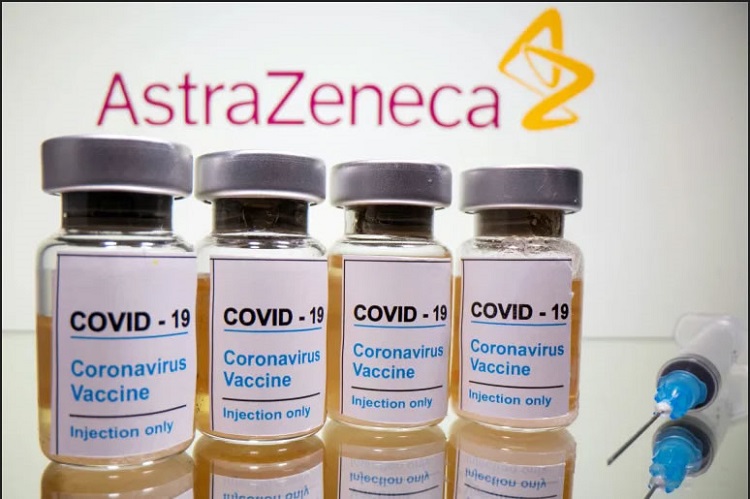
SINCE commencement of the distribution of the AstraZeneca vaccine in Nigeria, out of the 36 states and the Federal Capital Territory (FCT), Lagos, Kano and Abuja have received more than 23 per cent of the total 3.92 million available vaccines.
An analysis of the distribution of the vaccines through data gathered by THE ICIR has revealed that the two states and Abuja got the highest number of doses available.
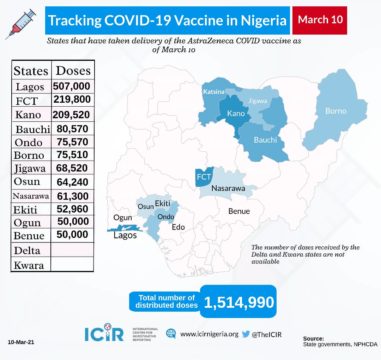
Nigeria had received 3.92 million of the AstraZeneca vaccine last week through the COVAX facility. Lagos state which has the highest number of cases in Nigeria was allocated 507,000 doses of the vaccine while the FCT was allocated 219,800.
Kano state which has recorded 3,852 cases of the deadly virus was allocated 209,520 doses of the vaccines.
The two states and the FCT have received exactly 936, 320 doses out of the 3.92 million AstraZeneca vaccine received by the country as the remaining 2,983,680 doses of the vaccine is being shared among the other 34 states.
As of the the time of filing this report, Ogun state has received 50,000, Bauchi; 80,570, Benue; 50,000, Borno; 75,510, Ekiti; 52,960, Jigawa; 68,520, Nasarawa; 61,300, Ondo; 75,570, Osun; 64240, Yobe; 65,610.
Some states with a lesser number of COVID-19 cases were allocated more vaccines than some with a higher number of cases, The ICIR has observed.
Benue state has recorded 1188 number of COVID-19 cases and was allocated 50,000 doses of the vaccine while Yobe with 293 cases got 65,610 doses.
Also, Ogun state which is the 8th state to record the highest number of cases with 4495 confirmed cases was allocated 50,000 doses of the vaccines while Jigawa with 496 COVID-19 cases has received 68,520 doses.
Like other earlier mentioned, Nassarawa state which has recorded 2283 COVID-19 cases got lesser doses compared to Bauchi that received 80,570 with 1420 cases.
When contacted to find out the criteria used for the distribution, Muhammed Ohittoto, the spokesperson for the National Primary Health Care Development Agency said the agency is not ready to answer such questions yet.
According to Ohitoto, the NPHCDA is still working on the statement that would be released to the general public on the distribution to states across the country.
“Until the official statement is released, I can’t speak on it,” Ohitoto told The ICIR.
However, during a State House briefing on vaccines last Thursday, Faisal Shuaib, executive director of the NPHCDA had said states that are yet to meet safety requirements will not get the vaccine.
According to Shuaib, states must be able to prove that they can properly secure the vaccines before they would be allocated to them.
“For example, we have communicated to the states that they have to wrap up their security around their cold stores because these are very valuable vaccines and we do not want a situation where vaccines are taken to the states and criminal elements take advantage to vandalise these cold stores,” the NPHCDA boss stated
Shuaib also said that the availability of cold stores in the states would also be a factor to be considered in the distribution.
JEROEN Elfers, corporate director, Dairy Development and Milkstream, Royal FrieslandCampina, has said that breeding, backward integration, food safety and farmer-centric programmes are the building blocks to sustainable dairy production in Nigeria.
Elfers said this during his presentation at a webinar organised by the Centre for Nigerian Dutch Dairy Development (CNDDD) monitored by The ICIR.
The webinar with the theme ‘Harnessing the Great Unpolished Diamond of Africa’ was organised to proffer ways to a better dairy industry in Nigeria.
According to Elfers, the building blocks to sustainable productions also included: soil quality, climate, true backward integration, herd management, animal welfare, among others.
Backward integration occurs when a company purchases part of its supply chain.
Elfers noted that the private, public and knowledge sectors must also collaborate to build a strong sustainable dairy sector.
He advised Nigeria to build on the collaboration as it was one of the major factors enhancing the success of the Netherlands, China and Pakistan’s dairy development.
Ben Langat, managing director, FrieslandCampina WAMCO Nigeria Plc, one of the founding partners of the CNDDD, also called for sustainable dairy development to boost nutrition and food security in the country.
Langat said sustainable dairy development would enhance community empowerment, adding that dairy had an impact on poverty reduction.
He said that a Food and Agriculture Organisation (FAO) study showed that milk collection and distribution generated a considerable amount of direct and indirect employment.
He further stated that the increase in malnutrition required the development of high-quality protein for vulnerable populations, saying dairy was an affordable nutrient-dense food.
“This plays a vital role in making high-quality nutrition accessible to the population of the country… The centre is making dairy attractive; linking local and international partners to foster sustainable development,” Langat said.
Langat, who doubles as chairman of CNDDD, disclosed that the centre had established a partnership with the University of Abuja, 2Scale, Rabobank and Van Hall Larenstein University of Applied Sciences, Netherlands to enhance its mission.
Keith Heikes, chief operating officer, URUS, said that Brazil’s experience in the genetic improvement of dairy cattle provided a good roadmap for Nigeria to adopt.
Heikes said that improved genetics was one of the key building blocks of successful dairy development.
Speaking on the new partnerships, Abdulrasheed Na’Allah, vice-chancellor, University of Abuja, said that partnership with the centre would enhance knowledge transfer and exposure for students.
Na’Allah, who was represented by Akeem Oyerinde, deputy dean at the university, said time was apt to strengthen partnerships and innovations that would deepen Nigeria’s dairy sector
CNDDD is an organisation that focusses on improving dairy productivity and sustainability throughout the entire dairy value chain in Nigeria, based on Dutch expertise gained for more than a century.
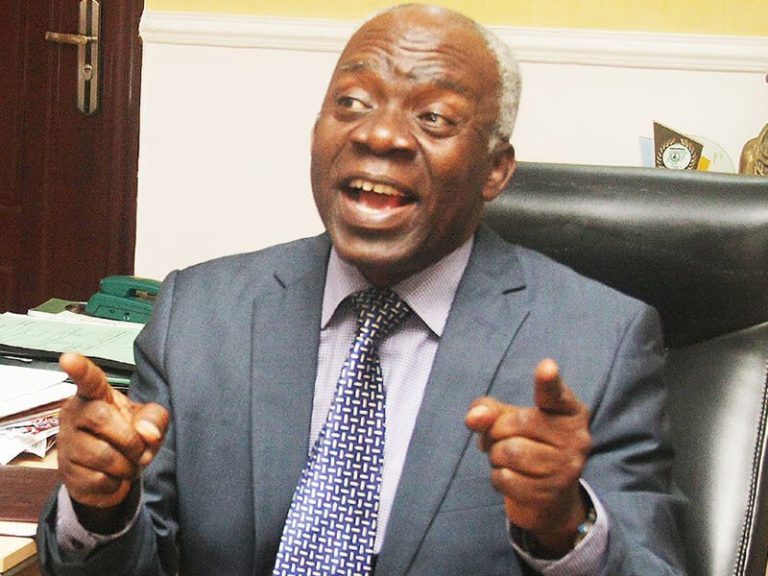
FEMI Falana, a human rights lawyer and Senior Advocate of Nigeria (SAN), says the federal government lacks the right to determine how the loot recovered from James Ibori, former governor of Delta, should be spent.
Falana, who stated this on Wednesday while appearing on Channels Television’s Politics Today, said the recovered funds should be returned to the state from where they were first looted.
He argued that since the said loot left Delta State’s coffers, it was the state that would determine what the funds should be used for.
“Having acknowledged the role of the federal government, the fund has to return to the source. Factually, between 1999 and 2003, the Delta state government, like other state governments in Nigeria, received its statutory allocation on a monthly basis and paid same into the account of the government. From that account, some amount was alleged to have been diverted and taken to the United Kingdom,” he said.
“As the honourable attorney-general had said, the money is over 100 million pounds. What has been released now is the first tranche of 4.2 million pounds. Since the funds left the Delta State government’s coffers, it has to be returned once this fund is recovered.
“The federal government has no locus standi with respect to how the money is spent. That is left for the people of Delta State to monitor the government of that state to ensure that the fund is not relooted.”
While saying that Britain would not decide how recovered looted funds were spent, he noted that the attorney-general of the federation should have worked in sync with the state government to demand damages from the banks holding the illegal funds.
“In fact, the memorandum of understanding referred to by the attorney-general, signed in London, smacks of colonialism. Britain cannot decide on how recovered loot should be spent.
“What I expect the attorney-general or the federal government in the circumstance — is to collaborate with the Delta State government to ensure that the banks that housed the looted wealth of Delta State or the banks involved are made to pay colossal damages and interests for denying the people of Delta State the opportunity to use the money for development.”
The United Kingdom, on Tuesday, signed a memorandum of understanding (MoU) with Nigeria to return 4.2 million pound assets stolen by Ibori, former governor of Delta State.
The funds are expected to be used for the completion of the Second Niger Bridge, Abuja-Kano Road, Lagos-Ibadan Expressway and other key infrastructures in the country.
The federal government has argued that it took possession of the funds because it was actively involved in its recovery process.
But Delta State government has also vowed to seek redress in court.
The House of Representatives has directed that disbursement of the funds be halted pending the determination of its owner by it.
‘’The frantic strides weren’t enough to save this victim. Soon a bullet hit Joseph right inside the car and then another when he attempted to crawl to safety. He died on the spot…’’
On Thursday, April 9, 2020, ten days after Nigeria entered a partial lockdown due to the COVID-19 pandemic, officers of the Nigeria police, army, correctional service and others had extra-judicially killed 13 while enforcing the curfew – the virus had only claimed six lives then. By May 4, when the government eased the lockdown, about 20 persons had been killed in similar circumstances. For three months, investigative journalist, Kemi BUSARI, followed the trails of these arbitrary killings which have left many families devastated, with no hope of justice.
Before she met her untimely death in April 2020, Lovender Elekwachi had served the Nigeria Police for 13 years.
Her journey to the force started on July 1, 2007, when she was recruited. She had risen to the rank of a sergeant and was due for a promotion in 2020 but a fellow officer terminated her life.
Lovender was on duty as a traffic warden at the Eneka Roundabout in Port-Harcourt, South-south Nigeria when she was shot dead by a fellow officer identified as Bitrus Osaiah, also a sergeant.
The 35-year-old mother of one was on duty around 2 p.m. when members of the Rivers State Taskforce on Road Decongestion, Illegal Street Trading and Motor Parks arrived to disperse traders around the roundabout.
Sergeant guns down sergeant
The date was April 23, 2020. Then, the Rivers State Government had just announced a closure of all markets in the state and later a total lockdown.
Soon, the enforcement led to harassment of some traders much to the dissatisfaction of Lovender. Many witnesses who spoke to PREMIUM TIMES said Lovender left her post and attempted to pacify police officers, who accompanied the task force members, to stop carting away the traders’ goods. This move was rebuffed irritably by Osaiah. He reportedly opened fire. Moments later, Lovender dropped dead.
She died about ten metres away from a shop belonging to Udoka Luke, a generator repairer. Luke had abandoned his work to watch the whole episode unfold that afternoon.
Trading around Eneka roundabout
“That day, there was task force packing people’s load over here,” he said. “Everybody was on the run, all the people that sell at the roadside, all of them ran away. Later, those boys that stand (sic) at the side of the road, those agberos (illegal traffic managers), were the ones that start(ed) using coke bottles to throw at the police and the task force.
“As the packing (of goods by Task Force officials) was going on, the policewoman (Lovender) was sitting somewhere there (around the roundabout), she now stands (stood) up to come and help because sometimes, if the task force people come, the police here use to come and defend the owners, they will now leave the goods for them. Immediately she stands (stood) up to go and defend that one that particular day, I saw her, she fell immediately. I was even the one that later rushed and saw that the woman was already dead.”
Horrid images gathered in the during this investigation can be viewed in a separate folder here. These are graphic pictures. Beware!
Luke, corroborated by other witnesses, said the police officers had shot twice towards the irate agberos (touts, mostly disguised as traffic assistants).
Once Osaiah and his colleagues saw that Lovender was dead, they zoomed off. The traders were quick to alert Lovender’s colleagues at the Eneka Police Station some 500 metres away. The officers chased and soon caught up with the fleeing assailant.
Lovendar was shot at this spot
While the task force raid was ongoing, some traders who sell goods at the roadside were arrested and held behind Hilux vans. Joseph Francis, who repairs phones and sells accessories, was one of those arrested.
Francis said the fruit seller, whom the team was harassing at one moment of their operation, was a friend to Lovender and her attempt to rescue this friend led to her death.
Female sellers approached at the junction were not willing to talk for fear of being subjects of attack. One of them who spoke on condition of anonymity said they live in fear of harassment by the task force but that they (task force) had not shown up at the junction since the incident.
Breadwinner gone
Lovender’s parent, Matthew Elekwachi and Mary Elekwachi couldn’t hide their emotions when PREMIUM TIMES visited the family home.
Both parents were in their Izu residence in Etche Local Government when the call announcing the death came in. Rattled, Mr Elekwachi dashed to the roundabout where he met the lifeless body of his daughter.
Mr Matthew, a chief, was proud of her daughter’s last act – compassion towards the traders – at the same time, he is sad the family support is gone.
Matthew
Before her death, Lovender lived around Eneka with her husband and their two-year-old son, Great Chimezie. Her sibling, Goddey Elekwachi, was also living with the family.
Goddey, 25, was nursing the prospect of studying Electrical Electronics at the University of Port-Harcourt and her sister had promised to handle the financial responsibility. The dream is now an impossibility as Goddey had to return to the village.
A visibly sad Mary Elekwachi said her livelihood depends entirely on unfailing aid from Lovender. She fought back tears while the interview lasted.
“Lovendar is (was) very good to me oooo…my son has stopped school because there is no one to train him, there is a house Lovender is building for me. Many things Lovender is doing for me, now nobody to do it again,” she said.
Dejected Mary
Apart from the assistance to her siblings, Lovender had placed her mum on a monthly stipend; she bought a farmland for the mum; she employed labourers to work on her farm at every farming season; she was also building a six-bedroom structure inside their compound for the family to have more comfort. She also enrolled her mum in medical care.
All these are now gone, taken away by a single bullet by a colleague.
The building under construction
The road to justice
All the family wants now is justice. Indeed, they have made some attempts at getting one. In May, 2020, a lawyer engaged by the family, Jerome Okere, wrote the Rivers State Governor, Nyesom Wike, pleading that the family be compensated for their loss. The letter was acknowledged by the Office of the Chief of Staff on June 4 but nothing has been achieved.
Mr Okere is also holding brief for the family in the case filed by the police. He said not much progress has been made.
“The matter was charged to magistrate court and the court declined jurisdiction. They don’t have the power to hear trial matters relating to murder. So, the file was referred to DPP and since then nothing has been done,” he said.
The family said that Lovender’s salary was only paid for three months after her death and that despite they perfecting documentation months ago, her entitlements have not been paid.
Lovendar’s family members
Nnamdi Omoni, the spokesperson of Rivers Police Command asked for ‘consultation time’ to revert when asked questions on these but he couldn’t provide answers after a follow-up.
He advised the family to approach the police ‘’to iron out encumbrances’’.
The PRO said Osaiah, the assailant, has been dismissed from the police. “He has been dismissed and charged to court. He is currently facing trial,” he said.
The family, corroborated by their lawyer, also alleged that the police informed them in August 2020 that they received ‘’orders from above’’ that the case should be transferred to Abuja which they rebuffed. Mr Omoni said he is not aware.
While bureaucracy continues to stall the case, the Elekwachi’s continue to live in double agony; one, that Lovender has not been buried yet due to the lingering case and that justice has not been served.
“The whole justice has been denied…how do I expect justice again? It is assumed that justice has been denied,” a frustrated Matthew said. “I want justice. The person that killed her, if you know what to do (to him) do it,” a more frustrated Mary, addressing the authorities, adds.
Day trigger-happy soldier went on rampage in Warri
The day was April 2, 2020, around 9 a.m. Most businesses in Warri, an oil-producing city in Nigeria’s South-south, were closed due to the lockdown sanctioned by the government.
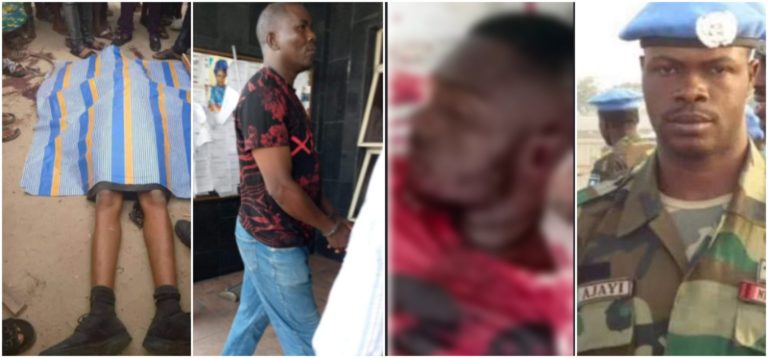
While the clock was ticking, a gunshot was heard on Bridgeview Road in the Ugbuwague area of the city. Unfamiliar with such a distraction, residents came out. They were met by the sight of a dead body – the body of 28-year-old Joseph Pessu with blood still gushing out.
Joseph
A few minutes before the gunshot, Joseph, driving in a car, had been stopped by soldiers at the Ubeji checkpoint, not very far from his house. One of the soldiers at the checkpoint, identified as Ilekura Ajayi, was reportedly unsatisfied with Joseph’s ‘conduct’.
He was said to have asked Joseph why he wanted to hit him with the car. A mild argument ensued and Joseph drove off.
A while later, the father of two noticed the soldier was chasing him, first on foot and later in a vehicle. Two gunshots followed, one hitting the tire. Joseph kept driving.
His destination was his father’s house in Ugbuwangue. He was about 700 metres away, when he couldn’t move again. The exit from Bridgeview Road had been closed by residents, probably due to the lockdown.
Sensing he might be caught by a hail of bullets from the angry soldier, Joseph hastily hopped down from the vehicle and dashed to the adjoining Mene-Akpata Street. Ajayi pursued with his gun.
The frantic strides weren’t enough to save this victim. Before he could wriggle out of the car, a bullet hit him and then another when he attempted to crawl to safety.
He died on the spot.
Monday pointing to where Joseph’s body was found
Ani Iyonsi, a resident who lives close to the scene witnessed the shooting. “I was at home when I heard the gunshots. They shot him through the back of the car which hit him by the side,” he said.
About three streets away, Joseph’s father, Monday Pessu, was waiting for his son. He had called him earlier to come and assist him to the hospital to check his failing health. It was a journey Joseph never made.
Back to the scene of the shooting, residents had started to gather and a call was put through to Monday who arrived at the scene in no time, despite his health. His first instinct was to attack Ajayi but he was soon calmed by residents now preparing for protest.
Monday hauled the dead body of his son to the back of his Hilux van and then followed some soldiers to the A Division Police Area Command. The body was later deposited at the mortuary. Nothing has been heard from the authorities since then.
Horrid images gathered in the course of this investigation can be viewed in a separate folder here. These are graphic pictures. Beware!
“After it happened, nobody came to me. It was the deputy governor who came for a condolence visit (based on the fact that) we are party members. From then on, nobody came but the matter is in court. I need justice,” the 66-year-old Monday said.
Monday Pessu
The family filed a case against the Nigerian Army claiming damages. The case with suit number FHC/WR/CS/48/2020 was filed at the Warri Division of the Federal High Court. Lawyer to the family, Clem Ade Omotoye said a hearing on the matter was about to commence at the Federal High Court, Warri.
Words not matching actions
Addressing journalists on March 30th, 2020, the spokesperson, Directorate of Defence Media Operations, John Enenche, a Major General, said that the military would not be involved in punishing residents who flout COVID-19 lockdown rules.
“Penalties will be left for the police, it’s not for the military,” he said. “I shouldn’t tell you that this is the penalty for any person that flouts the directive of staying at home, of wandering from one place to the other. It should be with the police because it is their force responsibility. What we normally do is provide aid to civil authorities. But as I speak with you, we now have the legality to work them if they call us.”
Ajayi acted contrary to the words of the top ranks of the Nigeria’s Defence Directorate. Worse still, the army has so far condoned this act.
There is no known investigation or retribution for the erring officer further aggravating discontent within the victim’s family.
Section 106 of Nigeria’s Armed Forces Act states that “ a person subject to service law under this act who, without justification or excuse, unlawfully kills another person… is guilty of murder and liable, on conviction by a court-martial, to suffer death.”
Ajayi, the soldier who killed Joseph
Calls and text messages to the spokesperson of the 6 Division of Nigerian Army, Charles Ekeocha, a major, were not responded to.
Ordinarily, as enshrined in the constitution, the Nigerian military are majorly saddled with the responsibility of protecting the national borders from external aggression but years of military rule and incompetence of the Nigeria police have made the military an added apparatus for maintaining law and order within the state.
Asked if the case was transferred to the police, Delta Command Public Relations Officer of the Nigeria Police, Onome Onovwakpoyeya, requested more details and time but has yet to revert as of press time despite a follow-up.
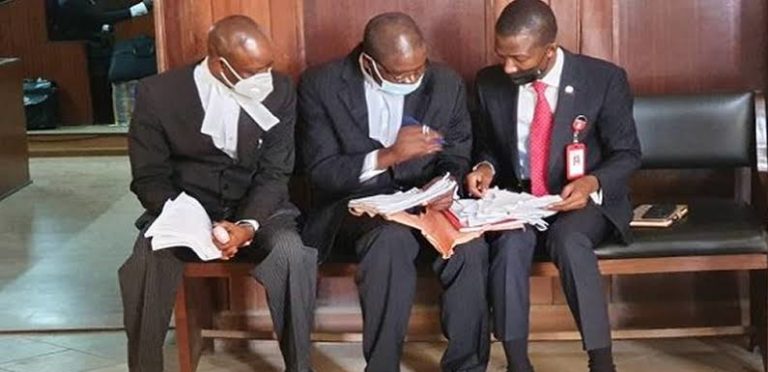
ABDULRASHEED Bawa, chairman of the Economic and Financial Crimes Commission (EFCC), on Wednesday, appeared before an Ikeja High Court to give evidence in a 1.4 billion naira fraud trial involving an oil company, Nadabo Energy. and its chairman, Abubakar Peters.
Bawa testified as the fifth prosecution witness.
Led in evidence by the prosecution counsel, Saidu Ateh, the EFCC boss, during resumed proceedings, narrated to the court how the fraud was perpetrated. Bawa said the defendants allegedly submitted to Petroleum Product Pricing Regulatory Agency (PPPRA) documents showing that they imported 14,000 metric tonnes (MT) of premium motor spirit (PMS), whereas they brought in only 4,850 metric tonnes of the product. Bawa said the defendants allegedly claimed subsidy on 14,000 MT of PMS.
Bawa told the court that he analysed the email correspondences of the defendants and found that they took about six million litres of premium motor spirit (PMS) from the mother vessel, MT Evriduk, into their own chartered vessel, MT St. Vanessa.
He said the email further confirmed that the same quantity was discharged at Port-Harcourt.
“In addition, the email also informed us that one Mr Jideofor Akpan was the agent of the vessel.
“We invited the said Akpan and during the course of our interrogation with him, he confirmed that the first defendant through the second defendant deferred the vessel and paid for it.”
He said Akpan volunteered the statement to the EFCC and also submitted several documents to the agency.
The EFCC boss testified that during the interview, he presented the purported shipping documents, which the defendants submitted, to the PPPRA for payment of subsidy to the defendant.
“We presented it to him to confirm to us whether or not the vessel that he is the agent for had anything to do with the vessel called MT American Express.
“MT American Express is the vessel the defendant claimed to have given the product to his own vessel.
“My Lord, Mr Akpan confirmed to us that MT St. Vanessa had nothing to do with MT American Express, rather, St. Vanessa loaded product from MT Evriduk,” Bawa said.
He further testified that he wrote a letter of investigation to Petrocam, the trader that supplied the defendant with the petroleum product.
The EFCC chairman told the court that a request was made in the letter for all the financial and shipping documents in respect of transactions with Nadabo Energy.
“My lord, Petrocam responded to our letter in writing, attaching all requested documents which include a proforma invoice, commercial invoice, letter of credit and bill of laden,” he said.
Bawa said that the EFCC also wrote a letter of investigations of activities to the Corporate Affairs Commission (CAC) to confirm the registration status of Nadabo Energy.
He said the CAC responded in writing by forwarding certified true copies (CTCs) of all the documents requested.
“On receipt of the response, we studied it and found out that the second defendant (Peters) is a shareholder as well as a director of the first defendant.
“My lord, in furtherance to that, we invited two of the directors and shareholders of the first defendant, namely – Mr Akeem Abalaka and one Mr Sanni.
“They both confirmed to us that although they are linked to the company, they are not involved in the contentious matter before this honourable court,” he said.
During Bawa’s testimony, the EFCC sought to tender to the court, the CTCs of the documents it received from Petrocam and the CAC, but the defence counsel, E.O. Isirameh, objected to the documents which included proforma invoice, letter of credit and other documents relating to the transaction.
The defence also raised objections to the admissibility of the response of the CAC with respect to the investigation of the company.
Isirameh argued that the documents were invalid, saying that they were produced by the prosecutors several years after the subsidy transaction occurred.
Christopher Balogun, presiding judge, adjourned the case until April 28 and 29 for ruling and continuation of hearing.
The EFCC had accused Abubakar Ali Peters and his company Nadabo Energy of allegedly using forged documents to obtain 1.4 billion naira from the federal government as oil subsidy after inflating the quantity of PMS purportedly supplied to 14,000 metric tonnes.
The defendants had pleaded not guilty to the alleged fraud charge.
Bawa, during previous proceedings, had also told the court that, after studying the documents submitted to the PPPRA, where the defendants claimed they imported about 14,000 MT of PMS, the EFCC conducted investigation which revealed the contrary.
Also at the last sitting on February 23, 2021, Justice Balogun had admitted in evidence an email correspondence between Bawa and Ullrich Afini Awani of Global Commodities African as well as the Certificate of Identification.
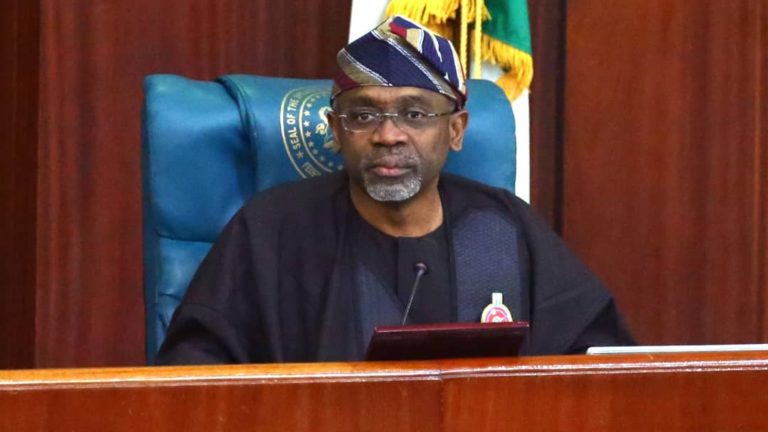
The House of Representatives has directed the federal government to halt the disbursement of 4.2 million pounds James Ibori loot pending the determination of the legitimate owner of the funds.
The directive was contained in a resolution by the House on Wednesday after the adoption of a motion of urgent public importance sponsored by all the lawmakers from Delta State.
According to TheCable, the lawmakers said the sum of 4.2m pounds, being proceeds of crime recovered from Ibori, was being transferred to the coffers of the federal government of Nigeria for appropriation without recourse to Delta State government and/or Parliament.
They argued that the recovered funds belonged to the people of Delta State and as such, should be refunded to the coffers of the state for developmental purposes.
While stating that the total sum recovered was 6.2 million pounds and not 4.2 million pounds as purportedly reported, they contended that if the federal government was allowed to utilise the funds, it would deprive Delta government of their legitimate resources to improve the economy of the state.
“From all indications, information to Delta State indicate that the actual money is 6.2m pounds and federal government should ensure that the total of 6.2m pounds is credited not 4.2m pounds as stated,” they said.
After a unanimous adoption of the motion, the House asked the federal government to stop “forthwith further appropriation and/or disbursement of recovered loot of 4.2 million pounds pending the final determination of the matter by the House.”
The United Kingdom, on Tuesday, signed a memorandum of understanding (MoU) with Nigeria to return 4.2 million pound assets stolen by Ibori, former governor of Delta State.
The funds are expected to be used for the completion of the Second Niger Bridge, Abuja-Kano Road, Lagos-Ibadan Expressway and other key infrastructures in the country.
The federal government had argued that it had taken possession of the funds because it was actively involved in its recovery process.
But Delta State government had also vowed it would be seeking a redress in the court.
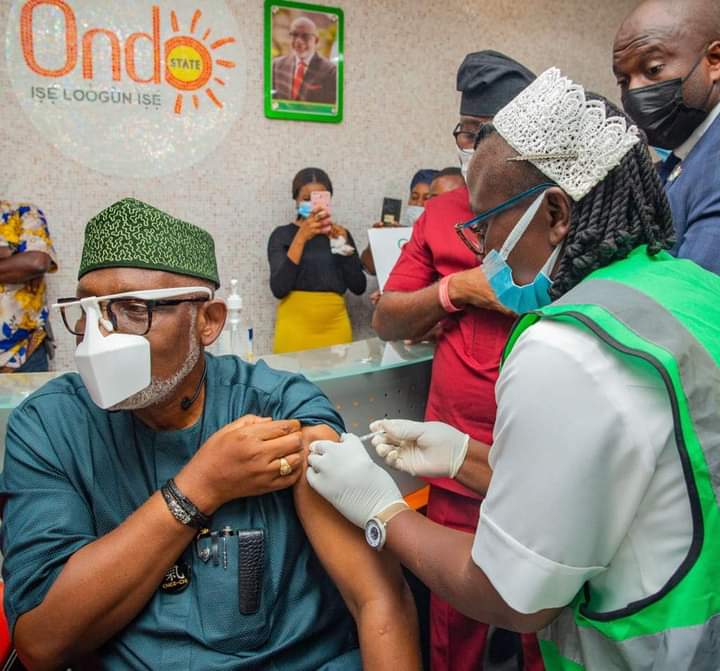
OLUWAROTIMI Akeredolu, Ondo State governor, has taken the first shot of Oxford-AstraZeneca COVID-19 vaccine, assuring the people of the state that it is safe.
The governor, who took the first shot alongside his deputy, Lucky Orimisan Aiyedatiwa, at the Cocoa Conference Center, Governor’s Office, Alagbaka, Akure, On Wednesday, said the state received a total of 73,570 doses of the vaccine from the federal government on Tuesday.
He said in line with the guidelines laid down by the National Primary Health Care Development Agency (NPHCDA), the eligible population for the COVID-19 vaccinations were citizens aged 18 years and above, including pregnant women.
Akeredolu disclosed that the vaccination exercise would be rolled out in four phases, adding that the first recipients would be frontline health workers, COVID-19 rapid response team, laboratory network group, petrol station workers, policemen, and strategic leaders
“In the phase two, the recipients will be older adults aged 50 years and above; those with co-morbidities aged 18-49 years
“The phase three will be those in local government areas with high disease burden who missed phases 1 & 2 while the phase four will be other eligible population as vaccines become more available,” the governor stated.
He assured the people of the state that the Ondo State Cold Chain was fully functional and ready to receive and properly store the COVID-19 vaccine doses.
“Furthermore, to be able to partake of the COVID-19 vaccination, an e-registration link has been created for eligible Nigerians to register. You will be able to put in your details and choose a convenient place and time where you wish to be vaccinated.
“I use this opportunity to implore Ondo State citizens to shun the unfounded rumours about the COVID-19 vaccine. Let me assure you that the vaccines have been tested and certified safe for use by reputable international organizations and NAFDAC.
“While it is true that you are not 100 percent prevented from getting infected after vaccination, you are less likely to get seriously sick or die from the infection if you get it and also less likely to infect other people.” Akeredolu explained.
The governor charged all local government chairmen, traditional rulers, religious leaders and health workers to step up intensive sensitisation activities for the people of the state to register and get themselves vaccinated.
Akeredolu said since the outbreak of the pandemic, his administration had continuously been seeking ways to combat the debilitating effects of the ravaging virus.
“Some of the measures we had put in place include the upgrading of the Infectious Disease Hospital (IDH) with more beds and equipment to admit infected patients, training of our IDH staff on handling of COVID-19 patients, roll-out of radio jingles, television adverts, other sensitisation and awareness tools to the general public,” he said.
“Motivation of our frontline health care workers in the state through the payment of COVID-19 hazard allowance and lately, the inauguration of our state-of-the-art Wahab Adegbenro Molecular and Public Health Laboratory to improve the testing capacity of the State.“
INSTITUTE of Development Studies (IDS), a UK-based research institute, has recommended that international organisations and non-governmental organisations must continue to support social accountability initiatives that advance women’s interest.
The group made this recommendation in a new policy briefing series titled: ‘Strengthening Women’s inclusion in Social Accountability Initiatives,’ published in February and authored by Sohela Nazneen and Maria Fernanda Silva Olivares.
NGOs are urged to design participatory processes that address the barriers to women’s participation, such as time poverty due to domestic work, biased gender norms limiting access to public spaces and others.
“This requires that NGOs and implementing organisations pay attention to details, including setting meeting times and locations that accommodate women so they can balance their paid and care responsibilities at home and travel to these spaces,” the report stated.
Civil society organisations are also charged to provide technical support to women, so they hold public officials accountable through enforcement mechanisms, grievance procedures, and other mechanisms.
To be able to offer support to women, the civil group also must show the capacity to identify key actors at the local level who may be in favour of women’s inclusion and open to challenging gender power dynamics, engage with them from the beginning and connect women beneficiaries to these civil society organisations at the local level, according to the report.
“This will create a strong network that may be able to pressure service providers to be responsive to women’s demands.”
To track what has shifted in the long term, the researchers advised international organisations to develop a benchmark on women’s status and condition at the outset and infuse it with a clear theory of change around women’s inclusion.
Finally, gender discrimination and social norms that limit women’s chance may remain if NGOs fail to provide long-term funding and technical support for institutionalising gender-sensitive processes, the researcher observed.
IDS and MacArthur Foundation supported the research.
CAMEROON has repatriated 5,000 Nigerian refugees out of 9,800 expected back home in the first batch. A total of 46, 000 Nigerian refugees are expected to return home from Cameroon in the long run.
The refugees fled Nigeria in 2014 due to Boko Haram insurgency but have now expressed willingness to return to the resettlement houses built by the Borno State government.
The refugees who had been camped at Minawao, located in Mokolo, far north region of Cameroon, were handed over to Borno State government during a brief ceremony that took place in Amchiide, a border community between Nigeria and Cameroon, close to Banki in Bama Local Government Area of the state on Tuesday.
Paul Atanga Nji, Cameroon’s minister for territorial administration, who led the handover team on behalf of his country, disclosed that President Paul Biya had approved a relief package that included food items and mattresses, blankets and other non-food items as support to all the 5,000 returnees.
Nji also commended Babagana Zulum, governor of Borno State, for constructing over 6,000 urban and low-cost resettlement houses sited in Bama, Banki, Gwoza, Kondugu, Kaga and other parts of the state, noting that most of the housing units had been completed.
Receiving the 5,000 refugees on behalf of Nigeria, Zulum expressed appreciation to Biya and the host communities for accommodating the refugees over the last six years and assured the returnees of his government’s commitment to creating an enabling environment that would enable them to resume a normal life.
“I wish to sincerely convey our deepest appreciation to the government of Cameroon under the distinguished leadership of President Paul Biya for the enormous support to my fellow Nigerians who took refuge in the Minawao camp. We remain eternally grateful,” Zulum said.
The governor later flagged off the presentation of food and non-food items to the returnees. Male heads of families received 30, 000 naira, while each woman was given 10, 000 naira and a fabric.
In February, Zulum had led a Nigerian delegation to Marwa in Cameroon for a meeting on the tripartite agreement signed between Nigeria, Cameroon, and the United Nations High Commissioner for Refugees, over the repatriation of Nigerians in the country.
The tripartite agreement spelt out international best practices on humanitarian issues involving the movement of persons between two or more countries and the roles and limitations of all parties, and the protection of refugees’ rights.
Before that meeting, the governor had held series of talks with Nigeria’s minister of foreign affairs, Geoffrey Onyeama; minister of humanitarian affairs, disaster management and social development, Sadiya Farouq; commissioner, National Commission for Refugees, Migrants and Internally Displaced Persons, Basheer Mohammed, and other relevant ambassadors.
The handover ceremony was attended by top officials from Cameroon, including the governor of the far North Region, Midjiyawa Bakary, officials of the Borno State government, and the United Nations High Commission for Refugees (UNHCR).
SIX governors of the South-South region have demanded an upward review of the Host Community Trust Fund in the Petroleum Industry Bill (PIB) from 2.5 to 10 percent.
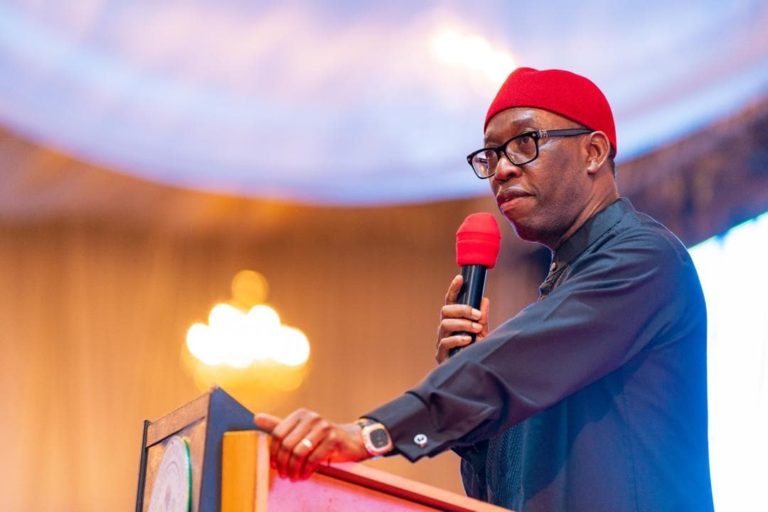
Ifeanyi Okowa, Delta State governor, who also doubles as the chairman of the South-South Governors’ Forum, said this at the end of the forum’s meeting in Port Harcourt on Tuesday.
He said that 2.5 percent allocated to host communities in the PIB currently before the National Assembly was inadequate.
He noted that the 10 percent increase was in the interest of host communities and the nation.
“We are of the view that while we welcome the Host Community Trust Fund, we do believe that 2.5 percent that is appropriated in that bill for the purpose of host community fund is inadequate,” he said.
“We have discussed with our people and collectively as leaders of the people in our various states and as leaders standing in on behalf of our people, we urge the National Assembly to increase the provision in the host community fund from 2.5 per cent to 10 per cent.
“This is in the best interest of our communities and the nation,’’ Okowa said.
“A peaceful environment in the various oil communities would enable us to have greater and seamless production, without any form of disruption, going into the future.
“The governors have also urged President Muhammadu Buhari that in the absence of the board of the Niger Delta Development Commission (NDDC), funds for the commission, beyond the payment of salaries, should be put in an escrow account until he constitutes the board,’’ Okowa said.
“We do know that there is a forensic audit taking place and for that reason, the board has not been constituted.”
The forum resolved that monies being sent to the NDDC should be put in an escrow account until a board was constituted and then proper processes followed in the expenditure of the money.
It added that the NDDC was being run in such a manner that was not beneficial to the people, saying that there was no stakeholder input in the running of the affairs of the commission.