Home Blog Page 1870

UN coordinator condemns Boko Haram attack on civilians, aid workers in Borno town

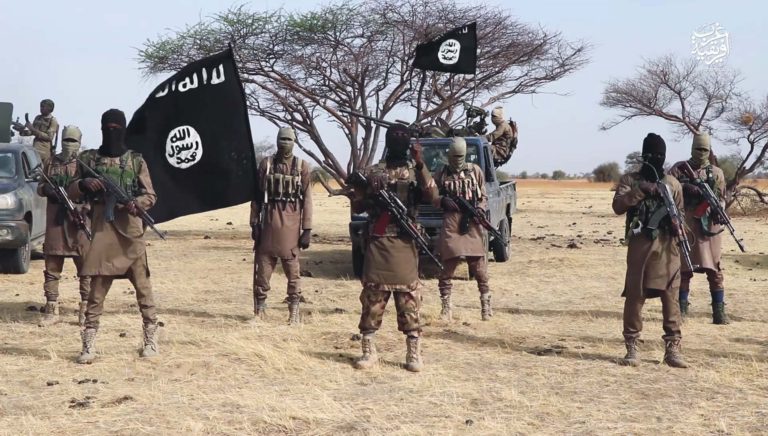
EDWARD Kallon, the United Nations humanitarian coordinator in Nigeria, has condemned Boko Haram’s renewed attacks on civilians and aid workers in Dikwa, a town in Borno State.

In a statement seen by The ICIR, Kallon said he was enraged by the attack and was concerned with the safety of civilians and aid workers in the town.

He called for adequate and maximum security of civilians and aid workers in the region.

“I am gravely preoccupied by reports on an ongoing violent attack by non-state armed groups in Dikwa, Borno State, during which several aid facilities were directly targeted. The attack started last night and, as information is still coming through, I am outraged to hear the premises of several aid agencies and a hospital were reportedly set ablaze and sustained damage,” he said.

“I strongly condemn the attack and deeply concerned about the safety and security of civilians in Dikwa, including internally displaced people inside and outside camps and thousands of people who had returned to the community to rebuild their lives after years in displacement.

“The violent attack will affect the support provided to nearly 100,000 people who are desperately in need of humanitarian assistance and protection, particularly as the COVID-19 pandemic risks spreading in Borno State.

283 civilians, 132 security personnel killed in violent attacks across Nigeria in July – Report

“Civilians and aid workers, their facilities and assets should never be a target. They must be protected and respected at all times. I call on all armed parties to immediately stop the violence and respect international humanitarian law and human rights law and ensure the protection 0f civilians, humanitarian and personnel.”

The insurgents had engaged security operatives in a gun battle before taking control of the ancient town in an attack that started on Monday evening and lasted till the early hours of Tuesday.

They were also said to have breached the security of a United Nations Hub in North-East Nigeria and then laid siege to the facility, causing humanitarian workers and guests to retreat to a fortified bunker within the facility.

Dikwa town is about 90km from Maiduguri, Borno State capital, and has experienced several attacks from the insurgents since the liberation of the town in 2016.

The town hosts the military Super Camp 9 where the chief of army staff visited last week.

The attack on Dikwa came barely days after the military engaged the insurgents in a battle to retake Marte Local Government Area from the militants.

It also came days after Babagana Zulum, Borno State governor, visited the town, distributing relief items that included cash to the victims of the previous attacks.

Army reacts

Mohammed Yerima, director of army public relations, said the terrorists “attempted to invade the town to loot food items and other logistics, having got wind of the recent food distribution to residents of the town by the state governor, Professor Babagana Zulum.”

He said the terrorists stormed the town in an unconfirmed number of gun trucks and motorcycles.

The army spokesman said the military was able to repel the attack with “heavy bombardment and overwhelming firepower by troops of 81 Task Force Battalion with reinforcement from other formations of the Nigerian Army and aided by air support of Air Task Force Operation LAFIYA DOLE.”

He noted that they could not gain access to the town due to the combat-readiness of troops who were positioned there.

Read AlsoOver 881 students kidnapped under Buhari’s administration

“The terrorists subsequently lost initiative as they were cut off completely following the recent successful recapture of Marte town by the gallant troops.

“In desperation and to scare off residents from returning to their homes, they planted series of landmines on the roads which were also detected and successfully detonated by troops,” he said.

The army spokesman decried some media reports suggesting that the terrorists attacked a United Nations base in the north-eastern state.

While noting that such reports were aimed at stirring up tension in the country, he said 25 aid workers were not trapped.

He also explained that the chief of army staff, Ibrahim Attahiru, had commended the efforts of the gallant troops and the prompt response of the Air Task Force in providing air interdictions throughout the operation.

President Muhammadu Buhari reshuffled the military command this year, raising hopes of a shift in strategy to end a 12-year-old conflict that has killed 36,000 people and forced around two million to flee their homes.
MRA asks IGP to arrest, prosecute policemen who assaulted Guardian newspapers’ reporter in Lagos

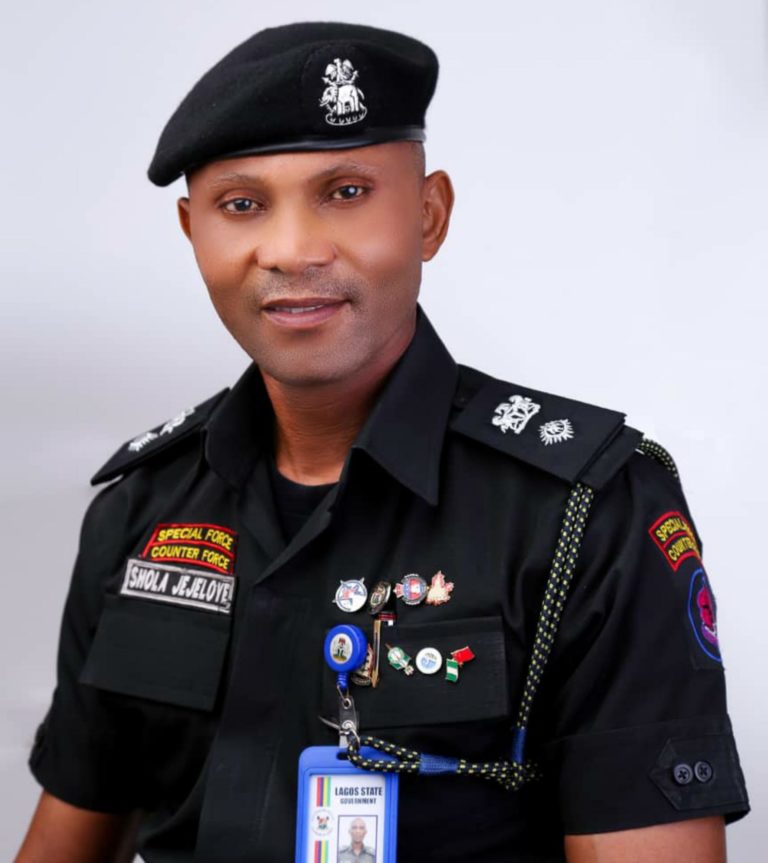
THE Media Rights Agenda (MRA) has called on Mohammed Adamu,  inspector-general of police, to order the arrest and prosecution of policemen, led by Shola Jejeloye, who assaulted, tortured and dehumanised the Guardian newspaper reporter, Eniola Daniel, on Sunday while he was covering the demolition of the shops along the Oshodi-Apapa Expressway in Lagos.

The organisation stressed that no democratic government should condone such lawlessness by its law enforcement officials.

In a statement issued on behalf of the organization on Tuesday by John Gbadamosi, its Programme Officer, MRA condemned the recent wave of attacks on journalists in the country perpetrated by police officers, saying the consistent failure of Police authorities and the Federal Government to hold such police personnel accountable was evidently responsible for the noticeable spike in such cases.


Read Also:


“If Police authorities are unable to discipline their men and hold them accountable when they abuse the rights of citizens and violate the law, it means that they really have no interest in enforcing the Law and cannot pretend to be doing so. If they have no regard for the Law, then they are no better than a band of criminals backed by the State and paid from public resources. They can have no legitimacy whatever with the citizens that they are supposed to serve,” Gbadamosi said.

The operatives from the Lagos State Police Command were reported to have gathered at the Ladipo Auto Spare Parts Market along the Apapa-Oshodi expressway in the early hours of Sunday morning to destroy shops along the road when Daniel arrived at the scene a few minutes past 10 am to find the policemen burning tyres as they destroyed shops along the road.

Read Also: Nigerians react to bill seeking to make degree minimum qualification for journalists

The journalist started filming the raging fire set on the highway when less than three minutes later, according to him, a man in plain clothes suddenly approached him and slapped him from behind continuously with other security men carrying guns running to support his assailant. The policemen reportedly punched the reporter, smashed his mobile phone and dragged him into the “Black Maria” vehicle stationed at the scene.

The journalist said although he brought out his Identity Card and showed it to the policemen to identify himself as a reporter with The Guardian newspaper, they ignored it and continued beating him with one of them calling him “a bastard.”

Jejeloye later ordered the policemen to release him upon which his smashed phone was returned to him with instructions that all the pictures he took at the scene should be deleted.

Gbadamosi said the silence of the police authorities and the Federal Government on the more than 48 hours after the incident is clear evidence of their tolerance for this sort of barbaric behaviour by officials who are supposed to uphold and enforce the law, which is apparently what has resulted in law enforcement officials frequently acting in such unlawful manner with impunity.

Assault on Journalist: A worrisome trend

A TOTAL number of 50 journalists were killed globally in 2020, a report published by Reporters Without Borders (RSF) has shown.

The report which was published on Tuesday is the second part of its (RSF) annual round-up report of the abusive treatment and violence against journalists across the globe also shows that two journalists fell victim to the climate of violence accompanying protests, especially protests against the brutality of police operatives in Nigeria.

It noted that while the number of journalists killed in countries at war continues to fall, more are being murdered in countries, not at war.

Shola Jejeloye
Lagos State Governor, Babajide Sanwo-Olu with Lagos Taskforce Chairman, Shola Jejeloye

RSF noted with concern that 32% of the fatalities are in war-torn countries such as Syria or Yemen or in countries with low or medium-intensity conflicts such as Afghanistan and Iraq. while 68 percent (more than two thirds) of the fatalities are in countries “at peace,” above all Mexico leading with eight journalists killed, India with four, the Philippines with three and Honduras, three.

It further stated that 84 percent of those that were killed in connection to their work were knowingly targeted and deliberately murdered, as compared to 63% in 2019. While some were murdered in a particularly barbaric manner.

3.9m doses of AstraZeneca vaccine arrives in Nigeria, but who gets what?

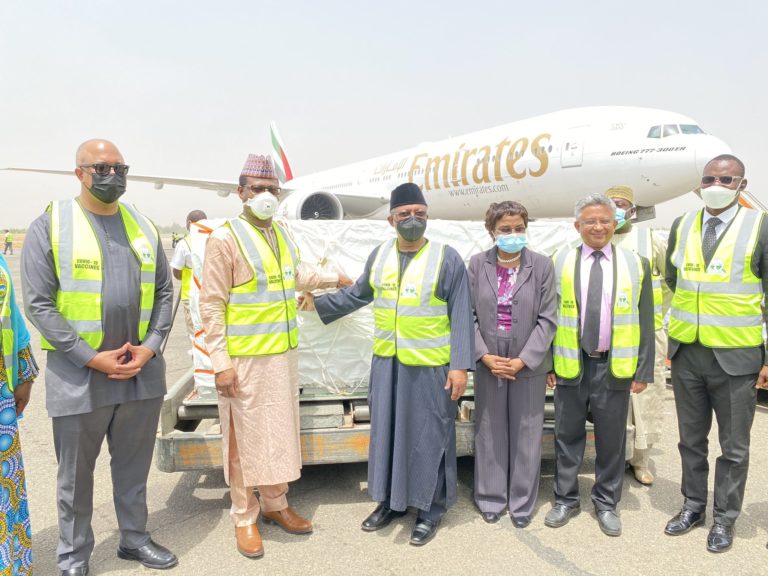
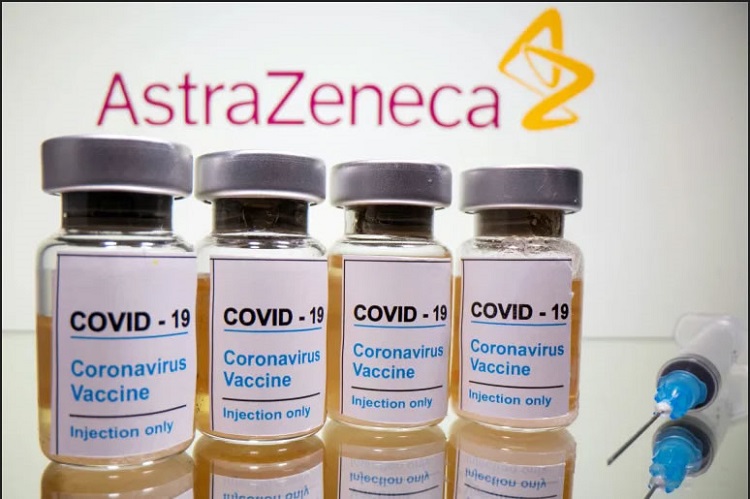
NIGERIA has received 3.9 million doses of AstraZeneca vaccine through the COVAX Facility in partnership with the World Health Organisation (WHO) and the United Nations Children Fund (UNICEF).

With the delivery, Nigeria becomes the third West African nation to receive the COVID-19 vaccine through the COVAX Facility after Ghana and Ivory Coast.

Taking delivery of the vaccine at the Nnamdi Azikiwe International Airport, Boss Mustapha, chairman of the Presidential Task Force on Covid-19 and secretary to the government of the federation, expressed the federal government’s appreciation to the facilitators of the delivery.

Mustapha handed over the vaccine to Osagie Ehanire, minister of health, whom he said had the responsibility to ensure that due process was followed in administering the vaccine.

“It is with a sense of relief and elation that we receive this consignment of vaccine, nearly 4 million in number, to begin the process of inoculating Nigerians against the deadly coronavirus.

“It is our belief that this is the beginning of the journey towards eliminating COVID-19 in our country. We assure you that due process would be done, there would be equitable use and free distribution, application to all parts of the country,” Ehanire said.

Who gets the vaccine first?

As Nigeria takes delivery of 3.92 million doses of the COVID-19 vaccine, there are debates on who should get it first, considering the population of Nigeria estimated at over 200 million.

According to Tolu Ogunlesi, a presidential aide, the vaccine rollout phase would first be targeted at frontline health workers and strategic leaders before administering it on persons 50 years and above- with priority for people with co-morbidities.

Others included persons within the age of 18-49 years with co-morbidities and then the rest of the eligible population (i.e. 18-49 years without co-morbidities), Ogunlesi said.

The ICIR had reported that the National Primary Health Care Development Agency (NPHCDA) launched a registration portal for COVID-19.

NPHCDA said the processes of getting the vaccine included an electronic self-registration by eligible Nigerians, assisted electronic registration of eligible Nigerians, concomitant vaccination alongside electronic registration, and house-to-house electronic registration.

Do women need the approval of male relatives before adopting children in Nigeria?

A tweet circulated online claims that in Nigeria a woman cannot adopt a child without getting a male relative to approve the adoption.

The post allegedly shows discrimination against women in Nigeria based on gender.

A screenshot of the tweet which was made by Pamela Adie @PamelaAdie on Twitter was also shared in a WhatsApp group.

The post, which has garnered over 2300 retweets and 3800 likes, reads;

“I was today old when I discovered that in Nigeria, women cannot adopt a child without the “guarantee”/approval of a male person with the same surname as the woman. This is 2021 Nigeria. Later they will say feminism is anti-women.”

The claim

A woman cannot adopt a child in Nigeria without the approval of a male relative.

The findings

Adoption is the process whereby a person legally and permanently assumes the parenting responsibility of a child not biologically theirs. It is different from fostering which is a temporary commitment with limited parental rights.

The Nigerian government domesticated the United Nations Convention on the Right of the Child and the African Charter on the Rights and Welfares of Child; as such, the Child Rights Act (CRA) was passed in 2003.

This Child Right Acts makes provision and states requirements for the adoption of a child which is done via a High Court accompanied with the following documents;

(a) Where the applicant is a married couple, their marriage certificate or a sworn declaration of marriage;

(b) The birth certificate or sworn declaration of age of each applicant;

(c) 2 passport photographs of each applicant;

(d) A medical certificate of the fitness of the applicant from a Government hospital; and

(e) Such other documents, requirements and information as the Court may require for the purposes of the adoption.

Beware! ‘2021 Dangote empowerment’ post in circulation is FALSE

Fred-Young & Evans LP in an article wrote that: “In practice, the Court prefers that an applicant must have fulfilled the condition precedent at the Child Welfare Department and obtain a report stating that the applicant is a proper person to adopt the child. The report would accompany the application for adoption.”

Even though the court may request other information as deemed necessary for the purposes of the adoption, requesting for a woman to get approval from her male relative would be contrary to Section 42 of the Nigeria constitution, Saidu Muhammad Lawal, the Managing Partner of Spectrum Legal told the FactCheckHub.

Section 42 reads:

“Every individual shall be entitled to the enjoyment of the rights and freedoms recognised and guaranteed in the present Charter without distinction of kinds such as race, ethnic group, color, sex, language, religion, political or any other opinion, national and social origin, fortune, birth or other status”.

Lawal noted that there is no uniform adoption law in Nigeria. The Child Rights Acts applies only to the 25 Nigerian states and the FCT who have domesticated and adopted it as law in their respective localities.

He observed that the requirement in the claim made by Pamela may be a requirement in a state, “But even if it exists in whatever state, it is unconstitutional; therefore, it is something that can be challenged on the grounds of its inconsistency with the constitution,” he reiterated.

Section 125 of the child protection law mandates every state government, for the purpose of adoption to “establish and maintain within the state, and in the case of the Federal Government, within the FCT, Abuja, a service designed to meet the need of a child who has been or may be adopted.

Section 129 states that married or single persons are eligible to adopt, however consent from spouse is required only for married people. This consent will be in line with section 132 which speaks on consent.

Section 132: Where a married person is the sole applicant for an adoption order, the Court may, if it
thinks fit, refuse to make the order if the consent of the spouse of the applicant to the making of the
order is not first obtained.

In Nigeria, 25 states have adopted and domesticated the child right act and only 11 states are yet to.

The 11 states include Kebbi, Kano, Katsina, Sokoto, Jigawa, Zamfara, Bauchi, Yobe, Gombe, Borno and Adamawa.

As at February 2021, most of these states which are yet to adopt and domesticate the Child Rights Acts do not allow for adoption or are silent on adoption. This invariably means the requirement that a woman needs to get the consent of a relative does not arise in the aforementioned states.

A survey shows that North-East sub-region of the country is yet to make provision for the adoption of children in their statute, the Vanguard Newspaper reported.

The survey by the News Agency of Nigeria (NAN) conducted in Bauchi, Borno, Yobe, Adamawa and Gombe states shows that authorities in those states prefer allowing applicants to serve as ‘Foster’ parents.

Audu Haruna, the Director, Social Welfare Department, Adamawa State’s Ministry for Women Affairs, Youths and Social Development, said “we do not have a child adoption policy in Adamawa; in place of that, we encourage foster child policy.”

Bauchi state also allows for only fostering while Borno has no specific policy.

Similarly in Gombe, the state Commissioner for Women Affairs and Social Welfare, Naomi Joel, says the state government only gives out children for fostering and not adoption. This also applies to Yobe state.

In Kano, Hajiya Binta Nuraini, the Director, Child Development in the state’s Ministry of Women Affairs and Social Development, said “we don’t adopt in Kano State because it is a Muslim state; as Shari’a law is practised and the majority of the people in the state are Muslims, we only foster.

In reaction to Pamela’s post, a Twitter user Temitayo O. Esq with the Twitter handle @Tbabz__ said even though it is not a statutory requirement, consent from the male relative of a woman who wants to adopt is required. He wrote;

As an adoption lawyer, I can confirm that this is technically true because I prepared dozens of that ‘approval’. It’s not a statutory requirement but procedural. If you’re solely adopting as a female, the MYSD [Lagos State Ministry of Youth and Social Development] will not accept your application if that male ‘approval’ is missing.

Temitayo went on to reiterate that “As long as you’re female, the evidence of your relationship with a male figure who can play a paternal role in the child’s life must be reflected in your application. [It] has no basis in law”.

He however stated that he doesn’t know if this practice is applicable to men as he is yet to meet “a Nigerian man who wants to adopt on his own”.

A reaction to the claim.

Olaore Feyisayo, an Assistant Director and Head of Adoption in the Lagos State Ministry of Youth and Social Development debunked the claim that women cannot adopt a child until a male relative’s approval is secured during the adoption application.

READ ALSO: FACT CHECK: Claim that Anambra’s debt profile is over N200bn is FALSE

“That’s not true sir,” she told the FactCheckHub in a phone interview. “Whatever we do in Lagos state, we are guided by the law. And in the law, a single unmarried man and a single unmarried woman can adopt but the only condition is that they must be at least 35 years old in age.”

For administrative purposes, she said the office engages in counselling of those interested in adoption, “but it’s not in the law that they cannot adopt without validation from someone.”

As for married women, adoption can also be done alone but this would have to be with the husband’s written consent. However, she was quick to add that the procedure is peculiar to Lagos state as the legal framework for child adoption in other states could vary.

Conclusion

In summary, the Child Rights Acts makes provision for the adoption of a child. This means it’s not mandatory to get approval from a male relative as a requirement before a woman can adopt. Unless she is married, then she will need her spouse consent; the same applies to married men. The Child Rights Acts have been adopted and domesticated by 25 states and the FCT. Most of the 11 states which have not, do not allow adoption or have no specific policy.  Even if such a requirement exists, it is procedural and not statutory; as such, it can be challenged on the ground of its inconsistency with Section 42 of the Nigerian constitution.

The verdict

The claim that a woman cannot adopt a child in Nigeria without the approval of a male relative is MOSTLY FALSE. This is because such a requirement does not exist in the Child Right Acts. Even if such is introduced by a state while domesticating the CRA, it is contrary to the Nigerian constitution. Consent/Approval is only sought from spouse for married persons, irrespective of gender.

Dubai Properties: ICPC warns finance directors of federal agencies against budget manipulation, embezzlement

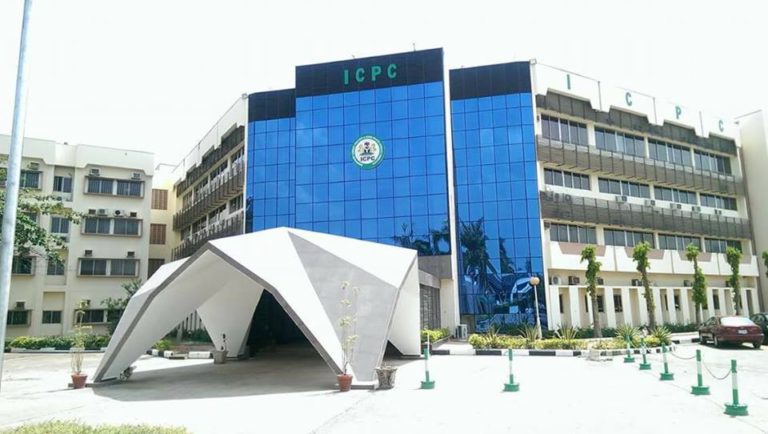
The finance and account directors of federal agencies found to be involved in the manipulation of the budget for self-gratification will soon be caught by the long arm of the law, says the chairman of The Independent Corrupt Practices And Other Related Offences Commission, ICPC, Professor Bolaji Owasanoye. 

The spokesperson of the Commission, Ogugua Chinelo quoted the chairman during the virtual roundtable dialogue organised by The ICIR to discuss the newfound interest of Nigerians, especially politically exposed persons and public servants owning real estate in Dubai (UAE).

The ICIR recently published a series of reports showing the list of Nigerians owning property in Dubai, one of the international havens for ill-gotten wealth.

Quoting a statement by her boss, Ogugua said: “We will take up anybody caught being manipulative or creative with the budget because Nigeria can’t survive the way budget fund is being siphoned from the country. If you keep doing this we will catch you, and we will not spare you, even if you say your own is small, we will use you as an example.”

She also defended the ICPC against the public perception that corruption is getting deeper because the Commission only targets small crooks and leaves out the corrupt big shots.

Ogugua said the Commission and other anti-graft agencies are rather winning the war against corruption because of the strong inter-agency collaboration. “Things are better now than when we started,” she added.

According to the ICPC spokesperson, the agency has engaged in several sting operations which have led to arrests and help the agency go after corrupt Nigerians involved in dubious practices.

“Sometimes we engage government agencies, not for the sake of investigating anything, but to check their systems and look for loopholes which resulted in the work we were able to do at the port sector and the results were commendable.

“What we are doing is still evolving because preventive measures take time. It involves a  comprehensive outlook. So in the course of doing preventive work to block loopholes, we sometimes see infractions and we flag it,” she said.

She however noted that the challenges facing the ICPC is hydra-headed, from poor funding to low staff strength, inadequate capacity and others.

“One of the major problems the ICPC has faced in recent times is the staff strength. We have less than 1,000 officers in Nigeria who are currently operating in only 15 states. And you can imagine that the number of investigators in the entire investigative arm is at most 300.

“When we tried to recruit last year, the outbreak of COVID-19 last year forced us to stop so even if we start recruiting again we will continue from where we stopped,” she said.

She also stated that the ICPC was limited by poor funding and in-depth capacity building of its staff to embark on investigations in specialised areas like tracking illicit financial flows in the oil and gas sector.

She commended the work of investigative journalists, especially those working in partnership with the ICPC, but highlighted the limitation of watchdog journalism in investigating corruption.

Spokesperson of the ICPC, Ms. Chinelo Azuka Ogugua during the zoom meeting with the ICIR on Saturday, February 27

“When you carry out your investigative journalism which gives us a well-detailed report that shows you’ve done your homework we can’t take it anywhere with all due respect because we need to conduct independent investigations of our own and dig deeper to see how it stands under the weight of the law.”

Explaining the procedure of the anti-corruption agency in addressing corruption cases, she revealed that even if the ICPC is confronted with intelligence reports from journalism reports, a petition will need to be filed before investigations can commence.

“If you write your reports and say the intelligence is out there without a petition then there is no assurance that we are going to work on it because we schedule our investigations and can’t just jump on every report of corruption from Nigerians,” she said.

Speaking further, Ogugua emphasised that ICPC’s approach to the fight against corruption hinges on lawful enforcement and preventive measures which is very slow especially for the public sector because technicalities could emerge that could jeopardise its court cases.

” So when it comes to serving public servants you follow the rules, for instance, if a case should be decided in 90 days and for 180 days you are still on it your case could be thrown out of court for that technicality which is why you’ll hear people say the person is still serving or we didn’t hear anything about that case.

“This is why we are thorough with our investigations to keep our court cases watertight,” she said.

In 2016, the ICPC secured 11 convictions out of 70 corruption-related cases it had filed in court after receiving a total of 1,569 petitions, according to its 2017 annual report.

Speaking at the session, Aliyu Wamako, President Real Estate Developers Association of Nigeria (REDAN), said the agreement between the United Arab Emirate, UAE, and Nigeria which mandates Nigerians who intend to sell properties in the UAE to obtain a permit from the Nigerian embassy would help check illicit financial outflow.

“Any Nigerian who owns a property in Dubai, before you can sell it out, you have to get a letter from the Nigerian embassy which is a good development because it will help us keep track of people who are taking our resources to develop Dubai which is an all-round loss for the country.

“We had a collaboration with SCUML [Special Control Unit Against Money Laundering], an arm of  EFCC that are mandated to check, money laundering and terrorism because we believe most of the monies go-to real estate which is the basis for the collaboration with them,” he said.


279 of 317 abducted Zamfara schoolgirls released

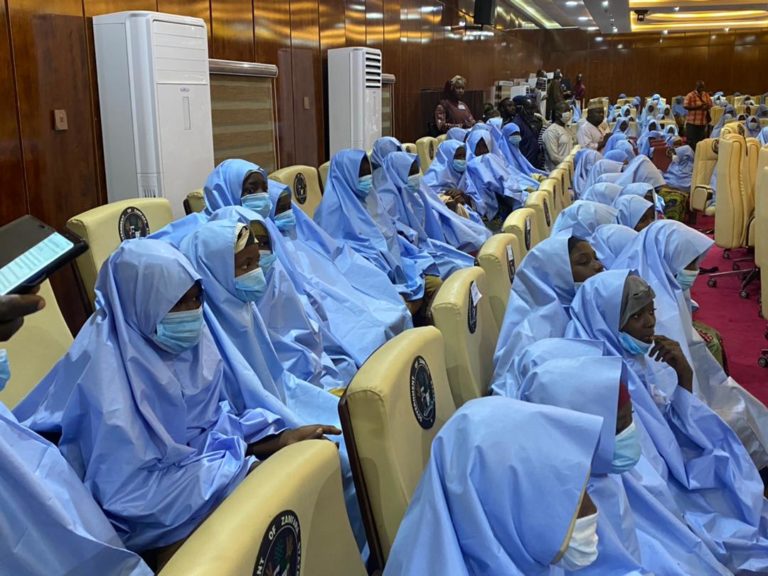
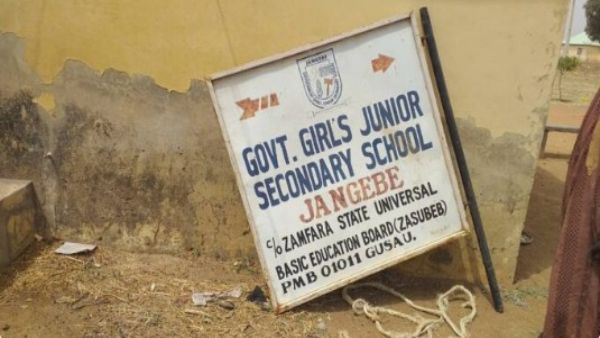
TWO hundred and seventy-nine schoolgirls kidnapped from Government Girls Science Secondary School,  Jangebe, Zamfara State, have regained their freedom after spending four days in bandits’ captivity.

Bello Mattawale,  governor of Zamfara State, made this known via a tweet on his official Twitter handle @Bellomatawalle1 Tuesday morning.

“Alhamdulillah! It gladdens my heart to announce the release of the abducted students of GGSS Jangebe from captivity.

“This follows the scaling of several hurdles laid against our efforts. I enjoin all well-meaning Nigerians to rejoice with us as our daughters are now safe,” Mattawale said in the tweet.

On Friday, February 26, 317 schoolgirls were kidnapped and whisked away from their school at about 1am by armed bandits. With 279 schoolgirls released, 38 of them are still in captivity.

Read AlsoDo women need the approval of male relatives before adopting children in Nigeria?

Concerns for remaining schoolgirls

According to a report, only 279 of the 317 schoolgirls have been released from captivity, but the fate of the remaining 38 schoolgirls is still unknown.

Mohammed Shehu, police public relations officer, did not answer calls nor did he reply to a text message sent to him regarding the remaining schoolgirls.

In some other cases of abduction or kidnapping in Nigeria, there has been a culture of leaving one or some of the abducted students behind.

Boko Haram terrorist group kidnapped 276 schoolgirls of Government Girls Secondary School on the 14th of April 2014 in Chibok town of Maiduguri in Borno State.

Over 881 students kidnapped under Buhari’s administration

More than eight years after, the whereabouts of 112 of these schoolgirls is yet unknown as there is a fleeting effort by the Nigerian government to rescue them, according to the Bring Back Our Girls Movement.

Like the remaining 112 Chibok schoolgirls, the whereabout of Leah Sharibu, one of the schoolgirls abducted from Government Girls’ Science and Technical College, Dapchi in Yunusari Local Government Area of Yobe State, is still unknown as there are no visible efforts to secure her release from the Boko Haram terrorist group that abducted her in 2018.

Nigerian dailies share false claim on rescue of Zamfara schoolgirls

ON Sunday, February 28, 2021, at least two major Nigerian dailies claimed in separate reports that 317 students of Government Girls Secondary School, Jangebe, Talata-Mafara Local Government Area of Zamfara State, abducted on Friday had been released.

These national dailies are widely circulated in the country.

The claim has been shared multiple times online and also generated different reactions.

The Claim

Abducted Zamfara schoolgirls have been released.

False news on Zamfara Schoolgirls.
The Findings

On Friday, February 26, 2021, abductors took 317 secondary school students of Government Girls Secondary School, Jangebe, Talata-Mafara Local Government Area of Zamfara State in Nigeria.

Following the incident, Zamfara State government and security operatives deployed a search and rescue team.

As part of the rescue efforts, the police deployed two helicopters to assist in the search and rescue mission.

Few days before the kidnapping incident, Mohammed Adamu, inspector-general of police (IGP), had deployed 275 special police officers to address the rising cases of banditry and other forms of insecurity in the state.

The Punch and The Nation newspapers, among other dailies, reported that these students had been released.

Have the students been found as claimed by the national dailies?

The FactCheckHub reached out to Muhammed Salisu, police spokesperson for Zamfara State Police Command, but he debunked the claim.

“Honestly, I’m not aware of that story,” Salisu said.

Police, Zamfara govt deny release of abducted schoolgirls

“I don’t know where they got the story from, but if there is anything like that, both the government and police will speak about it.”

He said once there was any development, the government and the police authorities would officially make the announcement.

Besides, Suleiman Anka, Zamfara State’s commissioner for information and culture, also distanced the state from the news report.

He encouraged the public, through his social media handle, to disregard the reports.

“I want to call the attention of good people of Zamfara State. They should disregard any fake news regarding the release of abducted students of the Government Girls Secondary School, Jangebe, by one national daily,” he stated.

“It is not true. But Alhamdulillah, the state government and securities are there trying their best.”

Bello Muhammad Matawalle, Zamfara State governor, further reaffirmed the position of his media aide but with assurance to locate the missing girls.

He gave the pledge on Sunday, February 28, 2021, during the visit of a federal government delegation led by Senator Hadi Sirika, aviation minister.

“The people of Zamfara State have mandated me as their governor to appeal to Mr. President to mobilise more securities to the prone areas because definitely there is a shortage of security manpower in the state,” he told the delegates.

“We hope that by the time you land in Abuja, you will be called upon to come and witness the release of the children,” he said.

In addition, one of the national dailies – The Punch Newspaper – later apologised for the false news.

“The Zamfara schoolgirls are yet to be released contrary to our earlier report. We regret and apologise for the error,” the newspaper stated.

In total, about three authorities have denied the report and one of the national dailies also apologised.

The Verdict

The claim in the reports by at least two national dailies that schoolgirls abducted in Zamfara have been released is FALSE.

Nigeria launches registration portal for COVID-19 vaccination

THE National Primary Health Care Development Agency (NPHCDA) has launched a registration portal in preparation for the receipt of 3.92 million doses of AstraZeneca vaccine on Tuesday.

The Electronic Management of Immunization Data (EMID) portal was created to capture the data of Nigerians in order to facilitate COVID 19 schedules, NPHCDA said on the website.

The agency said that registering on the website would make “vaccination easier and faster” for Nigerians willing to be vaccinated against the deadly virus.

While there are concerns for many Nigerians who might be unable to register on the website due to lack of access to the internet, the NPHCDA said that such persons would not be sidelined in the vaccination.

Mohammed Ohitoto, spokesperson for the NPHCDA, told The ICIR in a telephone interview that there were already processes in place to ensure that no one was sidelined in the vaccination process.

Read Also: 3.9m doses of AstraZeneca vaccine arrives in Nigeria, but who gets what?

“If you do not have the capacity to access, there is an assisted E-registration and if you do not have that too, there is the concomitant registration during vaccination.

“You can be registered right there at the point of vaccination. However, to make your vaccination easier you can register before that time,” Ohitoto said.

He also added that there would be vaccination centres across all local government of the federation to give access to Nigerians wishing to be vaccinated.

A joint statement earlier issued by NPHCDA, World Health Organisation (WHO) and the United Nations Children Fund (UNICEF) had disclosed that the arrival of the vaccine would kick-start vaccination of Nigerians in priority groups, starting with the frontline healthcare workers.

Viral video claiming students ran from forced COVID-19 vaccination was shot in 2019

Faisal Shuaib, executive secretary of the NPHCDA, also noted that the agency had commenced the training of health workers for the vaccination.

“We are fully prepared to receive and deliver the vaccine to eligible Nigerians as we have commenced the training of health workers and ensured that cold chain facilities are ready at all levels,” Shuaib said.

Beware! ‘2021 Dangote empowerment’ post in circulation is FALSE

A  post circulating on WhatsApp claims that the ‘2021 Dangote Empowerment’ is ongoing and urged people to click a link to check their ‘cash prize’ eligibility status.

The claim sent for verification to the FactCheckHub, the fact-checking arm of The ICIR, was published on February 18, 2021. It reads:

2021 Dangote Empowerment. Hurry now, check if you are eligible to receive a cash prize as part of the Dangote Empowerment Grant.  Apply Here.

The Claim

Dangote [Aliko Dangote Foundation] is inviting individuals to apply for the 2021 empowerment grant.

The Findings

Findings by the FactCheckHub show that the claim is FALSE.

Aliko Dangote is a Nigerian business mogul who owns a conglomerate of businesses.  Forbes 2021 billionaire ranking lists him as the wealthiest man in Africa.

He runs a philanthropist organisation known as the Aliko Dangote Foundation, which offers humanitarian support in various capacity.

Francis Awowole-Browne, the Director of Corporate Communication, Dangote Industries Limited, in a statement, debunked the viral post saying it is a scam meant to defraud people.

He said: “Our attention has been drawn to a fraudulent scheme circulating on WhatsApp and other social media titled 2021 Dangote Empowerment purporting to be sanctioned by the Aliko Dangote Foundation.

“Please note that this initiative is a scam aimed at defrauding unsuspecting people, and we strongly advise that you disregard it.

“While we work towards shutting down the activities and accounts of these scammers, please be advised to contact the law enforcement agency in case you have made contact with the group.”

Avoid falling victim to such scams. 

Over time, the FactCheckHub have debunked several of such claims hiding under the guise of recruitment, support fund, empowerment programme, a government activity or free internet data.

These claims usually follow a similar modus operandi by targeting areas that would be of interest to many persons.

They are often shared via the WhatsApp platform. Oftentimes, they impersonate a group, person or organisation, and they all have a link they ask people to click.

The link directs to a phishing website either meant to access people’s information for nefarious purposes or to garner traction in order to sell advertisements or sometimes get people to fill a survey under false pretence.

Most importantly – a red flag to be aware of – is that they always ask for the link to be shared multiple times with call-to-action phrases like “Share it until the bar is full”.

Also, these kinds of posts are usually littered with bad grammar and spelling errors.

Surfing the website or social media handles of the organisation the post claims to be from is a way to avoid falling victim to such scams. In this instance, visiting the Dangote Foundation’s website. This is because organisations would often share such information on their social media platforms.

You can also read the FactCheckHub article on how to Fact-check viral posts shared via WhatsApp.

The Verdict

The claim that Dangote [Aliko Dangote Foundation] is inviting individuals to apply for the 2021 empowerment grant is FALSE.

Court sentences former French president to jail for corruption

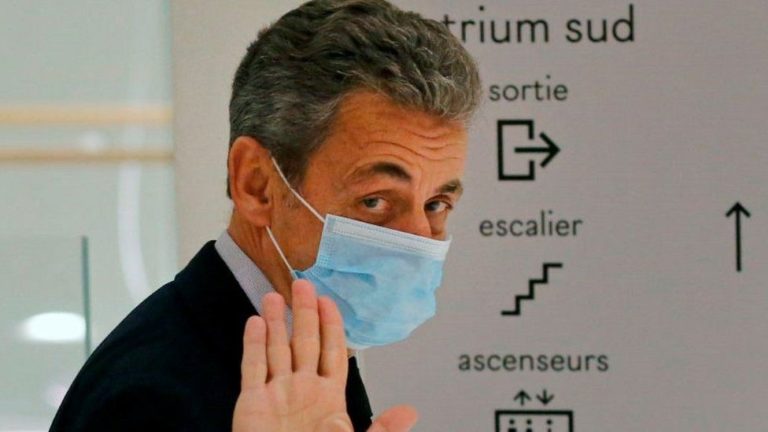
A PARISH court has found Nicolas Sarkozy, France’s former president, guilty of corruption.

The court also found him guilty of “influence peddling”, sentencing him to one year in prison and a two-year suspended sentence.

Sarkozy, 66, who served as president from 2007 to 2012, was convicted on Monday for having tried to illegally obtain information from a senior magistrate in 2014 about a legal action in which he was involved.

According to the BBC, prosecutors told the judges that Sarkozy had offered to secure a job in Monaco for judge Gilbert Azibert, in return for confidential information about an inquiry into allegations that he had accepted illegal payments from L’Oreal heiress Liliane Bettencourt for his 2007 presidential campaign.

This came to light while they were wiretapping conversations between Sarkozy and his lawyer Thierry Herzog after the right-wing leader left office. The wiretapping was carried out in relation to another investigation into alleged Libyan financing of the same campaign.

READ ALSOUAE amends laws to allow foreigners, including Nigerian property owners, to become citizens

The court said Sarkozy, a former lawyer himself, was “perfectly informed” about committing such illegal action. His two co-defendants were also found guilty and handed the same sentence.

Sarkozy had denied any wrongdoing, saying he was the victim of a witch-hunt by financial prosecutors who used excessive means to snoop on his affairs. He now has 10 days to appeal Monday’s ruling.

Taking into account the two years suspended, the sentence of one year jail means it is unlikely Sarkozy will physically go to prison, a punishment that in France usually applies to jail terms of above two years.

Jail corrupt govt officials stealing from the disabled, PWD urges Buhari

The court said Sarkozy will be entitled to request to be detained at home with an electronic bracelet.

Sarkozy will face another trial later this month along with 13 other people on charges of illegal financing of his 2012 presidential campaign.

He is the second former president in modern France, after Jacques Chirac, to be convicted of corruption.