Home Blog Page 1884

Christian, Islamic leaders warn Nigerians against religious politics

0

By Doyin OJOSIPE


RELIGIOUS politics remains a notable cause of disaffection, social disintegration and countless bloodletting in the country, religious leaders have said.

They urged Nigerians to be wary of politicians pitching them against each other for political gains.

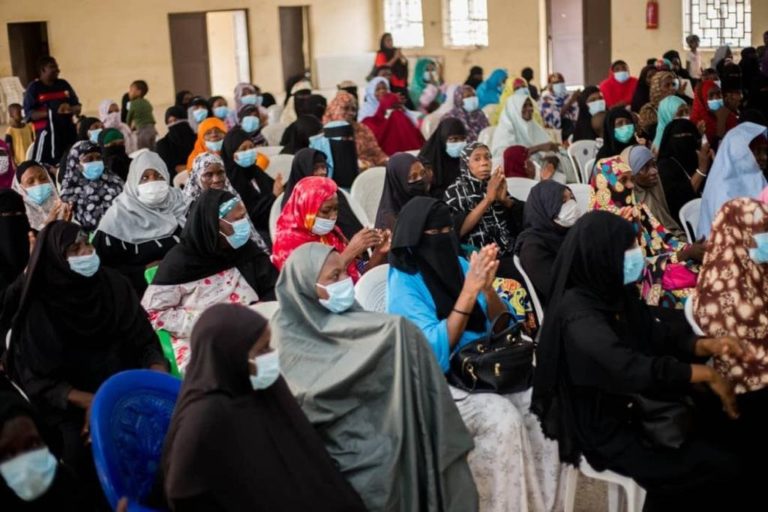
The clerics said this on Tuesday in separate addresses at a town hall meeting on Interreligious and Intercultural Dialogue and the launch of a MIL training manual for religious leaders on promoting peace in the age of social media.

The meeting, which held in Keffi, Nasarawa State, was organised by the African Centre for Media and Information Literacy (AFRICMIL), with the support of the Canada Fund for Local Initiatives (CFLI).

Speaking at the event, Mohammad Ali, Chief Imam of Jumaat Mosque in Nasarawa state, said the desire to get more and take over other people’s wealth was responsible for the kind of politicians in the country.

He said the politicians would either go to church or mosque and/or meet with adherents of a religion to seek loyalty, canvass for votes, after which they forget about the people.

Read Also: 57 communities in FCT kill twins, triplets, albinos – ActionAid

“They just want to win the election. After winning, they don’t even bother about the church or the mosque nor their followers. They come under the guise of being  Muslims or Christians but never had genuine intentions,” he said.

In the same vein,  Ogbonna Akuma, chairman of Christian Association of Nigeria (CAN), Nasarawa North Senatorial Zone, said although politicians had hijacked religion for selfish reasons, there had been more clashes because of ignorance and lack of understanding of other religions.

He said, “ As religious leaders, if we can go back and educate our people, it will go a long way to solve the problem.”

Addressing participants at the meeting,  David Akoji, who represented the director general of National Orientation Agency (NOA), Garba Shehu, said religious leaders held a sacred responsibility to promote peace in the society.

Akoji advised religious leaders to lend their voices against religious intolerance especially as they wielded the power to influence their followers.
He commended AFRICMIL for the initiative, stating that his organisation was always ready to give its support.

AFRICMIL coordinator, Chido Onumah, said the townhall meeting was third in the series of townhall meetings on the CFLI Interreligious and Intercultural Dialogue. The first two were held in Plateau and Kaduna States.

He said Nigeria was in need of such an initiative in the midst of heightened social disintegration and chaos in the age of social media.

Onumah noted that although the Nigerian society was greatly polarised along a variety of fault lines, none threatened the peace and stability of the country more than religion.

“The adherents of Christianity and Islam are endlessly battling for supremacy in all aspects of national life. Divisive and hate speeches are consistently delivered by preachers, and the faithful feel no restraint in physically carrying out the demands of these messages which are mostly extreme and, in some cases, violent” he said.

He stated that the age of the social media had complicated the issue of religious clashes and promoted hate speech and fake news as ignorant adherents would often make use of the media to provoke one another and stoke up needless tension among themselves.

In his words, “The potential for intense religious crises is even more obvious in this age of internet technology where websites, blogs and social media platforms are routinely deployed to disseminate all kinds of fake news and hate messages targeting other religions and cultures.”

The coordinator said it was important for youths and religious leaders to be media and information literate in order to tackle the trend by being able to recognise and respond to groups or individuals using the internet to promote stereotypes, preach religious extremism and promote violence.

According to him, “AFRICMIL has been working for many years with its partners in Nigeria and outside, to create awareness about the importance of Media and Information Literacy (MIL), and to promote the relevance of MIL as a catalyst for peaceful communication and a culture of dialogue, particularly on social networks.”


Soyombo emerges second prize winner at Fetisov Awards with ICIR/Cable-funded story

0

FISAYO Soyombo, an investigative journalist and former editor of the International Centre for Investigative Reporting (The ICIR), on Wednesday, emerged the second prize winner in the Outstanding Investigative Reporting category of the 2020 Fetisov Journalism Awards (FJA).

Soyombo’s undercover investigation on Nigeria’s criminal justice system was funded by The ICIR and TheCable. He spent two weeks in detention in an attempt to track corruption in the nation’s criminal justice system.

To experience the corruption of the justice system first-hand, he adopted the pseudonym, Ojo Olajumoke, pretending to be involved in a crime which prompted his arrest and subsequent detention in a police custody. He was subsequently arraigned in court and eventually remanded in prison.

Read here: UNDERCOVER: Bribery, Bail For Sale… Lagos Police Station Where Innocent Civilians Are Jailed And Criminals Are Recycled (1)

After publication  of the story, interior minister, Rauf Aregbesola, described the investigation as a ‘fantastic job’ and condemned the dehumanisation of prison inmates. The minister later announced an official investigation by the Nigerian authorities.

Read also: UNDERCOVER: Drug Abuse, Sodomy, Bribery, Pimping… The Cash- And-Carry Operations Of Ikoyi Prisons 2

Another ICIR-funded investigation by Kelechi Iruoma and Ruth Olurounbi, which focused on on oil spillage/ environmental pollution in the Niger Delta, was shortlisted under the ‘Excellence in Environmental Journalism’ category, but it did not make the winners’ list.

Nigeria’s Philip Obaji  was  named the third prize winner in the Outstanding Contribution to Peace category for his story which exposed a human trafficking ring on Facebook that specialises on selling Cameroonian child refugees.

According to the organisers, 35 entries from 21 countries were shortlisted and eleven winners were selected for the four categories. However, only two winners that met the judges’  criteria were announced in the Outstanding Investigative Reporting category this year.

The grand prize winner will cart home 104,005 dollars, while the second and third prize winners in each category will receive 20,801 dollars and 10,400 dollars respectively.

The Fetisov Journalism Awards aims to promote universal human values such as honesty, justice, courage and nobility through the example of outstanding journalists from all over the world as their dedicated service and commitment contribute to changing the world for the better.

Soyombo and Obaji join the list of Nigerian winners of the Fetisov Journalism Awards which include Isaac Anyaogu of Businessday who won the first prize in the 2019 Excellence in Environmental Journalism and Amos Abba of The ICIR who finished third in the same category for his report on Nestle Nigeria’s contamination of the water supply of its host community in Manderegi, Abuja.

57 communities in FCT kill twins, triplets, albinos – ActionAid

0

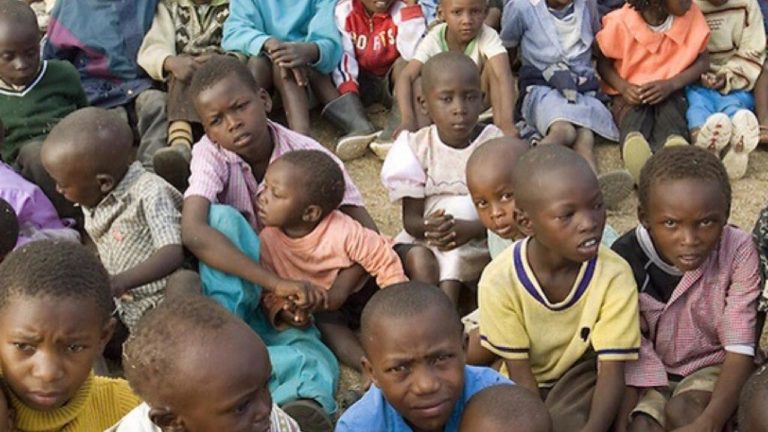
A civil society organisation, ActionAid Nigeria (AAN), has said that about 57 communities in the Federal Capital Territory(FCT)  kill twins, triplets and albinos as part of culture.

Ene Obi, country director of AAN, made this known during an interview with the News Agency of Nigeria (NAN) in Abuja on Wednesday.

“In some communities, there are twin altars where they bury these children and this happens in a couple of communities, about 57 around the FCT,” said Obi.

Lamenting the practice, Obi said that before now, the agency was not aware that such were in practice in the FCT environs.

“We know that the killing of twins was a practice in some parts of Nigeria. But little did we know that sitting in the FCT here and around us, twins, triplets, quadruplets, albinos, down syndrome children and those who lose their mothers at childbirth are considered evil and are killed.”

He explained that a centre had been created with support from the European Union to help cater for some of the children rescued from such communities.

Another not-for-profit organisation in Abuja, Vine Heritage Home Foundation, Kuje, said the practice was prevalent in the FCT and neighbouring communities.

Stephen Olushola, founder of the foundation, said last week that these communities killed twin babies, albino children, children with cerebral palsies, babies with growing teeth from the top of their gum, and babies whose mothers died during childbirth.

He stated that the tribes responsible for such act cut across Abaji, Gwagwalada, Kuje, Kwali and some parts of AMAC.

Olushola added that there were 67 communities carrying out the act but through several interventions, 10 of them had agreed to put an end to the act.

Historically, the killing of twins is prevalent in the southern part of Nigeria. Mary Slessor, a Scottish missionary, is said to have abolished the practice in Cross River State in the 19th century. However, the state is not the only place where such acts are perpetrated in Nigeria.

Read AlsoPWDS, poor Nigerians most affected by corruption in Nigeria – Albino foundation

Aside from killing of twins, in some part of Africa, albinos are killed either for rituals or for respite, according to several reports. Sometimes the albinos are amputated by ritualists, a report by the Human Rights Watch states.

In 2019, about 10 ‘witchdoctors’ were said to have been arrested by the Tanzanian authority in connection with killing and amputation of albinos, most of which were children.

The United Nations notes that the Office of the UN High Commissioner for Human Rights (OHCHR), the UN agency that deals with human rights issues, reported in 2016 that albino hunters sold an entire human corpse for up to 75,000 dollars, while an arm or a leg could fetch about 2,000 dollars.

False claim circulates online that NIMC has approved NIN self-registration

A POST circulating on WhatsApp claims that the National Identity Management Commission (NIMC) has approved a website for online National Identification Number (NIN) self-registration.

The NIMC is a Nigerian government agency that operates and regulates matters of national identity in the country.

The post, retrieved from a WhatsApp group on February 8, 2021, asks people to avoid unnecessary crowd at the NIMC centres and enrol online via a web link.

The post reads:

Federal Government has approved individual NIN registration online to avoid unnecessary crowd in the NIMC centers. Enroll Now.

THE CLAIM

The National Identity Management Commission (NIMC) has approved online self-registration of National Identification Number (NIN).

THE FINDINGS

Checks by the FactCheckHub show that the claim is FALSE.

The FactCheckHub observes that the website attached to the claim has similar characteristics of phishing websites attached to claims previously debunked here and here.

The website attached to the claim is different from the official website of the NIMC.

The official website of the NIMC is nimc.gov.ng and it does not have provision for NIN registration.

It, however, has provision for pre-enrolment. This process involves filling details online using the pre-enrolment portal (penrol.nimc.gov.ng), and the summary page which has a 2D barcode is printed and taken to an enrolment centre.

To remove ambiguity as to what pre-enrolment means, the NIMC website includes a caveat:

It is important to note that the Online Pre-Enrolment is an initial step in the enrolment process. The enrolment is only completed after the applicant gets his or her biometric data (fingerprints, headshot photograph and signature) captured and processed by an Enrolment Officer at any NIMC Enrolment Centre.

The website in the claim either seeks to fraudulently acquire people’s information or garner traffic as it prompts them to share links on WhatsApp groups.

For instance, the first page of the website asks people to input their full name and mobile number, while another page enjoins people to share the information with 15 friends or to 5 groups on WhatsApp.

To avoid falling victim to phishing websites,  here are some guides on how to fact-check broadcast posts shared on WhatsApp.

Kayode Adegoke, head of corporate communications, NIMC, has also confirmed to FactCheckHub that the claim is false.

Replying to the FactCheckHub’s enquiry via a telephone conversation, Adegoke says, “The website is fake.”

The FactCheckHub also observes that the NIMC has debunked the claim on its official verified Twitter Page.

THE VERDICT

The claim that the NIMC has approved online registration of NIN is FALSE. In addition, the website link shared in the claim looks fraudulent.

Viral video claiming students ran from forced COVID-19 vaccination was shot in 2019

A video has been shared multiple times on the social media with a claim that students were running away to avoid forced COVID-19 vaccination.

The video was posted on Twitter by ANT1 (@ANT159694954) on February 2, 2021 with the caption, “Africa in Danager (sic), kids running away from force (sic) vaccination. What is happening in the world.”

The 30-second clip has over 13,000 views.

THE CLAIM

Video shows students running away to avoid forced COVID-19 vaccination.

False claim circulates on line-about evasion of vaccination
A screenshot of the tweet.

THE FINDINGS

Findings by the FactCheckHub show that the claim is FALSE.

Through the WeVerify technology and the Google Reverse Image Search, the video was traced online to May 25, 2019.

In 2019, The Guardian Nigeria reported how a 17-year-old student of Community Secondary School, Oroworukwo, Port Harcourt, Rivers State in Nigeria, sent his school into pandemonium after he brought a teargas canister to school.

The canister had exploded while the students were fiddling with it.

“The explosion caused panic, prompting several students who were scared to start jumping down from the first floor of the two-storey of the secondary school,” the report stated.

Read AlsoFACT CHECK: Claim that Anambra’s debt profile is over N200bn is FALSE

The Vanguard newspaper, in 2019, reported  and did a follow-up story on the incident.

The footage was recorded by a teacher and it went viral after it was posted on the social media.

Ruth Major, school’s principal, had reported the incident at Olu-Obasanjo Police Station, Port Harcourt.

She said, “On Thursday, we experienced a security challenge and it happened because a student in senior secondary school 2 brought a teargas canister to class and invited his mates.

“As they were contemplating on how to open it, one of them, Darlington, detonated it. When he opened it and smoke started coming out, he ran out of the class. As a result, there was panic and stampede.”

As such, the video, which was online in 2019, could not have been of students running to evade forced COVID-19 vaccination. This is because it predates COVID-19  pandemic and also its vaccination.

The COVID-19 vaccines have been a subject of debate and misinformation.

Since the COVID-19 outbreak and its transition to a pandemic, the disease has spread across nations globally, infecting millions of people and killing many as well.

The World Health Organisation (WHO) COVID-19 dashboard says, as of February 7, 2021, the confirmed cases globally were over 105 million (105,394,301) while death was over 2.3 million (2,302,302).

After several efforts, including support from multiple experts in finding a cure to the pandemic, the WHO eventually announced the approval of Pfizer/BioNTech vaccine for emergency use.

In the second week of December 2019, the United States Food and Drug Administration Agency (FDA) also issued its support for the emergency use of the Pfizer/BioNTech.

Other vaccines such as Moderna, AstraZenecaSuptnik VJohnson and Johnson single-dose Covid-19 serum have been developed.

The Chinese, through its state-owned China National Pharmaceutical Group (Sinopharm), has also developed and approved Sinovac.

THE VERDICT

The claim that the video shows students running away to avoid forced COVID-19 vaccination is FALSE. The video was traced online to 2019, as such, it predates the COVID-19 pandemic and its vaccination.

Court jails civil servant 5 years over N .5million fraud

0

A KANO State High Court has sentenced Mohammed Ibrahim Hassan, staff of the Kano State Urban Planning and Development Authority (KNUPDA) to 5 years jail term for defrauding the state government of N513, 445.

A spokesperson for the Commission, Azuka Ogugua, disclose this on Wednesday

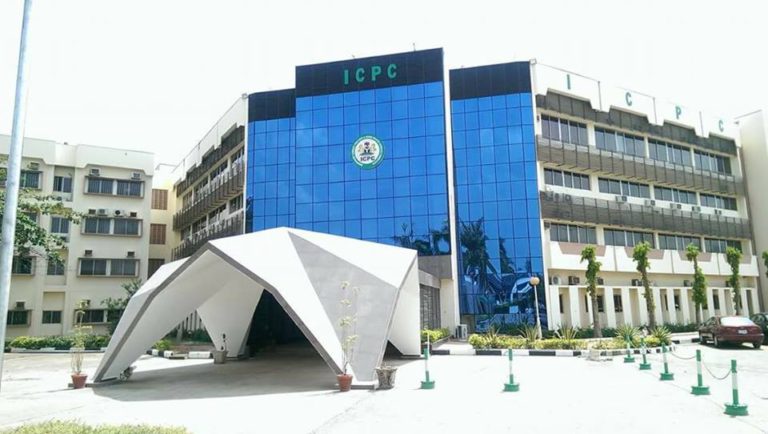
Mohammed Hassan was charged by the Independent Corrupt Practices and Other Related Offences Commission (ICPC) on a 4-count charge of allegedly forging a treasury receipt of the Kano State Government, with the intent to support a claim of refunding the said amount to the State Government.

Read Also: Tracking bank fraud perpetrators in Nigeria could cost victims more than they lost

The Prosecution told the court that the offence violated Section 25 (1)(a) of the Corrupt Practices and Other Related Offences Act, 2000, punishable under Section 25 (1)(b) of the same Act, as well as Section 363 of the Penal Code, Cap 105 Laws of Kano State, punishable under Section 364 of the same law.

Read also: Kano guber poll: Abba Yusuf heads to supreme court

The charge revealed that Hassan committed the offence between June 2017 and March 2018, when he dishonestly made fake treasury receipts of Kano State Government to support his claim of returning N299, 509 and N213, 935 in separate tranches, to the State Government, when he actually did not refund any money.

He pleaded not guilty when the charge was read to him, but changed his plea and entered into a plea bargain which was granted on the condition that he agreed to refund the N513, 445.

The presiding judge, Justice Lawal Wada sentenced the defendant to five years imprisonment or a fine of N100, 000. He also ruled that the convict should refund N513, 445 to the Kano state government.

.

CODE seeks speedy passage of Child Rights Protection Bill

0

THE Connected Development (CODE) has applauded the Kano State Government for approving the Child Rights Protection Bill, but it appealed for a speedy passage by the Kano State House of Assembly.

The bill is targeted at protecting children, girls especially, from early marriages and domestic violence and is also expected to punish violators of children’s rights.

Abdullahi Umar Ganduje, state governor, had approved the bill during the state weekly council meeting on Saturday.

Malam Muhammad Garba, state commissioner for information, who disclosed this at the end of the meeting, said Kano government, due to its commitment to child welfare, after assenting to the bill on Free and Compulsory Education, developed a keen interest in seeing the passing of the Child Rights Bill.

He said that the approved bill, which sought to protect the rights of the child, would now be transmitted to the state’s House of Assembly for passage and subsequent assent by the governor.

“The approved bill when passed seeks to protect the rights of the child and would be transmitted to the State House of Assembly for passage and subsequent assent by the governor,” he said.

Read Also: Inside Ilorin borstal home where deviant children learn life lesson the hard way

Hamzat Lawal, CODE’s chief executive, while commending the governor for the approval, urged for the speedy assent of the Child Right Bill and the adoption of the Violence Against Persons Prohibition Act (VAPP Act), adding that by doing this, Kano  would be helping to reduce the number of children and women whose human rights were violated.

“There must be no delay in protecting children and women from early marriages and violence. Girls and women should have a right to education, freedom from violence, reproductive rights, access to reproductive and sexual health care, employment, freedom of movement, and the right to consensual marriage. These rights must not be taken from them,” Lawal added.

CODE is partnering the trained 30 gender advocates in Kano State such as Bridge Connect Initiative, Save the Women and Children Initiative, Isa Wali Initiative, Rescue the Women Foundation, National Agency for the Prohibition of Trafficking in Persons (NAPTIP) to intensify advocacy, engage key government officials and call for the domestication of the VAPP and Child Rights Acts. It will also be engaging the Kano State Assembly, Ministry of Women Affairs and Social Welfare, and the Police Command in Kano to ensure enforcement once this becomes law.

CODE had recently raised the alarm over the increasing rate of child marriages and gender-based violence in the state. The non-profit organisation in collaboration with the Canadian High Commission had trained 30 gender-rights advocates in the state on gender policy and legal framework; gender-based advocacy; community mobilisation using digital advocacy tools to amplify voices of survivors and demand the wrath of the law on predators and perpetrators.

Kano receives 310 Nigerians evacuated from Saudi

THE Kano state government on Tuesday received 310 indigenes recently repatriated from the Kingdom of Saudi Arabia by the federal government at the end of their quarantine.

They were quarantined for two weeks at the FCT Muslim Pilgrims Hajj in Abuja.

Handing over the returnees to the state government, the director, consular and legal department in the ministry of foreign affairs, Bolaji Akinremi, said the returnees were well catered for by the federal government and have all tested negative to coronavirus before being discharged.

The director-general, Kano Investment Promotion Agency and Diaspora, Hama Aware Mohammed, who received them on behalf of state government, assured that Governor Abdullahi Umar Ganduje will ensure that they are rehabilitated and reintegrated back to society.

“The state government is ever ready to receive them and make home (Kano) better for them than where they came from,” Mohammed said.

Read also: Abike Dabiri denies responsibility for Nigerian ‘innocently’ executed in Saudi

The Nigerians in Diaspora Commission (NiDCOM)revealed via a tweet on Tuesday that the 310 returnees are among 1, 319 stranded Nigerians evacuated from Saudi Arabia in January, against the 808 figure it announced last month.

No official explanation has been provided for the increase in number. Responding to The ICIR  inquiry, chief information officer, NIDCOM, Violet Nwosu, referred our reporter to the Ministry for all enquiries regarding evacuation.

“In response to your question, I wish to let you know that all issues concerning evacuation should be referred to the ministry of foreign affairs as they are the ones that handle such matters and NAPTIP in cases of trafficking and migration,” she told the ICIR through an email.

On the number of Nigerians deported within the last six months – one year, Nwosu said: “The figure is not yet out but you can check on the CBN/World Bank website in case of any further enquiries”.

As at the time of filing this report, there has been no official response from the ministry of foreign affairs.

Court orders CBN to unfreeze 20 #ENDSARS protesters’ bank accounts

0

THE Federal High Court in Abuja has ordered the Central Bank of Nigeria (CBN) to unfreeze the accounts of 20 individuals linked to the #EndSARS protests.

The presiding judge, Ahmed Mohammed, issued the order on Wednesday after the legal teams of both the CBN and defendants decided to end the case.

In October, an Abuja federal high court presided over by Ahmed Mohammed, granted the request of the CBN to freeze the accounts of 19 individuals and a public affairs company linked to the #ENDSARS protests.

The court order addressed to the head offices of Access Bank, Fidelity Bank, First Bank Nigeria, Guaranty Trust Bank, United Bank of Africa and Zenith Bank directed the banks to freeze forthwith all transactions on the 20 accounts on the list annexed to the CBN’s application as Exhibit A and all other bank accounts of the defendants/respondents for a period of 180 days pending the outcome of investigation and inquiry being conducted by the CBN.

Contained in the written address in support of a motion ex parte filed by the applicant Godwin Emefiele, governor of CBN, the apex bank alleged that the transactions in the frozen accounts could cause economic and security harm.

Read Also: #ENDSARS: Nigerians, panel members divided over reopening of Lekki toll gate

“My lord, the nature of the transactions undertaken through the defendants’ accounts are of suspected terrorism financing in contravention of Section 13(1)(a)and(b) of the Terrorism (Prevention)(Amendment) Act, 2013 and Regulation 31(2)(a)and (3)(b) of the Central Bank of Nigeria Anti-Money Laundering/Combating the Financing of Terrorism Regulations, 2013.”

“There is a grave allegation that the defendants are involved in suspected terrorism financing via their bank accounts in contravention of the provisions of extant laws and regulations. The aforesaid transactions undertaken by the defendants, using their bank accounts, can cause significant economic and security harm to the public and the Federal Republic of Nigeria if left unchecked,” the written address read in part.

The affected individuals are: Bolatito Racheal Oduala, Chima David Ibebunjoh, Mary Doose Kpengwa, Saadat Temitope Bibi, Bassey Victor Israel, Wisdom Busaosowo Obi, Nicholas Ikhalea Osazele, Ebere Idibie, Akintomide Lanre Yusuf, Uhuo Ezenwanyi Promise and Mosopefoluwa Odeseye.

Others include: Adegoke Pamilerin Yusif. Umoh Grace Ekanem, Babatunde Victor Segun, Mulu Louis Teghenan, Mary Oshifowora, Winifred Akpevweoghene Jacob, Victor Solomon, Idunu A. Williams, and Gatefield Nigeria Limited.

MRA calls on government to ensure internet connectivity for all Nigerians

0

THE Media Rights Agenda (MRA) has called on governments at all levels in Nigeria to adopt appropriate policies and make the necessary investments to get all Nigerians connected to the internet while ensuring their safety online regardless of age, gender, social or economic status.

In a statement to commemorate this year’s Safer Internet Day, MRA contended that connecting all Nigerians to the internet while ensuring their safety online would put the government on track to fulfilling its principal role, in accordance with Section 14(2)(b) of the Constitution which stated that “the security and welfare of the people shall be the primary purpose of government.”

“Given the profound transformative impact of the internet on the lives of individuals and societies around the world over the last few decades, it is clear that in today’s digitised world, lack of access to the internet has far-reaching negative implications and consequences for those who are deprived of access, not just in terms of the quality of lives that they have, but also in terms of their livelihoods and political participation, among others ways,” MRA’s communications officer, Idowu Adewale, noted in the statement.

Launched in February 2004, Safer Internet Day seeks to create a safer and a better internet, where everyone is empowered to use technology responsibly, respectfully, critically and creatively.

Read AlsoMRA condemns blocking of three websites associated with #EndSARS protests in Nigeria

Adewale argued that an important first step by the government in seeking to connect everyone to the internet would be to take measures, including adopting laws and policies through multi-stakeholder processes, which would ensure that Nigerians felt sufficiently safe online and were able to enjoy all the benefits that the internet providesd

He said such confidence-building measures, which would cost the government very little or nothing, could then be followed by media literacy and digital literacy programmes to raise awareness about the dangers in the online environment and provide members of the public with the knowledge and tools to keep themselves safe online with their increased ability to identify the dangers existing online and taking necessary measures to safeguard themselves.

Adewale urged the government to develop a broad-based strategy to address other barriers standing in the way of citizens getting online, including economic, social, political and cultural challenges, adding that “the measures and policies to be adopted should pay special attention to the needs and interests of marginalised communities in Nigeria who are most impacted by the reality of digital exclusion.”

“MRA calls on the federal government to create a digital environment where all Nigerians can get online, not only to enable them to exercise and enjoy their rights but also to boost social and economic development in the country while enhancing the possibility of political participation by all Nigerians.”