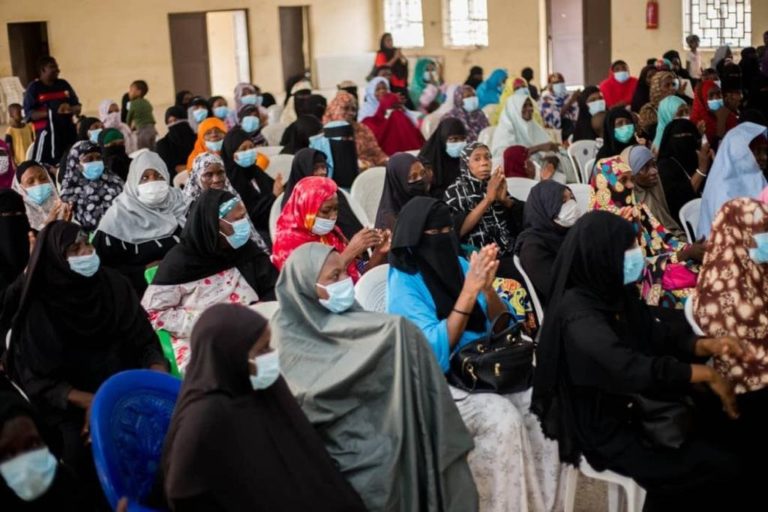
THE Kano state government on Tuesday received 310 indigenes recently repatriated from the Kingdom of Saudi Arabia by the federal government at the end of their quarantine.
They were quarantined for two weeks at the FCT Muslim Pilgrims Hajj in Abuja.
Handing over the returnees to the state government, the director, consular and legal department in the ministry of foreign affairs, Bolaji Akinremi, said the returnees were well catered for by the federal government and have all tested negative to coronavirus before being discharged.
The director-general, Kano Investment Promotion Agency and Diaspora, Hama Aware Mohammed, who received them on behalf of state government, assured that Governor Abdullahi Umar Ganduje will ensure that they are rehabilitated and reintegrated back to society.
“The state government is ever ready to receive them and make home (Kano) better for them than where they came from,” Mohammed said.
The Nigerians in Diaspora Commission (NiDCOM)revealed via a tweet on Tuesday that the 310 returnees are among 1, 319 stranded Nigerians evacuated from Saudi Arabia in January, against the 808 figure it announced last month.
No official explanation has been provided for the increase in number. Responding to The ICIR inquiry, chief information officer, NIDCOM, Violet Nwosu, referred our reporter to the Ministry for all enquiries regarding evacuation.
“In response to your question, I wish to let you know that all issues concerning evacuation should be referred to the ministry of foreign affairs as they are the ones that handle such matters and NAPTIP in cases of trafficking and migration,” she told the ICIR through an email.
On the number of Nigerians deported within the last six months – one year, Nwosu said: “The figure is not yet out but you can check on the CBN/World Bank website in case of any further enquiries”.
As at the time of filing this report, there has been no official response from the ministry of foreign affairs.
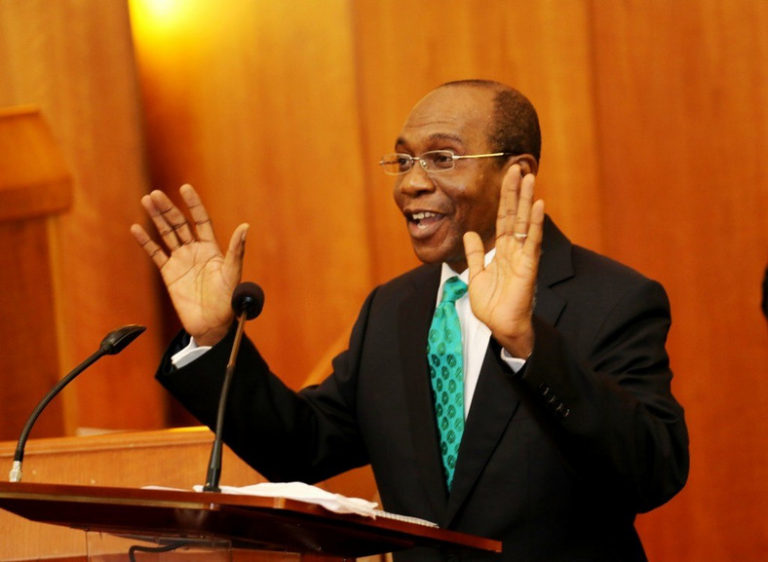
THE Federal High Court in Abuja has ordered the Central Bank of Nigeria (CBN) to unfreeze the accounts of 20 individuals linked to the #EndSARS protests.
The presiding judge, Ahmed Mohammed, issued the order on Wednesday after the legal teams of both the CBN and defendants decided to end the case.
In October, an Abuja federal high court presided over by Ahmed Mohammed, granted the request of the CBN to freeze the accounts of 19 individuals and a public affairs company linked to the #ENDSARS protests.
The court order addressed to the head offices of Access Bank, Fidelity Bank, First Bank Nigeria, Guaranty Trust Bank, United Bank of Africa and Zenith Bank directed the banks to freeze forthwith all transactions on the 20 accounts on the list annexed to the CBN’s application as Exhibit A and all other bank accounts of the defendants/respondents for a period of 180 days pending the outcome of investigation and inquiry being conducted by the CBN.
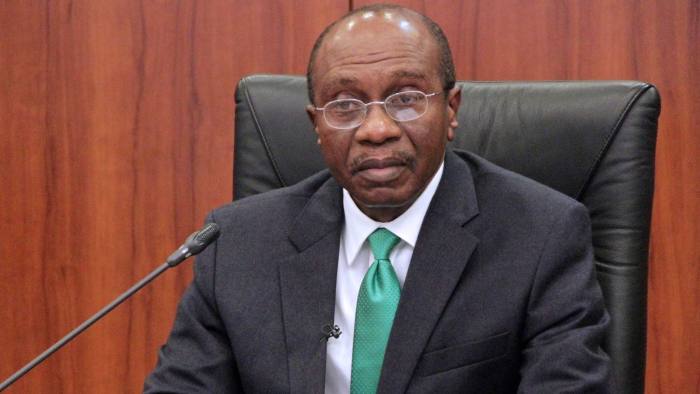
Contained in the written address in support of a motion ex parte filed by the applicant Godwin Emefiele, governor of CBN, the apex bank alleged that the transactions in the frozen accounts could cause economic and security harm.
“My lord, the nature of the transactions undertaken through the defendants’ accounts are of suspected terrorism financing in contravention of Section 13(1)(a)and(b) of the Terrorism (Prevention)(Amendment) Act, 2013 and Regulation 31(2)(a)and (3)(b) of the Central Bank of Nigeria Anti-Money Laundering/Combating the Financing of Terrorism Regulations, 2013.”
“There is a grave allegation that the defendants are involved in suspected terrorism financing via their bank accounts in contravention of the provisions of extant laws and regulations. The aforesaid transactions undertaken by the defendants, using their bank accounts, can cause significant economic and security harm to the public and the Federal Republic of Nigeria if left unchecked,” the written address read in part.
The affected individuals are: Bolatito Racheal Oduala, Chima David Ibebunjoh, Mary Doose Kpengwa, Saadat Temitope Bibi, Bassey Victor Israel, Wisdom Busaosowo Obi, Nicholas Ikhalea Osazele, Ebere Idibie, Akintomide Lanre Yusuf, Uhuo Ezenwanyi Promise and Mosopefoluwa Odeseye.
Others include: Adegoke Pamilerin Yusif. Umoh Grace Ekanem, Babatunde Victor Segun, Mulu Louis Teghenan, Mary Oshifowora, Winifred Akpevweoghene Jacob, Victor Solomon, Idunu A. Williams, and Gatefield Nigeria Limited.
THE Media Rights Agenda (MRA) has called on governments at all levels in Nigeria to adopt appropriate policies and make the necessary investments to get all Nigerians connected to the internet while ensuring their safety online regardless of age, gender, social or economic status.
In a statement to commemorate this year’s Safer Internet Day, MRA contended that connecting all Nigerians to the internet while ensuring their safety online would put the government on track to fulfilling its principal role, in accordance with Section 14(2)(b) of the Constitution which stated that “the security and welfare of the people shall be the primary purpose of government.”
“Given the profound transformative impact of the internet on the lives of individuals and societies around the world over the last few decades, it is clear that in today’s digitised world, lack of access to the internet has far-reaching negative implications and consequences for those who are deprived of access, not just in terms of the quality of lives that they have, but also in terms of their livelihoods and political participation, among others ways,” MRA’s communications officer, Idowu Adewale, noted in the statement.
Launched in February 2004, Safer Internet Day seeks to create a safer and a better internet, where everyone is empowered to use technology responsibly, respectfully, critically and creatively.
Adewale argued that an important first step by the government in seeking to connect everyone to the internet would be to take measures, including adopting laws and policies through multi-stakeholder processes, which would ensure that Nigerians felt sufficiently safe online and were able to enjoy all the benefits that the internet providesd
He said such confidence-building measures, which would cost the government very little or nothing, could then be followed by media literacy and digital literacy programmes to raise awareness about the dangers in the online environment and provide members of the public with the knowledge and tools to keep themselves safe online with their increased ability to identify the dangers existing online and taking necessary measures to safeguard themselves.
Adewale urged the government to develop a broad-based strategy to address other barriers standing in the way of citizens getting online, including economic, social, political and cultural challenges, adding that “the measures and policies to be adopted should pay special attention to the needs and interests of marginalised communities in Nigeria who are most impacted by the reality of digital exclusion.”
“MRA calls on the federal government to create a digital environment where all Nigerians can get online, not only to enable them to exercise and enjoy their rights but also to boost social and economic development in the country while enhancing the possibility of political participation by all Nigerians.”
THE Nigerian National Petroleum Corporation (NNPC) is in a precarious situation as major investments could turn into huge losses unless the oil price remains above 40 dollars per barrel, according to a report.
The report said that other national oil companies (NOCs) across the world, including the NNPC, might lose as much as 400 billion dollars to expensive oil and gas projects if the global energy needs transitioned speedily from crude oil to other sources.
This new report titled ‘Risky Bet’ was published by the Natural Resource Governance Institute (NRGI) . It estimated that investments by several state-run oil companies over the next 10 years could amount to 1.9 trillion dollars, but one-fifth of those investments would be unviable unless the oil price remained above 40 dollars a barrel.
Nigeria’s NNPC and Azerbaijan’s SOCAR were considered to be in serious distress, with half of NNPC’s investments in its upcoming oil projects risking losses if the global energy transition moved rapidly.
The report examined operating projects and the anticipated new projects of 30 state-run oil companies, calculating their post-tax break-even prices, and comparing them with their base case demand and price scenarios.
It projected that if the nominal price of oil was maintained at 62 dollars per barrel in 2025, and 70 dollars per barrel in 2030, the oil industry was likely to find ways of becoming more efficient and the costs of oil companies would fall. However, if the next generation of projects depended on less than 40 dollars per barrel, then oil companies would experience catastrophic losses.
Some of Nigeria’s biggest oil and gas projects currently embarked on by the NNPC include Ogidigben Gas Revolution Industrial Park (GRIP) which is worth 20 billion dollars; a downstream refinery and petrochemical complex located in Forcados, Delta State; and Etan & Zabazaba fields worth 13.5 billion dollars located offshore the OPL 245 block.
Timipre Sylva, state minister for petroleum resources, in an interview, said the Ogidigben Gas Project, which had stalled for several years, was not abandoned but would be completed within a short time.
“The Ogidigben Gas Project isn’t abandoned at all…If you listened to me while I was in Riyadh last year, the Ogidigben Project was in the front burners and it is a project that we really hope to achieve,” he said.
Major oil companies like BP, Total and Royal Dutch Shell have already progressively lowered their long-term price estimates, now in the 50-60 dollars per barrel range, anticipating the energy transition scenario.
The result could worsen inequalities as the invested funds could have been better spent on healthcare, education or diversifying the economy. Many of the NOCs are based in countries where millions live below the poverty line.
However, global oil prices have climbed to a 13-month high since the outbreak of the coronavirus last year, as Brent crude, Nigeria’s oil equivalent, is currently sold at 61.04 dollars per barrel while US West Texas Intermediate settled at 58.41 dollars per barrel as of Tuesday.
David Manley, senior economic analyst at NRGI and co-author of the report, said the huge expenditure by the state-run oil companies into oil and gas projects was an improbable ‘gamble.’
“State oil companies’ expenditures are a highly uncertain gamble. They could pay off, or they could pave the way for economic crises across the emerging and developing world and necessitate future bailouts that cost the public dearly,” he said.
According to the report, these projects would only generate a return if fossil fuel consumption remained high enough for global emissions to exceed the world’s carbon budget which was the level required to meet the Paris Agreement and keep the global temperature below 2°C.
Oil companies in Nigeria namely Shell, ExxonMobil, Total and Eni, are cutting billions in spending after taking hits to their profits, shifting money to renewable fuels and focusing only on the most cost-effective markets.
Mele Kyari, group managing director of the NNPC, told Reuters in an interview that the oil companies shift from Nigeria was based on their own choices.
“No company will invest where they cannot get the appropriate margin. We’re very conscious of the fact that people have choices, companies will make choices to leave countries when they have to,” he said.
The NNPC 2018 annual financial accounts showed that Nigeria’s three major refineries reported a combined loss of 154.4 billion naira which made the NNPC shut all of them completely last year as they awaited much-needed maintenance, repair and upgrades, leaving the country with a hefty fuel import bill.
According to the NRGI report, oil producers in the Middle East, such as Saudi Arabia, would be less impacted as their break-even levels were much lower, but African and Latin American countries would have more trouble.
Other countries where investments should be reviewed include Algeria, China, Russia, India, Mozambique, Venezuela, Colombia and Suriname.
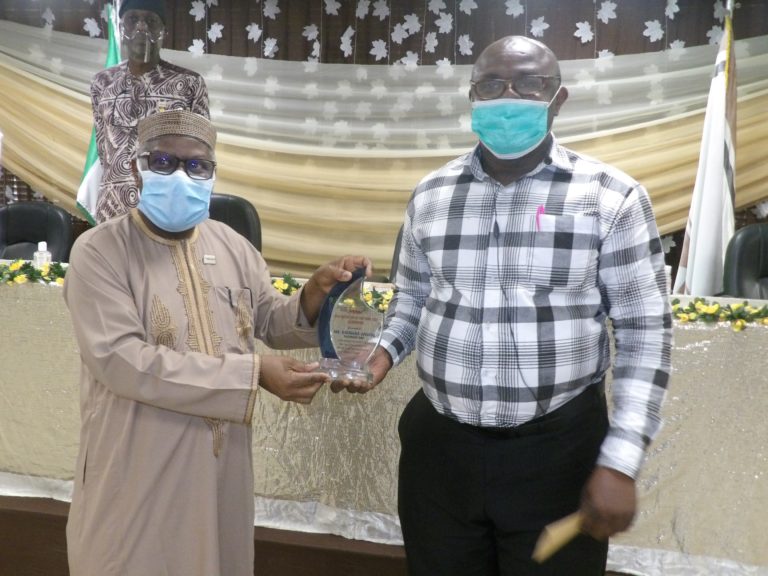
ODINAKA Anudu, news editor of the International Centre for Investigative Reporting (The ICIR), has won the 2020 Manufacturers Association of Nigeria (MAN) Reporter of the Year award.
This is his fourth time of walking off with the prestigious award, which rewards incisive, investigative and insightful stories on the real sector—the productive part of the economy.
He previously won the award in 2016, 2017 and 2018.
He was announced the winner at the 2020 MAN annual media luncheon held in Ikeja, Lagos, on January 28.
Anudu won the award for writing more than 100 stories in 2020 that influenced major policies of the federal government, particularly border closure and ill-thought-out bans imposed on essential items.
According to the judges, Anudu’s stories, submitted through a competitive process, were considered most incisive, investigative and in-depth, meeting all the criteria set for the award.
“His in-depth reporting and analysis of relevant issues in the manufacturing sector stood out among his colleagues,” said MAN’s panel of judges headed by Ambrose Oruche, director of corporate communications at MAN.
Mansur Ahmed, president, MAN, said Anudu also won the award for going extra mile to do in-depth reporting and analyses of issues and policies affecting the manufacturing sector, adding that he placed key manufacturing challenges on the front burner of public discourse.
“We congratulate Odinaka Anudu for being a serial winner of this award,” Ahmed said, adding that it was a demonstration of his doggedness.
“The ‘MAN Reporter of the Year Award’ has come to stay as this is one of the many ways we can acknowledge your contribution to the Association and, off course, reward excellence,” Ahmed further said.
Anudu wrote these stories while an assistant editor in BusinessDay, Nigeria’s flagship business and financial newspaper.
He has won some of the prestigious awards locally and internationally, including African Fact-Checking Awards, PwC Tax Reporter of the Year, Citi Journalistic Excellence Award, West African Business Reporter of the Year (Runner-Up), among many others. In 2017, he was selected by the University of the Witwatersrand, Johannesburg, South Africa, for a fully-funded investigation on Chinese companies in Guateng. In May and June 2019, he reported from Washington DC and Chicago, both in the United States, and The Hague in the Netherlands.
He left BusinessDay in December 2020 as an assistant editor in charge of Investigations and Real Sector desks. He supervised eight reporters in various beats such as manufacturing, agriculture, ports, health, retail, aviation and investigations. An experienced journalist with over a decade of experience, he had been a South-East Bureau chief for Orient Daily/Magazine before joining BusinessDay.
Anudu is a journalism trainer, economist and finance expert. He was educated at the University of Salford, Greater Manchester, UK, and Nnamdi Azikiwe University, Awka, for his master’s and bachelor of arts degrees, studying Finance and Investment Management, and Philosophy, respectively. He also studied Economics at master’s level at Nnamdi Azikiwe University, Awka.
He was formerly the secretary-general of the National Drug Abuse Control Association and has two books to his credit, ‘Top-Class English for Schools and Colleges’ (2009) and ‘Drug Abuse and Our Future: Who Will Bell the Cat?’ (2010).
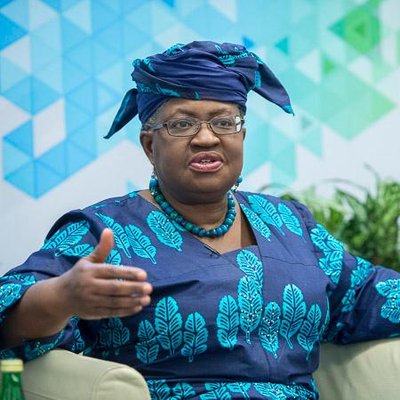
NGOZI Okonjo-Iweala, a Nigerian economist and former finance minister, may be announced director-general of the World Trade Organisation (WTO) on Monday.
According to a WTO statement seen by The ICIR, the global trade organisation will announce who occupies the DG position on February 15.
The statement titled ‘WTO General Council to consider appointment of next Director-General’ stated that the consideration would take place during its meeting slated for 3pm, Geneva, Switzerland time.
The meeting to decide the director-generalship of the WTO is set to take place in a virtual format.
The ICIR had reported that Okonjo-Iweala was poised to lead the organisation following the stepping down of South Korean opponent, Yoo Myung-hee.
Yoo announced her withdrawal after ‘consulation’ with major countries, including the United States.
The Trump-led US government was the only obstacle to Okonjo-Iweala’s victory in 2020 after it threw its weight behind the South Korean candidate.
In a sharp turn of events, Trump lost his second term presidential bid, and former US leaders are said to have advised incumbent US president, Joe Biden, to support the Nigerian economist.
Being the only candidate for the position, Okonjo-Iweala could be the first African to hold the seat as well as first woman to ever become the DG of the 164-member organisation.
Who is Okonjo-Iweala?
In Africa, she is well-known as an economist . She is applauded for lifting her country, Nigeria, out of debt, which she secured from the Paris Club during her time as the nation’s minister of finance.
Over the years, she has served as a development economist, and finance/international development expert.
Okonjo-Iweala graduated with a degree in Economics from Harvard University in the United States (US) and also earned a doctorate degree in Regional Economics and Development from Massachusetts Institute of Technology (MIT), also in the US.
The development economist also has 15 honorary degrees from top universities around the world, including Yale, Brown, and the University of Pennsylvania.
Beyond her fascinating education, Okonjo-Iweala has served twice as Nigeria’s finance minister after a successful career in the World Bank, rising to the level of managing director. While serving as finance minister for the second time in Nigeria under President Goodluck Jonathan, she was also the coordinating minister of the economy.
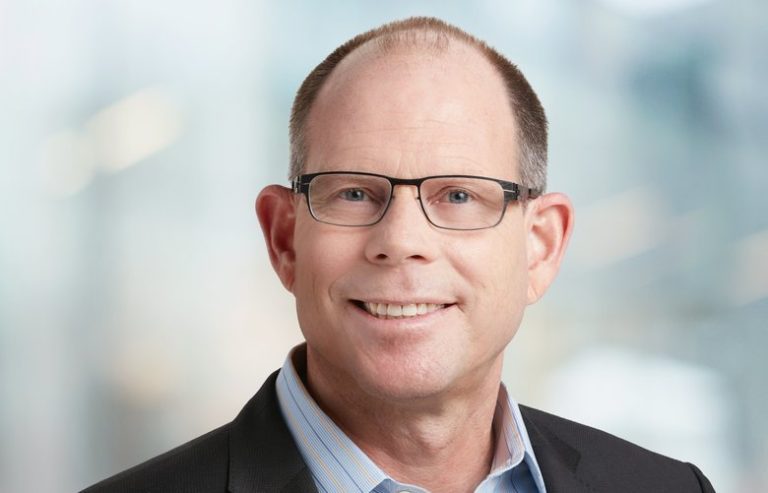
By Mark Suzman, CEO, Bill & Melinda Gates Foundation
THIS week, we learned that the COVID-19 vaccine developed by the University of Oxford and AstraZeneca appears to provide no measurable effect on mild or moderate disease caused by the variant of the virus first identified in South Africa, known as B.1.351.
This is deeply disappointing news. People the world over are understandably frustrated and anxious as the pandemic continues to disrupt their lives. In South Africa, where many of my family members live, and in other countries where variants are spreading, people have been waiting for the promising science to translate into lives saved in their communities.
The whole world is grappling with a complicated and fluid situation. We still don’t know, for example, if this vaccine could protect against severe or fatal disease caused by the variant, thereby preventing people from being hospitalized or needing supplemental oxygen, which is in short supply in some countries. Additional information will be needed to answer these and other questions. The World Health Organization and national health authorities will determine the potential public health value of this vaccine in South Africa and other countries and decide where and how it can be used.
While we may all be feeling destabilized now amid this swirl of questions, we must keep the big picture in mind. In science, every outcome is knowledge. Without the researchers in South Africa who were able to quickly identify the variant and incorporate it into this clinical trial, the world would not yet know the effectiveness of the vaccine on this variant. These world-class scientists have generated valuable new knowledge that will enable more targeted interventions, helping governments make important decisions about vaccine rollouts and better protect their people. For example, a version of this vaccine is being rolled out in India, where B.1.351 hasn’t yet been detected. So while questions are being answered, this vaccine will continue to be a valuable tool in other parts of the world.
COVID-19 vaccine
We’ve all been spoiled lately by how good the news on vaccine science has been. The world went from seeing the emergence of a deadly new infectious disease to developing several safe and effective vaccines against it within the space of only 10 months—the fastest humans have ever gone from identifying a novel virus to inoculating against it. Only four months ago, we weren’t sure any vaccine would work. With several additional vaccines coming through the final phases of clinical trials, including those from Johnson & Johnson and Novavax, we are still on a trajectory to get everyone protected against COVID-19. It will take time for doses of those vaccines to become available, following regulatory approvals and manufacturing scale-up, but they will get out.
As philanthropy, we will continue to do our part to keep up the momentum. Building on our longstanding partnerships, we are working with governments, multilateral organizations, and private companies to determine how to respond to the latest data. We will use our funding commitments of more than $1.75 billion to help accelerate the development and distribution of vaccines optimized for lower- and middle-income countries and are effective against the variants. We’ll also make new investments in treatments and diagnostics because we’ve learned that research and development on these important tools must accelerate as additional variants emerge.
Although the path forward is challenging, it is not bleak. We have learned a great deal about what works to control this virus during 2020, and these lessons are increasingly being applied for an even more nimble and effective response in 2021.
A pandemic knows no borders. Leaving half the world without access to vaccines only means that more people will suffer and die at home and abroad. As Bill and Melinda recently wrote in their annual letter, we are fighting against immunity inequality, an injustice that is bad on moral grounds, bad on economic grounds, and bad on public health grounds. The world needs to reach vulnerable communities and health care workers with vaccines as quickly as possible, no matter where they live if we’re going to get ahead of this virus.
To combat a global problem, global action is needed. Many nations and organizations have worked to create, fund, and promote collaborative international mechanisms to boost equitable access to COVID-19 vaccines. COVAX remains far and away the most significant and most important multilateral initiative to tackle this challenge, but only if it urgently receives funding to support enough vaccines to outrace the virus. Unfortunately, global manufacturing and procurement have remained underfunded while a bidding war for doses puts vaccines out of reach for the poorest countries. Nations that understandably want to shore up their own health networks and vaccine delivery systems should also ramp up funding for COVAX and reject the impulse to make bilateral deals that shut out other countries and delay the possibility of a global recovery.
If COVID-19 has taught the world anything over the past year, it is that we’re all in this together. Variants may continue to emerge that could put everyone at risk. We cannot defeat this pandemic unless everyone, everywhere, has a chance to get vaccinated.
AFTER the new service chiefs have spent 10 days in office, the Nigerian Senate has confirmed receiving a letter from President Muhammadu Buhari seeking their confirmation.
During plenary on Tuesday, Ahmad Lawan, Senate president, read the letter dated January 27 seeking the confirmation of the newly appointed service chiefs.
According to Lawan, the letter read “In compliance with the provisions of Section 18(1) of the Armed Forces Act. Cap A20 Laws the Federation of Nigeria 2004, I hereby forward for confirmation by the Senate, the appointment of the under listed officer as the Chief of Defence Staff and Services Chiefs of the Armed forces of the Federal Republic of Nigeria”.
The appointees listed for confirmation include Lucky Eluonye Onyenuchea lrabor as Chief of Defence Staff, Ibrahim Attahiru as Chief of Army Staff, Awwal Zubairu Gambo as Chief of Naval Staff and Isiaka O. Amao as Chief of Air staff.
Although the letter for confirmation sent to the Senate is dated January 27th, Buhari had already appointed the new service chiefs on January 26th. Since then the newly appointed service chiefs have started functioning as substative military heads.
Femi Falana, a Senior Advocate of Nigeria had faultedthe process of appointment of the new service chiefs.
Falana said this when he appeared on Channels Tv Sunrise Daily Programme questioning the legality of the appointments.
“The whole essence of democracy, presidential system of government is to ensure that there are checks and balances, section 218 of the constitution which empowers the president to make appointments also empowered the Senate to make laws with respect to the exercise of the power by the president.
“Section 18 of the Armed Forces Act provides that both chambers of the National Assembly shall approve the appointment of the service chiefs,” Falana said.
He added that the law was interpreted in the case of Festus Keyamo versus the President of Nigeria and the decision was rendered in 2018 by retired Justice Adamu Bello.
The Human rights lawyer said the constitutional provision had not been followed in the new service chiefs’ appointment.
THE Digital Rights Lawyers Initiative has sued the Central Bank of Nigeria (CBN) and the Securities and Exchange Commission (SEC) over the recent directive by the apex bank banning cryptocurrencies trading.
Last week, a memo from the CBN had warned Deposit Money Banks (DMBs), Non-Bank Financial Institutions (NBFIs), Other Financial Institutions (OFIs and members of the public to desist from dealing in cryptocurrencies and other related transactions because of the “risk associated” with the coins.
It further ordered banks to close all the accounts of customers transacting and dealing in Bitcoin immediately.
In a bid to attend to the public outcries that greeted the decision and further justify itself, the CBN released a statement on Sunday to say it prohibited banks from dealing in cryptocurrencies because of the unregulated nature of the business. The bank also cited the loss of investments, money laundering, terrorism financing, illicit fund flows, and criminal activities.
Why some persons have made arguments in favour of the CBN, some financial experts have also argued that the CBN should have put regulatory frameworks in place instead of prohibiting banks and Nigerians from trading it.
In a 2020 report, Nigeria emerged as the second biggest market for bitcoin, trading over 60,000 bitcoins, valued at $566 million, between 2015 and 2020.
Since 2017, the bitcoin trade volume in Nigeria has increased by 19% while the highest volume of trade (20,504.50) was recorded in 2020, Quartz Africa reports.
The country trails behind only the United States on Paxful, a leading peer-to-peer bitcoin market place. The sharp rise in bitcoin trade, particularly in 2020, has been attributed to the lockdown and the #ENDSARS protest across Nigeria.
However, in Suit No. FHC/L/CS/ 188/2021 filed on Monday, February 8, before the Federal High Court, Lagos, the group, said the CBN, the first defendant, lacked the power to restrict financial institutions from dealing in cryptocurrency transactions.
The digital rights lawyers argued that the second defendant, SEC, had in a circular dated September 14, 2020, declared cryptocurrencies as legal digital assets “protected under section 44 of the Constitution of the Federal Republic of Nigeria, 1999 (as amended)”.
Therefore, the lawyers asked the court to validate the Investments and Securities Act 2007, which made SEC the apex regulatory body of the Nigerian capital market.
They also prayed the court to declare the CBN action as “ultra vires, unconstitutional, null and void” while also seeking a “perpetual injunction restraining the 1st defendant from regulating and/or further regulating virtual currencies/ cryptocurrencies in Nigeria.”
The suit, which has not yet been assigned to any judge, was filed by the group’s counsel, Irene Chukwukelu.
ON February 5, the Central Bank of Nigeria (CBN) sent a circular to financial institutions, instructing them to immediately close the accounts of persons or entities transacting in or operating cryptocurrency exchanges.
The CBN said breaches to the directive would attract severe sanctions. The CBN’s action has since sparked reactions from many Nigerians, with some agreeing with the apex bank and others attacking it for stifling a thriving market. Most of the criticisms of the CBN’s policy have come from young Nigerians participating in the cryptocurrency market who leverage the bulging market. Nigeria is the world’s second-biggest crypto market after the United States.
Cryptocurrency and How It Works
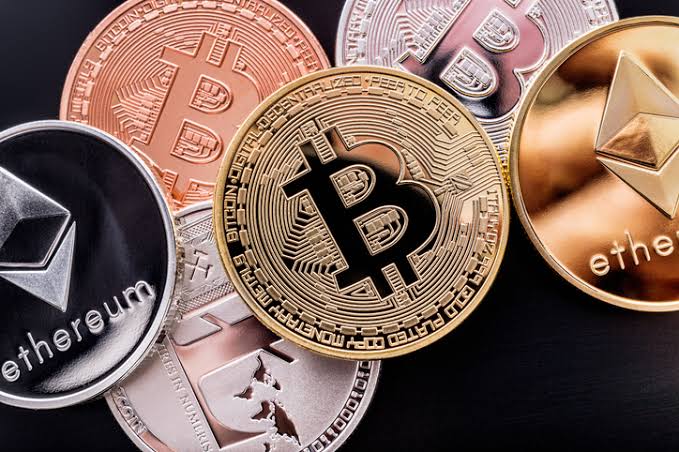
Cryptocurrency is believed to have been founded by Satoshi Nakamoto, an enigmatic character, in 1998. Up till today, nobody knows whether Nakamoto is a real name or pseudonym, and many players in the industry believe it belongs to a group of people, according to Investopedia, a financial and investment dictionary. Generally, cryptocurrency is a digital currency based on an asset distributed across a network of computers, according to Investopedia. Cryptocurrencies are decentralised based on blockchain technology, and central banks do not issue them. They are unregulated and use online ledgers with strong cryptography to carry out transactions, according to Nerdwallet.com, a cryptocurrency website.
There are 6,700 cryptocurrencies worldwide, but the most popular ones are bitcoin, etherum, tether, ripple and litecoin.
Crypocurrencies are very complicated because they are created through a process called mining, which involves using computers to solve complicated mathematics to generate coins, according to the Telegraph.
Like the stock market, users buy the currencies from brokers, store and spend them via wallets. The crypo market’s upsides are that it gives investors some level of anonymity and investments are mostly secure. However, they are not legal tenders, are speculative and volatile, as prices can nosedive within the shortest possible time.
Moreover, they can be used to launder funds, and carry out illegal transactions, which is why it has been banned in China, Vietnam. Russia, Ecuador, Columbia, Bolivia and now Nigeria. Hackers have also targeted the crypto market.
Why CBN Banned Cryptocurrency
The CBN on February 7 explained why it banned cryptocurrency transactions. According to the apex bank, it could be used to launder money and fund terrorism.
In a statement, Osita Nwanisobi, acting director, corporate communications, CBN, said the ban on such transactions would not have any negative impact on fintech.
“The use of cryptocurrencies in Nigeria is a direct contravention of existing law. It is also important to highlight a critical difference between a Central Bank issued digital currency and cryptocurrencies. As the names imply, while Central Banks can issue digital currencies, cryptocurrencies are issued by unknown and unregulated entities,” Nwanisobi said.
“The question that one may need to ask therefore is, why any entity would disguise its transactions if they were legal. It is based on this opacity that cryptocurrencies have become well-suited for conducting many illegal activities, including money laundering, terrorism financing, purchase of small arms and light weapons, and tax evasion,” he noted.
Nwanisobi further said that many banks and investors who placed a high value on reputation had been turned off from cryptocurrencies because of the damaging effects of the digital currencies’ widespread use for illegal activities.
He noted that the role of cryptocurrencies in the purchase of hard and illegal drugs on the darknet website called ‘Silk Road’ was well known, stressing that there had also been recent reports that cryptocurrencies were used to finance terror plots, further damaging its image as a legitimate means of exchange.
Experts Disagree
Financial experts have disagreed with the CBN directive, saying that it could kill an emerging industry that has created thousands of jobs for young people.
“My response as someone who is versed in risk management will be that there is a reality today that the world is going digital and there is a lot of innovation in the world and cryptocurrency are part of it,” Kingsley Moghalu, former CBN deputy governor, said on Channels TV on Sunday. He noted that the CBN’s directive was legal, but he was unsure that it was the right step.
“We have to go back to understand what cryptocurrencies actually are, which are virtual currencies that can be exchanged online to purchase goods and services, and the value of legal tender currencies does not determine the value.
“But you would have to use legal tender currencies to purchase those cryptocurrencies, the most popular which is bitcoin. Also, they don’t have an underlining value, so many people would say it is speculative because unlike a normal currency, that currency is not backed up by either foreign reserves, the productive nature of the economy of the country that owns the currency and various other elements,” he further said.
“I interpret it as a directive to financial institutions under the control and supervisory remit of the central bank not to deal with these cryptocurrencies, and the directive is targeted at exchanges of cryptocurrencies. It makes it difficult, but it does not criminalise it.”
Senator Ihenyen, president of Stakeholders in Blockchain Technology Association of Nigeria (SiBAN), said on his Twitter handle that the “total ban, unlike its January 2017 letter, is arbitrary, illegal, irresponsible, and with all due respect rather lazy.”
He said the CBN might not have the statutory or regulatory power to order banks to deny services to a set of people or an entire emerging industry.
Bitcoin Market Movement as of 05:41 pm on Feb 9, 2021, Source: Coindesk
Obiageli Ezekwesili, former World Bank vice president, said on her Twitter handle on February 6 that it was often difficult for Nigerian and African policymakers to understand disruptive technology.
“I believe in technology much. My biggest worry about disruptive technology was always how much harder it would be for regulatory authorities in our country and continent to understand, gain mastery on their value to economic growth and development to be champions for it,” she said.
Some experts believe that the CBN’s directive was in response to its policy on foreign exchange (FX) market, forcing Nigerians abroad to bypass the official route to send money to their relatives in Nigeria cryptocurrencies. Nigeria’s diaspora inflow is around 24 billion dollars in 2020.
Binance, Providus Bank, Others React
On February 8, Binance, world’s biggest cryptocurrency exchange, announced the removal of Nigerian naira from its platform-a big blow for many Nigerians trading via the exchange.
In a statement, Binance said its Nigerian naira payment partners had suspended deposit services until further notice, starting from 7 p.m. of last Friday. It noted that it was monitoring the situation closely.
“Withdrawal services remain normal and will continue to be processed but might take longer time than usual slightly,” the statement said.
Similarly, following CBN’s directive, Providus Bank has deactivated virtual accounts of PiggyVest, Cowrywise and Monnify, meaning that these fintechs can no longer carry out transactions via Providus Bank. The move immediately created panic in the market, but in a swift reaction, Providus Bank released a statement saying that it was a temporary situation.
“Please be informed that the Virtual Account platform has not been permanently shut down as we are currently reviewing them in line with new regulations. Rest assured we would notify the general public via our social media platforms once this review is completed,” Providus Bank said.
Genuine Concerns on Use of Crypto for Fraud, Terrorism
There are genuine concerns across the world that cryptocurrency transactions could fuel fraud. Imran Khan of Fraud Magazine wrote that some virtual currencies, such as eCache, were completely anonymous. “According to its operators, eCache doesn’t link a person to their transactions; it works like a Digital Bearer Certificate (DBC) that can be transferred to another party just like any other data on the internet,” she said. Khan noted that other virtual currencies, like bitcoin, would store all transactions in a public ledger called ‘The Blockchain.’
“The Blockchain only records the transactions, not the identities, of the users,” she said. In April 2019, two Nigerians were charged in the United States for defrauding victims in an online bitcoin scheme. ThisDay newspaper reported that the federal government and the CBN were warned by the United States’ Federal Bureau of Investigation (FBI) on the activities of fraudsters using cryptocurrencies to move hundreds of millions of dollars illegally into Nigeria.
These digital currencies can also fuel terrorism funding. In a research entitled, ‘Terrorist Use of Cryptocurrencies: Technical and Organizational Barriers and Future Threats,’ Cynthia Dion-Schwarz, David Manheim, Patrick B. Johnston noted that current cryptocurrencies were not well-matched with the totality of features that would be needed and desirable to terrorist groups but might be employed for selected financial activities.
“The authors’ research shows that should a single cryptocurrency emerge that provides widespread adoption, better anonymity, improved security, and that is subject to lax or inconsistent regulation, then the potential utility of this cryptocurrency, as well as the potential for its use by terrorist organizations, would increase,” the research-report said.
Any New Channel?
As of the time of filing this report, many Nigerians were looking for ways of circumventing CBN’s directive, saying the apex bank would not stop them from leveraging global opportunities.
Lagos-based Sandra Okums, who plays in the cryptocurrency market, told The ICIR that transactions would continue to go on as the market was unregulated and online. She noted that the CBN directive would not stop her as the bank did not declare cryptocurrency transactions illegal.
As of the time of filing this report, the Bitcoin price was high at 47,802 dollars. Elon Musk, the founder of Tesla and world’s richest man, has purchased 1.5 billion dollars in bitcoin and plans to accept it as currency.