Home Blog Page 1888

Critics dispute Buratai’s self-proclaimed achievements

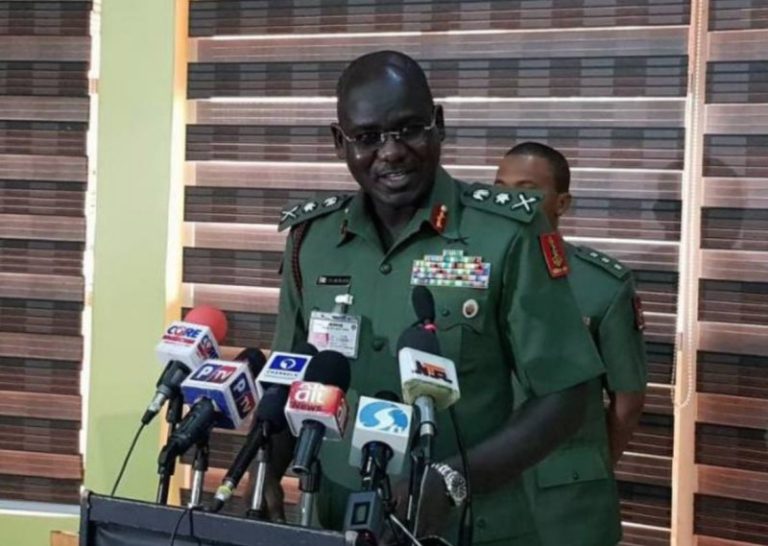
CRITICS have disputed Tukur Buratai’s self-professed achievements, saying that heightened insecurity in the northern part of Nigeria and human rights abuses under his watch could not have been regarded as accomplishments.   

 Last week, President Muhammadu Buhari forwarded the name of Buratai, immediate past chief of army staff,  together with others, for confirmation as non-career ambassadors.

The presidency had described their appointments as reward for hard work.

While speaking with reporters in Abuja over the weekend at a gala party organised in his favour by members of the 29th Regular Course Association of the Nigerian Defence Academy, Buratai, whose years of service were dotted with increased insecurity in the North-West, described his retirement as an honourable thing.

“It’s an honourable retirement and also an honourable appointment. I’m not a politician, so I have no word for the opposition. I have done well,” said Buratai, while reacting to the People’s Democratic Party (PDP)’s criticism of his appointment.

He said there was a ‘compendium’ of his achievements documented at the Nigerian Defence Headquarters to speak for his stewardship.

“I am happy that in July last year, my officers at the Army headquarters compiled a compendium of my achievements.

“In fact, I can’t even remember all the projects that we have executed. Is it in terms of infrastructure? Is it in terms of capacity building? Is it in terms of training?

“Since I was appointed, there was never a dull moment in terms of training. Remember the various exercises. These are training exercises from ‘Python Dance,’ ‘Crocodile Smile’ and even the latest one ‘Exercise Sahel Sanity.’

Read AlsoFor the Nigerian Army under Buratai, loyalty to Buhari comes first before allegiance to nation

“Is it in the area of medical? In terms of education of our children and wards, the Nigerian Army University are all great achievements.”  He said that books could be written about his achievements.

Critics Disagree

In its report last December, the Amnesty International (AI) had accused and indicted Buratai-led army of committing war crimes against older people in his war against Boko Haram in the North-East.

The 67-page report tilted, ‘My heart is in pain’: Older People’s Experience of Conflict, Displacement, and Detention in Northeast Nigeria, showed how older people were starved or slaughtered in their homes or left to languish and die in squalid, unlawful military detentions.

Also, in November 2020, Fatou Bensouda, prosecutor of the International Criminal Court (ICC), announced that her office had enough evidence to open a probe into human right abuses perpetrated by members of the Nigeria Security Forces (NSF) in Nigeria.

According to an issued statement, the ICC said its preliminary investigation into the situation in Nigeria had revealed that members of security forces were culpable of committing what she described as ‘crimes against humanity’ and ‘war crimes.’

Reacting, Buratai had accused the ICC of distracting the Nigerian Army, saying that he was not afraid of any probe by the International court.

But the AI is not alone. Twitter users on Monday said Buratai’s time as head of the army was brutal. While reacting to a news post on Twitter about Buratai’s achievements, users criticised the former army chief for various offences.

A Twitter user, Ibukunshine, with the handle @Ibukunshine, alleged that “All Nigerian (sic) is aware of your achievement and they are as follows: Shite massacre, Lekki toll gate massacre, Oyigbo massacre, flopping (sic) in the war against BH, flopping in the war against bandit, excorting Fulani terrorists to villages to forcefully graze crop.”

Nathaniel Olawuwo, with a Twitter handle @NOIawuwo, said the book being written about him “will narrate how you ordered the killing of innocent peaceful protester’s at Lekki toll gate.”

Another Twitter user, Owoichoyaale with the handle @owoichoyaale, referenced the events of October 20, 2020, at Lekki toll gate as one too hard to forget.

“Obviously, books will be written, stories told about the massacre of unarmed protesters at the Lekki toll gate on 20/10/2020, because your boys who you ditch out (sic) orders to committed the evil against humanity…. Can’t wait to see you told arms facing the ICC…”

Though all these are allegations, Buratai is accused majorly of supervising the killings hundreds of young Indigenous People of Biafra (IPOB) members in Onitsha and Okigwe, South-East Nigeria, including members of the Shiites religious sect in Kaduna. He is also accused of ordering the shooting of protesters of police brutality in Lekki on October 20, 2020.
Nigeria is unlikely to purchase Covid-19 vaccines except through donor grants

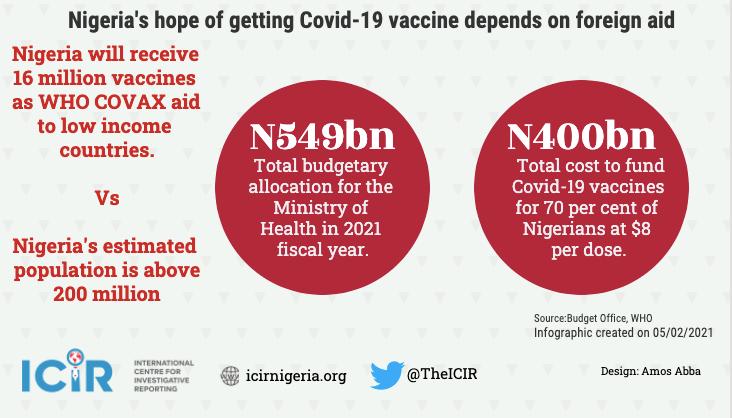
NIGERIA’S plan to provide Covid-19 vaccinations for 40 per cent of its population by the end of  2021 could only be realised through interevention from donor agencies, as its 2021 approved budget did not reflect any monetary provision to that effect. 

This was revealed at the Presidential Task Force briefing on Covid-19 on February 1,  by Faisal Shuaib, chief executive officer of the National Primary Health Care Development Agency who said the country was expecting 16 million doses of Covid-19 AstraZeneca vaccines from a COVAX facility.

“The COVAX facility has informed us that they will be supplying Nigeria with approximately 16 million doses of Astrazeneca vaccine this month.

“This will replace the earlier communicated 100,000 doses of Pfizer mRNA vaccine, which was grossly inadequate,” he said.

The COVAX programme is a global initiative supported by the World Health Organisation, WHO and Vaccine Alliance to equitably distribute Covid-19 vaccines to 92 middle and low – income countries.

The project was expected to raise $8 billion but $6 billion was realised to purchase 2 billion doses of the vaccines of which Africa is expected to get 600 million doses.

With Nigeria still reeling from the effects of the Covid-19 pandemic which has crippled the nation’s economy and raised its high debt obligations, experts say the robust financing of the nation’s health infrastructure will help prevent an upsurge of the pandemic.

A review of the approved budget of the 2021 fiscal year by The ICIR revealed otherwise, as the Federal Ministry of Health did not outline any specific project for Covid-19 vaccines or logistics required for a nationwide roll-out of the vaccines if they are made available.

Four insignificant items that were not related to vaccines administration which was spotted in ministry’s budget include assessing the effects of Covid-19 on snakebite patients, monitoring snakebite surveillance and the purchase of a Hilux van for the supervision which was valued at N12.5 million.

Read AlsoAfrica needs $9 billion to purchase 1.4 billion doses of COVID-19 vaccines – WHO

The allocation of N4.04 million which was budgeted for ”epidemic preparedness, capacity development on COVID-19, Lassa Fever and Ebola”.

Others are the purchase of 15 handheld air quality model equipment in and during Covid-19 pandemic at N24.7 million and implementation of community sanitation across the 36 states in the country during Covid-19 pandemic at N16.2 million.

This makes Nigeria’s hope of realising its ambitious goal of vaccinating about 40 per cent of its population by the end of 2021, a far-fetched dream. 

Where does Nigeria stand?              

According to records from the Nigeria Centre for Disease Control, NCDC, Nigeria’s infection rate is growing rapidly having recorded 42,950 new cases in January which is the highest monthly number of infections since the outset of the virus in the country last year.

Nigeria’s 2021 approved budget showed that the Ministry of Health was allocated N549 billion which accounts for 4.4 per cent of the total budget but when compared to the 2020 budgetary allocation for health, it was a 4 per cent reduction.

An unspecified project described as “Gavi/Immunisation” was assigned N45 billion while another vague item identified as “Counterpart funding including Global fund/Health/Gavi refund” was assigned N5.5 billion.

However, Gavi is an international organisation that was formed in 2000, to improve access to new and underused vaccines for children living in the world’s poorest countries.

Under the Covax facility, Pfizer’s vaccine was the only vaccine listed for emergency use by the WHO until Astrazeneza vaccines were recently added.

If the N45 billion in the health ministry’s budget is stipulated for the vaccines then that amount would be able to purchase complete doses of vaccines for 27 million Nigerians at the rate of $2.16 per dose.

With the cost of an Astrazeneza vaccine at $2.16 per dose of which each person is expected to get two doses which means that vaccinating 140 million Nigerians which is 70 per cent of the population that needs to get vaccinated to achieve herd immunity would cost N115 billion.

Since two doses are required for each person, this means N230 billion would be needed before Nigeria can attain herd immunity.

South Africa, Africa’s worst virus-hit country had ordered for AstraZeneca’s Covid-19 vaccine at a price which was 2.5 times higher than most European countries.

Read ALso:

Members of the EU paid $2.16 for each AstraZeneca’s vaccine shot, according to information leaked by a Belgian minister, Eva De Bleeker, on a tweet which he deleted, South Africa had paid $5.25 for the same vaccine shot.

In its defence, the EU said its members are entitled to a lower price because they were invested in the vaccine’s development, however, more than 2,000 South Africans had volunteered to participate in clinical trials for the AstraZeneca vaccine in 2020.

At the hearing of the Senate on the Federal Government plans to procure Covid-19 vaccines for Nigerians, Osagie Ehanire, Nigeria’s health minister said the country would need N400 billion to vaccinate 70 per cent of the population to achieve herd immunity.

“About N400 billion would be required to vaccinate 70 per cent of Nigeria’s 200 million population at $8 per person. We will need N156 billion for 2021, while N200 billion will cater for the vaccines supply in 2022,” he said.

With the inflated costs of the vaccines for low-income countries, Nigeria is expected to spend at least N280 billion going by the amount the vaccines were sold to South Africa.

Low-income countries to depend on COVAX vaccine grants

South Africa and India had proposed to the World Trade Organisation, WTO, that countries should be allowed waivers of patents related to Covid-19 vaccines, for the duration of the pandemic to allow middle and low-income countries get access to the vaccines.

Read Also: WHO counters report that Nigeria, others disqualified from receiving COVID-19 vaccines

“As new diagnostics, therapeutics and vaccines for Covid-19 are developed, there are significant concerns how these will be made available promptly, in sufficient quantities and at affordable prices to meet global demand,” the official statement read.

Their request was turned down as richer countries namely the United Kingdom, United States of America, Switzerland including members of the European Union, EU opposed the idea.

As of January 18, the world’s 50 richest countries had received 39 million vaccine doses when compared to 25 individual vaccine doses in low-income countries.

According to data by analytics company Airfinity, Canada has bought “enough doses to vaccinate each Canadian five times”

More developed countries such as the US and EU states have regulatory agencies that “complement” WHO’s work and could therefore roll out vaccines without the body’s approval but developing countries rely on the WHO to carry out due diligence.

The African Union, AU, is expected to secure 270 million doses to be delivered from April, through a $7 billion funding from lenders but the vaccines are yet to be approved by WHO for distribution on the continent.

According to the price list of the vaccines released by Bleeker in his tweet, the AstraZeneca-Oxford University vaccine costs $2.16 per dose, $8.50 per dose for Johnson & Johnson vaccine, $9.26  for the Sanofi/GlaxoSmithKline vaccine and $12.25 for the CureVac.

Some of these vaccines are still in the stages of development, and their advance purchasing agreements may never be activated or may take longer before the contract the EU signed with them becomes active if their vaccines work.

John Nkengasong, Director of the Africa Centers for Disease Control and Prevention, revealed in an interview that it would take three or four years to meet 60 per cent vaccination target which is needed to achieve herd immunity.

“The continent as a whole has never vaccinated 200 million people in one year but my fear is that we will peak, probably have the same peak as in July or August, in the coming months,” he said.

A survey carried out by the Africa CDC and the London School of Hygiene and Tropical Medicine which was published in December 2020, found that four out of every five African would be willing to take a Covid-19 vaccine “if it was deemed safe and effective”.

The Seychelles, Morocco and Egypt are administering the Chinese-made Sinopharm vaccine and Guinea the Russian Sputnik V which are yet to be approved by the WHO.

Another Ebola outbreak announced in DR Congo

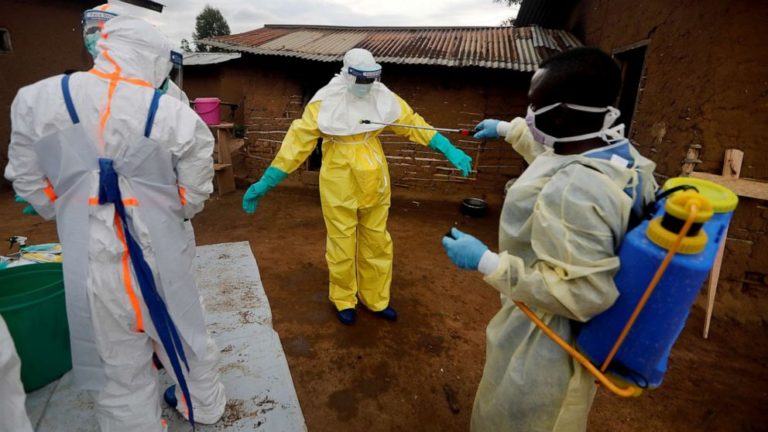
THE Democratic Republic of Congo (DRC) has announced the resurgence of Ebola in its troubled eastern part of the country. This is three months after the country was declared free from the deadly virus.

According to the AFP, the announcement was made by Eteni Longondo, DRC’s health minister to a state-owned television on Sunday.

The minister said the outbreak occurred in the Biena health zone of North Kivu province after a woman died of the disease last Wednesday.

“We have another episode of the Ebola virus in the Biena health zone of North Kivu province,” Longondo told state television, RTNC.

“It was a farmer, the wife of a survivor of Ebola, who showed typical signs of the disease on February 1,” he added.

She died on February 3, after which a sample of her blood tested positive for Ebola, the health minister said.

The DRC declared on November 18 the end of its eleventh Ebola outbreak, which claimed 55 lives out of 130 positive cases over nearly six months in the northwestern province of Equateur.

On October 16, the last person was said to have recovered from Ebola in Equateur.

The widespread use of Ebola vaccinations, which were administered to more than 40,000 people, helped curb the disease.

The return of Ebola in the country’s northeast — a region plagued by violence between armed groups — comes as the vast African country also fights its own Covid-19 outbreak.

A previous Ebola outbreak in the DRC’s east, which ran from August 1, 2018, to June 25 2020, was the country’s worst-ever, with 2,277 deaths.

It was also the second-highest toll in the 44-year history of the disease, surpassed only by a three-country outbreak in West Africa from 2013-16 that killed 11,300 people.

Ebola haemorrhagic fever was first identified in 1976 after scientists probed a string of unexplained deaths in what is now northern DRC.

The symptoms are severe: high fever and muscle pain, followed by vomiting and diarrhoea, skin eruptions, kidney and liver failure, internal and external bleeding.

The average fatality rate from Ebola is around 50 percent but this can rise to 90 percent for some epidemics, according to the World Health Organisation (WHO).

The virus that causes Ebola is believed to reside in bats.

DR Congo has also recorded 23,599 coronavirus cases and 681 deaths in a population of around 80 million people

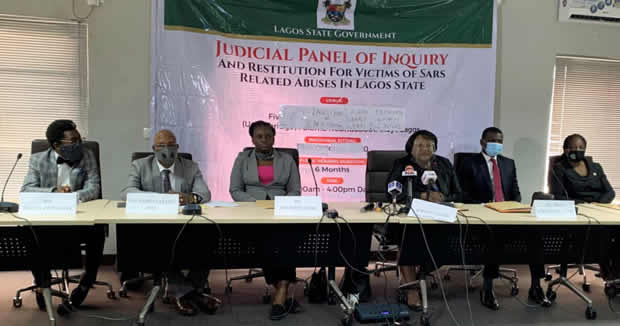
#ENDSARS: Nigerians, panel members divided over reopening of Lekki toll gate

Nigerians and members of the Lagos State judicial panel set up to investigate the October 20, 2020 Lekki shooting incident are deeply divided on the re-opening of Lekki toll gate.

On Saturday, the judicial panel chaired by Doris Okuwobi approved the reopening of the Lekki toll gate following an application by the LCC through its legal counsel, Rotimi Seriki.

According to Okuwobi,“To put the record straight, it is the jurisdiction of this panel to investigate the incident of October 2020 and make recommendations is the premise by which the panel must comply with jurisdiction to look into the Lekki case.”

“The Lekki toll plaza is considered the seat of event of that day. This panel has given ample opportunity to all petitioners to access the toll plaza with the view to considering the investigation,” Okuwobi said.

She added that the report of the forensic team had been concluded hence there was no reason to hold on to the property.

“The report is ready as the panel has been satisfied and the assurances from the forensic team that it will no longer require any visit to the plaza. The panel has decided that it will not await the termination of the petitioners before it hands over control of Lekki to LCC,” she stated.

Speaking on contradictory views regarding the toll gate re-opening, Okuwobi said any evidence in connection to the property should have been taken before now as the panel had given petitioners the opportunity to do so before now.

“To say that its wreckage be preserved as evidence beats my imagination. Whatever evidence any interested person decides to have must have been taken before now as the petitioners do not have any review before the panel to restrain the use of the toll plaza,” Okuwobi added.

Unsatisfied with the decision of the panel chair, some youth representatives in the panel and legal counsel to victims of the Lekki shootings, said reopening the toll gate would hamper the recommendations of the panel.

Ebun Adegboruwa, lawyer and senior advocate of Nigeria (SAN), who is also a member of the panel, said the decision to hand over the property was hasty, premature and would overreach the panel’s report.

“It will overreach whatever decisions the panel may reach and foist a situation of complete helplessness and a fait accompli, on members of the panel, in respect of any recommendation that it may make, on the general operations of the plazas,” Adegboruwa said.

He added that since the panel was yet to ascertain the claims and counter-claims of fatalities and massacres at the toll gate, reopening it would seem ‘insensitive and callous’ to those who might have died from the shooting.

Read alsoNo gunshot injury found on late Dennis Abuda – Police

Panel members say ruling cannot stand

A member of the panel, Rinuola Oduola, said the ruling would not stand because a quorum was not formed before the decision was made by the panel chair, Okuwobi.

“Also, the ruling that Lekki toll gate should be reopened cannot hold, as a quorum wasn’t formed today with the youth representatives absent.  It is also pertinent to note that five of nine can’t form a proper quorum.

“It should also be noted that the ruling did not include our dissenting opinions as members of the panel. Five other members of the panel held the view that the toll gate should be allowed to reopen,” Oduola said.

Stating her reason for objecting to the reopening of the toll gate, Oduola said one of her reasons was that the LCC had not given access of its CCTV servers to forensic experts.

She added that to her and another panel member, Temitope Majekodunmi, the investigation into the Lekki shooting had barely begun.

“Also, we are of the view that the investigations into the Lekki toll gate incidence have barely begun, and so the Lekki Toll Gate should remain shut until full investigations are concluded by the Panel,” she wrote on her Twitter account on Saturday.

She further noted that the same stand was also taken by Adegboruwa and Patience Udoh, members of the civil society groups in the panel.

Read Also: Herdsmen crisis may develop into a civil war – Soyinka

Nigerians divide over reopening

Many Nigerians, most especially on those on the social media,  are against the panel’s decision to hand over the property to LCC.

Expressing their opinions on Twitter, one Nigerian, Abayomi, stated that “People died, the blood of Lagosians were shed by their own army and their own government. People were amputated because of bullet wounds shot at them in that place. It must never be allowed to open again. It is now a massacre centre.”

Another user identified as Tee Praiz while responding to the argument of one of the members of the panel, Segun Awosanya (Segalink), who voted that the toll gate be reopened, said it was being done at the wrong time.

“No doubts that I understand the stand of Segalink on the reopening of #Lekki tollgate but it’s being done at the wrong time and wrong venue. The reason for the panel is yet to be achieved, and you’re clamouring for the reopening of where souls of patriotic and hardworking youths,” Tee Praiz noted.

Against some other opinions, a user identified as Theresa Tekenah said Lekki Tollgate was providing jobs, revenue for Lagosians and there was a legal agreement between Lekki Concession Company Limited and Lagos State government, meaning that the toll gate could not remain closed forever because of the sentiments of certain people.

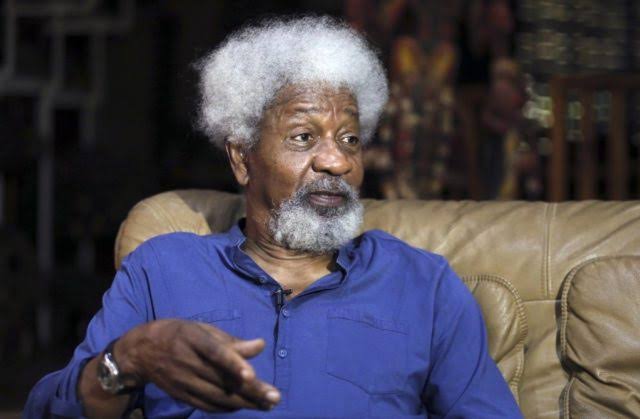
Herdsmen crisis may develop into a civil war – Soyinka

THE Nobel Laureate, Wole Soyinka, has said that recurring herdsmen crisis may develop into a civil war if urgent steps are not taken by President Muhammadu Buhari to address it.

The Nigerian playwright, poet and essayist  said this while speaking with BBC Pidgin in an interview on Saturday.

The 1986 Nobel Prize winner for Literature also said President Muhammadu Buhari’s silence on the ‘illegal’ activities of herders across Nigeria showed that he was complicit and not ready to stop criminal herdsmen.

President Buhari has been accused of not doing enough to tackle the menace of herdsmen across the country because he is  Fulani and the grand-patron to the main herders’ association, Miyetti Allah.

“What do they expect of us now that the war is on our doorstep? Of course, there will be mobilisation and if we keep waiting for this to be centrally handled, we are all going to become, if not already, slaves in our land. That, to me, is personally intolerable. It is not an acceptable condition,” he said.

“And whatever it takes, I stand ready to contribute in any way and I have made my governor understand this, that we are here not just to live in but to live in dignity. Right now, our dignity is being rubbished. My forest is being taken over, it’s been shrinking, my normal hunting ground is shrinking. My family tells me that if I go in-depth again, they will have me institutionalised.”

Soyinka, in the interview, said Buhari’s first action in trying to find a lasting solution to the menace was for him to address the nation on how the situation would be addressed.

“Yes, I know I am the patron of the Cattle Rearers Association etc., and I am a cattle rancher myself and it is a business. And I do not run my business by killing people. I do not run my business by raping, by displacing, by torturing. I do not run my business by occupying land that does not belong to me… Whatever comes to you for illegal occupation, for trespassing on other people’s property is your business and I am ordering the army, I am ordering all the security forces to back citizens’ efforts in flushing you out.

“It is very late already, but it is not too late. This is a language that we expect from President Buhari and as much as that language does not come, I must consider him as quite complicit in what is going on because the buck stops at his desk.

“We may enter a phase of serious skirmishes which get more and more violent and may develop into civil war and a very untidy mercy one. That’s my biggest fear. Unless action is taken… I am very glad that the governors are coming together and are discussing in all seriousness. I’m happy they are pulling in groups like Miyetti Allah, obviously knocking some sense into the heads of their leaders and they are talking about accepting the decision of governors and agreeing to obey.”

The interview is coming days after Saleh Alhassan, national secretary of Miyetti Allah Kautal Hore, in an interview with Punch Newspapers, accused President Muhammadu Buhari of doing nothing for the Fulani herdsmen except to create enemies for them.

The Alhassan’s interview came on the heels of the controversy generated by Rotimi Akeredolu, Ondo State governor, who ordered herders to vacate the state forest reserves over rising insecurity in the state.

He had said, “If the President is a Fulani, it doesn’t in any way affect the life of a herder. In fact, they are worse off under Buhari. What are they benefitting? They don’t access any government facility or social amenity, yet they are responsible for the bulk of animal protein we produce in this country. I think it’s deliberate for people to think otherwise.”

SundayAdeniyi Adeyemo, a Yoruba youth leader, also known as Sunday Igboho, had issued an ultimatum giving herdsmen seven days to leave Igangan, Ibarapa North Local Government Area of Oyo State, following cases of increased kidnapping and killings by suspected Fulani herdsmen in the area.

Soyinka said Igboho responded to the situation in the way he understood.

Read AlsoIbarapa crisis in the face of media abundance

Igboho had stormed the Fulani settlement in the town by ejecting the Seriki Fulani, Salihu Abdukadir, and other herdsmen accused of fuelling insecurity in the area.

He also stormed Ogun State on the 1st of February, insisting that killer-herdsmen must vacate Yorubaland.

Soyinka said, “We’ve never met, I hope people will always report things properly. I saw a byline of one media report that Wole Soyinka calls Igboho a hero, I never made any such thing. Sunday Igboho has responded to the situation in the way he knew how. Now you will see that he’s trying to work with others.

“Somebody, one day, reaches an explosion point and he says I cannot take this any longer and he takes unilateral action. It may be excessive, it may be wrong but what matters is that somebody has responded to an unacceptable situation. Any error which he makes is for the rest of us to correct by calling him and I know that a number of people are doing that.”

Attacks caused by Herdsmen between 2012 and January 2021

Nigeria has seen heightened clashes between crop farmers and herders since Buhari, a northern Muslim from the Fulani tribe, became president in 2015.

Some states across the country have lamented the activities of armed herdsmen who they accuse of grazing their cattle on people’s farmland and also engaging in criminality such as kidnapping, raping and murder.

  1. Deaths caused by Herdsmen between 2012 and January 2021

Samuel Ortom, governor of Benue State, last Thursday, accused President Muhammadu Buhari of only caring about Fulani herders, rather than being the president for all Nigerians.

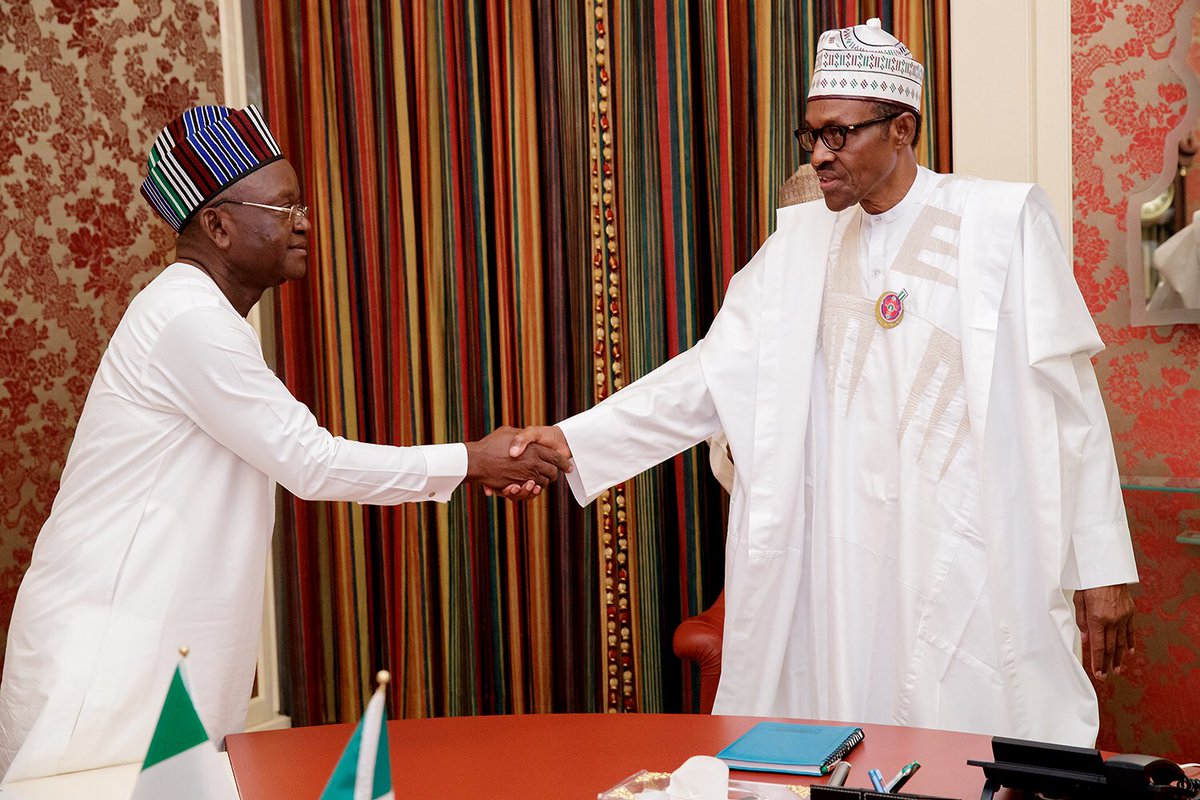
Addressing a press conference in Makurdi on Wednesday, February 3, 2021, Ortom, whose state has seen a fair share of farmers-herders clashes, as reported by Punch Newspaper, said Buhari should know that he is the president of the Federal Republic of Nigeria, rather than  president of Fulani.

President Muhammadu Buhari and Gabriel Ortom, Benue State Governor

“Mr. President, in case you are listening to me, I want you to know that your people, Nigerians, you promised Nigerians that you will be fair to all.

“You said that you will be for everybody and for nobody, and now it will appear that you are for Fulani people because nothing is coming from you to give the people confidence that you are their president.

“You are the president of the federal republic of Nigeria, you are not the president of Fulani.

“You are the president of everybody and I owe you a duty as a stakeholder in this nation to let you know that what is going on is wrong and this has the potential of dividing this country which will not be in the interest of anyone –some of us believe in the unity of this country,” he had said.

Parents of eight-year-old with broken skull seek help for surgery

WHEN eight-year-old Elijah Success left home for lesson on August 7, 2020, his parents and siblings had no premonition he would not return home the lively and healthy boy he had always been.

The Primary II pupil was trekking back home when the unexpected happened – he was hit by a fast-moving commercial motorcycle, leaving his skull smashed and his body bruised.

The incident happened at Gidandaya, around Orozo, a suburb of Abuja. He was immediately taken to Karshi Hospital, where he was referred to Federal Medical Centre, Keffi, and then to Garki General Hospital, Abuja, before finally finding respite at the National Hospital, where the head was operated upon.

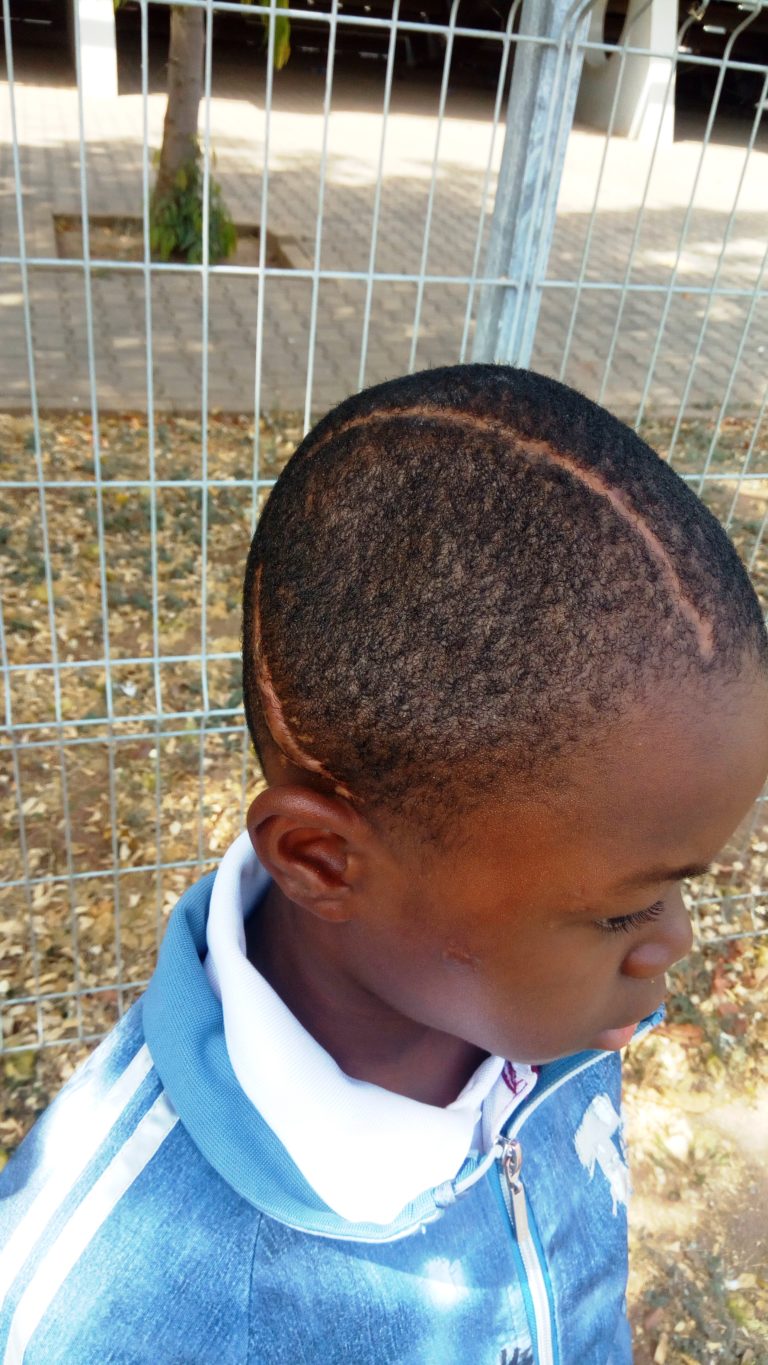
Eight-year-old Success Source: The ICIR

The damaged part of his skull was removed during the surgery, leaving only his scalp (skin of his head) to cover half of his head. He has been without half of his skull for five months, after the surgery was conducted.

A large and deep mark cuts across his head from one end to the other.  The skin on affected part of his skull shakes intermittently each time he breathes. Success looks very sombre whenever he tries to talk, a sign that he is in pain. He is eager to play with other children, but he’s  restrained by his disability. One of the limbs affected by the accident was paralyzed for weeks. But, now, he can stand for a few minutes and move his hand as well.

Elijah and Alice Achala, his parents, who both hail from Oju local government area of Benue state, said they already have spent over N2.5 million on the boy’s treatment, but can no longer bear the cost, particularly now that another surgery is imminent.

His poor, distraught father, a security guard who earns N25,000 monthly, lamented that he was in debt. He said that he and his wife have borrowed a lot of money from neighbours, friends and relations, many of who are now asking for the loan repayment. He said he owed N900,000 in the course of saving the boy’s lives.

His other children could no longer go to school, and he has not paid his house rent in a year, he told The ICIR.

What further compelled Achala to cry out for public assistance over his family’s travails is that he was sacked last November by the company he had worked with as a security guard.

He said he had gone to bury his father in the village that month, and was replaced by another guard. And all his appeals to his employers fell on deaf ears, he said.

Read also: Osinbajo undergoes surgery in Lagos hospital, to be discharged in few days

His wife corroborated his claims. Mrs Achala told The ICIR that her family lives on neighbour’s charity.

“As a mother, it’s not been easy for me at all. My husband has been sacked from his place of work. I’m only surviving through the people around me. Sometimes, they will come with ‘mudu’ (a small bowl for measuring foodstuffs) of garri (cassava flake), rice and beans. That’s how we’ve been living.  There are three children with me. None of them goes to school, except the orphan that is in senior secondary school,” she explained.

According to the father, Success needs weekly physiotherapy because the accident paralyzed his arm and leg on the side of his head that was affected by the accident. So, they have been able to make the paralyzed parts function a bit, through physiotherapy; which he said his family could no longer afford.

Forty-one-year-old Achala said: “My condition is very bad now. That is why I’m calling on people everywhere for help. I don’t want to lose him. He has endured much pain, and since he is alive today, I have assurance that he will survive this. All I just need is money to do this surgery. The national hospital has kept the skull with them and asked me to look for money so they fix it back.”

Unlike many other victims of crashes on Nigerian roads, the motorcyclist who hit Success stopped and helped him to the hospital. But, he has only made N18,000 contribution to his treatment since, the boy’s father told The ICIR.

He said his family was at the hospital for over a month during the first surgery before they were released to go look for money for the second lap.

Elijah Achala, Success father Source; The ICIR

Asked by The ICIR to tell how much he needed for the operation, he said the hospital did not tell him how much it would cost him, adding that the hospital told him to pay initial sum of N200,000 naira for theatre.

Achala expressed his family’s readiness to appreciate any hospital or team of experts who will be willing to collaborate with the hospital to carry out the surgery.

“All I want is to do the surgery in a way that will bring no further indebtedness to my family and ensure the safety and good health of the boy. And, I will be happy if I could get assistance to pay the N900,000 my family owes in the course of the past treatments,” the father pleaded.

He said he owed the hospital and could no longer afford the cost of checkups. He said he is not sure if the cost of the second surgery would be more than the first.

To avoid further complications, Success has been kept at home by his parents since he was discharged by the hospital, his father told our reporter.


WHO counters report that Nigeria, others disqualified from receiving COVID-19 vaccines

A representative of the World Health Organisation ( WHO) has countered reports by some sections of the media that the global health body has disqualified Nigeria and eight other countries from COVID-19 vaccine bid.

Walter Mulombo, WHO country representative to Nigeria, countered the reports in a tweet on Saturday morning.

Mulombo wrote on his official Twitter handle that contrary to reports, the WHO would not disqualify a member state from accessing an approved vaccine for its population.

“WHO is part of Covax facility and can never disqualify a member state from accessing an approved vaccine for their population. I call upon members of the press in Nigeria and globally to contribute to fighting misinformation,” Mulombo posted.

Charity Warigon, communicator officer for the WHO in Nigeria, in a statement sent to The ICIR, said Nigeria was among the 51 our of 72 countries considered by the review committee as ‘ready’ to receive the COVAX vaccine.

Warigon stated that out of the reviewed 51 countries, however,  only 18 countries in total were finally chosen to receive the initial Pfizer doses due to the high demand for the initial 1.2 million doses of the vaccine.

Warigon noted that all countries on the African continent were expected to start accessing the AstraZeneca/Oxford vaccines by the end of February as the vaccine was under review by WHO for Emergency Use Listing, with the outcome expected soon.

However, she added that out of the 88 million AstraZeneca doses allocated to African countries for the first phase, Nigeria had received 16 million, which was the largest allocation among all other countries.

Early Saturday morning, some Nigerian newspapers, including The Punch and Sahara Reporters, had reported that the WHO-led COVAX global initiative failed to shortlist Nigeria for the Pfizer vaccines following the country’s inability to meet the standard requirement of being able to store the vaccines at the required -70 degrees Celsius.

The report stated that Matshidiso Moeti, WHO director of African Region, during a virtual press conference, had said only four African countries were shortlisted for the Pfizer vaccine out of the 13 that applied.

Read AlsoKogi reports only 5 COVID-19 infections, but 10 bordering states have 32,880 cases

Moeti was quoted to have said that only Cape Verde, Rwanda, South Africa and Tunisia met the requirements to access the WHO emergency use listing.

“To access an initial limited volume of Pfizer vaccine, countries were invited to submit proposals. Thirteen African countries submitted proposals and were evaluated by a multi-agency committee based on current mortality rates, new cases and trends, and the capacity to handle the ultra-cold chain needs of the vaccine,” part of the report had said.

Faisal Shuaib, executive director of the National Primary Health Care Development Agency (NPHCDA), had said in January that Nigeria would receive 100, 000 doses of Pfizer-BioNTech vaccines through the WHO-led COVAX scheme by the end of the month.

As of the time of filing this report, Nigeria had recorded 137,654 positive cases of COVID-19 with 111,639 recoveries. The number of cases and deaths has seen a substantial increase since the second wave of the deadly virus, with 1,641 total reported deaths.

2m people at risk of female genital mutilation due to COVID-19, say UNICEF, UNFPA

0

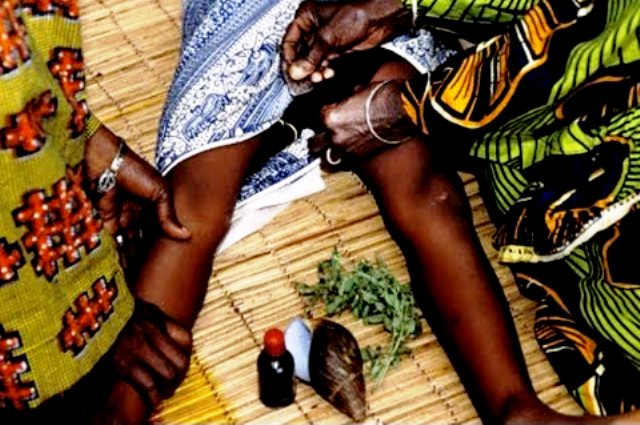
NO fewer than two million additional cases of female genital mutilation have been projected to occur over the next decade due to COVID-19 disruptions.

This was revealed in a joint statement by Henrietta Fore, executive director of the United Nations Children’s Fund (UNICEF) and Natalia Kanem, executive director of the United Nations Fund for Population Activities (UNFPA) on Saturday, the International Day of Zero Tolerance for Female Genital Mutilation.

The duo stated that COVID-19 had contributed to the shutting down of schools and disruption in programmes that could help protect girls from this harmful practice.

“Even before COVID-19 upended progress, the Sustainable Development Goals target of ending female genital mutilation by 2030 was an ambitious commitment.”

The international bodies reiterated their commitment to protect the 4 million girls and women who were at risk of female genital mutilation each year.

“Far from dampening our ambition, however, the pandemic has sharpened our resolve to protect the 4 million girls and women who are at risk of female genital mutilation each year.”

The UNICEF and UNFPA bosses, however, highlighted the need for unity and collaborations among stakeholders in tackling the menace of female genital mutilation across the globe.

“Ending female genital mutilation requires collaboration among a wide group of stakeholders. This includes global, regional, national and local policymakers; civil society from small grass-roots organisations and women’s rights groups to international non-governmental organisations; agents of change from teachers and health workers to religious leaders and local elders; as well as law enforcement and judicial officials.’

They also stressed the crucial role needed to be played by men and boys in ending female genital mutilation, adding that there was a need to amplify the powerful and persuasive voices of survivors who were increasingly leading transformative change in their communities.

$2.4bn needed to end female genital mutilation by 2030

The UNICEF and UNFPA directors have also highlighted the need for adequate funding in tackling the burgeoning menace of female genital mutilation across the world.

They stated that if the Sustainable Development Goals target of ending female genital mutilation by 2030 was to be met, some 2.4 billion dollars would be needed over the next decade.

“Even in countries where female genital mutilation is already declining, progress needs to increase ten-fold to meet the global target of elimination by 2030. This will require some $2.4 billion over the next decade, which breaks down to less than $100 per girl.”

They added that the money was needed to preserve the bodily integrity, health and right of a girl-child.

“This is a very small price to pay for preserving a girl’s bodily integrity, her health and her right to say no to violation. However, most of this money has yet to be raised.”

Ibarapa crisis in the face of media abundance

0

By Tunde AKANNI


NOT known to be a protégé of any ‘big’ political dynasty in Oyo State as such, suddenly, Seyi Makinde manifested prior  2015 governorship election. He began by handing out scholarships and other forms of empowerment to indigent people of Oyo State. From Ibadan, the reach extended inwards into other parts of the state. Branded vehicles ran everywhere announcing Makinde.

Oyo people familiarized by the day. 

For the rest of us not resident in Oyo State, the billboards probably did the magic. We were curious and sought to know more. The private radio stations for which Ibadan has since come to offer a supportive nursery bed of some sort, complemented the billboards. The people reckoned, and properly too. The then Ajimobi government knew clearly the people were reckoning. It could not pretend too. Indeed, the government attack against the radio station owned by the Tungba dance maestro, YinkaAyefele, earned Makinde more sympathy, among other repercussions. Whatever was the reductionist disposition of the ‘constituted authority’ folks in Oyo State finally fizzled out. Seyi Makinde swept them off. Seyi Makinde forces of the fringes have mainstreamed.  Media of all sorts, online and offline, coalesced in favour of Seyi. Seyi needs no further conviction on the power of the media. Media made him and filled his cup of joy, as they say. But for how long will this ecstasy endure? Will they wait till they pay double the price of their predecessors as warned by historian?

When he assumed the governorship position of Oyo State, many, including yours sincerely, was excited about Seyi Makinde in a way.  I quickly moderated it knowing the usual ways of Nigerian politicians. Maybe I should be particularistic with the politicians of the Southwest. Be it known to them all: the people, and I mean their voters now have several derogatory names for them. And the labels are registering fast with us all. We shall come back to these labels in due course.  The Ibarapa crisis have probably given the highest decibel to the discomfort deriving misgovernance and even lack of governance.

Unluckily for the political class, the internet technology, has liberalized peoples’ access to information. So what? A lot, really. Till date I haven’t encountered that story anywhere else.

It was the story of a young agripreneur in Ibarapa area of the state.  She recounted her tragedy to a an Ibadan based broadcaster who was farsighted enough to upload the video online. It goes thus: The female agricscience graduate of the University of Ibadan still resident in Ibadan with the retired parents had set up a farm in Ibarapa area. On a particular weekend the boyfriend joined her in Ibadan and they both travelled down to the farm. When they were done in the evening, they set out to return.  The journey ended abruptly with some marauders’ violent intervention. The Fulani herdsmen signaled a violent stop order. But who would heed such? Trying to speed away, the daring devils dashed forth and hauled bullets on the couple’s car. The driver was the target and they got him. He fell leaving the car to drift uncontrollably. The guy had died. The killers moved in and dragged the lady out of the car. Thus began her kidnapping experience. It didn’t matter to the Fulani herdsmen that this poor lady had just lost her partner who could probably have been saved.  Her confessed malaria condition notwithstanding, the ultimate ransom was their concern. She received beatings of her life as she was marched through forest thickets and rivers with her hands chained to avert any possible escape attempt.  This self-motivated farmer spent days before the daredevils struck a deal with the father who had to personally bring the ransom in exchange for his dear daughter.  The follow-up burdens are better imagined: How will the tragic news of her boyfriend be broken? Will she go back to the farm? Who can guarantee future safety?

So deeply, the tragedy sank into me. It did so much as I ruminated over my recent trip through some section of Ibarapa stretch some months back. I needed to see a friend in both Oyo and Okeho same day. Fate can hand out life and death challenges sometimes, just believe it. I had my share that weekend. I, therefore, left Lagos for Oyo and later headed for Okeho from Oyo. Returning to Lagos was inevitably via Igbo Ora to Abeokuta from where I could “easily” connect Lagos. If you plan to be in Abeokuta from Okeho and you don’t make up your mind by 4.00 pm. you may as well forgo it. The road from Okeho to Abeokuta through Igbo Ora is afairly good road even as it had been built by the government of the Awolowo premiership days. On both sides of the road were cultivated lands brimming largely with food crops like plantain, yams, cassava and assorted vegetables and fruits. Once in a while, we encountered Fulani ladies selling ‘wara’.  Their sight did not portend any fear or danger then.  But the thought of those encounters these days…

How can you be emotionally strong after reading the supposed tribute written by one of the sons of Dr Fatai Aborode, an American returnee farmer, to the father after Dr Aborode’s gruesome murder, allegedly by the Fulani herdsmen.  I got the said tribute after watching the video of Team Sunday Igboho’s threatening visit to the Seriki Fulani of Igangan. Dr Aborode’s son was painfully declarative asserting “…Nigeria is not home…Nigeria cut your life short, Nigeria ruined your dreams and didn’t let you reap the fruit of your labour! Nigeria wouldn’t find your killers; Nigeria is not home!”

Any more damning or worse, hell remains to be let loose in Ibarapa, after the two tragedies cited here? Surely, Oyo State government officials couldn’t have missed all these. And if they did and chose to ignore it, their conscience must be out of this world. How can anyone predict who may be the next victim of the raging disturbance with its unpredictable space and time manifestations?

The submissions and subsequent interpretations including locally contextualized versions of the scholars who asserted the centrality of media and communications in the multi-track diplomacy are not far-fetched.  No stronger evidence of this was the timely public argument of a foremost peace and conflict resolution scholar, Prof Isaac Olawale Albert, published by Cable, an online newspaper.  The timely, multistakeholder approach prescribed by Albert, perhaps,  did not seem to bear any strong appeal for the SeyiMakinde government.  The cost of the crises thus ballooned freely.  Apparently preferring the populist option, the governor took his time to devise his own mitigation design.

But which crisis allows for vacuum? A parallel leader has since emerged in the person of Sunday Igboho.  Igboho, unlike Makinde of the government house, has been feasting on the incidence of media abundance of this age, even with seeming territorial influence extending beyond Oyo, that they both belong.

Makinde can’t be luckier with Ibadan being home to Nigeria’s foremost conflict resolution scholars and practitioners well appreciated continent-wide and beyond. His reckoning for experts in his neighbourhood unmistakably needs immediate reinforcement.

Tunde Akanni, PhD, is a media and conflict expert based at the School of Communication of the Lagos State University. Follow him via: @AkintundeAkanni

3 women bag 6-month jail term over human trafficking

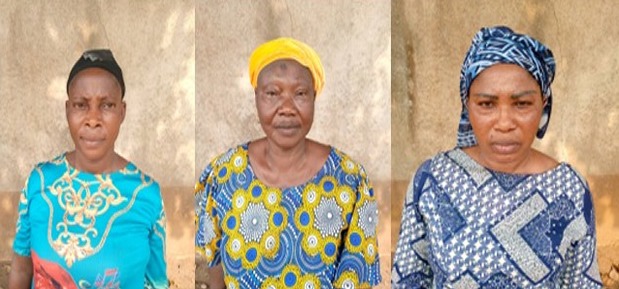
A Federal High Court sitting in Abuja has sentenced three women to six months in jail after they were found guilty of a five-count charge bordering on human trafficking.

According to the National Agency for the Prohibition of Trafficking in Persons (NAPTIP), the women were arrested in March 2015 over allegations of human trafficking.

NAPTIP had charged the women to court in a suit marked FHC/133/2017 containing a six-count charge against them.

The presiding judge ruled that the three women were guilty of contravening Section 23(1)(b) of TIPEA, 2015.

Delivering his judgement, the judge found the accused women guilty of five of the six-count charge levelled against them.

Consequently, they were sentenced to six months imprisonment which was to run concurrently from the time they were arrested in March 2015.

NAPTIP noted that the judgement was given following a plea of allocution by the accused and the present Covid-19 pandemic.

Read AlsoFG failed to take action against military officers involved in sex trafficking in ‎IDP camps, detention centres… US report

The punishment for the offence attracts a minimum term of two years, but not exceeding seven years.without an option of fine.

After the judgement was delivered, the convicts were left to regain their freedom.

Reacting to the judgement, Imaan Sulaiman-Ibrahim, director-general of NAPTIP, lauded the judiciary’s effort in ensuring that justice was delivered, most especially in cases of human trafficking. He also urged victims of human trafficking to ensure that such cases were reported.

A report by the United States Office to Monitor and Combat Trafficking in Persons titled ‘2020 Trafficking in Persons Report: Nigeria,’ states that in 2020, NAPTIP received 943 cases for investigation, completed 210 investigations, prosecuted 64 suspects, and convicted 27 traffickers.

According to the report, this is lower than it did in 2019 where it received 938 cases for investigation, completed 192 investigations, 64 prosecutions, and 43 convictions.