Home Blog Page 1890

APC entrenches hate culture in Nigeria, says Sule Lamido

SULE Lamido, former Governor of Jigawa state says Nigeria’s ruling party, the All Progressives Congress (APC) has brought a culture of hate and division since it assumed power in 2015.

The former governor said this on Wednesday when he featured on ARISE News ahead of the 2023 general elections, the choice will rest solely on Nigerians to decide whether to continue with the APC in power or not.

Lamido said “Nigeria is a very clear history of two pages. The first page is PDP, the second page is APC, this is how it has been for the past 25 or 23 years.

“Page one, PDP, uniting Nigerians, love, respect for each other, mutual understanding, prosperity, stability and then of course development.

“Page two, APC, a culture of hate, a culture of division, a culture of vilifying people, a culture of impunity, mocking Nigerians and calling them whatever.

“So the choice is for Nigerians not for me. They should look at page one- PDP, page two-APC make your choice if you want APC forever, fine so be it, I have no problem,” he said.

READ ALSO: Confusion trails alleged execution of 6 soldiers by Nigerian Army

Meanwhile, Lamido who is also a former minister of foreign affairs described moves by the APC governor to persuade former President Goodluck Jonathan to run for 2023 presidency as hypocrisy.

“I begin to wonder, are we really serious? This is somebody who offered himself, a very humble person, somebody you can reach and talk to any time, yet Nigerians vilified him. They called him all kind of names, they called him clueless, vilified his wife and called her all kind of names.

“And he was defeated and this is somebody who was demonised and called all kind of names and now you want him back? Why was he defeated in the first instance?”

When Lamido was asked if the governors were trying to harass the former president’s mentality, he said “They wanted to defeat him, they wanted to flush him out, they have flush PDP out and now they are going back to him again.

“Are they saying that Buhari has failed them? Are they saying there is no material in the entire APC for them to fill? This is what I call dripping hypocrisy.”

Residents reported influx of Fulani herders into Kwara – Police

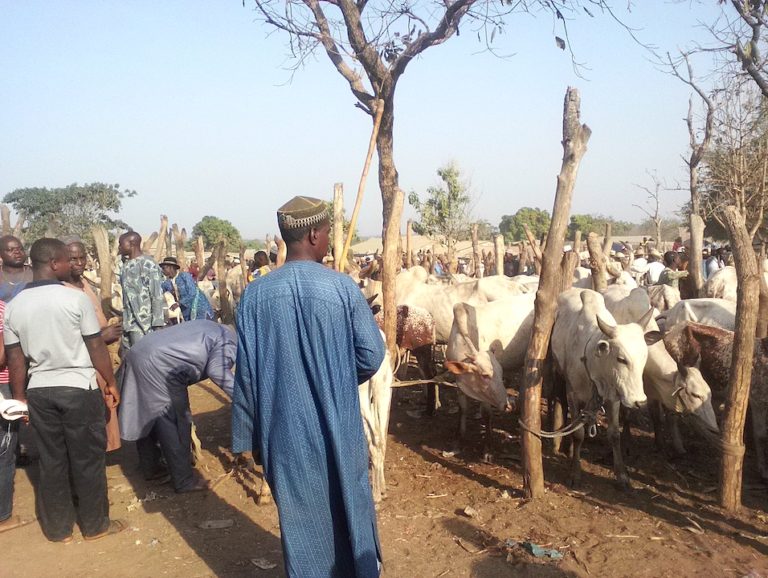
THE Kwara Police Command has confirmed that it received reports from residents concerning the influx of Fulani herders into the state.

Okasanmi Ajayi, Kwara State police public relations officer, confirmed this to The ICIR during a telephone conversation on Wednesday.

According to Ajayi, there had always been presence of Fulani herders in Kwara State, but some residents recently said they noticed an influx of the herders into the state.

However, he noted that there had not been any reported conflict connected to the Fulani herders in the state.

Ajayi added that Mohammed Bagega,  Kwara State commissioner of police, at a stakeholders’ security meeting with traditional rulers, said measures were being taken to prevent a break-down of law and order.

READ ALSO: Buhari creating enemies for Fulani herdsmen – Miyetti Allah

Bagega, who advised traditional rulers not to abdicate their responsibilities as the leaders of their communities to youths, said that the youth should be put on check at all times for peace to reign in their communities.

While the police have not confirmed seeing large numbers of Fulanis herders migrate to the state, there are reports that the Seriki Fulani confirmed that he now lives in Kwara State after he was ‘chased’ out of Igangan town in Oyo.

Saliu Abdulkadri,  Seriki Fulani of Igangan town, left the state following the expiration of an ultimatum issued by Sunday Adeyemo, a youth leader in Oyo State, popularly known as Sunday Igboho.

Seriki Fulani of Igangan town
Saliu Abdulkadri, the Seriki Fulani of Igangan town.
Photo Credit: Premium Times

According to Igboho, Abdulkadiri was responsible for the several violence unleashed on the people of Igangan by Fulani herders.

After the expiration of the ultimatum, Igboho and his team attacked the residence of the embattled Fulani leader in Igangan community.

Igboho and some residents of Igangan town accused the Seriki Fulani of conniving with some Fulani herders to attack residents of the state.

Fulani herders’ crisis has once again generated tension across some southern states in Nigeria due to alleged destruction of farms, kidnapping and attacks on residents by Fulanj herders.

Recently in Ogun State, some residents of some villages in Yewa North Local Government Area were beaten by soldiers for rejecting Fulani herders in their communities.

After the viral video was made public, Igboho visited some villages in Ogun where a series of violence was reported to have been perpetrated.

READ ALSO: APC entrenches hate culture in Nigeria, says Sule Lamido

On Wednesday, a viral video also showed women from Uromi, Edo State who gathered in large numbers to protest Fulani herders.

COVID-19 travel alert: Kogi accuses NCDC, PTF of scaring away investors from state

THE Kogi State government has accused both the Presidential Task Force (PTF) on COVID-19 and the National Centre for Disease Control (NCDC) of scaring away investors through deliberate lies regarding COVID-19 in the state.

The PTF had, on Tuesday, warned against travelling to Kogi after classifying the state, Yobe, Jigawa, Zamfara and Kebbi as ‘high-risk’ COVID-19 states.

The PTF hinged its decision on the state government’s repeated denial of the existence of the deadly disease and its poor attitude towards report tests and isolation centres.

Reacting, Kingsley Fanwo, state commissioner for information and communication, said the government believed that the intention of the PTF and NCDC was to drive away investors from the state.

“Despite their unreliable figures, Kogi emerged as the preferred investment destination of Nigeria in the last quarter of 2020. They felt embarrassed and the best way to hit back is to create a picture of health crisis in the state.”

According to him, Kogi was the first state to procure face masks in thousands and distributed to all the councils, as well as the first to set up a team to combat the spread of the virus.

“We set up isolation centres with state-of-the-art equipment. We have done sensitisation more than any other state. So if we don’t believe that Covid-19 exists, we won’t be doing all we are doing to ensure it doesn’t ravage our state.

“What we said and are still saying is that Covid-19 is not worth all the marketing going on just for a few to make billions; that we do not have to suffer innocent Nigerians while a few smile to the banks,” the commissioner said.

He said that the cases reported in Kogi were fraudulent, saying that the named institutions could not have been working in the interest of public good. He noted that the NCDC data was unreliable and inconsistent.

Visit the ICIR COVID-19 portal

Entangled in a web of conspiracy

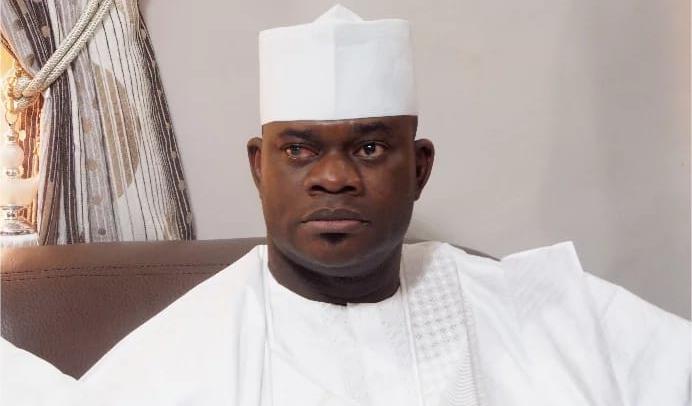
Since the outbreak of COVID-19 in the country, Yahaya Bello, state governor, has consistently denied the existence of COVID-19 in his state and the country.

In July 2020, some unknown gunmen invaded the Federal Medical Centre (FMC) in Lokoja to disrupt a COVID-19 press conference scheduled to demand a COVID-19 screening centre in the state and to address the challenges facing health workers in their fight against the disease. Some medical officers in the facility were severely beaten and injured.

Last month, Bello was seen expressing doubts on the authenticity of the vaccine and alluding that there was no cure for Covid-19, HIV and many other diseases troubling mankind before a crowd of supporters in a viral video.

Citing a 1996 Pfizer vaccine in Kano that had an adverse effect on its recipients, the governor stressed that the vaccine was intended to introduce diseases that would kill Nigerians and the rest of the world.

“Vaccines are being produced in less than one year of COVID-19. There is no vaccine yet for HIV, malaria, cancer, headache and for several other diseases that are killing us. They want to use the (COVID-19) vaccines to introduce the disease that will kill you and us. God forbid,” he had said.

“We should draw our minds back to what happened in Kano during the Pfizer polio vaccines that crippled and killed our children. We have learned our lessons.

“If they say they are taking the vaccines in the public, allow them take their vaccines. Don’t say I said you should not take it, but if you want to take it, open your eyes before you take the vaccines.”

THE Nigeria Governors Forum (NGF) has since distanced itself from Bello’s comments and claims, saying it would only be guided by science and take decisions with public and professional trust.

ALGON revisits abandoned hospital project in Kano

0

By Yakubu SALISU, Kano


TWO months after an investigative story by Metrodaily Nigeria about the abandoned primary healthcare facility project at Garun Sheme, Kunchi LGA of Kano state, where no fewer than 100 women die annually during childbirth due to lack of functional healthcare facilities, the Association of Local Government of Nigeria, ALGON has revisited the site.

The investigation, supported by the John D. And Catherine T. MacArthur Foundation and the International Centre for Investigative Reporting (ICIR) discovered that the project, awarded sometimes in 2007 was abandoned two years later and not completed till date.

The 27 – room hospital and a doctor’s residential quarter has been left uncompleted since 2009 by the contractor , Trustcon Nigeria Limited due to non-release of funds.

However, a recent visit to the village revealed that the Association has revisited the project site after the report, and erected a new signboard showing the contractor’s detail.

When contacted, the District Head, Garun Sheme, Mal. Haruna Abubakar said it was a relief for the villagers to see the new signboard  with the Association’s name and that of the contractor erected at the site of the abandoned project.

Although, he hasn’t been informed about the continuation of the project, he expressed hopes that work would resume soon at the project site.

Abubakar reiterated that the villagers  still experience health complications which often results in death as a result of lack of standard and functioning clinic.

The situation forces the residents to travel to Kano city, a journey of not less than 50 kilometers, or to other places such as  Kazaure, Kunchi town or Bichi to access good hospital.

He said the diseases such as malaria and typhoid pose great threats to the lives of the villagers particularly the children, leading to grave hardship and deaths.

Haruna called on government  to come to their rescue and charges ALGON to speedily  complete the hospital so as to help save the lives of the villagers from more deaths.

Recall this reporter visited the ALGON headquarters in Abuja, October, 2020 where he was informed that the national president who doubles as the chief accountant and resides in Lagos is in custody of the file containing the needed information as such, no information was available at the head office in Abuja.

An FOI letter was subsequently sent requesting information on the Garun Sheme contract but no reply was also given three weeks after the visit.

In the request letter dated October 14, the agency was asked to provide information, including the name of the contractor, contract amount, amounts released so far as well as the contractor’s address but the agency declined the request.

The Member representing Kunchi/Tsanyawa Federal Constituency at the National Assembly, Hon Sani Bala, had previously promised that as a result of these investigations he would henceforth collaborate with the incoming local government chairman from the district to ensure that he includes the completion of the abandoned project as part of his priorities.

He stressed that efforts would be made for the state government to take over the project being an immovable project in the local government.

Hon. Bala stated that the investigation had drawn his attention to the abandoned project and would henceforth ensure the state government come to the aid of the people from the affected villages.

When Contacted over the recent development, Hon. Bala described it as a welcome move saying that the people of Garun Sheme a notable ward in the LGA have peculiar challenges bordering around health and drinkable water.

According to him, in a bid to alleviate the sufferings of the people in the area in terms of access to quality healthcare system, the available primary healthcare hospital in the area was supplied some equipment but much couldn’t have been done because the primary facility has no space to accommodate much.

In view of the above, Hon Sani pledged that he would continue making efforts to ensure that the village’s major problems are presented before the 9th Assembly and included in the budgets for execution.

The lawmaker also promised to see to the completion and functioning of the healthcare centre.


Confusion trails alleged execution of 6 soldiers by Nigerian Army

A coalition of civil society groups has alleged that the Nigerian Army secretly executed six soldiers at the Abacha Barracks, in Abuja, on January 25, 2021.

The ‎Eastern Nigeria’s Rights and Intelligentsia Coalition, in a statement released on February 2, 2021, said it had incontrovertible evidence that the ‎soldiers, who were attached to the Armory Department of the Nigerian Army, Abacha Barracks, Abuja, “were secretly executed under the instruction of now-retired Lt Gen Tukur Yusuf Buratai, a day before he left office on Tuesday, 26th January 2021‎‎.”

The said soldiers –  Prince Ukwuoma, Ebube Isaiah, Amos Azubuike, Ekene Ebere, Moses Anyim and Godwin Uchendu – were allegedly executed after a military court-martial, according to the CSOs coalition.

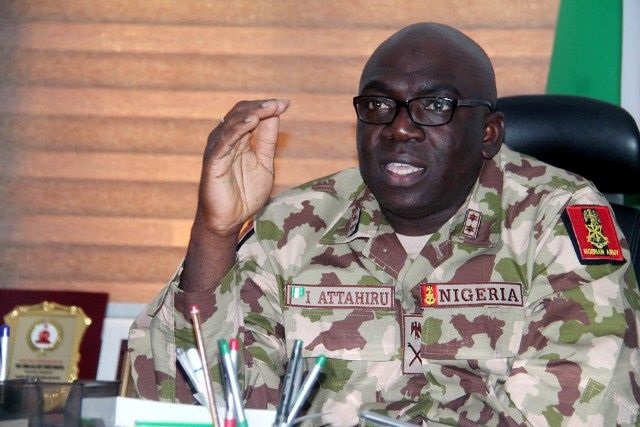
But the Nigerian Army denied the allegation when contacted by The ICIR on Tuesday, February 2, 2021.

The coalition, in the statement, said it obtained information concerning the alleged executions from E. R. Okoroafor, a human rights lawyer.

Okoroafor ‎said he was “contacted by one of the slain soldiers through his family to defend them in the trumped-up charges, executed using hazy and clandestine military court-martial.”

‎The lawyer, according to the coalition, disclosed that the execution was connected to allegations of missing weapons at the Abacha Barracks.

Quoting Okoroafor, the statement issued by the coalition said, “‎Sometime in September 2020, an allegation of missing weapons was made at Abacha Barracks and it was immediately traced to a senior colonel (of Hausa-Fulani origin) and instead of the chief of army staff (Buratai) to issue query and sanction the colonel, he exonerated him on the grounds of his tribe and religion.

Read Also: Investigation: How illegal gold miners milk FCT of billions in revenues

“The COAS turned around and ordered for the arrest of 12 soldiers guarding the armory, comprising six Igbo soldiers, three Yoruba soldiers and three Fulani-Hausa soldiers. In the end, the latter soldiers were shielded and exonerated under questionable circumstances and the six Igbo soldiers made to face secret court martial during which they were blocked and prevented from having access to their families and defense lawyers of their choice.”‎

‎Okoroafor also told the CSOs that his attempts to stand in for the soldiers were stiffly opposed and he was flimsily told by the Army’s Legal Department that “civilian lawyers are not allowed to defend the accused soldiers except military lawyers.”

“Their trial was totally shrouded in secrecy and never disclosed to the public through army statements till date. Likewise, their constitutional right of appeal to Court of Appeal and Supreme Court was also totally denied. The persecuted and executed soldiers protested their innocence to the point of tendering their resignation in protest; all to no avail,” the statement further said. ‎

The statement was jointly signed by ‎‎Emeka Umeagbalasi, International Society for Civil Liberties and Rule of Law‎; Anthony Ejiofor, World Igbo Congress (USA);‎ Uzodimma Nwala, Ala-Igbo Development Foundation (ADF)‎; Justice Chidi, Concerned Elites for Better Society Initiative; Justin Akujieze, Ekwenche Research Institute (USA);‎ Moses Nwaigwe, Biafra Genocide Survivors Group (USA); ‎Austin Okeke, Igbo Board of Deputies (UK); ‎Kanayo Odeluga, Igbo League, Inc.(USA);‎ Mercy Alu, International Association of African Authors and Scholars (USA);‎ Onyenkachi Orjiako, International Society for War Against Lawlessness (USA); ‎Okezie Kelechi, Neighborhood Environment Watch Foundation and Jerry Chidozie Chukwuokoro, International Solidarity for Peace and Human Rights Initiative.

Other signatories were Zulu Ofoelue, Igbo National Council;‎ Ezekwike Chekwube Violet, New Home Mentoring and Development Initiative;‎ Aloysius Attah, Civil Liberties Organization, South-East; Tochukwu Ezeoke, Igbo Ekunie Initiative;‎ Justine Ijeoma, Human Rights Social Development and Environmental Foundation;‎ Vincent Ezekwueme, Civil Liberties Organisation, Anambra State;‎ Peter Onyegiri, Center for Human Rights and Peace Advocacy‎; Alex Olisa, South-East Good Governance Forum‎; Nnana Nelson Nwafor, Foundation for Environment Rights Advocacy and Development;‎ Nkwocha Anozie, Initiative for Ideal Development Emancipatory Leadership;‎ Emeku Uche, Easy-life Initiative for Rural Youths‎; Samuel Njoku, Human Rights Organisation of Nigeria and Ngwobia Ngwobia, Primate Salvation Initiative.‎

Read Also: Lekki shootings, Shitte killings and other lies peddled by Nigerian Army since 2015

  • It’s fake news, says Nigerian Army

When contacted by The ICIR, a spokesman of the Nigerian Army, ‎Sagir Musa, ‎acting director of army public relations, forwarded to our correspondent a montage of pictures of the alleged slain soldiers with ‘Fake News’ written over it.

Musa forwarded the pictures as a response to enquiries made by our correspondent through a WhatsApp conversation.

The army spokesman did no‎t make any other comment.

  • CSOs insist soldiers were executed, claim Nigerian Army never owns up to extra-judicial killings

The ICIR confronted a member of the coalition, Umeagbalasi, with the Nigerian Army’s denial of the alleged execution.

Umeagbalasi, in response, insisted that the six soldiers were actually executed.

“Everybody knows the antecedents of the Nigerian Army – denial is their second name. Look at what happened at Lekki during the #ENDSARS protests where protesters were killed and they are still denying till today. That will tell you the nature of the Nigerian Army,” Umeagbalasi told The ICIR on February 2, 2021.

“People should not be deceived by the army’s denial. T‎here is no way you will expect the army to admit the truth. Let them produce the soldiers if they are not lying,” he added.

  • Lawyer tell The ICIR that soldiers were indeed executed

The ICIR ‎also contacted Okoroafor, the lawyer who said he was representing the alleged executed soldiers.

After obtaining Okoroafor’s contact details from Umeagbalasi, our correspondent informed the lawyer that the Nigerian Army had described his allegations as ‘fake news’.

Okoroafor told our correspondent that he got involved in the case after a US-based brother of one of the soldiers contacted him.

Insisting that the army indeed executed six soldiers, the lawyer said, “Up till now, none of their (six soldiers’) phone numbers is going through and an insider confirmed that they have been executed.”

He said the coalition would, next week, petition the International Criminal Court (ICC) over the alleged executions.

We don’t need Tl to tell us that corruption is getting worse, says Peter Obi

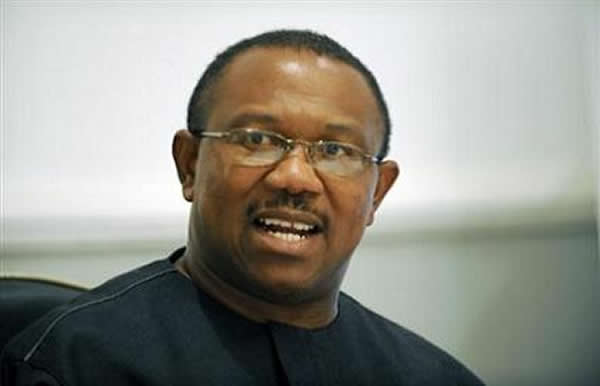
PETER Obi, former governor of Anambra State, says Nigerians do not need Transparency International (TI) to learn that corruption is getting worse in the country.

The former governor said this when he featured on Arise TV’s The Morning Show on Tuesday.

Obi’s statement is coming days after Transparency International rating placed Nigeria as West Africa’s most corrupt country after Guinea-Bissau.

According to him, the low score was an indicator that corruption was perceived to have worsened in the country within the last year.

“Is corruption getting worse in Nigeria? Yes, we don’t need Transparency International to tell us that.

“We see it every day, we witness it every day, it is getting worse and we know it is getting worse.

“We have to respect and learn to listen when people are telling us the truth. It is not only when it favours us. In fact, one of the leadership tools is for you to listen and learn whenever you are criticised genuinely,” Obi said.

Read Also: Corruption: Lawal, Kalu, Amosu, Metuh top EFCC’s major arraignments for 2021

Nigeria slumped to 149 out of 180 on TI’s 2020 Corruption Perception Index (CPI), scoring 25 points out of 100.

These numbers are big blows on Buhari who became Nigeria’s president in 2015 mainly on corruption mantra.

But the Nigerian Presidency, through Garba Shehu, spokesman to Muhammadu Buhari, in a reaction to the rating on the 29th of January, said the persons behind the recently published global corruption ranking were the opposition of the current administration.

Also, Lai Mohammed, minister of information, noted that Nigeria’s low rating in the 2020 Tl Corruption Perception Index (TI-CPI) did not truly reflect the great strides by the country in its fight against corruption.

The minister said the implementation of the various reforms, especially in the area of ease of doing business, was expected to yield positive outcomes in the country’s corruption perception and other relevant assessments in the next 12 to 24 months.

COVID-19: PTF mulls closure of schools

THE Presidential Task Force on COVID-19 has said it won’t hesitate to shut down schools in the country should there be a spike in recorded COVID-19 cases.

“The issue of school reopening is something that the PTF has discussed very extensively. The ministry of education decided to open the schools. Based on our own understanding, it was the states that actually wanted to have the schools reopened,” Mukhtar Muhammed, the PTF national incident manager, stated this in a Twitter video post by the PTF on Monday.

“Now, the PTF is watching this very closely, we are monitoring what is going on and if we find out that cases continue to rise in the country and we start to have incidences in schools, certainly, we will have the schools closed.

“In the first instance, we should have delayed opening of the schools but now that the schools are opened, the PTF will continue to monitor very closely with all the schools to ensure that they institute measures and ensure that people follow as much as possible.”

READ ALSO: COVID-19: PTF warns against visiting Kogi, says state is high-risk

In October, Adamu Adamu, Nigerian minister for education, ordered reopening of all schools in the country after they closed in March owing to the outbreak of COVID-19 in the country.

He added that the federal government consulted with all relevant stakeholders in the education sector before arriving at the decision to reopen all schools.

However, the minister warned that schools that fail to adhere strictly to the outlined COVID-19 safety protocols, risk closure if there is an outbreak from such institutions.

According to the Nigeria Centre for Disease Control (NCDC), Nigeria has recorded over 130,00 COVID-19 cases and over 1,600 fatalities since it reported its index case in February 2020.

N7.1billion Fraud: Delay in Chief Judge’s response stalls retrial of Senate Chief Whip, Orji Kalu

THE Counsel to the Economic Financial Crimes Commission (EFCC) has said that the delay in getting a response from the Chief Judge has stalled the retrial of the Senate Chief Whip, Orji Kalu over alleged 7.1 billion naira.

Chile Okoroma, counsel to the EFCC told the court on Tuesday that a response is being awaited on a pending letter before the Chief Judge, John Terhemba Tsoho demanding over the transfer of the case to Lagos State.

According to Okoroma, the Chief Judge is yet to respond to the letter written following the ruling of the Supreme Court in May 2020 that the prosecution of the former Abia state governor, Kalu be started afresh.

Stating reasons why the case should be transferred, Okoroma noted that none of the allegations levied against the defendant was committed within the jurisdiction of the Federal Capital Territory (FCT).

Okoroma further informed the court that the prosecution has filed an application for the adjournment of the case till a response is gotten from the Chief Judge.

Responding to Okoroma, Inyang Ekwo, the sitting judge on the case ruled that even without the prosecution’s application, the case cannot go on.

However, Ekwo said the case cannot be adjourned without a specific date for a report. Ekwo eventually adjourned the case till June 7, 2020.

On December 5th, 2019, Kalu, his company Slok Nigeria Limited and Udeh Udeogu, a former Director of Finance and Accounts at the Abia State Government House were convicted of 39 count charges bordering on conspiring and diverting over N7 billion from the state’s coffers.

Muhammad Idris, a sitting judge of the Federal High Court, sentenced Kalu to 12 years’ imprisonment and ordered the winding up of his company, Slok Nigeria Limited.

However, following an appeal to the Supreme Court upturned the High court’s judgement on grounds that Idris who delivered the previous judgement had already been elevated to the Court of Appeal, and as such, had no power to sit as a High Court Judge.

The Apex court also held that the fiat that was issued to him (Kalu) by the Court of Appeal pursuant to section 396 (7) of the Administration of Criminal Justice Act was unconstitutional.

Frustration of Nigerian undergraduates learning over a video conferencing app

0

AGUNBIADE Tomiwa is clear about one thing, virtual learning is not working for her.  Since the programme was announced by the University of Ilorin in January as a way to curtail the spread of the coronavirus and regain lost time after a ten-month halt in academic activities due to COVID-19 restrictions, she has not gained much learning.

The first-year student of Aquaculture and Fisheries at the University of Ilorin has no prior experience of attending virtual classes. Like most students in public tertiary institutions in Nigeria, online classes are a new experience.

She struggled with virtual learning, especially in classes such as Anatomy, Advanced Mathematics and General Studies. Her internet connection sometimes gets slow, and she usually has a hard time getting a chance to ask questions during the live classes.

“There is no way the virtual classes is going to work with the current challenges of poor network, and the lack of interaction with the lecturers. It is as good as just reading on your own,” she said.

According to Tomiwa, the online video conferencing classes organised by the lecturer are held on Zoom and Google Meet where a link to each class is shared with students offering the course to enable them to prepare in advance,  but the use of these dual tools depends on the flexibility of the lecturer to simplify a classroom structure on a video call.

More than 1,000 students across six departments in Tomiwa’s faculty are registered for the class, but nearly 50 per cent of the participating students are logged out of the online lectures because the free version of Zoom only allows maximum participants of 300 people.

The ICIR examined the University of Ilorin’s 2021 budgetary allocation by the Federal Government which did not specify any allocation for Covid-19 expenditure to cater for video conferencing applications for lecturers or students.

“It is difficult for students like me to attend these Zoom classes because there is a large pool of students who are on the queue waiting to get into the class so it comes down to luck before you get to attend your lectures.

“Last week, one of my lecturers couldn’t even get into a Zoom class he organised because the class was filled beyond capacity and no single student in the online class was willing to leave so he could log in. Eventually,  the class had to be rescheduled,” she said.

On January 18, the Federal Government directed public universities to resume academic activities after the Academic Staff Union of Universities, ASUU called off its strike.

But there was a problem of Second wave of covid-19 to deal with. Data obtained from the Nigeria Center for Disease Control, NCDC coronavirus resource portal shows that Nigeria’s infection rate is growing rapidly having recorded 42,950 new cases in January which is the highest monthly number of infections since the outset of the virus in the country last year.

It has been reported, however, that the spike in the number of Covid-19 cases in Nigeria is likely to decline if remote learning in Nigerian universities is successful. Yet the challenges posed by poor internet connectivity, access to computers and adaptability to the online video conferencing tools by the lecturers jeopardise the process and put students in harm’s way.

READ ALSO: COVID-19: Virtual learning widens digital divide between Nigeria’s public and private schools

Attending class on a mobile phone

Opeyemi Kosemani,  a 100 level student of aquaculture at the University of Ilorin was trying to grasp the anatomy of a fish as she flipped open her notebook, pen in one hand and her phone in the other. She found out that this method of learning between slides and the chatbox was difficult.

Opeyemi muted herself on the Zoom class and turned off the camera, yet these functions are sometimes too much for her mobile phone to handle.

“The online class on Zoom allows us to see the names of participating students but the lecturers will still ask us to take attendance and for me using a phone, this is challenging. I will have to start scrolling down the chatbox to get the attendance sheet and other students will continue to distribute attendance sheets so the lecturers usually have little control of the class.

“Using a phone to attend online classes is a difficult task, sometimes I spend time zooming in and out of the page when the lecturer is trying to explain equations on the board especially courses on statistics and mathematics,” she said.

The user experience for mobile phone users in an online class in Nigeria’s public universities differ, Aminat Rufai, a 400 level student of Mass Communications of Bayero University, Kano told The ICIR that the virtual classes are only used for courses on general studies which are theory-based courses.

“I don’t have problems with the Zoom classes in my school because we are divided into groups so the lecturers can control the classes with ease. I am comfortable with using my phone for the classes since they are not congested because my courses are not technical,” she said.

Zoom became a popular video conferencing tool after the spread of COVID-19 made face-to-face meetings risky.

In South Africa, the National Student Financial Aid Scheme, NSFAS, approved the disbursement of more than 700,000 laptops for the 2020 academic year to enable South African university students to cope with the disruption of normal classroom interaction since the outbreak of the pandemic.

According to records from the Budget Office, Nigeria’s education ministry did not include any virtual learning intervention measure in its 2021 approved budget to assist lecturers and students in public universities after the seven-month nationwide strike was called off.

Olupelumi Gift, a final year student of the Department of English and Literary Studies at the Federal University, Oye, Ekiti State says she attends classes using her phone on Telegram, an informal distance-learning app where her lecturer sends a PDF document of their course to the students in a group asking them to study the document.

The app allows her lecturers to share their lessons using voice notes, videos, and photos in group chats which resembles a real-life classroom.

“We have not resumed fully so some lecturers send us materials on Telegram asking us to read without explanations, hopefully in the coming weeks we would have fully grasped this online learning programme in my school,” she said.

The case of the University of Lagos is even laughable, yet instructive according to a student.

The University in a newspaper report announced January 25, as the resumption date for academic activities which would commence with online classes due to the second wave of COVID-19. But the announcement was made on a print media instead of sending a message to students virtually.

In a tweet by @ope_yemie which was retweeted by over 3,000 people, she alleged that the University of Lagos had resorted to publishing the resumption date in a newspaper instead of sending emails to students to notify them of the development.

Bridging the wide gap

According to a 2020 research published on the Journal of American Medical Association for Internal Medicine, coronavirus infections stems from campuses since young people who contract the virus are far less likely to die than older people.

However, the re-opening of universities across the country could increase the chances of community transmission among student population if the virtual learning programme is unsuccessful.

READ ALSO: COVID worsens problems of Nigerian autistic children, and their parents

Ifeanyi Anorue, a former head of mass communication department at the University of Nigeria, Nsukka told The ICIR that the virtual learning programme at UNN is riddled with network challenges and both lecturers and students are burdened by additional data expenses.

“There is nothing that can replace the interactive person-to-person relationship in class but since online teaching is our new reality poor network is a major challenge. Sometimes connecting with students through video calls might take hours and cause classes to be re-scheduled.

“Apart, from the network problems, we are experiencing nobody has put in the financial toll of buying data on both students and lecturers because every expense on data comes from your pocket,” he said.

Anorue also explained that lecturers have adapted to the reality where raised a digital hand means to speak during a session, however, they can’t read the facial expressions or body language of students to gauge whether they were engaged or learning.

The pandemic ushered in Zoom’s popularity which many educators adjusted its settings to make it easier for students to join virtual classrooms which showcase as much as 49 people at once on a screen.

Its features boast of real-time noise suppression in its conference-call function to reduce background sounds from keyboards alongside custom backgrounds.

The popularity of the video conferencing application raised a situation called “Zoombombing” where people gain unauthorised access to a meeting and disrupt video meetings by sharing pornographic images e.t.c but Zoom has responded by adjusting default settings for users.

David Olasupo, a software developer with Cuesoft Incorporated, Nigeria, said the country’s virtual learning programme would be properly harnessed if the requisite infrastructure in universities is available.

“The video conferencing classes held at these universities don’t have virtual augmented classes for technical courses which is one of the major core of online learning. Where we have simulations of live events or tools which is beyond video calls,” he said.

Ugandan Election: Opposition leader, Bobi Wine, in court to challenge Museveni’s victory

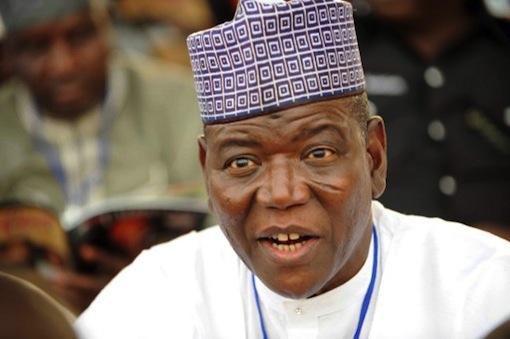
ROBERT Kyagulanyi, better known as Bobi Wine, has approached the Ugandan Supreme Court to seek redress over the recently conducted presidential election that kept Youveri Museveni in power for more than 35 years.

Wine’s legal team has filed the petition on behalf of the opposition leader and his party, the National Unity Platform, urging the apex court to declare the election rigged.

One of the counsels to Wine and NUP, Anthony Wameli, said the team had gathered ‘glaring evidence’ to prove that the election result announced by the Electoral Commission was not valid.

Another member of the legal team, George Musisi, a senior legal associate at Foundation for Human Rights Initiative, Kampala, also reiterated that the demand of the party and the candidate was to have the election cancelled and repeated.

Musisi said during the January 14 election, there was ‘outright ballot-stuffing’ and intimidation at the polls.

Read Also: Mass protest rocks Caracas over Venezuelan diplomat detained in Cape Verde

“There was outright ballot-stuffing, there was intimidation of NUP agents and supporters, some were arrested on the eve of [last month’s] election, there was pre-ticking of ballots,” said Musisi.

According to the Ugandan Electoral Commission, Museveni won the election with 58.64 percent of the total votes cast while his main challenger, Wine, garnered 34.83 per cent of the total votes cast.

How the election was conducted

During the electioneering period, there were several reported human rights violations and intimidation of the opposition in the country.

There were reports that some members of the NUP were arrested arbitrarily by the Ugandan military. While some were released, some are still in military detention as the whereabouts of others remain unknown, according to Wine.

Also, a few days to the election, the Ugandan government led by Museveni shut down the internet, arguing that ‘it was no good’ to its people.

Both the European Union and the United States did not observe the election due to the government’s failure to implement previous electoral recommendations and accredit electoral observers respectively, they said.

Post-election, Wine, the opposition leader was placed on arbitrary house arrest by the Ugandan military for more than 10 days until a court ordered the security operatives to vacate his residence.