Home Blog Page 1892

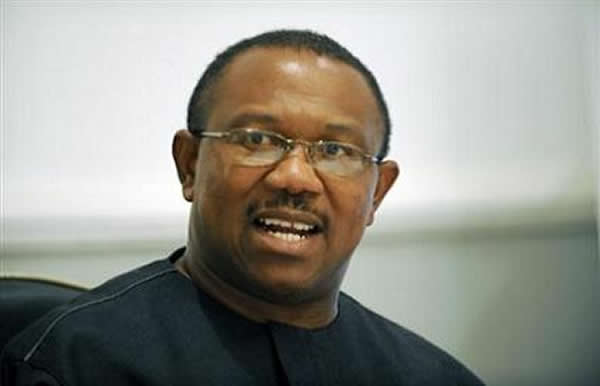
We don’t need Tl to tell us that corruption is getting worse, says Peter Obi

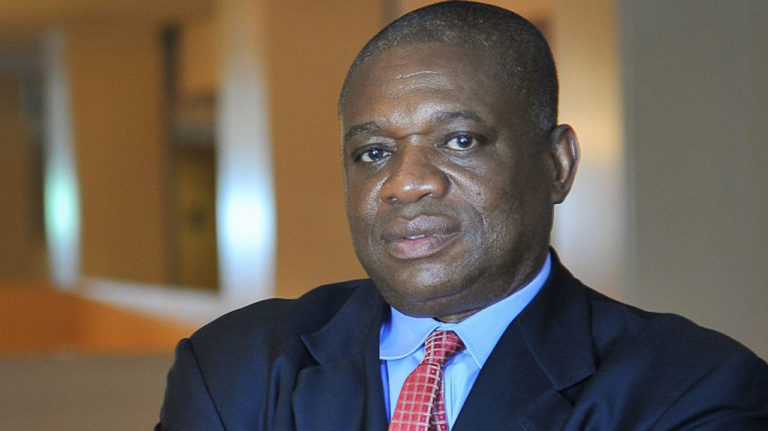
PETER Obi, former governor of Anambra State, says Nigerians do not need Transparency International (TI) to learn that corruption is getting worse in the country.

The former governor said this when he featured on Arise TV’s The Morning Show on Tuesday.

Obi’s statement is coming days after Transparency International rating placed Nigeria as West Africa’s most corrupt country after Guinea-Bissau.

According to him, the low score was an indicator that corruption was perceived to have worsened in the country within the last year.

“Is corruption getting worse in Nigeria? Yes, we don’t need Transparency International to tell us that.

“We see it every day, we witness it every day, it is getting worse and we know it is getting worse.

“We have to respect and learn to listen when people are telling us the truth. It is not only when it favours us. In fact, one of the leadership tools is for you to listen and learn whenever you are criticised genuinely,” Obi said.

Read Also: Corruption: Lawal, Kalu, Amosu, Metuh top EFCC’s major arraignments for 2021

Nigeria slumped to 149 out of 180 on TI’s 2020 Corruption Perception Index (CPI), scoring 25 points out of 100.

These numbers are big blows on Buhari who became Nigeria’s president in 2015 mainly on corruption mantra.

But the Nigerian Presidency, through Garba Shehu, spokesman to Muhammadu Buhari, in a reaction to the rating on the 29th of January, said the persons behind the recently published global corruption ranking were the opposition of the current administration.

Also, Lai Mohammed, minister of information, noted that Nigeria’s low rating in the 2020 Tl Corruption Perception Index (TI-CPI) did not truly reflect the great strides by the country in its fight against corruption.

The minister said the implementation of the various reforms, especially in the area of ease of doing business, was expected to yield positive outcomes in the country’s corruption perception and other relevant assessments in the next 12 to 24 months.

COVID-19: PTF mulls closure of schools

THE Presidential Task Force on COVID-19 has said it won’t hesitate to shut down schools in the country should there be a spike in recorded COVID-19 cases.

“The issue of school reopening is something that the PTF has discussed very extensively. The ministry of education decided to open the schools. Based on our own understanding, it was the states that actually wanted to have the schools reopened,” Mukhtar Muhammed, the PTF national incident manager, stated this in a Twitter video post by the PTF on Monday.

“Now, the PTF is watching this very closely, we are monitoring what is going on and if we find out that cases continue to rise in the country and we start to have incidences in schools, certainly, we will have the schools closed.

“In the first instance, we should have delayed opening of the schools but now that the schools are opened, the PTF will continue to monitor very closely with all the schools to ensure that they institute measures and ensure that people follow as much as possible.”

READ ALSO: COVID-19: PTF warns against visiting Kogi, says state is high-risk

In October, Adamu Adamu, Nigerian minister for education, ordered reopening of all schools in the country after they closed in March owing to the outbreak of COVID-19 in the country.

He added that the federal government consulted with all relevant stakeholders in the education sector before arriving at the decision to reopen all schools.

However, the minister warned that schools that fail to adhere strictly to the outlined COVID-19 safety protocols, risk closure if there is an outbreak from such institutions.

According to the Nigeria Centre for Disease Control (NCDC), Nigeria has recorded over 130,00 COVID-19 cases and over 1,600 fatalities since it reported its index case in February 2020.

N7.1billion Fraud: Delay in Chief Judge’s response stalls retrial of Senate Chief Whip, Orji Kalu

THE Counsel to the Economic Financial Crimes Commission (EFCC) has said that the delay in getting a response from the Chief Judge has stalled the retrial of the Senate Chief Whip, Orji Kalu over alleged 7.1 billion naira.

Chile Okoroma, counsel to the EFCC told the court on Tuesday that a response is being awaited on a pending letter before the Chief Judge, John Terhemba Tsoho demanding over the transfer of the case to Lagos State.

According to Okoroma, the Chief Judge is yet to respond to the letter written following the ruling of the Supreme Court in May 2020 that the prosecution of the former Abia state governor, Kalu be started afresh.

Stating reasons why the case should be transferred, Okoroma noted that none of the allegations levied against the defendant was committed within the jurisdiction of the Federal Capital Territory (FCT).

Okoroma further informed the court that the prosecution has filed an application for the adjournment of the case till a response is gotten from the Chief Judge.

Responding to Okoroma, Inyang Ekwo, the sitting judge on the case ruled that even without the prosecution’s application, the case cannot go on.

However, Ekwo said the case cannot be adjourned without a specific date for a report. Ekwo eventually adjourned the case till June 7, 2020.

On December 5th, 2019, Kalu, his company Slok Nigeria Limited and Udeh Udeogu, a former Director of Finance and Accounts at the Abia State Government House were convicted of 39 count charges bordering on conspiring and diverting over N7 billion from the state’s coffers.

Muhammad Idris, a sitting judge of the Federal High Court, sentenced Kalu to 12 years’ imprisonment and ordered the winding up of his company, Slok Nigeria Limited.

However, following an appeal to the Supreme Court upturned the High court’s judgement on grounds that Idris who delivered the previous judgement had already been elevated to the Court of Appeal, and as such, had no power to sit as a High Court Judge.

The Apex court also held that the fiat that was issued to him (Kalu) by the Court of Appeal pursuant to section 396 (7) of the Administration of Criminal Justice Act was unconstitutional.

Frustration of Nigerian undergraduates learning over a video conferencing app

0

AGUNBIADE Tomiwa is clear about one thing, virtual learning is not working for her.  Since the programme was announced by the University of Ilorin in January as a way to curtail the spread of the coronavirus and regain lost time after a ten-month halt in academic activities due to COVID-19 restrictions, she has not gained much learning.

The first-year student of Aquaculture and Fisheries at the University of Ilorin has no prior experience of attending virtual classes. Like most students in public tertiary institutions in Nigeria, online classes are a new experience.

She struggled with virtual learning, especially in classes such as Anatomy, Advanced Mathematics and General Studies. Her internet connection sometimes gets slow, and she usually has a hard time getting a chance to ask questions during the live classes.

“There is no way the virtual classes is going to work with the current challenges of poor network, and the lack of interaction with the lecturers. It is as good as just reading on your own,” she said.

According to Tomiwa, the online video conferencing classes organised by the lecturer are held on Zoom and Google Meet where a link to each class is shared with students offering the course to enable them to prepare in advance,  but the use of these dual tools depends on the flexibility of the lecturer to simplify a classroom structure on a video call.

More than 1,000 students across six departments in Tomiwa’s faculty are registered for the class, but nearly 50 per cent of the participating students are logged out of the online lectures because the free version of Zoom only allows maximum participants of 300 people.

The ICIR examined the University of Ilorin’s 2021 budgetary allocation by the Federal Government which did not specify any allocation for Covid-19 expenditure to cater for video conferencing applications for lecturers or students.

“It is difficult for students like me to attend these Zoom classes because there is a large pool of students who are on the queue waiting to get into the class so it comes down to luck before you get to attend your lectures.

“Last week, one of my lecturers couldn’t even get into a Zoom class he organised because the class was filled beyond capacity and no single student in the online class was willing to leave so he could log in. Eventually,  the class had to be rescheduled,” she said.

On January 18, the Federal Government directed public universities to resume academic activities after the Academic Staff Union of Universities, ASUU called off its strike.

But there was a problem of Second wave of covid-19 to deal with. Data obtained from the Nigeria Center for Disease Control, NCDC coronavirus resource portal shows that Nigeria’s infection rate is growing rapidly having recorded 42,950 new cases in January which is the highest monthly number of infections since the outset of the virus in the country last year.

It has been reported, however, that the spike in the number of Covid-19 cases in Nigeria is likely to decline if remote learning in Nigerian universities is successful. Yet the challenges posed by poor internet connectivity, access to computers and adaptability to the online video conferencing tools by the lecturers jeopardise the process and put students in harm’s way.

READ ALSO: COVID-19: Virtual learning widens digital divide between Nigeria’s public and private schools

Attending class on a mobile phone

Opeyemi Kosemani,  a 100 level student of aquaculture at the University of Ilorin was trying to grasp the anatomy of a fish as she flipped open her notebook, pen in one hand and her phone in the other. She found out that this method of learning between slides and the chatbox was difficult.

Opeyemi muted herself on the Zoom class and turned off the camera, yet these functions are sometimes too much for her mobile phone to handle.

“The online class on Zoom allows us to see the names of participating students but the lecturers will still ask us to take attendance and for me using a phone, this is challenging. I will have to start scrolling down the chatbox to get the attendance sheet and other students will continue to distribute attendance sheets so the lecturers usually have little control of the class.

“Using a phone to attend online classes is a difficult task, sometimes I spend time zooming in and out of the page when the lecturer is trying to explain equations on the board especially courses on statistics and mathematics,” she said.

The user experience for mobile phone users in an online class in Nigeria’s public universities differ, Aminat Rufai, a 400 level student of Mass Communications of Bayero University, Kano told The ICIR that the virtual classes are only used for courses on general studies which are theory-based courses.

“I don’t have problems with the Zoom classes in my school because we are divided into groups so the lecturers can control the classes with ease. I am comfortable with using my phone for the classes since they are not congested because my courses are not technical,” she said.

Zoom became a popular video conferencing tool after the spread of COVID-19 made face-to-face meetings risky.

In South Africa, the National Student Financial Aid Scheme, NSFAS, approved the disbursement of more than 700,000 laptops for the 2020 academic year to enable South African university students to cope with the disruption of normal classroom interaction since the outbreak of the pandemic.

According to records from the Budget Office, Nigeria’s education ministry did not include any virtual learning intervention measure in its 2021 approved budget to assist lecturers and students in public universities after the seven-month nationwide strike was called off.

Olupelumi Gift, a final year student of the Department of English and Literary Studies at the Federal University, Oye, Ekiti State says she attends classes using her phone on Telegram, an informal distance-learning app where her lecturer sends a PDF document of their course to the students in a group asking them to study the document.

The app allows her lecturers to share their lessons using voice notes, videos, and photos in group chats which resembles a real-life classroom.

“We have not resumed fully so some lecturers send us materials on Telegram asking us to read without explanations, hopefully in the coming weeks we would have fully grasped this online learning programme in my school,” she said.

The case of the University of Lagos is even laughable, yet instructive according to a student.

The University in a newspaper report announced January 25, as the resumption date for academic activities which would commence with online classes due to the second wave of COVID-19. But the announcement was made on a print media instead of sending a message to students virtually.

In a tweet by @ope_yemie which was retweeted by over 3,000 people, she alleged that the University of Lagos had resorted to publishing the resumption date in a newspaper instead of sending emails to students to notify them of the development.

Bridging the wide gap

According to a 2020 research published on the Journal of American Medical Association for Internal Medicine, coronavirus infections stems from campuses since young people who contract the virus are far less likely to die than older people.

However, the re-opening of universities across the country could increase the chances of community transmission among student population if the virtual learning programme is unsuccessful.

READ ALSO: COVID worsens problems of Nigerian autistic children, and their parents

Ifeanyi Anorue, a former head of mass communication department at the University of Nigeria, Nsukka told The ICIR that the virtual learning programme at UNN is riddled with network challenges and both lecturers and students are burdened by additional data expenses.

“There is nothing that can replace the interactive person-to-person relationship in class but since online teaching is our new reality poor network is a major challenge. Sometimes connecting with students through video calls might take hours and cause classes to be re-scheduled.

“Apart, from the network problems, we are experiencing nobody has put in the financial toll of buying data on both students and lecturers because every expense on data comes from your pocket,” he said.

Anorue also explained that lecturers have adapted to the reality where raised a digital hand means to speak during a session, however, they can’t read the facial expressions or body language of students to gauge whether they were engaged or learning.

The pandemic ushered in Zoom’s popularity which many educators adjusted its settings to make it easier for students to join virtual classrooms which showcase as much as 49 people at once on a screen.

Its features boast of real-time noise suppression in its conference-call function to reduce background sounds from keyboards alongside custom backgrounds.

The popularity of the video conferencing application raised a situation called “Zoombombing” where people gain unauthorised access to a meeting and disrupt video meetings by sharing pornographic images e.t.c but Zoom has responded by adjusting default settings for users.

David Olasupo, a software developer with Cuesoft Incorporated, Nigeria, said the country’s virtual learning programme would be properly harnessed if the requisite infrastructure in universities is available.

“The video conferencing classes held at these universities don’t have virtual augmented classes for technical courses which is one of the major core of online learning. Where we have simulations of live events or tools which is beyond video calls,” he said.

Ugandan Election: Opposition leader, Bobi Wine, in court to challenge Museveni’s victory

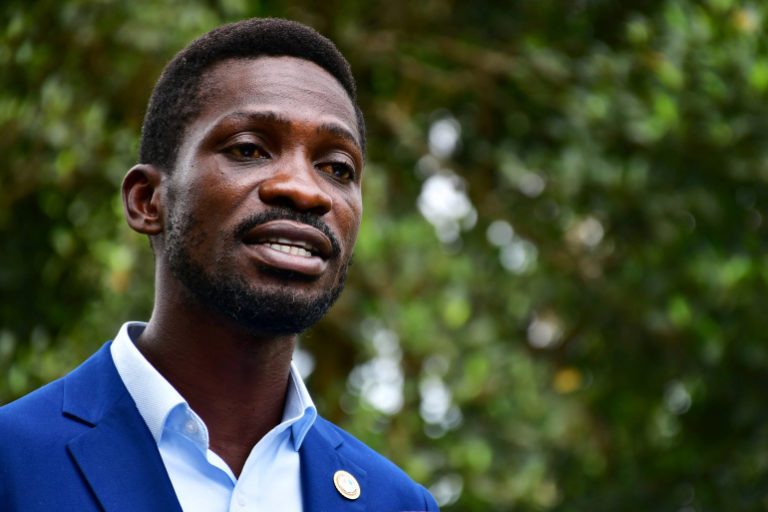
ROBERT Kyagulanyi, better known as Bobi Wine, has approached the Ugandan Supreme Court to seek redress over the recently conducted presidential election that kept Youveri Museveni in power for more than 35 years.

Wine’s legal team has filed the petition on behalf of the opposition leader and his party, the National Unity Platform, urging the apex court to declare the election rigged.

One of the counsels to Wine and NUP, Anthony Wameli, said the team had gathered ‘glaring evidence’ to prove that the election result announced by the Electoral Commission was not valid.

Another member of the legal team, George Musisi, a senior legal associate at Foundation for Human Rights Initiative, Kampala, also reiterated that the demand of the party and the candidate was to have the election cancelled and repeated.

Musisi said during the January 14 election, there was ‘outright ballot-stuffing’ and intimidation at the polls.

Read Also: Mass protest rocks Caracas over Venezuelan diplomat detained in Cape Verde

“There was outright ballot-stuffing, there was intimidation of NUP agents and supporters, some were arrested on the eve of [last month’s] election, there was pre-ticking of ballots,” said Musisi.

According to the Ugandan Electoral Commission, Museveni won the election with 58.64 percent of the total votes cast while his main challenger, Wine, garnered 34.83 per cent of the total votes cast.

How the election was conducted

During the electioneering period, there were several reported human rights violations and intimidation of the opposition in the country.

There were reports that some members of the NUP were arrested arbitrarily by the Ugandan military. While some were released, some are still in military detention as the whereabouts of others remain unknown, according to Wine.

Also, a few days to the election, the Ugandan government led by Museveni shut down the internet, arguing that ‘it was no good’ to its people.

Both the European Union and the United States did not observe the election due to the government’s failure to implement previous electoral recommendations and accredit electoral observers respectively, they said.

Post-election, Wine, the opposition leader was placed on arbitrary house arrest by the Ugandan military for more than 10 days until a court ordered the security operatives to vacate his residence.

Again, FG extends deadline for NIN-to-SIM integration

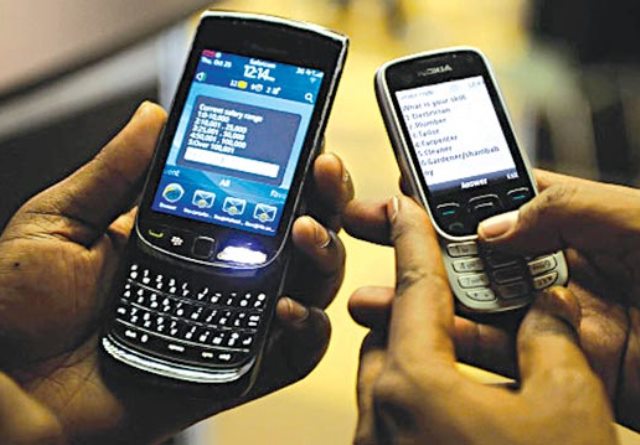
THE federal government has, again, extended the deadline for the ongoing integration exercise of the National Identification Number (NIN) and Subscriber Identity Module (SIM) by eight weeks.

According to Channels Television, the deadline was contained in a joint statement by Ikechukwu Adinde​​​, director, public affairs, Nigerian Communications Commission (NCC) and Kayode Adegoke, director of corporate affairs, ​Nigeria Identity Management Commission (NIMC) on Monday.

”Dr Pantami stated that the extension is to give Nigerians and legal residents more time to integrate their NIN with the SIM,” the statement had said.

”The meeting was chaired by the Honourable Minister and attended by key stakeholders, including the EVC/CEO of the Nigerian Communications Commission (NCC), DG/CEO of the National Identity Management Commission (NIMC),DG/CEO of the National Information Technology Development Agency (NITDA) and the chairman of the Association of Licensed Telecommunications Operators of Nigeria (ALTON). Others include the MD/CEOs of MTN, Airtel, 9Mobile, Ntel, Spectranet and SMILE, as well as the COO of Globacom.

”It was reported that a total of 56.18 million NINs have been collected by the mobile network operators. Each NIN is usually tied to an average of 3 to 4 SIMs and this infers that the current figure accounts for a significant portion of the existing SIMs. This number of NINs collected represents a significant increase when compared with the 47.8 million reported by the Technical Committee on January 18, 2021.

”Furthermore, over 1060 registration centres for NIN have been activated and made operational by NIMC across the country, while Mobile Network Operators (MNOs) have opened hundreds of centres and are rapidly deploying resources to open thousands of other NIN enrolment centres across states of the country. This is in line with the policy of the administration of President Muhammad Buhari to enhance security and make the process of obtaining NINs easier for Nigerians.”

The is the second time the registration has been extended by the Nigerian government since it directed telecoms service providers to block SIM cards not linked to NIN by December 30, 2020, with a vow to withdraw licenses of any service providers who failed to so.

The directive has led to mammoth crowds across major cities around the country as people struggle to get themselves registered, leading to flagrant abandonment of COVID-19 protocol.

The exercise has also been characterised by allegations of extortion by officials of the National Identity Management Commission (NIMC).

Wike’s N500m donation to Sokoto can construct, rehabilitate 17 health centres in Rivers

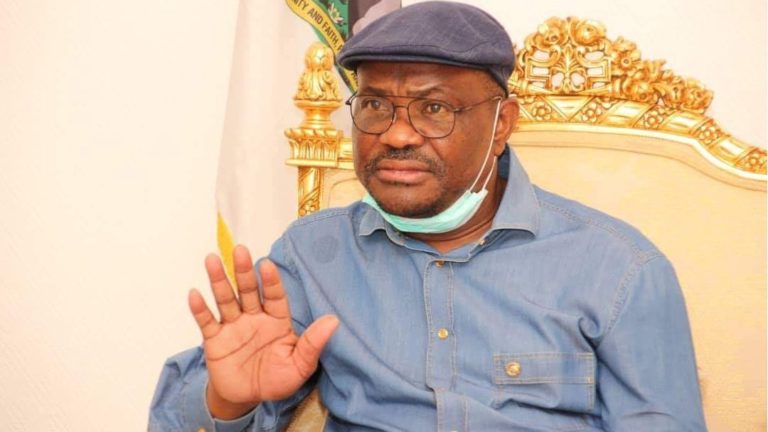
NYESOM Wike,  Rivers State governor, recently donated 500 million naira to Sokoto State government over a fire incident that affected some farmers in the North-West state.

Though the gesture may make political sense to Wike and his supporters, it flies in the face of economics.

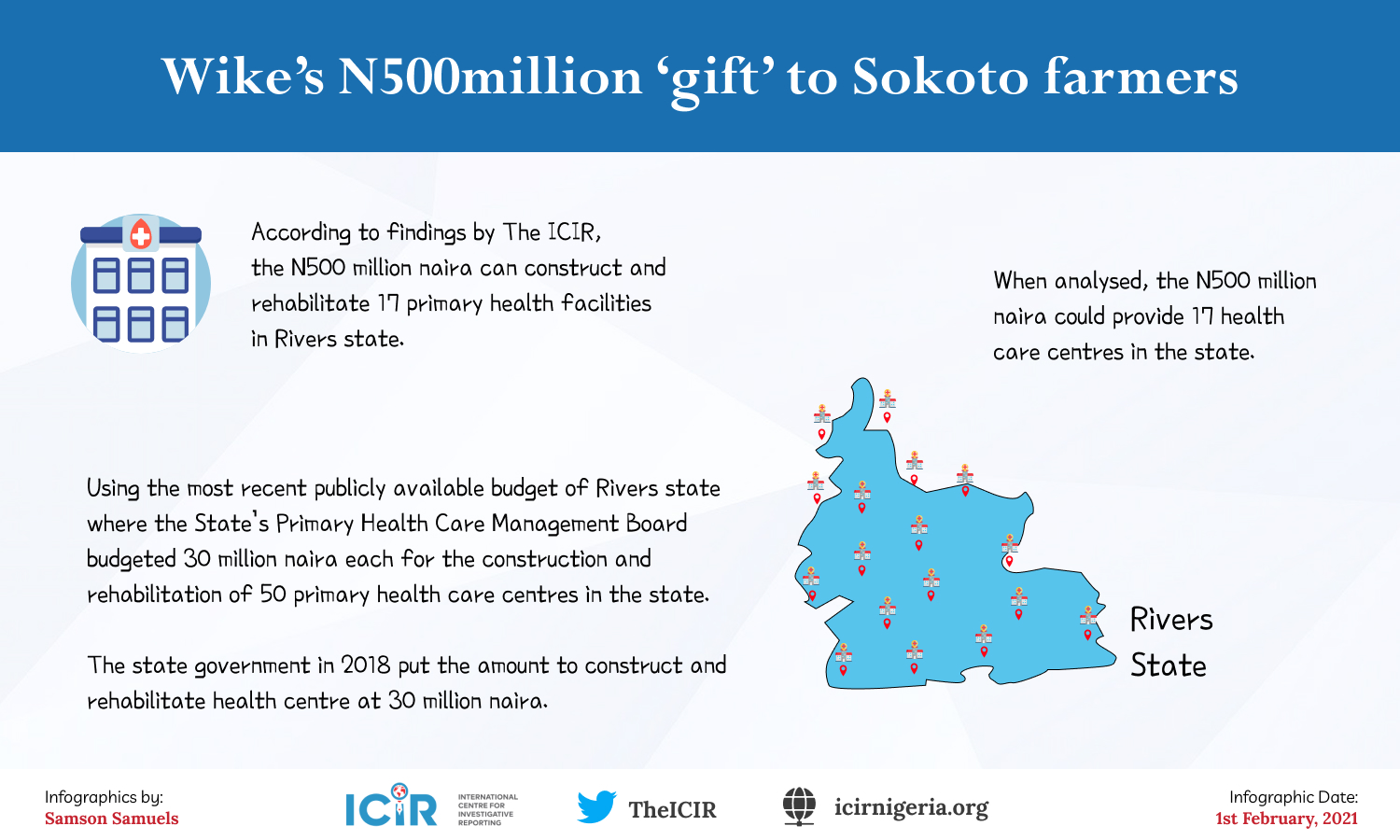
The ICIR checks show that the amount can build and rehabilitate 17 primary health centres (PHCs) in Rivers, his own state.

According to the statement signed by  Muhammed Bello, spokesman to Tambuwal, the donation was meant to support the state’s rebuilding efforts and provide assistance to the affected traders.

“Rivers State government has pledged the sum of half a billion naira to support Sokoto State government in rebuilding the Sokoto central market ravaged by fire on Tuesday morning,” the statement read in part.

However, some are of the opinion that instead of donating to another state government, Wike should have focused on providing for the welfare of his people, for which he was elected. They argue that there are pending basic issues the governor should have channelled the 500 million naira proposed ‘gift’ to.

Some have tagged the governor’s promise as a political gesture, given that Wike belongs to the same political party as Aminu Tambuwal.

Others associate it with the politics of 2023. Wike was heavily criticised by social media users who condemned the governor’s action as financial recklessness and an act to score cheap political points.

N500 million can construct, rehabilitate 17 health facilities in Rivers

According to findings by The ICIR, the 500 million naira can construct and rehabilitate 17 primary health facilities in Rivers State.

Using the most recent publicly available budget of Rivers State, where the State’s Primary Health Care Management Board budgeted 30 million naira each for the construction and rehabilitation of 50 primary health care centres in the state, the ICIR’s calculations show that the amount donated by Wike could build 17 PHCs.

The state government in 2018 put the amount to construct and rehabilitate each health centre at 30 million naira.

As highlighted earlier, the 500 million naira can provide 17 PHCs in the state.

Out of the 23 local governments in the state, if 17 of them are equipped with quality health facilities, they would lessen the health infrastructural deficit in the state, most especially in the middle of a pandemic.

Read Also: Corruption: Lawal, Kalu, Amosu, Metuh top EFCC’s major arraignments for 2021

APC, Group condemn governor’s action

Sobomoba Jackrich, convener of a civil society organisation called Network for Defence of Democracy and Good Governance (NDDGG) said the governor did not have a clear vision for the future of the Rivers State.

Jackrich said this in a statement on behalf of the group, stressing that Sokoto was not a territory of Rivers State.

“The NDDGG wish to sound it loud and clear that Sokoto is not a territory of Rivers warranting such unaccountable obligation,” the statement read in part.

He added that it was also worrisome that the governor made such promise a few days after confirming the receipt of 78.9 billion naira from the federal government as a refund for constructing federal roads.

“The action of the governor clearly proves that he does not seem to have a protected future at stake or vision for our dear state,” the group said.

According to NDDGG, Wike was unbothered about how Rivers State ranked as one of the states with the highest unemployment rate in Nigeria.

Chris Finebone, a former spokesperson for the Rivers State All Progressives Congress (APC), described the proposed gift as another politically motivated donation.

“People believe that Governor Wike is trying very hard to buy the 2023 presidential or vice-presidential ticket of the PDP with Rivers taxpayers’ money. This is the latest in the string of politically-motivated donations the governor has been making across Nigeria,” Finebone said.

He added that the governor who gave out donations to Sokoto farmers had, in the past, ignored some victims of flood and market fire disasters in his own state.

“This unbridled profligacy flies in the face of the fact that Rivers pensioners are owed gratuities and pension while …even some victims of market fire disasters and flooding in the state are ignored by the governor,” he noted.

Defending the governor’s action, Paulinus Nsirim, state commissioner for information and communications, said : “As Rivers people, we have our challenges but that doesn’t mean we have lost our sense of humanity and this is what Governor Wike epitomises with great equanimity and humility.”

NBS Job Data on Rivers State

Despite its humongous earnings as an oil-producing state, Rivers is among the top three states with worst unemployment numbers in Nigeria. According to the National Bureau of Statistics (NBS), Rivers State unemployment rate is 43.7 percent, implying that almost one in every two citizens of the state is jobless. The 500 million naira donated by Wike to Tambuwal can pay the minimum wage of 30,000 naira for 1,388 jobless citizens in the state for one year. It can also set up micro businesses for at least 500 jobless people in Rivers, providing 1 million naira each to them.

According to Waheed Olagunju, former acting managing director of the Bank of Industry, one micro business creates a minimum of 3 to 5 jobs. Going by this argument, channelling the money to micro businesses could create between 1,500 and 2,500 new jobs in the state, with potential spin-offs.

COVID-19: PTF warns against visiting Kogi, says state is high-risk

The Presidential Task Force (PTF) on COVID-19 has warned against travelling to Kogi after classifying the state as ‘high-risk.’

The PTF hinged its decision on the state government’s repeated denial of the existence of the deadly disease and its poor attitude towards report tests and isolation centres.

According to The Cable, Mukhtar Muhammad,  national incident manager of the PTF, made the announcement during a media briefing on Monday, stating that Kogi was not testing at all.

He said, “We have states where data is not coming forth. If we don’t test, your data will not be analysed, and if your data is not analysed, we won’t know the level of the pandemic in your state,” he said.

“Notable among the states that have not been reporting adequately are Yobe, Jigawa, Zamfara and Kebbi and, of course, Kogi that has not been reporting at all.”

“States that are not testing are probably at much higher risk than the states that are currently known as high burdened states.”

“A state that is not testing at all is an absolute high-risk for Nigerians to go there because there is no testing facility and even if you fall sick, there is no isolation centre and they don’t even acknowledge that the disease exists. So for that reason, we put that state at the top of the high-risk state,” he said.

While some states across the country have seen an increase in cases in the second wave, Kogi, as of the time of filing this report, had only reported five of the novel coronavirus.

Lagos State has recorded 49,274 cases; FCT, 16,863; Plateau state, 7,894; while Kaduna State has recorded 7,661 cases.

Nigeria has recorded 131,242 positive cases out of 1,302, 410 tested samples, with 1,586 deaths related to COVID-19.

Out of the total 131,242 positive cases, 104, 989 have recovered, and only 24,667 are active cases.

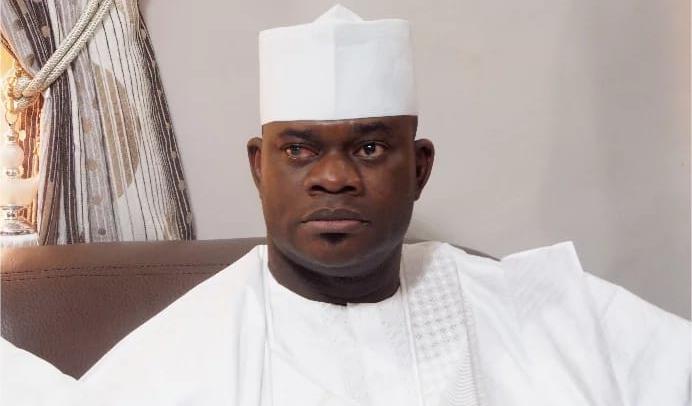
Yahaya Bello, Kogi State governor, has, on numerous occasions, rejected the existence of the virus and was seen lately discouraging a crowd of supporters from taking COVID-19 vaccines.

He had told the cheering crowd, without evidence, that vaccines introduced to combat the virus was intended to kill people.

“…They want to use the (COVID-19) vaccines to introduce the disease that will kill you and us. God forbid!” he said.

“These vaccines are being produced in less than one year of COVID-19. There is no vaccine yet for HIV, malaria, cancer and for several diseases that are killing us… We should draw our minds back to what happened in Kano during the polio vaccines that crippled and killed our children. We have learned our lessons.

Visit the ICIR COVID-19 portal

“If they say they are taking the vaccines in the public, allow them take their vaccines. Don’t say I said you should not take it, but if you want to take it, open your eyes before you take the vaccines.”

https://www.facebook.com/ibrahim.adamu.1048/videos/1548623982004291

He had also, in his new year broadcast, said his administration would not respond to the second wave of COVID-19 with ‘mass hysteria.’


Manufacturers identify dollar scarcity, cost of funds as biggest business impediments

0

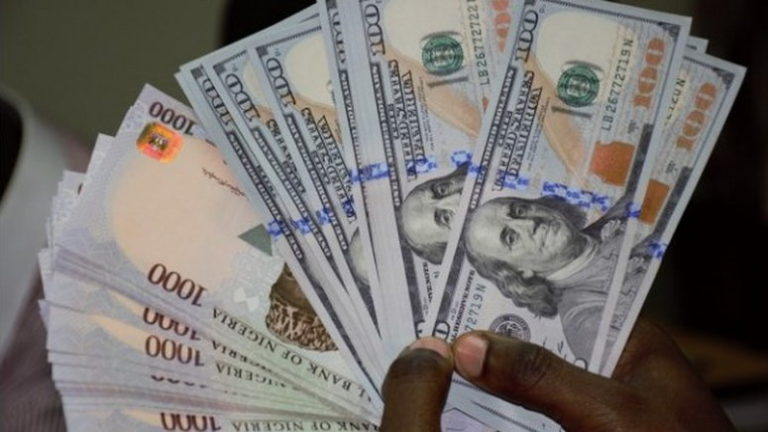
THE Manufacturers Association of Nigeria (MAN) says scarcity of foreign exchange (FX) and high cost of funds are two biggest hiccups facing industries in the country.

Reviewing challenges faced by manufacturers in 2020 at a luncheon held in Lagos recently, Mansur Ahmed, president of MAN, said high costs of energy, funds and logistics were key issues hurting the growth of manufacturing companies in the country.

Ahmed explained that low purchasing power of consumers had resulted in decreased demand for locally manufactured products, leading to unsold inventories in many companies.

He pointed out that regulatory pressure, poor port administration and policy somersaults were other challenges faced by players in the sector.

“The implication of these challenges highlighted is that it impedes the growth and development of the manufacturing sector, thereby affecting the attainment of the sector’s full potential of massive job and wealth creation,” Ahmed said.

Nigeria relies on crude oil proceeds for  90 percent of foreign exchange and more than 50 percent of revenue, according to government documents. Low crude oil prices since late 2014 have led to diminished dollar inflows, resulting in acute foreign exchange scarcity in Africa’s biggest economy.  Nigerian manufacturers import 40 percent of their raw materials, sourcing 60 percent locally, according to the latest Executive Summary of Economic Review published by MAN (in 2019).  Manufacturers are struggling to find the greenback needed to import inputs, with many of them unable to meet supply targets due to lack of raw materials. Two top manufacturers who spoke with The ICIR on the condition of anonymity, for fear of being victimised by the Central Bank of Nigeria(CBN), said they only got 2 to 10 percent of their dollar needs from the foreign exchange market in the last two years.

“We asked for 60,000 dollars to import our raw materials, but we were only given 3,000 dollars by our bank,” one manufacturer in the textile sector, who imports inputs from China and India, said.

Another manufacturer complained that apart from dollar scarcity, exchange rate differentials between dollar and naira had shot up production cost.

Frank Udemba Jacobs, former MAN president, had previously admonished the CBN to adequately fund the FX needs of local manufacturers to boost job creation, FX inflows and economic growth.


Cost of funds

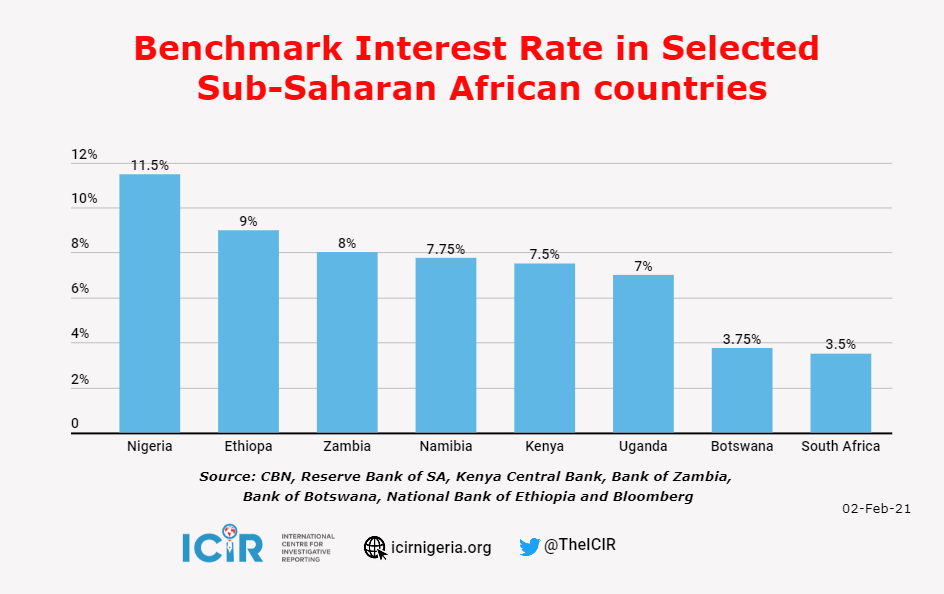
Apart from dollar scarcity, cost of funds in Nigeria is high in Nigeria compared with many Sub-Saharan African (SSA) countries. Nigeria’s Monetary Policy Rate (MPR), which is the benchmark interest rate in the economy, is 11.5 percent, according to the CBN. This is higher when compared with South Africa’s 3.5 percent; Kenya’s 7.5 percent; and Zambia’s 8 percent, according to their central banks. In Ethiopia, another SSA nation, the benchmark interest rate was put at 9 percent, according to the National Bank of Ethiopia. Botswana’s rate is estimated at 3.75 percent while  Uganda’s is 7 percent. Similarly, while Namibia’s benchmark rate is 7.75 percent, Mali’s is 9.12 percent. These are benchmark interest rates, meaning that lending rates from commercial banks to customers will be higher.

Benchmark Interest Rate in Selected Sub-Saharan Countries


MAN said  in the Executive Summary that its members were charged 21.25 percent interest rate by deposit money banks in 2019.

The association noted that high cost of borrowing remained a core challenge for the manufacturing sector in the country.

At a press conference held in Lagos last Thursday, the Lagos Chamber of Commerce and Industry (LCCI) said low interest rate was needed in Nigeria to boost manufacturing and other sectors of the economy.

“A low interest regime will encourage blue-chip corporates to undertake further investments, thereby stimulating aggregate demand and
economic growth,” said Toki Mabogunje, president of the LCCI.

Mass protest rocks Caracas over Venezuelan diplomat detained in Cape Verde

SOME Venezuelans have taken to the street of the nation’s capital, Caracas, to protest the continued detention of its diplomat, Alex Saab, who is in the custody of the Cape Verdean authority.

The protesters, who gathered in numbers on Sunday, demonstrated their displeasure over Saab’s detention in the African island nation, Cape Verde.

According to pictures and videos seen by The ICIR, the Venezuelan protesters carried placards demanding an unconditional release of the special envoy.

The protest was said to have gathered momentum on the social media following comments by Ulisses Correia, Cape Verdean prime minister, who told the nation’s parliament that Cape Verde “did well” by arresting Alex Saab under a request from the United States during the administration of former President Donald Trump.

The ICIR had reported how Saab, who was alleged by the US government to have been involved in money laundering, was arrested and detained in Cape Verde.

His extradition was requested by the US government over allegations of money laundering, a move the Venezuelan government faulted with claims that the businessman is its special envoy on a ‘humanitarian mission.’

The Venezuelan government claimed that before his arrest, Saab had been on a mission to get food and medical supplies, stopping over in Cape Verde where he was arrested by security operatives.

There have been several legal battles between Venezuela, Saab’s lawyer and the Cape Verdean government over the detention of the diplomat.

Read Also: Ugandan Election: Opposition leader, Bobi Wine, in court to challenge Museveni’s victory

Saab’s legal team led by Femi Falana approached the Economic Community of West African States (ECOWAS) court to stop Saab’s extradition to the US.

The ECOWAS Court of Justice on 2nd December, 2020, gave a ruling that the extradition process be put on hold pending the determination of the case of illegal detainment brought before it.

The African regional court, ECOWAS, also ordered that Saab be placed on house arrest and be allowed to access facilities when needed.

Checks by The ICIR confirmed that the ECOWAS Court of Justice will commence the hearing of the case marked ECW/CCJ/APP/43/20, bordering on violation of human rights, on February 2nd, 2021.