Home Blog Page 1898

NAFDAC bars UNIJOS from producing, selling unapproved anti-COVID herbal tea

THE National Agency for Food and Drug Administration and Control (NAFDAC) has stopped the University of Jos (UNIJOS) from continuing with production, promotion and sale of a herbal remedy allegedly effective in providing immunity against the deadly COVID-19 disease.

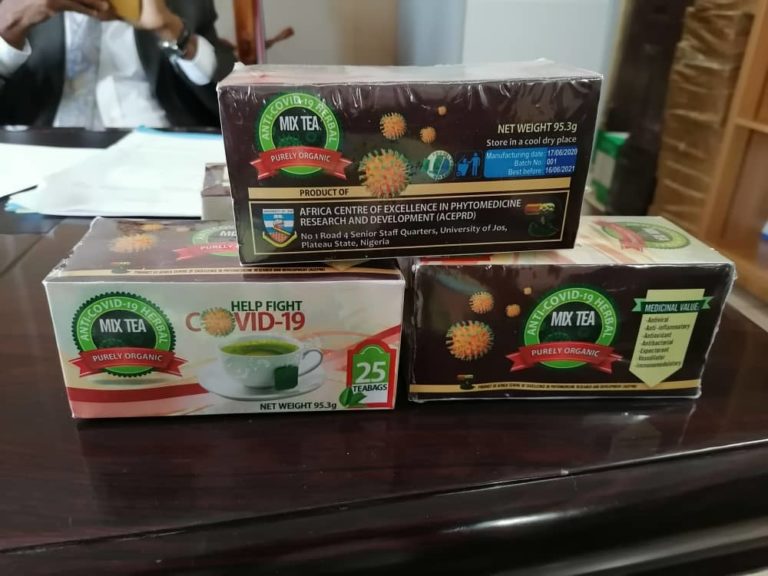
UNIJOS had through its Africa Centre for Excellence in Phytomedicine rolled out the first batch of the herbal remedy on 17th June, 2020, without contacting NAFDAC, an agency responsible for regulating and controlling quality standards for foods, drugs and related products in Nigeria.

Mojisola Adeyeye, Director-General of the agency had ordered a probe into the herbal tea, Fraden Bitrus, Director/Head of Pharmacovigilance and Post Marketing Surveillance of NAFDAC in the agency told The ICIR on Monday.

The tea contains 25 bags in a pack. Its labelling urges users to put a teabag in a teacup, add boiling water over it and cover, allow to steam between 10 and 15 minute, then stir and remove the teabag. Thereafter, the teabag would be squeezed and discarded. It is to be sipped slowly between 20 and 30 minutes; and the process should be repeated every 12 hours. The product has a year lifespan, but it carries no NAFDAC registration number as required by the law. Unijos COVID-19

The university’s Senate through a circular released on its behalf on 11th January endorsed the herbal tea and advised that employees of the university be sensitized to buy and use it.

The memo, titled “Senate Decision: Available Solution for the Prevention of the Spread of COVID-19” was signed by Monday Danjem, the school registrar and secretary to the Senate.

It was addressed to all deans, directors, heads of departments and units in the institution.

NAFDAC, however, told The ICIR that it would not dismiss the drug in its entirety, but its concern was that the product failed to go through required procedures.

NAFDAC’s Bitrus told The ICIR: “The office in Jos is on top of it. The truth is that NAFDAC was not informed initially. NAFDAC is on it now. I wouldn’t know, but I’ve been reliably told that they are aware of it and they are already investigating it.”

Asked to state NAFDAC position on such seeming contravention of the agency’s law, he said: “The issue is that we are talking of science. We don’t just pre-empt anything. They have to tell us what exactly is there. The fact is that there is a procedure for doing that. They may not have followed the procedure, but I don’t know what exactly it contains and I don’t know what exactly it can do. I can’t say anything about that. Of course, where it is possible, we will see where we can encourage them. But, when it is not something we can prove, there is nothing we can do about it.”

Bitrus also said the production and sale of the product have been put on hold.

Part II (5), paragraph A of the NAFDAC Act Cap. N.1 LFN 2004 confers on the agency the power to regulate and control the importation, exportation, manufacture, advertisement, distribution, sale and use of food, drugs, cosmetics, medical devices, bottled water and chemicals in Nigeria.

Paragraph B of that part places on the agency, the responsibility of conducting appropriate tests and ensuring compliance with standard specifications designated and approved by the NAFDAC’s council for effective control of the quality of food, drugs, cosmetics, medical devices, bottled water and chemicals and their raw materials as well as their production processes in factories and other establishments.

Paragraph F of the same part of the Act makes the agency to undertake the registration of food, drugs, cosmetics, medical devices, bottled water and chemicals in the nation.

Part IV (25) Two and Four of the Act are among paragraphs specifying punishments for contraventions against the Act. “Any person who contravenes the provisions of any regulations made under this Act is guilty of an offence and liable on conviction to the penalties specified in the regulations…

“Where an offence under this Act which has been committed by a body corporate is proved to have been committed with the consent or connivance of, or to be attributable to any neglect on the part of any director, manager, secretary or other similar officers of the body corporate or any person purporting to act in any of those capacities, he, as well as the body corporate, shall be deemed to be guilty of the offence and shall be liable on conviction to a fine of N 100,000.”

University of Jos
University of Jos

The University of Jos had received Eight Million Dollar grant from the World Bank to establish an African Centre of Excellence on Phytomedicine Research and Development (ACEPRD) in 2013.

The centre was to focus research on the production of modern drugs from plants. Core areas of research by the centre are biological evaluation, phytochemistry; plant science, biotechnology, formulation and production, clinical trials, commercialisation, and regulatory, education and social sciences, ethics, research publications and communication.

Efforts by The ICIR to get UNIJOS response on this report proved abortive as Abdullahi Abdullahi, Deputy Registrar, Information and Publications of the university, has not responded to request for an interview

After three unanswered calls around 8 pm on Monday 18th January, our reporter sent him a message, he responded the following day at 8:53 am: “Sorry, I saw your message very late yesterday. Thanks for bringing this to my attention. I’ll forward it appropriately and get back to you with the university’s response as soon as possible.”

Three reminders were also sent to him, but he did not reply.

Meanwhile experts have frowned at the university’s Senate decision and production as well as sale of the herbal tea by the centre in clear breach of the law.

Oyewale Tomori, a professor of virology and chairman, Nigerian government’s Expert Review Committee on COVID-19, told The ICIR that: “While the senate of the university, has the mandate to organise teaching and promote research, it may have gone beyond its mandate by approving and endorsing the product of research for human consumption. I think only the NAFDAC has such authority.”

He said any local remedy that comes out of the nation’s research effort must be subjected to laid down processes and procedures that are globally accepted and endorsed for approval for any product for human use.

Tomori added that such must be done in addition that products must receive the national regulatory approval for its safety and efficacy. “For COVID-19 intervention, we currently do not have any such product,” he stated.

Similarly, Dr Ejike Oji, Chairman, Federal Capital Territory (FCT) Ministerial Experts Advisory Committee on COVID-19, blamed some “rogue professionals” who try to do things the wrong way when the nation and the rest of the world battle a deadly pandemic, in a telephone interview with The ICIR.

He said every scientist knows the best way to do scientific research and would always follow procedures for conducting their work.

According to him, for scientists to get acceptability in terms of drug and medicament, the universally known way is to do randomized double-blind study of what they are producing.

He said as the researcher does that, he must have ethical review sign-ups, which is available in every country. In the case of Nigeria, it’s NAFDAC, he noted.

“There is an ethical review committee that looks at your research protocol, the fact that it is a human trial and who will agree that you can use those trials on the human subjects. A body that contains all such scientific research and drugs, which we call regulatory control on medicaments, in Nigeria happens to be NAFDAC. When you finish, you have to subject your review to that board.

“Anybody that wants to bring medicament for the consumption of human beings, you first develop you research product and because you’re going to do it on human trial, you must send that protocol to an ethical review board. Once they agree that your methodology is okay to do trial further, you go ahead and do your study. That study must be randomized, you can’t go and select people, you must use technological randomization to make sure you’re not just picking people you like to pick. That is why it must be randomized, and it must be double-blind study.”

He said when that is done, whoever sees the work, the methodology and finding they follow, would know that if such process is repeated anywhere in the world over and over again, the process would yield the same result.

He explained that when that is concluded, the findings must be taken to the regulatory authority (NAFDAC) to sign up. He said it’s only when NAFDAC has signed up that researchers are allowed to sell, adding that if the process is not followed, the scientist has gone foul of the scientific process and nobody should allow him to market his product.

NAFDAC had in the past sanctioned firms which were seen to have fallen short of its standards or violated its laws.

On October 9, 2020, NAFDAC blacklisted Mars Remedies PVT Limited, India for the manufacture of falsified Ciprofloxacin Tablets BP 500mg (NAFDAC REG. NO C4-0498) for Pinnacle Health Pharmaceutical Ltd, located at 16/18. Nuru Oniwo Street, Surulere, Lagos.

It said in view of the unprofessional practice, all products manufactured by the company would not be allowed into Nigeria.

The agency restated its position of zero tolerance for substandard and falsified medicines in the country, in fulfilment of the regulatory obligation of safeguarding the health of the nation.

Also, in May 2020, the agency had warned the public to desist from making unapproved claims on remedies for COVID-19 disease, noting that “a claim of a cure must be subjected to clinical evaluation through well-controlled, randomized clinical trials following an approved clinical trial protocol.”

The agency encouraged all stakeholders to present the products of their research findings and allow the remedies to go through the internationally recognised process of approval through pre-clinical and where applicable, clinical trials.

It added that it was committed to encouraging and supporting sponsors with appropriate guidance to expedite the development of effective interventions to treat or prevent COVID-19.

The Nigerian government has promised to receive a consignment of 100,000 doses of COVID-19 through the World Health Organization before the end of January 2021, pledging that additional 10 million doses were likely to follow before end of March same year.

COVID-19 cases in Nigeria as at 6 pm Tuesday January 19, stood at 112,004. Discharged and active cases were 89,939 and 20,616 respectively, while the nation had recorded 1,449 deaths.

Plateau state, which hosts UNIJOS, had the third-highest cases in the country with 6,831. Lagos state led the chart with 41,400 cases, trailed by Abuja, the nation’s capital, which had 14,700 cases, according to data obtained from the Nigerian Centre for Disease Control.
US Race Equality: 3 Nigerians to serve in Biden administration

By Oghenekevwe UCHECHUKWU


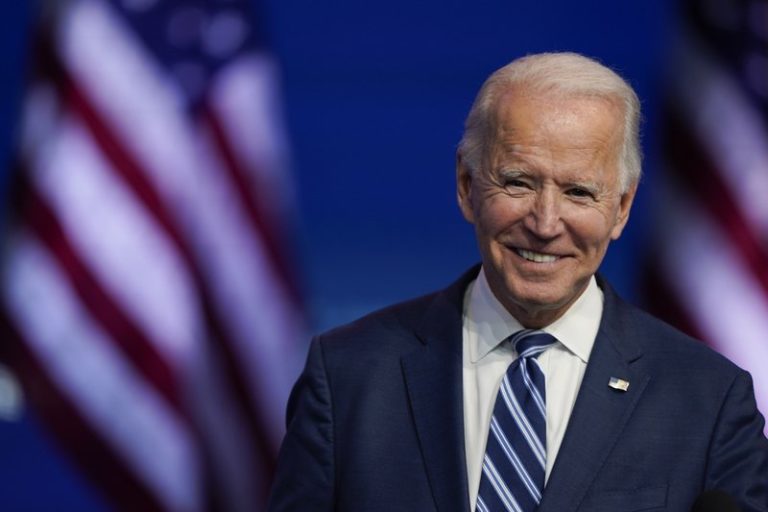
NOT fewer than three persons of Nigerian descent are expected to serve in the cabinet of US President-elect Joe Biden and his deputy Kamala Harris who will be sworn in today as the 46th President and 49th Vice-President of the United States.

According to the Biden-Harris transition website, which has so far announced over 100 key administration posts, Nigerian-American Funmi Olorunnipa Badejo has been appointed to serve as an Associate White House Counsel, while Osaremen Okolo was appointed a member of the presidential COVID-19 response team and Adewale Adeyemo nominated as the Deputy Treasury Secretary.

While the appointments of Badejo and Okolo do not require any confirmation by Senate, Adeyemo’s nomination will need to pass through a process of hearing before confirmation by the Senate after a simple majority vote. If there is a tie, Harris who will make history as America’s first woman, first Black Vice President will serve as the tie-breaking vote since the vice president also serves as president of the Senate.

Funmi Olorunnipa Badejo

Badejo, before the announcement, was general counsel of the House Select Subcommittee on the Coronavirus Crisis, chaired by House Majority Whip, James E. Clyburn, and has also as Counsel for Policy to the Assistant Attorney General in the Civil Division of the U.S. Department of Justice, Ethics Counsel at the White House Counsel’s Office, and Attorney Advisor at the Administrative Conference of the United States during the Obama-Biden administration.

Similarly, Adeyemo has held several management positions at the U.S. Department of the Treasury, including senior adviser and deputy chief of staff, as well as chief negotiator for the Trans-Pacific Partnership’s provisions on macroeconomic policy. He also served as the first chief of staff at the Consumer Financial Protection Bureau where he helped to hire the bureau’s initial executive leadership team and build an agency devoted to protecting U.S. consumers.

The 39-year-old Deputy Treasury Secretary nominee was also President Barack Obama‘s international economic adviser while serving as Deputy National Security Advisor and Deputy Director of the National Economic Council from 2015-2017 and was “one of the stars of the Obama Administration,” according to his former colleague and then chief economic adviser to the President of the US, Jason Furman.

Adewale Adeyemo

Announcing her appointment, the transition team said, “Osaremen Okolo serves on the Biden-Harris Transition domestic policy team. Prior to joining the transition, Okolo served as Senior Health Policy Advisor to U.S. Representative Jan Schakowsky of Illinois. Okolo drafted, negotiated, and managed the Congresswoman’s legislation, oversight, and policy across a comprehensive health care and public health agenda, most recently focusing almost exclusively on the COVID-19 pandemic”.

The transition team added: “Previously, Okolo served as Legislative Aide for Health Policy on the U.S. Senate Committee on Health, Education, Labor, and Pensions (HELP) for Ranking Member Patty Murray of Washington. A daughter of Nigerian immigrants, Okolo was born and raised in Massachusetts and graduated from Harvard College”.

Read Also: Biden turns to Nigerian – American Adewale Adeyemo, to build global economic co-operation

Many Nigerians have hailed the appointments and nomination, saying that it suggests that the incoming administration is committed to delivering on its promise to increase the representation of all leaders by race, gender, and ideology by assembling a diverse White House and Cabinet that truly represents America.

Osaremen Okolo

The Edo State Governor, Mr. Godwin Obaseki, in his congratulatory message to Osaremen Okolo, who hails from Ewohimi in Esan South East Local Council of Edo State, said she is “among a long list of illustrious Edo sons and daughters boldly affirming the indomitable Edo spirit to the world”.

“I congratulate Miss Osaremen Okolo on her appointment as the COVID-19 Policy Advisor to the President-elect, Joe Biden. The feat attests to your brilliance, dedication and resilience and her exceptional zeal to make remarkable change in society,” the governor said.

Chairman/Chief Executive Officers of the Nigerians in Diaspora Commission (NiDCOM), Abike Dabiri-Erewa, said Adeyemo’s nomination did not come as a surprise going by the success he had attained in the various positions he held before now and wished him a smooth, hitch-free senate confirmation and unparalleled success in the job.

In addition to increasing race representation, President-elect Biden whose inauguration will commence today at about 2:45 pm Nigerian time has appointed more women to the incoming Cabinet than his six predecessors.


Did WHO say drinking palm oil can stop the spread of COVID-19?

A message shared on WhatsApp as seen on Friday, January 15, 2021 says experts have confirmed that consumption of palm oil can help curb the spread of Coronavirus (COVID-19).

The claim was attributed to the World Health Organisation (WHO).

It specifically claimed that drinking two spoonfuls of palm oil every morning would help curb the spread of the virus.

The Claim

WHO says consumption of palm oil can curb the spread of COVID-19.

False Claim on Corona Virus Vaccine
The findings

Findings show that the claim is FALSE.

The COVID-19 is a pandemic.

On December 31, 2019, the WHO Country Office in China became aware of the ‘viral pneumonia’ in Wuhan city. The Wuhan Municipal Health Commission issued a media statement on the disease outbreak.

The WHO says it took 98 days for the virus to infect 100, 000 people in Africa and just 18 days thereafter to hit 200, 000 cases.

As of January 15, 2021,  91,816,091 have been infected with 1,986,871 deaths recorded.

On October 22, 2020, the United States Food and Drug Administration announced approval of an antiviral drug Veklury – remdesivir. The drug is the first vaccine for COVID-19 treatment to receive the FDA approval.

By December 31, 2020, the WHO listed Pfizer/BioNTech vaccine as first emergency use for the virus.

“This is a very positive step towards ensuring global access to COVID-19 vaccines. But I want to emphasize the need for an even greater global effort to achieve enough vaccine supply to meet the needs of priority populations everywhere,” Dr. Mariangela Simao, WHO Assistant Director General for Access to Medicines and Health Products stated.

The claim in circulation did not reference any expert or  source that can be validated

In addition, the manner at which the message was constructed also defies WHO’s communication pattern.

Charity Warigon, Head of Communication, WHO Nigeria, dismissed the message and distanced the WHO from it.

Read Also: FACT-CHECK: Claim that warm water is effective in curing epilepsy, others is FALSE

“This is definitely not a WHO recommendation,” she told The FactCheckHub via a text message.

“In fact, for someone who is coughing, it could be dangerous as they could inhale oil which would be worse off.”

She queried if the claim was ever supported by any data.

“WHO will not make a recommendation without backing it by evidence,” Warigon adds.

She described the post as “another fake news.”

Professor Adebola Olayinka, WHO Infection, Prevention and Control Expert, also shared the same position with Warigon.

“No, not true. Another fake news,” she said.

This will not be the first time that a message will be falsely attributed to WHO.

The FactCheckHub had previously debunked a claim that said WHO shared ‘7 biggest brain-damaging habits’.

The verdict

Based on the above findings, the claim is FALSE.

WHO did not send out the message circulating on WhatsApp which recommends that drinking two spoonful of palm oil can curb the spread of COVID-19.

In addition, there is no evidence to back the claim that drinking two spoonfuls of palm oil can curb the spread of COVID-19; on the contrary, it might aggravate a situation where a person is coughing.

This report was originally published by FactCheckHub

Prophecies gone wrong: ‘Men of God’ who falsely predicted Trump second-term win

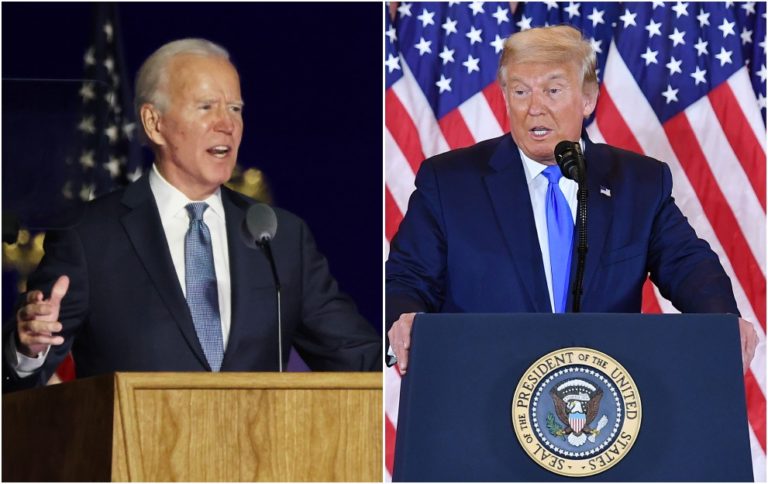
DURING the 2020 United States presidential election, ‘prophets’ and pastors across the globe made predictions that Donald Trump, the 45th US president would defeat the Democrat candidate, Joe Biden, but, their prophecies never came to pass.

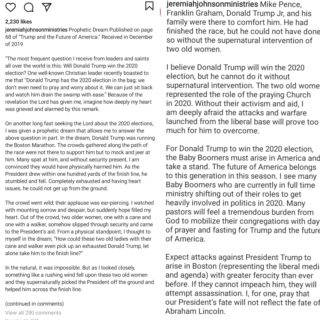
One of the latter-day prophets is Jeremiah Johnson, a Charlotte, N.C.-based evangelist who predicted Trump’s triumph in the US 2016 election because according to him,  God had shown Trump would secure a second term in office.

On his official Instagram profile, Johnson narrated a long revelation where he saw ‘two old women’ rescue Trump in a race.

The prophet translated this to mean that the 74-year-old Trump would again secure a win over the Democrat candidate.

Jeremiah Johnson

However, Johnson’s prophecy did not come true, Trump was ousted according to the official declaration by the US election commission and later upheld by the US congress.


Read Also:


Johnson eventually apologised over his unfulfilled prophecy in a video posted on his Instagram page adding that he had gotten death threats from people who called him a false prophet.

https://youtu.be/Fgh14KIVmcs

Some Christian congregations, Conservative Christians, missionaries and individual also hold the belief that Trump’s second term bid is in connection with the fulfilment of a religious prophecy.

Rick Perry, the outgoing US Secretary of Energy had in an interview with Fox News had referred to Trump as the “Chosen One”, arguing that God uses imperfect people to fulfil his prophecies.

“God’s used imperfect people all through history,” Perry said, naming several Biblical figures. “King David wasn’t perfect, Saul wasn’t perfect, Solomon wasn’t perfect,” Perry said.

Believing the biblical narrative, Trump adopted the religious reference, describing himself as ‘the Chosen One’ while addressing journalists over trade matters with China.

“Somebody had to do it, I had to do it, I am the Chosen One,” Trump said while looking up.

Another pastor, Kris Vallotton, the resident pastor at the Bethel Church, Redding, California, also took the same stance as Johnson during the electioneering period, he claimed that Trump would lead the US for another four years.

Valloton said this to the public and his over 11,000 members of the Non-denominational church but his prophecy did not come through.

After the outcome of the presidential 2020 election, Valloton released an apology video stating that he had, in fact, predicted that Trump would not be impeached but would go on to win his second term in office.

“I really want to apologise, sincerely apologise, for missing the prophecy about Donald Trump,” said Vallotton. “I was completely wrong, I take full responsibility for being wrong, there’s no excuse for it. I think it doesn’t make me a false prophet, but it does actually create a credibility gap,” Valloton posted.

‘African Angels’ that refused to arrive

Paula White-Cain, a televangelist and spiritual adviser to Trump, during a prayer service requested for “Angels from Africa and South America” to come to Trump’s aid in securing a second term and claimed she could “hear” a sound of victory.

“I hear a sound of victory, the Lord says it is done,” she said.

“For angels have even been dispatched from Africa right now… In the name of Jesus from South America, they’re coming here,” the televangelist said.

Unfortunately, the African and South American Angels never came to rescue as Biden is set to be inaugurated as US president today January 20.

Nigerian Pastors with visions from the US

Taribo West, a former super eagles player turned pastor is among the Nigerian pastors who claimed that Trump would win the November 2020 US presidential elections.

“Donald Trump will win the election with a slight, split edge over Joe Biden, so quote me, I want it to be out before time,” said West but his prophecy was wrong. Trump did not win.

David Elijah, a pastor at Glorious Mount of Possibility Church, Yaba, Lagos state in a viral video also claimed that Trump would emerge victorious at the 2020 US polls.

Elijah claimed that his prophecy shows that a popular politician in the United States would commit suicide because Donald Trump is going to win again.

These “prophecies” of winning a second term never came through as Joe Biden is elected the 46th president of the United States following his victory at the polls.

According to the official record, Biden won a total of 306 electoral colleges against Trump’s 232, crossing the 270 threshold of the United States.


Akwa Ibom government claims N1.057bn earmarked in 2019 budget for constituency projects was spent on arrears

0

By Ekemini Simon and Abasifreke Effiong


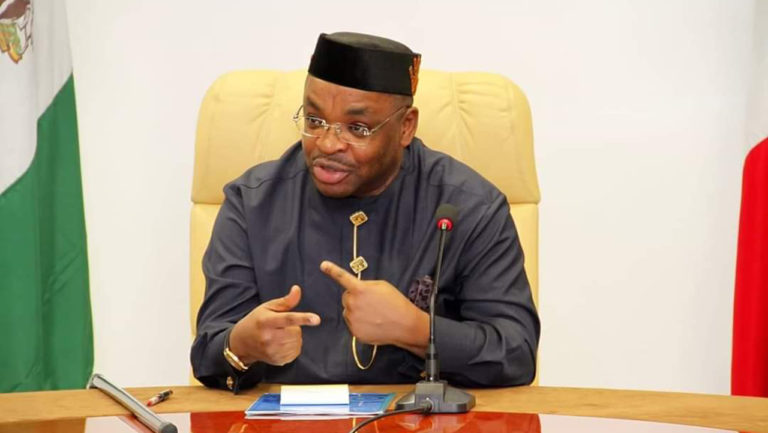
AKWA Ibom State government has claimed that 1.057 billion Naira posted in the 2019 budget for constituency projects was actually meant for the payment of three-year arrears  of resource persons who facilitated past constituency projects in 2013, 2017 and 2018 .

Uwem Andrew-Essien, accountant general of the state, disclosed during an investigative hearing held on Monday at the Conference Hall of the Akwa Ibom State House of Assembly that the item listed as ‘facilitation of 26 constituency development projects in the 26 state constituencies of Akwa Ibom State’ was for the settlement of past arrears of participants in various constituency projects.

The hearing was in response to a three-part investigative report by The ICIR which exposed cases of extra-budgetary expenditures in the 2019 annual report and audited statements of the state published by the Office of the Accountant General.


Read Also:

The investigative report, which was supported by John D. and Catherine T. MacArthur Foundation and The ICIR, exposed how the office of the SSG and the Akwa Ibom State Government House made over N10 billion in extra-budgetary expenditure on maintenance of the state aircraft, purchase of cars, fuel and lubricants and pilgrimage in 2019.

In reaction to the media report, the Akwa Ibom State government had claimed that ‘coding error’ occurred in the course of producing the 2019 annual report and audited financial statements, hence changed figures on some of the expenditure items in the published audited account.

The State House of Assembly on December 8, 2020, constituted a four-man committee to investigate issues in the report and report back to the House within a month.

At the hearing, the position of the accountant general that the expenditure posted in 2019 was payment for arrears owed resource persons in 2017, 2018 and as far back as 2013 was corroborated by the senior special assistant to Governor Udom Emmanuel on Sustainable Development Goals, Ntufam Elijah Iyak, who submitted documents on the constituency projects, locations, names of resource persons and payment made for the jobs.

Read also: After The ICIR funded investigation, Akwa Ibom Govt commences reconstruction of library, opens N25 billion hotel

Though the documents were not shown to members of the public at the hearing, summary of the report read out indicated that arrears of 190 million Naira was paid for 2013 constituency projects. A total of 658 million Naira was paid for the 2017 projects, which were tagged as ward projects. On the other hand, 209.283 million Naira was paid for 2018 projects rolled over to 2019, making it a total of 1.057 billion Naira posted in the 2019 annual report as payment for constituency projects.

In our earlier investigative report, we had noted that “Only one out of five serving members of the House of Assembly who spoke to these reporters admitted that the constituency project he nominated in 2018 was paid for in 2019.”

We had also reported that “Two former members of the House of Assembly said though the projects they nominated (in 2018) were completed, the government is yet to pay for them.”

On security-encoded ID cards for intending pilgrims which government house in the ‘authentic’ report posted 9 million Naira on, permanent secretary of government house, Nathaniel Adiakpan, said the ID cards “had some security chips and marking that make them unique to guard against possible cases of impersonation.”

Our previous investigation revealed that no security ID card was produced for intending pilgrims in the state in 2019. Pilgrims and officials of the Akwa Ibom State Pilgrims Welfare Board, including secretary of the board, Nsikan Abasi Nnam-Okuo Orok, had confirmed that no ID card was produced.

However, the ad-hoc committee frowned at the production of ID cards for pilgrims by government house instead of the State Pilgrims Welfare Board.

Addressing Adiakpan, chairman of the ad hoc committee on the investigative hearing, Udo Kierian, said: “Permanent secretary, this committee doesn’t find this right. We have Pilgrims Welfare Board in this state; we don’t see any reason production of ID cards for pilgrims should be done at the government house. We recommend that, from 2022, that budget item (production of ID cards) should be done by the Pilgrims Welfare Board.”

Meanwhile, in response to the request made at the hearing by one of these reporters, the committee has directed the accountant general and permanent secretary of the Akwa Ibom Government House to furnish her with details of projects called ‘Government special development project’ which gulped 3.060 billion Naira in 2019 at the next sitting of the committee where the secretary to the state government, Emmanuel Ekuwem, is expected to make presentations on expenditure on purchase of cars and maintenance of the state aircraft by his office in 2019.


Amid COVID-19, Nigerian start-ups secure big-ticket private equity investments

0

IN spite of COVID-19 disruptions and economic downturn in the last one year, Nigerian start-ups have been able to secure big private equity (PE) investments and venture capital (VC) that are redefining their operations.

The PEs and VCs consist mainly of funds and investors that directly invest in private companies, or engage in buyouts of public companies, resulting in the delisting of public equity, Investopedia says.

On the other hand, angel investors are high-net-worth individuals who pump their money into start-ups or newly-established businesses.

According to The ICIR findings, these funds secured by Nigerian start-ups are focused majorly on expansion of operations, engagement of highly skilled manpower and investment in new ventures.

In November 2020, auto technology company, Autocheck, secured 3.4 million Dollars in a pre-seed funding round to support its growth.

The funding round was led by TLcom Capital and 4DX Ventures, two PE firms. The funding was also supported by Golden Palm Investments, Lateral Capital, Kepple Africa Ventures, MSA Capital and some local angel and seed investors.

Etop Ikpe, founder and chief executive officer of Autochek, said after the deal that the firm would use the investment to grow its Nigerian and Ghanaian markets while further investing in technology and in its team.

Autocheck helps buyers to secure used vehicles and to find exactly the cars they are looking for.

“This early stage investment allows us to get started with the work of developing technology products and services that will transform automotive trade on the continent, whereby we significantly improve transactions and after care support for car owners, dealers and other stakeholders across the African automotive industry,” said Ikpe said, in a statement last November.

In April  2020, Okra, a fintech firm, raised 1 million Dollars from TL.com Capital, a venture capitalist.

Okra was founded in June 2019 by Fara Ashiru Jituboh and David Peterside, two Nigerian entrepreneurs.

Okra said after the deal that it would continue to build a super-connector API that allowed individuals to connect their bank accounts directly to third party applications.

Also in April, 54gene, an African genomics research and development company, raised 15 million Dollars in a Series A round of funding, in addition to 4.5 million Dollars earlier secured.

“I am pleased to announce @weare54gene’s Series A round of funding closed at $15m. The fund raise was led by @adjcap,” Abasi Ene-Obong, CEO of 54gene, Tweeted on April 14, 2020.

“With previous participation from YCombinator, KdT Ventures and Better Ventures, this brings our company’s total VC investment thus far to $19.5M,” he further said.

This month, uLesson, a Nigerian edtech start-up, secured 7.5 million Dollars in a Series A round led by Owl Ventures, according to Sim Shagaya, founder of the firm.

Apart from Owl Ventures, other investors involved in the deal were TL.com Capital, Founder Collective and LocalGlobe.

The funding is expected to enable the start-up, founded in early 2020, to expand its online education to Eastern and Southern Africa.

“At uLesson, we know we have a critical role to play in this ‘new normal’ and this funding will be crucial in our dive to fill the major gaps in Africa’s education system through tech,” Shagaya said on Tuesday, after the deal.

David Frankel, managing director of Founder Collective, one of the investors, said Sagaya was assembling a world-class team to help realise his vision of a modernised education system for one of the highest potential places in the world today.

Sagaya had, in November 2020, secured 3.1 million Dollars in a round led by TL.com, according to the edtech company.

Read Also: Forex scarcity in Nigeria paints grim picture for investors, manufacturers as recession looms

More so, Nigeria-based API fintech start-up, OnePipe, said it raised almost 1million Dollars in December 2020, in a pre-seed funding led by Techstars and Atlantica Ventures.

Within the COVID-19 period, health start-ups have performed considerably well in terms of raising PEs and VCs.

“Health and food companies have done considerably well because they are two most essential sectors within the COVID-19 period,” Ambrose Oruche, former acting director-general, Manufacturers Association of Nigeria (MAN), said in November 2020.

Apart from 54gene, a Lagos-based e-health startup, Helium Health, raised 10 million Dollars in May 2020 to expand operations and capture new markets.

 Helium Health is a healthtech company founded in 2016.

Its funding round fund was led by Global Ventures and Asia Africa Investment & Consulting (AAIC), including  Tencent, Ohara Pharmaceutical Co, HOF Capital, Y Combinator, VentureSouq, Chrysalis Capital, among others.

Nigerian startups contributed more than 17 percent of the over 1 billion Dollars secured by African start-ups in 2020, according to a recent report by Startuplist Africa on the African Startup Ecosystem.

The report said that the funds were secured by over 280 startups in more than 350 deals across the continent in 2020.

COVID-19 and Nigerian economy

COVID-19 has disrupted global supply chains and plunged economies, into Nigeria’s, into recession. The virus, which began to spread from December 2019, has infected 96.64 million people across the world, killing 2.066 million as of Wednesday.

The Nigerian economy fell by 3.6 percent in the third quarter (Q3) of 2020, after slumping 6.1 percent earlier in the second quarter (Q2), according to the National Bureau of Statistics (NBS).

But this has not stopped PE or VC investors from betting on Nigerian start-ups where they see demography and virgin market as opportunities.


Anambra state govt in a failing battle against COVID deniers

­By Alfred AJAYI


THE Presidential Task Force (PTF) and health officials across Nigeria have expressed concern over the rising cases of COVID-19 infections in the country,  a development that is already putting pressure, especially on health facilities meant for the treatment of those who test positive to the virus.

Even before the second wave of the disease in the country, the task forces had been lamenting the flagrant violation of the preventive protocols among Nigerians, which they feared might render the country more vulnerable.

Now the reality is here, as the country has continued to record increase in the number of daily infections and death.

An analysis of the situation across the country and particularly in Anambra State, raises further issues.

The long-standing mutual distrust between the government and the governed seems to be standing in the way of governmental efforts against the disease.

A good number of residents are yet to be convinced of the existence of COVID-19, which they see as a grand conspiracy theory conceived by the government and corporate elite to deceive the public.

Another category which believes the disease is real, maintains that the figures being bandied as daily infections and deaths are from the blues.

For this category, those at the corridor of power must be doing a lucrative business with the COVID-19 narrative.

Inside Eke-Awka Market on Monday 18th January, 2021

The situation is the same in Anambra State, where residents had totally lowered their guard against the disease, with many accusing the government of fighting a public health challenge that never exists.

A walk through the cities and semi-urban centres of the state reveal mindless disregard for the non-pharmaceutical preventive measures, especially wearing of facemasks and maintenance of social distancing.

Unlike before, traders now go about their businesses without sparing thoughts for the disease. Hand-washing basins have disappeared in front of shops, while citizens go about their normal daily engagements without wearing face masks.

The situation is worse in the rural communities, where disbelief about the dreaded virus had taken deep root.

A recent release by the State Commissioner for Information conveyed the worrying mood of Governor Willie Obiano about the soaring number of infections in the state, where forty-nine persons were said to have tested positive to the virus within a week.

Visit ICIR COVID-19 Dashboard

The release reads in part: “There are 80 confirmed cases in the state since the second wave began two weeks ago, meaning an average of 40 cases per week. In contrast, the state used to record nine cases per week on average in the first wave. It is disheartening that there are people who doubt the COVID-19 is ravaging the country. There are two persons who, a few days ago, came for testing and were confirmed to be positive. Instead of isolating themselves, they rejoined a wedding party and may have infected a number of people”.

Governor Willie Obiano, in his latest statewide broadcast noted that the second wave of the disease had become a reality in the area. According to the Governor, the new variant is deadlier especially now that most people have lowered their guard.

He noted: “We have dropped our level of vigilance and returned to our normal lives. But the virus has not gone away. On the contrary in has come back with renewed viciousness. It is claiming many lives because our people are not complying with the COVID-19 protocols.

The Governor, who enumerated efforts of his administration in flattening the curve of COVID-19, noted that his administration had risen to the challenge to repeat the feat during the first wave, which saw the state as at December 7, 2020, conduct 90,000 tests and only 287 were confirmed positive.

“As at that date, “there was nobody in the protective care centres in the state. We were all enjoying the fruits of our collective efforts”.

He pointed out that the second wave did not take his government by surprise but was upset that despite all efforts made to get citizens appreciate the prevailing truth about the disease, citizens have continued to disregard the protocols.

He lamented: “Despite our warnings, our people allowed themselves to be carried away by the joy of yuletide and failed to maintain the COVID-19 protocols. Between December 7, 2020 and January 11, 2021, we have recorded 110 new cases of COVID-19 in Anambra State”.

The Governor explained that the government had consequently taken some hard decisions to stamp out the spread of the new wave.

The measures include: compulsory observance of the standard covid-19 protocols such as: regular hand washing, use of hand sanitizer, wearing of facemasks and maintenance of social distancing in all government offices.

Governor Obiano also renewed the directive on compulsory wearing of face masks in public places, while gathering of more than fifty persons is prohibited in addition to the ban on nightclubs.

“The COVID-19 Action Teams in all our 61 markets must ensure full compliance to the standard protocols. You must set up a hand-washing point at the entrance to each market. Take temperature of visitors and ensure that both traders and their customers wear facemasks. Transport operators are advised to revert to all the practices that helped us during the first wave of the pandemic. They must ensure social distancing inside their vehicles and maintain a passenger manifest”.

Read AlsoHow NCDC’s delayed COVID-19 result jeopardises fight against global pandemic

The Governor also postponed the resumption of academic sessions by two weeks, urging management of every school to help revive the structures which helped preventing infections in schools during the first wave.

Great as the measures seem, enforcement has been at its lowest ebb, hence the abysmal compliance rate. Visit to various markets as at Monday, 18th January indicated that the Governor’s directive on compulsory wearing of face masks was yet to be enforced. Hand washing buckets were seen in many shops gathering dust as citizens enter and alight from commercial vehicles without facemasks.

A Public Affairs Commentator, Chief Kanayochukwu Obidigbo, blamed the development on poor management of COVID-19 outbreak in the country, which shielded the infected persons from public glare. “Nobody regards the protocol. I hear on the state radio station everyday that defaulters of these protocols are liable to fine and community service. That’s good but enforcement is not there. So, people violate the preventive protocols with reckless abandon”.

Residents go about their businesses without face masks

For a Civil Society Advocate and Political Scientist, Comrade Elvis Okolie, the government and the citizens share the blame for the low compliance rate.

“Government takes blame for enforcement failure. But compliance is the duty of the citizens. Until Nigerians are forced to do something right, we don’t do it. So, the government should have applied the enforcement rule. Until it is enforced, I don’t think Nigerians are ready to comply”.

Comrade Okolie remarked that the system had conditioned the people to think that their economic survival is above every other consideration. “Some of them see themselves as dead already due to battered economic situation. They will prefer to go out and die than to die in their houses when even the government does not care for them”.

Be that as it may, the government is being advised against locking down the state due to its destructive impacts on the economy as witnessed during the first wave last year. A resident, Chief Jude Emecheta, strongly advised government at all levels against locking down.

“If you lockdown, you will kill more people than COVID-19. People should learn how to obey the protocols. Allow the economy to run. People are aware of the preventive measures. Whoever chooses to die of COVID-19 should be allowed to instead of putting the economy of the entire citizenry and that of the country into jeopardy”.

Even with the resolute determination of the state government to give the second wave of the pandemic the fiercest fight it deserves, the co-operation of the citizens in terms of compliance to the preventive measures will determine success or failure.

The days ahead will reveal if there will be any positive change or the situation will take a dive for the worst. But, “God forbid” is the prayer, in the mouth of everyone in the state.

Provide alternative grazing areas for herders, MACBAN tells Akeredolu

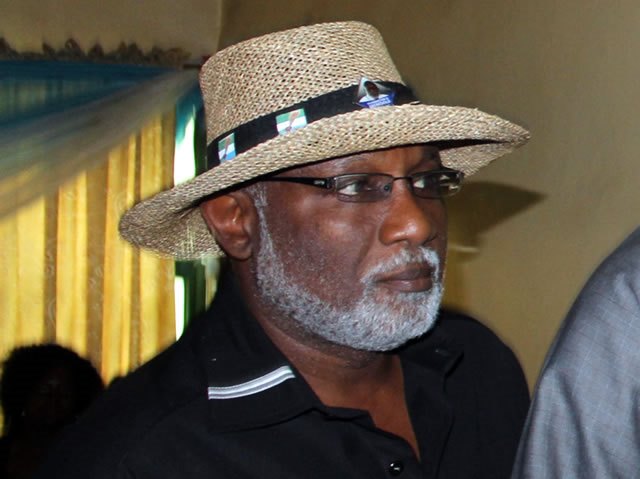
THE Miyetti Allah Cattle Breeders Association of Nigeria (MACBAN) has asked Governor Rotimi Akeredolu to create alternative grazing routes for herders if he must ban them from accessing state forest reserves.

The governor had, in a series of tweets on Monday, ordered herdsmen within the state to vacate the state forest reserves in the next seven days, saying that it was one of the several tactics put in place by the state government to address the growing insecurity in the state.

But the announcement did not go down well with MACBAN, which asked the governor to provide alternative sources of grazing for the herders if he had plans to ban them from the forest.

Usman Baba-Ngelzerma, secretary-general, MACBAN, told newsmen on Tuesday that the earlier agreement reached with the governor revolved around ending night grazing, rather than vacating forest reserves.

“The governor had a two-hour meeting today and the chairman of MACBAN in Ondo State was there. He told me that the agreement they reached was that we should stop night grazing and stop allowing cows to graze around government properties, and cooperate with Amotekun to help fish out bad eggs among them.

“That is what we were told. There was no discussion about vacating. But if they asked them to vacate the forest reserves, have they provided an alternative for them to graze? Where will they graze if they leave the forest reserves?

“As it is now, we are not aware of any order to vacate. My chairman is not aware of that. I just read about it in the media. When we have confirmed, we will know what to do.”

He further said Nigerians must be aware that not all herdsmen were members of Miyetti Allah.

However, Ajibade Ogunoye, traditional ruler of Owoland, commended the governor’s decision, saying that it was long overdue.

The monarch, through his chief press secretary, Sam Adewale, said the governor’s action would go a long way in solving the security challenges facing the state.

The monarch said, “As the chief security officer of the state, the governor could not sit, watch and fold his arms while the citizens are being kidnapped at will by bandits.

“The security of lives and properties of the people of the state are important to the government. Therefore, all efforts of the government in this regard must be supported by all.”

Read AlsoOrtom wants FG to legalise weapons for ‘responsible civilians’, calls for end to open grazing

Oba Ogunoye also called on all the traditional rulers in the state to rally support for the governor in his bid “to rid the state of criminals and make Ondo State safe for the people to live in”.

Earlier in December, The ICIR had reported how Oba Israel Adeusi, a foremost traditional ruler in the state, was killed by suspected gunmen at Elegbeka, a community along the Ifon-Benin highway, while returning from the monthly meeting of the state council of Obas in Akure.

His vehicle was said to have been rained with bullets while the driver was trying to escape from the gunmen. He was rushed to the Federal Medical Centre in Owo, where he died as a result of gunshots he sustained during the attack.

The same day that the monarch was killed, Sade Ale, wife of the Ondo state governor’s chief of staff, Olugbenga Ale, was kidnapped on her way from Lagos on Thursday night by some suspected gunmen at Owena area, near Akure.

She regained her freedom following security intervention.

The same day, a commercial bank was robbed at Ode Irele, in Irele Local Government Area,  with two reportedly killed and several others injured.

Falana petitions UN over continued house arrest of Ugandan opposition leader

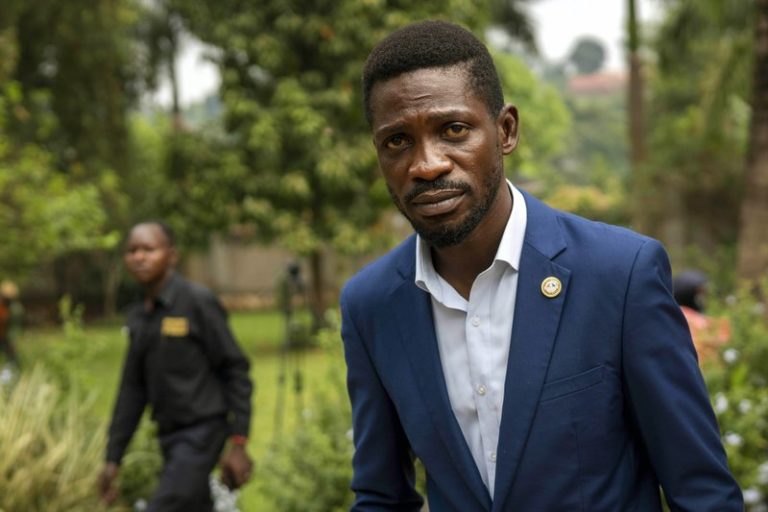
FEMI Falana, a human rights lawyer, has petitioned the United Nations Working Group on Arbitrary Detention (UN-WGAD) over the continued house arrest of Ugandan opposition, Robert Kyagulanyi, also known as Bobi Wine.

Wine, who was the major opposition leader during the just concluded presidential election in Uganda, has been reportedly detained by security operatives together with members of his family shortly after casting his vote. He complained that his house had been under military siege since last Thursday.

He lost to Yoweri Museveni, incumbent president, in an election that was grossly characterised by security intimidation and rigging.

In his petition to the UN-WGAD, a body of independent human rights experts that investigate cases of arbitrary arrest and detention of the United Nations (UN), Falana said that the Ugandan government “is arbitrarily depriving activist, musician, journalist, and politician, Bobi Wine, of his liberty and continues to arbitrarily put him and his wife, Barbara Itungo Kyagulanyi, under house arrest.”

He said the continued detention of Wine and his family was arbitrary and in violation of Uganda’s Constitution and obligations under international human rights law.

He noted that the action was a stark violation of Article 9(1) of the International Covenant on Civil and Political Rights (ICCPR) guaranteeing the right to liberty and freedom from arbitrary detention.

He urged the UN-WGAD to compel the Ugandan government for his release and to also initiate a procedure involving the investigation of the case of Wine together with his wife and his domestic staff.

He requested that UN-WGAD should “send an allegation letter to the Government of Uganda inquiring about the case generally” and raise specific questions about the legal basis for his arrest, detention, and/or degrading treatment, each of which is in violation of international law.”

He stated that Wine, presidential candidate of the National Unity Platform (NUP) in the Ugandan presidential election, had been detained incommunicado and without access to the outside world, including his lawyers.

Related StoryUgandan election: Bobi Wine says he is under military siege

The human rights lawyer said, “Mr. Wine and his wife are being illegally detained for days without any criminal charges preferred against him. He has also been denied adequate supply of food by hundreds of Uganda military forces and policemen who have laid siege to his house for the umpteenth time since the election day.

“I am therefore seeking an opinion from the Working Group finding the house arrest and continuing detention of Mr. Wine and his wife to be arbitrary and in violation of Uganda’s Constitution of 1995 (as amended) and obligations under international human rights law including the International Covenant on Civil and Political Rights and the African Charter on Human and Peoples’ Rights to which Uganda is a state party.”

He called for “immediate and unconditional lifting of the house arrest enforced on Wine, his wife and domestic staff.”

He also requested that the Ugandan government investigate and hold accountable, all military and police officers and security agents suspected to be responsible for the unlawful arrest, continued detention, and degrading treatment of Wine, together with his wife and others.

The senior Nigerian lawyer also requested the Ugandan authorities to immediately withdraw the military and police forces currently laying siege in the premises of Mr Wine.

The lawyer also requested that Ugandan government award Wine, his wife and others “adequate compensation for the violations they have suffered as a result of their unlawful arrest, arbitrary detention, and torture and other ill-treatment.”

How NCDC’s delayed COVID-19 result jeopardises fight against global pandemic

0

SHEHU, a social media publicist who asked to be identified with his first name did not have headaches or fever when he walked in to know his status at Thisday Dome, a makeshift treatment and isolation centre for COVID-19 cases located in Central Area, Abuja on December 4, 2020.

But when a colleague in his office tested positive, every staff in the media firm where he worked were compelled to self-isolate and get themselves tested.

At the testing centre at Thisday Dome, Shehu had throat and nasal swabs taken from him by officials of the Nigeria Center for Disease Control, NCDC, before he was issued a verification number and told the outcome of the test would be sent to him via a text message on his mobile phone.

The testing centre at Thisday Dome is one of ten centres located in Abuja, Nigeria’s capital with estimated population of over 3 million people.

Shehu remained in self-imposed isolation for a two week period after the test but couldn’t stay locked up indoors for very long.

The idea of visiting his parents who were based in Lagos during the Christmas holiday looked very appealing to him but he also weighed the risks of exposing his family to the virus if his COVID-19 status was not confirmed.

After three weeks of waiting without a response from the NCDC either by text messages or calls, Shehu took his chances when he noticed he didn’t show the signs or symptoms of COVID-19.

He embarked on an 18-hour journey by road in a commercial bus with other passengers to and from Abuja to Lagos.

Speaking to The ICIR, Shehu is uncertain about his current status and still wonders if he is negative or asymptomatic to the effects of the coronavirus.

“I was to travel during the festive period in December but became hesitant because the result was not released. I could not make a decision since I would be interacting with family members in Lagos so I had to take necessary precautions by wearing masks while trying to maintain physical distance,” he said.

One month after his trip the result is still been expected despite the NCDC guideline that stipulates a maximum turnaround time of 20 hours to obtain the result after a COVID-19 test is conducted.

Shehu’s plight is not different from hundreds of Nigerians who have taken COVID-19 tests but are yet to be notified of their test results months after they got tested.

This exposes a clog on the accuracy of the current infection rate in the country posted daily on the website of the NCDC and also increases the risks of transmission from asymptomatic carriers to the general population.

A weak line of defence

Testing and tracing of people who exhibit symptoms of the coronavirus have been described by health experts as a “second line of defence” in controlling the spread of the viral pandemic.

Speaking at a news conference in Abuja, Osagie Ehanire, Minister of Health said the rise in cases was majorly driven by an increase in infections within communities and, to a lesser extent, by travellers entering the country.

Visit ICIR COVID-19 Dashboard

“We may just be on the verge of a second wave of this pandemic,” he said. At the press briefing, Ehanire ordered the reopening of all isolation and treatment centres that had been closed because of the declining number of patients in the fourth quarter of 2020.

Cases in Nigeria have been on an upward trend since early December 2020, as the country joined the league of African countries to record over 100,000 cases. The lack of access to the results of tests undertaken by Nigerians is likely to hide the transmission rate and make the true spread of the virus difficult to track.

In April 2020, the NCDC had set a target of analysing at least 2 million Covid-19 test samples within three months through state and federal laboratories but nine months later less than half of the target is yet to be achieved.

Nigeria registered 1,867 new cases of Covid-19 on January 15, which is its highest daily record of cases since the onset of the disease in the country reflecting a spike in the infection rate.

The number of tests conducted by the NCDC is estimated at 1.03 million tests as of January 14, when compared with its vast population of over 200 million people the testing rate is significantly small.

Countries in Africa with higher testing rates relative to their population include South Africa having tested 7.3 million people, Ethiopia with 1.8 million tests, Morocco testing 4.5 million samples, Egypt with 1 million tests conducted, Kenya carried out 1.04 million tests, Rwanda has tested 760,897 samples and Ghana with 697, 087 tests.

However, the NCDC is yet to articulate a coherent strategy to test and speedily provide results to stem silent carriers of COVID-19.

Uncertainty trail testing without results

Mercy Olayinka, a poultry farmer based in Abuja makes use of the space outside her home to raise chickens for sale.

Her business relies on physical interaction with her customers, even when payment for her birds is facilitated using a digital platform, the delivery chain of the business depends on meeting people directly.

Read alsoSecond wave: How Nigeria’s COVID-19 cases surged to highest daily record

In November 2020, Mercy decided to get tested for COVID-19 after she came in contact with a family member who was infected with the coronavirus.

Mercy had called the hospital where she got tested to inform them that she needed the result to facilitate a job opportunity, hoping the information will prompt them to release the results

“I have since moved on since the results failed to arrive on time especially since I didn’t notice the symptoms of the disease. It is not a good experience to take a test and not get a result,” she said.

One month later, she got a call from an official of Abuja’s Health Services who called to confirm her name. When she told him that wasn’t her name, that was the last time she heard from the official.

“What’s the essence of testing when you won’t get a result, “Mercy queried.

For, twenty-four-year-old Isah Abdullaziz who is on the low-risk category of contracting the virus, according to a global study he got tested on November 27, 2020, and was assured to be notified of the outcome of the result in a couple of days.

Two weeks later, Isah was contacted by a contact tracer who inquired about his health conditions and when Isah asked about his result the contact tracer told him to go back to the centre where he got tested to get his result.

“Initially I was on self-isolation after the test but after I exceeded the 14 days period without the signs I had to move on with my life. My concern is with the process that the NCDC uses to conduct testing because without a result it leaves you with uncertainty and you don’t know if you are infected or not,” he said.

The second month after Isah could not get his result, he used the verification number issued by the NCDC official on their website to check his result but his data did not exist on their portal.

“The testing is not co-ordinated, for instance, after I did the test I was given an epidemiological number which means that whenever I present the number on their portal or manually, my data is with the NCDC should reflect but that has not been the case,” he said.

According to a study published by the Nigeria Institute Medical Research (NIMR) examining the infection rates and deaths from Covid-19 in the country indicated that the number of people who had died from the virus could have been underestimated.

The Africa Center for Disease Control reveals that currently, 20 out of 55 African countries have Case Fatality Rates, CFR which is the percentage of people who die from the virus higher in Africa when compared with the global average of 2.2 which is likely to increase when compared with the first wave of the pandemic in 2020.


Expert’s perspective

Ekaete Tobin, a consultant clinical epidemiologist at the Irrua Specialist Teaching Hospital, Edo State says people who got tested and have not seen their results would likely increase the transmission rates of the virus and complicate the pandemic.

“While people who have taken the tests are waiting for their results, they would have to be quarantined because the incubation period for the virus is 2 days but without getting their results they will have to go to the market or other public places and mingle with other people.

“The infected person if later confirmed positive will have passed the virus to hundreds of people even if their immune system has the capacity to beat the virus. What about the other people who got infected can we say their immunity was strong,” she said.

At a webinar hosted by the African Forum for Research and Education for Health, Nigeria’s presenter Rhoda Atteh, head of the Africa Field Epidemiology Network, Nigerian chapter at the Federal Ministry of Health said Nigerian contact tracers engaged in one-on-one communication to facilitate contact tracing process and prevent further transmission from asymptomatic carriers.

“We also focus on doing self-isolation at home and also monitoring contacts remotely when we have identified cases,” she said at the event.

The ICIR contacted the NCDC to ascertain the reasons for the delay in releasing Covid-19 test results to Nigerians who tested but are yet to be notified of their status after several months.

Emeka Oguanuo, spokesperson of the NCDC did not answer several phone call to him. He, however,  acknowledged the email sent to him with a promise to reply. “Good evening, Amos, seen your mail. Will revert,” he said in a message on Wednesday, January 13.

A reminder was sent to him on Friday, January 15, but he has not responded as of the filling this report.