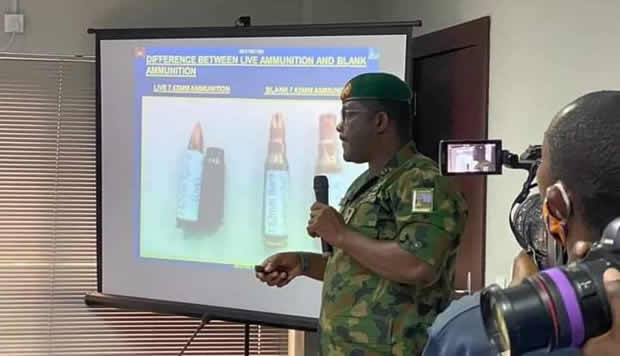
BRIGADIER General Ahmed Taiwo Commander of 81 Military Intelligence Brigade, Victoria Island, Lagos, on Saturday confirmed that soldiers who left Bonny Camp military base to #EndSARS Lekki Toll gate protest scene on October 20 had both blank and live bullets with them.
General Taiwo during a cross-examination based on his earlier testimony said although the soldiers were with live bullets but were not used by the soldiers who engaged protesters at the scene of the protest.
He had earlier made a presentation before the panel in defence of the Nigerian Army on November 14, but returned on Saturday for cross-examination by two counsel for #EndSARS protesters, Messrs Adeyinka Olumide-Fusika (SAN) and Mr Adesina Ogunlana.
Asked if soldiers who went to the toll gate carried guns, Taiwo said, “When you are talking of guns, you are talking about high-calibre guns. They were carrying rifles, not guns.”
When further probed if the soldiers’ rifles had only rubber bullets as he had earlier testified, the General said they had live bullets, but that it was meant for back up measures.
Earlier at the panel, the CCTV footage submitted by the Lekki Concession Company, operators of the tollgate was reviewed.
The footage showed that the scene was calm until about 6.43pm when people could be seen running towards the tollgate from the Oriental Hotel end.
Two minutes later, at 6.45pm, military trucks no fewer than seven were seeing with flashing headlights arrived the scene.
Later at 6.53pm, about 10 minutes after the arrival of the military vehicles, the tollgate went into a blackout.
OVER 100 women die annually during childbirth in Garun Sheme District, Kunchi Local Government Area, LGA, of Kano State due to lack of a functional healthcare facility, an investigation by our correspondent has shown.
The situation is not different in Lamba District, where scores of pregnant women also die because they cannot access prompt medical services during labour and delivery.
But residents and community leaders insist that the lives of many pregnant women could have been saved if there were functional healthcare facilities in the affected communities.
District Head Garun Sheme, Kunchi LGA, Kano State, Mal. Haruna Abubakar, said, being a suburb, the area is neglected in terms of development, adding that it has always been a nightmare for people of the community any time a pregnant woman is in labour, as she has to be moved to Bichi, Kazaure or Kano metropolis in order to have access to quality health care services, thus exposing them to prolonged labour.
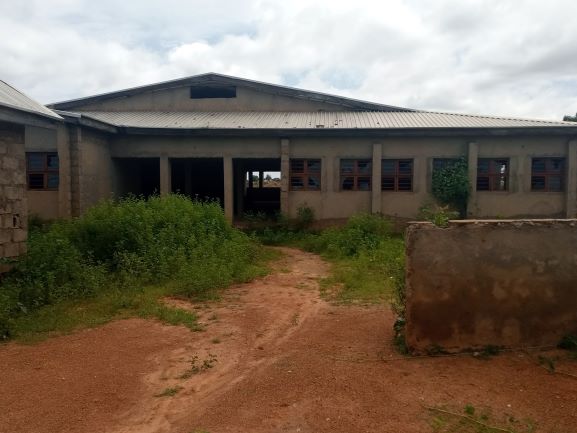
Abandoned Primary Health Centre at Garun Sheme
“We have lost women in this community because whenever a woman is in labour we have to start thinking of how to get a vehicle to move her out of our remote village, and many don’t make it before they see a doctor due to complications,” he observed.
Abubakar stated further that various village heads under his jurisdiction report at least 6 to 7 deaths every month resulting from childbirth complications, and at least 100 every year.
“As you can see, we live in the remote part of the town, there are no any signs of developments here, no good roads which makes movements in and out of this area difficult, so in case of any emergency health situation we have to move to Bichi, Kazaure or Kano Town,” he said.
Although there are two outpatient hospitals 10 kilomiters away at Rigana and Gidan Misau, deplorable nature of roads washed away by erosion makes it difficult to get there on time and the best option is to head to Kano or the other nearby towns.
The district head said the PHC project located at the center of the community in Kesawa was a sign of relief to them with the hope that when completed, there would be no more travelling to have access to good medical facilities but their hope was dashed as the project suddenly came to a halt about eleven years ago.
“We woke up one faithful morning to see the contractor’s boys handling the contract removing the doors, windows and roofing of the building which was almost completed and when accosted, they explained that the contractor has not been paid for a while that was why they had to remove their materials,” he said.
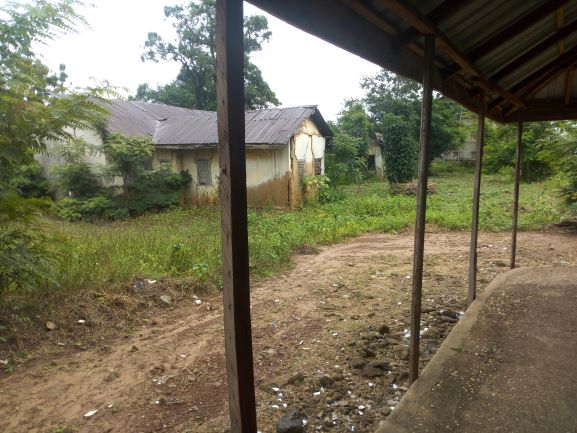
Abandoned Doctor’s Quarters at Garun Sheme
“We were all happy when the contract started. After the building materials were dismantled, we were told that the contractor stopped getting funds to complete the contract and ever since that incidence, the contractor is yet to return to site”
Abubakar lamented that all their efforts to hear from relevant authorities both at the state and federal levels proved abortive as letters and series of visitations yielded no result.
Halima Sani, a mother of four who resides at Garun Sheme, explained that their plight in terms of access to quality health care is better imagined than explained.
She said lack of a health care facility that can easily be reached by the people of the village has lingered for too long with no hope in sight.
She called on relevant authorities to come to their help and alleviate their sufferings especially the women who loses their lives at childbirth or their infants due to lack of proper medical care and attention.
Another housewife in the village, Hafsat Sale Muhammad, said many of them resort to the use of traditional medicine because of the stress they go through to get medical attention from the hospital.
District head, Garun Sheme
The development, she said, has led to complications in some cases, fatal results due to the side effects of consuming such unregulated traditional medicines.
Hajiya Hafsat further said that the absence of conventional hospitals in the village has contributed to high patronage of the traditional medicine which experts warns of its side effects as most of them are unregulated and not certified by any regulating agency.
Contractor says he is not to blame
When contacted, the contractor, Samuel Ejiofor, explained that he was forced to abandon the project due to lack of payment.
According to him, his company, Trustcon Nigeria Limited, was awarded the contract by the Association of Local governments of Nigeria (ALGON) sometime in 2007 through a private consultant, MATHAN Nig Limited, at the sum of N28 million.
However, Ejiofor explained that the contract for the construction of a 27 – room hospital and a doctor’s residential quarter came to a halt in 2009 as a result of lack of release of funds, which left him with outstanding payment and despite promises for variation, nothing has been done till date.
The contractor, who declined further comments, said any other information needed should be sourced from the ALGON.
In the same vein, the village head of Lamba, Haruna Isa, Kunchi LGA of Kano State revealed that the 15 – room Primary Health Care facility was expected to be completed in four months. However, the work was abandoned at the last stage.
“The hospital work was expected to be completed in four months, that is from sometime around December 15, 2019 to March 15, 2010.
The building got to the roofing stage and all the doors and glass windows have been properly fix but since then nothing else has been done.
It’s been ten years since the contractor left the site and we are yet to see anyone come to complete the finishing touches”.
Like the case of Garun Sheme, Isa said in case of any health emergency, the sick has to be transported to Bichi town, 15 Kilometres from Lamba or Kano Metropolis, which is about 116 kilometres away.
“The building like you saw has gotten almost to the last stage as it has been roofed with doors and windows all fixed but since then, nothing else has happened.
Any time we have any emergency that cannot be handled in the only small outpatient health facility we have, we have to run to the next Local government close to us which is Bichi otherwise, we go to Kano town”.
The village head pleads with relevant authorities concerned to come to their aid and complete the project so that the people of the community can begin to enjoy services to be rendered by the facility.
Village head, Lamba
Isyaku Isa, chairman of the Ward Development Committee in Lamba, stated that the project was facilitated by their House of Representative Member, late Ibrahim Muazam Bichi but the work stopped while he was still in office.
He said many women have given birth in the car on their way to the next town and some time to get a vehicle to convey a sick person is a serious challenge.
According to him, from the beginning, all equipment and other inventories for the hospitals such as mattresses, drugs, test kits and every other thing needed to run the hospital were provided and are presently in a store under his custody but due to the long period of time taken, the drugs have all expired.
Speaking further, isyaku stated that the whole community was confused as to how a project for which every material needed for its operation was provided from the unset would be abandoned and despite all efforts to get to the root of the problem, no success has been recorded up till date.
Asabe Mukhtar, who also shared her experiences, revealed that her sister Zainab had once given birth in a vehicle while on their way to Bichi Hospital.
“My sister Zainab once gave birth in the car while moving her to Bichi.
Although we have one hospital in our village, but it is not enough to handle all cases that’s why we have to move to neighbouring towns in case of complicated cases,” she added.
Contractor says government refused to pay her
The owner of Setbat Nigeria Limited, contractor that handled the job, Hajiya Halima Omidele when contacted said she stopped work when the government stopped funding the project.
“I bided for the contract with the National Primary Healthcare Development Agency and what stopped the work was payment delay and accessibility to the place was something else.
“I stopped where payment stopped, and when I went to make subsequent enquiries about when the remaining money would be released, I was told that the contract had been reassigned to someone else”.
Omidele who promised to provide further information from the beginning of this investigation, however, became evasive, giving excuses up till the time of filing this report.
However, when this reporter visited the National Primary Healthcare Development Agency headquarters, Abuja, on the Oct 5, 2020, he was directed to submit an Freedom of Information Act, FOIA, request for information on the project to enable the agency to reply.
As demanded, the FOI request was sent but no reply was received which prompted for a second letter as a reminder, all to no avail six weeks after.
In the same vein, during a visit to the Associations of Local Governments of Nigeria (ALGON) head quarters at 6th floor WAEC Building, 10 Zambezi Crescent, Off Aguiyi Ironsi St, wuse Abuja, this reporter was informed by one Leonard Onachukwu Papee, the protocol officer, that the National President who doubles as the Chief Accountant and resides in Lagos is in custody of the file containing the needed information as such, no information was available at the head office in Abuja.
A FOIA request was subsequently sent requesting information on the Garun Sheme contract but no reply was also given three weeks after. In the request letter dated October 14, the agency was asked to provide information, including the name of the contractor, contract amout, amounts released so far as well as the contractor’s address. The agency declined providing the requested information.
When contacted, Hon Sani Bala, Present Member representing Kunchi/Tsanyawa Federal Constituency at the National Assembly said it is unfortunate that such an important project would be abandoned.
According to him, one of the projects was a special intervention project through ALGON, which was poorly handled leading to wastage of public funds with no one in particular to hold responsible due to what he described as irregular procedures of executing a project.
Bala further stated that he could not have done much on the issue of the project because members of the House of Representatives from the state only get N40 million as constituency project funds due to their large number, unlike other states with few local governments and House members.
However, Sani promised that as a result of these investigations he would collaborate with the incoming local government chairman from the district to ensure that he includes the completion of the abandoned projects as part of his priorities.
He stressed that the only way out is for the state government to take over the project from the local government.
Sani expressed delight over the investigations which he said has drawn his attention to the abandoned projects and would now ensure the state government come to the aid of the people from the affected villages instead of waiting on the Federal Government that might never answer them.
* This investigation is supported by the John D. And Catherine T. MacArthur Foundation and the International Centre for Investigative Reporting.
A FALSE claim has been circulating online that the Academic Staff Union of Universities, ASUU has suspended its ongoing nationwide strike.
A message obtained on the parody ASUU Twitter account named official ASUU @ASUUNGR_ on Saturday announced that ASUU Strike has been suspended.
The claim reads: ”ASUU STRIKE HAS BEEN SUSPENDED!!.”
As of the time of filing this report for publication, the tweet has gathered nearly 4000 “likes and over 1000 retweets.
Recall that a false claim has also circulated the social media on Wednesday, 18th November, stating that ASUU has suspended its nationwide strike and Universities across the country should resume Monday, November 23.
The previous memorandum headline reads: ” NOTICE OF SUSPENSION OF ASUU INDEFINITE STRIKE ACTION OF ALL MEMBER UNIVERSITIES ACROSS NIGERIA.”
The Findings
Though efforts to reach the ASUU National Chairman, Prof. Biodun Ogunyemi was unsuccessful as calls and text messages were ignored, checks conducted by this reporter confirmed that the circulated message is fabricated and not from ASUU.
Further checks revealed that the Union president, Abiodun Ogunyemi earlier, made it known to Nigerian students that the Union didn’t say so as they haven’t reached any conclusion with the members yet.
Dr John Edor, the ASUU chairman at the University of Calabar has also debunked the rumour, describing it as fake news. He said the Union is again meeting with the Federal Government on Friday 27th November.
Edor debunked the rumour in a telephone interview with the News Agency of Nigeria (NAN) in Calabar.
“As I talk to you now, ASUU does not have a Twitter account, so I wonder where that statement came from. As far as I am concerned, it is fake news,” he said.
This reporter also checked some of the previous posts of the fake ASUU Twitter handle, and found that the person in charge of the account has once posted birthday wishes for his best friend, a strange post on the official Twitter handle of the Union.
The post reads: “Happy Birthday Best Friend. I am grateful for your true friendship. Hope you (sic) birthday is amazing as you are my best friend! I wish you love, hope, and everlasting joy and happiness. Thank you for being my best friend!
@M_bosting
“It will cost you €0.00 to RT and wish him HBD”
Verdict
Based on the checks above, the claim that ASUU has suspended its nationwide strike is FALSE.
In fact, as of the time of fact-checking this claim, ASUU doesn’t operate any social media account.
MANY indigent residents of Benue State are dying at the hands of unqualified medical personnel due to a shortage of qualified medical doctors in most rural communities in the state. Auxiliary nurses and laboratory scientists across the state posing as medical doctors often send hapless patients to their early graves. In part two of this report, Ameh EJEKWONYILO shows why the people of Benue state are helpless.
GYOH who once chaired the MDCN noted that: “There is a regulation which demands that clinic should be set up by a qualified doctor. It follows that, if there is any malpractice in that clinic, the doctor will be liable and be subjected to discipline by the Medical and Dental Council of Nigeria (DMCN). Therefore, clinics are registered by nurses and ward attendants who persuade the doctor to agree that the clinic belongs to them (the doctor) so that the clinic can be registered.”
The retired surgeon said the problem with the registration authorities is that “they don’t check the background; they don’t inspect, they don’t demand to know what is happening in that clinic.
“So, what happens is that once a doctor has put his signature and collects some money from whoever (nurse or ward attendant) registering the clinic, that is the end; he (the doctor) never remembers that a clinic was registered in his name. The practitioner who may be a nurse, a laboratory attendant or even somebody who is just blatantly fearless carries on the activity. He doesn’t receive a visit from the doctor under whose signature that clinic was opened. And the authorities don’t bother to inspect or find out what is happening in various clinics in the state.”
Gyoh also blames the regulatory authorities who are lax with registration of medical facilities in the state.
“When you register a clinic, you are supposed to inspect their equipment, building, staff, and their qualifications and experience. And it is from these that you can determine what can be done at the clinic. You can’t register a clinic that has registered as midwifery for delivering babies, and then the clinic goes on to see people with cardiac conditions and hypertension. If you inspect, you will find out that this is what they are doing! And you tell them, no, you have to do this, you have to stop this or we will withdraw your license. No, that does not happen. Once the original money is cleared from various hands, then the person who registered the clinic can do anything. So, the big fault is from the registration authorities. You must never register without specification.
He shared a personal experience to buttress his point about the complicity of regulatory authorities.
“When I retired, I came back to Gboko town in Benue State. I applied to the Benue State Ministry of Health to setup a clinic at the back of my residence. They told me, ‘Yes, setup the clinic and start operating it, and we will come and inspect it.’ But I said surely you must inspect it before you agree to what can be done there, but they (Health Ministry officials) said, ‘No, no, no. That is not how we do it. What we practice is you set up and start operating it, we will fix a date to come and inspect it.’ Sadly, they never did. That was between 2003 and 2004. I closed the clinic because in 2004, I got a job with a mission organization, a hospital at Mkar; I got appointed as the medical superintendent of that hospital. So, I closed my clinic. I operated the clinic for a few months, but when I got a job, my principle is if you have a full-time job, you have no right to open a clinic. So, I closed the clinic on my own.
“The State Ministry of Health or the Benue State Government should have a committee to register, accredit and inspect all private and even public health institutions. In fact, as far as I am concerned, all health institutions; if the government health facilities don’t meet up with the requisite standards, they should be shut down at once!”
Magnitude of the problem
While assessing the magnitude of the problem of quackery Gyoh said, “Medical quackery in Benue State is an epidemic. It’s very rampant. You as a citizen, if you go to a government health institution, you will be frustrated. If you are not frustrated, frequently, the doctor there would tell you, ‘Well, look, I can see you here but you won’t get good attention, why don’t you come to this clinic,’ and it happens to be his own private clinic. And because there is no control, it is going on; the public doesn’t have a choice but to use it. It is not only in Benue State, it is all over the federation.
“In 2018, I made a publication on the epidemic of Fecal Fistula. Fecal Fistula is when patients after an operation start discharging stool from the abdominal wound because the diagnosis is made that they (patients) have appendicitis; they (quacks) take out appendicitis and they don’t know how to do it properly due to lack of training or carelessness. After four or five days, stool begins to come out of the abdomen, and when that happens, the way of handling it is very special; you don’t just go back blindly, look at the place where the stool is coming from and you stitch it; if you do that it will worsen the matter, and that is what they (quacks) always do. They don’t understand and as a result, many patients lost their lives. Because, if you do that more stool would come out; the short-socketing of the intestine is now more severe; the infective stool excoriates the abdomen, thereby depriving the patient of nutrient; the patient loses weight and becomes anemic and if you do the third operation, the patient is dead. It is at this point that many of the quacks would refer the patient to the hospital.
As a consultant surgeon, I dealt with this problem so much. I was so fed up when I came to Benue State, that I said there is an epidemic of Fecal Fistula. It was published in the international journal of surgery. It was reported to all the authorities, but they never acted on it. So, I left it!”
Betty Abah, an award-winning journalist and human rights activist noted that medical quackery had led to needless deaths and agony in Benue State.
“These deaths were as a result of the unethical practices of quacks in the state, and are largely due to the decrepit state of healthcare in Benue State. These deaths are as a result of a comatose healthcare system. A system run shamelessly by quacks at every street corner and completely unregulated. Some state-run hospitals are even worse off. The consequences are completely avoidable deaths. Every single day,” Abah said.
She added: “In most communities and towns of Benue, auxiliary nurses run private hospitals where major medical surgeries are carried out often leading to needless fatalities. These unlicensed hospitals could be described as mortuaries owing to the unwholesome practices being carried out by quacks.”
Benue State Government’s response
While speaking to our reporter in his office in Makurdi, the Benue State Commissioner for Health and Human Services, Emmanuel Ikwulono, did not deny knowledge of the existence of quacks in the state. He even emphasised how dangerous they could be.
“Going to the field to investigate this kind of issue, you may be shocked at what you will find; because these quacks are actually very dangerous; they can physically attack you if they know that you are out to expose them. If you go to some villages, they will eat you raw. The quacks would mobilize thugs against you. They are very powerful people, who would not mind killing whoever that wants to expose their criminal activities.”
However, when pressed to comment on what the government was doing to address the problem, particularly the allegation of “abdication of responsibilities in the areas of prosecution of quacks, access to health services and the parlous condition of public hospitals in Benue,” by the NMA and other experts on the issue, Ikwulono declined to respond.
Rather, he asked the reporter to write a formal letter to his office, requesting vital information concerning the investigative story, so as to enable him to respond appropriately. In fact, the commissioner queried the reporter for speaking to people in the state about the issue without “clearance” from his office.
“Where are the investigative proposal and ethical clearance for this story you are doing? You cannot just go into the field and begin to interact with our people without any form of clearance.
“This is so because you will need to publish data on morbidity and mortality on medical quackery in the state. This will reveal the extent of the problem being caused by quacks in Benue,” the commissioner said.
But when an application was submitted on August 25, 2020, requesting data on mortality and morbidity on victims of quackery, statistics on a number of doctors in the state’s employment as well as data on a number of registered private and public health institutions in the state, Ikwulono did not respond. He is yet to respond as of the time of filing this report in November.
Nevertheless, findings by the reporter revealed that there are about 40 doctors in the state’s permanent employment. A source at the Benue Hospital Management Board in Makurdi confided in our reporter that “there are 120 part-time doctors, who are called Bond Doctors. They are fresh doctors from the medical school, who were given financial aid while studying, so when they finished their studies, they are back in the state to pay back,” the source explained, adding that the “state is in dire need of medical doctors due to the shortage of trained manpower in the system.”
On its part, the Benue State House of Assembly Committee on Health and Human Services condemned the activities of quacks but pledged to look into the problem through its oversight duty on the health ministry.
“So, in our oversight, we look at the activities of government agencies, but it is the responsibility of the Ministry to regulate the activities of the private sector, especially these quacks in the medical field. Most of these people operate without a license; posing huge risks to human lives. Therefore, our responsibility as a parliament in the state is to legislate against such obnoxious practices in the state,” said Joseph Okponya, House Committee Chairman on Health.
“In our oversight, we will demand to know how far the Commissioner of Health has gone in dealing with the endemic problem of medical quackery in Benue,” he stated further.
Benue State Police Command reacts
When this reporter drew the attention of the Benue State Police Command to its “unwillingness to prosecute quacks,” in a text message, the police spokesperson, DSP Catherine Anene said she could not react to the allegation.
“(The) Commissioner of Police may have nothing to say about this (allegation) because it’s not his jurisdiction, please.”
But when the reporter pressed further to meet with the police PRO for clarification on allegations of a cover-up and general lack of will by the police authorities to prosecute quacks in the state, Anene replied with a text message, “I’m not in the office. I am part of the ongoing police recruitment (exercise).”
Health as a human right
However, in a telephone conversation on the claim by the police spokesperson that it was not within its purview to prosecute quacks, a human rights lawyer, Femi Falana (SAN), countered the authorities.
“No, no, no. What the NMA should do is to petition the Inspector General of Police by virtue of Section 4 of the Police Act. All criminal offences shall be investigated and prosecuted by the police,” he said.
“People should learn to enforce the law; the NMA should also petition the Attorney General of Benue State who will then direct the State Commissioner of Police to prosecute the medical quacks in the state. The NMA themselves can also get a lawyer, get some of the investigation done, and then ask for the right of private prosecution. People are not using the law, so we are in trouble. For instance, I have told the governor of Benue State repeatedly, ‘don’t cry, and don’t say you are helpless.”
On the issue of non-justiciability of health matters in Chapter 2 of the Nigerian Constitution, where citizens find it difficult to demand their rights to quality healthcare from the court, Falana said, “The right to health is enforceable in Nigeria by virtue of Article 16 of the African Charter on Human and Peoples Rights Act. Every Nigerian by the provisions of the Act is entitled to healthcare. It is a human right that is beyond Chapter 2 of the 1999 Constitution of the Federal Republic of Nigeria.”
“The courts have held that the provisions of the African Charter are applicable in Nigeria. There are judgments of the court where the African Charter had been applied on right to health. For instance, the case of Odafe V Attorney General of the Federation, where some prisoners required special treatment and they were imprisoned in Port-Harcourt, Rivers State, and the court ordered that they should be removed from the prison, put in a specialist hospital at the expense of the government.”
Another lawyer who specialises in the prosecution of quacks and erring medical doctors before the Medical and Dental Council of Nigeria, MDCN, Ahmed Adetola-Kazeem, said the extant laws against medical quackery in Nigeria are the Criminal Code Act, Penal Code Act, the Criminal Law and Penal Law of various states.
He lamented that corruption has remained the bane of an effective legal battle against medical quackery in Nigeria.
“The level of prosecution (of quacks) is low because of the lackadaisical attitude of the police and their failure to work hand in hand with the complainant(s) which is often times the Medical and Dental Council of Nigeria in ensuring that cases are followed to a logical conclusion.”
“It is the responsibility of the State and Federal Ministry of Justice as well as the Police to prosecute quacks, provided that the Police Prosecutor is a lawyer in view of section 66(1) of the Nigeria Police Act 2020,” Adetola – Kazeem explained.
Way forward
In charting the way forward in combating the nefarious activities of quacks in the state, Otene was of the view that the state government has to take a systematic approach.
“There are no problems without solutions, but the solutions have to be systemic. It has to be a systematic solution covering everything. For instance, the health system has to be strengthened; especially the primary healthcare system in Nigeria has to be strengthened because that is the health sector that is supposed to take healthcare to the grassroots. It is not properly funded; it is well-organized on paper but in actual sense, it is not organised as it should be, because people do not have these primary healthcare centres; functional, comprehensive PHCs within reach in their communities and villages, they are forced to patronize alternatives that might end up either maiming them or taking their lives.
“If we strengthen our primary healthcare system and our universal health coverage, we strengthen our national health insurance scheme or community-based insurance scheme; because with the national health insurance scheme or community health-based insurance scheme, what we are actually doing is to get a better financing option for healthcare for our population, so that people that get sick do not nurse that fear that, ‘Oh my God, if I go to the hospital I have no money on me to pay.’ So, when all these are in place, they would know that when they go to the hospital, they can access healthcare from an insurance scheme that is on the ground.
So, Nigeria has to, apart from strengthening its primary healthcare scheme, we have to strengthen our health insurance scheme; make healthcare more accessible and affordable to the average Nigerian.
“When Nigerians can differentiate a qualified medical doctor from a quack and can reach a doctor as fast and easily as a quack and will pay with little difference to the quack as I pay the qualified medical doctor. Nigerians are not fools; most people will prefer to be seen by those they know are better trained to see them. But when you take options off the hands of a human being, then you leave them with whatever is left at their disposal.
“It is a complex problem and the solution has to be multi-pronged. Eventually, there has to be better financing of healthcare. We always say we are committed to budget 15 percent of our national budget annually to healthcare, but I doubt if we have ever crossed 5 percent of that. Sometimes, the budget is 3.9percent or 3.7percent, 4 percent. We hardly cross 5% and we are supposed to commit 15% minimum of our annual budget to health and health-related issues.
Clearly, just like every other sector in the country, health is not as funded as it should be.”
In proffering solutions to the problem, Mohammed said, “So, there should be regular, periodic inspection of healthcare centres to ensure there is compliance with laid down rules and procedures of service delivery in the medical profession. They are not doing this, and I guess it is because of logistically challenges or so.”
On his part, Adetola-Kazeem explained that the problem can be dealt with in a decisive manner: “The (Benue) State (government) should work more with the Medical and Dental Council of Nigeria which are necessary witness as the Institution that licenses Medical and Dental Practitioners and have the absolute authority to determine who is a real or fake doctor.
The state should also properly monitor and ensure that Police Officers are properly trained to be able to effectively investigate and gather evidence that will lead to the eventual conviction of quack doctors. The state should also ensure that the police are properly monitored to ensure there is no compromise and to make sure those who compromise are brought to book. The prosecutors should also be properly trained to ensure a positive result at the trial.”
This report was supported by the Institute of War and Peace Reporting (IWPR) and the International Centre for Investigative Reporting (ICIR).
THE Australian government has advised its citizens to avoid travelling to Nigeria due to safety concerns arising from violent protests, terrorism, kidnapping and Internet scams in the West African country.
The warning was published on a website – smartraveller.gov.au. Smartraveller is a travel advisory provided by the Australian Department of Foreign Affairs and Trade for Australian citizens.
In the latest update on Nigeria, which was classified as ‘Still Current’ as of November 21, 2020, the Australian government recommended “Do not travel’ to its citizens who intend to visit Nigeria.
The travel advisory issued by the Australian government suggested that Nigeria is currently perceived as a dangerous, volatile destination for prospective visitors.
The recent #EndSARS protests, which culminated in widespread violence and looting across the country, with attendant loss of lives, was a major concern for the Australians.
The Australian government also believes that Nigeria is prone to terror attacks, in addition to having a high crime rate. The Australian authorities noted that in Nigeria, criminals sometimes disguise as policemen or soldiers.
Nigeria is not safe
In general assessment of ‘Safety’ in Nigeria, the travel advisory said, “Recent large-scale protests in Nigeria, as well as subsequent violence, deaths and looting in Lagos and in other locations throughout the country, indicate the continued need to exercise caution and avoid locations where protests or street gatherings may be occurring. The situation has the potential to change rapidly.
“There’s a high risk of terrorist attacks in Nigeria by militant groups. Possible targets include government and security sites, international organisations, embassies, oil infrastructure, tourist and public areas, transport and airports. Avoid popular hotels and crowds. If you must visit a crowded place, have a clear exit plan.
“The kidnapping threat is high. If, despite our advice, you travel to a high-risk area, get professional security advice.
“Nigeria’s crime rate is high. Crime increases at night and includes assault, armed robbery, home invasions and carjacking. Assaults and robberies are common on public transport and in taxis. Petty crime is common in crowds. Don’t travel after dark. Don’t visit banks or use ATMs alone.
“Criminals may pose as police or military, or company representatives at airports and hotels. Arrange pick-ups with someone you know. Always keep your car doors locked and windows up, even when moving.
“Internet romance, friendship and employment scams often start in Nigeria. If you travel to Nigeria as a scam victim, you may be in danger. Be wary of online contact from people you don’t know. Don’t send money until you’ve checked who you’re sending it to.”
The Australian government further advised its citizens who visited Nigeria to avoid driving at night, and always carry extra fuel, bottled water and first aid kit wherever they are going to in the country.
“Regular taxis and motorcycle taxis are dangerous. Use car hire services with a local driver. These are available at most major hotels. Don’t use public transport due to safety issues and the risk of crime. Piracy, hijacking, kidnapping and armed robbery occur in Nigerian waters. Check the International Maritime Bureau’s piracy reports,” the travel advisory added.
Terror attacks can happen anywhere, anytime in Nigeria
The Australian government, in the travel advisory, noted that, in Nigeria, terrorist attacks can happen anywhere and at any time but are more frequent in the North-eastern states.
Pointing out that terrorists could target places popular with foreigners or crowded public areas, the travel advisory noted that “Australian officials take extra security measures when they travel outside Abuja and Lagos”.
Highlighting the activities of ‘militant groups’, such as Boko Haram, also known as Islamic State West Africa Province, the Australian government noted that “targets for future attacks may include Nigerian government and security institutions, internally displaced persons’ camps and international organisations, police stations, diplomatic buildings, financial institutions, oil facilities and infrastructure, tourist and public areas such as markets, hotels, licensed premises, restaurants and cinemas, airports and transport, schools, colleges, universities, large sporting and recreation events.”
Australian High Commissioner Claire Ireland with President Muhammadu Buhari Photo Credit: Australian High Commission Nigeria
It added that terrorists may attack during religious festivals, significant dates and national holidays, such as Ramadan, Christmas and Easter.
Noting that Boko Haram plan to take control of large parts of North-eastern Nigeria, the Australian government said the group is mostly active in North-western states of Adamawa, Bauchi, Borno, Gombe and Yobe; and North-eastern states of Kano and Kaduna.
“Boko Haram has kidnapped more than 1000 people and killed more than 10,000 people. More than 2.5 million people are now displaced as a result of recent attacks. Affected areas have been pillaged, buildings burnt and crops destroyed.
“Parts of Adamawa, Borno and Yobe are still under Boko Haram’s control. Recent attacks are in retaliation to continued military operations in the region,” the travel advisory said, adding that a militant group, the Niger Delta Avengers, has attacked multiple oil facilities and workers across the Niger Delta region.
The travel advisory observed that “many buildings in Nigeria have tightened security”, and suggested that “security presence may mean a higher risk of an attack”. But it also added that less security may not mean less risk.
Noting that Nigerian authorities may set, change or cancel curfews without notice, the advisory went ahead to counsel Australians on ways to cope with terror attacks in Nigeria.
“To protect yourself from terrorism: always be alert to threats, especially in public places; avoid known targets including popular hotels and crowds;
monitor the media for threats, curfews and other restrictions; take official warnings seriously, follow the advice of local authorities; report any suspicious activity or items to police. If you’re in a ‘Do not travel’ area, leave if it’s safe to do so. If you must go to a crowded place, have a clear exit plan. If there’s an attack, leave the area immediately. Avoid the affected area in case of secondary attacks,” the travel advisory said.
Threat of kidnapping high in all parts of Nigeria
The Australian government, in the travel advisory, further observed that “the threat of kidnapping is high in all parts of Nigeria”.
It noted that the UK Government has warned that Boko Haram plan to kidnap foreigners, including in Bama Local Government Area of Borno state, along the Kumshe-Banki axis. In March 2019, the US Embassy also warned that terrorists plan to kidnap travellers in Borno state, it added.
The travel advisory said kidnapping is a risk in the ‘South-eastern riverine states’ of Bayelsa, Delta, Rivers, Akwa Ibom and Cross River.
“Kidnappers usually target locals, but Westerners, including Australians, have been taken. Aid workers may be targets. Kidnapping of Westerners occurs mostly in regions where we advise Australians ‘do not travel’,
sometimes in other parts of Nigeria, including Abuja and Lagos.
Motives for kidnapping are usually financial in the south — holding victims for ransom; political in the north — holding victims for terrorist reasons.
Kidnappers sometimes execute their victims,” the travel advisory stated.
The Australian government pointedly warned it’s citizens: “If you travel to a high-risk area despite our advice, we may not be able to provide consular services. Seek professional security advice and arrange personal security measures.”
The Australian Government’s longstanding policy is that it doesn’t make payments or concessions to kidnappers, the travel advisory stressed.
In Nigeria, violent protests can occur spontaneously and in several locations at once
The travel advisory observed that, in October, demonstrations and protests over police conduct resulted in subsequent violence, looting and deaths in Lagos, Abuja and other locations across Nigeria.
Advising Australians concerning protests in Nigeria, the advisory said, “Temporary state-wide curfews in several Nigerian states were imposed. While the daytime curfew has now been lifted in Lagos, and curfew conditions relaxed elsewhere, these conditions may still change at short notice. Monitor local media closely and follow the advice of local authorities.
“Under all circumstances, exercise caution and avoid locations where protests or street gatherings may be occurring. Stay indoors unless you are an essential service provider or first responder.
“Protests have the potential to occur spontaneously and in several locations at once. Follow the advice of local authorities for information on their locations, and avoid protests. The situation can change rapidly.”
The Australian government noted that public protests and events that draw large groups of people can turn violent, adding that civil unrest can interrupt phone networks, road travel, border crossings and domestic and international flights.
It added, “Long-standing tribal, religious, political and community arguments cause serious violence and unrest. Many civilians have already died. This occurs most often in central and northern Nigeria. Protests by pro-Biafran groups occur in the south-east of Nigeria and can turn violent.
“Political gatherings and demonstrations are frequent in major Nigerian cities, including protests by the Islamic Movement of Nigeria and protests against police conduct in Lagos, Abuja and/or other locations.”
Noting that foreigners generally are not the target of political violence, the travel advisory however observed that Australians and other foreigners in Nigeria could get caught up in violence directed at others.
Nigeria has a high crime rate
Stating that Nigeria’s crime rate is high, the Australian government observed that crime increases at night, particularly in major cities and on highways.
It listed kidnapping, violent assault, armed robbery and banditry, home invasion even in walled and guarded compounds and carjacking as forms of violent crime that persons visiting Nigeria should be wary of. “Assaults and robberies are common on public transport and when travellers are alone in taxis,” it added.
The travel advisory said foreigners risk falling victim to petty crime especially in crowded places.
The Australian government added, “Crime is common on the roads near airports in Lagos, Abuja and other urban centres. Criminals might pose as: police, military personnel, greeters or company delegates at airports and hotels.”
Counseling its citizens on ways to avoid falling victim to petty crime while in Nigeria, the travel advisory stated, “To protect yourself from petty crime avoid travel after dark; always pay attention to your security; keep car windows up and doors locked, even when moving; don’t go alone to banks or ATMs; only use ATMs in banks, hotels and secure buildings.”
“To protect yourself from impostors make sure you know who you’re meeting and where; arrange airport and hotel pick-ups with someone you know;
always check the identity of the person who collects you,” the advisory added.
The Australian government further advised its citizens who fall victim to violent crime, especially rape, to get immediate medical attention. “Nigeria has a high HIV/AIDS infection rate,” it noted, adding that “Police can be slow to respond to reports of criminal activity. Sometimes they don’t respond at all.”
Internet scams often come from Nigeria
The Australian government, in the travel advisory, stressed that Internet scams, mostly in the form of romance, friendship, business and job offers, often come from Nigeria.
To protect themselves from scams, the Australian government advised its citizens who visited Nigeria to be wary of online contact from people they don’t know and to avoid sending money to anyone until they have thoroughly checked them out.
“If you suspect a scam, get legal advice. Don’t travel to Nigeria to get your money back or to get revenge. You could be in danger,” the travel advisory warned.
Further highlighting the prevalence of Internet scam in Nigeria, the Australian government told its citizens – “If you’re travelling to Nigeria, your family and friends may receive bogus phone calls and emails from Nigeria. Scammers may claim that you’re in legal, financial or medical trouble and that you need money. Some scams ask you to transfer money through the Australian High Commission in Abuja. Some scammers pretend to work there.”
The Australian government advised its nationals to “be careful about giving out personal information or disposing of personal documents while in Nigeria”.
“Tell friends and family to contact you directly if they receive any emails about you; if friends and family can’t contact you directly, they should contact the 24-hour Consular Emergency Centre,” the advisory added while urging Australians to check with the Australian High Commission in Abuja if they are asked to send money or details to them.
Further warning Australians concerning the activities of Internet fraudsters in Nigeria, the Australian government, in the travel advisory, noted, “Scammers can access your personal data when you use open networks. Be careful when and where you use internet banking and other sites that transmit or store your data or passwords.”
NIGERIA has officially entered into its worst economic recession in over three decades, posting its worst growth rate since 1983.
According to the National Bureau of Statistics, NBS records released on Saturday, Nigeria’s economic growth contracted by -3.62 percent in the third quarter of 2020.
This is the second consecutive quarterly Gross Development Product, GDP decline since the recession of 2016. The cumulative GDP for the first nine months of 2020 stood at -2.48 percent.
The GDP growth rate measures the economic output of a nation by comparing one-quarter of the country’s GDP, to the previous quarter.
When the GDP growth rate of a country is negative consecutively for two financial quarters, then the economy of that country slides into recession.
According to records from the NBS, this is also officially the second recession under President Muhamadu Buhari’s democratic regime and his fourth recession as head of state.
Analysis by The ICIR shows that Nigeria had experienced eight recessions from 1960 to date. It recorded its first recession in 1967 posting a GDP growth rate of -15.74 percent, followed by a – 5.23 percent in 1975, -5.76 percent in 1978, and -13.13 percent in 1981.
In 1982, the growth rate was -10.92 per cent, -10.92 per cent in 1983, -2.04 per cent in 1993, -1.62 per cent in 2016 and -3.62 in 2020.
Key indicators that drive a nation’s GDP growth include its consumer spendings on goods and services, business investments in the country, government spendings, and net trade.
The country has also recorded a fair share of economic prosperity recording its highest economic growth rate at 25.10 percent in 1970, but today the growth rate has crashed to -3.62 percent.
However, this recession makes Nigeria an unlikely destination for Foreign Direct Investment, FDI, as it offers limited opportunities for business growth, particularly when foreign corporate brands are considering an expansion into new regions.
THE Osun State Government has assured its indigenes working in Ladoke Akintola University (LAUTECH), Ogbomosho, that the recent dissolution of its joint ownership between the state and Oyo state will not affect their jobs.
Funke Egbemode, Osun State Commissioner for Information and Civic Orientation, made this known in a statement on Saturday.
“All workers of Osun extraction either in the College of Health Sciences and LAUTECH ceded to Osun or those in Ogbomoso are assured of job security. There will be no intimidation or discrimination against them in the discharge of their duties,” parts of the statement said.
“The agreement states that indigenes of Oyo and Osun State working in either of the two entities will retain all their rights and obligations stipulated in their letters of engagements, therefore the State Government of Osun wishes to inform citizens that there is no need to fret about the dissolution, as all workers of Osun extraction are assured of the security of their jobs.”
Funke said Osun students in the institution will also not be subjected to fees or admission differentials. They will pay the same tuition fees as their Oyo counterparts.
Yesterday, The ICIR had reported that Abubakar Rasheed, the Executive Secretary of the National Universities Commission (NUC), at a press briefing in Abuja announced the dissolution of joint ownership of the institution.
Abubakar said the commission has ceded the institution to the Oyo State government following a mutual agreement and Memorandum of Understanding (MoU) signed by the two states that the joint ownership be dissolved.
The NUC boss however added that the Osun State Government is to take over the institution’s College of Health Sciences in Osogbo.
Abubakar expressed optimism that the new arrangement would restore peace to LAUTECH.
“It is gratifying to note that after extensive deliberations, negotiations and consultations, both owner states mutually agreed terms, and the joint ownership of LAUTECH was formally dissolved,” he said.
The joint ownership of the institution has always been an issue of contention between the two states.
LAUTECH was established in 1990 by the old Oyo State Government with the main campus located in Ogbomoso. The teaching hospital was subsequently established in Osogbo. When Osun State was carved out of the old Oyo State in 1991, both states became joint owners of the institution.
The joint ownership of the institution has always been an issue of contention between the two states.
In 2017, the institution’s chapter of the Academic Staff Union of Universities embarked on a protracted strike that crippled academic activities for months over the neglect of the school by both the Oyo and Osun State governments respectively.
In 2019, Seyi Makinde, Oyo State governor, had stated during a visit to the institution that the perennial and persistent industrial action experienced by LAUTECH, will be resolved if it is transferred to the state.
He said the state was financially prepared to shoulder the responsibility of the school if the proposal is granted.
THE Federal Government has agreed to pay salary arrears owed to striking university lecturers using the Government Integrated Financial and Management Information System (GIFMIS).
Chris Ngige, Minister of Labour and Employment, made this known in a communique read to newsmen after a seven hour meeting with the striking lecturers to resolve their ongoing eight-month industrial action in Abuja on Friday.
He said his office will work alongside relevant agencies to lift off the embargo placed on the salaries of the lecturers as a result of the strike and who were not captured in the Integrated Payroll and Personnel Information System (IPPIS) pending the review and formalization of ASUU’s University Transparency and Accountability Solution (UTAS).
“We are also reviewing how the lecturers will be paid on the old platform until UTAS is ready for usage,” he said.
“We agreed also that the withheld salaries are the component of the issue of ‘no work, no pay’ that was invoked and the Minister of Education and myself are working on that to get approval for the lifting of the embargo.
“This is a transition period between the formalization of UTAS, and as soon as we finish this, the Office of the Accountant General of the Federation, the National Universities Commission and the Vice Chancellors are to work together to make sure that the withheld salaries are paid through the old platform, which the Accountant General’s office used in paying the salaries of university workers that were not captured on IPPIs for the months of February, March, April, May and June.”
The minister also announced that the government has offered to raise the Earned Academic Allowances (EAA), to university staff from N30bn to N35bn and the revitalization of universities funds from N20bn to N25bn.
“The FG reiterated that her offer of N40 billion or N35 billion, whichever is accepted by ASUU, was for all the universities’ unions. ASUU had proposed that N40 billion be paid immediately for all unions,” he said.
“We have moved and brought on the table N15 extra billion and by that, a proposal in one basket for N25 billion Revitalization and N40 billion Earned Allowances for all the unions in the universities.”
“While the second basket offer is the issue of revitalization getting N30 billion and Earned Allowances getting N35 billion. So the offer has been made, it is in this document and ASUU is supposed to come back to the government with acceptance on either or one of the offers.”
As one of the demands of ASUU that the government should constitute a visitation panel to universities, Ngige stated that the panels will be inaugurated in the incoming week and they will conclude their assignments on December 31.
“They will look at issues arising from the last 10 years in those federal universities broken down into 5 years compartments,” he said.
“We also have agreed on the issue of the negotiating panel of the 2009 agreement. The panel has been constituted and members have been given their letters of appointment which says they should start work immediately,” he said.
Biodun Ogunyemi, ASUU chairman said, “ASUU will take the new offer to its members” and revert back to the government their position next week Friday.
“We will give the government our response by next week Friday after discussing with our members.”
ASUU has been on strike over purported shortcomings of IPPIS and the failure of the federal government to honour its 2019 agreement, among other matters since March this year.
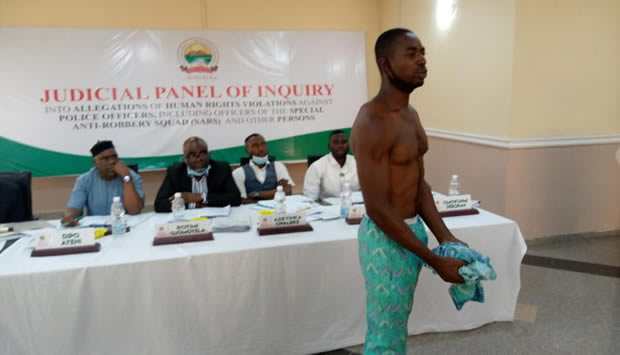
AYOTOMIWA Elegbeleye, a 30-year-old man on Thursday narrated before the Ekiti State Judicial Panel of Inquiry how the disbanded Special Anti-Robbery Squad (SARS), brutally tortured him with hot pressing iron.
Elegbeleye said he was arrested by eight SARS operatives in his house in Ikere-Ekiti on January 7, at about 11:55 p.m. and was taken to their custody where he was repeatedly tortured.
He said he was beaten with a rod while the officers allegedly tortured him with pressing iron for 23 days over his failure to offer N500,000 requested for him to be released.
Elegbeleye, who was reportedly brought from the Correctional Centre, showed members of the panel the injuries he sustained from the hot pressing iron when he was in their custody.
“I was arrested by the SARS operatives around 11:55 p.m. at my house in Ikere-Ekiti without telling me the crime I committed. That night, I was taken to their office, they beat and tortured me with pressing iron that I should confess being an armed robber.
“I was also beaten up with a rod. I gasped for breath begging them to release me but they said I would only be released with payment of N500,000.
“After 23 days in their custody and with serious bodily injuries, they took me to the police hospital in Oke-isa when they felt I might die due to my worse health condition.”
He said he was never involved in any criminal activities, pleading that the judicial panel should investigate his case with a bid of releasing him from the prison.
“I have come to the judicial panel for them to assist me in getting justice from this suffering I am passing through for an offense I don’t know anything about and I need urgent medical attention now because I am having serious difficulty in breathing due to the manner I was beaten by the SARS officers,” he said.
The counsel to the police, however, said a case of the alleged conspiracy, murder and armed robbery against the man is currently before the State High Court.
But counsel to the man argued that his client is before the judicial panel to seek justice over the brutality he suffered in the hands of the SARS operatives.
The Anti-torture Act 2017 guarantees the right to freedom from torture, cruel, inhuman and degrading treatment a non-derogable right, criminalizing torture and protecting victims and witnesses of torture.
Justice Cornelius Akintayo, Chairman of the judicial panel, however, adjourned the matter till December 3 for the continuation of hearing, calling on the parties to present their witnesses on the adjourned date.
Two networks of Nigerian Twitter accounts are amplifying pro-government content and appear to be staging an online suppression campaign to delegitimize the nationwide #EndSARS protests against police brutality.
From at least late October, 2020, these two networks –comprising a cluster of recently created grassroot sockpuppet accounts, and the second a group of high-follower paid influencers — posted and amplified content and hashtags supporting Nigerian President Muhammadu Buhari and his incumbent political party, the All Progressives Congress (APC). The accounts also shared and amplified content meant to suppress #EndSARS protesters, delegitimize prominent eyewitnesses and vilify local organisations pushing for accountability on the part of government.
The accounts did this by circulating meme-like graphics in a loosely coordinated manner. Over the span of a few minutes to several hours, these images — using the same fonts, colors and graphical elements — would be posted and amplified by both of these networks. The accounts frequently interacted with and amplified each other’s posts through retweets and quote tweets. The accounts coordinated their activity using a distinct set of hashtags, particularly #OneNigeria, #LeadWithLove, #EndViolence, and more recently, #EndViolenceInNigeria.
Considering the scale and persistence of the #EndSARS movement on social media, such a campaign stands to benefit President Buhari and his government. Although there is no direct evidence linking President Buhari’s government to these accounts, the content being shared is strongly biased in favor of President Buhari, his government and the Nigerian armed forces.
Background
The current cycle of #EndSARS activism was sparked on October 4, 2020, when video footage taken near the Wetland Hotel and posted on Twitter claimed the Nigerian Special Anti-Robbery Squad (SARS) shot and killed a young Nigerian man before speeding off in his car. The scale and resilience of the #EndSARS campaign on social media is noteworthy — the hashtag made 302 billion impressions between October 1 and November 18, 2020.
An analysis using Meltwater Explore indicating the volume of tweets using #EndSARS. Between October 1 and November 18, 2020, the hashtag has been used 185 million times by 31.5 million users. A large portion of this traffic was retweets. (Source: Meltwater Explore)
The claims surrounding the Waterfront Hotel video was false, though: it was later revealed the man had jumped from his moving car after being arrested by Delta Safe, a different law enforcement unit from the area. But despite the questionable narrative surrounding the Wetland Hotel video, the incident served as a catalyst: numerous Nigerians shared other videos of police brutality perpetrated by SARS officers against civilians under the same hashtag.
Within a week, nationwide protests were organized to call on the Nigerian government to disband the unit altogether. Within another week, international celebrities and Twitter’s Jack Dorsey rallied behind calls to #EndSARS.
An inflection point was October 20, 2020, at the Lekki toll gate in the south of Lagos. Video footage and social media posts suggested Nigerian soldiers had opened fire at protesters at the toll gate: a DFRLab investigation confirmed that Nigerian soldiers, firing their weapons, could be placed at the scene along with injured civilians. The Nigerian military labelled these initial reports as “fake news.”
While the governor of Lagos has since instituted a commission of inquiry into the incident, fears remain of a possible cover-up. The Nigerian army initially denied deploying any soldiers to the scene at all, but in a series of cascading retractions it later admitted to the deployment, but not opening fire, then subsequently admitting that soldiers fired their rifles, but claimed no live ammunition was used. The Nigerian minister of Justice Abubakar Malami has also suggested that hoodlums dressed in Nigerian military uniforms could be behind the shooting.
It is amid these fears of a cover-up and the rewriting of the narrative by state forces that these suspicious networks of accounts have now surfaced.
Repeat performers
During October and early November 2020, several Twitter accounts began sharing similarly stylized content using a combination of recurring hashtags: #OneNigeria, #LetLoveLead, and #EndViolence. Later, #EndViolenceInNigeria would also be used.
An analysis using Meltwater Explore of tweet volumes mentioning the hashtags #OneNigeria, #LetLoveLead, #EndViolence and #EndViolenceInNigeria. The initial spike on October 1 and October 2 related to the celebration of Nigeria’s 60th year of independence. (Source: Meltwater Explore)
Although some of these hashtags were used organically for real-world events at the time — such as #OneNigeria during celebrations of Nigeria’s 60th year of independence on October 1 and 2 — some of the accounts persistently engaging with these hashtags appeared suspicious. A recurring set of Twitter accounts used the hashtags to post, retweet and quote-tweet meme-like graphics.
The similarities between these images were striking; across multiple topics and subjects, the slides used a similar font, typographical style and artistic assets. This suggested that the content was created centrally for distribution by these accounts.
Examples of similarly stylized content shared by one of the more prominent accounts in the network. Over multiple days, the account posted images using the same typeface, quote-style format and repeated graphical assets. (Source: @mickiebrownkie / archive, top left; @mickiebrownkie / archive, top center; @mickiebrownkiev / archive, top right; @mickiebrownkie / archive, bottom left; @mickiebrownkie / archive, bottom center; @mickiebrownkie / archive, bottom right)
These users’ timelines revealed that they were tweeting the same images in a loosely coordinated way. Although there were slight variations in the accompanying text, the central message remained the same. The accounts also shared the same series of images within a timespan of a few minutes to several hours, again suggesting a very relaxed level of coordination. The accounts also frequently retweeted and quote-tweeted each other’s posts. This behavior could be observed over multiple days.
Screengrabs of examples from these influencer/digital marketing accounts distributing the same images on November 5 (top), November 10, (center) and November 13 (bottom). (Source: @johnfanimokun/archive, left; @mickiebrownkie/archive, center left; @lollylarry1/archive, center right; @cbngov_akin1/archive, right)
In addition, these high-follower accounts were seemingly supported by a group of low-follower sockpuppet accounts. Several of these were recurringly found to have retweeted and quote-tweeted tweets using the hashtags or related images.
Screengrabs from the @abubaka62933112 Twitter account showing the large number of retweets of related content and hashtags. (Source: @abubaka62933112 / archive)
Content without moderation
Specific examples of campaign “tracks” shared by this network included celebrating the Nigerian army’s victory over Boko Haram rebels; spotlighting infrastructure spending by the incumbent government; and a series of questions delegitimizing Obianuju Catherine Udeh, a popular Nigerian musician and eyewitness to the Lekki toll gate shootings. Shortly after an NGO with links to the Nigerian military provided Amnesty International Nigeria with an ultimatum to leave Nigeria or risk being lynched, this network circulated graphics that labeled Amnesty International “a threat to Nigerian national security.”
The content of these images could be classified into positive, negative and suppressive content. The positive content celebrated the achievements of the incumbent government, the Nigerian armed forces, or President Buhari himself. These were contrasted with negative content that cast doubt on the events of the Lekki shooting, criticized prominent witnesses and targeted the media and NGO’s such as Amnesty International Nigeria, who has been vocal in calling for accountability of the shootings.
Several of the images shared by these accounts took aim at supporters of the protests (left), showed support with the Nigerian armed forces (center) or supported the federal Nigerian government and President Buhari (right). (Source: @iam_ademuyiwa / archive, top left; @mickiebrownkie / archive, bottom left; @iam_demuyiwa / archive, top center; @iam_ademuyiwa / archive, top right; @iam_ademuyiwa / archive, bottom right)
A third category of content seemed aimed at dissuading social media users from participating in the protests. These urged the so-called Soro Soke generation (Yoruba for “Speak louder!”) participating in the protests to reconsider, as they can expect to be outmaneuvered politically by the children of the leaders they are protesting against. This echoed similar narratives delegitimizing the protests, insinuating the protests are an excuse for hooliganism and urging protesters to heed calls for a unified Nigeria.
Stockpuppets
To explore the nature of this network of accounts, the DFRLab extracted tweets using the hashtags #OneNigeria, #LetLoveLead and #EndViolence for the period from October 30, 2020 until November 12, 2020. The resulting data was visualized as a social network graph using Gephi to identify the most prolific tweeters and the accounts that amplified them. This revealed two distinct networks.
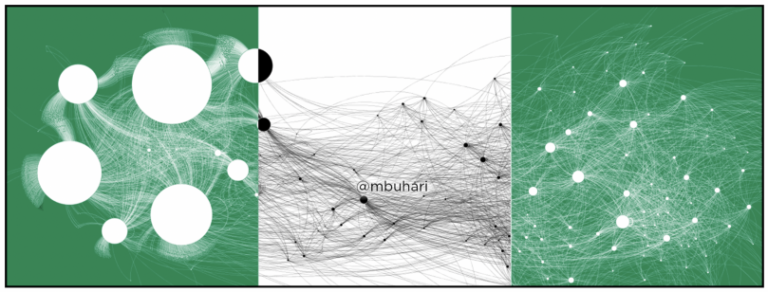
A social network graph of the accounts using #EndViolence, #OneNigerian or #LetLoveLead between October 30 and November 12, 2020. The analysis revealed two distinct networks — a sockpuppet retweet network indicated in green, and a number of pro-government influencers indicated in purple. (Source: @jean_leroux/DFRLab via Gephi)
The first of these networks, indicated in green above, bore hallmarks of a sockpuppet or astroturfing network. These accounts tried to create the impression of grassroots or organic support for tweets using either the hashtags or the related graphics. The accounts retweeted and quote-tweeted each other frequently, creating the dense network seen in the network graph.
The active accounts within this sockpuppet network had relatively small followings, and in some cases their followers consisted mainly of other accounts within the same network. Many of the newer created accounts also used the stock profile picture.
Screengrabs from the Followers tabs for three of the recently created sockpuppet accounts, indicating that the mutual followers are all within the same network. The account creation dates are also indicated in the image above. (Source: @feyiofada / archive, left; @kelvinchinons15 / archive, center; @sirdeeh12 / archive, right)
One of the most prolific accounts in this network (@abubaka62933112) was created five days after the Lekki toll gate shooting, but has to date tweeted 846 times. Of these tweets, 95% were retweets or quote-tweets of accounts which form a part of this network.
Screengrabs from the @abubaka62933112 Twitter account showing the largest portion of retweets by the account were of accounts identified within this network. All of the top nine most retweeted accounts were identified within the full network. (Source: @abubaka62933112 / archive @jean_leroux/DFRLab via TruthNest)
Some of the accounts in this network were created recently, and even in short succession: for example, three of the accounts in this network — @abuduwyinmi, @FeyiOfada, and @FardaGobir- were created within the span of five minutes. There are indications that at least two of these accounts were created using the same mobile phone number.
Screengrabs from several accounts that engaged with related hashtags revealed that many of these accounts were recently created, some in short succession. These accounts used profile images and banners related to the imagery used as well. (Source: @abuduweyinmi / archive, top left; @feyiofada / archive, top center; @faridagobir / archive, top right; @kelvinchinons15 / archive, bottom left; @ene_uk / archive, bottom center; @sirdeeh12 / archive, bottom right)
The account creation dates for this part of the network varied, and not all of them were newly created. Some of the accounts were created as far back as 2014, but only recently returned from extended periods of inactivity to engage exclusively with the same hashtags and graphics.
Screengrabs from the accounts for @Mr_eemraan (left) and @princpogu (right) indicating the extended periods of inactivity. A timeline of their recent activity corroborates their sudden reappearance. (Source: @mr_eemraan/archive, left; @princepogu/archive, right; via Twitonomy)
There are also indications that multiple Twitter accounts are being created and used within the network; examples such as @faysal306/@306faysal, @1unitednaija/@1unitednaija1, and @aliyuAfar/@aliyuafaru were found within the network.
Shillfluencers
The second portion of the network consisted of a group of highly active influencer and digital marketer accounts with relatively high followings. Some of these accounts are overtly aligned with the incumbent government and President Buhari, while others were paid marketers.
Screengrabs of the profiles of several of the prominent accounts in the influencer/paid marketer network. These accounts were either open about their communication and paid marketing roles (yellow) or overtly supportive of the Nigerian government (red). (Source: @scarfizal/archive, top left; @mickiebrownkie/archive, top center; @lollylarry1/archive, top right; @johnfanimokun/archive, bottom left; @cbngov_akin1/archive, bottom center; @iam_ademuyiwa/archive, bottom right.)
These accounts were very prominent in the network of tweets, likely as a result of their substantial followings. Whereas the sockpuppet accounts had mostly single digit follower numbers, these accounts had substantially more: the most prominent accounts had at least 20,000 followers, with the largest clearing just north of 81,000 followers. This is evidenced in the large number of engagements their accounts were responsible for within the network, visible as the size of their respective nodes.
A network analysis revealed the second group consisted of high-follower paid influencer and digital marketing accounts amplifying the hashtags and graphics related to the broader campaign. The size of each account indicates the account’s degree, or level of interaction with the hashtags in the network. (Source: @jean_leroux/DFRLab via Gephi)
As already demonstrated, these accounts posted the same content related to the campaign in a loosely coordinated manner. Their activity does not appear to be either fake or automated, but instead present as real social media influencers that are participating in this campaign.
Conclusion
This network appears to be an attempted counter of the #EndSARS movement’s popularity online, combining a mixture of social media influencers and sockpuppet accounts to amplify content beneficial to the Nigerian armed forces, President Buhari and the Nigerian government. At the same time, these accounts cast doubt at the legitimacy of the protests and the demands underpinning them.
This behavior is deceptive, and creates the impression of support for this content where there is little authentic support for it. There are also indications that the network is expanding: new sockpuppet accounts have already joined the accounts indicated here since our research began.
Jean Le Rouxis a Research Associate, Southern Africa, with the Digital Forensic Research Lab and is based in Cape Town.
The DFRLab team in Cape Town works in partnership with Code for Africa.
This report is published with permission from DFRLab





 The GDP growth rate measures the economic output of a nation by comparing one-quarter of the country’s GDP, to the previous quarter.