Home Blog Page 193

ICPC moves to challenge court ruling shielding Kano top official from N6.5bn corruption probe

0

THE Independent Corrupt Practices and Other Related Offences Commission (ICPC) has vowed to challenge a Kano High Court judgment that restrained it from further investigating Abdullahi Rogo, the Director General of Protocol at the Kano State Government House, who is facing a multi-billion-naira corruption probe.

The ruling, delivered by a justice, Musa Ahmad on August 18, 2025, declared that ICPC’s invitation to Rogo amounted to a breach of his fundamental rights and barred the commission from taking further action against him. The court also awarded him N2 million in costs.

The ICPC, however, insists that the decision undermines its statutory powers and shields a powerful official from accountability. The agency said it would file an appeal immediately after obtaining the Certified True Copy (CTC) of the ruling.

Rogo has secured a judgment restraining the ICPC from inviting him for further questioning.  Findings show that Rogo is under investigation by both the ICPC and its sister agency-the Economic and Financial Crimes Commission (EFCC) for allegedly siphoning ₦6.5 billion through fictitious contracts that were never awarded or executed.

According to ICPC investigators, Rogo allegedly diverted the amount belonging to the Kano State government through bureau de change (BDC) operators, Shell companies and personal accounts.

Already, the commission has reportedly recovered more than ₦1 billion out of the  funds that were allegedly funnelled through suspicious companies, bureau de change operators, and personal accounts.

Findings indicate that on July 2, 2025, the Federal High Court in Kano issued a final forfeiture order, granting the Federal Government control of a portion of the suspected loot traced to the governor’s aide.

Earlier in April the ICPC had approached the court by ex parte motion, seeking forfeiture of N142 million “reasonably suspected to have been acquired illegally.”

Governor Abba Yusuf of Kano State in a tete-a-tete with his embattled Protocol Director. PC: PREMIUM TIMES

On May 7, the judge granted interim forfeiture of the funds and directed that a notice be published in a national newspaper, inviting anyone with interest to show cause within a month why the money should not be permanently forfeited.

With no claimant emerging, the court ordered a final forfeiture of the N142 million, ruling that it represented proceeds of corruption connected to Rogo, The ICIR gathered.

It was also gathered that the forfeited sum is only a fraction of the transactions traced to the embattled protocol director.

The commission insists that its invitation was based on the powers provided in the ICPC enabling Act. Section 6(a) of the ICPC Act, 2000, states: “It shall be the duty of the commission where reasonable grounds exist for suspecting that any person has conspired to commit or has attempted to commit an offence under this Act or any other law prohbiting corruption, to receive and investigate any report of the conspiracy to commit, attempt to commit or the commission of such offence, and in appropriate cases, to prosecute the offenders.”

Following a petition by a whistleblower, the anti-corruption agency commenced investigation  against Rogo, for allegedly siphoning ₦1,170,000,000 (one billion, one hundred and seventy million naira) from the account of the Kano State Government.

During its investigation into petitions marked ICPC/P/NW/21/2024 and ICPC/P/NC/564/2024, the ICPC invited the protocol director to appear before its operatives to respond to the allegations.

However, instead of honouring the invitation, Rogo, through his lawyers, approached the Kano High Court in Bichi and filed an application to enforce his fundamental human rights.

The allegations

The ICIR reports that Rogo, Director General of Protocol at the Kano State Government House, is under investigation by the ICPC for allegedly siphoning state funds through multiple companies and personal accounts.

Investigators allege that over ₦1.17 billion was funnelled through A.Y. Maikifi Petroleum and Ammas Oil and Gas Limited into bureau de change operators, who then converted the money to U.S. dollars for Rogo. About ₦1.1 billion has since been recovered.

Rogo is also accused of laundering over ₦3 billion through a company account, with ₦142 million forfeited by court order. In addition, his Zenith Bank accounts reportedly handled billions in suspicious inflows, exceeding legal limits for public officials.

Sources within the anti-graft agencies disclosed that he initially made a confessional statement before later seeking refuge in the courts.

Meanwhile, some bureau de change operators have reportedly implicated Rogo in the multi-billion-naira corruption scandal.

The operators, in statements to EFCC and ICPC, reportedly described how they moved huge sums of public funds at Rogo’s request.

Legal fireworks

After being invited by the ICPC for questioning, Rogo, filed a suit at the Bichi Division of the Kano State High Court on February 20, 2025, seeking to enforce his fundamental rights.

He asked the court to restrain both the ICPC and EFCC from arresting, intimidating, or prosecuting him, arguing that such actions violated his rights to dignity, liberty, and freedom of movement.

Counter affidavit

In a counter affidavit, the ICPC denied any rights violations, stressing that Rogo was merely invited to respond to allegations of fraud, conspiracy, and money laundering, matters within its statutory mandate.

The agency argued that constitutional rights to liberty do not preclude lawful arrest or questioning where crimes are suspected, urging the court to dismiss the application as an attempt to obstruct its investigation.

“The transaction leading to the invitation of the applicant (Rogo) borders on the allegation of fraud, conspiracy and money laundering, among others and therefore within its statutory mandate,” the ICPC stated.

Controversial judgment

Although the application was argued on May 29, 2025,  The ICIR gathered that the judgment which was initially slated for July 28, was not ready. It was later fixed for August 18, within the annual vacation.

On August 18 2025, Ahmad of the Kano High Court ruled in favour of Rogo. He declared the ICPC’s invitation as a breach of Rogo’s fundamental rights and restrained the commission from further investigating activities as it relates to the applicant.

Although, he acknowledged that his rights had not yet been violated, the judge held that there was a likelihood of breach, given the overlapping invitations and threats of arrest.

The court declared ICPC’s invitation unlawful, and awarded him N2 million in costs against the anti-graft agencies.

The ICPC has vowed to appeal the judgment, accusing the court of shielding a powerful official from accountability.

Reacting to the judgment, the spokesperson for the ICPC, Demola Bakare, said it would head for appeal, insisting that it has the statutory mandate under the enabling law to carry out such investigation.

“We heard of the ruling and are awaiting a Certified True Copy (CTC). I can assure you that we are acting within our statutory mandate and shall proceed to file our appeal as soon as we get the CTC of the ruling,” Bakare said.

More than 1,000 killed as landslide wipes out village in Sudan

0

A LANDSLIDE in Sudan’s mountainous Jebel Marra area of Darfur has wiped out an entire village, killing more than 1,000 people and leaving just one survivor.

In a statement on Tuesday, September 2, the leader of the Sudan Liberation Movement/Army (SLM/A), Abdelwahid Mohamed Nour, disclosed that the landslide hit Tarseen village on August 31 following a week of heavy rainfall.

“Tarseen, famed for its citrus production, has now been completely levelled to the ground.

“Initial information indicates the death of all village residents, estimated to be more than one thousand individuals, with only one survivor,” Mohamed said.

The SLM/A further called on the United Nations and international aid agencies to help recover the bodies of the victims, which include several children.

The Sovereign Council in Khartoum mourned in a statement stating that “all possible capabilities” have been mobilised to support the affected area.

The SLM/A has stayed neutral in Sudan’s civil war between the National Army and the paramilitary Rapid Support Forces (RSF) who are battling for control of al-Fashir, the nearby capital of North Darfur state now under RSF siege and devastated by famine.

The Reuters news agency reported that residents of al-Fashir and surrounding communities have fled to Jebel Marra in search of safety, but food, shelter, and medical supplies remain scarce, leaving hundreds of thousands exposed to the rains.

Meanwhile in Tawila, where most have gathered, a cholera outbreak is spreading.

The ICIR reports that the disaster comes amid Sudan’s war now in its third year, which has pushed the country deeper into one of the world’s worst humanitarian crises, with famine already declared in parts of Darfur.

More than half of Sudan’s population is experiencing crisis-level hunger, while millions have been displaced from their homes, leaving them highly vulnerable to the country’s devastating annual floods.

Public-interest lawsuit: How does it work in Nigeria, who gets the money?

0

ON August 10, 2025, Comfort Emmanson’s journey from Cross River to Lagos aboard an Ibom Air flight turned into a national scandal. After she allegedly refused to switch off her mobile phone, the confrontation intensified and ended with her being forcibly removed from the aircraft, an incident caught on video and widely shared online.

The Nigerian Bar Association (NBA) and several Nigerians condemned the airline’s actions as “reckless” and a breach of her dignity, vowing to provide Emmanson with pro bono legal representation.

A Lagos-based public-interest lawyer, Ayodele Ademiluyi, filed a N500 billion suit some days later at the Federal High Court against the Federal Government, the NCAA and others, framing it as a challenge to “aviation impunity.” However, Emmanson herself denied any affiliation with the lawsuit or that she had filed such a claim. 

What are public interest lawsuits?

A human and civil rights lawyer Ofen-Imu Gabriel Uzuanje, said that public interest lawsuit is a legal action initiated in a court of law for the primary interest of the public, whether pecuniary, social, customary, political or otherwise.

“In Nigeria, public interest litigation is a tool used to address issues that affect the public at large, such as environmental degradation, human rights violations, and corruption. The primary aim is to ensure that the rights of the public are protected and that justice is served in matters that affect the designated segment of society. 

“It empowers citizens and organisations to hold the government and other entities accountable for actions that harm the public interest. It is an avenue for judicial activism and one that helps to develop legal jurisprudence,” he said.

Referencing the case of Adesanya v. President of the FRN & ANOR (1981) LPELR-147(SC), Uzuanje explained that the case was the basis of the principle of locus standi (right to sue) which is a critical aspect of public interest litigation. 

“The Court held that a general public interest is not a litigable interest that can ground locus standi, emphasising the need for a plaintiff/claimant to demonstrate a special or sufficient interest in the matter. Only those who were directly affected by a legal issue could bring a case to court.”

According to the lawyer, locus standi is a traditional and basic requirement in litigation. 

“To establish standing, a claimant or plaintiff must demonstrate a “sufficient, direct, and personal interest” in the matter, often by showing they have suffered special damage over and above that suffered by the general public. Under this view, someone without a direct, personal injury would be considered a “meddlesome interloper” or “busy body,” he added.

He also maintained that Nigeria, like many other legal systems, have moved toward a more liberal and expansive approach to public interest litigation. 

“This allows public-spirited individuals, non-governmental organisations (NGOs), or associations, to bring actions on behalf of others, or for the public interest. Public interest is a matter of public policy, shaped by factors such as socio, economic, political, customary and societal interest amongst others,” he explained.

Referring to the case of Fawehinmi v. Akilu [1987] 4 NWLR (PART67) 797, he added that, “This is particularly important in cases where the affected parties are marginalised or lack the resources to pursue legal action”, Uzuanje added.

The Fundamental Rights Enforcement Procedure, Rules (FREP) 2009, brings in a statutory flavour to this liberalised requirement (amongst others) for locus standi in human rights cases. The FREP allows the following to bring human rights applications: Anyone acting in their own interest; anyone acting on behalf of another person; anyone acting in the interest of a group or class of persons; anyone acting in the public interest; an association acting in the interest of its members or others.

Interpretation of locus standi in recent years

The case of Adesanya v. President of the FRN & ANOR (1981) LPELR-147(SC), stated the traditional position while the Fawehinmi v. Akilu [1987] 4 NWLR (PART67) 797, brought in the liberal position, that a person or organisation can sue on behalf of others even though they have no direct standing.

In Centre for Oil Pollution Watching v. NNPC [2018] LPELR 50830- SC, 98 – 112 PARAS F – F case, the Supreme Court held that any person acting genuinely in the public interest can maintain an environmental-related lawsuit without necessarily proving a personal injury. 

In the case of FOI enforcement on recovered assets (SERAP v. CCB & FG, FHC Lagos, 2020), the Federal High Court ordered authorities to disclose and widely publish details of recovered stolen assets and their spending since 1999, vindicating the public’s right to know. Monetary damages weren’t the point; the public gained information and oversight power.

Similarly, the Twitter ban ruled unlawful (ECOWAS Court, 14 July 2022) in a suit led by SERAP and others, the regional court held Nigeria’s seven-month Twitter suspension violated freedom of expression, ordering non-repetition and aligning state policy with rights another non-monetary, society-wide win flowing from public-interest litigation.

The case of Okafor & ORS v. Nwora & ANOR [2022] LPELR-58681(CA), where the Court held that an action under the Fundamental Rights (Enforcement Procedure) Rules, 2009, cannot be defeated on the grounds of lack of locus standi.

The case of AG of the Federation v. AG of Abia State & ORS (2024) LPELR-62576(SC), the Supreme Court discussed the locus standi of the Attorney-General in public interest litigation, highlighting the role of the Attorney-General in safeguarding public interest. The beneficiaries of such judgments are the citizens whose rights are protected by the enforcement of public laws. 

In Adedeji & ORS V. CBN & ANOR (2022) LPELR-57809(SC), the Court held that judgments in suits filed in a representative capacity ensures to all parties whether named or not, thereby benefiting all members of the represented group. 

In Ekpoke & ANOR V. USILO & ORS (1978) LPELR-1097(SC), the Supreme Court expanded the doctrine of Estoppel to hold that it ensure that judgments in public interest suits are binding on parties who were not directly involved in the litigation but are affected by the outcome.

“As we speak today, one Ayodele Ademiluyi Esquire has recently filed a suit out of the “KWAM1” incident, to challenge the Federal Government on the issue of air passenger treatments and rights. 

“This would be another opportunity for the courts to further develop the law. Hereunder are a few of several cases that have upheld this position in recent times,” Uzuanje said.

Ibom Air case

The ICIR reported that the suit number FHC/L/CS/1632/25, targets the FG, NCAA, FAAN, Ibom Air, ValueJet, and others, was based on what Ademiluyi described as a “blatant breach of the rule of law” and “unequal treatment” by aviation authorities. It addressed two separate but controversial incidents involving an Ibom Air passenger, Emmanson, and Fuji musician, King Wasiu Ayinde Marshal (Kwam 1). 

Uzuanje explained that the suit alleged impunity and double standard, while Emmanson faced immediate arrest, arraignment, and a travel ban, while KWAM 1, allegedly received preferential treatment. 

“In the KWAM 2 CASE, the main actor was arrested and instantly detained. There were issues of wrongful handling of this case. The outcry of the media (particularly social media) turned the tide. It was at this point that the Federal Government took a position on the issue. 

“The KWAM2 CASE was what woke the Federal Government up to action. And now, the question is, were the actions taken in line with the laws? These, I humbly think, are the reasons for the Ayodele’s suit on public interest grounds for the safety of air passengers, and proper regulation and enforcement of the aviation laws for the good of all,” he said.

Who benefits from awards in public interest lawsuits?

He explained that the suit was not at the instance of Emmanson and for her.

“Should the case fail, she has nothing to lose, and should it succeed, she might receive compensation,” he said.

The human rights lawyer said that the proceeds of the judgment are in  two folds.

 “First is the cost of litigation and the compensatory award/claims. The cost which involves the legal fees, expenses, logistics and cost in general will be for  the lawyer and the process of prosecuting the suit.

“On the other hand,  the compensatory awards/claims for the victims and affected groups. This may be in peculiar terms or declaratory relief and material awards,” he said.

Public, systemic benefits

“its main beneficiaries are those who are considered the average Nigerian. It is a vital instrument for promoting justice, accountability, and social change in Nigeria. It empowers citizens to actively participate in the democratic and legal process, making room to hold authorities accountable, thereby strengthening the rule of law and democratic governance,” he explained.

The human rights lawyer noted that the suit is supported by the Constitution of the Federal Republic of Nigeria, 1999, in Sections 174(3) and 211(3), which emphasise the Attorney-General’s duty to consider public interest in legal proceedings. 

“This is the reason Ademiluyi can file the N500 billion suit,” he added.

The ICIR reports that the court rulings of Ademiluyi’s  case can drive institutional changes, aviation procedure reviews, and regulatory oversight.

As a high-profile case, it will also raise awareness, embolden citizens to demand better governance.

Nigerians, FG react as Finnish court jails Simon Ekpa 6 years for terrorism

0

THE Federal Government has described the sentencing of pro-Biafra agitator Simon Ekpa as a victory against terrorism in Nigeria.

On Monday, the Päijät-Häme District Court in Finland handed Ekpa a six-year prison term after finding him guilty of inciting terrorist acts and associating with a terrorist group.

The court established that Ekpa leveraged his vast social media following to incite violence and destabilisation across Nigeria’s South-East region between August 2021 and November 2024.

In his reaction in a statement posted on X, the Minister of Information and National Orientation, Mohammed Idris, welcomed the ruling, calling it amajor victory in the war against terrorin the country.

“A major victory for the Nigerian people in the collective fight against terror,he posted.

Also in a statement issued on Monday in Abuja, Mohammed described the ruling as a notable development in the global effort to address terrorism and political violence.

He said the verdict brought justice to many Nigerians affected by the violent acts encouraged and supported by Ekpa and his associates.

He added that it also strengthened the relationship between Nigeria and Finland.

“For years, Ekpa’s inflammatory messages and support for violent activities have led to loss of lives, displacement, destruction of property, and fear in several communities. These actions directly threatened Nigeria’s peace and stability,he stated.

The minister argued that the decision by the Finnish judiciary affirmed Nigeria’s position and sent a clear message that people who promoted violence would face consequences, regardless of where they operated.from.

He added that the President Bola Tinubu administration would continue to protect Nigeria’s sovereignty and the safety of its citizens.

The Federal Government also urged those influenced by Ekpa’s actions to reject violence and pursue peaceful engagement.

The government expressed appreciation to the Office of the National Security Adviser (NSA), the Armed Forces, security and intelligence agencies, the Ministry of Justice, and the Nigeria Police for their service to the nation.

It said their work, along with the resilience of Nigerians, remained essential to the country’s stability.

Also speaking on Ekpa’s sentence in Finland, a former senator, Shehu Sani, reflected on his own release from Aba Prison in Abia State in 1998 after serving four years of a 15-year sentence for treason.

He remarked that while Ekpa might not endure the same harsh conditions, such as surviving on garri for every meal, the psychological weight of losing his freedom remained a profound form of suffering.

“When I heard Simon Ekpa bagged six years in prison in Finland, I remembered when I was released from Aba Prison, Abia state in 1998 after serving four of my 15 years sentence for treason. I believe Ekpa will not eat garri breakfast, lunch and dinner like us, even though the loss of freedom is an unquantifiable mental torture,he posted.

Also reacting to the ruling, a prominent member of the All Progressives Congress (APC) and die-hard Tinubu supporter, Joe Igbokwe, alleged that the most notable part of the judgment was that Ekpa would be sent back to Nigeria after completing his six-year prison term in Finland to face terrorism charges.

He added that the South-East had endured heavy losses over the past decade and noted that the identities of those involved would astonish the world.

Igbokwe also expressed a personal desire to confront those who attacked and burnt his home –  the City of David in Nnewi, Enugu State, on October 3, 2021, under the pretence of pursuing the Biafra struggle.

“The most Interesting part of the judgment is that Simon Ekpa will be deported after serving six years in a Finnish prison to face terrorism charges in Nigeria.

“The pains of what we lost in the SE in 10 years will go round. The findings and those involved will shock the world. My own prayer is to see face to face and know the people that invaded the City Of David Nnewi on October 3 2021 and set it on fire all in the name of the non existing Biafraud nonsense,he posted on Facebook.

Ekpa, a self-proclaimed disciple of the detained leader of the Indigenous People of Biafra (IPOB), Nnamdi Kanu, has spearheaded the controversial sit-at-home protests in the South-East.

The campaign’s violent enforcement has left several civilians and security officers dead.

After Kanu was extradited from Kenya in June 2021, Ekpa briefly took over as the main broadcaster on Radio Biafra. His stint was short-lived, as IPOB removed him for defying the station’s code of conduct.

The fallout deepened internal rifts and prompted him to create a splinter group.

The ICIR reported that a court in Finland  sentenced him to six years in prison for terrorism-related and other offences.

The Court on Monday, September 1, convicted the 40-year-old former municipal politician from Lahti on multiple charges, including participation in the activities of a terrorist organisation, provocation to commit crimes for terrorist purposes, aggravated tax fraud, and violations of the Lawyers Act.

According to the judgment, between August 2021 and November 2024, Ekpa attempted to promote the independence of theBiafra regionin southeastern Nigeria through illegal means.

Ekpa was accused of using social media to gain a politically significant position and taking advantage of the confusion within a key separatist movement in Nigeria to play a significant role in the group.

The court also found that Ekpa played a crucial role in founding and developing the separatist movement into a more organised structure, working alongside others.

During the trial, it was argued that armed groups were established under the movement, which the court classified as terrorist organisations.

Ekpa, however, denied all the charges against him.

The trial spanned 12 sittings between May 30 and June 25, 2025. It ended with a unanimous verdict by a three-judge panel.

Wike vows to demolish Abuja shanties

0

THE Minister of the Federal Capital Territory (FCT), Nyesom Wike, has vowed to evict residents living in Abuja shanties, describing them as illegal structures that serve as hideouts for criminals. 

Wike issued the warning on Monday, September 1, during a live media chat. He said people behind insecurity, kidnappings, and ‘one-chance’ mostly lived in shanties.

“When you say shanties, are shanties legal? You see, we cannot joke with the security. You have complained about insecurity, kidnapping, and ‘one-chance’. These are people who occupy all these shanties.

“In fact, sometimes, they take over the corridors where the road is supposed to pass. And when you want to do the road, they say, ‘compensate’. Compensate who? It is not correct. Mind you, criminals don’t stay where you will locate them. Criminals stay in these locations where you cannot locate them,” he stated. 

The minister argued that any government unable to guarantee the safety of its citizens had no justification to remain in power, noting that poverty was not an excuse to allow criminals continue to increase and terrorize citizens.

He said it was not possible for the Federal Government to build houses for every Nigerian.

“You see, we have to be careful about this poverty thing and no poverty thing. We cannot say because of poverty, we should allow you to kill people, to rob people, to kidnap people.

“We’re going to make sure that all illegal occupants of anywhere will be thrown out. It’s unfortunate. There’s nothing we can do about it because security is paramount.

He added that shanties defaced the city. He used the platform to inform Nigerians and Abuja residents that he was not intimidated by whatever anyone said. 

In December 2024 Wike said the structures being demolished by the Federal Capital Development Authority (FCDA) were properties illegally built on government lands, noting that he would not be swayed by blackmail.

The ICIR reported in August that the FCTA announced plans to pull down all illegal settlements, particularly shanties in Area 1, Durumi which it said had become an operational base for criminals, especially kidnappers, drug peddlers, and one-chance operators.

Doctors issue 10-day ultimatum, threaten strike

0

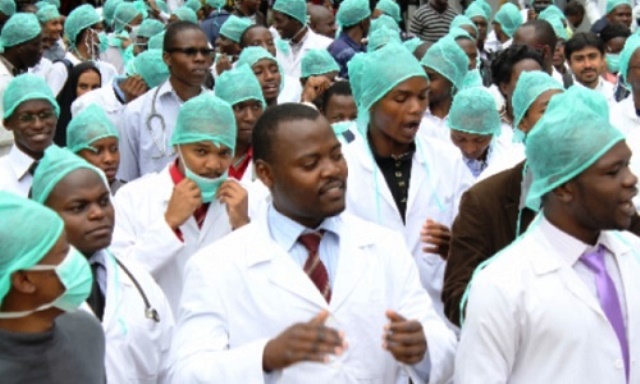
THE Nigerian Association of Resident Doctors (NARD) has issued a final 10-day ultimatum to the Federal Government, threatening to embark on a nationwide strike if its long-standing demands remain unmet.

In a communiqué signed by the NARD President, Tope Osundara, General Secretary, Oluwasola Odunbaku, and Publicity Secretary Omoha Amobi, on Monday, September 1, the union expressed frustration over the government’s failure to meet its demands.   

The threat followed an Extraordinary National Executive Council (E-NEC) meeting held virtually by NARD on Sunday, August 31.

The NARD noted that it had earlier given a three-week ultimatum in July, “which was extended in the interest of industrial harmony.”

However, the association said that despite repeated engagements, there had been no meaningful progress on critical issues affecting its members. 

It cited the non-payment of the 2025 Medical Residency Training Fund (MRTF) to a large number of doctors and the failure to pay outstanding salary arrears arising from the revised 25 per cent and 35 percent Consolidated Medical Salary Structure (CONMESS).

The doctors also criticised the continued withholding of the 2024 Accoutrement Allowance and raised concerns over what they described as the unjust downgrading of membership certificates issued by the West African Colleges of Physicians and Surgeons by the Medical and Dental Council of Nigeria (MDCN). 

They demanded immediate payment of the 2025 MRTF to all eligible residents, settlement of the five months’ salary arrears under the revised CONMESS, and full implementation of the 2024 CONMESS. 

They also called for the prompt payment of the 2024 Accoutrement Allowance and specialist allowances to all eligible doctors, as well as the restoration of recognition for West African postgraduate qualifications and the release of pending certificates by the NPMCN.

The NARD warned that if these demands were not met by Wednesday, September 10, 2025, the association would have no choice but to commence a nationwide strike.

NARD had, on June 1, called on the Federal Government to immediately settle specialist allowances and outstanding salary arrears owed to its members.

Speaking during a press conference in Uyo, the NARD president decried the continued exclusion of resident doctors from the payment of specialist allowances, despite their active roles in delivering critical care across various health institutions.

A communiqué issued at the end of the meeting outlined the frustrations of the association, including the “persistent casualisation and poor remuneration of resident doctors by chief executives of tertiary hospitals.”

The NARD also condemned the non-payment of arrears arising from the upward review of the Consolidated Medical Salary Structure (CONMESS).

Meanwhile, The ICIR reports that the ultimatum also came days after the Academic Staff Union of Universities (ASUU) led nationwide protests across campuses over similar issues of unpaid salaries, breach of agreements, and systemic neglect. 

The coordinated ASUU demonstrations, which took place in at least 12 universities on August 27, raised concerns over the fragile state of industrial peace in the education sector and highlighted broader discontent with government handling of public institutions.

Earthquake kills over 800, injures 2,500 in Afghanistan

0

A 6.0 magnitude earthquake struck Kunar, near the city of Jalalabad, in neighbouring Nangarhar province, eastern Afghanistan, on Sunday, killing at least 812 people and injuring more than 3,000.  

The administration spokesperson, Zabihullah Mujahid, revealed on September 1, that the quake struck at 11:47pm local time (19:17 GMT) destroying numerous villages. Houses made of mud and wood collapsed as helicopters were sent in to evacuate the injured.

Mujahid said the quake destroyed three villages in Kunar, with at least 610 people killed in Kunar and12 dead in Nangarhar.

The spokesperson for the Health Ministry, Sharafat Zaman, said the quake hit at a depth of 10 km (six miles)

Another Health Ministry’s spokesperson, Abdul Maten Qanee, citing efforts in areas from security to food and health, said “All our … teams have been mobilised to accelerate assistance, so that comprehensive and full support can be provided.”

The Defence Ministry said in a statement, that it had flown rescue teams out across the region, with 30 doctors and 800kg (1,764lb) of medicine into Kunar to support hospitals overwhelmed with casualties, with 40 flights carrying away 420 wounded and dead.

The ICIR reports that the earthquake is expected to put additional strain on the Taliban-led administration of the war-torn nation, which is already struggling with multiple humanitarian crises.

This marks Afghanistan’s third major deadly earthquake since the Taliban’s takeover in 2021, which coincided with the withdrawal of foreign forces and a sharp decline in international funding that once made up most of the government’s budget.

Afghanistan’s mountainous terrain makes it highly vulnerable to earthquakes, as the country lies near the convergence of the Indian and Eurasian tectonic plates, one of the world’s most active seismic zones.

In October 2015, a powerful 7.5-magnitude earthquake hit the Hindu Kush region in northeastern Afghanistan, claiming 272 lives. On January 17, 2022, the United States Geological Survey (USGS) reported that a shallow 5.3-magnitude quake struck Qadis district in Badghis province, western Afghanistan, killing at least 26 people.

In June 2022, a powerful 6.1-magnitude earthquake struck eastern Afghanistan, affecting the provinces of Paktika, Paktia, Khost, and Nangarhar, and killing more than 1,000 people as numerous homes collapsed.

Two earthquakes with magnitude 5.1 and magnitude 4.6 hit the neighbouring provinces of Kunar and Nangarhar in northeastern Afghanistan In September 2022, leaving at least eight people dead.

In October 2023, three earthquakes struck Herat province, marking one of Afghanistan’s deadliest natural disasters in recent years. The British Red Cross Society reported that at least 2,445 people lost their lives.

In March 2023, a 6.5-magnitude earthquake hit Afghanistan’s northeastern Badakhshan province, near the border with Pakistan’s Khyber Pakhtunkhwa, killing at least 13 people.

Finnish court jails Simon Ekpa 6 years for terrorism offences

0

A COURT in Finland has sentenced Nigerian-born Finnish, Simon Ekpa, to six years in prison for terrorism-related and other offences.

The Päijät-Häme District Court on Monday, September 1, convicted the 40-year-old former municipal politician from Lahti on multiple charges, including participation in the activities of a terrorist organisation, provocation to commit crimes for terrorist purposes, aggravated tax fraud, and violations of the Lawyers Act.

According to the judgment, between August 2021 and November 2024, Ekpa attempted to promote the independence of “Biafra region” in southeastern Nigeria through illegal means.

Ekpa was accused of using social media to gain politically significant position and taking advantage of the confusion within a key separatist movement in Nigeria to play a significant role in the group.

The court also found that Ekpa played a crucial role in founding and developing the separatist movement into a more organised structure, working alongside others.

During the trial, it was argued that armed groups were established under the movement, which the court classified as terrorist organisations.

“Ekpa equipped the groups with weapons, explosives and ammunition through his contact network. He also urged and enticed his followers on X (formerly Twitter) to commit crimes in Nigeria,” the court said.

Ekpa, however, denied all the charges against him.

The trial spanned 12 sittings between May 30 and June 25, 2025. It ended with a unanimous verdict by a three-judge panel.

Ekpa, a former municipal councillor in Lahti, is widely known for his controversial involvement in the Biafran separatist movement.

His online broadcasts and social media posts attracted both strong support and sharp criticism in Nigeria and abroad.

The ICIR reported in November 2024 that the Finnish authorities detained Ekpa, alongside four others, over suspected involvement in terrorism-related activities in Nigeria.

The Päijät-Häme District Court made the decision following a hearing in Lahti, where Ekpa was alleged to have incited crimes with terrorist intent, according to reports from Finland.

It was reported that the Finnish National Bureau of Investigation (NBI) accused Ekpa of leveraging his leadership in a Nigerian separatist group to promote violent activities in southeastern Nigeria. 

According to the NBI, these activities, which reportedly targeted civilians and government forces, were coordinated through social media from Finland.

Otto Hiltunen, detective chief inspector, revealed that the investigation focused on Ekpa and four other suspects, all of whom are accused of financing terrorism. 

Meanwhile, November 2024 was not the first time the Finnish government had arrested Ekpa.

The pro-Biafra agitator was arrested in Finland days after the Nigerian government expressed concern over his inciting comments and the imposition of a sit-at-home order on residents of Nigeria’s South-East, which could disrupt the elections scheduled for February 25, 20223. 

Ekpa was detained by authorities in Lahti in February 2023 and was later released in the evening of that day.

His arrest also came weeks after an investigation revealed how he and his foot soldiers raised funds for their operations under the Biafra Republic Government in Exile (BRGIE), through fundraising meetings held worldwide. 

According to the report, the group collects funds to support their militia activities, while also seeking alternative revenue streams such as cryptocurrency launches, merchandise sales, extortion, and international lobbying, to expand their operations.

The ICIR reports that Ekpa severally enforced sit-at-home order in the South-East, with what started as a peaceful exercise for the release of Nnamdi Kanu, leader of the proscribed Indigenous People of Biafra (IPOB), eventually becoming a bloody affair.

Residents of the South-East and visitors who decide to flout the order by stepping out for business, work, or personal reasons on Mondays risk losing their lives and property.

Several lives have been lost, and property destroyed at the hands of militias widely described as “unknown gunmen” who insist on enforcing the sit-at-home.

report published by The ICIR in 2023 noted that micro businesses in the South-East states lost an average of N4.618 trillion ($10.495 billion) in one year to the sit-at-home order.

Tinubu’s Brazil visit ignites hope for petrobras return but corruption shadow roars

0

PRESIDENT Tinubu’s recent visit to Brazil has once again reignited talks for the return of Brazil’s state-owned oil company, Petrobras, to Nigeria, but concerns persist over the firm’s previous domestic corruption cases.

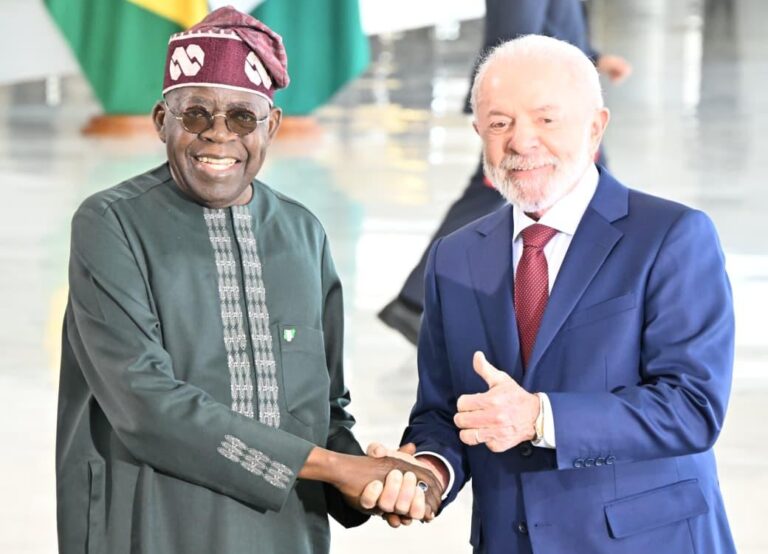
Brazil’s state-run oil company Petrobras, which left Nigeria five years ago, should be able to return quickly, Nigerian President Bola Tinubu told a press conference with his Brazilian counterpart, Luiz Inacio Lula da Silva during his recent two-day visit.

“We have the largest gas repository. I don’t see why Petrobras shouldn’t return as a partner in Nigeria as soon as possible,” Tinubu told a joint press conference with Brazilian President Luiz Inacio Lula da Silva in Brasilia on Tuesday, August, 26.

Many industry analysts believe that the return of the firm would open more doors for Nigeria’s deep-water off shore investments, although concerns of corruption still rears its head.

“We have been doing business with Petrobras. Petrobras is the closest in terms of deep-water off-shore exploration projects because their deep-water share lots of similarities with ours. We share the same climate and its going to be a good one because it will mean the huge investments  of some multi-nationals like Shell, Exxon Mobil in our country,” an oil and gas governance expert, Najim Animasaun told The ICIR.

Former Chairman of Major Oil Markers Association of Nigeria (MOMAN), Adetunji Oyebanji, told The ICIR that their coming back could open more investment opportunities into several untapped marginal fields in the country.

“Their coming back means investments into marginal fields and new acreages. It means that people are having more confidence to invest in Nigeria’s economy. You could also see that emerging economies are also aligning to build their own economic network,” he said.

Despite the hope that the return offers with regard to investment in Nigeria’s oil and gas, there are some unanswered questions about how the firm exited Nigeria in 2020.

The ICIR reports that Petrobras left Nigeria in 2020 due to a combination of factors, partly as a result of financial struggles largely due to domestic corruption scandals which impacted its global divestments and streamlining of its global portfolio.

According to Britannica, Petrobras scandal, Brazilian political corruption scandal began in 2014 that involved the indictment of dozens of high-level business people and politicians as part of a widespread investigation alleging that many millions of dollars had been kicked back to officials of Petrobras, Brazil’s huge majority-state-owned oil company, and to politicians—especially members of the ruling Workers’ Party.

The malfeasance was revealed by a federal investigation begun in 2014 under ‘Operation car wash’

The massive scheme to defraud Petrobras—Brazil’s largest enterprise and a symbol of the country’s entrenched economic nationalism—did not fully come to light, however, until after the narrow re-election of President Dilma Rousseff on October 26, 2014.

By the time of her second inauguration, on January 1, 2015, Rousseff’s approval rating had collapsed to 14 per cent, with some two-thirds of Brazilians blaming her for Petrobras’s troubles.

Petrobras and follow-up reforms after scandals

It would be noted that the investigation about Petrobras neck-deep corruption which began in 2014, uncovered a giant conspiracy involving bribery, kickbacks, and money laundering.

Further findings showed that Petrobras executives and politicians colluded with contractors to receive illicit payments and bribes in exchange for inflated contracts.

The scheme involved billions of dollars and implicated dozens of senior politicians and businessmen.

Notable key players in the financial corruption include the former President of Brazil, Lula Da Silva who was later found guilty and was convicted of passive corruption and money laundering related to a luxury apartment received from Grupo OAS.

His conviction was later annulled due to procedural issues.

In a similar vein, the CEO of Odebrecht-Marcelo Odebrecht, a major construction firm, was sentenced to 19 years in prison on March 8 2016, for paying over $30 million in bribes to Petrobras executives.

The investigation involved cooperation with authorities from over 60 countries, including the US Department of Justice and the Federal Bureau of Investigation.

The consequences of this scandal led to a significant decline in Petrobras’ stock price, negative impact on the Brazilian economy, and increased unemployment rates.

The scandal, however, led to significant reforms and restructuring efforts within Petrobras, including the appointment of new leadership and implementation of new policies to prevent corruption.

Tinubu’s visit offers hope

On Monday, President Tinubu welcomed Petrobras imminent return to Nigeria, five years after the Brazil’s state-owner oil company halted it’s joint venture operations.

Nigeria and Brazil have a robust trade relationships, with Nigeria standing as Brazil’s 49th largest export destination.

Trade between the two countries peaked at nearly $2.1billion in 2024.

Brazil exported almost $1billion to Nigeria, primarily sugar and jams and imported $1.1billion, mostly fertilisers.

Bayo Onanuga, the special adviser to the president on information and strategy, said the decision would ignite Nigeria’s economy.

In a statement, Onanuga noted that, “Petrobras’ return to Nigeria offers hope for renewed economic cooperation, potential investment in Nigeria’s vast natural gas resources, and a strengthening of the two countries’ energy sector partnership.

“This collaboration is expected to foster economic growth, as Nigeria seeks to leverage its resources through partnerships with established international companies like Brazil’s state-owned oil giant.”

#GEJ2027: A hostage in the lap of judges

0

By Chidi Anselm Odinkalu

SEVEN years ago, in 2018, my good friend and former Dean of Law at the University of Ghana at Legon, a professor, Raymond Atuguba, undertook a path-breaking study which sought “to move away from the perception that Justices of the Supreme Court dispense justice impartially under a constitutional democracy and reflect on the influences on the Justices as they are taking decisions.” The focus of the study was the influence of politics on judicial decision making in the Supreme Court of Ghana.

For this purpose, Atuguba examined 78 judgments by 39 Justices of the Supreme Court (including six Chief Justices) over the first twenty-five years of Ghana’s Fourth Republic from 1993 to 2018 in political cases, cross-matching the Justices who sat on the cases against the political party or regime which appointed them. As a functional matter,  Atuguba’s study defined a political case to be one in which “you have a political party or politician or politically exposed person as a party to a suit or where it revolves around issues that inure to the political,  social, financial or other benefit of a political party or its operatives or known affiliates.”

The conclusions were revealing but hardly shocking. The study found overwhelming correlation between Justices and the regimes that appointed them. It showed that in a majority of cases, the politics explained how the judges decided. In presenting the conclusions of the study,  Atuguba argued for the need to “acknowledge political decision making by our Supreme Court….”

Courts are not instruments of revolutionary change. On the contrary, most judges across the world see their roles primarily as being there to afford cover to the regime which appointed them or the system under which they work and, as Alexander Hamilton wrote, are defined by “an unwillingness to hazard the displeasure” of these political benefactors. It is unusual for judges, especially in a developing country, therefore, to defect from the path of support for a ruler or party in power.

This should explain the chronically anomalous jurisprudence that has become the routine of judicial decision-making in Nigeria under elective civilian government. Rather perversely, this situation should present politicians with the needed incentive to ensure that the country’s electoral system is credible because once out of power, those who enjoyed the benefit of weaponised or situational court decisions suddenly find themselves at the receiving end.

Former president, Goodluck Ebele Jonathan – also known as GEJ – now finds himself in this situation. As the country prepares for presidential elections in less than 18 months, it now seems certain that GEJ seeks a return to the partisan fray. The man himself has made moves which clearly indicate that he is giving this more than an active consideration. If he were to choose to run for the presidency, his political brand is likely to be #GEJ2027.

Columnist, Chidi Amuta, has counselled GEJ to “flee” from the importuning of those who want to draft him into the 2027 contest. Should he choose to ignore that, however, the likelihood is that the judges will have the final say on his ambitions. It does not require a lot of imagination to see why or how such a case will be decided under the present dispensation.

The ambitions of President Jonathan in 2027 will rest on two different provisions of the 1999 constitution. Under section 137(1)(a), a person is disqualified from running for Nigeria’s presidency if “he has been elected to such office at any two previous elections.” This provision was there when President Jonathan ran unsuccessfully for a second term in 2015. At the time, there was a considerable amount of murmuring about his ineligibility to run, having assumed office for the last year following the death of Umaru Yar’Adua in May 2010.

Having been on the presidential ticket with Yar’Adua in 2007 and again at the top of the ticket in 2011, it was arguable in 2015 that GEJ had previously “been elected to such office” twice and was therefore barred from running again. However, it was beyond improbable that a judge could be found at the time to rely on that argument to preclude a sitting president from running.

In 2027, however, two things will be different. First, two years after GEJ left office, in 2017, the fourth alteration to the Constitution (no. 16), introduced section 137(3) which provides that: “A person who was sworn-in as President to complete the term for which another person was elected as President shall not be elected to such office for more than a single term.” This will put GEJ’s eligibility directly in issue. The question will be simple: having inherited the presidency from President Yar’Adua and served a full elected term from 2011 to 2015, is he still eligible to run again in 2027?

On that question, the judges will not be apolitical. In litigation, this will be presented as a legal question. In reality, it is a political one and this is where the second issue arises. Where in 2015, GEJ enjoyed the favours of judicial complaisance and the presumption against judicial defection from incumbents, that presumption would count against him in 2027. And where in 2015, no judge could be found to bump him from the race under cover of judicial ceremony, there will be no end to the number of judges happy to oblige the incumbent in 2027 with precisely that kind of judicial cover for a political hit job.

The only issue will be the timing of such a judgment. A ruling party looking to make the most of this situation will probably lend its organising and marketing assets with deniability to the promotion of the ambitions of GEJ to begin with. That is the easiest way to decimate the ranks of the opposition. By omission or commission, a putative #GEJ2027 project will suck most of the oxygen from the ranks of other opposition candidates. It will be in the interest of the ruling party to egg him on until he secures the ticket of a major party for the contest.

At that point of no return, an innocuous looking legal challenge will materialise questioning GEJ’s eligibility to run under the constitution. They will sue him, his party, and Independent National Electoral Commission (INEC) and will ask the courts to restrain INEC from recognising him as a candidate in the election.

The suit will slow walk its way to a decision. Then, suddenly, around the week before the vote, judgment will come down restraining the party from presenting GEJ as a candidate and restraining the INEC from having him on the ballot. Any serious threat to the incumbent’s ambitions will have been judicially squelched. The script is so easily authored, the ruling party must be licking its chops at the idea of a Jonathan candidacy. There can be no better political gift for the incumbent president and his ruling party.

GEJ should know that those importuning him for a tilt at the presidency in 2027 are clutching at withered straws. The judicial landscape he left in 2015 is radically different from what he will confront should he choose to throw his hat into the ring 12 years later in 2027. The odds are that, whatever GEJ does, his ambitions will fall to a judicial hit job made to look all very legal. He can choose to risk it, safe in the assurance that his ambitions will be crushed in the laps of the judges; Or he can choose to continue in the life of a statesman who still has a lot to offer to his country in meaningful leadership.

A lawyer and a teacher, Odinkalu can be reached at chidi.odinkalu@tufts.edu