THE Nigerian Army on Saturday told the Lagos judicial panel addressing cases related to the Special Anti Robbery Squad, SARS, that the military did not shoot protesters with live bullets when soldiers were deployed to Lekki tollgate on October 20.
Ahmed Taiwo, Commander of the 81 Military Intelligence Brigade, disclosed this when he appeared before the Lagos panel on behalf of the army.
He also insisted that the military only fired into the air and not directly at the #EndSARS protesters.
While explaining that the blank bullets used cannot cause any damage to the flesh, Taiwo said if real bullets were indeed fired, one bullet had the potency to kill three persons at one shot.
Babajide Sanwo-Olu, governor of Lagos, had declared a 24-hour curfew on October 20, earlier scheduled to begin at 4 pm. However, the time was changed to 9 pm afterwards.
A few minutes before 7 pm, men in army uniform arrived the Lekki tollgate where #EndSARS protesters had gathered and forcefully dispersed the protesters.
Giving a breakdown of what happened at the Lekki tollgate on October 20, Taiwo said that Sanwo-Olu invited the army to restore order after the #EndSARS protests degenerated into crisis.
“The situation was so dire and they wanted everyone off the streets. If you like, sleep in your office; if you like, stay at home if you are near your house, but get off the streets and let us deal with the criminals and hooligans,” Taiwo said.
“After some observation, this timing was shifted to 2100 hours, that is 9 pm. However, this timing was not communicated to the Nigerian Army.
“Be that as it may, the Nigerian army deployed immediately to forestall further violence and loss of lives,” he concluded.
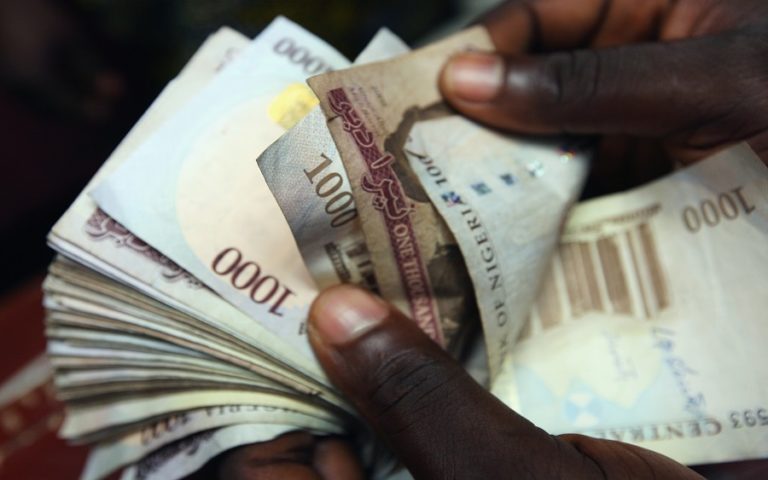
THE Naira dropped against the US Dollars, USD, by N470 in the parallel market which is the weakest rate in six weeks, despite the Central Bank of Nigeria, CBN, interventions to close demand for the dollar within the official window.
According to abokifx.com, a website that collates unofficial market rates of foreign currencies shows the naira closed at 382.10 against the USD on the official market, where the CBN sells limited amounts of the greenback to importers.
However, the naira conceded all grounds it had gained after the CBN started weekly interventions of supplying USD to importers and licensed Bureau de Change operators, indicating the perpetual existence of increased demand for the dollars.
The CBN had resumed sales to licensed Bureau de Change operators in September after the Federal Government opened up international travel following the lifting of COVID-19 restrictions.
The USD available within the official weekly window was insufficient to meet demand which accounted for the fall of the naira in the parallel market.
After trading at N465, N466 and N468 against the greenback on Tuesday, Wednesday and Thursday respectively, until it dropped on Friday to its weakest in more than a month.
As of November 10, the foreign reserves stood at $35.63 billion, the lowest since August 24, according to the CBN.
As oil prices remain within $40 to $42 per barrel, the CBN will find it even harder to support the exchange rate in the near term.
With foreign investors inflow still in lower proportions, and a limited window to attract forex, the situation could lead to further devaluation.
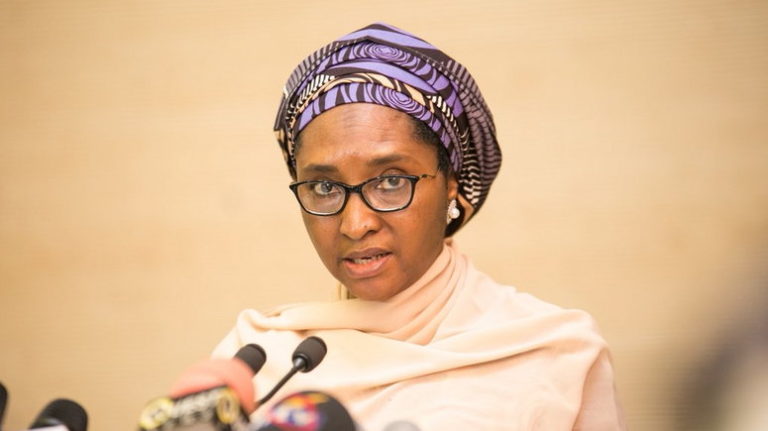
THE Federal Government has announced that it is in the process of acquiring a $750 million loan from the World Bank, in an attempt to stimulate the economy and cushion the effect of COVID-19.
Zainab Ahmed, the Minister of Finance, Budget, and National Planning stated this at the inauguration of the Federal Steering Committees of the Nigeria COVID-19 Action Recovery and Economic Stimulus (N-CARES) program in Abuja, where she disclosed that the government is weighing the effects of COVID-19 and cause of civil unrest in the country.
“The consequences will be too high if we ignore the root cause of rising civil unrest in our country. We must, therefore, fashion out ways of ensuring that post-Covid-19 is not injurious to the Nigerian people and the economy,” Ahmed said
The minister also emphasized the importance of securing the loan to support the economy, stating that Nigeria cannot continue to remain in recession and the needs of its estimated 200 million population must be met.
Already, Nigeria’s Total Debt Stock (Foreign & Domestic), as at June 2020, stood at N31.01 trillion ($85.9 billion), according to Nigeria public debt report, released by the Debt Management Office (DMO).
The country in August, secured a $114.28 million COVID-19 loan from the World Bank, with the aim of helping Nigeria fight COVID-19 with a specific focus on state level responses.
According to a statement from the World Bank, the financing included $100 million credit from the International Development Association (IDA) and $14.28 million grant from the Pandemic Emergency Financing Facility.
The $100 million credit with Project ID number: P173980, is due to be paid back over 30 years, with additional 5 years grace period.
The Civil Society Legislative Advocacy Centre (CISLAC) has expressed worry over the rate at which the Presidency seeks approval to borrow more money despite huge amount of resources that have been wasted.
The organisation disclosed that a total of $23.224 billion and N7.744 trillion have been left unaccounted for by various ministries, departments and agencies (MDAs) in the country.
Disclosing series of spending yet to be accounted for, it added that the June 2020 publication of the NNPC 2018 Audited Financial Statement (AFS) shows that three of Nigeria’s four refineries gulped N1.64 trillion in cumulative losses recorded in their operations since 2014.
Meanwhile, Nicholas Ossai, member, federal house of representatives and chairman of the house committee on treaties, protocols and agreements recently raised an alarm, stating that some government officials were signing empty pages of loan agreement.
Ossai made the allegation while speaking at the investigative hearing on external loans and commercial agreements in Abuja on August 19, revealing that government agencies sign commercial agreements worth billions of dollars before going to the federal executive council for approval to execute them.
FALSE claim circulates online that MTN is giving out N15,000 airtime as a customer reward program. The claim circulated on WhatsApp that MTN is giving out N15,000 as part of a customer reward program for those who have been using MTN for more than three months.
A post retrieved from a WhatsApp group on November, 8 directed people to click the link to claim their own.
The post reads “MTN GIFT: Check if your number has been chosen by MTN to receive ₦15000 As Party of customer REWARD Program For Who has been using MTN for more than three months. MTN USERS ONLY Deadline: 2020-12-9 Click http://bit.ly/MTN_GIFT months.”
The Findings
The findings conducted by this reporter divulged that MTN has disclaimed the purported links being shared by people on WhatsApp that the MTN is giving out N15,000 airtime, pointing out that the post is fake and is not emanated from its website.
The MTN has released a memo on its official Twitter handle that the Customer Reward program which claims to give N15,000 worth of airtime for MTN users is fake.
The circular read thus: “Our attention has been drawn to a fake online Customer Reward Program which claims to give N15,000 worth of airtime for customers who have been on MTN network for more than three months.
“Please note that any product/value offering by MTN Nigeria PLC is done on our official platforms, MTN Nigeria on Facebook, @MTNng on Twitter, Instagram Tiktok, and www.mtnonline.com.”
In addition to that, clicking the link will take the users to a website in which he will be asked to input his phone number and share the link to different 15 WhatsApp groups to claim the N15,000 airtime, the next thing is to find themselves lost in that same website.
The findings by this reporter showed that none of those who have shared the link has confirmed that they have benefited from the so-called Customer Reward Program.
Experts Opinion
While speaking with Abdulgafar Taoheed, an expert in White Hat Hacker, he revealed that pressing that bogus links has a lot of implications, noting that the people that developed the website can have access to the phone details of anyone who clicks the link and they can hack the person’s social media account easily through it.
He disclosed that the website has been modeled in a way that will extremely consume the data of anyone who press the link to the website which will be a source of income for them.
“Anything can happen but it looks like bio-data encryption; I mean it will just take some of your biodata with the network. The website is not secured at all and not from the MTN as they claimed it is, ” he clarified.
Verdict
The claim that MTN is giving out N15,000 worth of airtime as a reward program for customers is False.
As of the time of fact-checking this, the site has been temporarily suspended.
NIGERIA ranks 115th of 180 countries on the 2020 Global Press Freedom Index, as 160 journalists were attacked in the past two years. For the dismal record, Nigeria deserves a “badge of dishonour”, says a report recently published Premium Times Center for Investigative Journalism, PTCIJ.
The press freedom report was developed from cases collated through the Press Attack Tracker, a civic technology tool designed to track and report attacks on the press.
The report also showed that the attacks on journalists and the media were multi-dimensional with physical harassment and arrests being more prevalent. However, the perpetrators of the attacks are mostly government officials, state institutions, security agencies and political parties.
North-Central region of the country recorded the highest number of attacks on the press with 47 attacks when compared to the five other geopolitical zones.
North East region, the Nigerian hotbed for terrorism activities, ironically recorded the least attack on the press in the country.
“Between July 2019 and January 2020, two journalists were shot dead in Abuja, the country’s capital, while covering protests by the Islamic Movement in Nigeria.
“The reality is reflected in a deeper look at the cities with the highest volume of attacks, with the FCT hosting 73 per cent of all attacks in the region. This is likely a pointer to the government’s attitude towards the freedom of the press and its constitutionally guaranteed rights to hold the powerful to account,” the report said.
Nigeria dropped from 111 in 2015 to 116 in 2016 and fell to 122 in 2017, entering the “red zone” for press freedom. It then bounced back to 119 in 2018, then dropping to 120 in 2019.
Since President Muhammadu Buhari assumed office in 2015, the country’s press freedom ratings have been steadily fluctuating, however, the latest rise on its ranking still puts the country within the “red zone” for press freedom.
The “red zone” for press freedom is a situation in countries where press freedom is classified as “bad”.
Adenike Aloba, Program Manager at PTCIJ said the improvement in the country’s rating does not reflect the country’s growth since the situation was still bad for press freedom.
“Nigeria’s ranking on the Press Freedom Index continues to sit in the red zone, ranking 115 in the 2020 ranking, an improvement on its 2019 ranking but no less solidly red, the colour used to identify countries that earn the badge of ‘bad,” she said.
Lanre Arogundade, executive director of the International Press Centre, in his review of the report, said examining the report makes it obvious why Nigeria still belongs to the batch of countries that have done poorly on the press freedom index.
He said the report wants the citizens to “consciously” fight for a free space to avoid permanently staying at the cross-roads and worst still, be perpetually subjugated.
The report also highlighted the fine of N3 million levied against each AIT, Channels TV and Arise TV for allegedly broadcasting unverified information about the #EndSARS protests.
THE Ondo State Government has banned the unauthorized use of vehicles with tinted glass in the state.
Donald Ojogo, Commissioner for Information and Orientation, who disclosed this in a statement on Friday added that arbitrary use of such vehicles will be impounded.
He also stated that commercial motorcycle operators within the state are only allowed to operate from 6 am to 6 pm daily.
“That all vehicles with unauthorized tinted glasses are hereby banned from plying the roads. Every of such vehicle without a duly certified permit issued by a relevant security agency shall be impounded,” he said.
“That all commercial motorcycle operators, otherwise known as Okada, are to, henceforth, operate within the hours of 6 am and 6 pm. In other words, none in this category shall operate beyond 6 pm in the evening. Anyone found flouting this directive shall have his motorcycle impounded.”
The commissioner said the state government was worried about the alarming rate of insecurity, hence the decision to arrest the situation.
“The Ondo State Government has noted with concern the worrisome spike in crime rate across the State. In particular, security reports at the disposal of the government are considered signs deserving of serious attention.
“Specifically, the last one week witnessed an unimaginable upsurge in robbery, kidnapping and in some cases, murder. This is no doubt, condemnable.”
It urged all security agencies to come out and confront this abhorrent development with a promise to provide necessary support in terms of both human and logistics aids shall be provided to ensure the safety of residents within the State.
He called on residents to cooperate with security operatives by providing information about crimes in their immediate environment.
“Let’s collectively keep our State safe. Expose criminals,” he stated.
THE Imo State House of Assembly has impeached its speaker, Chiji Collins over allegations bordering on financial misappropriation, high handedness and gross misconduct.
Collins, who represents the Isiala- Mbano state constituency was removed during house plenary on Fridayat the legislative chamber of the Assembly complex in Owerri, the state capital.
The former Assembly Speaker was sacked following the decision of 19 out of 27 members of the Assembly who voted in support of the motion to strip him of his office.
Paul Emeziem from Onuimo Local Government Area was elected as the new speaker of the Imo State House of Assembly by the lawmakers.
Collins’ impeachment is coming eight months after he defected to the All Progressive Congress (APC) alongside other 15 other lawmakers from the People’s Democratic Party (PDP)
He had defected to the APC about two weeks after a supreme court judgement ousted Emeka Ihedioha as the governor of the state replacing him with the incumbent governor of the state, Hope Uzodinma.
Chiji had won the Isiala-Mbano Assembly seat on the platform of the All Progressive Grand Alliance (APGA) but joined PDP in the race for the speakership position of the Imo State Assembly.
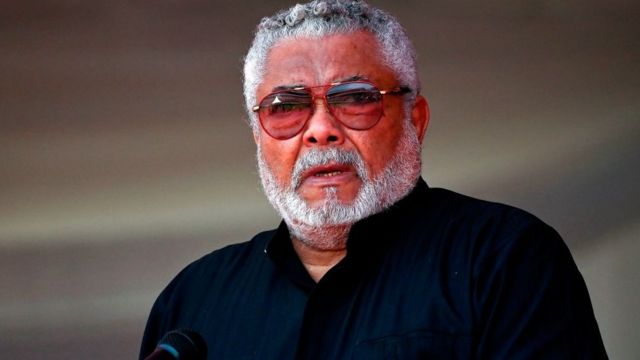
JERRY Rawlings, Ghana’s former President, has died from complications of COVID-19.
Rawlings, one of the most respected African leaders, was a military leader in Ghana and later became a politician who ruled the country from 1981 to 2001.
He died at Korle-Bu Teaching Hospital in Accra, capital of Ghana, on Thursday morning.
According to the Africa Centers for Disease Prevention and Control on Wednesday, the number of people infected by the coronavirus in Africa has crossed 1.9 million with at least 45,954 people have died due to virus-related complications across the continent since February.
The ICIR in this report compiles some personalities who died as a result of the coronavirus disease in Africa.
Jerry Rawlings, Ghana’s former President
Rawlings, who is one of the most respected African leaders, was a military leader in Ghana and later became a politician who ruled the country from 1981 to 2001.
Dele Momodu, a former Nigerian Presidential candidate, confirmed the development on Twitter.
“The saddest news of this year. My God. Former President Jerry John Rawlings of Ghana has passed on. I’m completely devastated. Good night, an African hero,” he tweeted.
He was until his death, the African Union envoy to Somalia.
Chief of Staff to Nigerian President, Abba Kyari
Though Nigeria had recorded 13 deaths from Covid-19 before April 17, the demise of Abba Kyari, Chief of Staff to Nigerian President Muhammadu Buhari underscored the deadly impacts of the novel virus.
He had tested positive for coronavirus disease after returning from a trip to Germany on March 15.
His death was confirmed in a statementposted by Femi Adesina, the presidential spokesperson early hours of Saturday.
“Chief of Staff to the President, Mallam Abba Kyari, passes on. May God rest his soul. Amen. Funeral arrangements to be announced soon,” Adesina tweeted.
Several reports had it that Kyari had a history of medical complications, including diabetes and was transferred from Abuja the capital city to Lagos for medical care before his eventual death.
Emeka Chugbo: Nigerian doctor infected on duty
Emeka Chugbo, a Nigerian medical doctor, succumbed to Covid-19 after contracting the virus while managing an infected patient at his private clinic.
According to a BBC report, Chugbo was admitted to Lagos University Teaching Hospital on Monday and died on Wednesday April 15, according to the hospital’s director, Chris Bode.
Bode said the doctor was brought to the hospital with severe symptoms. The Nigerian Medical Association (NMA) said the deceased was exposed while managing a patient who died a week before. His friend, Lawal Oyeneyin, said Chugbo who was 60 also had a history of asthma, his friend
Top South African scientist, Gita Ramjee
According to Anadolu Agency report, Gita Ramjee recently returned to South Africa from a trip to London without showing Covid-19 symptoms, but later fell sick and was admitted to a hospital in Durban on the East Coast where she died on Tuesday March 21.
Professor Ramjee was renowned for her work on finding HIV prevention methods that were conducive to the lifestyles, circumstances and perceived risk factors that South African women face, as well as attempts to find an effective HIV vaccine.
“We have indeed lost a champion in the fight against the HIV epidemic, ironically at the hands of this global pandemic,’’ South Africa Deputy President David Mabuza said in a statement.
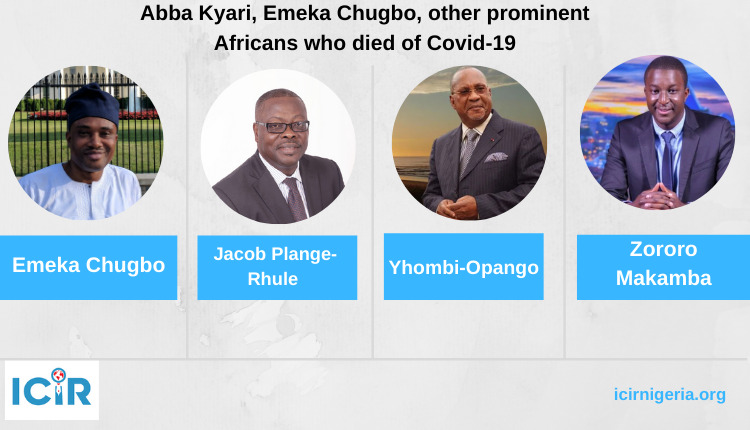
Abba Kyari, Emeka Chugbo, other prominent Africans who died of COVID-19 Photo Credit: Abeeb Alawiye @TheICIR
Professor Jacob Plange-Rhule: Ghanaian renowned physician
One of Ghana’s famous doctors and a senior lecturer in the field of renal medicine, Jacob Plange-Rhule died after contracting the novel corona virus.
According to GhanaXtra.com, Plange-Rhule, a former president of Ghana Medical Association (GMA), reportedly passed away on April 10 in Accra, after a battle with the deadly virus.
Justice Blankson, GMA General-Secretary, said it was too early to tell whether the deceased got infected in the line of duty or not.
For a man who dedicated the better part of his life to curing the sick, his death has been described as an incalculable loss by persons within and outside the medical fraternity.
Pape Diouf, former manager of Marseille
A former sports journalist, a legendary football agent and former president of Olympique Marseille football club, Pape Diouf, 68, became the first Covid-19 victim of Senegal.
In a report by Africanews, authorities confirmed that he had been in intensive care in Dakar. Senegal President Macky Sall wrote on his official Twitter account that he had followed Diouf’s health closely after he was admitted for treatment.
“I pay tribute to this great figure in sport,” Sall wrote. “I pay tribute to the medical staff at Fann Hospital who spared no effort to save him.” Relatives said Diouf was meant to be moved to France. He had recently traveled to several countries in the West Africa region.
Ex-Congolese president, Yhombi-Opango
On March 31, former president of the Republic of the Congo, Jacques Joaquim Yhombi-Opango died after contracting coronavirus disease.
Yhombi-Opango died in a Paris hospital on Monday. He was 81.
According to Aljazeera, Yhombi-Opango was ill before he contracted the virus, his son told AFP news agency.
He led Congo-Brazzaville from 1977 until he was toppled in 1979, being ousted by the country’s current leader, Denis Sassou Nguesso.
Zimbabwean broadcaster, Zororo Makamba died ‘alone and scared’
Thirty-year-old Zororo Makamba was “alone and scared”, according to his older brother who spoke to Zimbabwe’s privately owned Daily News newspaper.
BBC reports that Makamba was being treated in the Wilkins Hospital, designated as the main isolation facility for coronavirus patients in Zimbabwe’s capital, Harare.
Shortly after he talked to his family, he was dead.
The death of Makamba, a well-known journalist, came swiftly – less than three days after his diagnosis.
Rose Marie Compaore: Top lawmaker becomes Burkina Faso’s first COVID-19 casualty
Rose Marie Compaore was the first person to die of coronavirus in Burkina Faso on March 17.
The authorities confirmed that Compaore, who was the first-vice president of the parliament died aged 62 and was said to have diabetes, an underlying health condition.
President Marc Roch Kabore and Speaker of the National Assembly, Alassane Bala Sakande, were among those that sent condolences to the family via social media platform Twitter.
Legendary Manu Dibango
Manu Dibango died on March 24 in France at the age of 86 from Covid-19.
The iconic musician played a variety of genres and is known for one of his most popular songs, “Soul Makossa,” which was sampled by Michael Jackson and Rihanna.
A statement released by the family read: “It is with deep sadness that we announce to you the loss of Manu Dibango, our Papy Groove, who passed away on 24th of March 2020, at 86 years old, due to covid-19.”
Born in 1933 in the city of Douala, he attended church from where he honed his music skills.
Celebrated for a unique blend of jazz, funk and traditional Cameroonian music.
Influenced bands from Kool and the Gang in the 1970s to hip-hop in the 1990s.
Ex-Somali Prime Minister “Nur Adde”
Former Somali prime minister Nur Hassan Hussein died on April 1, at a London hospital where he was receiving treatment for Covid-19.
Hussein served as prime minister between November 2007 and February 2009 and was credited with leading peace talks between the Ethiopia-backed government and Eritrea-based rebels.
“We extend our most profound condolences to the Somali people, friends and bereaved family of Somalia’s former Prime Minister, HE Nur Hassan Hussein who passed away in London, UK,” Somali PM posted on Twitter.
THE Ekiti State Government has taken delivery of medical items donated by the Office of the Sustainable Development Goals (SDGs) in support of the state’s fight against COVID-19 and other infectious diseases.
Kayode Fayemi, while receiving the equipment in Ado Ekiti, said his administration would continue to collaborate with private and public organisations including individuals to ensure better health care delivery for the people.
The equipment includes 100 hospital beds with mattresses, 12 motorized tricycle ambulances, and 12,000 KN95 face masks.
The governor who commended President Muhammadu Buhari through his Senior Special Assistant on SDGs said he was delighted that the donation was meant to strengthen the state’s continued efforts at reinforcing the health sector as well as fight any potential resurgence of Covid-19 in the country.
He noted that Ekiti had already put structures and adequate measures in place to combat the deadly disease far before the index case was recorded, adding that the preparation helped the state to check the spread ahead of time.
The governor revealed that the state government knew from the onset that it was clear that the magnitude of the challenges posed by the pandemic would require collaborative efforts of government, the private and public sectors, and also good spirited individuals to enable us to defeat the common enemy.
He reassured the people of the state that his administration would continue to enhance their living standards and make life better for them, adding that the security of their lives would be paramount in the agenda of the government through responsive and pragmatic healthcare services.
The governor commended the over 5,000 healthcare workers in the state for their resilience in ensuring better healthcare delivery to the people, with a pledge that his administration would ensure full-scale implementation of SDGs.
He explained that SDGs tools and principles would be used as it is encapsulated in the 17 SDGs global development agenda to add significant values to the lives of the people.
Fayemi also noted that the state, in collaboration with the federal government, through the office of the SSA to the president on SDGs was using the fundamental principles provided by SDGs 3 to ensure healthy lives and promote wellbeing for all ages to fight to a standstill any resurgence of Covid-19 pandemic and other diseases in the state.
He promised that the donated equipment would be distributed to the critical health infrastructure to complement the state government efforts and desire to completely rid the state of the symptoms of the Covid-19 pandemic and any other infectious diseases in the state.
“The importance of this donation cannot be over-emphasized as it is meant to strengthen our continued quests to reinforce the health sector and to also assist the state to fight the potential resurgence of the Covid-19 pandemic in Nigeria. On behalf of the people and government of Ekiti state.
“It is common knowledge that in Ekiti state, before the index case was recorded, we’ve fully prepared ourselves and facilities ahead of time for any Covid-9 eventuality, we put structures and adequate measures in place to combat the deadly disease and prevent it from spreading in our communities. The effort we made assisted us and we were able to curtail it through the efforts of the various stakeholders and professionals at the frontline.”
Earlier, Oyebanji Filani, the Commissioner for Health and Human Services, noted that Ekiti State’s response to Covid-19 has been in line with global best practice to test as many people as possible, carry out contact tracing and treat those who are positive.
The commissioner disclosed that the state has recorded far less cases in the southwest with 338 confirmed cases and 6 deaths, adding that the low figure would not deter his ministry from strengthening the response to prevent further transmission and deaths.
Describing the equipment being donated as a huge investment into the public health system, Filani stressed that the goal of the government was to improve the quality of care and ensure a reduction in the number of preventable deaths to zero in the state.
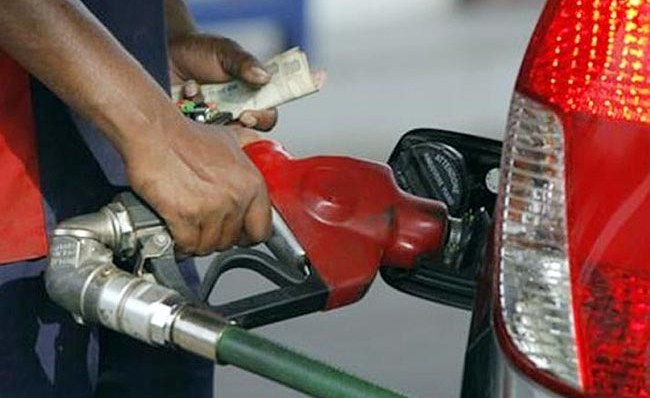
NIGERIANS are set to purchase Premium Motor Spirit otherwise called Petrol for as much as N168 to N170 per litre following an increase in ex-depot price from N147.67 to N155.17 per litre by Petroleum Products Marketing Company, an agency of the Nigerian National Petroleum Corporation (NNPC).
According to report, the increased ex-depot is contained in an internal memo signed by Tijjani Ali dated November 11, with reference number PPMC/C/MK/003.
The internal memo states that due to this, the estimated minimum pump price of petrol would be increased from N153.86 per litre to N161.36 per litre effect from November 13, 2020.
The ICIR had reported an increase in the price earlier in September by the PPMC from N148 to N151.56k which forced Nigerians to buy a litre of petrol for N158 to N160.
With the new increase in the ex-depot price, petrol marketers would increase the pump price in equivalence of the increased amount by the PPMC to almost N170 per litre.
The increase in Petrol price followed the deregularisation of petrol by the Nigerian government on the basis that the government can no longer subsidize petrol price due to an increase in its revenue.
Against the present reality, Nigerian President, Muhammadu Buhari had said that the advantage of deregularisation of PMS in Nigeria is that the price of petrol would ‘keep coming down’.
Buhari said this at the First Year Ministerial Performance Review Retreat at the State House Conference Centre, represented by Vice President Yemi Osinbajo.
“This is the role that government must now play through the Petroleum Products Pricing Regulatory Agency (PPPRA). This explains why the PPPRA made the announcement a few days ago setting the range of price that must not be exceeded by marketers. The advantage we now have is that anyone can bring in petroleum products and compete with marketers, that way the price of petrol will keep coming down,” Buhari said in the statement.
Petrol usage is at the centre of the Nigerian economy as most businesses are reliant on its use in their day to day activities. This is made worse by the lack of constant electricity in almost every part of Nigeria.