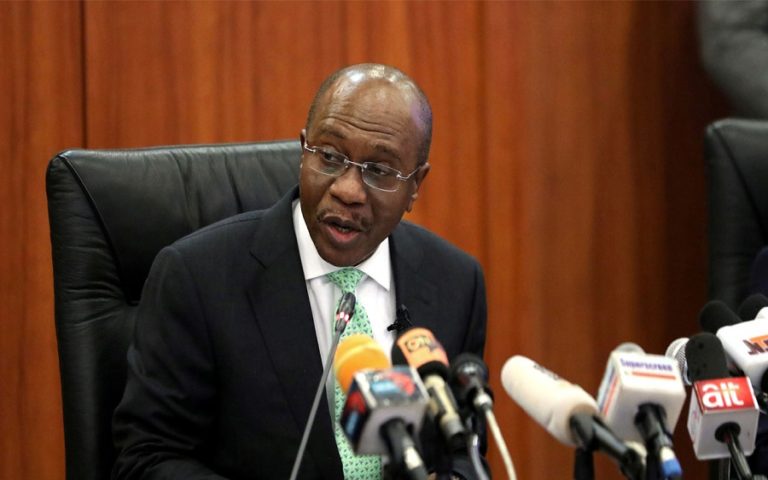
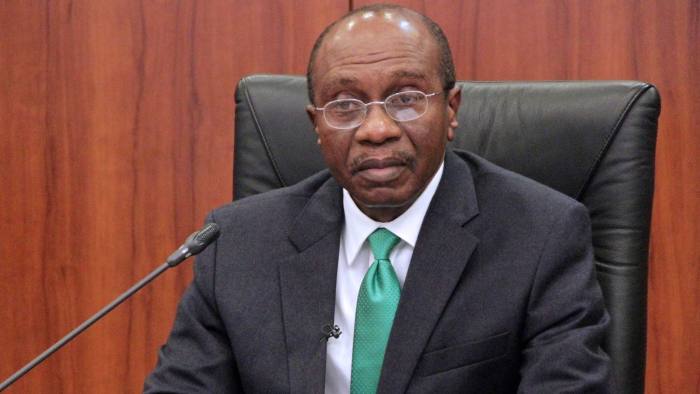
GODWIN Emefiele, the Governor of Central Bank of Nigeria (CBN) violated extant regulatory procedure when he ordered 20 bank accounts owned by #EndSARS campaigners be frozen without obtaining a court order, a letter by Access Bank has confirmed.
According to reports, in the letter from Access Bank to Gatefield Limited, which had his account frozen alongside 19 other #EndSARS campaigners, it was confirmed that CBN directed the suspension of the accounts on October 26, a week before the apex bank got an ex-parte order to do so from a Federal High Court in Abuja, presided by Justice Ahmed Mohammed.
Gatefield Limited, a media rights organizations had raised funds to support journalists reporting the happenings of the #EndSARS protests that carried on for 12 consecutive days.
In defending its apparent clampdown on #EndSARS protesters, CBN in its written address to the court accused the protesters of financing terrorism, alleging that the transactions in the frozen accounts can cause ‘economic and security harm’.
There is no provision in the law that allows for any bank to effect a post-no-debit order on any customer’s account without a court order. In a 2019 case between Guaranty Trust Bank (GTB) and a customer identified as Akinsiku Adedamola, the Court of Appeal held that: “Before freezing customer’s account or placing any form of restrain on any Bank account, a bank must be satisfied that there is an order of court.
The court further stated that: “Our financial institutions must not be complacent, reticent and toothless in the face of brazen and reckless violence to the rights of their customers. Whenever there is a specific provision regulating the procedure of doing a particular act, that procedure must be followed.”
Emefiele simply didn’t follow the provisions of the law and also concealed the fact that the 20 frozen bank accounts were owned by persons involved in the #EndSARS protests from the court.
There have been several attempts by the Federal Government to clamp down on frontline #EndSARS protesters over the past week, following the shooting of peaceful protesters by officers of the Nigerian Army at Lekki Toll Gate Plaza on October 20.
Modupe Odele, one of the lawyers who organised legal aid for the protesters had her international passport seized by the Nigerian Immigration Service (NIS) while she tried leaving the country for the Maldives.
There have also been calls by the government for social media regulation. Leading the call is Lai Mohammed, Minister of Information and Culture who on Tuesday, October 27, used the #EndSARS protests as justification to make yet another push for social media regulation in the country.
SEVERAL young Nigerian journalists and activists have been selected for various awards in this year’s Future Awards Africa Prize for their various contributions to the society.
Among them is Adejumo Kabir, a reporter with Premium Times, who was nominated for the Africa Prize for journalism category in the “Future Awards 2020.″
Kabir, according to the information seen by The ICIR on the Future Award Africa website was nominated for exposing sharp practices “in governance, health, politics and the economy with real-world consequences. After his report on how the Nigerian Army abandoned families of slain soldiers, authorities reached out to the neglected families and began to process their pay.”
Adejumo Kabir
It further added that “Beyond training young journalists on the best practices in investigative journalism, he risked his life journeying by sea from Nigeria to the Benin Republic to expose how security operatives breached border closure during the pandemic and explained why Nigeria continues to have an increase in the number of coronavirus cases. Adejumo Kabir has put the truth above political affiliations, the concerns of his superiors and his own life. What could be more admirable than that?”
Others nominated in this category are Aisha Salaudeen, Aneta Felix Abdulbaqi Jari, Aanu Adeoye, Solomon Elusoji, and Victoria Sanusi.
Also nominated is Wilson Atumeyi, the Chief Executive Officer of Water With Development (WaterWide). He was selected for the 2020 Future Awards Africa Prize for Activism.
Wilson Atumeyi
He was selected alongside 6 other young Nigerians who have committed their time and efforts to advocate for better life opportunities for all Nigerians across various socioeconomic areas.
WaterWide which has been tracking government spending and international aid for Water, Sanitation and Hygiene (WASH) to ensure transparency, accountability and proper implementation and completion of WASH projects in rural communities across Nigeria, was founded in 2019 with the goal of improving access to safe water, sanitation and hygiene facilities for people living in marginalised communities.
The nongovernmental organization is working towards the achievement of Goal 6 (“Ensure availability and sustainable management of water and sanitation for all”) of the Sustainable Development Goals (SDGs).
Speaking on this achievement, Wilson Atumeyi said that “over the past year, working on solving the water and sanitation challenges has been a thing of pain and pleasure. I derive pleasure in the work I do but so much pain when I see the challenges facing people in marginalised communities.”
“Having seen the caliber of great young Nigerians that have been nominated for this category, I am truly humbled, excited and feel honored. These other young Nigerians have achieved great feats in their areas of focus and I am glad to have been nominated alongside them. I dedicate this nomination to all of WaterWide’s 1,293 volunteers across the nation, working tirelessly to ensure that there is access to safe water and sanitation for all, especially in marginalised communities, and also to my family and friends for their financial and professional support,” he said.
Other Nigerian youths that were nominated in this category include Hassana Umoru Maina, Hajara Kabeer Abdulfatah, Aghogho Odibo, Richard Akuson, Kelechukwu Nwachukwu Lucky, and Adenike Titilope Oladosu.
The Future Awards Africa, also popularly known as The Future Awards, are a set of awards given by The Future Project (TFP), a social enterprise set up with a strong, practical commitment to human and capital development, especially in Africa.
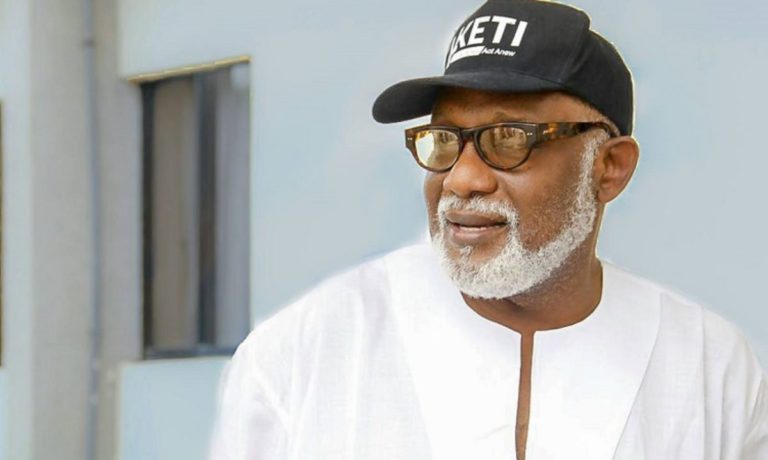
DESPITE public outcries, Rotimi Akeredolu, governor of Ondo State, has backed the action of the Central Bank of Nigeria (CBN) freezing bank accounts belonging to #EndSARS promoters.
“Speaking very honestly, I don’t see anything wrong in it,” the governor said while appearing on Channels Television’s Sunrise Daily on Wednesday.
“If for instance, my account was frozen, what would I do? All I would do is go back to court to explain. Even politicians, their accounts are sometimes frozen. You have to go to court and explain. And at the end of the day, the court will say, ‘Leave the account. The account should be de-frozen’ and you take your money back,” he added.
Akeredolu who downplayed insinuations that the protesters are being charged for a treasonable offence stated that the owners of the accounts should justify the money in their accounts.
“If your account is frozen, you justify why the money was there. You come to explain what use you have put this money in. If it is that ‘Okay, we used this money to pay this caterer to give food to these boys when they were there. We spent money before the hoodlums took over,’ it will be explained, people will know and the accounts will be de-frozen.
“It is just that we (CBN) suspected this account then the owner of the account will explain,” he said, noting stressing that it “is not a conclusion that those accounts were used for acts of treason.”
CBN Court Order
Last week, an Abuja federal high court presided by Ahmed Mohammed, granted the request of the CBN to freeze the accounts of 19 individuals and a public affairs company linked to the #EndSARS protests.
The court order addressed to the head offices of Access Bank, Fidelity Bank, First Bank Nigeria, Guaranty Trust Bank, United Bank of Africa, and Zenith Bank, directed the banks to freeze forthwith all transactions on the 20 accounts on the list annexed to the CBN’s application as Exhibit A and all other bank accounts of the defendants/respondents for a period of 180 days pending the outcome of investigation and inquiry currently being conducted by the Central Bank of Nigeria.
The affected individuals include Bolatito Racheal Oduala, Chima David Ibebunjoh, Mary Doose Kpengwa, Saadat Temitope Bibi, Bassey Victor Israel, Wisdom Busaosowo Obi, Nicholas Ikhalea Osazele, Ebere Idibie, Akintomide Lanre Yusuf, Uhuo Ezenwanyi Promise and Mosopefoluwa Odeseye.
Others are Adegoke Pamilerin Yusif. Umoh Grace Ekanem, Babatunde Victor Segun, Mulu Louis Teghenan, Mary Oshifowora, Winifred Akpevweoghene Jacob, Victor Solomon, Idunu A. Williams, and Gatefield Nigeria Limited.
Many Nigerians and civil societies organizations have described the action of the apex bank as abuse of power.
Poor sanitation and lack of access to water affect the health and education of school children in Nigeria, but this problem is yet to gain the full attention of the government at various levels in Nigeria. Olugbenga ADANIKIN visited a number of schools in South-East and South-West where this problem is acute. Here is part two of the report:
BUILT and managed initially by a philanthropist, St. Anthony Secondary School, Azia, Ihiala South, Anambra is not a good learning environment. It lacks basic teaching infrastructures such as classrooms, laboratories and toilets. Not only that, the school is far removed from the community.
Teachers transferred to the school would rather influence their postings to better schools, and visitors are mostly terrified while accessing the school due to its secluded location. The school was later taken over by the Anambra State government to prevent a total collapse, says Esther Ezeasor the School’s Principal.
“This place is not really safe,” she told The ICIR.
“The first time I came, I was marvelled. Anyone can just invade the school because it has no fence and toilets.”
But in 2015, respite came. St. Anthony was captured for rehabilitation through the Universal Basic Education Commission (UBEC) projects. Emeka Anohu, former House of Representatives member from the Peoples Democratic Party (PDP), representing Ihiala Federal Constituency facilitated the projects.
Anohu who served as the ex-Deputy Chairman, House Committee on Basic Education and Services had facilitated the construction of Science Laboratory and Staff offices comprising of toilet facilities in the school. The entire project was awarded at N35 million. But as of date, it is yet to be completed.
Hon. Emeka Anohu, ex-PDP Lawmaker Representing Ihiala Federal Constituency. Photo Source: Donbobbie blog
Pranav Contracting Nigeria Limited, the contracted firm abandoned the project.
Anohu, while in office had promised to use his leadership position to promote better education, especially in his constituency but the reality is not the case.
Teachers’ staff room flooring was poorly done. Doors and windows to the laboratories were also left unfixed as of the time The ICIR and PPDC visited. But, the uncompleted classrooms were already painted.
“I have never seen any contractor since I came in 2018,” says Ezeasor. “As you can see, the project is yet to be completed.”
“We appeal to our lawmakers to please help us complete our school projects,” Margaret Onyebuagu, the female school prefect pleads.
The contractor, Pranav Contracting Limited with RC: 708797 was registered on September 13, 2007, and located at 17, Themes Street, Maitama, Abuja. The office later relocated to 20, Amazon Street, Maitama in Abuja.
Breach of Procurement Act
It was difficult finding any information about the company because it lacks an active online presence. Internet search later showed that the firm engages in Information and Communication Technology Services (ICT). This implies that if registered with the Corporate Affairs Commission (CAC) as an IT firm, it should not have bidded for school building rehabilitation contract as it is contrary to the provisions of the Public Procurement Act (PPA).
Besides, a 2018 report listed Pranav Contracting Nigeria Limited among fictitious firms accused of benefitting from a controversial N10 billion contract involving Kemi Adeosun, former Finance Minister. The firm, as of then was fingered as one of those not captured in the database of the Bureau of Public Procurement (BPP).
It is considered unlawful for any contractor, consultants, or service providers not recognised by the BPP to execute federal projects. Aside from being registered with the BPP, contractors are also expected to satisfy other requirements such as PenCom, Industrial Training Fund, Nigeria Social Insurance Trust Fund (NSITF) and remittance of tax to the Federal Inland Revenue Service (FIRS) before being awarded any contract.
Mohammed Adoke, ex-Attorney General of the Federation on April 28, 2014 announced the compulsory registration as a major requirement for getting government’s contract.
Thus, the Bureau referenced Section 58 of the PPA, 2007 as a sanction against offenders.
“Any natural person not being a public officer who contravenes any provision of this Act commits an offence and is liable on conviction to a term of imprisonment not less than 5 calendar years but not exceeding 10 calendar years without an option of fine,” the BPP Act states.
Even though Pranav Contracting Nigeria Limited later registered, it failed to comply with the compulsory requirement necessary to win the contract. It defaulted in its tax remittance, no record of its business category and no proof to show it previously executed similar project.
Details of Non-Compliance with the BPP Act
Pranav Contracting Nigeria Limited and Pyramid Energy Limited use same fake address
On August 7, The ICIR attempts to reach out to Pranav Contracting Nigeria Limited. It was earlier discovered that Pyramid Energy Limited got similar contract from the Universal Basic Education Commission (UBEC) for a school rehabilitation at a separate location within the state. However, both firms share the same address at 20, Amazon Street, Maitama, Abuja. But the address is fake, it houses a different company identified as SMEC Consulting.
Two private security officers with navy blue uniforms, met at the office entrance denied knowledge of both companies. A Hausa man in a brown local attire, brown cap and black face-mask affirmed the firms never existed at the said address.
False office address – 20, Amazon Street, Maitama, Abuja presented by Pranav Contracting Limited also adopted by Pyramid Energy Limited but occupied by SMEC Consult – a different firm entirely Photo Credit: Olugbenga Adanikin, The ICIR
This is N0. 20, who do you want to see? The security men queried.
“Not here sir,” the officers responded after providing names of the two firms.
They later directed the reporter to Amazon Close.
There were only five apartments at the Close, and the contractors’ address was none of them.
Yet, 20, Amazon Street was the active address Pranav Energy Limited submitted to the BPP.
Pyramid Energy was entirely missing from the BPP database as of the time of this report.
10 Amazon Street, the same address as Pranav Contracting Limited on BPP’s Database. Photo Source: Bureau of Public Procurement
The fact-finding was further extended to Amaka Okpala, Secretary to the two companies who was appointed in May 2012. Efforts to contact her to respond on behalf of the companies failed. She could not be located at the office address provided in the CAC search. Her phone line also was not captured in the CAC record of the company.
The ICIR investigation later revealed that the location was a residential address.
The security officer manning the entrance to the apartment claimed ignorance of the company secretary. Residents of the apartment also denied knowing Okpala.
“There is nobody like that in this compound,” she said.
The ICIR contacted Chuma Nzeribe of Pranav to verify why the N35m project was stalled but Nzeribe tacitly responded it has been completed and terminated the phone call.
Technical college with no technical tools
The beauty of attending technical school is basically to gain hands-on knowledge. But that is not the case at Community Technical College, Ubahuekwem, Ihiala where students are subjected to visit external workshops to acquire practical skills.
More pathetic is the neglect of two uncompleted and abandoned 2015 constituency projects in the school which include a science laboratory and technical workshops (Fabrication, welding and electrical installation and motor mechanic).
“Actually the project speaks for itself,” a staff in the school told The ICIR, expressing his discomfort. “It is a terrible situation but what can we do?”
The school will often rely on external technical workshops where the principal foots the bill for students to acquire the needed practical skills.
While this approach appeared inevitable, the essence of establishing the technical college was gradually being defeated. Continuous funding of practical knowledge outside of the school premises is also unsustainable.
The ICIR went through the laboratory and workshops which has been under construction since 2015. The uncompleted electrical installation, fabrication and welding workshops have never served the purpose of which they were awarded. In fact, the already painted buildings have started depreciating due to neglect.
“Since 2016, we have not had science and chemistry laboratory….we have not seen anyone from UBEC to see the level of work done,” the source who pleaded anonymity added.
The State government, it was gathered brought technical machines to the school for installation but it was reportedly returned due to uncompleted status of the project as of the period.
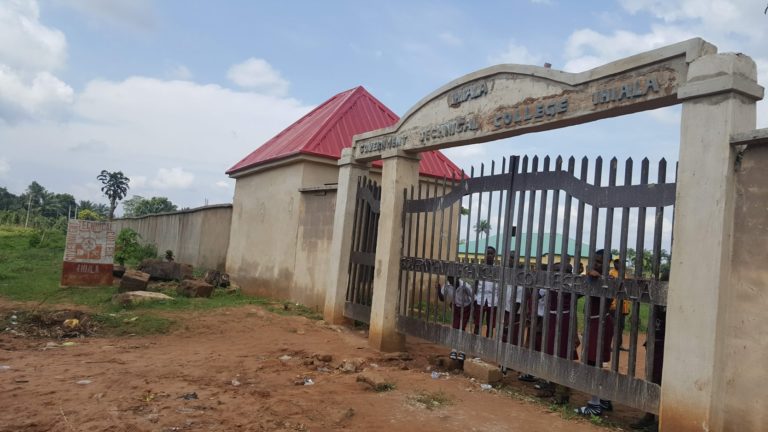
Abandoned Technical Laboratory awarded to Pyramid Energy Limited in Government Technical College, Ubahuekwen, Ihiala, Anambra State. Photo Credit: Olugbenga Adanikin, The ICIR
“We are still making efforts to see if they can return the equipment,” the source added. The Anambra state government has remained docile intervening on the matter. Efforts made by one of the school heads yielded negative results. According to him, the state officials insisted that the laboratory work is a federal project, thus would be difficult to interfere.
Meanwhile, in 2018, when the case of the abandoned school project was aired, the contractor hurriedly came to fix the doors and windows and disappeared thereafter.
The failed N28.75 million project awarded to Pyramid Energy Limited in 2015 is yet to be completed. Though registered with the CAC on September 16, 2005, with RC: 634769, the firm is not accredited to execute federal contracts, yet got the huge sum from UBEC to execute the projects.
Brief details found on the internet about Pyramid Energy Limited was on Connect Nigeria – a business profiling website. The business profiling platform also lacks detailed information on the firm’s activities.
In 2005, it submitted 110, Awka Road, Onitsha, Anambra as its registered address but the firm still shared the same, false address with Pranav Contracting Nigeria Limited at 20, Amazon Street, Maitama in Abuja.
Few shareholders of both companies also shared the same family name. For instance, Chuma Nzeribe, Nonye Nzeribe and Pascal Nzeribe own N7m, N250, 000 and N250,000 company shares respectively at pyramid energy limited. Umolu Odii, the fourth shareholder owns N500, 000 worth of shares in the firm.
Ironically, Chukwuma Nzeribe and Pascal Ntom Nzeribe share similar names with the above three shareholders. Both Chukwuma and Pascal Nzeribe are currently shareholders in Pranav Contracting Nigeria Limited. They became directors in the company on the same date – on May 4, 2012.
Moreso, the day, May 10, 2012 Pranav contracting limited changed its registered office to 20, Amazon Street, Maitama was the same day Pyramid Energy limited resolved to change its address to the same address in Abuja. These imply a shared interest among owners of the two firms.
Three years after unifying the address of both firms, Chief Nzeribe and Pascal Nzeribe of Pranav resigned as directors of the firm. They left alongside two other foreigners – ING. Dott. Fillipo Terranova and Navin Kumar Bhandarada.
Uncompleted Constituency Projects at Community Secondary School, Umunnachi, Anambra State facilitated by Victor Umeh and awarded to Dilicon Limited. Photo Credit Olugbenga Adanikin, The ICIR
Constituency projects, an annual ritual
The Federal Government has approved in recent years billions for constituency projects in the 36 states. It is an annual ritual allocated through the yearly budgets. Aside, the idea behind these projects is to drive development at the various constituents represented by Senators and House of Representative members.
Reports have shown that the process of awarding these contracts is laced with corruption, thus opaque. While some projects are left uncompleted, others are completed but not done to standard.
There are cases where fake companies are awarded contracts for similar constituency projects, still, nothing physical was found at project sites. These illegalities, however, prompted advocacies on strict adherence to the procurement law (PPA) at government agencies and parastatals.
It is believed that complying with the PPA would promote transparency in project award and delivery.
In 2019, after several investigative reports, the Independent Corrupt Practices and Other Related Offences Commission (ICPC), affirmed the federal lawmakers have been conniving with implementing agencies to steal billions of money meant for rural development through constituency projects.
The commission in the report produced by the Constituency Project Tracking Group (CPTG), tracked 424 projects between 2015 and 2018 in 12 states including the Federal Capital Territory (FCT) where the massive fraud was perpetrated.
New perimeter fence built on cracked one yet left uncompleted
In 1983, Community Secondary School, Umunnachi, Dunukofia LGA, Anambra was built as a boarding school until when it suffered insecurity challenges. Shortly after, perimeter fence was built around the school. Over the years, the fences became weak and were falling off.
New fence built on an existing and cracked uncompleted perimeter fencing at Community Secondary School, Umunnachi, Anambra State. Photo Credit: Olugbenga Adanikin, The ICIR
The school became porous to external forces such that Mrs Obum James, the immediate past school principal was said to have abandoned the principal’s lodge situated within the school. The teachers repeatedly complained about students’ safety. The reoccurring situation forced the school to transit to a day class rather than boarding system.
“There was a time thieves invaded our computer laboratory and took all the computers but we were able to recover them since then not all are functional because they were mishandled,” Mrs. Ada Okwuneso, the School’s Vice Principal Academics told The ICIR.
“There was also a rape case,” another official who pleaded anonymity said while taking the reporter around. “You cannot keep students where there is no fence. This used to be their hostel, the kitchen and see the cafeteria,” she adds.
Eventually, two local guards supported by the vigilantes were hired. The unused hostel structures were converted to a library, staff room and offices.
In 2018, Victor Umeh, a former Senator representing Anambra Central had facilitated N9.7 million constituency project in the school. They include re-roofing of the refectory and a perimeter fence but the project remained uncompleted as of the time The ICIR visited.
The projects were awarded to Dilicon Limited located at 53, Western Avenue, Ojuelegba in Surulere, Lagos State. In the same year, the contractor visited to take pictures and later commenced work, the teachers disclosed.
Okwuneso said the school was filled with excitement until the project suddenly came to a halt.
Though, accredited by the BPP among federal contractors, roofing of the school cafeteria awarded for repair was partly done when The ICIR visited. The student canteen had no ceiling sheets, except for the main roof, thus not fully put to use.
Section of the new perimeter fencing was built on the old, despite the cracked and weak state of the existing fence. The project also came to halt at a bamboo shrub, some metres to the school gate.
Apparently, the contractor would require uprooting the thick bamboos to complete the project but that was not the case.
Members of the school management at Community Secondary School, Umunnachi, Dunukofia LGA during the inspection in Anambra State. Photo Credit: Olugbenga Adanikin, The ICIR
“You get hold of your students if the school is fenced,” Mrs. Okonkwo Chinwe, the VP Admin said while advocating for the project completion. “…as long as it is half-fenced, they can penetrate through anywhere, so it is still a serious challenge.”
“You see these bamboos? can you see that the walls will soon fall?” Chinwe asserted, pointing at the cracked fence. “So they need to uproot them.” As long as the bamboos are around the fence, in two years, the fence might start cracking, she said.
Beyond the uncompleted projects, Chinwe urged the authorities to provide better security and potable water for student use.
UBEC did not ask us to complete school projects – Contractor
A background check on Dilicon limited showed the firm has no company secretary. It has only three directors – Ofodile Ifeanyi Anieto, Joy Nebechi Anieto and Ifesinachi Chukwudum Anieto with N800, 000, N100, 000, and N100, 000 shareholdings respectively.
There was no evidence of annual return filed to the CAC since the firm was established in the year 2000. Data from the BPP also revealed the firm defaulted in its tax payment.
Ofodile Anieto, Dilicon Managing Director was contacted by The ICIR to seek reaction to why the projects were uncompleted. He initially claimed they have been completed until the reporter told him of the flaws in the project execution.
At that point, he accused UBEC of cutting down the approved sum for the project, but he could not provide the actual amount released for the project.
He said there was no way he could complete the project since he was not fully paid.
“What they told us is they had a budget and somewhere along the line they cut the budget to 50 percent. Initially, when we quoted for that project it was about N20 million, along the line they cut it to about 9 million.” The ICIR could not get the budget breakdown of UBEC because it is among agencies of government that gets statutory transfers.
Anieto said only four windows were approved for repair at the refectory but his firm repaired over 20 windows. The ceiling and noggin, he noted were also excluded from the project scope.
On the perimeter fencing, he admitted to the collapsed bricks and the fact that they built a new fence on an existing cracked wall. But, he attributed the flaw to the paucity of funds. A larger part of the approved sum, he said was spent on the refectory while the remaining undisclosed amount was expended on the fence. The bamboo tree, he noted was not an obstacle in the first place.
“The fence is not intended to go round the school,” Aniteo said. “They told us they will come back for the second phase but they never came back.” He suggested a physical meeting among The ICIR, UBEC and his firm to reaffirm his argument. The reporter told him he will meet with the UBEC officials in Abuja.
Anieto denied the allegation of tax evasion. “I remitted over N200, 000 as tax recently,” he said, but this was not the case because the BPP record did not capture his tax remittance.
Civil society seeks probe, want a database of all abandoned projects for easy monitoring
Joshua Olufemi, Executive Director of Dataphyte in his reaction, highlights the crucial role of government in monitoring the trend of abandoned projects nationwide.
He called for an overhaul of the entire financing process from the project planning stage to implementation in order to guarantee steady funding of awarded projects. Agencies of government, he noted, would often instruct contractors to suspend work due to poor capital releases.
“You don’t set a budget when you are not sure of where to get revenue,” Olufemi added, emphasising the government’s role. “If you only rely on oil and the price of oil falls, then every one of your plans will be affected.”
He also advised the executive arm of government to develop a database of abandoned projects and poorly executed projects across the MDAs. The identified projects, he suggested, should be continued rather than awarding new projects on yearly basis.
He also called for a multi-stakeholder engagement and grassroots participation for proper monitoring and successful implementation of the constituency projects.
In his remarks, Debo Adeniran, Chairman, Centre for Anti-Corruption and Open Leadership (CACOL) attributed the project neglects to corrupt practices.
Adeniran said, though legislatures are meant to make laws, they have also failed to follow up some of the constituency projects in their constituents.
“Sometimes contractors compromise standards and quality. That is why many of the constituency projects even when they seemed to have been completed, they don’t stand the test of time,” he argued.
“We really need to do more. We are not doing enough to ensure those who ought to benefit from these projects are carried along. Relevant authorities need to know about the project especially if the specifications are not met.”
The Transparency and Accountability Unit in the Ministries and Departments and Agencies, he suggested, should be involved in the entire procurement process until project delivery.
Blossom Ossom, UBEC spokesperson did not respond to questions about many failed projects. He referred The ICIR to the office of the Director of Physical Planning through the Executive Secretary of the Commission.
“If your enquiry has to do with constituency project execution, the person to respond will be the Director of physical planning in UBEC,” he said asking The ICIR to send an official enquiry. A letter was sent to the office in August. The letter was acknowledged but as of date, no official response was provided by the commission. Other efforts to reach UBEC for reactions were ignored.
THE Central Bank of Nigeria (CBN) has accused some #EndSARS protesters of financing terrorism after freezing their bank accounts illegally.
The CBN had in the second week of October frozen bank accounts of 20 #EndSARS protesters and thereafter approached a Federal High Court in Abuja to seek an ex parte order to freeze the accounts, Punch reports.
The affected accounts are domiciled in Access Bank, Fidelity Bank, First Bank Nigeria, Guaranty Trust Bank, United Bank of Africa, and Zenith Bank.
Contained in the written address in support of a motion ex parte filed by the applicant Godwin Emefiele, Governor of CBN, the apex bank alleged that the transactions in the frozen accounts can cause economic, security harm.
“My lord, the nature of the transactions undertaken through the defendants’ accounts are of suspected terrorism financing in contravention of Section 13(1)(a)and(b) of the Terrorism (Prevention)(Amendment) Act, 2013 and Regulation 31(2)(a)and (3)(b) of the Central Bank of Nigeria Anti-Money Laundering/Combating the Financing of Terrorism Regulations, 2013.”
“There is a grave allegation that the defendants are involved in suspected terrorism financing via their bank accounts in contravention of the provisions of extant laws and regulations. The aforesaid transactions undertaken by the defendants, using their bank accounts, can cause significant economic and security harm to the public and the Federal Republic of Nigeria if left unchecked,” the written address read in part read in part.
In the case with suit number FHC/ABJ/CS/1384/2020, filed before Justice A. R. Mohammed, the CBN, however, made no mention of the fact that the 20 accounts were owned by persons involved in the #EndSARS protests, but told the court that the funds might have emanated from terrorist activities, Punch reports.
While the majority of Nigerians have criticised the Federal Government’s moves to muzzle #EndSARS protesters, Rotimi Akeredolu, Ondo State governor has defended it, saying there’s nothing wrong with Nigeria’s apex bank freezing accounts of citizens.
While speaking on Channels Television Sunrise Daily program on Wednesday, Akeredolu said: “I don’t see anything wrong in it. If for instance, my account was frozen, what would I do? All I would do is go back to court to explain.
“Even politicians, their accounts are sometimes frozen. You have to go to court and explain. And at the end of the day, the court will say, leave the account, the account should be de-frozen and you take your money back.
“If your account is frozen, you justify why the money was there. You come to explain to what use you have put this money,” he said.
Meanwhile, Abubakar Malami, Attorney General of the Federation, has kept mum on the legality of freezing bank accounts of protesters.
When asked by journalists about frozen accounts owned by #EndSARS protesters, Malami was reported to have smiled and walked away, Channels reports.
There have been several attempts by the Federal Government to clamp down on frontline #EndSARS protesters over the past week, following the shooting of peaceful protesters by officers of the Nigerian Army at Lekki Toll Gate Plaza on October 20.
Modupe Odele, one of the lawyers who organised legal aid for the protesters had her international passport seized by the Nigerian Immigration Service (NIS) while she tried leaving the country for the Maldives.
There have also been calls by the government for social media regulation. Leading the call is Lai Mohammed, Minister of Information and Culture who on Tuesday, October 27, used the #EndSARS protests as justification to make yet another push for social media regulation in the country.
THE Federal government of Nigeria has reappointed the suspended Vice-chancellor of the University of Lagos (UNILAG), Oluwatoyin Ogundipe who was indicted for misappropriation of the university fund and dissolved the Governing Council led by Wale Babalakin, the former pro-chancellor.
Ben Goong, the Press Secretary of the Federal Ministry of Education confirmed the development to The ICIR on Wednesday.
“I can confirm that he has been reinstated,” Goong told The ICIR.
According to a report, Goong in a statement titled ‘Re: Report of special visitation panel to UNILAG’ made the development known.
The statement read that Nigerian President, Muhamadu Buhari has approved the recommendations of the Special Visitation Panel to UNILAG constituted to investigate Ogundipe’s removal as UNILAG VC.
“The highlights of the findings and recommendations approved by Mr. President are as follows – the removal of Professor Oluwatoyin T. Ogundipe as the Vice-Chancellor did not follow due process.
The statement further read the panel said the suspended VC was not allowed to defend himself on the allegations that led to his removal.
“The Vice-Chancellor was not granted an opportunity to defend himself on the allegations upon which his removal was based. He should accordingly be re-instated.
“All allegations made against the Vice-Chancellor and the management of the University before and after the Constitution of the Special Visitation Panel should be referred to regular Visitation Panel for a thorough investigation and necessary recommendations,” the statement read.
Buhari said that as recommended by the panel, the Governing Council in the appointment of Omololu Soyombo as Acting Vice-Chancellor of the University was inconsistent with the provisions of the Law relating to the appointment of an Acting Vice-Chancellor. The Governing Council should be dissolved.
Earlier in August, the Governing Council of UNILAG removed Ogundipe as VC over alleged financial misappropriation and abuse of office.
However, Ogundipe challenged the council’s decision arguing that due process was not followed by the Babalakin-led council.
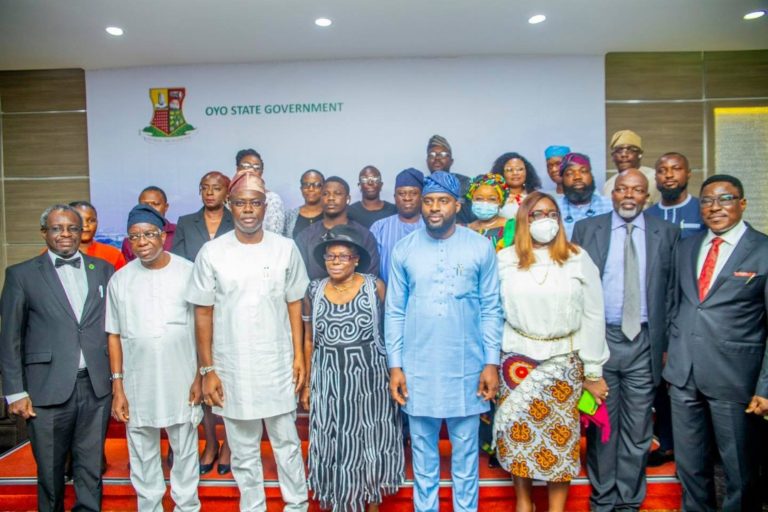
SEYI Makinde, governor of Oyo State, has inaugurated the Oyo State Judicial Panel of Inquiry into police brutality, violation of rights of citizens and unlawful killings on Tuesday afternoon.
The eleven (11) members panel which is to be chaired by Bolajoko Adeniji, a retired justice, has its membership drawn from the legal community, the National Human Rights Commission, the Department of Public Prosecution (DPP), the National Youth Council of Nigeria, youth representatives of End SARS protesters and the community.
Makinde noted that the panel was constituted pursuant to Section 2 (1) of the Oyo State Commission of Inquiry Law Cap 32 of the Laws of Oyo State 2000 which empowers the Governor to set up a commission of inquiry. However, as the scope is beyond Oyo State, we are collaborating with the Federal Government.
He called on residents of the state who have suffered any form of human rights abuse from the police to seize the opportunity.
“I encouraged anyone who has faced human rights abuse in the hands of any of the security forces to use this opportunity to seek justice. I also stated that those responsible for the deaths of Isiaka Jimoh, Ganiyu Moshood Alabi, and Adeoye Taiwo would be brought to book.”
The governor also clarified the position of the Southwest on the regulation of the social media bill. He said contrary to media reports, the Southwest said since there is an existing cybercrime Act, the nation does not need another law to regulate the social media.
“I also clarified the misrepresentation of the position of the Southwest leaders on the so-called social media bill. Contrary to media reports, our position remains that since we already have an extensive Cybercrime Act, 2015 we do not need any other bills to regulate social media,” Makinde said.
The governor had in October set up a 500 million naira compensation fund for victims of police brutality in the state.
Protest, demands, government’s response
In October, there were a series of protests across major cities of Nigeria, when the youths demanded an end to police brutality and police reforms.
The protesters issued a five-point demand which included release of all persons arrested and justice for victims of police brutality.
Other demands are “setting up an independent body to oversee the investigation and prosecution of all reports of police misconduct (within 10 days), psychological evaluation of all disbanded SARS officers before they can be redeployed, and increase in police salary so that they can be adequately compensated for protecting lives and property of citizens.”
In response, President Muhammadu Buhari directed Mohammed Adamu, the Inspector General of Police (IGP) to disband the dreaded and tactical unit of the police.
Also, some state governors have set up Judicial panels of inquiry to investigate the acts of police misconduct perpetrated by the operatives of the disbanded Special Anti-Robbery Squad (SARS) and to give reprieve to the victims of police brutality and their families.
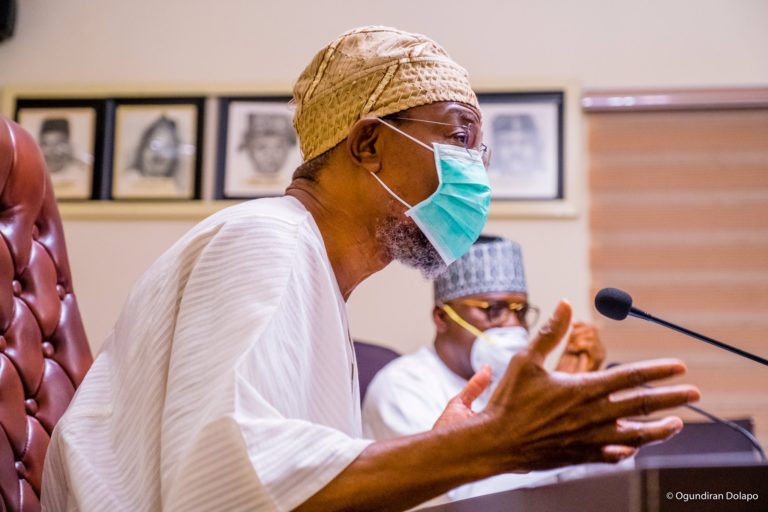
ON Tuesday, Ogbeni Rauf Aregbesola, Minister of Interior called on Nigerian traders in Ghana not to leave the country because of the plan by the Ghanian authorities to enforce $1 million equity payment as a condition for operating business.
He disclosed this at a press briefing in Abuja after he received a delegation of the Nigerian Traders Association in Ghana, an affiliate of the Nigerian Traders Association, led by its National President, Ken Ukaoha.
The statement which was delivered by Mohammed Manga, the interior ministry spokesperson said the Federal Government was engaging with the Ghanaian authorities and other relevant stakeholders with a view to resolving the challenges of the Nigerian traders.
“Your pains cannot endure, we will not abandon you, no stone is being left unturned to remove the pains you are passing through in Ghana,” he said.
The Ghanian law stipulates that a person, who is not a citizen, may engage in a trading enterprise if that person invests in the enterprise not less than $1 million in cash or goods and services relevant to the investment.
The closure of shops owned by Nigerian traders in Ghana started in 2018 when their Ghanaian counterparts began clamouring for foreigners to stop the retail trade in their country.
The situation deteriorated in November 2019 as the Ghana Union of Traders Association, GUTA members shut over 300 shops belonging to Nigerians in Kumasi, Magazine, Alaba, Kejeta, Edum and Suame areas.
In Accra, about 50 shops were locked up by the Ghanaian traders, while 15 others were sealed off for over a year, according to reports.
The Minister stressed that the government was not sleeping on the matter but “doing everything possible to make life better for its citizens in Ghana and other countries of the world.”
Ukaoha revealed what he referred to as the agony, humiliation and torture of Nigerian traders in Ghana, which started when the Ghanaian government’s decision to raise the capital base of any foreign trader doing business in the country to $1 million, and the subsequent locking up of shops belonging to Nigerian traders since 2019.
He added that despite various interventions by representatives of the FG, nothing significant had been done by the Ghanaian government to reverse the trend.
“If we react proportionately to the way we have been treated in Ghana, it might lead to a serious crisis,” he noted.
IN a keynote address during the opening ceremony of the Directorate of Army Physical Training (DAPT) Officers Training Conference, 2020, in Zaria, Kaduna State, on November 3, Chief of Army Staff, Lieutenant General Tukur Buratai, for the umpteenth time, declared the ‘loyalty’ of the Nigerian Army to President Muhammadu Buhari.
In a speech read on his behalf by the Commander Infantry of the Nigerian Army, Major General Stevenson Olabanji, Buratai said, “I want to humbly express my profound gratitude to Mr. President and Commander-in-Chief of the Armed Forces, Federal Republic of Nigeria, President Muhammadu Buhari, GCFR, for his continued and invaluable support to the Nigerian Army in the discharge of its constitutional roles.
“Therefore, I wish to pledge the commitment and unalloyed loyalty of officers and soldiers of the Nigerian Army to the President and the defence of our democracy.”
However, the import of Buratai’s speech, which suggests that the Army’s loyalty lies first with the President before allegiance to the Nigerian state and its constitution, is at odds with the spirit of the Armed Forces Oath.
The wordings of the Nigerian Armed Forces Oath puts loyalty to the country first, before loyalty to the President.
The Armed Forces Oath reads, “I… swear by Almighty God that in the service of my country, I will be faithful and bear true allegiance to the Federal Republic of Nigeria and the Commander-in-Chief of the Armed Forces at all times. I will truly and faithfully serve the Federal Republic of Nigeria as by law established as a…. and will as in duty bound so serve for the period of my engagement or re-engagement, as the case may be, and go wherever ordered by land, sea or air and I will observe and obey commands of the Government of the Federation of Nigeria as by law established and of officers placed over me. I will always perform my duties diligently and efficiently and will not engage or be involved in any activity in conflict either directly or indirectly with this pledge. I will, in the performance of my duties, eschew and expose corruption and will not corrupt others or aid or abet corruption in all its facets. I will not discriminate on the basis of religion, tribe or cult or practise any form of partiality in the performance of my duties and will always follow the path of justice, honesty and concord amongst all the people of Nigeria in all I do. I will subject myself to all Acts, Laws, subsidiary legislation and service regulations which now are or shall from time to time be in force and applicable to the Arm in which I am to serve during the period of my engagement or re-engagement, as the case may be. So help me God.”
In the same vein, the wordings of the Oath of Enlistment of members of the Armed Forces of the United States, from whom Nigeria copied it presidential system of government, also put loyalty and allegiance to country first.
The US Armed Forces Oath reads, “I…, do solemnly swear (or affirm) that I will support and defend the Constitution of the United States against all enemies, foreign and domestic; that I will bear true faith and allegiance to same; and that I will obey the orders of the President of the United States and the orders of the officers appointed over me, according to the regulations and the Uniform Code of Military Justice. So help me God.”
Remarkably, the Nigerian Army, under Buratai, has had cause to declare loyalty to Buhari on several occasions in recent times. And, in all such instances, the Army put loyalty to the President before loyalty to the country and the constitution.
As the recent #EndSARS protests gathered steam across the country, and moved from just demanding the scrap of the Special Anti-Robbery Squad ( SARS) of the Nigeria Police Force to questioning bad goverance, the Nigerian Army issued a statement, on October 15, labelling the protesters as ‘subversive elements’, ‘trouble makers’, ‘agents of disunity’ and ‘anti-democratic forces’.
The statement, signed by Acting Director, Army Public Relations, Col. Sagir Musa, also pledged the Nigerian Army’s ‘unalloyed’ loyalty and commitment to Buhari.
“As a responsible and law-abiding organisation, the Nigerian Army reaffirms its unalloyed loyalty and commitment to the President, Commander-in-Chief of the Armed Forces of the Federal Republic of Nigeria, President Muhammadu Buhari, and the constitution of the country,” the Nigerian Army statement said.
Buratai also pledged the Army’s ‘absolute’ loyalty to Buhari during a working visit to the Defence Industries Corporation of Nigeria (DICON), in June 2020.
Noting that, following a directive from Buhari, the Nigerian Army was on course to becoming self-sufficient in the production of arms, ammunition and other military hardware, Buratai added, “I assure President Muhammadu Buhari absolute loyalty on his intention to secure Nigerian territorial integrity. The Nigerian Army and the Armed Forces will always support his programmes.”
It was a similar case on September 25, 2020, at the graduation ceremony of participants of Warrant Officers Course 36, at Jaji Military Cantonment, in Kaduna State.
Buratai, who was represented at the occasion by the Commander, Infantry Corps, Major General Stevenson Olabanji, told Senior Non-Commissioned Officers: “Your loyalty through the hierarchy of the Nigerian Army to the President and Commander-in-Chief of the Armed Forces of Nigeria must not be in doubt.”
Buratai had also put loyalty to Buhari before loyalty to the constitution when he declared open a seminar for commandants, bursars and administrative officers of the Nigerian Army on August 1, 2019, in Abuja.
He said, “We need to remain absolutely loyal to Mr. President and Commander-in-Chief of the Armed Forces and the Constitution of the Federal Republic of Nigeria. This is a non-negotiable part of our profession.”
Chief of Air Staff, Air Marshal Abubakar Sadiq, had also followed Buratai’s example by pledging the loyalty of the Nigerian Air Force to Buhari.
On May 25, 2020, at an Eid-el-Fitr luncheon for troops in the North-East, in Yola, Adamawa State, where he was represented by Air Commodore Muhammed Yusuf, Commander 153 Base Services Group, Yola, the Chief of Air Staff assured Buhari of the loyalty of the Nigerian Air Force.
“Let me assure our loyalty to the Commander-in-Chief of the Armed Forces, President Muhammadu Buhari, for his constant support to the Nigerian Air Force,” the Chief of Air Staff said.
Some legal practitioners who spoke to The ICIR on the development faulted Buratai for pledging and declaring the Nigerian Army’s loyalty to Buhari.
A Senior Advocate of Nigeria, Dr. Koyinsola Ajayi, noted that the Nigerian Army should be loyal to the “constitution and the nation” and not just to Buhari as the President.
Also, a lawyer, Barrister Chukwuma Nwachukwu, noted that it was not proper for the Chief of Army Staff to place the Nigerian Army’s loyalty in the person of Buhari.
Loyalty to Buhari could raise concerns that the Armed Forces would be willing to do the President’s bidding, even if it is contrary to the country’s constitution.
Under the Nigerian Constitution citizens have the right to protest, albeit peacefully, but a high level meeting over the #EndSARS protests, convened by Buratai and attended by Principal Staff Officers, General Officers Commanding and Field Commanders of the Nigerian Army on October 26, ended with the Army pledging its loyalty to the Buhari-led Federal Government after the military authorities claimed that the protests were aimed at toppling Buhari’s government.
While it is a welcome development that Nigeria’s military authorities are loyal to the country’s democratically elected government, Buratai’s incessant declaration of the loyalty of the Nigerian Army to Buhari is coming against the backdrop of strident calls by Nigerians on the President to remove the service chiefs, who have already overstayed their tenure in military service.
The service chiefs – COAS, Buratai; Chief of Air Staff, Sadiq Abubakar; Chief of Naval Staff, Ibok Ekwe Ibas; and Chief of Defence Staff, Gabriel Olonisakin – have been due for retirement having already spent more than 35 years in military service.
Despite worsening insecurity in the country, Buhari, for unclear reasons, continues to retain them, first extending their services by two years in 2015 before renewing the extension in 2017.
Calls on Buhari to sack the service chiefs re-echoed on Monday, November 9, when the Coalition of North East Elders for Peace and Development asked Buhari to sack the military leadership for ‘deploying massive strength against #EndSARS protesters in various parts of the country while leaving the zone (North East) at the mercy of Boko Haram and the Islamic State of West Africa Province (ISWAP) terrorists’.
The North East coalition, in a statement signed by the chairman, Mr. Zana Goni, said gaps left by the military gave the terrorists the opportunity to operate unchallenged in many communities, leading to many unreported deaths and destruction of property.
The coalition also appeared to express concerns at Buhari’s seeming loyalty to Buratai and the other service chiefs. “We are concerned that our President Buhari, who is so passionate about leaving an enviable legacy of a prosperous nation in all respect, has remained adamant, as far as the military heads are concerned. This position is despite the unanimous resolution by the Senate and the House of Representatives requesting the sack of the Service Chiefs,” they said.
The Nigerian Army, under Buratai, had engaged in a running battle with global rights group, Amnesty International, over reports accusing Nigerian troops of extra-judicial killings.
Recently, AI released a report which said the Army killed at least 10 persons during the attack on #EndSARS protesters at the Lekki tollgate in Lagos on October 20.
Following the report, a group, Centre for Africa Liberation and Socio-Economic Rights (CASLER), said to be sponsored by Buratai, asked Amnesty International to leave Nigeria within seven days.
”It’s (AI) staffers will be treated the same way that innocent policemen lynched by mobs were treated,” Princess Ajibola, convener of the group, CASLER, said during a press briefing.
Buratai, who appears to be untouchable, in a recent statement issued by Acting Director, Army Public Relations, Col. Sagir Musa, suggested that the Nigerian Army was not afraid of the International Criminal Court.
Reacting to reports that some civil society organisations and individuals have petitioned the ICC over the Army’s role in the Lekki shooting and other incidents during the #EndSARS protests, Buratai stressed that ”none of the Principal Staff Officers, GOCs, Field Commanders and other officers and soldiers of the Nigerian Army should be afraid of the ICC for carrying out their legitimate duties”.
Rather than soften the Army’s brutal approach when threatened with ICC prosecution, Buratai, according to the statement issued after the meeting of the top management of the Nigerian Army at the Defence headquarters in Abuja on October 26, gave soldiers what amounted to a ‘licence to kill’ by directing troops to respond “quickly and decisively” to attacks.
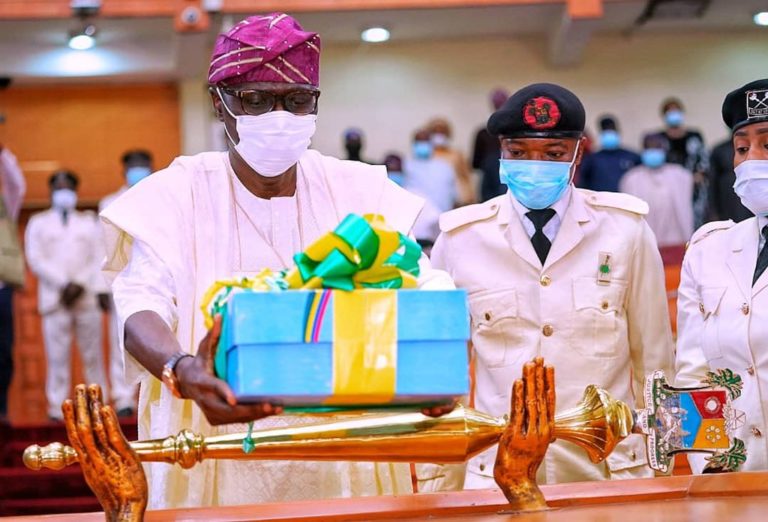
LAGOS and Osun state governors, Babajide Sanwo-Olu and Gboyega Oyetola have presented their respective 2021 budget to the State Houses of Assembly for approval.
Sanwo-Olu proposed a budget size of N1.6trn for the 2021 fiscal year for passage before the State House of Assembly on Tuesday.
Sanwo-Olu, during his presentation, tagged the budget as ‘Budget of Rekindled Hope’ stating that it aimed to reflect the determination of his administration to rise above the challenges that have affected the state’s development indices in the last 10 months.
A breakdown of the budget showed that Education will take N143,655,493,855.89, Agriculture, N18,311,948,584.57, Health, N118,360,479,650.50, Commerce, N41,989,851,318.18, Energy and Mineral Resources, N32,585,739,585.09, while Transportation is allocated a sum of N98,931,628,325.88.
In Osun state, Oyetola proposed a budget of N109.8bn to the State Assembly and tagged it ‘Budget of Providence’ also saying that it is dedicated to post COVID-19 pandemic recovery.
He noted that the fact that the bulk of government’s revenue for the year 2020 came from Federal Allocation highlighted the need to boost Internally Generated Revenue, (IGR) of the State.
Timothy Owoeye, the Osun State Assembly Speaker commended the Executive arm for making the 2020 budget live up to its expectations even in the face of COVID-19.
Owoeye charged the executive to increase ease of doing business and remove bottlenecks that could scare investors away from the State.
He added that the State House of Assembly would continue to embark on effective oversights to ensure timely completion of government projects in the state.