Home Blog Page 2060

WAEC releases timetable, guidelines for 2020 WASSCE

THE West African Examination Council (WAEC) on Tuesday announced guidelines for the conduct of its senior secondary school certificate examination amid coronavirus pandemic.

This follows the announcement on Monday by Emeka Nwajuiba, Minister of State for Education, the date for the commencement of WAEC examination in the country.

The PUNCH reported that Patrick Areghan Head of the Nigeria National Office of WAEC released the guidelines in which he stated that the examination would hold for five weeks.

Areghan, who spoke at a press briefing in Lagos State on Tuesday, said, the examination body has taken due cognisance of the various measures and protocols rolled out by both the federal and state government while conducting the examination.

Guidelines listed by WAEC include the provision of hand washing facilities, with running water, soaps, hand sanitizers and thermometer hand-gun to check the temperature of all concerned by schools.

Others are compulsory use of facemasks by all examination functionaries, including the Council’s staff on distribution, supervisors; invigilators, inspectors, candidates and school officials daily and throughout the duration of the examination.

While assuring parents and the general public that the exam body will adhere strictly to laid down measures, he added that more classrooms, halls and many supervisors and invigilators would be used to ensure that candidates sit two  metres apart to ensure social and physical distancing.

“This has certainly raised the supervision fee to be paid to supervisors as well as the provision of Personal Protective Equipment to staff, supervisors and other examination officials,” he said.

“No doubt all these measures have financial implications which were not contemplated at the time of drawing up the budget for the conduct of the examination.”

He further pleaded with federal and state authorities for personal protective equipment for WAEC personnel ahead of the examination which starts first week in August.

Areghan  also  warned schools and candidates against any form of examination malpractice.

On the timetable for the examination, he aid, “The final international timetable has been sent to all the WAEC Zonal and Branch Offices for onward dispatch to schools and Federal and State Ministries of Education.”

Reps to investigate NNPC over $1b illegal withdrawal from NLNG account

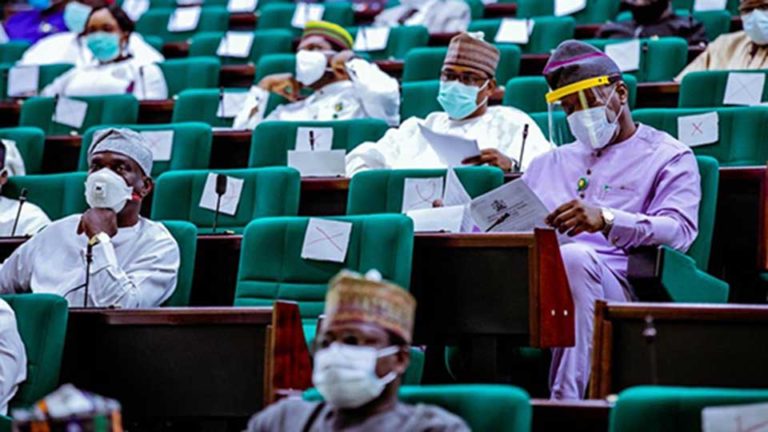
THE House of Representatives is set to begin an inquiry into the Nigerian National Petroleum Corporation, (NNPC) over “illegal withdrawals” from the Nigerian Liquefied Natural Gas Limited (NLNG) account.

During plenary on Tuesday, lawmakers accused management of the NNPC of illegally withdrawing up to $1 billion from NLNG funds without due process.

Speaking during the plenary, Ndudi Elumelu, the House Minority Leader,  said the NNPC management used the funds without approval from states and the National Assembly as prescribed by law.

According to Elumelu, the law provides that the NLNG dividends be paid into the consolidated revenue funds account and shared among the three tiers of government.

The NLNG is a limited liability company established in 1989 with the aim of producing Liquefied Natural Gas, LNG and natural gas liquids for export purposes and it’s production kick-started in 1999.

It is jointly owned by the Federal Government represented by the NNPC with a shareholding stake of 49 per cent, Shell gas B.V with 25.6 per cent, Total LNG Nigeria Ltd at 15 per cent and ENI with 10.4 per cent.

But the lawmaker said the NNPC had “without the required consultations with states and the mandatory appropriation from the National Assembly, illegally tampered with the funds at the NLNG dividends account to the tune of $1.05billion, thereby violating the nation’s appropriation law.”

“The house is disturbed that there was no transparency in this extra-budgetary spending, as only the group managing director and the corporation’s chief financial officer had the knowledge of how the $1.05 billion was spent,” he said.

“The house is concerned that there are no records showing the audit and recovery of accrued funds from the NLNG by the office of the auditor-general of the federation, hence the need for a thorough investigation of the activities on the NLNG dividends account.”

Femi Gbajabiamila, Speaker of the House, adopted his motion, directing the House Committee on Public Accounts, to invite the management of the NNPC, as well as that of the NLNG in order to conduct a thorough investigation on activities that have taken place on the dividends account and report back to the house in four weeks.

Conflict between herders and farmers: Nigeria needs to accept there are victims on both sides

By Oludayo Tade, University of Ibadan

BETWEEN  2010 and 2015, Nigeria lost 6,500 citizens and 62,000 others were displaced from their homelands in 850 recorded violent clashes between herdsmen and farmers in the Middle Belt region of the country. These deaths were more than what records show.

Available studies have looked into the causes and consequences of the clashes and made policy suggestions. But very little is known about victims’ experiences. This is important for policy formulation, implementation and other forms of intervention.

In our study, we examined the experiences of herding and farming communities in Nasarawa State, north central Nigeria who had been victims of the violence. We embarked on the research because news reports had constructed the perpetrators of violence as herders who should be punished and farming communities as victims who should be compensated.

To get a more balanced view of people’s experiences we sought responses from people who had been victims in both the farming and herding communities in Nasarawa State. We spoke with officials of the Cattle Breeders Association of Nigeria, Miyetti Allah Cattle Breeding Association of Nigeria and displaced members of the farming communities who were accommodated in a camp.

In the balance of tales, both farming and herding communities claimed victimhood status.

We found that farming communities suffered internal displacement resulting from the destruction of farmland, forceful takeover of their community, destruction of livelihoods and human fatalities. We also found that herding communities suffered from the destruction of livelihood (such as the killing of cows), cattle rustling and human fatalities.

Farming communities’ perspective

We found that farmers suffered different forms of losses, including houses, property, farm produce, animals and close or distant relations. Some were direct victims, others combined both direct and indirect statuses while the third category only suffered vicariously. One 25-year-old married man we spoke to recounted:

I have lost my properties, food and clothes. My house was set on fire including the yam, guinea corn, and maize that I have in my food barn. In fact, I even lost my elder brother who was killed by this Fulani people when our village was attacked.

A 55-year-old married man told us:

My house and properties and farm produce were all destroyed by the herdsmen. In fact, they have taken over our community and are using it as their camps.

The effects of the violence extended to non-farming activities as the hostile environment made it difficult for farmers to conduct business transactions. For example, small business owners reported losing both their capital and investment to the conflict. A 30-year-old man shared his experience:

I owned a football viewing centre and I just did my subscription for matches. But now that we are displaced, the money for the subscription plus the business has ended.

The experience of herding communities

It was not possible to meet with the direct victims in the herding community because of their nomadic life. Instead, we interviewed executive members of a cattle herders association which speaks on behalf of the herding community.

Those we spoke to talked about herders losing the mainstay of their economy and livelihoods – their cattle. A key interviewee was the leader of Miyetti Allah Cattle Breeders Association of Nigeria, Nasarawa chapter. He observed that:

We cannot estimate (the loss). The Fulani are the victims. They have lost thousands of their cows and uncountable people. Because some people are coming from different states I cannot record those ones that are not from my state. I don’t have the right figures of herders that migrated from Bauchi, Plateau, Katsina to Nasarawa and were killed here. Most of the corpses are not even seen … The Fulani as a whole have lost so many things. The challenge we have is that our loss is not being aired out like that of the farmers. We don’t have control or access to the social media, and other forms of media outlet like the others (farmers). But let me tell you we have lost a lot of things. So many lives of the herders have been lost in these conflicts. Hundreds and thousands of cows have been rustled too.

The quote also highlights how the herders feel marginalised by the media.

It’s clear how central the cattle economy is to a Fulani herder and to what extent he can go to protect his livelihood. The chairman of Miyyetti Allah also described the mindset of a typical Fulani man:

For a Fulani man, for you to seize his cows he prefers to die. He does not have any certificate to tender to federal or state government. He does not have any certificate to tender to state or local government for employment. For him, his cows are his livelihood. He prefers to die. If you kill me, you take the cow.

What can be done

Interventions to deal with the conflict must target alternative livelihood sources and deal with the factors that caused the conflict. And victim compensation funds may be created to attend to the needs of victims.

To avoid food insecurity, government must depoliticise the response to the conflict and provide adequate and timely intervention to prevent more violence.The Conversation

Oludayo Tade, Researcher in criminology, victimology, electronic frauds and cybercrime, University of Ibadan

This article is republished from The Conversation under a Creative Commons license. Read the original article.

Enough is enough, reopen all churches CAN tells state governments

THE Christian Association of Nigeria (CAN) has asked state governments to reopen worship centres across the nation stating that the closure is ‘no longer acceptable and reasonably justified’.

Samson Ayokunle, the President of CAN said this in a statement signed by Adebayo Oladeji, his Special Assistant on Media and Communications on Tuesday.

“Samson ‘Supo Ayokunle, on behalf of the Association, has called on all State governments that are yet to reopen churches under their watches to do so now because the continued lockdown order on the places of worship is no longer acceptable and reasonably justified,” the statement read.

Ayokunle bemoaned the closure of worship centres by state governments despite the directive by the Presidential Task Force (PTF) on COVID-19.

“Despite the directive given by the Presidential Task Force on COVID-19 with regards to the re-opening of places of worship nationwide, some states like Lagos and Ogun are yet to allow worship places, especially churches, to be reopened. What sin have the places of worship committed,”he said.

Questioning the rationale behind the continued closure, Ayokunle noted that markets have been opened and airports and schools are about to open but some states are still insistent on not reopening worship centres.

“With the reopening of the economy, especially the markets (both organized and the unorganised markets) along with the plan to reopen airports and schools, the closure of churches anywhere in the country is no longer tenable and acceptable,” he further said.

“In what way are the opened and roadside markets more organized than the church which warranted their opening? Is it not our members in the places of worship that do go to markets and other sectors opened? Why are they allowed to go to markets and disallowed from going to places of worship? Is it because the marketers cannot contract the virus in the markets and airports.

“It is our opinion that while the government and other relevant stakeholders are working hard to get a cure for the COVID-19 pandemic, the Church too has a role to play by seeking for divine solutions as well.”

Lagos, Osun, Kwara and Ogun state governments have retained the ban on worship centres after the Presidential task force had given a go-ahead to reopening of worship centres.


Sexual Harassment Bill prescribes 14 years imprisonment, N5m fine for offenders

THE Sexual Harassment in Tertiary Educational Institutions Prevention, Prohibition and Redressal Bill, 2019, also known as Sexual Harassment Bill, sponsored by Ovie Omo-Agege, the Deputy Senate President, has proposed up to 14 years imprisonment and N5 million fine for offenders.

The Bill, which was first introduced in the 8th Senate and reintroduced in the 9th Senate on October 9, 2019, passed third reading on Tuesday, standing as the single legislation enacted to promote and protect ethical standards in tertiary education as well as the sanctity of the student-educator fiduciary relationship.

The objectives of the Bill include the protection of students against sexual harassment, prevention and redressal of complaints of sexual harassment of students by educators in tertiary educational institutions.

Containing 25 clauses, the Bill spells out the offences and penalties for educators who engage in sexual harassment of students in tertiary institutions.

Among its list of offences, it considers sexual intercourse, harassment and demand for sex from a student or prospective student an offence and pronounces guilty educators be sentenced to an imprisonment term of up to 14 years but not less than five years, without an option of a fine.

The Bill also posits that an educator passing advances or sending unsolicited photos to a student is guilty of a felon and is liable on conviction to an imprisonment term of up to five years but not less than two years, without an option of a fine. And it is immaterial if a student consents to the act.

The Bill also states that independent investigations must be carried out by institutions as cases arise, and prescribes that the administrative head of an institution shall establish an Independent Sexual Harassment Prohibition Committee in consultation with the highest management body of the institution.

It adds that the membership of the Sexual Harassment Prohibition Committee shall be seven staff members of the institution, including a chairman as well as at least two students, two non-academic staff members and two academic staff members of the institution. The membership is required to include at least three females.

In a case where the committee is set up against the standard set up in the Bill, it proposes that the head of administration is liable on conviction to a minimum fine of N5 million or imprisonment for five years, or both.

The anti-sexual harassment bill was originally introduced in 2016 but didn’t pass through the assembly.

Critics rejected the bill because it did not cover sexual harassment in the workplace and included defence for consent. The defence for consent has been removed from the latest bill.

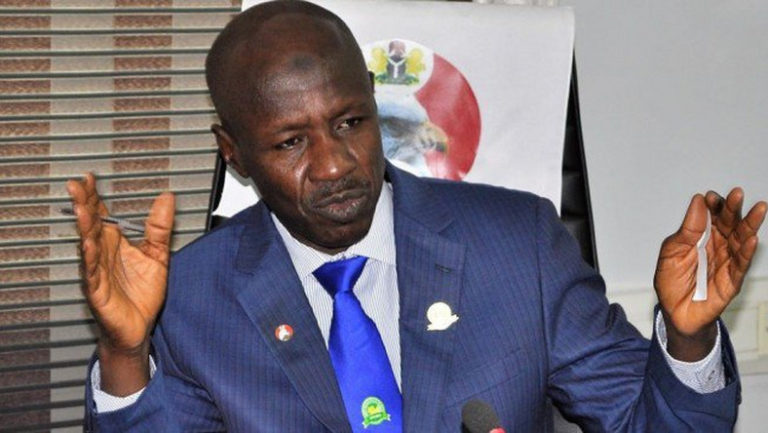
Acting EFCC Chairman, Magu reportedly suspended from office

THE Acting Chairman of the Economic Financial Crimes Commission (EFCC) has been reportedly suspended from office.

Magu had spent the night in detention at the Police Force Criminal Investigations Department (FCID) in Area 10, Abuja following long hours of interrogation, according to insider sources at Aso Rock.

The ICIR reported that Magu was picked up on Monday by security operatives attached to the inter-agency panel set up by President Muhammadu Buhari to investigate allegations of corruption.

On Tuesday afternoon, Magu was reported to have been suspended after his interrogation

Magu is being questioned over allegations of gross misconduct by a panel headed by Justice Ayo Salami, a retired President of the Court of Appeal who is also the chairman, Corruption and Financial Crime Cases Trial Monitoring Committee (COTRIMCO).

Although the presidency is yet to release an official statement on his suspension, a source in the government disclosed to The ICIR that he has been relieved of his duties.

In an effort to confirm the report, The ICIR contacted Professor Itse Sagay, the Chairman of Presidential Advisory Committee against Corruption, PACAC about Magu’s suspension but he denied knowledge of the case.

Sagay said he is unaware of the development adding that he does not have any knowledge of happenings about the embattled EFCC boss.

“I am not aware, in fact, I don’t know much about what is going on, it is all new to me,” Sagay told The ICIR in a telephone conversation.

Magu’s renewed probe followed a memo written by the Attorney General of the Federation and Minister of Justice, Abubakar Malami.

In the memo, Malami demanded the sack of Magu over allegations of insubordination and diversion of recovered assets.

Meanwhile, Professor  Femi Odekunle, a PACAC has described the travail of Magu as “outcome of power-play.”

In a statement released yesterday, he said: “The alleged originating Malami memo, up to the current “arrest “ seems an outcome of power-play by power blocs in the corridors of power in which Malami appears to be an arrow-head or major agent of a power bloc that is not really interested in, or in support of, Buhari’s anti-corruption fight.”


COVID-19: Kenya to re-open schools in 2021, students, teacher test positive in Ghana

GEORGE Magoha, Kenyan Education Cabinet Secretary says schools in the country would not re-open until 2021 noting that re-opening of schools at the moment is not safe.

Magoha was quoted by a local media in Kenya that it is not practical and safe to re-open schools in Kenya  because the peak period for the virus infections is just starting.

According to him, all learners will be required to repeat their current classes when schools re-open next year as the national examinations for primary and secondary schools will not be done this year.

“Schools will re-open next year that is when KCPE and KCSE examinations will be done,” Magoha said.

President Uhuru Kenyatta ordered the closure of schools in Kenya on March 15, soon after the first case of coronavirus was confirmed in the country.

Mogoha, however, assured Kenyans that the narratives might change if things improve in the country.

“All the decisions that we have made with stakeholders regarding reopening of learning institutions may change as informed by reports from the Ministry of Health, prevailing circumstances and increased knowledge of the COVID-19,” he explained.

He said the Ministry will explore several ways that will ensure school children are engaged while at home, adding that online learning is mainly going on in private schools.

Magoha stated that the decision to reduce physical contact in learning institutions came after due consultations with the Ministry of Health by having fewer learners if schools were to re-open once the curve flattens. COVID-19 cases had surged to 8,007 by July 7.

“Based on this disturbing trend, stakeholders have shelved an initial proposal to reopen basic education learning institutions,” he said.

Universities were, however, allowed to re-open subject to meeting COVID-19 protocols but he warned that institutions that will flout the COVID-19 containment measures will be closed.

“Reopening of universities for face-to-face sessions will be on a case-by-case basis based on approved compliance with the Ministry of Health COVID-19 protocols,” he explained.

Meanwhile, one week after Ghana reopened its schools for resumption for some final year students in junior and senior high schools and tertiary institutions, a teacher, his wife, and six other students of Accra Girls Senior High School (AGISS) tested positive for COVID-19 Ghanaweb reported on Tuesday morning.

Patrick Kuma Aboagye, Director General of the Ghana Health Service (GHS) and Professor Kwasi Opoku-Agyemang, Director General of the Ghana Education Service (GES) confirmed the development in a joint statement.

“As of 6 July 2020, six students, a teacher, and spouse have been confirmed as positive for COVID-19 in Accra Girls Senior High School.”

President Nana Akufo-Addo of Ghana had in his 10th address to the nation announced the reopening of schools for only final year students of Junior High School, Senior High School, and tertiary institutions.

The Nigerian government on June 30, had announced the reopening schools for students in graduating classes as part of its measures for the next phase of easing lockdown restrictions, those that followed the Covid-19 pandemic outbreak.

Also following the announcement, Emeka Nwajuiba, the Minister of State for Education disclosed on Monday that the West Africa Examination Council (WAEC) examination for senior secondary students is to hold from August 4 to September 5, with NECO following immediately.


Senate passes bill against sexual harassment in educational institutions

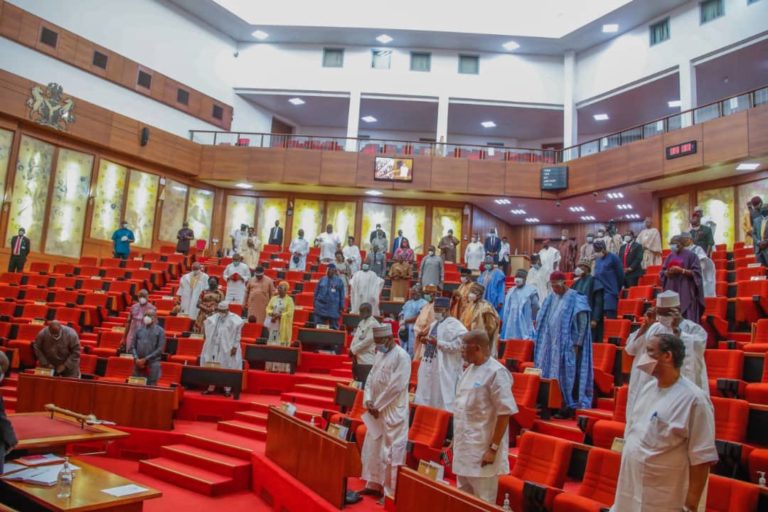
The Nigerian Senate on Tuesday has passed a bill against sexual harassment in educational institutions after it scaled the third reading.

The bill defines sexual offences as “sexual intercourse with a student or demands for sex from a student or a prospective student or intimidating or creating a hostile or offensive environment for the student by soliciting sex or making sexual advances.

The bill titled: ‘A Bill for an Act to prevent, prohibit and redress sexual harassment of students in tertiary educational institutions and for matters concerned therewith, 2019’, was reintroduced in the Senate on October 9 and scaled second reading on November 6, 2019.

Following a BBC investigation that uncovered alleged sexual misconduct by lecturers in Nigeria and Ghana, the sexual harassment bill sponsored by Ovie Omo-Agege, the Deputy Senate President and 106 others has 27 clauses.

It proposes 14-year jail term, with a minimum of five years, without an option of fine for any educator who commits sexual offences in tertiary institutions.

However, Biodun Ogunyemi, President of the Academic Staff Union of Universities (ASUU),  during the public hearing of the bill in Abuja described it as biased. He said the bill will stigmatise lecturers in universities.

The anti-sexual harassment bill was originally introduced in 2016 but didn’t pass both houses of parliament.

Critics rejected the bill because it did not cover sexual harassment in the workplace and included a defence for consent. The defence for consent has been removed from the latest bill.


Foreign students taking full online classes in US face deportation

FOREIGN students taking online courses in the US may be facing deportation from the country following modifications on temporary exemptions for non-immigrant students taking online classes due to the coronavirus pandemic for the fall 2020 semester

The Student and Exchange Visitor Program (SEVP) under the United States (U.S,) Immigration and Customs Enforcement (ICE) agency on Monday announced the modifications indicating that non-immigrant F-1 and M-1 students attending schools operating entirely online may not take a full online course load and remain in the United States..

In a press release shared on its website, ICE disclosed that the F-1 visa is for students pursuing academic coursework and M-1 visa bearers are students pursuing vocational coursework.

The statement read that students whose schools and programs are now entirely digital must exit the country or take the option of transferring to other schools or programs that offer in-person instruction modules.

“Non-immigrant students within the United States are not permitted to take a full course of study through online classes,”it said.

“If students find themselves in this situation, they must leave the country or take alternative steps to maintain their non-immigrant status such as a reduced course load or appropriate medical leave.”

It highlighted that only foreign students who operate under normal in-person classes are bound by existing federal regulations, stating that other foreign students face deportation if they choose to remain in the country.

For students taking a blend of online and in-person classes, the ICE stated that such students would only be allowed to take more than one class or three credit hours online, adding that schools offering such ‘hybrid’ model of classes must certify to SEVP, through the Form I-20 titled Certificate of Eligibility for Non-immigrant Student Status, certifying that the program is not entirely online.

It further disclosed that the U.S. Department of State would not issue visas to students enrolled in schools and or programs that are fully online for the fall semester nor would the U.S. Customs and Border Protection permit such students to enter the country.

It is not clear how many foreign students would be affected by the new guideline. The U.S. State Department issued 388,839 F visas and 9,518 M visas in fiscal 2019, according to the agency’s data.

Many schools have begun announcing plans for the fall 2020 semester.Harvard University on Monday announced it would conduct course instruction online for the 2020-2021 academic year.

Meanwhile, Donald Tump, the US President earlier announced plans to suspend immigration into the country in a bid to protect ‘American jobs’ as the effect of COVID-19 pandemic takes its toll globally.

FACT-CHECK: Was Ize-Iyamu arraigned in Court for allegedly ‘looting’ N700m?

By Niyi Oyedeji

ON July 6, a Twitter user claimed that the governorship candidate of the All Progressives Congress (APC) for the September 19 Edo State election, Osagie Ize-Iyamu was arraigned in court in 2018 for looting a sum of N700 million.

The claim was tweeted by a Twitter user, Bulama Bukarti, with the Twitter ID: @Bulamabukarti.

The tweet has garnered 411 retweets, 503 likes and 71 comments as of 2:30 pm on Monday, July 7.

Attached to the tweet was a 28 seconds video where a former Chairman of the APC, Adams Oshiomhole, was seen singing, saying Ize-Iyamu is a “loser” and that EFCC would come for him.

FACT-CHECK: Did court restrain Obaseki from contesting Edo PDP primaries?

THE CLAIM

The tweet reads: “In 2015, APC said Eze-Iyamu looted 700m and called on the good people of Edo to not vote for him.

“In 2018, the EFCC under an APC government arraigned Eze-Iyamu in court for looting 700m.

“In 2020, the same APC fielded Eze-Iyamu as its candidate for Edo State.

“APC is a fraud.”

There are three claims from the tweet, namely:

  1. That APC accused Ize-iyamu of looting N700 million in 2015.
  2. That the EFCC under an APC government arraigned Ize-Iyamu in court for looting N700 million in 2018.
  3. That APC fielded Ize-Iyamu as its candidate for the 2020 Edo State election.

The transcript of the video reads: “You are a loser, 700 million! You are a loser, 700 million! EFCC is waiting for you.

“One more time, 700 million, you are a loser, Pastor, you are a loser,  Ize-Iyamu, you are a loser, EFCC is waiting for you. Thank you and God bless”

FACT-CHECK: Report on Thompson Oliha’s death MISLEADING

THE FINDINGS

CLAIM 1

APC accuses Ize-Iyamu of looting 700 million in 2015

The ICIR findings revealed that APC accused Ize-Iyamu of looting N700 million but the accusation was made in 2016 and not in 2015.

While examining the video attached to the tweet, The ICIR findings revealed that the 28 seconds video where Oshiomhole was seen saying that EFCC would soon come for Ize-Iyamu for looting was shot in 2016 during the gubernatorial campaign for the Edo State governor, Godwin Obaseki.

The video first appeared on the Channels Television YouTube page on July 28, 2016.


CLAIM 2

EFCC arraigned Ize-Iyamu in court for looting N700million in 2018

The ICIR contacted the EFCC spokesperson, Dele Oyewale, who confirmed that the EFCC arraigned Ize-Iyamu and four others on the allegation that they received a sum of N700 million from a former Petroleum minister of Nigeria, Diezani Alison- Madueke.

“It is true that we arraigned Ize-Iyamu and four other persons in 2018. In fact, we are still in court with them,” Oyewale stated in a telephone interview with The ICIR.

Further findings by The ICIR revealed that the news about Ize-Iyamu’s arraignment was first published on the EFCC website on March 24, 2018.

The story with the headline, “EFCC Arraigns Ize-Iyamu, Dan Orbih, Lucky Imasuen and two others for N700m Scam” read in part:

“The Economic and Financial Crimes Commission, EFCC, today, Thursday, May 24, 2018, arraigned Pastor Osagie Ize -Iyamu,  PDP governorship candidate in Edo State; Lucky Imasuen, former Edo State deputy governor;  Chief Dan Orbih, PDP chairman in Edo State; Tony Aziegbemi and Efe Erimuoghae before Justice P.I.Ajoku of the Federal High Court, Benin City,  Edo State on an eight-count charge bordering on money laundering.‎

“The defendants were alleged to have sometime in March 2015 in Benin City directly received the sum of seven hundred million (N700,000,000), part of the now infamous $115million Diezani Alison- Madueke bribe to influence the outcome of the 2015 general election.”

It was also revealed on the EFCC website that as of June 18, 2020, the case was adjourned again.

In addition, in 2018  Muhammadu Buhari of the APC was the President of Nigeria.


CLAIM 3

In 2020, APC fielded Ize-Iyamu as its candidate for Edo State

Checks by The ICIR revealed that Ize-Iyamu on June 20, emerged the flag-bearer of the APC for the September 19 governorship election in Edo State. This was reported by several media houses.


THE VERDICT

From all evidence obtained

  1. The claim that APC accused Ize-Iyamu of looting N700 million is TRUEbut the accusation was made in 2016 and not in 2015.
  2.  The claim that the EFCC under an APC government arraigned Ize-Iyamu in court for looting  N700 million in 2018 is TRUE, but he was arraigned for money laundering.
  3. The claim that APC has fielded Ize-Iyamu as its candidate in the forthcoming Edo state governorship election is TRUE.