Home Blog Page 2059

Bauchi Assembly uncovers contracts racketeering, sharp practices at SUBEB, summons Chairman

By HARUNA Mohammed 


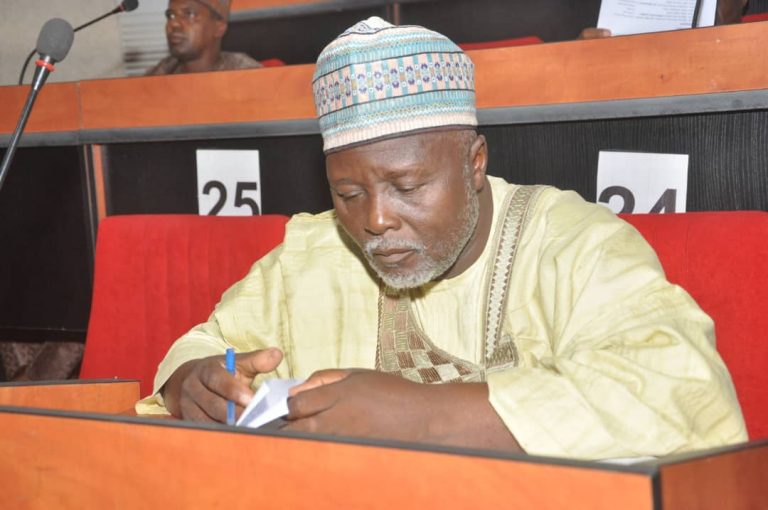
THE Bauchi State House of Assembly Committee on Education has uncovered sharp practices and contracts racketeering at the Bauchi State Universal Basic Education Board, SUBEB, The ICIR can authoritatively report.

The committee in a report submitted to the Assembly during plenary on Tuesday said sharp practices and contracts racketeering such as “buying and selling of contracts against procurement laws, non-execution and or non-completion of some contracts more than a year after award as well as shoddy execution of some contracts” were uncovered at the Board.

According to the committee, contractors awarded contracts to construct and repair classroom blocks were found wanting noting that 80 percent of the newly constructed or renovated structures across the state requires urgent attention.


Read Also:

In a 13 page report submitted to the Assembly and exclusively obtained by our reporter, the committee  uncovered 252 uncompleted and six non-executed contracts awarded by SUBEB.

The report showed that committee also uncovered sub-standards execution of hand pump boreholes at Gadda Primary School, Alkaleri Local Government Area, Dinchi Primary School and JSS Fagam in Dambam Local Government Area and Wahu Primary School, Zoro and Wuro Bokki Primary School in Darazo Local Government Area.

The committee in the report recommended that the contractors who executed shoddy jobs should not be paid until they corrected all the defects associated with the contracts execution.

It also recommended that all companies and contractors that executed substandard projects “to the detriment of the people of Bauchi State should be blacklisted, while investigation should be carried out on the alleged negligence of SUBEB engineers who were supposed to supervise the projects.

While presenting the report to the House, the Committee recommended that the Assembly should as a matter of urgency summon the SUBEB Chairman,  and other officials to appear before it on July 14, to offer explanations on the alleged shoddy deals and contracts racketeering.

Other recommendations made by the Committee include; “SUBEB should be conducting quarterly inspection of all the newly constructed or renovated structures across the state with a view to protecting their standard and durability.

It recommended that the executive arm of government should be advised to construct fencing walls in schools that are located in urban areas in order to provide security required for effective teaching and learning  while SUBEB should henceforth auction the zinc, woods, doors and windows removed from renovated classrooms to the people of the host communities.”

The committee also agreed that monitoring and evaluation and constant oversight “are the key to end the problems; thus the House Committee on education will swing to action.”

The report also recommended that all members of the Assembly should monitor all contracts being executed in their constituencies and be reporting to the House Committee on education.

This report was originally published by WIKKITIMES
Seven die in NNPC facility explosion

THE Nigerian National Petroleum Corporation (NNPC) says seven persons were killed during an explosion that occurred at one of its facilities at Gbetiokun, OML 40, in the Niger Delta region operated by the Nigerian Petroleum Development Company (NPDC), on behalf of the NPDC/Elcrest Joint Venture. 

This was disclosed in a statement by Kennie Obateru, the Group General Manager Group Public Affairs Division of NNPC.

The incident occurred on Tuesday during the installation of a ladder on a platform (Benin River Valve Station) for access during discharging of Gbetiokun production,

Obateru in the statement said that detailed investigation of the cause of the explosion has commenced, while the Department of Petroleum Resources (DPR) has been duly notified and Form 41 was being prepared for the industry regulator as required in circumstances of this nature.

He said bodies of casualties have been deposited in a morgue in Sapele, while families of the personnel involved are being contacted by their employers: Weld Affairs and Flow Impact, which are consultants to NPDC.

Obateru said Mele Kyari, Group Managing Director of NNPC has commiserated with the families of the bereaved, praying that God grants them the fortitude to bear the irreparable loss of their loved ones while also assuring that all personnel on board the platform had been fully accounted for.

370 million children to miss out on school meals due to school closure- UN report

THE United Nations in a report says over 370 million children are going to miss out on school meals this spring due to school closures which has kept 90 per cent of students (1.57 billion) out of school globally as a result of COVID-19 pandemic.

In the report ‘The Sustainable Development Goals Report 2020’, the UN said prolonged absence from school has resulted in lower retention and graduation rates.

The report which was prepared by the United Nations Department of Economic and Social Affairs in collaboration with over 200 experts from more than 40 international agencies, indicated that COVID-19 has worsened learning outcomes.

This, it said has an adverse effect on the social and behavioral development of children and youth.

Liu Zhenmin, Under-Secretary-General for Economic and Social Affairs in the report laments that as more families fall into extreme poverty, children in poor and disadvantaged communities are at much greater risk of child labour, child marriage and child trafficking.

Zhenmin noted that the global gains in reducing child labour are likely to be reversed for the first time in 20 years.

“In short, the crisis is having life-altering consequences for millions of children and youth worldwide,” Zhenmin.

On the progress made so far on the Sustainable Development Goals (SDGs) one-third of the way into the journey, report stated that the world is not on track to achieve the global Goals by 2030.

“Before the COVID-19 outbreak, progress had been uneven and more focused attention was needed in most areas,” it said.

It remarked that the pandemic abruptly disrupted implementation towards many of the SDGs and, in some cases, turned back decades of progress.

The crisis,it lamented has touched all segments of the population, all sectors of the economy, and all areas of the world.

“Not surprisingly, it is affecting the world’s poorest and most vulnerable people the most. It has exposed harsh and profound inequalities in our societies and is further exacerbating existing disparities within and among countries.”

According to the report, forecasts indicate that the pandemic will push 71 million people back into extreme poverty in 2020, in what would be the first rise in global poverty since 1998.

“Many of these people are workers in the informal economy, whose incomes dropped by 60 per cent in the first month of the crisis,” the report said.

“Half of the global workforce – 1.6 billion people – support themselves and their families through insecure and often unsafe jobs in the informal economy, and have been significantly affected.”

Reminiscing over the impact of the pandemic, the UN said that that the economic impacts of the crisis are  sobering and that the world is now facing its worst recession in generations.

The organization also estimates that world trade will plunge by 13 to 32 per cent, foreign direct investment will decline by up to 40 per cent, and remittances to low- and middle-income countries will fall by 20 per cent in 2020.

Many poorer countries are already experiencing acute food insecurity, it said.

The report also warned that the poorest and most disadvantaged countries will inevitably be the hardest hit as even the most advanced and developed countries are struggling to cope with the health, social and economic fallout of the pandemic.

However, it advised that the world must hold firm in its convictions and not let the crisis derail its hopes and ambitions stressing that the principles on which the SDGs were established are key to building back better in the post-COVID-19 recovery.

”Our collective response to the pandemic can serve as a “warm-up” for our preparedness in preventing an even larger crisis – that is, global climate change, whose effects are already becoming all too familiar.”

The report further advised that governments and businesses should heed the lessons learned from this wake-up call to formulate the kinds of transitions needed to build a healthier, more resilient and more sustainable world.

No Unity School will participate in scheduled WAEC exams – Minister

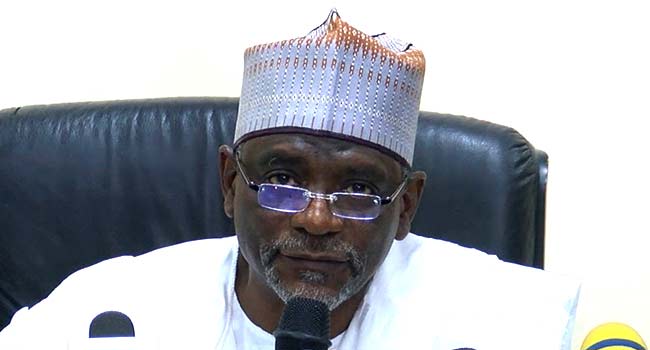
ADAMU Adamu, the Minister of Education on Wednesday said no Unity School in the country would participate in the scheduled Senior Secondary School Certificate examination by the West Africa Examination Council (WAEC).

Adamu stated this after the Federal Executive Council (FEC) presided over by President Muhammadu Buhari.

The Minister insisted that none of the schools under his ministry would resume until schools are considered safe for students and teachers.

He however, urged the WAEC  management and the state governments to reconsider their decision to open for exams.

Emeka Nwajiuba, the Minister of State for Education had on Monday during the Presidential Task Force (PTF) on COVID-19 daily press briefing announced August 4 as the date for the commencement of the WAEC examination, through September 5.

Meanwhile, WAEC on Tuesday announced guidelines for the conduct of its senior secondary school certificate examination amid coronavirus pandemic.

The PTF had also allowed for the resumption of schools for students in graduating classes.

$9.7m, £74,000 found in my house were gifts from friends – ex-NNPC GMD, Andrew Yakubu

ANDREW Yakubu, a former Group Managing Director (GMD) of the National Petroleum Corporation (NNPC) on Wednesday told an Federal High Court that $9.7 million and £74, 000 found in his house in Kaduna in 2017 were gifts he received from friends during on occasions such as birthdays and thanksgiving services and others.

Yakubu is facing  charges of money laundering and non-declaration of assets instituted against him by the Economic and Financial Crimes Commission (EFCC).

The EFCC had charged him with six counts relating to the sums of $9,772 and £74,000 recovered from his home in Kaduna State on February 3, 2017.

Operatives of the anti-graft agency had raided Yakubu’s house on Chikun Road in the Kaduna South Local Government Area from where about N3 billion was allegedly recovered.

But appearing before the court on Wednesday, the former NNPC GMD  said he received the monies in tranches of not more than $10, 000 and not more than £5, 000.

While testifying as his own witness, Yakubu confirmed that the monies were contained in a safe taken from his property.

“Yes my lord, I confirm that the monies were contained in a safe taken from my property,” he told the court.

“Substantial part of that amount was given to me after I left service, it was given to me on such occasions as birthdays, thanksgiving services, and other celebrations that I hosted after leaving my office.

“I also hosted marriages of my daughters, in fact, over 98 percent of the money came from gifts.”

According to him, the monies were kept in the safe pending the time he would decide on which business he would invest it in.

“Since the money was given to me unexpected, I kept the money in safety, in a safe, pending when I decide on a specific business venture to embark on. And as soon as the decision is crystalized, the business would be funded through the financial institutions,” the former NNPC GMD said.

He said the other two percent of the recovered monies were funds he got from his travels to foreign countries.

“For over 25 years, I had reason by virtue of my schedule to travel to many parts of the world. I was entitled to estacodes in United States Dollars,” he said.

“Any saving I made during the trip, I came back and saved. The other two percent of the funds recovered from my safe was from such savings I made from travels.

“The prevailing rate of dollar at that time was average of N150 to a Dollar and N250 to Pound Sterling. That was about the bank rate at that time”. “When I was asked the time frame within which the safe was placed in the location, I told them that it was within 2010 to 2014.”

The trial judge, Justice Ahmed Mohammed had struck out two of the charges in the suit marked FHC/ABJ/ CR/ 43/ 2017.

The sustained charges read that  Yakubu had between 2012 and 2014, without going through a financial institution, received cash payments of $9, 772, 800 and £74, 000, and thereby committed an offense contrary to section 1 of Money Laundering (Prohibition) Act 2012 and punishable under section 16(2) of the Act.

He had pleaded not guilty to the charges in 2017 before he was granted a bail of N300 million by the Federal High Court on March 16, 2017.

On Wednesday, while being cross-examined by the prosecution counsel, M.S. Abubakar, Yakubu, told the court that he joined NNPC in 1980 and became the Managing Director of a subsidiary of NNPC Warri Petrochemical & Refining Company in 2007.

“I was appointed the Executive Director in charge of Exploration and Production in 2011 at NNPC headquarters. “I became the Group Managing Director of NNPC in 2012 and retired in 2014”.

After Yakubu’s statement in the witness box, Justice Mohammed,  adjourned the case to July 22 for his cross-examination by the EFCC counsel.


FG seeks World Bank help to reduce the number of out-of-school children in Nigeria

By Vincent Ufuoma


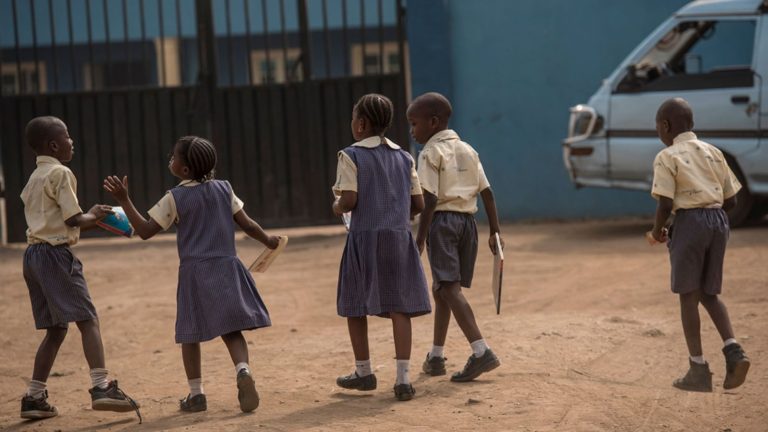
THE Federal Government has called on the World Bank to assist Nigeria in reducing the number of out-of-school children from 10 to 5 million by the year 2023.

Adamu Adamu, Minister of Education during a visit by a World Bank delegation to his office on Wednesday led by Shubham Chawdry, Country Director of the World Bank.

Adamu said the call was in line with the Federal Government’s commitment “to ensure that Nigerian children have access to qualitative education, irrespective of their economic backgrounds.”

The Minister reiterated that “the federal government is keen about reducing the number” of out-of-school children in the country and to also improve the country’s standard of education.

He said that the Ministry was currently working with the World Bank on projects aimed at encouraging children back to school, particularly in the area of increased enrollment of the girl-child.

Adamu commended the Bank’s role and commitment to the development of Nigeria educational sector, and expressed the government’s readiness for better interventions that would lead to the eradication of the out-of-school children phenomenon in the country.

Speaking, Shubham Chawdry, World Bank Country Director,  pledged his organisation’s commitment to the improvement of Nigeria’s education sector.

While emphasising that education is a sure way of eliminating poverty, Chawdry pledged the readiness of the World Bank to assist in financing more developmental projects.

He declared the Bank’s interest in long-lasting projects, adding that the World Bank would no longer dictate developmental projects but leave the decision to governments as they are in the best position to ascertain the needs of their citizens.

A Demographic Health Survey (DHS) conducted in 2015 by UNICEF and the Nigerian government revealed that Nigeria has the highest number of out-of-school children in the world with a number of 13.2 million children.

The report further said that about 69 percent of the country’s out-of-school children are spread across the FCT and 10 states in the North.

The states include Bauchi, Niger, Katsina, Kano, Sokoto, Zamfara, Kebbi, Gombe, Adamawa and Taraba states.

About 60 percent of the country’s 13.2 million out-of-school children are said to be girls.

Harvard, MIT sue Trump administration over planned deportation of foreign students

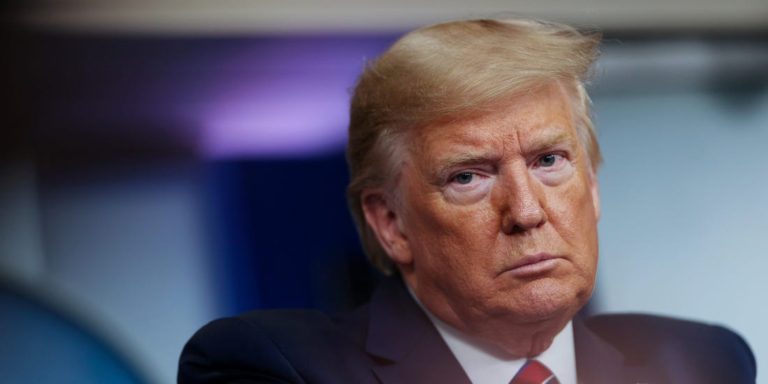
THE Harvard University and Massachusetts Institute of Technology (MIT) on Wednesday applied to court to stop the Trump administration’s decision to strip  foreign students taking online courses of their visas if their universities move exclusively to online classes amid the COVID-19 pandemic.

The institutions filed the lawsuit following  announcement by the U.S. Immigration and Customs Enforcement (ICE) that Non-immigrant F-1 and M-1 students attending schools operating entirely online may not be allowed to take a full online course load and remain in the United States.

The ICE also stated that U.S. Department of State will not issue visas to students enrolled in schools and or programs that are fully online for the fall semester nor will U.S. Customs and Border Protection permit these students to enter the United States.

According to a report by The Hill, the Ivy league schools had asked a federal court in Boston for a temporary restraining order and permanent injunction against the administration’s new policy.

The universities’s lawsuit alleged that the ICE’s decision appears designed to “force universities to reopen in-person classes,” thereby increasing the risk of exposure to the coronavirus, while scrambling carefully laid plans to conduct courses online and upending foreign students’ lives.

“The effect — and perhaps even the goal — is to create as much chaos for universities and international students as possible,” the lawsuit states.

The report says Department of Homeland Security, which oversees ICE, did not immediately respond to a request for comment.

The lawsuit alleges several violations of a federal law known as the Administrative Procedure Act (APA), which concerns how much decision-making power resides with federal agencies. At issue is whether ICE’s new policy is legally justified or if it was “arbitrary and capricious,” and thus illegal under the act.

The lawsuit makes several references to the Supreme Court’s recent decision to block the administration’s plan to end an Obama-era deportation shield for young undocumented immigrants. In that ruling, a majority of justices found the Trump administration had failed to give an adequate justification under the APA for terminating the Deferred Action for Childhood Arrivals (DACA) program.

ICIR reporter, 12 others selected for Dubawa fellowship

THE Premium Times Center for Investigative Journalism (PTCIJ), through its fact-checking project, Dubawa, has selected 13 fellows including journalists and researchers for the second edition of its fact-checking fellowship.

Among the selected fellows is The ICIR‘s Uthman Samad.

According to Temilade Onilede, Dubawa Programme Assistant, the fellows who were chosen from 104 applicants from different newsrooms in Nigeria and Ghana will undergo four-day intensive training from Wednesday  July 8 to Monday July 13, 2020.

Onilede explained that fellows would be taken through courses on the misinformation ecosystem, news industry transformation, research and data journalism, fact-checking methodology, and fact-checking/verification as an innovation to today’s journalism

She added that the fellows are expected to use the six-month fellowship program to tackle misinformation and hold political elites accountable for their words and actions.

The successful candidates are also expected to expand the reach of verified information to grassroots communities that are targeted constituencies for political, social and cultural disinformation for them to be adequately equipped to hold political elites accountable.

The 2020 Dubawa Fellowship programme which is slated to end in December, is supported by Heinrich Boll Stiftung Foundation Abuja office.

Flashback: How presidency ignored allegation of corruption against Magu in 2017

WHEN Ibrahim Magu, an Assistant Commissioner of Police (ACP) was first appointed as acting chairman of the Economic and Financial Crimes Commission (EFCC) in November 2015, following the dismissal of Ibrahim Lamorde, the former chairman of the Commission, he very quickly became the arrowhead of the President Muhammadu Buhari anti-corruption fight.

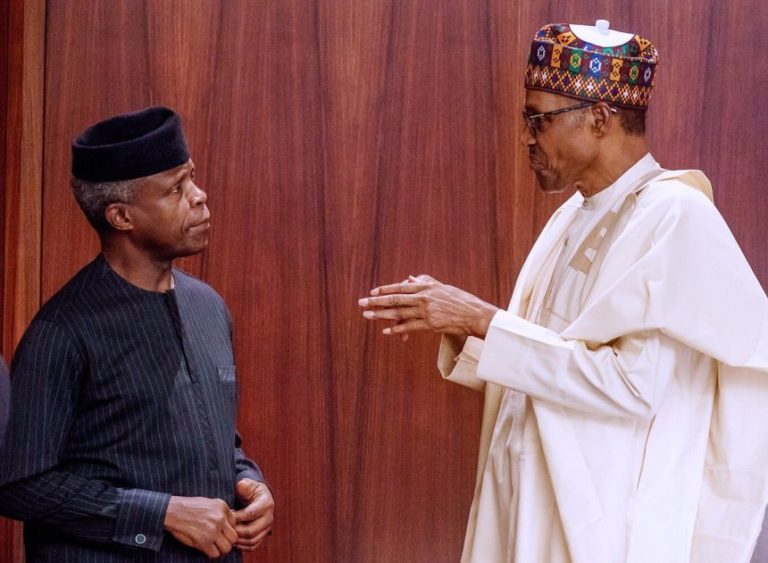
Upon the expiration of his temporary appointment, VP Yemi Osinbajo, while serving as acting president on June 17, 2016, forwarded Magu’s name to the Senate for screening and subsequent confirmation as the substantive Chairman of the anti-graft agency.

However, Magu’s elevation was at first instant marred by an indicting security report from the Department of State Security Service (SSS) and subsequent rejection by the Senate.

The DSS Report

Containing 14 paragraphs, the letter submitted to the Senate via the Services’ letter No. SV.114/ 2 on October 3, 2016, painted Magu as a corrupt agent whose professional and private dealings were in direct contrast to the anti-corruption mission driving the Buhari administration.

According to the report, in December 2010, the Police Service Commission found Magu guilty of “Action prejudicial to state security, withholding of EFCC files, sabotage, unauthorised removal of EFCC files and acts unbecoming of a Police officer,” and awarded him severe reprimand as punishment.

The report also disclosed that Magu at the time was occupying a residence rented for N40m, at N20m per annum, adding that the said accommodation was not paid for from the Commission’s finances but by one Umar Mohammed, a retired Nigerian Air Force officer, who has since been arrested by the Commission for alleged corrupt practices.

It was further disclosed that the EFCC boss has maintained a high profile lifestyle and on many occasions lived extravagantly against the directive given to public servants.

“The EFCC boss has so far maintained a high profile lifestyle. This is exemplified by his preference for First Class air travels. On 24th June 2016, he flew Emirate Airlines’ First Class to Saudi Arabia to perform the Lesser Hajj at the cost of N2,990,196. This is in spite of Mr. President’s directive to all public servants to fly Economy Class,” the report read in part.

In its ultimate recommendation, the report chided the person of Magu and submitted that the nominee lacks the integrity to lead the country’s anti-corruption agency.

“In the light of the foregoing, Magu has failed the integrity test and will eventually constitute a liability to the anti-corruption drive of the present administration,” the report read.

The Senate’s double rejection

In December 2016, following the incriminating report submitted by the SSS, the Senate, under the leadership of Bukola Saraki, former Senate President, rejected Magu’s nomination for the first time.

However, in January 2018, Buhari re-nominated him for confirmation but in March, he was again rejected a second time by the upper legislative chamber.

Magu’s rejection was announced at a press briefing in the National Assembly by Sabi Abdullahi, Senate spokesperson, after a two-hour closed-door meeting. Abdullahi cited an unfavourable security report as the reason for Magu’s rejection.

Presidency push back

Despite the indicting report against Magu and the Senate’s rejection of his appointment, the presidency retained him as acting EFCC chairman.

Osinbajo while being represented by Nasir El-Rufai, Kaduna State Governor, Mallam Nasir El-Rufai, at the commissioning of the Kaduna zonal office of the EFCC in July 2017, said that he and President Buhari had confidence in Magu, adding that he would remain the chairman of the anti-graft agency.

“We have every confidence in Magu to fight corruption to a standstill. He will remain the EFCC chairman as long as I remain the Acting President and as well as Muhammadu Buhari remains the President. “It is our belief that Magu will continue to remain a nightmare for corrupt people for years to come,” he said.

Years later, Magu gets suspended

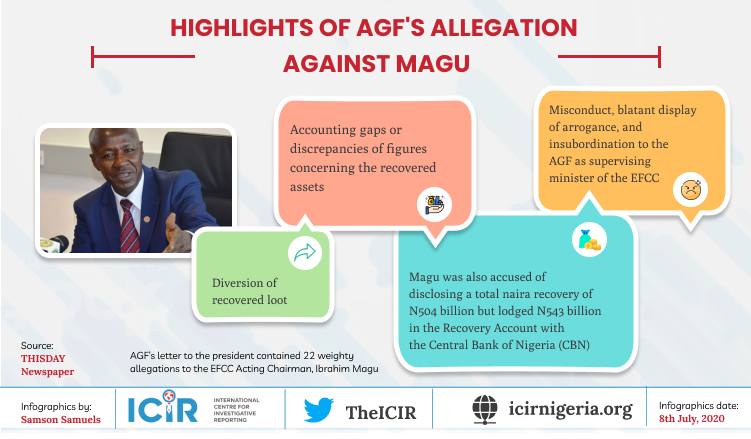
Earlier in June, Abubakar Malami, Attorney General of the Federation and Minister of Justice sent a memorandum containing 22 weighty allegations against Magu to President Buhari, urging the sack of the acting Chairman of Nigeria’s anti-graft agency, over allegations of corruption.

One of such allegations, according to the publication was that the EFCC boss disclosed a total recovery of N504 billion but lodged N543 billion in the Recovery Account with the Central Bank of Nigeria (CBN), exceeding the disclosed figures by N39 billion.

On Monday, Magu was picked up by security operatives attached to the inter-agency panel set up by Buhari to investigate allegations of corruption and subsequently spent the night in detention at the Police Force Criminal Investigations Department (FCID) in Area 10, Abuja.

By Tuesday, it was reported that the EFFC chief had been suspended from office. Although the presidency is yet to release an official statement on his suspension, a source in the government disclosed to The ICIR that he has been relieved of his duties.

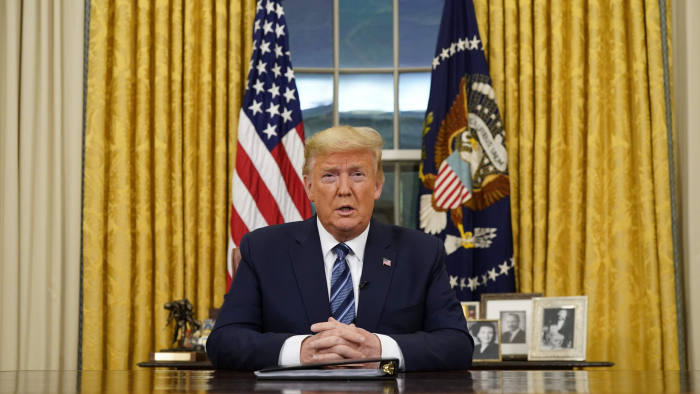
Trump finally exits US from WHO

UNITED States of America has formally withdrawn its membership of World Health Organisation (WHO), Bob Menendez, US Senator from New Jersey confirmed.

This is coming at a time the US alone accounts for 27 percent of the world’s coronavirus cases.

President Donald Trump had in May threatened to exit WHO and permanently end funding to the body, New York Times reported.

With over three million confirmed cases, and over 133,ooo deaths, the US is the epicentre of COVID-19, which has killed over 539,000 people and infected over 11. 6 million persons globally.

Menendez in a tweet shared on Tuesday, stated that that the Trump administration notified Congress of its formal withdrawal from WHO.

He described it as a wrong move that won’t serve the interest of America.

Congress received notification that POTUS officially withdrew the US from the WHO in the midst of a pandemic,” he wrote on Twitter.

“To call Trump’s response to COVID chaotic & incoherent doesn’t do it justice. This won’t protect American lives or interests—it leaves Americans sick & America alone.”

The country’s withdrawal from WHO came after President Donald Trump’s temporary suspension of the public health body’s funding.

In April, Trump had ordered the halt of U.S funding to WHO, citing its role in “mismanaging and covering up the spread of the coronavirus.

The US is the global health body’s largest single funder. In 2019, the US contributed about $450 million to WHO and so far this year, it has contributed about $34 million in membership dues to WHO according to Nature.

Trump had told the director-general of the World Health Organization he would permanently end all funding to the organization if it did not “commit to substantive improvements within the next 30 days.

He also wrote that the United States would reconsider its membership in the WHO because it was “so clearly not serving America’s interests.”

“It is clear the repeated missteps by you and your organization in responding to the pandemic have been extremely costly for the world,” the president wrote in a four-page letter outlining his grievances against the organization and its leader, Dr. Tedros Adhanom Ghebreyesus.