Home Blog Page 2080

Ministerial report on Kano mysterious deaths is misleading- Ganduje

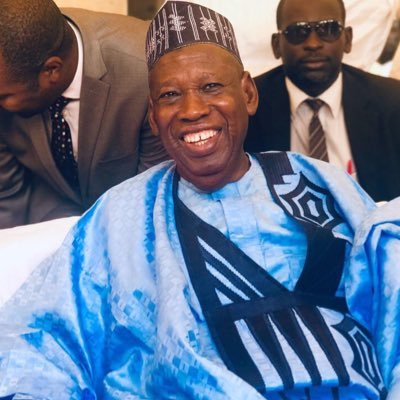
ABDULLAHI Ganduje, Governor of  Kano State has reacted to report by Ministerial Task Force Team which claimed that about 60 per cent of people who died​ during the mysterious deaths in Kano was caused as a result of COVID-19 pandemic, saying the report was misleading.

“The report by the Technical Committee from the Federal Ministry of Health indicating that 60 per cent of the mysterious deaths in Kano was related to COVID-19, I think all they​ indicated certainly lacked correlation,” Ganduje said.

“In fact, their data cannot pass the test of time, reliability and validity. Once such findings could not pass validity and reliability, you can as well, throw away that investigation into an ocean, signifying nothing, reporting nothing and misleading almost everybody.”

According to a publication on the official website of Kano State, Ganduje stated this when he received the report of a study undertaken by a combined team of Kano State Ministry of Health and development partners, including the World Health Organization, (WHO), National Centre for Disease Control (NCDC), AFENET and Lafiya Projects.

He stated that the report indicated that only 15.9 per cent of the deaths were caused by COVID-19 pandemic.

“This is the report of the Technical Committee appointed by Kano State Government as earlier promised and we have seen this report;​ and I do congratulate this team of experts,” the governor said.

Ganduje  said the report will be forwarded to President Muhammadu Buhari, Minister of Health,  chairman of the Presidential Taskforce on COVID-19,  National Coordinator on COVID-19.

Muktar Gadanya, Lead Consultant and a  professor of Infectious Diseases from Bayero University Kano (BUK) who presented the Mortality Review (Verbal Autopsy) findings by the team, countered the Minister of Health comments which was based on findings by the Ministerial Taskforce Team, which earlier said the large number of the mysterious deaths were caused by COVID-19.

According to him, the team of researchers discovered that about 1,774 deaths were recorded, but the researchers traced the relatives of about 1604 of the deceased which represented over 90 per cent of the total figure.

Gadanya maintained that out of 1604 cases traced, only 255 cases of deaths were linked to COVID-19 pandemic, representing 15.9 per cent.

He however, attributed the remaining deaths to diseases related to hypertension, diabetes, malaria and other commonly identified ailments, including self-medication by victims who could not approach the hospitals for fear of being identified as COVID-19 patients, including disruption of medical care and down turn in economic activities.


Nigeria’s inflation rate spikes to 12.40 percent, highest in 24 months

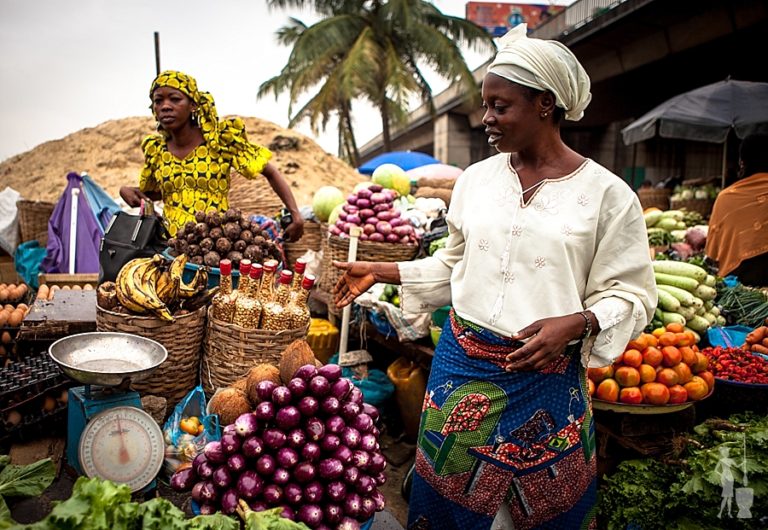
INFLATION rate in Nigeria has increased by up to 12.40 percent (year-on-year) in May 2020, indicating the highest level in 24 months, Consumer Price Index (CPI) of May 2020 has shown.

The report, published by the National Bureau of Statistics (NBS) also revealed that food inflation increased to 15.04 percent in May from 15.03 percent in April.

According to the report, increases were recorded in the 12 Classification of Individual Consumption According by Purpose (COICOP) divisions that yielded the headline index.

The COICOP includes food and non-alcoholic beverages, alcoholic, and beverages; tobacco, and kola; clothing and footwear; housing, water, electricity, and gas; furnishings and household equipment.

Others are health, transport, communication, recreation and culture, education, restaurants and hotels, miscellaneous goods and services.

The closure of land borders in the country in August 2019 was a major driving force for the upward trend of the inflation rates of the country according to NBS data which shows the rates started increasing from September 2019.

The Central Bank of Nigeria (CBN) in March said inflation level will rise in the next six months due to the effect of Coronavirus disease (COVID-19), but it is expected to fall in the next 12 months.

Inflation in states

In May 2020, all item inflation on a year-on-year basis was highest in Rivers- 14.69 percent, Bauchi- 14.91 percent, Ebonyi, Kogi, and Plateau states- 13,87 percent, while Benue- 11.13 percent, Adamawa- 11.10 percent, and Kwara- 10.58 percent recorded the slowest rise in headline year-on-year inflation.

For food inflation, Abuja 18.13 percent, Osun- 17.40 percent, and Imo- 17.13 percent recorded the highest, while Abia- 13.64 percent, Bauchi and Kaduna- 12.97 percent recorded the slowest rise in headline month-on-month inflation.

US condemns ‘senseless’ ISIS killings in Northern Nigeria

THE United States of America (US) has condemned what it called ‘senseless and brazen’ killings of civilians by Islamic State West Africa Province (ISWAP) militants in the Northern part of Nigeria.

The US raised this concern through a statement signed by Mike Pompeo, United States Secretary of State on Thursday.

According to Pompeo, ISIS West Africa has launched multiple attacks in Borno State that killed more than 120 civilians.

“In recent weeks, suspected  ISIS West Africa  militants launched multiple attacks in  Borno  State, killing more than 120 civilians, including women, children, and the elderly.  On June 9, unidentified armed  bandits  attacked a village in Katsina State, killing dozens,” Pompeo wrote.

He added that the attacks in Borno and Katsina states followed shooting of a pastor and his pregnant wife, an Imam and other civilians in Taraba State.

“These horrific crimes follow the  shooting  of a  pastor and his pregnant wife on June 1 and the killing of an imam, local village head, and several civilians  on June  5  in  the course of intercommunal violence in  Taraba State,” he noted.

Pompeo stated that in recent years, tens of thousands of Nigerians have lost their lives to terrorist attack, communal clashes among others.

“Tens of thousands of civilians have  lost their lives  in Nigeria in recent years to  violent  attacks  by  terrorist groups  or  criminal gangs, in inter-communal violence, or due to their religious beliefs,” the statement further read.

The United States urged the Government of Nigeria to do more to strengthen ongoing efforts to address violence, hold those responsible accountable as well as protect  civilians in the country.

Six Nigerians sanctioned by US government for $6 million cyber fraud

The United States government on Wednesday  says it has placed sanctions on six Nigerians who defrauded US citizens through various internet-related schemes to the tune of $6 million.

Steven Mnuchin, US Treasury Secretary,  revealed this in a statement published on Tuesday  on the US department of treasury website, stating that the perpetrators of the fraud are between the ages of 32 and 37.

“Today, in a coordinated action with the U.S. Department of Justice, the Department of the Treasury’s Office of Foreign Assets Control (OFAC) took action against six Nigerian nationals for conducting an elaborate scheme to steal over six million dollars from victims across the United States,” read the statement.

The Nigerians who were sanctioned are Richard Uzor, Michael Olorunyomi, Alex Ogunshakin, Felix Okpoh, Nnamdi Benson and Abiola Kayode.

“The individuals designated today targeted U.S. businesses and individuals through deceptive global threats known as business email compromise (BEC) and romance fraud.

“American citizens lost over $6,000,000 due to these individuals’ BEC fraud schemes, in which they impersonated business executives and requested and received wire transfers from legitimate business accounts,” the statement read.

The statement did not indicate the location of the six persons, nor any information about their arrest while the alleged fraudulent acts were committed between 2015 and 2017.

“As technological advancement increasingly offers malicious actors tools that can be used for online attacks and schemes, the United States will continue to protect and defend at-risk Americans and businesses,” Mnuchin said.

The secretary included the terms of the sanctions placed on the six Nigerians in his statement.

“Today’s action includes the designation of six individuals pursuant to Executive Order (E.O.) 13694, as amended by E.O. 13757, which targets malicious cyber-enabled activities, including those related to the significant misappropriation of funds or economic resources for private financial gain.

“As a result of today’s action, all property and interests in property of the designated persons that are in the possession or control of U.S. persons or within or transiting the United States are blocked, and U.S. persons generally are prohibited from dealing with them,” the statement read.

Last year, government officials in Washington confirmed that the US lost hundreds of millions of dollars to a fraud ring suspected to be perpetrated by Nigerians.

The attackers were suspected to have used information about US citizens such as social security numbers to file for unemployment claims on behalf of people who have not been laid off.

NNPC owned refineries post losses, spend N836m on stationary, printing, other questionable items – 2018 Audit reveals

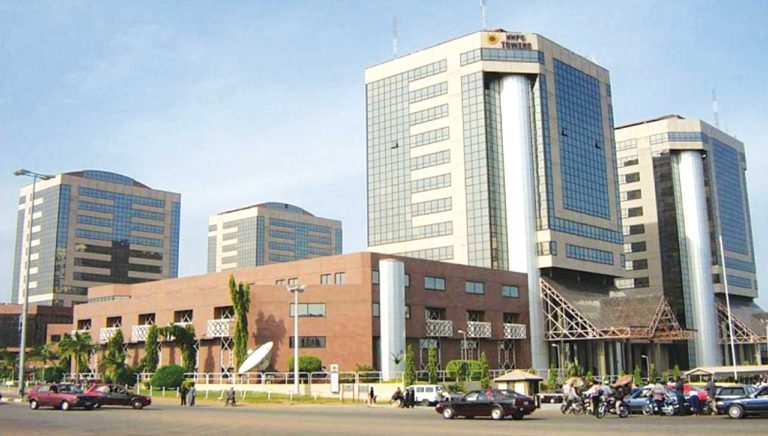
FINANCIAL audit of the 2018 expenditures of Nigeria’s refineries released by the Nigeria National Petroleum Corporation (NNPC), last week, shows that while the refineries recorded substantial losses, their administrative expenses balloon over the years.

For the first time, the NNPC also published the audited accounts of its 20 subsidiaries and business divisions online in a bid to promote transparency around its operations which has been shrouded in secrecy for years.

The nation’s major refineries which are subsidiaries of the NNPC captured in the 2018 audit include Kaduna Refining and Petrochemicals, KRPC, Warri Refining & Petrochemicals Company, WRPC, and Port Harcourt Refining Company, PHRC, Limited.

The records show that the three refineries reported a combined loss of N154.4 billion with Kaduna refinery posting zero revenue for the 2018 financial year.

According to a report, the Group Managing Director, GMD, of the NNPC, Mele Kyari, said the failure to fix the country’s refineries over the years was a strategy problem that requires a different framework from the past.

“This framework would enable others to help us. Ultimately, we will change that equation and that is very simple. We will set a target for ourselves and have a clear strategy for achieving it,” he said.

Nigeria imports over 90 per cent of its refined petroleum products especially petrol to meet its current needs, as the nation’s refineries are unable to meet the demands in the country as they are dilapidated and poorly maintained, Reuters has reported.

A Price Waterhouse Coopers, PWC, data estimates Nigeria’s per capita refining capacity at 0.002 barrels per day/capita which pales into insignificance when compared to Libya at 0.06 barrels per day /capita and South Africa on 0.01 barrels per day/capita.

The annual financial accounts revealed that Port Harcourt refinery marked a slump in its revenue which was declared as N1.5 billion in 2018, indicating a 69 per cent drop compared to its earnings of N4.8 billion in 2017. 

Between 2014 and 2018, Port Harcourt refinery posted losses for five years consecutively totalling N206 billion while a breakdown of its administrative expenses incurred within the period comprising salaries, guest house costs, overhead costs and others was N106 billion.

However, Warri refinery with a staff strength of 583 in 2018 after it had depleted its workforce from 663 in 2017, registered a slight increase in its revenue earnings with N1.9 billion in 2018 from the N1.2 billion declared as its total revenue in 2017.

The rise in revenue for Warri refinery in 2018 did not reflect during the close of the annual financial year as it posted N44.4 billion after-tax losses which were lower compared to N84 billion lost by the company in 2017.

However, WRPC’s administrative costs dropped in 2018 by 52 per cent at N34 billion compared to N71 billion spent in 2017 but the audit also exposed other inconsistencies where N836 million was spent on printing and stationeries in 2018 while N73 million was also spent on the same purpose in 2017.

After reducing its workforce, the salaries, allowances and wages of the company increased from N12.9 billion in 2017 to N13.8 billion while staff welfare also increased extensively from 73.8 million in 2017 to N275 million.

For Kaduna refinery, the 2018 audit of its financial books shows how not to run a business enterprise which saw the company earning zero revenue from processing fees which it blamed on the shutdown of its plant and an ongoing through around maintenance.

While the company recorded a loss of N64 billion, its administrative expenses incurred within the period under review was N39.9 billion with several suspicious items included in the audited account that were not consistent with its operations since the plant was shut down.

Despite, recording losses five years consecutively the company in 2018 spent N447 million in the training of its staff, local and international travels accounted for N662 million and photocopying of documents that costs N4 million.

Several items added on its include electricity bills at N30 million, office expenses gulped N353.6 million, an item tagged as consumables were said to cost N3.6 million, rent also took N21 million, consultancy services cost N843 million, salaries and wages were pegged at N9 billion, with employee benefits at N13.8 billion amongst other administrative expenditures.

Also, the report showed a certain provision which the auditors designated under inventories as goods in transit which cost N128 million while the refinery plant was shut down due to ongoing maintenance.

The financial records also reveal that 36 per cent of the total expenditure at KRPC, was spent on staff welfare which includes direct and indirect costs that account for N23.4 billion, which is odd for a company without a profit in five years, according to the annual report.

Also, 210 workers received N15 million and above which constitutes 67 per cent of the total workforce of 312 workers in 2018 despite shedding off 710 workers from its staff. 

However, the directors at KRPC include Chinwe Osolu (Finance and Accounts), Tsavnande Atighir(Operations), Abdullahi Idris(Services), and Ladenegan Solomon who served as Managing Director until the close of the financial year.

Lekan Olubode was Director of Finance and Accounts before he retired in February 2018 while Bukar Abba got transferred in September before handing over in September 2018.

The four directors received between N10 to N20 million while the highest-paid received N33 million, however, 61 per cent of the company’s income valued at N209 million for 2018 came from interest on employee loans.

Nigeria ranks as one of the largest consumers of refined products in Africa behind Egypt, South Africa, Algeria and Morocco and also accounts for over 7 per cent of Africa’s refined product consumption.

However, it’s not all gloom for the NNPC as the National Petroleum Investment Management Services, NAPIMS, a subsidiary of the corporation was the most profitable subsidiary from the financial statements.

With its revenue at N5.04 trillion in 2018 and a profit margin of N1.01 trillion, it was a boost when compared with a loss of N1.65 trillion from the financial records in 2017. 

Increase in electricity tariff to kick off in July- Minister

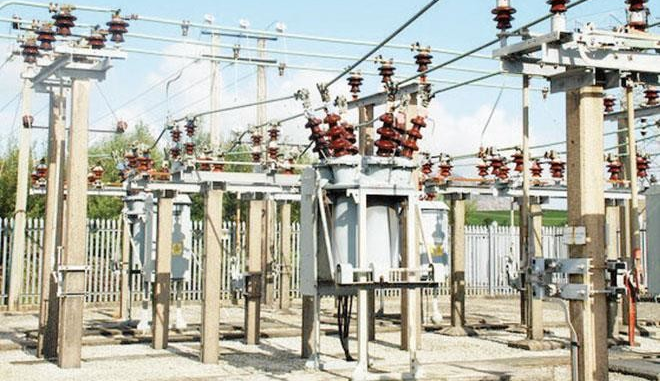
SALE Mamman, Minister of Power has said that the new increase in electricity tariff would kick off in July.

Mamman disclosed this in Abuja at the Investigative Public Hearing on Power Sector Recovery Plan and the Impact of COVID-19 pandemic organised by the Senate Committee on Power.

The Minister stated that the COVID-19 pandemic has affected the framework for repositioning the electricity market towards financial sustainability under the Power Sector Recovery Programme.

“The impact of this means the subsidy being incurred in maintaining the current tariff level has to be maintained until July 2020 when the proposed tariff review will be implemented,” he said.

Mamman admitted that after the completion of public consultation on tariff review, it was initially planned to conduct a tariff review in April, but the COVID-19 outbreak and customer apathy caused the proposed tariff review to be delayed by three months.

“The challenge we are currently facing in the development and expansion of our transmission line is budget and release of Federal Government’s commitment in the estimated sum of N32 billion primarily for the right of way acquisition and environmental impact mitigation,” he said.

“The fund should be provided for in 2020, 2021, and 2022 Appropriation of the Ministry of Power.”

He also said the COVID-19 pandemic had a great economic impact not on the health sector alone but on the overall economy.

“Indeed, the prevalence of the pandemic has already reduced productivity due to the strategy adopted globally to contain which by default affects the purchasing power of consumers and the demand for electricity in general,” Mamman explained.

He further stated that the current situation in the Nigerian power sector is that a lot of capital investment is being made, most of which is dependent on donor funding, loans and budgetary allocations.

“For projects that we have already secured their funding, we do not expect any adverse effect.”

He, however, said his ministry was proactively seeking strategies to identify projects that would require counterpart funding in the face of dwindling national revenue so as to deliver within the projected timelines.

“This explains our prayer for the distinguished senators to consider and approve additional funding for the execution of the various projects we are undertaking,” he said.

On December 31, 2019, Nigerian Electricity Regulatory Commission, (NERC), had announced its plans to review electricity tariffs in the country from January 1.

The order titled “December 2019 MYTO Minor Review Order” for the 11 electricity distribution companies (Discos) was jointly signed by Joseph Momoh, the Chairman of the Commission, and Dafe Akpeneye, Commissioner for Legal, License & Compliance.

However, the Commission clarified later that the new tariff regime would not take effect until April 1, 2020, to allow it sufficient time to consult all the interest groups following reservations from Nigerians.


FACT-CHECK: Report that Osinbajo advised FG to suspend NYSC for two years is FALSE

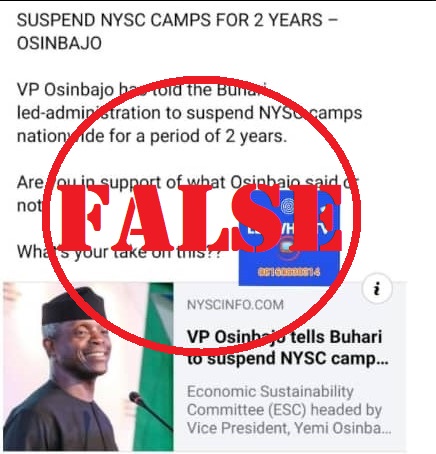
ON June 16, several news platforms and blogs reported that the Nigeria Economic Sustainability Committee (ESC), chaired by Vice President Yemi Osinbajo, recommended the suspension of the compulsory National Youth Service Corps (NYSC) for Nigerian graduates for the next two years.

The news report published by several media and blogs including the concise.ng, latestnigeriannews.com, kemifilani.ng, was also shared on social media.

Though few news organisations reported the information accurately,  many other news platforms got it wrong, and the wrong version has since gone viral on social media.

THE CLAIM

“The Economic Sustainability Committee (ESC) chaired by Vice President Yemi Osinbajo has asked the Federal Government to suspend the National Youth Service Corps, NYSC, for two years.”


FINDINGS

The ESC was established by President Muhammadu Buhari on March 30, 2020 and his Vice, Osinbajo, was made the Chairman of the committee to oversee activities of the team.

Part of their responsibilities was to provide a clear cut policy direction to support each sector of the economy, as well as possible interventions with the main target for job creation amidst effects of the Coronavirus (COVID-19) pandemic.

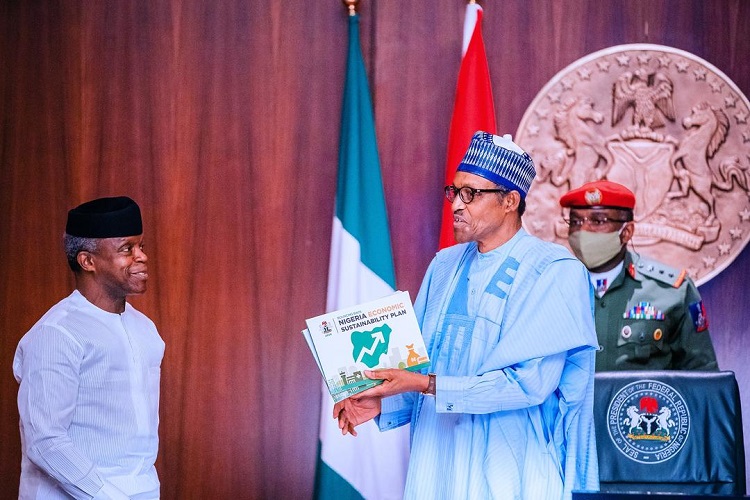
On June 11, 2020, Osinbajo officially submitted the economic sustainability plan to the President at the Presidential Villa in Abuja.

The 76 pages document was titled: “Bouncing Back: Nigeria Economic Sustainability Plan.”

The vice president the economic plan would avert the looming, “impending economic headwinds,” thus, convert the anticipated crisis to success stories for Nigerians.

It was also developed to reduce non-essential spending, spell out specific measures to support the State and the Federal Capital Territory (FCT) and place the nation’s economy on solid foundation against the pandemic, among others.

The major categories of the plan are the Fiscal Monetary Measures and the Real Sector Measures.

From the real sector which includes education, the document suggested practical measures such as virtual learning, virtual convocation and using of technology tools at all levels of education to address disruptions caused by the pandemic.

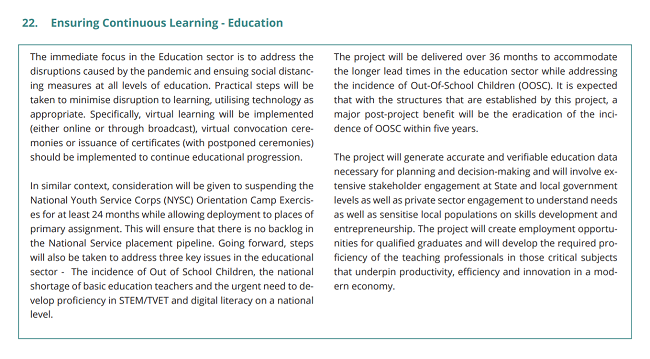
However, on the reported claim on NYSC, the document only suggested that the compulsory NYSC orientation camp should be suspended for two years, and not the NYSC scheme in particular.

Section of the 2020 Nigeria Economic Sustainability Plan that reflects the Committee's true recommendation. Document Source: Federal Ministry of Information and Culture
Section of the 2020 Nigeria Economic Sustainability Plan that reflects the Committee’s true recommendation. Document Source: Federal Ministry of Information and Culture

This, based on the recommendation, is to prevent a backlog of the NYSC postings.

“In similar context, consideration will be given to suspending the National Youth Service Corps (NYSC) Orientation Camp Exercises for at least 24 months while allowing deployment to places of primary assignment,” the document stated.

“This will ensure that there is no backlog in the National Service placement pipeline.”

VERDICT

Based on the statement of the vice president as documented in the Economic Sustainability Plan, the claim reported by many news websites including those listed above is FALSE and MISLEADING.

Giadom declares self as APC acting National Chairman, overrules Obaseki’s disqualification

VICTOR  Giadom, Deputy National Secretary of the All Progressive Congress (APC) on Wednesday declared himself as the acting National Chairman of the party.

Giadom also nullified the disqualification of  Godwin Obaseki, Governor of Edo State from participating in the party’s governorship election in Edo State.

Speaking during a press briefing which held at the National Secretariat of the party in Abuja, Giadom stated that the Tuesday’s ruling of the Court of Appeal that affirmed the suspension of Adams Aliyu Oshiomohle as the National Chairman of All Progressives Congress paved way for his emergence as the acting National Chairman of APC.

“Consequently, I bring to your notice that on the 16th of March 2020, Hon Justice S.U. Bature in suit no FCT/HC/M/6447/2020 had ordered that, with the earlier suspension of Comrade Adams Aliyu Oshiomohle, I Chief. Hon Victor Giadom should act as National Chairman of our great party,” he said.

He stated that he has assumed office as Acting National Chairman of our great party in compliance with the order of the court.

“That Order could not be immediately effected at that time because of the temporary reprieve Adams Oshiomohle got from the Court of Appeal on the same date. However, having removed the temporary reprieve yesterday by the Court of Appeal and considering the fact that we cannot allow for a vaacum, I most humbly inform you that I have assumed office as Acting National Chairman of our great party in compliance with the order of the court.”

While announcing the cancellation of the disqualification of Obaseki by the party’s Screening Committee, he said the decision was in strict compliance with the provisions of the Constitution of the Federal Republic of Nigeria that forbids anyone who is interested in a cause to be a judge in that same cause.

“As your Acting National Chairman and presiding officer in the NWC, we therefore cancel the decision of the Screening and Appeal Committees of the former Chairman of the party on the Edo primaries,” Giadom said.

He described as a brazen rape on the Rule of Law and the Constitution of the Federal Republic of Nigeria the decision of the former Chairman,  Adams Oshiomohle to preside and select Committees in respect to the governorship primaries in Edo State being a key player in the crisis in that state.

Giadom insisted that whatever ‘role the former chairman was given to play in that process by the APC constitution, it cannot override the provisions of the Constitution of the Federal Republic of Nigeria which governs all of us.’

He asked all aspirants in the governorship primaries to report for fresh screening between today  (Wednesday) and tomorrow (Thursday).

APC NWC says Ajimobi remains acting National Chairman

Meanwhile, the party’s National Working Committee (NWC) has ratified Abiola Ajimobi, former governor of Oyo State as the acting National Chairman of APC.

According to a report by The PUNCH, the NWC also disowned Victor Giadom, insisting that his membership of the NWC ceased when he resigned to contest the Deputy Governorship position in Rivers State.

The APC National Vice-Chairman (South-South), Hilliard Eta, who addressed the media soon after Giadom left the party Secretariat, said preparations for the Edo Governorship primary was on course.

It would be recalled that Lanre Issa-Onilu, APC National Publicity Secretary, Tuesday evening announced in a statement that the party has selected Ajimobi as its acting National Chairman.

He explained that the enthronement of Abiola Ajimobi, the party’s Deputy National Chairman was in line with the advice of the party’s legal department, backed by the party’s constitution.

“The National Working Committee (NWC) of the All Progressives Congress (APC) has received the news indicating the Appeal Court has upheld the suspension of the Party’s National Chairman, Comrade Adams Oshiomhole by an FCT High Court pending the determination of the substantive suit,” the statement read.

Issa Onilu added that the action was “guided by advice from the Party’s legal department in line with the provisions of Section 14.2. (iii) of the Party’s constitution, the Deputy National Chairman (South), Sen. Abiola Ajimobi will serve as the Party’s Acting National Chairman.”

According to him, Section 14 subsection (iii) of the APC constitution stated that the Deputy National Chairman, North/South “Shall act as the National Chairman in the absence of the National Chairman from his zone”.

Tuesday evening, Ajimobi was reported to have called on all APC Stakeholders to continue to observe the peace as he assumes position as acting National Chairman of the APC.

Oyo Today, reported that Ajimobi spoke on Tuesday night through Bolaji Tunji, his Special Adviser, Communication and Strategy, following the order of the Court of Appeal affirming the suspension of  Adams Oshiomhole as National Chairman.


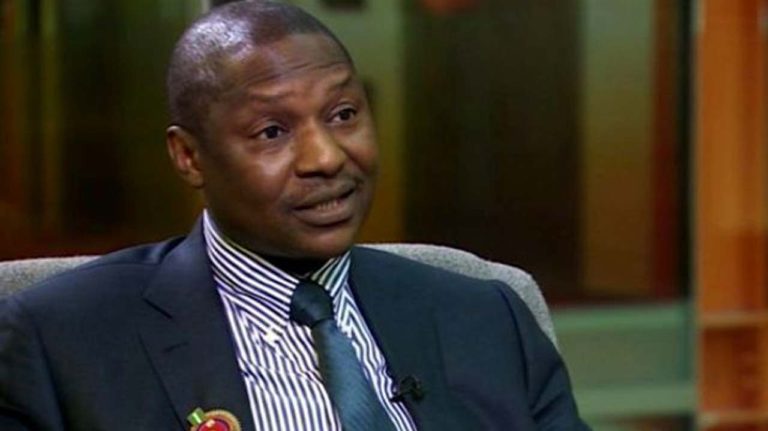
6,590 inmates released from 32 prisons across 14 states- Malami

ABUBAKAR Malami, Attorney General of the Federation and Minister of Justice has announced the release of 6590 inmates across 32 correctional facilities in 14 states of the federation.

Malami who disclosed this on Twitter on Wednesday noted that the inmates had satisfied the laid down conditions and were released as part of modest efforts to decongest the Nigerian Correctional Centres.

The Minister added that as a member of the Committee on Prison Reforms and Decongestion, he had taken up a major role towards the decongestion of Nigerian prisons.

Earlier in March, the Senate had called on the Federal Government to decongest prison facilities advising that it should budget more to build new prisons.

The ICIR reported that the Red Chamber had urged the Federal Government to quickly take steps to reduce the population in the nation’s correctional centres as well as disinfect them to avoid any possible outbreak of an epidemic among inmates.

The Senate also advised the Federal Ministry of Interior to commence the process of upgrading facilities in all the correctional centres.

It added that the Judiciary, the Ministry of Interior and correctional centres need to work together and come up with a workable modality on how to fast track the process of decongesting the correctional centres in the country.

Nigeria’s Correctional Services currently has about 250 prisons of which 155 are prisons for convicts and 83 are satellite facilities and with 74,000 inmates.

According to a report by VOA, an average Nigerian prison houses about five times the number of inmates it was intended for.

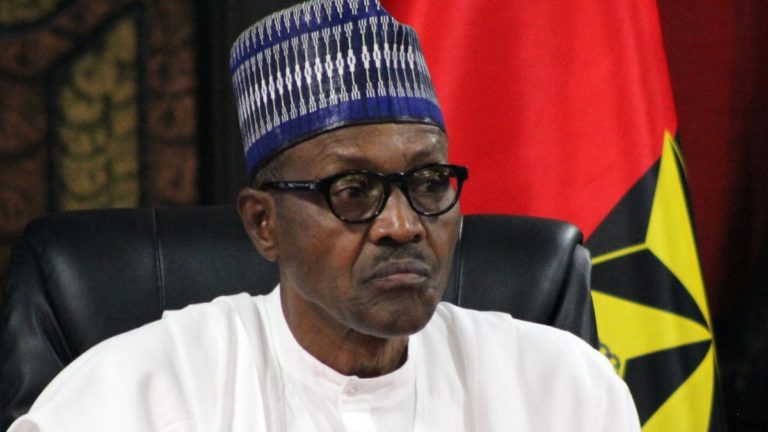
Your protest could distract military operations, Buhari warns protesters in Katsina

PRESIDENT Muhammadu Buhari has warned that the waves of protest in Katsina State against rising insecurity in the state can distract the military operations mounted to flush out bandits terrorising the state.

Garba Shehu, Senior Special Assistant to President Buhari on Media and Publicity in a statement reacting to protests in Katsina said  the president has approved a joint military and police operation specifically targeted at combing Niger, Kaduna, Katsina, Zamfara and Sokoto states to rid the areas of bandits.

He assured that surveillance will be improved, with more night vision aircrafts already deployed under “Operation Accord’.

“President Buhari admonishes that taking to the streets for protest could distract the military operations, urging” Katsina indigenes not to give up on the military who over the years have a strong track record of quelling crises once given enough time,” the statement read in part.

Hundreds of youth across Katsina State on Tuesday converged on Katsina town to protest the killings and wanton destruction by gunmen in their respective localities.

The peaceful protest, convened by Coalition of Northern Group (CNG) and Citizens Participation Against Corruption Initiative, was flagged off at Kofar Soro and concluded at the old Government House, Katsina.

However, the president has urged calm, promising that the military are fully capable of dealing with the challenges of banditry and terrorism.

“The Presidency assures Nigerians, again, that the nation’s armed forces are fully capable of dealing with the challenges of banditry and terrorism, urging more patience as the military takes appropriate steps to block gaps being exploited to unleash mayhem on innocent citizens,” Shehu said.

“President Buhari appeals to the people of Katsina State to be patient and supportive of the ongoing military operations in the state, while sympathizing with those who are bereaved, injured and lost properties.”

This is in contrast to recent reports pointing that the Nigerian military has faced criticisms for its response to rising insecurity in the country.

Sometime in February, Babagana Zulum, Governor of Borno State, accused Nigeria’s military of failing to protect victims of insurgency, while calling for soldiers to re-establish a base in the epic-centre of terrorism in Nigeria.

“The fact is, we have made several attempts for the Nigerian military to establish their unit in Auno,Borno but nothing was done,” Zulum said.

“As soon as it is 5 o’clock and they closed up the gate, they abandon the people and move over to Maiduguri.”