Home Blog Page 2082

COVID-19: For pregnant women, it’s a tougher battle

Adie Vanessa Offiong

 Accessing healthcare on a normal day is difficult for many pregnant women in Nigeria. COVID-19 has made it a tougher battle for them to stay healthy and alive, even as they struggle to keep their babies safe. And their difficulties worsen during the pandemic. With poverty, lack of adequate information and failed system, many women in resource-poor settings resort to self-help. Yet, many are at the mercy of Nigeria’s rogue security agents. Freelance journalist, Adie Vanessa OFFIONG, reports.


FOR Helen Agbo, 33, four children were already a lot to care for. Finding out she was pregnant, despite being on the contraceptive, was a rude shock.

Broke, but in good health, Helen, who lived in Karimo, one of Abuja’s urban poor settlements, decided she would seek alternative prenatal care – an inexpensive option. This meant drinking agbo [local cocoction of herbs and roots] and ‘eating well.’

Regardless, she registered for antenatal at seven months because time was getting close for her delivery. This would be her saving grace when she began to bleed soon after.

At the Noble Hope Clinic & Maternity where she went for a test,  the scan revealed she was carrying twins.

“I wanted to have an abortion because I knew it would be difficult to take care of them. I don’t work and my husband has been jobless since the beginning of the pandemic when the bicycle he used for selling ice-cream was stolen,” she said.

But learning that one of her babies was a boy, she changed her plan because she had only one son at the time.

Then the lockdown began on March 30, and she became extremely worried because her expected delivery date was near and she still was broke.

In Oba-Ile, Ondo State, Nigeria’s southwest, Opeyemi Babajide, another pregnant woman currently bears the same concern.

In January her husband lost his marketing job with a Chinese company after receiving his last salary – ₦10, 000. The following month, she received a ₦3, 000 parting stipend from the NGO she had worked with.

Balanced diet vs a food crisis

Since then, staying healthy has become an issue of grave concern for her especially, and the family.

“My diet as a pregnant woman and caring for my three-year-old son, are what worry me the most. I can’t eat the kind of food that I should be eating during pregnancy,” she said.

With daily meals mostly consisting of rice, or garri made into eba or soaked, the family tries to balance their diet with vegetables and peppers from their backyard.

Helen, who ‘eats well,’ said her meals are predominantly carbohydrates – garri, tuwo from rice or maize – with vegetable or okra soup, but rarely with fish or beef. Eggs and dairy products are luxury menus, especially during COVID-19, she added.

Poor diet is a common experience of low-income households during the lockdown.

According to the International Food Policy Research Institute (IFPRI) in an April publication, poor households in Low and Middle-Income Countries, like Nigeria, would have dramatic income effects due to “widespread unemployment resulting from COVID-19 mitigation measures.”

Also reflecting both women’s current situation, the publication noted, “The poor will respond by purchasing the cheapest calories they can find to feed their families.” Findings from earlier research by IFPRI, revealed that “in poor countries calories from nutrient-rich, non-staple foods like eggs, fruits, and vegetables are often as much as 10 times more expensive than calories from rice, maize, wheat, or cassava.” This, the research noted, happened during Indonesia’s 1998 financial crisis, “when real wages fell by 33 per cent between August 1997 and August 1998 due to rising unemployment and a food price crisis.

“Strikingly, even as rice prices skyrocketed by almost 200 per cent, rice consumption continued to rise during this period.”

In Abuja’s Deidei Market, between late February and early March, a 50kg bag of rice sold for ₦14, 000 to ₦15, 000. As of June 3, it was selling at ₦27, 500. In the same period, garri went from ₦10, 000 to ₦16, 000 for 70kg in Madalla Market.

A not so pleasant surprise

Labour came for Helen on April 2. With only ₦2,000, with which she was to buy charcoal for her sister, the decision was that she would have the babies aided by her husband.

She said, “we trekked to a farm. I went with a razor blade, wrapper and some baby clothes and hoped that I would deliver in the bush, while ‘exercising.’”

When this failed, she trekked back home aided by a stick and intermittent rests. She ended up at the Maternity Home when the pain became unbearable.

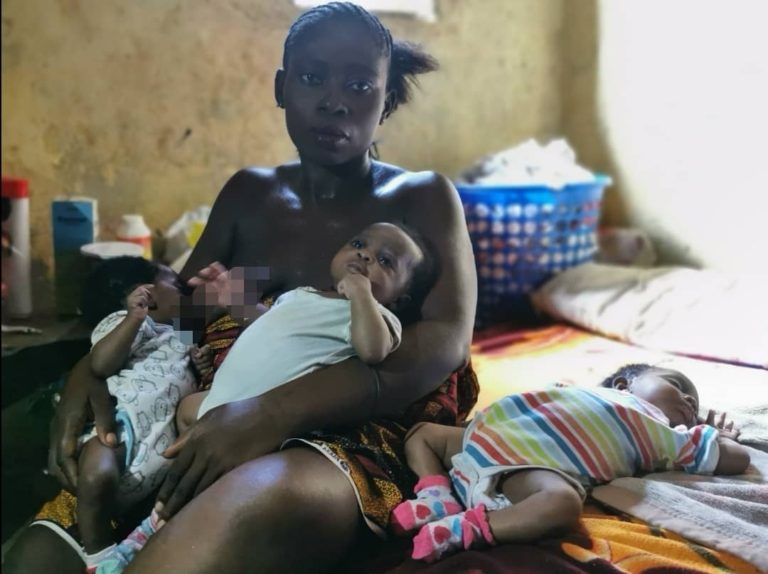
At 10 am on April 3, the Agbos welcomed Sarah, and then Samuel at 4 pm. Amidst the joy of the children’s torturous but safe arrival, Helen received the shocking news that there was a third baby.

L-R Samuel, Samson and Sarah are Helen’s triplets born on April 3 and 4 PHOTO-Adie Vanessa Offiong

“The doctors and nurses waited and waited for this baby but nothing was happening and at some point, I thought the doctor was mistaken,” Helen said.

At 8 am on April 4, a 4.5kg Samson was born through Caesarean Session with a ₦250, 000 bill, dangling over Helen’s head. This bill has now been cleared by a Good Samaritan.

For Opeyemi the narrative is slightly different

She is yet to tell her husband she is carrying twins. She is ‘afraid’ of how he would react and how they will manage when the babies come. Terrified of giving birth at home due to lack of money, she is worried about maternal death and even neonatal death, which she has experienced before.

Since the lockdown, she has not attended any antenatal session, even though she is now in her third trimester.

“I am scared of contracting the virus but money for transportation and finding a safe public means to the clinic, are more the reasons I have not gone.

“If they had phone consultation and I could afford it, I would have preferred it,” she said.

Telemedicine to the rescue?

Virtual healthcare solutions have now become an indispensable option due to the pandemic.

To ensure that pregnant women have unlimited access to healthcare during this period and as alternatives to physical hospital visits, there have been arguments advocating the switch to telemedicine and other remote consultations via various online and messaging platforms.

Institutions like the American College of Obstetricians and Gynaecologists have long endorsed its use for patients in rural areas. Telemedicine advocates believe that this could reduce the typical 14 required antenatal visits by half.

The Society of Maternal Foetal Medicine while speaking on telemedicine and pregnancy care, recommend that it is safe to reduce “routine” ultrasounds, due to the pandemic, without putting the pregnancy and health of the mother in jeopardy. They state that women carrying multiple babies or babies with possible birth defects may require more traditional checks. Clinical Assistant Professor, Hector Chapa opines that, “Pregnant women are able to do some at-home monitoring, such as for high blood pressure, diabetes and contractions, and telemedicine can even be used by pregnancy consultants, such as endocrinologists and genetic counsellors.”

While these may seem appealing and convenient, for the like of Opeyemi, their circumstances do not give room for them to access such.

Opeyemi and her husband have taken to subsistence farming in their backyard to get some of the nutritious food they need PHOTO-Martin-Mary Falana

An expert like Dr Toyin Adeyalo-Ogunadare, also cautions that for pregnant women, it may not be advisable to have phone consultations, except they want to.

During a phone interview with our reporter, she said “this is because you can’t hear the foetal heartbeat via phone. When they come for antenatal, these are one of the things checked.”

Adeyalo-Ogunadare who is the Special Assistant to the Ondo State Special Adviser of Health said the state has ensured “regular antenatal clinics an immunisation exercises” since the start of the pandemic.

“Also, pregnant women resident in the state can access healthcare through our Abiyamo Maternal and Health Insurance Scheme, even if they have lost income due to COVID-19. This covers them and children under age five. With functional healthcare centres in every ward, you really may not need public transport to get to the nearest facility.”

Opeyemi and her three-year-old son PHOTO-Martin-Mary Falana

COVID-19, maternal deaths and being at the mercy of uniforms

Researchers at Johns Hopkins University envisage that, “between 42,000 and 192,000 more children worldwide, as well as between 2,000 and 9,450 more mothers, could die each month due to COVID-19’s indirect impacts on health and food access.”

These projections are based on statistical modelling and factoring in elements like vaccine availability, antenatal care and health coverage. According to UNICEF, in a May 13, 2020 publication, about 6,800 more Nigerian maternal deaths could also occur in just six months. It also said, “new mothers and newborns will be greeted by harsh realities, including global containment measures such as lockdowns and curfews; health centres overwhelmed with response efforts; supply and equipment shortages; and a lack of sufficient skilled birth attendants as health workers, including midwives, are redeployed to treat COVID-19 patients.” Women like Helen and Opeyemi, in poorest households, bear the brunt of these deaths.

In May 2020, a Lagos woman rescued by personnel of Nigeria’s Federal Road Safety Commission, while driving to the hospital amid labour pains, narrowly escaped being added to the maternal mortality statistics.

Also in May, another woman who had gone to the Asokoro General Hospital to give birth, could not be attended to because the hospital had been converted to an isolation centre for COVID-19. After some rigmarole, she ended up at Lona City Care, Karu where she was delivered of her baby by Dr. John Agbo, a family medicine expert.

Agbo who has worked in a government hospital explained that, “Patients are usually classified in government hospitals as very high risk and are also called ‘doctor-patients.’ They are those who have had Caesarean Section before and would need surgery again. These patients are referred to other hospitals. Then the rest are told to look for hospitals where they can give birth,” as was the case of this woman who came to him.

She and her husband had lost their jobs during the pandemic and did not have the financial power to decide on their fate. They first went to a maternity home where all she was given was a bed. A neighbour who had given birth at Lona, took her there where she was immediately attended to and delivered of her baby at about 3AM. This was possible because Agbo had relocated to the hospital since the lockdown, for such eventualities.

However, in Ogun State, Waidat Adedeji who was in labour and being conveyed by a commercial motorcyclist to give birth, was not so lucky. She was reportedly killed by a policeman at a checkpoint during the lockdown, because the cyclist refused to give a ₦100 bribe.

Waidat Adedeji died because of ₦100 bribe the police demanded Credit-Premium Times

Alternatives and measures to be taken

Temitope Alale a member of the Institute for Dietetics in Nigeria and of the Association of Nigerian Dieticians, said, it is unhealthy for a pregnant woman and her growing foetus, to consume these too frequently.

She said, “Although vegetable is good, pregnant women need to eat a wide range of foods that provide nutrients to support their health and wellbeing as well as the growth and development of their babies.”

With the pandemic threatening the food security of many households, Alale suggests that Opeyemi, Helen and other mothers in their situation, can substitute food items.

“For example instead of meat which sells from ₦300 and above, she can use crayfish and locust bean which cost far less and she will get the necessary nutrients needed for that same amount of money.”

Alale also encourages the women to grow vegetables like tomatoes, okro, waterleaf, spinach, ugwu and bitter leaf around their homes, to avoid buying them.

In 2016, the Katsina State Government distributed 720 high breed goats worth N104 million to women under its Women Empowerment Scheme. Two hundred and forty women selected from the State’s 34 local governments received two female goats and one male goat. This might be an initiative worth replicating across the country, to alleviate the challenges of women like Helen and Opeyemi during this pandemic.

Dr Anthony Ajayi is a postdoctoral fellow in Population Dynamics and Sexual and Reproductive Health Unit at African Population and Health Research Center, Kenya. He shared his thoughts on what Nigeria could do to ensure safe motherhood during the pandemic.

Ajayi said, often to the neglect of other health priorities such as maternal health, resources are diverted to halt the spread of the virus.

“The lock-down is the most aggressive of all the interventions against COVID-19, that could have unintended consequences on maternal health if measures are not put in place to accommodate pregnant women.”

He advised that “access to maternal health care services must be made a priority during the lock-down and efforts should be geared towards providing free transportation services for all pregnant women to ensure no woman is unable to access services due to lack of transportation.”

This is in addition to the provision of free maternal health care for all pregnant women, “given that COVID-19 has devastated the earning opportunities of most families, with little palliative measures from the government,” he said.

Giving a recommendation on what government should do regarding maternal health and COVID-19, he added:

“The number of women and children who have died undocumented is more than the number of people who have died of COVID-19, said, Dr Agbo. He said if the government had made available resources in cash and kind in public hospitals for pregnant women, it would have helped. He added that this would, however, only be effective in an organised and structured environment.

He also advocates discounted healthcare costs for resource-poor pregnant women, “in order to reduce the complications of delivery.

“When I was in Kaduna State, there was a time we had free treatment for women and children. What they did was to give the hospitals a little overhead and supplies of consumables they needed.

Within that time, maternal mortality reduced drastically in Kaduna State about 10 years ago. Although there is a UNICEF Joint statement on nutrition in the context of the COVID-19 pandemic in Asia and the Pacific, Nigeria could benefit from its recommendations.

UNICEF advises health services to continue providing essential nutrition services for pregnant and breastfeeding mothers, newborns and sick children.

“They should also provide appropriate support for mothers to breastfeed, including those with COVID-19, and communicate accurate information on maternal, infant and young child nutrition,” it said. Nigeria is one of the countries with the expected highest numbers of births in the nine months since the pandemic declaration with 6.4 million new babies. Others are India (20.1 million), China (13.5 million), Pakistan (5 million) and Indonesia (4 million). With most of them already having high neonatal mortality rates prior to the pandemic, there is a worry that these levels may increase with COVID-19.

Stating that it is hard to imagine how the pandemic has recast motherhood, Henrietta Fore, UNICEF Executive Director, said, “Millions of mothers all over the world embarked on a journey of parenthood in the world as it was. They now must prepare to bring a life into the world as it has become – a world where expecting mothers are afraid to go to health centres for fear of getting infected, or missing out on emergency care due to strained health services and lockdowns.”

This report was facilitated by the Wole Soyinka Centre for Investigative Journalism (WSCIJ) under its COVID-19 Reality Check project.
Army Court orders ‘dismissal with disgrace’ of General Otiki over embezzlement of military fund

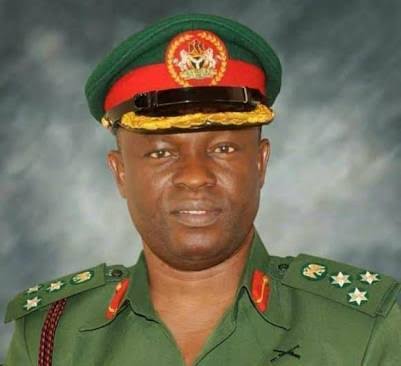
THE Nigerian Army has found Hakeem Otiki, a Major-General and former General Office Commander (GOC) of 8 Division, Nigerian Army Sokoto, guilty of N100 million fraud.

The General Court Martial (GCM) set up by the Nigeria Army to investigate alleged embezzlement of funds belonging to the Nigerian Army while Otiki served as GOC of 8 Division, recommends him for demotion from the rank of Major General to Brigadier General and dismissal with dishonour.

The decision of the the GCM headed by  headed by Lamidi Adeosun, a Lieutenant-General is subject to review and final approval of the Army Council.

Global Sentinel reports that Adeosun read the profile Otiki who had served in the Nigerian Army for 34 years.

“Many will be praying to have such an unblemished career and record of military service in the country like the accused senior army officer”, Adeosun was quoted as said before pronouncing the sentence.

He said that having confirmed that Otiki is a first time offender in his 34 years of “previously unblemished career in the army and to the Nigeria armed forces”, the court president said it would “not fail in dispensing justice. We would do the very best with the humanness and kindness that the law allows.”

The President of the General Court Martial then went ahead and delivered the sentencing of Otiki and ruled as follows:

Count Five: Two years loss of seniority on rank of Major General. Subject to confirmation by the Army Council.

Count Four: Severe reprimand. Subject to confirmation by the Army Council.

Count Three: Reduction of rank to Brigadier General with two years seniority on the rank. Subject to confirmation by the Army Council.

Count Two: Dismissal, disgrace and dishonour. Subject to confirmation by the Army Council.

Count One: Dismissal, disgrace and dishonour. Subject to confirmation by the Army Council.

Orders

  1. All monies recovered by the Special Investigation Bureau (SIB) of the Nigerian Army totaling N135,382 million and $6, 600 dollars from the convicted senior officer should be returned to the Nigeria Army coffers.
  2. The N150million stolen by the accused senior officer which remained unaccounted for in Count Two should be returned to the coffers of the Nigerian Army.

The prosecution counsel, Major AA Onumo had earlier thanked the court martial for doing justice to the case after the conviction of the army general.

According to Global Sentinel, Otiki had been on trial following the abscondment of five soldiers attached to his office with the sum of N100 million but which had erroneously been reported in the media as N400 million.

The five soldiers, who absconded with the money were allegedly instructed to deliver it to a senior officer in Kaduna for the purchase of furniture meant for the 8 Division of the Nigerian Army in Sokoto.

The fleeing soldiers, who have since been declared wanted are: Corporal Gabriel Oluwaniyi, Corporal Mohammed Aminu, Corporal Haruna, Oluji Joshua and Hayatudeen. One of them Lance Corporal Isah later returned the sum of N15 million as well as $6,600 to army authorities voluntarily and he was detained.

Lt. General Lamidi Adeosun who is also the Army Chief of Policy and Plans led the nine month trial.

Others on the jury of the court martial include Major General A Tarfa, Major General FO Agbugor, Major General FA Nadu, Major General N Mohammed, Major General CT Olukotu, Major General C C Okonkwo. He also named Major A Mohammed was the judge advocate; and Captain A Ibrahim the Liason Officer.

It could be recalled that on January 23, a Federal High Court sitting in Abuja had ordered the interim forfeiture of the sum of $376, 120 allegedly seized from Otiki, to the Federal Government of Nigeria.

Abike Dabiri charges US govt to investigate death of 19-year-old activist Oluwatoyin Salau

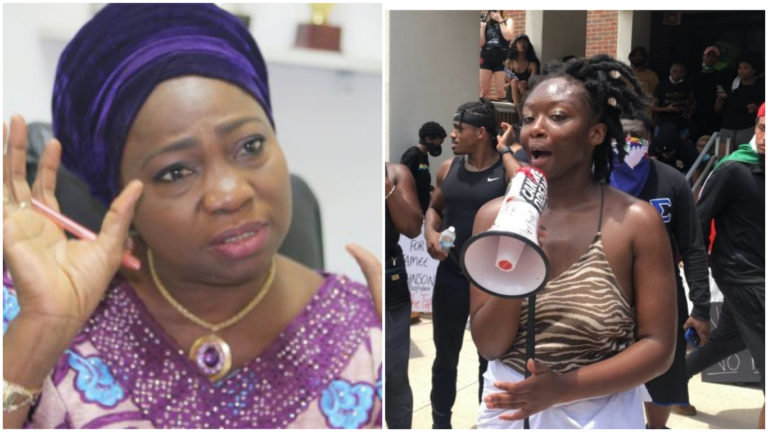
ABIKE Dabiri, Chairman, Nigerians in Diaspora Commission (NIDCOM) has urged the United States (US) Government to investigate the death of 19-year-old activist Oluwatoyin Salau, who was found lifeless by the Tallahassee Police Department (TPD) on June 13.

In a statement released by Abdur-Rahman Balogun, Head, Media and Public Relations Unit  at NIDCOM Abuja, Dabiri tagged the news of Salau’s passing as depressing and cruel.

The NIDCOM chairman also condoled the family of late Salau.

The ICIR had earlier reported about late Salau, who went missing on June 6, after sharing a series of tweets in which she disclosed that she was sexually assaulted by a man who posed as a good samaritan.

According to the police, a 49-year-old man, Aaron Glee Jr, identified as a suspect has been taken into custody in relation to the case which is being treated as a homicide.

Salau’s body was found alongside the lifeless body of a 75-year-old Victoria Sims.

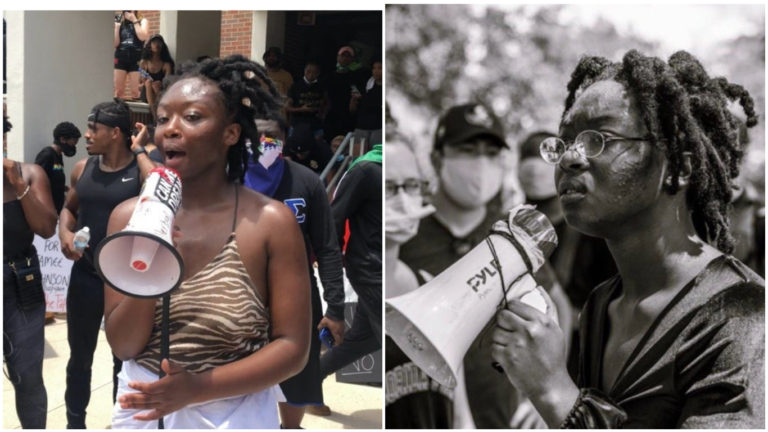
Before her death, Salau had gained a reputation for standing against injustice and oppression. The teenager was known for protesting the rights of black people in America and had joined few protests held in Tallahassee, Florida.

Meanwhile, a friend of the deceased, identified as Ashley on Twitter, has shared that a protest demanding justice for Toyin and celebrating her strength as an activist is to be held on Friday.

“There is going to be a major protest Friday in honor of Toyin’s memory and strength. Also Friday weeks ago was her first time protesting. The details are coming out soon,” Ashley tweeted.

We thought our passenger was Babatunde Fashola, Works Minister, says Executive Jet CEO

EXECUTIVE Jet Services Limited, the aviation company, whose private jet flown Nigerian music star, Naira Marley to Abuja for a concert on Friday, June 12 has apologised for flying the controversial musician to the nation’s capital against the law.

In the letter of apology addressed to Hadi Sirika, Minister of Aviation, Sam Iwuajoku,  Chief Executive Officer of Executive Jet Services Limited admitted that the flight was approved to convey a judge to Abuja but said the intended passenger had found his way to Abuja with the help of another flight.

“Please the flight was to carry a Judge to Abuja on Sunday 14th, 2020 as requested and permit was granted based on the application, but unfortunately when I called the Judge on Saturday morning to inform him that we have the permit, he then said that he has reached Abuja already with a different flight that someone gave him a lift to Abuja,” he said in the letter.

Iwuajoku said his team later got an offer to convey another set of passengers to Abuja but added that he was confused when he saw the name Fashola Babatunde.

Naira Marley’s real name is Azeez Fashola, but a particular name on the flight’s manifest was Fashola Babatunde, and it was No.6 on the list while there was also Fashola Adeshina on the list as No.3.

The company’s chairman said he thought it was the minister of works and housing not knowing that “it was a bunch of useless people”.

“So on Saturday morning 13th June, 2020 my staff called me that they have a charter flight to Abuja and that the passengers are already in the lounge as a rule passenger manifest is always sent to me before any departure, when I went through the manifest and I saw FASHOLA BABATUNDE I thought it was the Honorable Minister of Works going to Abuja with his men, so we decided to do the flight since (he) is a serving minister of the Federal Republic of Nigeria, I didn’t know that it was a bunch of useless people,”  he explained.

“We hereby apologize for the above flight, with your permit ref: PMA/ATMD/0175/V/V/1268 dated 11th June, 2020.”

“We are very sorry for this mistake and we promise that this would not happen again.”

This followed the suspension of the company by the Federal Government on Monday after it established that the private jet was approved  for a different purpose which was to convey a judge, Justice  Adefope Okoj to Abuja and back to Lagos on official assignment.

Naira Marley had Friday night performed in Abuja at Jabi Lake Mall in a concert that was meant to be a sit-in car show but turned to large crowd event which violated the lockdown guidelines against the COVID-19 imposed by the government.

The event which has left the aviation company suspended indefinitely by the Federal Government  also saw to the sealing off of   Jabi Lake Mall for two weeks by the Federal Capital Territory Administration for hosting the singer and violation of restrictions on social gathering.

Trump team attempts to block world court from investigating possible U.S war crimes

0

A WORLD court designed to investigate allegations of human rights violations has found itself in the crosshairs of the President of the United States.

A new Trump executive order threatening the court’s operations has been condemned by prominent global institutions and individuals as it appears to give cover to human rights abuses committed in the course of U.S. foreign wars while demanding accountability from foreign countries in similar circumstances.

The International Criminal Court (ICC), for example, has the power to investigate war crimes and crimes against humanity committed in northeast Nigeria, and by so doing, offers the possibility of justice for Nigerians who suffered abuses by the military fighting Boko Haram in that region.

In March, the ICC ruled that it could also investigate allegations of war crimes in Afghanistan – including any committed by the U.S. – taking a step that outraged the Trump administration.

Param-Preet Singh of the U.S.-based Human Rights Watch, praised the decision of the ICC to greenlight an investigation of brutal crimes in Afghanistan, reaffirming the court’s essential role for victims when all other doors to justice are closed.

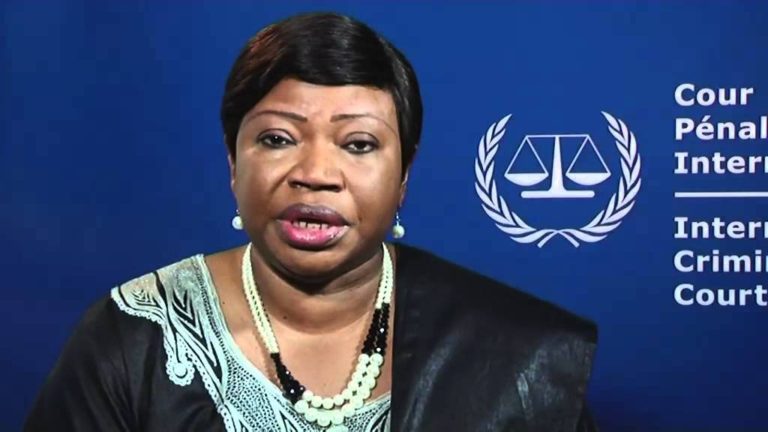
After years of collecting information on the Afghanistan war, the court’s chief prosecutor, Ms. Fatou Bensouda of The Gambia, said that enough information had been found to prove that U.S. forces “committed acts of torture, cruel treatment, outrages upon personal dignity, rape and sexual violence” in Afghanistan in 2003 and 2004, and later in clandestine C.I.A. facilities in Poland, Romania and Lithuania.

She requested permission to open an investigation into claims of war crimes and crimes against humanity attributed to the U.S. military and intelligence personnel, the Taliban and Afghan forces.

The United Nations’ mission in Afghanistan has documented the killings of more than 17,000 civilians by the Taliban since 2009, including nearly 7,000 targeted killings. Yet, last April, a U.N. report found that U.S. and Afghan forces had killed more civilians in the first three months of 2019 than the Taliban did..

Objections by the U.S. to being examined for serious crimes in Afghanistan began with John R. Bolton, then the national security adviser, who denounced the court as “illegitimate.” He said: “We won’t cooperate with the I.C.C. We will provide no assistance to the I.C.C. And we certainly will not join the I.C.C. We will let the I.C.C. die on its own.” He added, “If the court comes after us, we will not sit quietly.”

Similar comments have been made by Secretary of State Mike Pompeo.

Shaharzad Akbar, the head of the Afghanistan Independent Human Rights Commission, said the court had made the right decision to procede over U.S. objections. “We will advocate for victims regardless of the group affiliation of the perpetrator — whether U.S. actors, Taliban or Afghan forces,” Ms. Akbar said.

The ICC was established more than 15 years ago to seek justice for victims of war crimes, crimes against humanity and genocide.

This report is published with permission from Global Information Network.

South African leader condemns latest violence against women

0

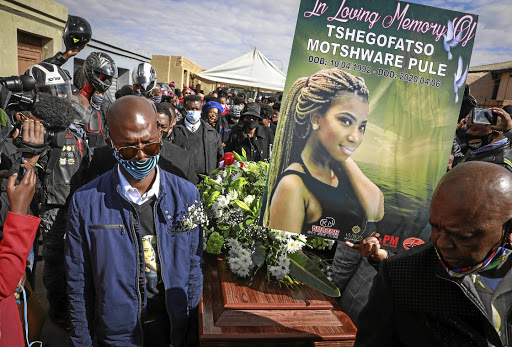
CALLING it a “dark and shameful week,” South African president Cyril Ramaphosa denounced the latest surge in violence against women, including the murder of a woman eight months pregnant.

“Gender-based violence thrives in a climate of silence,” he said. “By looking the other way because we believe it is a personal or family matter, we become complicit in this most insidious of crimes,” the President said.

Ramaphosa’s remarks come after some coronavirus restrictions were lifted, including a ban on the sale of alcohol.


READ ALSO:

Mr Ramaphosa condemned the brutality of recent killings, naming three of the victims, two of whom have become the subject of Twitter campaigns. They are: Tshegofatso Pule – #JusticeForTshego, and Naledi Phangindawo – #JusticeforNaledi. The president said another young woman had been dumped under a tree in Johannesburg’s Soweto township on Friday.

But his remarks ring hollow when a “new government report” released in September also declared gender-based violence a national crisis.

According to the 10-month-old report, a woman is murdered every three hours in South Africa, and many are assaulted and raped before their death.

Nomakhosazana Xaba, in her late 20s, says this violence now resembles a country at war against its women.

After the September report, President Ramaphosa announced a five-point plan to tackle violence against women, including media campaigns, strengthening the criminal justice system, and providing training for healthcare workers and counsellors.

But Xaba was fed up. “Enough is enough! A lot has been said, but there is still no change. We are brutally victimized each and every day, every second. Am I next? It’s fearing to live.”

Yesterday, the Federation of Unions of South Africa issued a strong statement urging steps to end the violence. “Fedusa is horrified by the ongoing scourge and the slow response and general inaction of our government,” they said. “Yet the government still has not ratified the ILO convention on Ending Violence and Harassment in the World of Work.”

For its efforts, 1.1 billion rands gifted by the government were deposited in the Federation’s bank.

Meanwhile, police minister Bheki Cele continues to maintain that law enforcement is doing its job when it comes to arresting perpetrators of gender-based violence. “Police are responding,” he said defensively. Commenting on the recent surge of violence, he blamed the sale of alcohol during lockdown level 3.

Mpume replied on Twitter: “Bheki Cele is gonna need to do more than just confiscate alcohol and pose in front of shebeens (bars). Women are dying every single day.”

This report is published with permission from Global Information Network.

Struggle seen in Belgium over racist historical statues

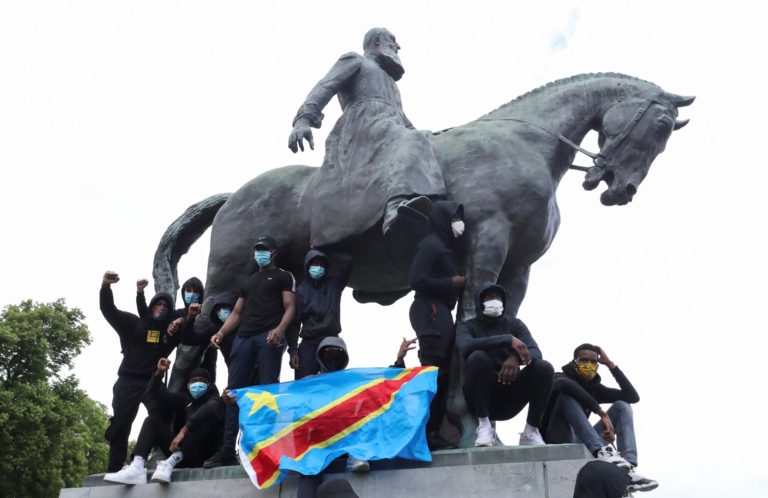
SOME of the largest anti-racism protests in Europe have taken place in Belgium, the birthplace of King Léopold II, whose brutal rule of Congo from 1885 to 1908 caused an estimated 10 million Congolese deaths through murder, starvation and disease.

This past week, close to 12,000 people gathered in central Brussels. They were targeting the King Leopold statue outside the royal palace and more than a dozen others. The most egregious one depicts a group of Congolese people kneeling below Leopold in “gratitude”.

Many of these statues were built in the 1930s when the Belgian government created a mythology around Leopold II, erasing the public memory of the Congo atrocities and replacing it with a narrative of a benevolent king who brought glory to Belgium.

But as calls for the removal of the statues grow louder, Belgian’s political class is raising objections to the dismay of Afro-Belgians and other citizens.

“You should see what Leopold II has done for Belgium!” Prince Laurent, younger brother of the current Belgian King Philippe, was quoted to say. “He had parks built in Brussels and many other things.”

“I don’t see how he could have made people (in the Congo) suffer,” Laurent said. “There were many people that worked for Leopold II, and they were really abusive — but that does not mean that Leopold II was abusive.”

“You won’t erase the history by removing statues,” said District Mayor Koen Palinckx of Antwerp. “You won’t turn back the clock.” He scolded activists destroying objects that are public property saying: “That’s a line you do not cross.”

“This is not how we proceed in a democracy,” added Auderghem Mayor Didier Gosuin. “This is not how we put history back on the right track.”

In 2010, former Belgian foreign minister Louis Michel, the father of future prime minister and present EU Council president Charles Michel, called Leopold “a hero with ambitions for a small country like Belgium” and described the Congo stories as “exaggerations”.

Belgians have been unwilling to confront colonialism, said Idesbald Goddeeris, a professor of history at Leuven Catholic University. When he was a student in the 1990s, instructors spent only one or two minutes on the country’s role in Congo, he recalled.

“Slavery is still very real history for black people – we are still living with the consequences of it, with a racial hierarchy that puts black people at the bottom,” said Mary Ononokpono, who is doing a Ph.D. at the University of Cambridge on the British-Biafran slave trade.

“Britain, Europe and America – and Africa – have to confront their history,” said Ononokpono. “We urgently need to have a long-overdue and honest discussion about the history of slavery and its legacy of impoverishment.”

This report is published with permission from Global Information Network.

FACT-CHECK: Did a Nigerian invent machine that transforms nylons, plastics into petrol?

By Opeyemi Kehinde


A news story, published by Legit.ng on Wednesday, June 10 claimed that a Nigerian man has invented a machine that could transform nylons and plastics into petrol.

The report, titled: Brilliant! Nigerian man invents machine that transforms nylons and plastics into petrol (photos), has garnered about 60,000 views on the website and shared at least 462 times on Facebook with over 400 likes and 129 comments as of Monday, June 15.


THE CLAIM

The story claimed that Emeka Nelson Ugwueze, a Nigerian invented a machine that could transform nylons and plastics into petrol.

Published on the website with photos embedded, the story read: “A Nigerian man has invented a machine that might develop Nigeria for the better – The man built a machine that transforms waste into petrol, Kerosene and Diesel.

“It was reported that the machine can also transform waste into tiles and roofing sheets.

Mr. Ugwueze. Insert: his ‘plastic-to-fuel’ machine.

“Emeka Nelson, a Nigerian from the eastern part of the country, remains celebrated in his own right for being able to create a machine that converts wastes to petrol. The machine does other things and there is hope that Emeka’s innovation will help Nigeria’s struggling economy.

“The young man shared a posting, stating what the list of things the machine can do with photos of the invention on his Facebook page. On the Facebook post, the young Nigerian man reported that the machine transforms hydrocarbon related wastes like plastic, nylon and so on.”


THE CHECK

Independent findings by The ICIR confirmed that Mr. Ugwueze actually fabricated the machine and posted it on his Facebook page on October 31, 2018 (about 20 months ago).

Ugwueze in an interview with The ICIR said: “Yeah, it’s true, it can make diesel, petrol, kerosene. A single machine can do all that depending on the design but we found out that the efficiency can be low. So now, we’ve decided to split them so that they (machines) do single thing. For instance, if we want to transform the plastics into pavement blocks or whatever, each one has its own different machine that does that.

“The one that converts plastics to petrol, diesel or whatsoever in that regard is more complex. So, it’s a different machine for that. But technology has made it possible that we can incorporate so many things into one; it’s just like combining two different machines into one.”

When asked if he knew why the platform decided to republish his Facebook post of about two years as fresh report, Ugwueze said: “I don’t know, I don’t know.”

“Whatever they posted there was actually an earlier design. The improved one (machine) we’ve been working on is still doing same thing. But we’re just trying to increase its efficiency,” he said.

Ugwueze added: “at some point, I just talk less and no longer post them (online). They didn’t reach out to me; but what they published wasn’t far from the truth.” He noted that he has improved on the designs published by the platform, adding “but I have kept it personal.”

Further investigation by The ICIR revealed that there are actually incinerating plants or machines that recycle plastics through chemical processes such as gasification and pyrolysis.

Gasification and pyrolysis are completely different processes to simply incinerating the plastic. Gasification and pyrolysis can produce electricity or fuels, and provide more flexible ways of storing energy than incineration, Muxina Konarova, a senior Research Fellow at The University of Queensland, Australia wrote in theconversation.com

She added that gasification involves heating the waste plastic with air or steam, to produce valuable industrial gas mixtures called “synthesis gas”, or syngas. “This can then be used to produce diesel and petrol, or burned directly in boilers to generate electricity.”

“In pyrolysis, plastic waste is heated in the absence of oxygen, which produces mixture of oil similar to crude oil. This can be further refined into transportation fuels,” she opined.

PHOTO CREDITS: Theconversation.com

Dr. Anjan Ray, Director, CSIR-Indian Institute of Petroleum, also pointed out that “The fuel obtained from conversion of plastic is completely environmentally friendly due to absence of any toxic substances. Apart from producing petroleum and diesel, this technology will also ensure that urban and semi-urban areas become plastic free, as instead of disposing plastics as waste, they can be converted to fuel.”

“Countries like Japan, Germany and the United States have already implemented the plastic to fuel conversion process with much success. These three also have been successful in creating business models out of the conversion process, resulting in the conversion model becoming a profitable business one,” Saptarshi Dutta also wrote on NDTV.com.

Estimates show that less than 5% of the plastic manufactured each year is recycled, with production of the material set to increase by 3.8% every year until 2030, adding to the 6.3 billion tonnes churned out since production began 60 years ago, according to the National Geographic (NatGeo) channel.

The ICIR reports that the plastics-to-fuel ecosystem if supported could provide major economic benefits to the nation, not only through job creation but also by curbing environmental pollution.


THE VERDICT

The claim was TRUE, however Legit.ng was re-circulating the Facebook post earlier made about two years ago by Mr. Ugwueze as fresh news. And this is MISLEADING.

Mystery trails death of 19-year-old activist Oluwatoyin Salau who went missing in the US after post on sexual assault

THE Tallahassee Police Department (TPD) in the United States (US) on Sunday shared that it had found the lifeless body of 19-year-old Black Lives Matter (BLM) activist, Oluwatoyin Salau, nine days after she was declared missing.

In a statement shared on its Facebook page, the TPD disclosed that the deceased was found during the late hours of June 13, alongside another dead body, stating that both deaths would be investigated as homicides.

It further disclosed that preliminary investigations had revealed a suspect, who has since been apprehended. The identity of the suspect is yet to be released by the police.

Controversy had trailed the disappearance of Salau who went missing on June 6, in Tallahassee, Florida, US, after she shared a series of tweets in which she disclosed that she was sexually assaulted by a yet-to-be known man.

In her Twitter post, Salau, shared details of the assault, describing her abuser as a mid-40s black man who had posed as a good samaritan wanting to help with her homeless situation.

“Anyways I was molested in Tallahassee, Florida by a black man this morning at 5:30 on Richview and Park Ave. The man offered to give me a ride to find someplace to sleep and recollect my belongings from a church I refuged to a couple days back to escape unjust living conditions.

“He came disguised as a man of God and ended up picking me up from nearby Saxon Street. I entered his truck only because I carry anything to defend myself not even a phone (which is currently at the church) and I have poor vision. I trusted the holy spirit to keep me safe,” Salau’s post read.

Describing the alleged sexual assault incident, Salau said the man used her body for his pleasure while she laid faced down on his couch, only finding a way to escape after he fell asleep.

“He then asked me if I wanted a massage at this moment his roommate who was in the house was asleep. I was laying on my stomach trying to calm myself down from severe post-traumatic stress disorder. He started touching my back and rubbing my body, using my body until he climaxed and then went to sleep.

“Before I realized what happened to me I looked over and his clothes were completely off. Once I saw he was asleep I escaped from the house and started walking from Richview Road to anywhere else,” Salau’s final tweet before her disappearance read.

Salau reported the case to the police shortly before she went missing.

Several days passed before her lifeless body was found on the road.

The police said: “At approximately 9:15 pm Saturday night, June 13th, TPD investigators arrived in 2100 block of Monday Road in the course of a follow-up investigation in a missing person case. During the course of the investigation, two deceased people were located in the area.”

One of the bodies was identified as Salau.

The death of the BLM activist has sparked several reactions on social media, with many calling for justice and answers over what happened to the girl who fought against racism.

Having joined protests driving the message about the importance of black people’s lives in America, Salau’s last days were lived fighting perceived oppression and racial injustice.

According to a friend of the deceased, identified as Ashley on Twitter, a protest demanding justice for Toyin and celebrating her strength as an activist is to be held on Friday.

“There is going to be a major protest Friday in honor of Toyin’s memory and strength. Also Friday weeks ago was her first time protesting. The details are coming out soon,” Ashley tweeted.

In the interim, a petition has been set up on behalf of  Salau to gain the attention of the Florida Governor, Ron DeSantis and TPD to investigate what friends and supporters of the deceased described a crime.

COVID-19 patient dies after delivery of Twins

THE IMO state chairman of the COVID-19 task force, Professor Maurice Iwu has announced the death of a woman who has died of the coronavirus infection after giving birth to twins on Monday, bringing the total number of COVID-19 deaths in the state to 4.

Confirming the incident to Channels Television, Professor Iwu said the woman was delivered of a set of twins but after delivery, she couldn’t survive it.

Although the woman’s details are unknown, the deceased was said to have been receiving treatment in the isolation centre after testing positive for the coronavirus disease a few days ago.
According to Iwu, the babies were however fortunate as to have tested negative for the virus.

While warning against rumours that COVID-19 is not real, he urged indigenes of the state to continue to comply with precautionary measures put in place by the state government to contain the spread of the virus.

Iwu also noted that COVID-19 cases keep increasing by the day due to an increase in sample testing in the state.