Home Blog Page 2087

COVID-19: 370 million school children missing out on school meals- UN

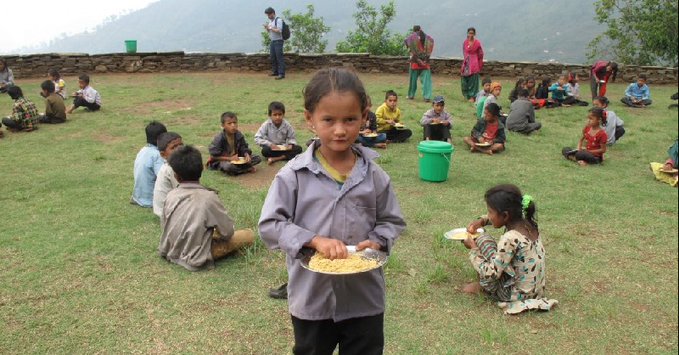
THE United Nations (UN) in its recent findings says  370 million school children globally are missing out on school meals which is a major source of nutrition for them due to closure of schools forced by the COVID-19 pandemic.

More than 820 million people in the globe are hungry, said Antonio Guterres, UN Secretary-General in a policy briefThe Impact of COVID-19 on Food Security and Nutrition launched on Tuesday.

Guterres said response to the pandemic must support children who no longer have access to school meals.

According to him, 144 million children under the age of 5 are stunted which means that more than one in five children worldwide have stunted growth as a result of malnutrition.

He said more than 820 million people in the world are hungry though there is more than enough food in the world to feed a population of 7.8 billion people.

”Our food systems are failing, and the COVID-19 pandemic is making things worse,” Guterres said.

Guterrres stated that unless immediate action is taken, that there is an impending global food emergency that could have long term impacts on hundreds of millions of children and adults.

According to him, about 49 million extra people may fall into extreme poverty due to the COVID-19 crisis noting that the number of people who are acutely food or nutrition insecure will rapidly expand.

He stated every percentage point drop in global Gross Domestic Product (GPD) means an additional 0.7 million stunted children, and ‘even in countries with abundant food, there are risks of disruptions in the food supply chain.’

Guterrres recommended that governments and individual around the wold must mobilize to save lives and livelihoods, focusing attention where the risk is most acute by designating food and nutrition services as essential.

He said there is need to implement appropriate protections for food workers and preserving critical humanitarian food, livelihood and nutrition assistance to vulnerable groups while also positioning food in food-crisis countries to reinforce and scale up social protection systems.

The UN Scribe e also advised that countries need to scale up support for food processing, transport and local food markets, adding that they must keep trade corridors open to ensure the continuous functioning of food systems.

“And must ensure that relief and stimulus packages reach the most vulnerable, including meeting the liquidity needs of small-scale food producers and rural businesses,” he said.

He also recommended that the governments must strengthen social protection systems for nutrition and invent ways to safeguard access to safe, nutritious foods, particularly for young children, pregnant and breastfeeding women, older people and other at-risk groups in countries around the world, which should include supporting children who no longer have access to school meals.

Finally, he advised that countries should and must invest in the future, as there are opportunities to build a more inclusive and sustainable world.

”Let us build food systems that better address the needs of food producers and workers.”

”Let us provide more inclusive access to healthy and nutritious food so we can eradicate hunger.”

”And let us re-balance the relationship between food systems and the natural environment by transforming them to work better with nature and for the climate,”  Guterres advised.

The UN boss stated that food systems contribute up to 29 per cent of all greenhouse gas emissions, including 44 per cent of methane, and are having a negative impact on biodiversity.

Guterres therefore advised that governments should adhere to to the recommendations as indicated by the brief launched by the organization as a measure to avoid some of the worst impacts of the COVID-19 pandemic on food security and nutrition which also supports the green transition in a way that the world needs.

Sokoto, Kaduna, Adamawa top list of states where more Nigerians were killed in month of May

At least 356 Nigerians were reported killed in 27 states of the country in the month of May 2020 alone, a new report said.

NigeriaMourns, a Non-governmental Organisation that released “Violence Incidents Report: May 2020” on Wednesday documented daily deaths and violence happening across the country amidst the COVID-19 pandemic.

According to the report, Sokoto, Kaduna and Adamawa were the states with the highest number of killings, totalling 181 deaths.

The report also indicated that 212 deaths were attributed to banditry attacks, while communal conflicts accounted for 80 deaths, 27 were attributed to Boko Haram/ISWAP, 10 to cult clash, herdsmen attack took 10, eight were due to extrajudicial killings while five were killings related to isolated attacks and four to mob action.

Violent Incidents Report: May 2020

NigeriaMourns described the continuous crisis in Southern Kaduna which led to a larged scale death of people and destructions as a source of concern.

In the report, four civilians’ deaths were also attributed to Nigerian soldiers while enforcing the lockdown orders in Karim Lamido, Taraba State.

“At Owode, Yewa South Local Government of Ogun state, 15-year-old Riliwan Bello died from an “accidental bullet discharge” fired by men of the Nigerian Customs Service (NCS), Ogun 1 Area Command. The incident occurred barely a month after unnamed agents of the NCS reportedly killed another 15-year-old girl, Sekinat Agbelade at Agosasa, Ipokia Local Government Area of Ogun State,” the report said.

“Rinji Peter Bala, a 20-year-old student of the University of Jos, was first arrested by vigilantes alongside six others for violating the lockdown order. Shortly after they were released, officers of the Nigerian Army “accidentally” shot and killed Rinji.

“An unidentified inmate was reported dead from a shot fired by a prison guard, at the Nigeria Correction Service, Aba. The incident occurred when some old inmates had tried, but failed to escape from the prison.

“16-year-old Tina Ezekwe was shot and killed by a policeman at a bus stop near her home in Lagos State. Provoked by this tragic incident and the endless extrajudicial killings in Nigeria, Nigerians led a protest with the hashtag #JusticeforTina,” the report read.

The report further revealed that 10 security agents were killed during violent attacks in the same month.

According to the report, Killing of security officers in Nigeria has continued at an alarming rate.

“A police officer attached to Bomadi Divisional Police Station was shot dead by an army officer attached to 222 battalions in Agbarha-Otor, Ughelli North L.G.A Delta State.

“Five Nigerian soldiers were also killed in an attack on a military outpost by ISWAP terrorists in Mainok, Borno State, in addition to the two earlier reported killed by Boko Haram at Gujba local government area of Yobe.”

Three major sectors to benefit from amended Local Content bill as it passes second reading

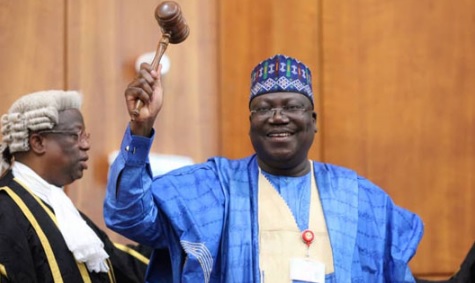
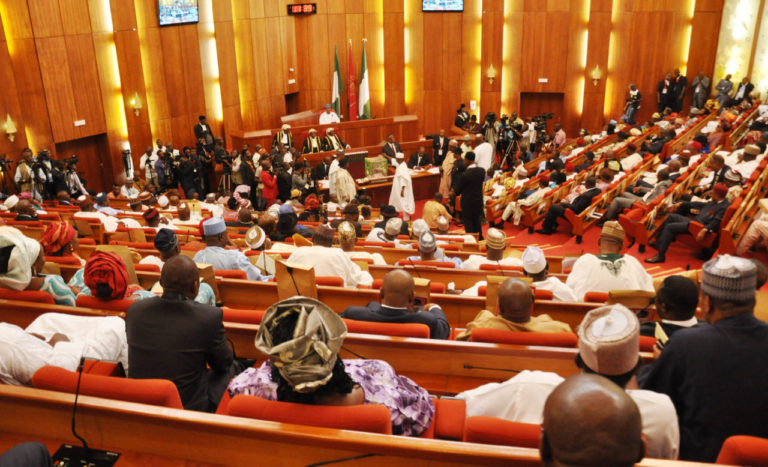
THE Senate on Wednesday has referred the bill for an Act to repeal the Nigerian Oil and Gas Industry Content Act, NOGIC, Act 2010, to the Senate’s Committee on Local content for review after it passed the second reading.

Aliyu Sabi, a senator from Niger State who is at the forefront seeking to repeal the NOGIC Act, 2010, in replacement for Nigerian Local Content Development and Enforcement Commission Act, NCDE said the bill would realise the legislative agenda of the ninth assembly.

The bill had 209 clauses which would address all the local content needs for the oil and gas industry and also extend to other sectors of the economy, he said.

The NCDE bill seeks to update and replace the outdated provisions of the Nigerian Oil and Gas Industry Content Act, NOGIC, Act 2010, to ensure that priority is given to Nigerian operators in the issuance of licences and permits in designated sectors especially oil and gas sector.

It also stipulates that companies or individuals undertaking a business activity in the Nigerian economy shall give consideration in terms of the award of contracts and employment to Nigerian indigenous businesses and individuals.

Kabiru Gaya, representing Kano South senatorial district said the bill was long overdue stating the current bill should be merged with any other existing one to align a wholistic standard local content.

After deliberations on the bill, Ahmad Lawan, President of the Senate asked that the committee on Local Content should report to the Senate in four weeks

These are three major sectors that the NCDE bill is set to benefit Nigerian workers and indigenous service companies in the country if it is passed.

Oil and Gas

The bill proposes that Nigerian independent operators should be given first consideration in the award of oil blocks, oil field licences, oil lifting licences as well as contracts for projects subject to the fulfilment of conditions as specified by the Minister of Petroleum Resources.

A major challenge in the oil and gas sector is its technology intensiveness but the bill makes provision for Nigerians working with foreign oil and gas firms to build core competencies and acquire skills by ensuring minimal deployment of foreign expertise in project execution.

While contracts involving a total budget exceeding $1 million held by a foreign firm shall have a labour clause mandating the use of a minimum percentage of Nigerian labour in specific cadres as may be stipulated by the Board.

It also compels foreign operators in the sector to submit to the Board a succession plan for positions not held by Nigerians to enable nationals understudy positions held by incumbent expatriates for a maximum period of five years after which such positions will be held by Nigerians.

Power Sector

One of the key targets of the Nigerian content policy under the NCDE bill in the power sector is to ensure Nigerian firms are given exclusive consideration in the issuance of licences, permits, leases and other instruments vesting right of operation if they have demonstrated sufficient capacity.

The bill states that baring uncertain circumstances where there are inadequate local materials or the inability for any contract to be engaged, the board may grant its permission for a waiver so a foreign company to step in but not more than 3 years from the date of the approval.

However, the bill imposes on every unit of power purchased by an electricity consumer a two per cent charge of the monetary value of the unit purchased which will be paid into a Fund that would be named “National Power Development Fund” which shall be administered by the board alongside the Nigerian Electricity Regulatory Commission (NERC) to promote Nigerian Content in the Power Sector.

Information and Communication Technology (ICT)

The bill also seeks to establish a National Office for Nigerian Content on Information And Communication Technology (“the National Office on ICT”) which shall be responsible for implementing the local content obligations of the ICT sector.

With exclusive consideration to be given to Nigerian indigenous companies that demonstrate the requisite capacity, with regards to the grant of a licence, leases, permits, and other right-vesting instruments in relation to the ICT sector.

NAPTIP, Ministry of Justice working to set up special court to try rapists

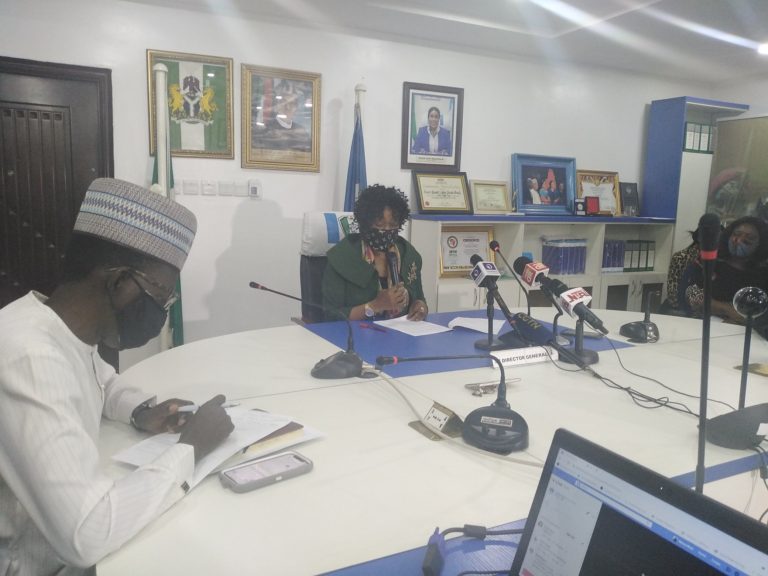
JULIE Okah-Donli, the Director-General of National Agency for the Prohibition of Trafficking in Persons (NAPTIP) on Wednesday disclosed that plans are on to establish a special court to try rapists.

While speaking during a press briefing in Abuja, Okah-Donli stated that NAPTIP would meet with the Federal Ministry of Justice on the proposed special rapist court.

She also hinted that those who are making excuses for rapists would be arrested and prosecuted.

While speaking on the role of parents in stemming the tide of rape cases in the country, the NAPTIP DG lamented that parents were not doing enough to take care of their wards and children.

”Victim shaming and blaming must stop, culture of silence must be broken. Shame is the portion of the rapist. Empathy and justice is victim’s. Let’s not normalize rape,” Okah Donli said.

According to Okah-Donli, 90 percent of rape cases were committed by uncles, fathers and relations.

She stated that over 600 rape cases were reported in Sokoto State in 2019 while 80 were reported in Anambra State during the lockdown, noting that most were cases of rape by fathers.

“Recalling rape incidents of Barakat(18) raped and killed in Ibadan, Shumuyiwa(29), in Benin a pregnant wife of a politician raped and killed in her home, and arrest of a bishop who drugged and raped a girl brought to him for deliverance in Warri,” she said.

The NAPTIP boss lamented that Nigeria has no template for rape victims’ trauma response, noting that trauma varies from individual to individual.

However, Okah-Donli advised rape victims in Nigeria to promptly report rape cases.

She further stated that those around should ensure that victims are taken to the hospital without taking a bath.

Okah-Donli further gave the NAPTIP response template for rape victims, which includes not having a bath, no change of clothes, picking evidence like condom/wipes noting that items picked should not be destroyed.

She added that victims should go to the hospital immediately and demand a medical report.

” Your body, your clothes, skin and semen of the rapist are veritable evidence needed to convict and jail rapists. Call NAPTIP on 07030000203 or *627# to report rape today.”

Just last week, Julie Okah-Donli, published names and photographs of about 20  persons who have been found guilty and convicted for rape from 2019 to 2020.

All those arraigned charged on grounds of incest and rape include; Adenekan Adegboyega, Friday Elijah, Shehu Abubakar, Asateru Gabriel, Emeka Akile.

Others are Vincent Akande, Abdulkareem Yahaya Danmallam, Olaoluwa David Ajibade, Yusuf Francis Kyemang and Basiru Adeyanju.

Last October, Justice Sybil Nwaka of an Ikeja Sexual Offences and Domestic Violence Court, sentenced Adegboyega to 60 years imprisonment.

EU condemns killings in Borno State, pledges support against terrorism in Nigeria

THE European Union (EU) says it will continue to stand with Nigeria in the battle against terrorism and extremism, as it condemns the attacks by terrorists on Tuesday which claimed lives of  81 people in, Gubio village, Borno State.

Official government statement said a survivor informed the Governor of Borno State that “81 residents were killed during the attack on Tuesday with 13 persons injured and seven others, including village head, was abducted.

 Josep Borrell Fontelles, EU High Representative for Foreign Affairs and Security Policy who reacted to the killings described the attack as despicable and deliberate act of terror.

“More than 70 civilians have been killed in Borno State, Nigeria Yet another despicable and deliberate act of terror in a region which is the victim of so many attacks,”  Fontelles who is also  the Vice President of the Commission wrote on Twitter.

“The European Union continues to stand with Nigeria in the battle against terrorism and extremism.”

It would be recalled that President Muhammadu Buhari  Wednesday night also expressed shock at the attack.

The President said he was deeply shocked by the brutal killing of tens of innocent people by the Boko Haram/Islam in West Africa Province (ISWAP) in Gubio village particularly happening not too long after the end of Ramadan fasting.

He charged the armed forces to sustain their recent string of successes against the terrorists to extract a heavy price from the attackers, and bring back all those they kidnapped as well as the large number of cattle rustled.

President Buhari in a  statement by Garba Shehu, his Senior Special Assistant on Media and Publicity, also expressed his condolences to the government of and people of Nigeria to the bereaved families, communities and the government and people of Borno State.

Bala Mohammed threatens to lockdown Bauchi city as COVID-19 cases rise

BALA Mohammed, Governor of Bauchi State says he may be left with no option than to impose a lockdown on Bauchi city if the number of recorded cases of COVID-19 in the city keeps increasing.

Mohammed dropped this hint during a press briefing where he lamented that Bauchi reported a daily record high of 69 COVID-19 cases on Tuesday.

He attributed the rising cases of infections on the attitude of the people towards obeying health guidelines such as handwashing, use of sanitisers and face masks.

The governor particularly mentioned places of worship such as mosques as the epicentres of the viral disease.

“Some of our places of worship, especially the mosques, they are the epicentre of infections, and nobody is doing anything,” he said.

“I am pleading with the people of Bauchi, if this thing continues to happen – we are bordered by seven states, some of them are worse – in order to secure the common people of Bauchi, I might have to lock up Bauchi,” he added.

The governor also disclosed 15 COVID-19 cases in the state were people who had travelled from Calabar, Cross River’s capital city despite claim’s that Cross River state has no case of the novel virus.

The Nigeria Centre for Disease Control (NCDC), lists Cross River as the only state in the country without a confirmed case of COVID-19.

However, in a report, the Nigeria Medical Association (NMA) had decried the obstruction of the NCDC by Kogi and Cross River state governments.

Mohammed who did not hide his dissatisfaction with the development said some of his colleagues in other states were pretending about the COVID-19 status of their states.

“I don’t want to join issues with anybody but I want to tell Nigerians that they are going to be accountable to God. There is no need pretending that this thing is not there, we as leaders, we must come out and face the challenges,” Mohammed said.

Bauchi had experienced a spike in the number of infections on Tuesday, with 69 new cases bringing the toll to 364 confirmed cases.

Bala Mohammed and Baba Tela, his deputy, had contracted the disease but had recovered while other frontline workers have lost their lives which include Bello Katagum, a COVID-19 frontline doctor in Bauchi State.


Okezie Ikpeazu, Bala Mohammed and 2 other governors who have contracted COVID-19

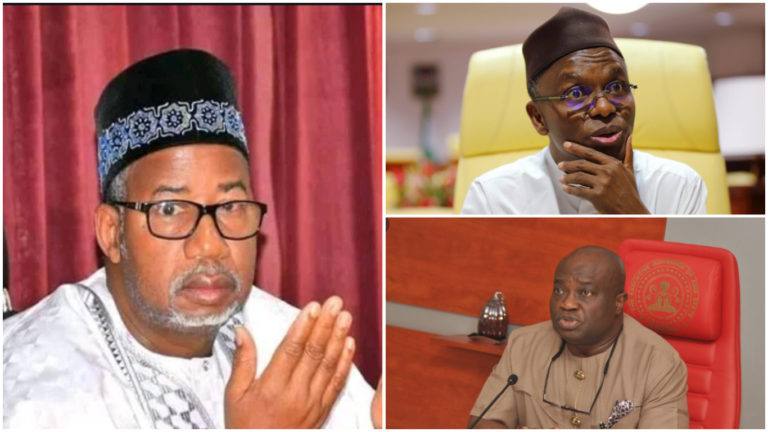
SINCE Nigeria recorded its index case of coronavirus (COVID-19) disease on February 27, four state governors including Bala Mohammed, Governor of State; Nasir El-Rufai, the governor of Kaduna State, Seyi Makinde, governor of Oyo State and most recently, Okezie Ikpeazu, governor of Abia State, have all contracted the deadly virus which has infected over 7.1 million people globally.

While Mohammed, Makinde and El-Rufai tested positive to the virus in March, Ikpeazu was reportedly diagnosed on Monday after submitting samples for the test on June 4.

This is coming three months after Ikpeazu announced that COVID-19 would not afflict Abia because the state is mentioned in the Bible.

“Abia is the only state that is mentioned in the Bible. We have a promise from God that none of these diseases will touch God’s people. And I hold on to God’s promise.

“We saw Ebola, it did not get to us. We saw monkeypox, it didn’t get to us. Even this one (coronavirus) will also pass us by,” Ikpeazu said with confidence in a Facebook live chat with his chief press secretary, Onyebuchi Ememanka.

According to the World Health Organisation (WHO), COVID-19, which spreads primarily through droplets of saliva or discharge from the nose of an infected person, can have patients displaying mild to severe symptoms. In some other cases, patients suffer a breathing crisis.

The most symptoms of COVID-19  are fever, cough and tiredness.

Other less common symptoms include; aches and pains, sore throat, diarrhoea, conjunctivitis, headache, loss of taste or smell, rash on skin, or discolouration of fingers or toes.

However, some COVID-19 patients are asymptomatic – displaying no symptoms – like in the case of Makinde, governor of Oyo State, who tested positive to the virus and announced his condition on his official Twitter handle on March 30.

Out of the woods in one week

For Makinde, who has been advocating for local solutions to cure COVID-19, his recovery from the deadly virus was brief.

Barely a week after testing positive, the governor eased the minds of his supporters when he announced that he was fully recovered and free of the virus.

According to the governor, while he lost some weight during the course of living with the virus, he fought and prevailed by using Vitamin C, carrots and black seed oil mixed with honey in boosting his immune system.

“I mix it (black seed oil) with honey and take one teaspoon in the morning and one in the evening. So, there are local solutions to boost immunity. So, our people should not fret. They shouldn’t fret. Just as I have been able to get the virus out of my system, so will it be for the majority of our people,” Makinde rekindled hope in an interview with Isaac Brown of Fresh FM in Ibadan, in April.

Governor El-Rufai spent 25 days in isolation centre

El-Rufai also disclosed that he had contracted coronavirus on March 28,  and even infected four other persons with the virus, who are now all recovered.

His wife, Hadiza Isma El-Rufai made the announcement first before the governor also confirmed the development.

After spending 25 days in the isolation centre,  El-Rufai announced that he had recovered from the virus on Twitter on April 22.

“I thank Almighty Allah for His grace and mercy. I also acknowledge with gratitude the massive outpouring of sympathy, prayers and public support that followed the disclosure of the infection.

“My family not only went through the trauma of potentially losing a member, but also the risk of being infected as well,” he said.

Shook hands with an infected person

Three days before El-Rufai disclosure about his status, the governor of Bauchi State, Bala Mohammed had tested positive.

The governor admitted meeting and shaking hands with Mohammed Abubakar, son of former Vice President Atiku Abubakar, who tested positive to the virus on March 22.But after spending 15 days in an isolation ward, the governor announced on April 9 that he had tested negative.

“I just received the green light. My second test for COVID19 returned negative

“I thank you all for your prayers and support even while I was in isolation. Most importantly, all the praises and thanks be to Allah –the Most Beneficent, the Most Merciful,” he said in jubilation on Twitter.

The novel coronavirus, described as a respiratory illness has killed over 406,000 persons globally, according to Worldometer.

In Nigeria, the fatality rate of COVID-19 has reached 354, while the number of confirmed cases has hit  12,486.

Reps move to monitor COVID-19 funds, demand details of FG’s donations to states, NCDC

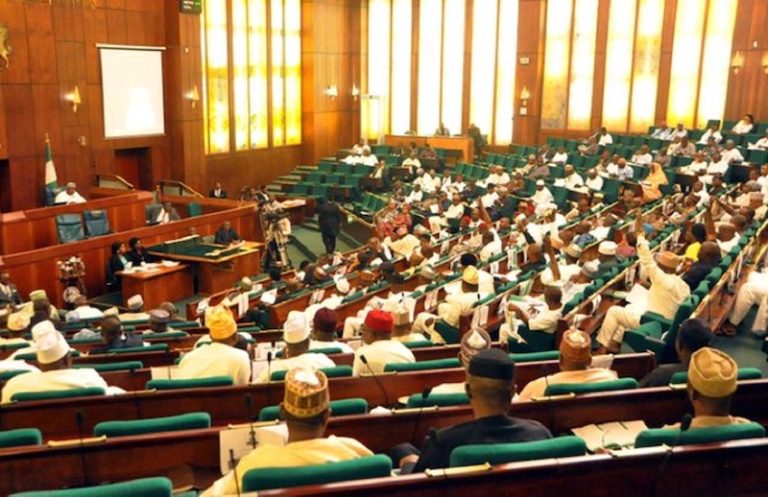
THE House of Representatives has asked Ahmed Idris, the Accountant-General of the federation (AGF) to provide the details of all the funds donated by the Federal Government to the states of the federation, the Nigeria Center for Disease Control (NCDC) and the relevant ministries to fight the COVID-19 pandemic outbreak in the country.

The House of Representatives made the demand on Wednesday when the AGF appeared before the House Committee on Public Accounts investigating the financial status of the Presidential Task Force (PTF), chaired by Busayo Oluwole Oke.

The Committee said it would also write formally to Godwin Emefiele, the Governor of the Central Bank of Nigeria (CBN),to demand the details of all the lodgements and disbursement of COVID-19 pandemic funds by the Federal Government.

While asking the AGF to provide details of N22.1 billion so far donated by public-spirited individuals and organisations to the government, the Public Accounts Committee also demanded for details of how much he had so far transferred to the PTF on COVID-19.

In his response, Idris explained to the Committee that the government opened a special account at the CBN where the donations were lodged, adding that the bank would later provide the documents requested.

“There was a special account we opened with the CBN and that was what we borrowed from to meet the needs of this emergency,” he said.

Idris further told the Committee that there was a total donation of N139,439,544.38 received by the Federal Government from the donations by the 109 Senators and 360 members of the House adding that another N300 million came from a philanthropist from Kano State.

But the Committee maintained that the AGF must provide the details at its next sitting  slated for Monday, June 15.

It will be recalled President Muhammadu Buhari had in May approved the opening of five different accounts for COVID-19-related donations.

Court to rule on eligibility of witness July 6 in Babachir’s N500m grass cutting scam

A Federal High Court sitting in Abuja has fixed July 6 for ruling on the eligibility of a prosecution witness in the on-going trial of Babachir Lawal, a former Secretary to the Government of the federation,  for alleged N500 million scandal.

A statement by Dele Oyewale, Head of Media and Publicity at the Economic and Financial Crimes Commission (EFCC)  on Wednesday,  stated that Justice Jude Okeke made this ruling on the amended 10 count charges.

The charges brought against Lawal, his younger brother, Hamidu David Lawal, one Suleiman Abubakar, Apeh John, Rholavision Engineering and Josmon Technologies by the  EFCC border on fraud, diversion of funds and criminal conspiracy to the tune of over N500 million.

Akin Olujimi, the lead defense counsel had opposed the eligibility of  Chidi Eboigbe, a compliance officer with Ecobank,  presented by the prosecuting counsel, Offem Uket as witness on grounds that he was not listed as a witness in the matter.

“I cannot see anywhere that the witness in the box was listed among the witnesses going through the proof of evidence and cannot see any name that looks like his. The only person from Ecobank is Obadino Abiola Ganiyu who has given a statement to EFCC,” Oyewale quoted Olujimi as said.

Olujimi disclosed that the defence was therefore at a loss as to what the witness would say, and as such was unable to prepare for his cross-examination. He therefore, urged the court to strike out the witness from the case.

Other members of the defence team led by Olujimi agreed with his submission, adding that their clients must be given direct notice of the witness’ appearance and evidence sought to be given by him.

Uket, the prosecuting counsel, told the court that the prosecution listed a representative of Ecobank as a witness in the matter and that representative is Enoigbe.

“The witness is not in court as a person but as a representative of the bank to speak on the documents from his bank and that the statement of account is in the proof of evidence,” the EFCC counsel said.

Uket further noted that “Ecobank is an entity that acts through its servants and that means any staff can be assigned to speak on the issues of past records of transactions that happened in the past and in the future.

He informed the court that it did not matter that the transaction was not conducted by the witness and that it predated his employment in the bank and therefore prayed the court to reject the argument of the defence and allow the witness to give his testimony.

Justice Okeke during his ruling adjourned the matter till July 6, for ruling on the eligibility of the witness and continuation of trial.

Senate considers bill to protect victims of rape, insurgency

AHMED Lawan, Senate President on Wednesday directed the Senate Committee on Judiciary and Legal Matters to look into a bill seeking to protect victims of rape and insurgency in the country.

The bill, sponsored by Sani Musa,  senator representing Niger East Senatorial District, titled “A Bill for an Act to prohibit the stigmatization of victims of rape and insurgency, 2020 (SB. 243)”, seeks to ensure  that rape victims and insurgency are reintegrated into society and given equal opportunities.

While presenting the bill that has passed second reading, Musa noted that it was important at the moment  as the bill will account for the legislation to cover the estimated 205 million Nigerian population.

He explained that the bill if passed would protect and provide a legal and institutional framework for the rape victims and insurgency as well as prohibit their stigmatisation.

Musa added that the country with an estimated 205 million people has no legislation that will protect  and provide for the victims of rape  and insurgency.

“The Bill shall ensure that the victims are reintegrated into society and given equal opportunities in Nigeria,” he said.

According to him, the bill has eleven clauses spelling out the objectives and how the bill will be implemented, noting that it shall be an offence to stigmatize victims of rape and insurgency.

“The bill provides the legal part for such victims to seek redress in the court of law,” he said.

If passed into law, the lawmaker submitted that the bill shall apply through-out the 36 states and the Federal Capital Territory (FCT).

Sandy Onor,  senator representing Cross River Central Senatorial District, who seconded the motion recalled that he had raised a motion of the rape and brutality of women and girls in the country.

He argued that rape like murder should attract no bail and that the Senate should look for a way of ensuring that the victims are not stigmatized.

Supporting the bill also, Ike Ekweremadu,  senator representing Enugu West Senatorial District and formal deputy president of the Senate said Nigeria “needs to have proper records of the perpetrators and have them profiled so that those who have committed rape would be denied social benefits.”

Meanwhile, the Senate President gave the Senate Committee on Judiciary and Legal Matters four weeks to report back to the Senate on the bill.