Home Blog Page 2109

COVID-19: FG grants 2-month licence fee waiver to broadcast stations

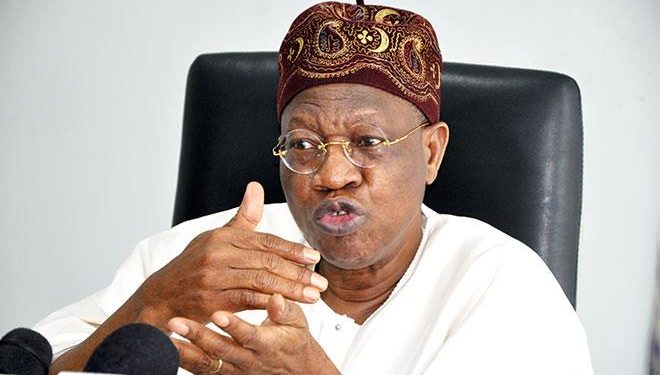
THE  Federal Government has granted a two-month licence fee waiver for terrestrial broadcast stations in Nigeria to cushion the effects of the Coronavirus disease (COVID-19) pandemic in the industry.

The Minister of Information and Culture, Alhaji Lai Mohammed, stated this at a meeting with the Broadcasting Organisations of Nigeria (BON) in Abuja on Wednesday.

He also announced the setting up of a committee of Creative Industry stakeholders to advise the Federal Government on the best way to mitigate the effect of the pandemic on the industry.

“Before I announce the terms of reference of the committee, let me say that in the interim, I want to announce that I have approved the request by the National Broadcasting Commission (NBC) to grant a two-month licence-fee waiver for terrestrial broadcast stations in Nigeria.

“I make bold to say that while BON members have been hit hard by the current pandemic, they are not alone. In fact, the entire Creative Industry, which also covers the Broadcast Industry, has been affected by the pandemic that has inflicted extensive damage on the economy of nations across the world,” he said.

Lai Mohammed stressed the need for a collective and government-supported approach in dealing with the immediate, short and long term palliatives and initiatives for the industry, in order to mitigate the effect of the pandemic on the Industry.

He said the committee has therefore decided that instead of addressing this problem piecemeal,  should do so wholistically for a more positive outcome,  noting that the creative industry is a very critical sector of the nation’s economy and a major plank of the economic diversification policy of this administration, in addition to creating the highest number of jobs after agriculture.

The Minister said the terms of reference of the committee include to assess the expected impact of the pandemic on the industry in general and advise the government on how to mitigate job and revenue losses in the sector as well as to create succour for the industry small businesses.

The committee is also expected to suggest the type of taxation and financing that is best for the industry at this time to encourage growth and also advise the government on any other measures that can be undertaken to support the industry.


I have no apology recommending Chroloquine as cure for COVID-19—Bauchi Gov

By Haruna Mohammed Salisu


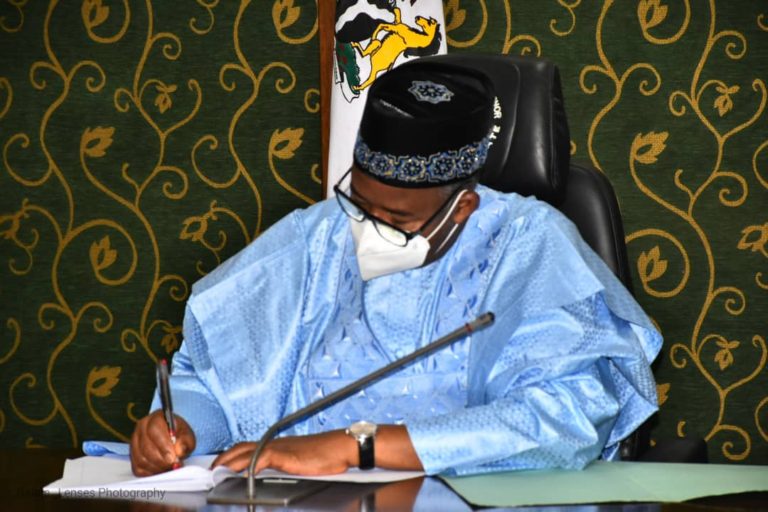
Bala Mohammed, Bauchi State Governor said he has no apology recommending Chroloquine, Zithromax, Zinc and vitamin C to patients of Coronavirus disease.

The governor made this disclosure while responding to questions about his recommendation of the drugs as cure for COVID-19.

The governor who said the drugs in question was what he uses when he was in isolation said since there is no vaccine for the virus, people should follow the medical counsel of their physicians.

“Pertaining what I said about the use of Chloroquine, Zinc, Zithromax and vitamin C for the treatment of COVID 19 that I was misquoted.

“I was once a COVID 19 patient, how did I get cured, I only made a recommendation and it is not a recommendation of the committee for COVID 19 in the state.

“I have no apology for saying that I used Chloroquine, Zinc, Zithromax and vitamin C to get cured, but Allah cured me.

“To me, it is better you take something rather than sit down and die. We have not recorded any death in Bauchi state and I still maintain that. The person that died came after the test and you can see that we have 80 patients. By the grace of Allah, Allah will heal all our patients.”

“It is not Chloroquine or anything; many countries are using modern medicine to combat the pandemic. It is a common knowledge that COVID 19 has no vaccine and drugs, we are just grappling in the dark, but if you have symptoms of fever, you take Chloroquine and cure it.

“If you have symptoms of infection, you take Zithromax and cure it. If you have symptom of weakness, you can take Panadol to cure it. You don’t need a doctor. However doctors are prescribing. I did not take these drugs on my own, I took it based on the recommendation of my doctors,” he said.

Governor Bala during the covid-19 update in the state said, Bauchi State has recorded additional 3 cases of the novel coronavirus, tallying the number to 73 active patients while 6 discharged.

The governor said he had instructed the state’s taskforce on the coronavirus to intensify massive testing and contact tracing to enable the state have full control on the number of cases who might be positive for the virus.

This report was originally published by Wiki Times .

Oil earnings to decline by 80 per cent in 2020 – FG

As federal government projected revenue from oil earnings continues to decline, Federation Account Allocation is now expected to fall by 80 per cent,

In real term, the allocation  will drop to N1.1 trillion as against N5.5 trillion previously projected for the 2020 fiscal year.

This revelation was part of the discussion during a meeting between the Ministry of Finance, Budget and National Planning and the UK Department for Internal Development (DFID).

The meeting was a citizen’s dialogue session focused on Nigeria’s response to the fall in oil prices and the COVID-19 pandemic.

The government also expects that Nigeria’s Gross Domestic Products (GDP) will contract by 3.5 per cent year on year in 2020.

This will be despite a N649 billion reduction in allowable fiscal deductions by Nigerian National Petroleum Corporation (NNPC) for federally funded projects/expenditures.

Specifically, the projected  Premium Motor Spirit (PMS ) under-recovery (petrol subsidy) has been reduced from N457 billion in the 2020 federal budget to zero.

The Nigerian government says it now expects oil prices in 2020 to average $20 per barrel against the budget benchmark of $57 per barrel.

The average production cost of Nigerian crude has been revised downward to $28 per barrel from $33 per barrel with implications for Petroleum Profit Tax (PPT).

According to the government, Customs revenue has come down to N1.2 trillion in 2020 against N1.5 trillion previously

The amount accruable to Value Added Tax (VAT) pool account now estimated at N2.0 trillion against N2.1 trillion previously in the year 2020.

Amount accruable to federation account now projected at N3.9 trillion against N8.6 trillion previously.

Projected federal government receipt from the federation account for 2020 is now put at N2.4 trillion against N4.8 trillion previously.

States and local governments are now likely to receive only N2.1 trillion and N1.5 trillion, respectively from FAAC compared to N3.3 trillion and N2.5 trillion, respectively, in previous estimates.

Projected N5.6 trillion budget deficit to be financed through privatisation proceeds will be N126 billion, but no details were provided.

Drawdowns from FGN special accounts of N260 billion, bilateral/multilateral drawdowns N387 billion, and new borrowings estimated at a whooping N4.6 trillion.

As part of measures to alleviate the impact of COVID-19, the government has set up an Economic Sustainability Committee to, among others, assess systemic vulnerabilities and develop programs that would make recession short-lived and ensure sustainable long-term growth

Government plans to invest in road and farmlands as well as offering credit facilities in order to improve agricultural products.

The federal government said it has plans to off-take agro-products, especially now that market conditions are unfavourable.

The government has also pledged to provide funding supports for the aviation sector, being the worst-hit at this period.

How ease of lockdown has shown Nigerians’ poor acceptance of online, digital banking system

ONLINE images of people crowded in banks in various parts of the country may have shown that Nigerians are yet to completely embrace digital and online banking system in Nigeria. 

After five weeks of lockdown in Lagos, Ogun and Federal Capital Territory (FCT), the federal government ordered the ease of lockdown on 4th May.

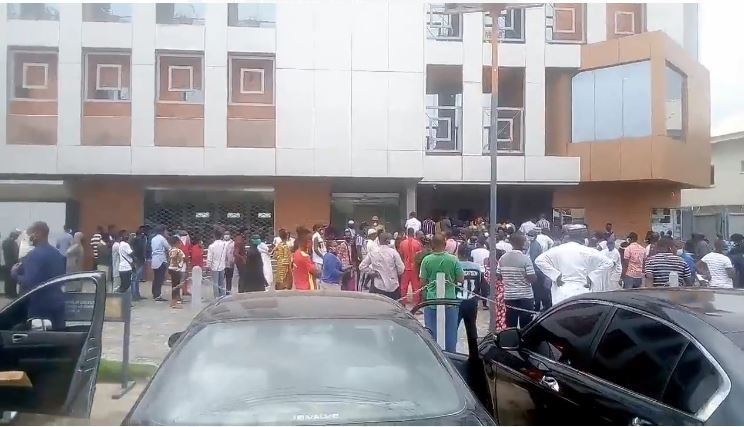
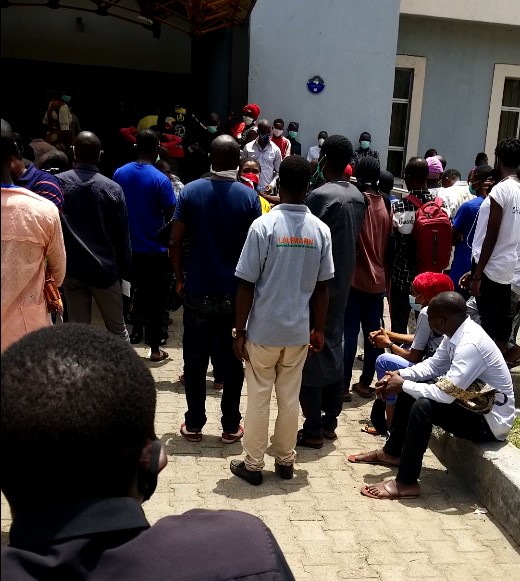
There are video footages of commercial banks in Abuja, Lagos and Ogun states that were packed full of customers, who appeared unmindful of social distance protocol.

Access Bank Ikotun, Lagos
Photo Credit: Tope Bisade /Twitter

Even micro-finance and development banks with fewer cutomer base recorded high number of visitors relative to their size.

Digital banking is part of the response to the cashless policy of the federal government.

The shift from traditional to digital banking has been gradual and remains ongoing, and is constituted by differing degrees of banking service digitisation.

Currently, in Nigeria, there are over 22 commercial banks that serve customers nationwide and all of which have mobile application platforms that serve customers from their location.

Currently more than 50 per cent of commercial banks today offer online services, including opening accounts online.

But many customers still prefer face-to-face banking transaction, especially because of the increasing cases of cyber crimes.

The mass appearance of customers in various banks on Monday  has shown that Nigerians are yet to embrace digitisation in the banking sector.

Guaranty Trust Bank Area 3, Abuja
Uthman Samad /TheICIR

The world today is confronted by the emergence and necessity of digital banking in financial services.

In developed economies, fintech has posed a threat to established major retail banks as their speed to market and digitisation of banking services draw a large following due to their ability to make everyday banking more accessible.

In Nigeria, however, digital banking plays a much more significant role than fintech and retail banks.

Digital banking brings a world of opportunity to address pressing issues in access to finance, especially to a young and internet active population as well as growing middle class.

Both retail banks and fintech in Nigeria are using digital innovation in banking to solve problems in an exciting and modern way.

Peter Egun ATM officer for Zenith Bank Lagos who spoke to The ICIR said; ” Nigerians have always preferred to enter the bank for transactions. We daily educate them on the use of mobile applications but it is hard for them to just stop coming to the bank.”

Fashina Adeleye Assistant Manager Keystone Bank said: “We have concluded after different survey that people like being attended to physically, there are cybercriminals online these days and our customers are scared of putting their card details online.

“So as a bank what we are currently doing is tightening our cybersecurity system, our customers’ details are safe online at the highest level.”

Cashless Policy in Nigeria

The Central Bank of Nigeria (CBN) introduced a new policy on cash-based transactions which stipulates a cash handling charge on daily cash withdrawals that exceed N500,000 for Individuals and N3,000,000 for corporate bodies.

The policy on cash-based transactions (withdrawals) in banks, aims at reducing (NOT ELIMINATING) the amount of physical cash (coins and notes) circulating in the economy and encouraging more electronic-based transactions (payments for goods, services, transfers, etc.)

The CBN said the aim for the policy is to drive development and modernisation of our payment system in line with Nigeria’s vision 2020 goal of being amongst the top 20 economies by the year 2020.

An efficient and modern payment system is positively correlated with economic development and is a key enabler for economic growth, to reduce the cost of banking services (including the cost of credit)

And drive financial inclusion by providing more efficient transaction options and greater reach, to improve the effectiveness of monetary policy in managing inflation and driving economic growth

Financial Inclusion

According to Stears Business, a financial reporting firm showed that the importance of access to finance cannot be understated; a well-functioning and inclusive financial system has the benefit of poverty reduction through the provision of financial safety-nets.

Yet, financial inclusion is still an issue in Nigeria—only 30 per cent of adults have a formal bank account.

GTBank has had success on this front with its mobile money bank, Bank 737, where mobile phone customers can make payments without access to the internet by dialling 737 through USSD codes.

Similarly, in 2014, Diamond Bank partnered with mobile network MTN to provide mobile bank accounts. Diamond Bank gained 7 million new customers from this venture at a low cost by benefiting from several pre-existing MTN agent locations to act as money agents for Diamond’s Y’ello bank.

With the recent merger, Diamond’s success is now Access’s win.

WEMA Bank produced Nigeria’s first totally digital bank through the bank app ALAT, with no physical bank branches, customers submit all their details through the bank app and can create a bank account in minutes with a physical card delivered to them in a matter of days anywhere in Nigeria.

Digital innovation, like WEMA’s ALAT understands the growing appreciation for speed and a seamless banking experience amongst young adults in Nigeria.

Seventy nine per cent of ALAT’s customers are between the ages of 18 to 35 years, and only 6 per cent of their customers are above the age of 45.

Banks are continuing to provide alternatives to visiting branches.

United Bank of Africa’s artificial intelligence chatbot, Leo who checks balances and buys airtime is an example.

And a soon to be launched KudaBank is creating Nigeria’s second digital bank.

Senate calls for decentralisation of Nigerian Police, endorses community policing

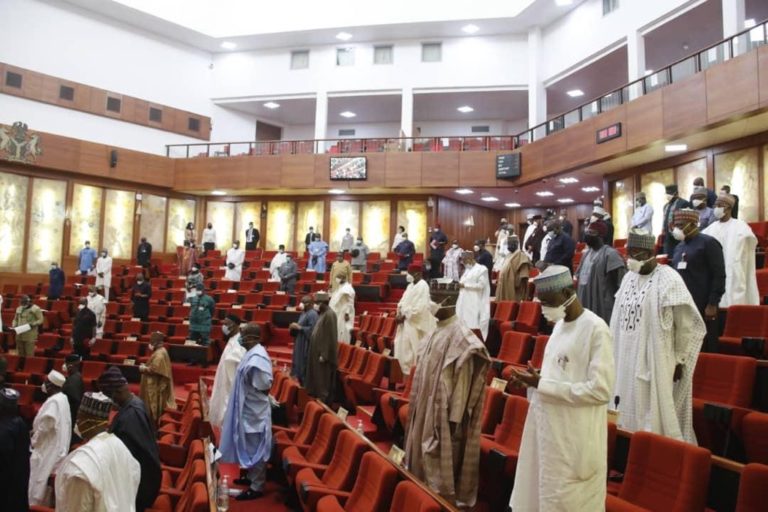
THE Senate has called for the de-centralisation of the Nigeria Police Force and the need for community policing as a way of addressing the country’s problem of insecurity. 

According to a Twitter message by the Nigerian Senate , this was part of the recommendations of the Senate Ad-hoc Committee on Nigeria Security Challenges which was considered and approved during plenary on Tuesday.

Ajibola Basiru, Chairman Senate Committee on Media and Public Affairs and senator representing Osun Central Senatorial district who signed the statement released on Twitter said the Senate urged urged the Executive to direct the Ministry of Police Affairs and the Inspector General of Police to “decentralize the police command structure with operational and budgetary powers” vested in the zonal commands.

The Senate also urged the Federal Government to set up Zonal Security Advisory Committees at each Zonal Command to advise on the security challenges facing each zone, he said.

The red chamber, accordingly, urged the Federal Government to direct the Ministry of Police affairs and the Inspector General of Police to immediately implement the Community Policing Strategy involving local stakeholders at the grassroots, and traditional rulers with a view to addressing local security challenges.

The Senate spokesperson added that the upper chamber while urging the state assemblies to make necessary laws to legalise community policing to be established at the Local Government level, called on State Governors to fund community policing from grants appropriated to each Local Government.

It would be recalled that the upper chamber had set up an Ad-hoc Committee on Nigeria Security Challenges on January 29, 2020, under the Chairmanship of Yahaya A. Abdullahi, the Senate Leader and  senator representing Kebbi North.

Basiru said the committee in its report made wide ranging recommendations which were also approved by the chamber.

The Senate he said also called for composition of the Zonal Advisory Council as proposed by the upper chamber which includes; Governors in the Zone; Zonal AIG of Police; State Commissioners of Police in the Zone; State Directors of the Department of State Security Service; Zonal Immigration Officers;

Zonal Customs Officers; and Representative of the Nigeria Security and Civil Defense Corps in the Zone.

Others are: Representative of the Nigeria Correctional Service in the Zone; Chairmen of State Traditional Rulers Council in the Zone; Faith-based Leaders in the Zone; Civil Society representatives in the Zone; representative of Senators from the Zone; Representative of Members of House of Representatives from the Zone; Representatives of Business Community and Labour in the Zone; and any person or persons deemed to be useful and relevant, taking into account the socio-cultural peculiarities of the zone.

Recommendations were also made for the expansion of the State Security Council and constitution of Area Command, Local Government and Ward Level Advisory Councils.


COVID-19: MDAs that flout the guidelines for the management of the funds would be sanctioned – OAGF

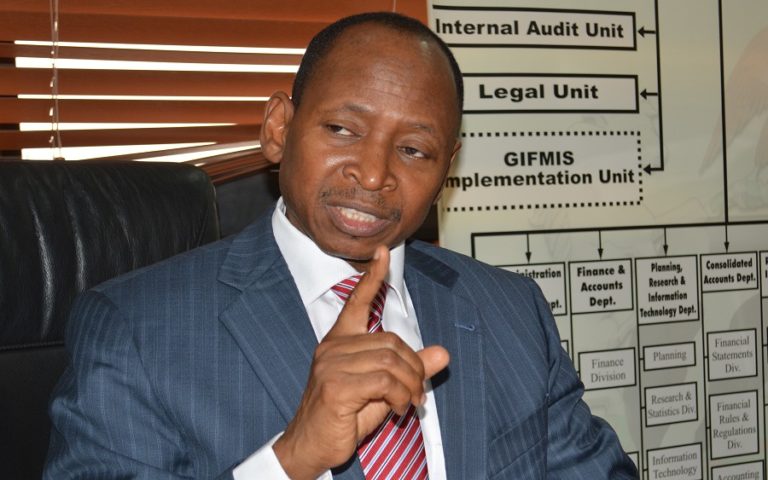
THE Office of the Accountant General of the Federation (OAGF) has announced that Ministries, Departments and Agencies (MDAs) that flout the guidelines for the management of COVID-19 funds will be sanctioned.

And top officials of such MDAs will be exposed and penalised accordingly, the OAGF warned.

The directive came up after setting up a framework where all COVID-19 funds are to be appropriated directly to participating MDAs and also spending units like the Ministry of Health, Ministry of Humanitarian Affairs, and others.

Also, the OAGF stated that the names of the MDA and its principal officers shall be made public as an additional measure of transparency.

“Participating MDAs are reminded that the COVID-19 fund is a public fund in the truest sense of it.

“The public is invested in ensuring that the funds are utilised in the most transparent and prudent manner.

“For this reason, any participating MDA that contravenes this guideline may be sanctioned from continued participation in the programme,” the OAGF warned.

The contributions to the Private Sector Coalition against COVID-19 stood at N25.8 billion as of 17th April 2020, according to OAGF.

The accountant general said President Muhammadu Buhari had endorsed the opening  of COVID-19 donor accounts as part of the current Treasury Single Account (TSA) arrangement.

The framework covers all public funds allocated and dedicated to the campaign against COVID-19, including the fiscal stimulus package.

Coronavirus: Corruption in health care could get in the way of Nigeria’s response

By Obinna OnwujekweCharles OrjiakorPrince Agwu 


Since President Muhammadu Buhari came to power in Nigeria in 2015, anti-corruption has been at the heart of his administration. However, a lot of effort is focused on grand corruption at the higher levels of governance and politics. There is less emphasis on the less-talked-about but vulnerable areas such as the health sector.

We have been involved as researchers in an extensive study of health sector corruption in Nigeria. The study interacted with front-line health workers and health policy makers and managers. The aim was to systematically identify the different types of corruption occurring in the Nigerian health sector, and rank them based on how damaging they can be to the health sector.

The drivers and potential solutions to these health sector corruption problems were also identified, as well as recommendations on how to mitigate corruption in the sector. In the end we hope to explore and bring to the fore feasible grassroots solutions to the problem of health sector corruption in Nigeria.

In the war against COVID-19, health system resilience, accountability and integrity are more important than ever. The health systems of some high-income-countries have become overwhelmed by the rising number of infected persons and deaths from the disease. Weaker, corruption-prone and less resilient health systems of many low and middle income countries are even more vulnerable. Some may even collapse.

Research has underscored the vulnerability of Nigeria’s health system. A consistently solid and accountable health system has eluded the country. The requisite health resources are also in short supply.

The reality is that citizens, health workers and international development partners worry that Nigeria’s health system is very weak and may be unable to adequately combat COVID-19.

Money management issues
Contributing to the weakness of the system is the federal and state governments’ very low budgetary allocation to the health sector.

Nigeria’s health sector appropriation in the 2020 budget is 4.5% of the total federal budget, about N427.3 billion. This is far below the 15% agreed in the 2001 Abuja Declaration, when African Union member countries pledged to improve spending on their health sector and urged donor countries to scale up support.

Following recent collapse in the international price of crude oil, the budget has now been revised downward.

Concerns about budget are valid. But of equal weight is the issue of the optimal management of presently allocated funds. This continues to be an underlying problem.

In a paper published last year health workers and decision makers set out to explain the reasons that corruption persists in the healthcare sector.

They identified the top 49 corrupt practices in the Nigerian health system. These included absenteeism, procurement-related corruption, under-the-counter payments, health financing-related corruption, and employment-related corruption.

Discussions with health workers in an ongoing study on COVID-19 spanning different regions in Nigeria echo these findings. Health workers have indicated that there are structural and facility-level corruption and accountability issues that they have to work with routinely. These compromise their efforts to do their jobs as healthcare providers, including containing COVID-19 and its impacts.

We also found that there were high levels of distrust in the government, poor welfare conditions for health workers and health service users, and a lack of proper equipment.

What needs to be done
Patricia Garcia, a leading figure on global health issues, believes that for most developing countries, “with more money comes more corruption”.

Nigeria is certainly a case in point.

So what can be done about it?

The previous journal publication on Nigeria noted that front-line workers and policymakers agreed that tackling corrupt practices requires a range of approaches.

Garcia herself advocates an incremental approach to tackling the problem.

We could start from the bottom up, taking small steps. We need rigorous research methods to prove or disprove that a strategy works. Addressing and ending corruption will require the participation of researchers from several disciplines and multiple approaches, and the commitment of funders to supporting serious research. Corruption in global health should not continue as an open secret, it has to be confronted and brought to light.

The rapid spread of COVID-19 in Nigeria calls for sincerity on the parts of the authorities, the health workers and citizens. It also demands vigilance from civil society organisations and the mass media to foster accountability.

During the Ebola outbreak, Transparency International reported how systemic corruption in West Africa’s health sector undermined the response. Unfortunately, the lessons seem to have parted with the epidemic. We hope that lessons from dealing with COVID-19 will strengthen the health system in Nigeria and put in place stiff anti-corruption measures.

We will undertake further studies on health system corruption and accountability through a new project that is funded by the UK’s Joint Health System Research Initiative, entitled “Understanding and eliminating health sector corruption impeding UHC at district level in Nigeria and Malawi: institutions, individuals and incentives”.​

This report is published with permission from The Conversation.

INTERVIEW: I’ve no regrets paying tribute to Abba Kyari, says Simon Kolawole

TheCable, Nigeria’s independent online newspaper, marked its sixth anniversary on April 29, 2020. In this interview with eelive.ng, Simon Kolawole, Founder and CEO of Cable Newspaper Ltd, speaks on the journey so far, the challenges facing the media in Nigeria and his relationship with Abba Kyari, the late chief of staff to President Muhammadu Buhari.


eelive.ng: You recently wrote a tribute to Mallam Abba Kyari, the late Chief of Staff to President Buhari, and you came under attack, with some questioning your personal reputation and professional integrity. Were you surprised by the reactions?

Kolawole: All my adult life, I have never sought anybody’s validation of my integrity or reputation. In my experience, those who are quick to attack other people’s integrity are usually the ones who don’t have any integrity. They think everybody else is like them. I always write from the integrity of my heart. Whatever anybody thinks thereafter is their own opinion. It is called freedom of speech. Before I wrote the Kyari tribute, I knew what I was up against. I knew they would unleash the attack dogs on me, the same dogs they sent after Abba Kyari since 2017. Unfortunately, these people don’t know the person they are dealing with. I am the worst human being you can orchestrate attacks against. Why? I don’t care. I can’t be intimidated.

Once I am convinced that I wrote from the integrity of my heart and my conscience is clear to God, the rest is irrelevant. I would be miserable if I fail to write because I am afraid some people would come after me. That would be a disaster. I know people who shied away from eulogising Kyari because of the way the attack dogs came after me, Waziri Adio and Olusegun Adeniyi after our tributes. They are afraid of social media-based professors and twitter warriors. I am man enough to stand up with my chest out. I would hate myself the day I chicken out of my convictions because of fear of attacks. That is not the man my grandmother brought me up to be.

I have been writing my THISDAY column since June 2003. If I can be intimidated or blackmailed, I would have run away years ago. You can imagine the number of attacks I get every week over my viewpoints, especially on restructuring and ethno-religious harmony. In any case, I knew the Kyari tribute would hit them hard. They hated Kyari and they wanted everybody else to join them in hating him. I have a very independent mind. I don’t go with the flow. I search things out by myself. I don’t engage in mass lynching. I’m never afraid to be different. Anybody who knows me very well will tell you that about me.

Ironically, I did not read any of those attacks against me. It was people that were calling me and forwarding them to me. Some went to the extent of summarising them so that I could have an idea of the bitterness. I always had a good laugh. They are still attacking Kyari in his grave as if they too won’t die one day. All souls must taste death. Many of those denigrating him will not attain half the height Kyari reached in his lifetime. Most of the people who demonised Kyari did not know him. They believed all the attacks that were orchestrated against him. This is one of the things I wrote in my tribute that made the sponsors of the attacks go wild. The attack machinery has now been sent after my humble self. They have proved me right. They were depressed when the Economist, Financial Times, Africa Confidential, the US government and the UK government eulogised Kyari. These are not frivolous or emotional institutions. They knew the real Abba Kyari.

A simple textual and discourse analysis of these attacks against me will reveal widespread similarities. This shows not only that the attack dogs are singing from the same hymn book but also that there is someone clearly coordinating and orchestrating things. They are not even smart enough to hide their hands. I know those unleashing the dogs and they know that I know them. Their goal is to sustain the narrative in which they invested so much resources and energy to create against a man who is now dead. Not even his death, which they celebrated, can assuage them. To them, anyone who challenges their preferred narrative is an enemy, deserving of the same orchestration they deployed against Kyari. I wrote just one article and they have replied with about 46 rejoinders as at the last count. It’s an industry!

eelive.ng: Popular opinion remains that Abba Kyari was a bad influence on Buhari and was responsible for everything that was wrong with his government. Your article appears to suggest otherwise. Did you know him that well?

Kolawole: I knew Kyari as far back as 2010. He even invited me to be the spokesman of Buhari’s presidential campaign in 2011 but I explained to him that I was not interested in politics. The position was later given to Chief Yinka Odumakin. After the election, which Buhari lost, Kyari joined the editorial board of THISDAY. I was the editor of THISDAY then. We had a warm relationship. He used to send me books. He became Chief of Staff to Buhari in 2015, five years after our paths crossed. Our relationship continued. It was a professional and intellectual relationship. It was not financial or transactional. I could tell him my mind without any fear of falling out of favour. I can’t claim to know him that much, but we were close enough for him to take me as a confidant and friend.

One thing I know is that too much power was attributed to him. It was an urban legend. He was portrayed as a monster and a media narrative was built around that image, and it was nurtured consistently and persistently. Everything was blamed on him. When somebody is being blamed for everything that is bad, commonsense tells you to begin to suspect that there is an agenda. And I can understand why. Every leader has a gatekeeper. If you are the gatekeeper and you are doing your job well, there is no way some people will not demonise you. If everybody is praising the gatekeeper, something is not going well. An effective gatekeeper must be hated in some quarters.

Sadly, Kyari, for reasons best known to him, refused to officially address the orchestrated accusations or even sue his accusers. Not one shred of evidence was produced against him. All his accusers did was to just make allegations, and you know Nigerians would believe anything negative you say about somebody in government, especially if you pin it on corruption. That is our collective psyche, until you have become a victim yourself. He told me the full story in our private conversations and I found them believable. I also crosschecked with other sources. Yet, he insisted everything he told me was for my ears only, not for me to defend him or publish. Despite the fact that we could have written a lot of exclusives from his explanations, we chose to respect his decision to keep quiet. I must confess it was painful not reporting those stories, but off-the-record briefing and confidentiality are canons of journalism ethics.

What hurt his traducers about my tribute is the fact that I said now that Kyari is dead, let us see if they would take over the presidency as they had been day-dreaming. That statement touched a raw nerve and I knew it. A senior journalist called me and said, ‘Simon, I like your tribute but be prepared for attacks.’

eelive.ng: But some critics believe your tribute was not balanced, that you should have written about Kyari’s failings and shortcomings too. Do you accept that?

Kolawole: You know we have a lot of journalists today who don’t understand journalism. A tribute is not an obituary or a story. A tribute is a eulogy. It is a personal commentary. It is not neutral. A tribute is written to celebrate somebody. An obituary is a feature, which is supposedly neutral or dispassionate or balanced. What I wrote was a tribute, published in a personal opinion column. I have written glowing tributes to several Nigerians who died — Prof Dora Akunyili, Chief Sunday Awoniyi, Dr Alex Ekwueme, Mr Oronto Douglas, Mr Stephen Keshi and Dim Chukwuemeka Ojukwu. Nobody tried to teach me how to write tributes then. But because they hate Kyari, they want to redefine the meaning of tribute and force it down my throat. I am laughing in Yagba.

I am not saying people should not disagree with me. Nobody is above criticism. People should feel free to disagree. I also disagree with people. In fact, we can get a very healthy debate out of this. People should just not stray from decency and decorum and begin to defame me. That one has legal consequences. If they don’t like my tribute, they should write their own. It is a free world. But they should please not legislate for me on how a tribute should be written. That I will not accept. As they say on social media, is it your tribute?

eelive.ng: One critic said you breached journalism ethics by being too close to a news subject and failing to write what you know about the alleged MTN bribery scandal. What would you say to that?

Kolawole: It is part of what I am saying: people who don’t know journalism trying to teach journalism. I have practised journalism for 27 years. I have never been jobless for one day. I didn’t come to journalism by accident or out of joblessness or as a last resort. I set out to be a journalist. I collected JAMB form and filled “mass communication” in all three choices. I scaled the highly competitive process to be able to study mass comm. Only four direct entry students were given admission in my set. I was taught not just the best in the craft of journalism but also its laws and ethics. I studied at the University of Lagos. I took a whole course on ethics. I was not just taught ethics; I have taken the pains with keeping myself educated about the different schools of thought and their positions on journalism ethics. So, it is laughable when people who know little about ethics begin to pontificate recklessly.

Let me start from the basics. I have known Waziri Adio, the Executive Secretary of the Nigeria Extractive Industries Transparency Initiative (NEITI), since 1989. That is going to 31 years. He is like a blood brother to me. Because he was appointed the ES of NEITI, I should stop picking his calls? If he buys me a book, I should reject it? I have known Lanre Issa-Onilu, the National Publicity Secretary of APC, since 1987. That is 33 years. We met at the Kwara State Polytechnic where we wrote our A’Levels together. Am I supposed to delete his number the moment he entered government? I have known President Muhammadu Buhari personally since February 2001. That is 19 years. We used to meet or talk on the phone regularly. If he calls me today, I should not pick? If he invites me for dinner, I should say no? This is absolutely ridiculous.

It is very ridiculous to think someone can bribe me simply because we exchange books. The journalism code of ethics does not say I should unfriend my friends. It says I can have a arms-length relationship with them as potential news sources and know where to draw the line and how to crosscheck whatever they tell me from other sources. I always did this.

Those saying I breached journalism ethics by not reporting what Kyari told me in confidence about the MTN settlement also fall into this category. They don’t know there is something called off-the-record briefing and they claim to be teachers of ethical journalism. Confidentiality is a global practice. If the subject says, ‘I am briefing you for your information only’, you have to respect the confidentiality. If you can’t keep it off-the-record, tell the source straightaway so that he does not go any further. There is nothing in the Code of Ethics that says you should betray trust. In fact, our Code of Ethics at TheCable is very clear: if you breach an off-the-record agreement, the punishment is instant dismissal. The Code of Ethics of the Nigeria Union of Journalists is very clear too: off-the-record is off-the-record. All over the world, journalists will protect their sources even with their lives!

Still on the MTN matter, if Kyari had told me he collected a bribe and I covered it up, that would have been a different matter. You could be talking about national interest there. But he said he didn’t collect any bribe. He said he was not even on the committee that resolved the issue. He said he didn’t know if they collected a bribe or not. So what ethical code did I breach? Maybe I should have invented a story that he took a bribe and denied to me? Or I should go and look for the names of the committee members and write recklessly and sadistically that they collected a bribe, even without producing any evidence to support my claim? I am not that kind of journalist. I am ready to defend whatever I report if it becomes a court case. I am not a reckless reporter.

I think the problem with many of these chaps is that they are confusing journalism with activism. I am a journalist, a professional journalist. I am not an activist. I am not just a journalist, I am a development journalist. I went to school to study journalism and I also hold a graduate degree in governance and development. I have taken leadership courses at the Harvard Kennedy School and the Yale University. I was a Mo Ibrahim Fellow in Governance for Development at the University of London. I didn’t go to this length in order to start running people down without evidence. I am not an adversarial journalist. I seek to build, not to destroy. I take no joy in pulling people down.

I am very much interested in constructively engaging with political authorities to help birth good governance and good public policies. If you notice, when people are saying there is ‘casting down’, I am saying there is ‘lifting up’. When they say Nigeria should break up, I say there are other options to consider. When they say Nigeria is finished, I say let’s try good leadership before we give up. A lot of people are irritated by these views and that is their right. It is the path I have chosen in life. If you want to be an activist journalist, as some people love to call themselves, good luck to you but please don’t legislate for me. Continue along your path and let me continue on my own path.

What type of ethical journalism convicts someone based on one-sided allegation from leaked but incomplete documents or so-called trusted sources that are not agenda-neutral, sources that are not ready to go on record? What kind of journalism takes allegations not proven beyond reasonable doubt as gospel truth? Not the journalism I was taught. For those of them that really studied journalism in proper schools and not serving as political or ethnic propaganda outlets, I would like to have a proper debate with them on the principles, the mechanics, the theories, the laws and the ethics of journalism. I am game. I have no business with agenda-pushers, bigots and some of these emergency journalists. One funny character was lecturing me about journalism without even respecting the elementary boundaries of defamation. Funny characters!

Some journalists have allowed themselves to be brainwashed by some so-called activists, so much so they have come to think that anybody in government is their enemy and they should never talk to them or relate with them. It is that bad. A good journalist should have sources everywhere, not just in NGOs. Even these so-called activists are not agenda-neutral. Some of them are hiding behind NGO work and human rights to push personal agenda which they pass off as national interest.

Unfortunately for some journalists, activists will be the highest level of contacts they will ever have in their entire careers. So, they are confounded when they realise that a journalist of my standing has access to a chief of staff. They cannot believe it. They are overwhelmed. They begin to write poor-quality opinions which they pass off as stories or analyses on ethics. What they don’t know is that I have access to almost every former president or head of state of this country. We talk on the phone. We meet and exchange ideas if there is an opportunity. How can I be a journalist all my life and all I can boast of is that I can only call civil society activists? I should know more people and have sources in every walk of life. In advanced countries, senior journalists have direct access to the highest authorities, and they get confidential briefing which they will never disclose. Some go to their graves with those secrets. I don’t owe anybody any apologies for my professionalism. I did not set out in my career to please everybody. I cannot please everybody. I am not jollof rice!

eelive.ng: A critic said you were hoping to get government appointment and that must have informed the glowing tribute you wrote on Kyari…

Kolawole: I have been turning down appointments since January 2000. Some of the positions I have turned down in my life are positions people will kill for. Political appointments mean nothing to me. I am very content. I am content with the impact I am making in my chosen fields. And by the way, is it that difficult to get a political appointment in Nigeria? You need to write a tribute to Kyari in order to get an appointment? Now, look at the contradiction: their paymasters said Kyari was more powerful than Buhari, that Kyari made all the appointments. Why then would it be hard for Kyari to give me an appointment? Why would I wait to be begging for appointment after his death? These guys are trying to send Bovi out of business. Sadly, they are low-grade comedians. Bovi is world-class.

eelive: Would you say you regret writing the tribute?

Kolawole: You may not believe this but most of the feedback I got was positive. I mean overwhelmingly positive. At least 80 percent of those who called me or sent me chats and SMS said ‘Thank you, Simon, I never knew this part of Kyari’ among other comments. Even if they had condemned it, I would still not be moved. I wrote from the point of conviction. I didn’t write so that people can clap for me. I have no regrets paying tribute to Kyari. I am not saying he was perfect or didn’t have any blemish. In any case, there is no human being born of a woman who is perfect. Of course, there were unproven allegations against him in the media. None went to the court of law. Accusations are very easy to make, especially without concrete evidence. I have been a journalist long enough to know how stories are planted to pursue an agenda. Nonetheless, I would do that tribute again and again. It is one of the best tributes I have ever written. I have been wondering: if my simple tribute to Kyari pained these people so much that they are bitter and depressed, what would they do if I wrote a whole book on him? As Fela sang, “If you like, e good/If you no like, you hang/If you hang you go die/You go die for nothing.”

eelive.ng: Let us talk about TheCable online newspaper. It is six years old. How has the experience been?

Kolawole: I tell my team members all the time that in all my years in journalism, I have never learnt as much as I have done since we launched TheCable in 2014. I started practising journalism in 1993. I had worked in probably nine media houses before starting TheCable. My last job was as editor of THISDAY, a job I did for five years. That should be one of the toughest jobs in the world because of the standards expected of you. But we started TheCable online newspaper and I discovered a new world. News breaks by the minute and you have to be on top of it. There are probably 10,000 websites you are competing with, although most of them are not professional. But you have to be on top of your game. That was a major challenge.

We also faced the challenge of finance at the beginning. We discovered that advertisers behaved differently online — they were more interested in quantity of traffic rather than the quality. This drives many websites into click-baiting sensationalism, fake news and porn. Advertisers were offering peanuts. If you didn’t accept, there were a thousand others that would gladly do. We set out to offer quality journalism. We had a full complement of staff. It was not a one-man show. We had offices in Lagos and Abuja. We were not aggregators. We generated original contents and did real investigative stories. So, our cost structure was different. We were fortunate that some advertisers realised what we were up to from day one and bought into the vision immediately. We were never in danger financially, but our initial projections were not on target.

eelive.ng: You must have had low moments. Can you share with us?

Kolawole: The lowest moment was when we reported that Professor Wole Soyinka made some racist comments against the Igbo. It was completely false. This was in 2015. When my attention was drawn to the story and I read it, I knew Soyinka would never say such a thing. It was completely out of character. When the editor explained what happened to me, I knew we had fallen into a trap. It was a teachable moment for us. We retracted and apologised. It was the honourable and professional thing to do. You don’t see much of that in this space these days. You see these platforms and their writers digging in or moving on after unjustly tarnishing others.

I wrote a personal letter of apology to Soyinka and he graciously replied, even cracking a joke in the process. The Soyinka incident was a turning point for the team. My guys now realised TheCable was taken seriously more than they assumed. Many other websites and newspapers reported the same story but only TheCable was picked out. It was a terrible experience but it turned out to be a defining moment: we started fact-checking our stories more rigorously. We have made more mistakes, of course, but they are genuine mistakes, not motivated by hatred or malice or out of pushing somebody’s agenda. Journalists make mistakes, even with the most rigorous systems, because they are human. In fact, some publications have a section named ‘Our Errors’. The right thing to do is put systems in place to minimise errors and swiftly and clearly correct them when they happen. That is the professional approach. We keep striving for perfection. That is our target.

eelive.ng: There have been happy moments too, isn’t it?

Kolawole: We’ve had numerous. We’ve broken big stories, had big exclusives and won awards. There are people that wait for a story to appear in TheCable before they believe it. I find that most gratifying. In the last one year or so, we have broken massive stories. I remember we broke the story that former Vice-President Atiku Abubakar had been issued with the US visa and we also reported that he had arrived in the US. Many people doubted us initially and tried to cast aspersion on the stories. We reported that there was a plot to remove Justice Walter Onnoghen as the chief justice of Nigeria. We were spot on. When he resigned, we also broke the story.

The planned deposition of Alhaji Muhammadu Sanusi II as Emir of Kano was first reported by TheCable. Months later, Governor Abdullahi Ganduje set the machinery in motion. We have also won a number of local and international awards. We are trusted and quoted by local and foreign media. Much older and better resourced traditional newspapers have reused stories broken by TheCable, with credit. These are big positives for us. Fisayo Soyombo, the pioneer of TheCable, has been nominated for the International Journalist of the Year award following his undercover work in Ikoyi prisons. The two other nominees are from the BBC and Sky News. For TheCable to be on the same list with BBC and Sky is a great compliment. We are exceedingly grateful to God.

eelive.ng: Back to the issue of finance, there is this belief that you have survived so far because you receive foreign door funding. Is that true?

Kolawole: Foreign donors do not fund businesses. They fund non-for-profit bodies. Cable Newspaper Ltd (CNL) is a business concern so it is impossible to receive foreign donation. But there is the Cable Newspaper Journalism Foundation (CNJF) which is not-for-profit. CNL and CNJF are different legal entities. The foundation has received grants from donors such as the MacArthur Foundation and the UK Department for International Development. CNJF is into journalism training/mentorship as well as funding investigative journalism. CNL benefits from these two aspects of CNJF programmes. But CNL and CNJF are completely different, legally and operationally. TheCable is sustained largely by adverts from companies that value the quality of our stories and the quality of the readership.

eelive.ng: Do you believe the printed newspaper still has a future?

Kolawole: I was brought up as a newspaper man and that is an emotional thing for me. I want the printed newspaper to survive. I believe it will survive, no matter how tough. I can’t imagine a world without the printed newspaper! The current economics are not good but something tells me no matter how harsh the situation is, the industry will not die. The news of the death of newspapers is always exaggerated, right from the time radio came on board through the various deployment of cutting-edge technology for journalistic purposes. This may be the biggest existential challenge to newspapers yet, but the industry will adapt, and business will continue.

This report is published with permission from eelive.ng.

COVID-19 cure: AU in discussions with Madagascar over herbal remedy vaccine

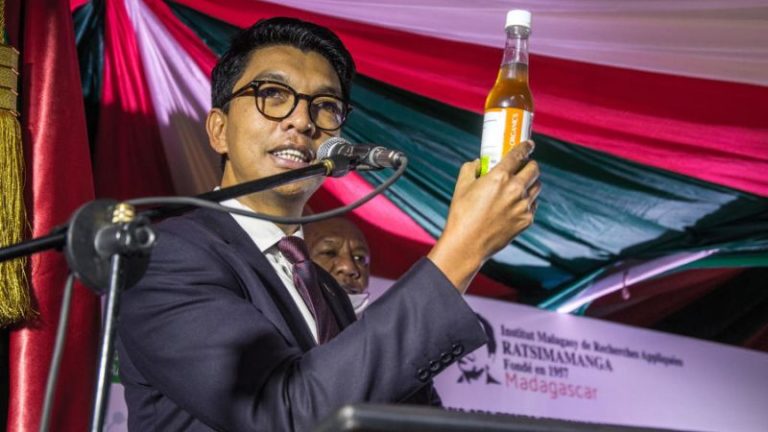
THE African Union has announced that it is in talks with Madagascar to obtain technical data regarding the safety and efficiency of a herbal remedy, recently announced by the country for the reported prevention and treatment of Coronavirus (COVID-19) disease.

The mixture called the Tambavy Covid-Organics and made from artemisia annua – a plant with proven efficacy in treating malaria – as well as other indigenous herbs is being touted as cure and prevention of the deadly virus which has killed over 256,000 persons globally.

Andry Rajoelina, President of Madagascar, has announced the launch  of the vaccine produced by the country’s Institute of Applied Research in partnership with a Congolese Doctor, Dr. Jerome Munyagi.

“All trials and tests have been conducted and its effectiveness in reducing and elimination of symptoms has been proven in the treatment of Covid-19 patients in Madagascar,” President Andry Rajoelina of Madagascar said of the drink on April 20.

However, the World Health Organisation (WHO) has advised against the use of medicinal plants such as Artemisia annua to cure COVID-19.

In a press statement released on Monday, the organisation said while it supports scientifically proven traditional medicine, there’s need to test for the safety and efficacy of the new drug being advertised as a cure for the deadly virus.

Meanwhile, both Equatorial Guinea and Guinea-Bissau have taken delivery of thousands of doses of the drink while Tanzania, Senegal and Congo Brazzaville have said they would take the same step, and it is reported that Nigeria may follow suit.

Currently, Africa has a  record of over 49,000 cases and over 1,800 deaths.

New Infectious Disease Bill will make vaccination compulsory for Nigerians

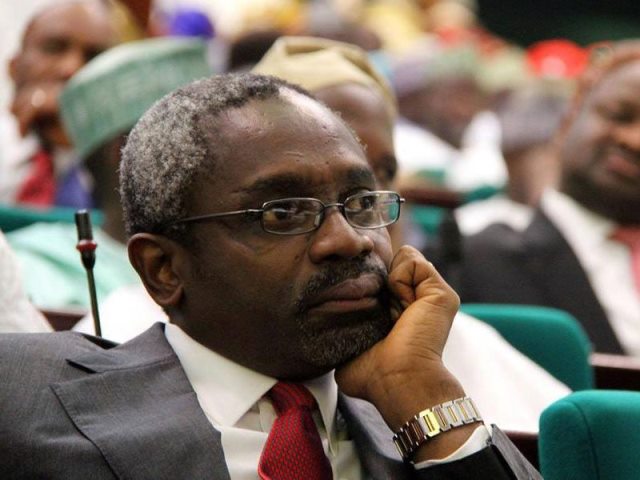
THE proposed Control of Infectious Disease Bill sponsored by Speaker of the House, Femi Gbajabiamila and submitted in the lower chamber on April 28, is set to make vaccinations compulsory for all Nigerians, checks by The ICIR has revealed.

The draft bill which is a duplicate of Singapore’s Infectious Disease Act of 1977, contains measures that have been described as draconian in nature and aimed at stifling the rights of Nigerian citizens as contained in the 1999 Constitution.

Certain provisions in the bill has indeed generated  controversy on social media.

Many have condemned sections including the aspect which empowers security officials to arrest and detain citizens without warrant or higher level authority on mere suspicion of having an infectious disease.

A bothersome article in the proposed bill which is now sparkling  outrage is section 47 (1) of the bill.

Titled Power to order certain persons to undergo vaccination or other prophylaxis, the section of the bill, empowers the Director-General of the Nigeria Centre for Disease Control (NCDC) to, in the case of a suspected or an infectious disease outbreak in the country, order compulsory vaccination for any person(s) in any area of the country.

The section reads: “In an outbreak or a suspected outbreak of any infectious disease in any area in Nigeria, the Director-General (DG) may by order direct any person or class of persons not protected or vaccinated against the disease to undergo vaccination or other prophylaxis within such period as may be specified in the order.”

If passed into law, this provision would empower the DG to make any form of vaccination (if believed to treat any infectious disease) compulsory for all Nigerians, in any area of the country, at any given time.

The section also makes it compulsory for every child in the country to be vaccinated against infectious diseases and their parents must ensure adherence.

It also requires a notice for vaccination to be issued for newborns right after their birth.

For all it’s worth, Nigerians and Civil Society Organisations (CSOs) have protested against the proposed bill which they believe is designed to give excessive power to unelected public officials, and trample on the rights of citizens.

Debate on vaccination 

While many support givng vaccine as prevention from infection, they disagree with compulsory administration of vaccine  on every Nigerian as the new bill seeks to achieve.

On a global scale, while vaccines are responsible for many global public health successes, such as the eradication of smallpox and significant reductions in other serious infections like polio and measles, there were cases of vaccine failures which led to complications.

For example, high school students in Maury County, Tennessee in the United States experienced an outbreak of mumps in  1991 in which over a thousand students were infected, yet all but one of them had been vaccinated against mumps, according to a 1994 report.

Notwithstanding, Tedros Adhanom, Director general of the World Health Organization (WHO),  has said that every year, more than 116 million children are protected from deadly diseases in routine vaccination programmes.

Meanwhile, Gbajabiamila on Tuesday, announced that the proposed Infectious Disease Bill will now be subject to public hearing.

In a statement of address, the Speaker debunked the perceived purpose of the Bill, submitting that House of Representatives will never bring harm to Nigerians and would only work to serve interests of the citizens.

In his remarks to the House during a plenary on Tuesday, the Speaker announced that the Control of Infectious Diseases Bill will be put forward to a public hearing where stakeholder contributions will be sought to make improvements to the Bill before it is reviewed and debated by the Committee.