THE African Union has announced that it is in talks with Madagascar to obtain technical data regarding the safety and efficiency of a herbal remedy, recently announced by the country for the reported prevention and treatment of Coronavirus (COVID-19) disease.
The mixture called the Tambavy Covid-Organics and made from artemisia annua – a plant with proven efficacy in treating malaria – as well as other indigenous herbs is being touted as cure and prevention of the deadly virus which has killed over 256,000 persons globally.
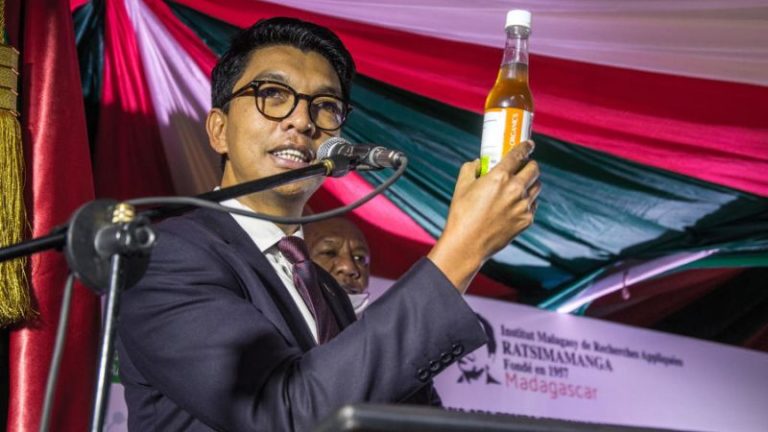
Andry Rajoelina, President of Madagascar, has announced the launch of the vaccine produced by the country’s Institute of Applied Research in partnership with a Congolese Doctor, Dr. Jerome Munyagi.
“All trials and tests have been conducted and its effectiveness in reducing and elimination of symptoms has been proven in the treatment of Covid-19 patients in Madagascar,” President Andry Rajoelina of Madagascar said of the drink on April 20.
However, the World Health Organisation (WHO) has advised against the use of medicinal plants such as Artemisia annua to cure COVID-19.
In a press statement released on Monday, the organisation said while it supports scientifically proven traditional medicine, there’s need to test for the safety and efficacy of the new drug being advertised as a cure for the deadly virus.
Meanwhile, both Equatorial Guinea and Guinea-Bissau have taken delivery of thousands of doses of the drink while Tanzania, Senegal and Congo Brazzaville have said they would take the same step, and it is reported that Nigeria may follow suit.
Currently, Africa has a record of over 49,000 cases and over 1,800 deaths.
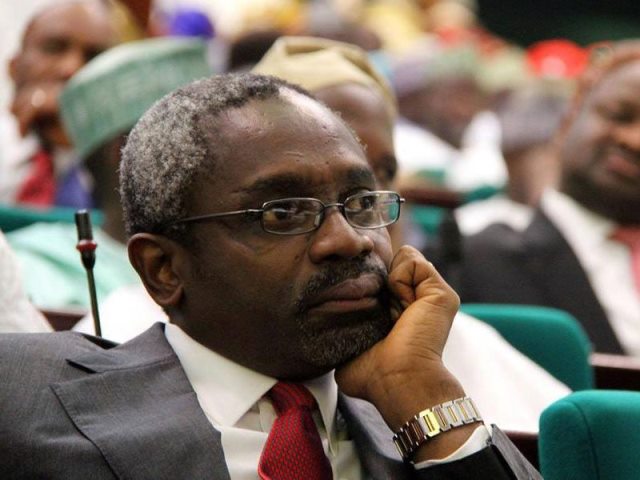
THE proposed Control of Infectious Disease Bill sponsored by Speaker of the House, Femi Gbajabiamila and submitted in the lower chamber on April 28, is set to make vaccinations compulsory for all Nigerians, checks by The ICIR has revealed.
The draft bill which is a duplicate of Singapore’s Infectious Disease Act of 1977, contains measures that have been described as draconian in nature and aimed at stifling the rights of Nigerian citizens as contained in the 1999 Constitution.
Certain provisions in the bill has indeed generated controversy on social media.
Many have condemned sections including the aspect which empowers security officials to arrest and detain citizens without warrant or higher level authority on mere suspicion of having an infectious disease.
A bothersome article in the proposed bill which is now sparkling outrage is section 47 (1) of the bill.
Titled Power to order certain persons to undergo vaccination or other prophylaxis, the section of the bill, empowers the Director-General of the Nigeria Centre for Disease Control (NCDC) to, in the case of a suspected or an infectious disease outbreak in the country, order compulsory vaccination for any person(s) in any area of the country.
The section reads: “In an outbreak or a suspected outbreak of any infectious disease in any area in Nigeria, the Director-General (DG) may by order direct any person or class of persons not protected or vaccinated against the disease to undergo vaccination or other prophylaxis within such period as may be specified in the order.”
If passed into law, this provision would empower the DG to make any form of vaccination (if believed to treat any infectious disease) compulsory for all Nigerians, in any area of the country, at any given time.
The section also makes it compulsory for every child in the country to be vaccinated against infectious diseases and their parents must ensure adherence.
It also requires a notice for vaccination to be issued for newborns right after their birth.
For all it’s worth, Nigerians and Civil Society Organisations (CSOs) have protested against the proposed bill which they believe is designed to give excessive power to unelected public officials, and trample on the rights of citizens.
Debate on vaccination
While many support givng vaccine as prevention from infection, they disagree with compulsory administration of vaccine on every Nigerian as the new bill seeks to achieve.
On a global scale, while vaccines are responsible for many global public health successes, such as the eradication of smallpox and significant reductions in other serious infections like polio and measles, there were cases of vaccine failures which led to complications.
For example, high school students in Maury County, Tennessee in the United States experienced an outbreak of mumps in 1991 in which over a thousand students were infected, yet all but one of them had been vaccinated against mumps, according to a 1994 report.
Notwithstanding, Tedros Adhanom, Director general of the World Health Organization (WHO), has said that every year, more than 116 million children are protected from deadly diseases in routine vaccination programmes.
Meanwhile, Gbajabiamila on Tuesday, announced that the proposed Infectious Disease Bill will now be subject to public hearing.
In a statement of address, the Speaker debunked the perceived purpose of the Bill, submitting that House of Representatives will never bring harm to Nigerians and would only work to serve interests of the citizens.
In his remarks to the House during a plenary on Tuesday, the Speaker announced that the Control of Infectious Diseases Bill will be put forward to a public hearing where stakeholder contributions will be sought to make improvements to the Bill before it is reviewed and debated by the Committee.
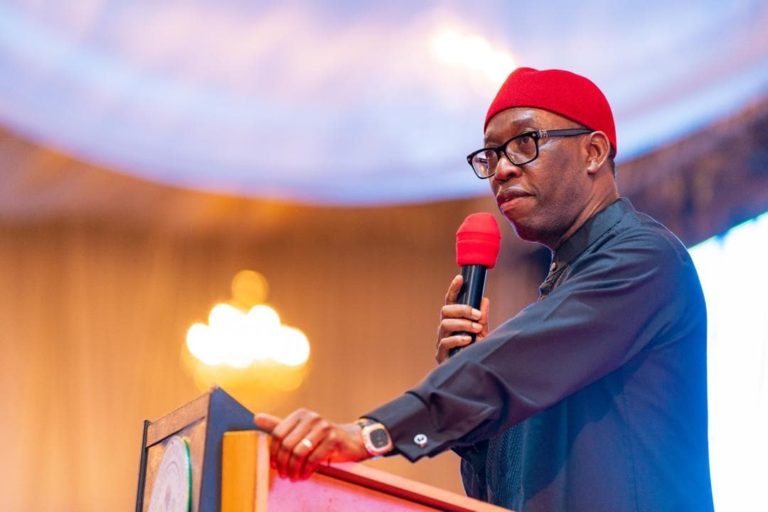
A HUMAN rights activist, Ighorhiohwunu Aghogho, has asked the Delta State governor, Ifeanyi Okowa, not to confirm Emmanuel Zimi Dolor’s nomination as judge in the state judiciary, alleging that the nominee supervised the sales of several innocent children.
The new judge’s appointment followed recommendations by the National Judicial Council (NJC) after its 91st meeting held online to the Delta State governor and the state House of Assembly, seeking approval and appointment of Dolor and four others as judges.
The NJC meeting was chaired by Justice Tanko Mohammed, Chief Justice of Nigeria (CJN).
In a petition signed by Aghogho and obtained by The ICIR on Monday, the activist stated that the action of NJC was unprofessional and a gross violation of the Section 153 of the 1999 Constitution (as amended) that set it up because “Emmanuel Zimi Dolor Esq was among the judicial officers/workers supposedly to be under investigation by NJC in a petition dated 31/12/18 and 7/10/19 respectively.”
But the National Judicial Council (NJC), which recommended Dolor for confirmation as a judge, said it cleared him of all the allegations against him before forwarding his name for the position.
In a letter dated September 23, 2019, signed by Ahmed Gambo Saleh, Secretary of the Council on behalf of the Chief Justice of Nigeria (CJN) addressed to Aghogho in response to his petitions dated December 31, 2018, and January 7, 2019, to the CNJ, the Council said the allegations were investigated and were found to be frivolous and baseless.
Corroborating this, a top official of the NJC who did not want to be named told our reporter that the Council’s Interview Committee looked into all the allegations and found no merit in them.
He argued that the petitions were considered before the appointment was made, saying ” they were dismissed otherwise they wouldn’t have considered him.”
“They have written against him before and the matter has been looked into and it was found to be frivolous, that there was nothing like that,” the NJC official added.
In his fresh petition to Governor Okowa against the confirmation of the judge nominee, Aghogho alleged that using his position as Chief Registrar High Court of Justice Asaba, Dolor had been involved in the massive disappearance of thousands of innocent children from the state.
According to him, on April 18, 2019, while the nominee was Chief Registrar of the High Court in Asaba, he “unethically” issued letters exonerating the state Chief Judge, Justice Umukoro, and dismissed a petition before the NJC and the Chief Justice of Nigeria bothering on alleged child trafficking and illegal adoption of children by the Delta State judiciary.
Aghogho in the petition further alleged that Dolor also issued a letter dated April 20, 2018, constituting additional family courts in Delta State during the pendency of NJC investigation into the child trafficking allegation.
He said the trafficking of the children was done through the Family Court of the Warri Magisterial District constituted during the pendency of the NJC investigation, which he observed is still ongoing.
The children, Aghogho alleged, were sold through the court via unlawful applications filed by one Valentine Uzama , a staff of the Delta State Ministry of Women Affairs through a ghost “Probation Office” not known to law. He stated that the alleged ghost office “was ably represented in the said court proceedings with suit number MW/3/FC/18, MW/4/FC/18, MW/5/FC/18 respectively”.
“That it is upon these grounds, we are hereby put Governor Ifeanyi Okowa and the entire Delta State House of Assembly on notice not to fall into the antics of NJC in approving the recommendation of Emmanuel Zimi Dolor Esq aka E.Z.Idolor Esq as a Judge of the Delta State Judiciary,” the petitioner said.
“We will resist all forms of coercion in whatever guise in paving ways for child thieves in controlling the Delta State Judiciary in order to felicitate and encourage child trafficking in the state.”
When contacted for his reaction, Emmanuel Zimi was not available for comments as of the time of filing this report.
Calls put through to his mobile phone were not answered, just as both SMS and messages sent to him on WhatsApp were not replied, though he was shown to be online for a long time.
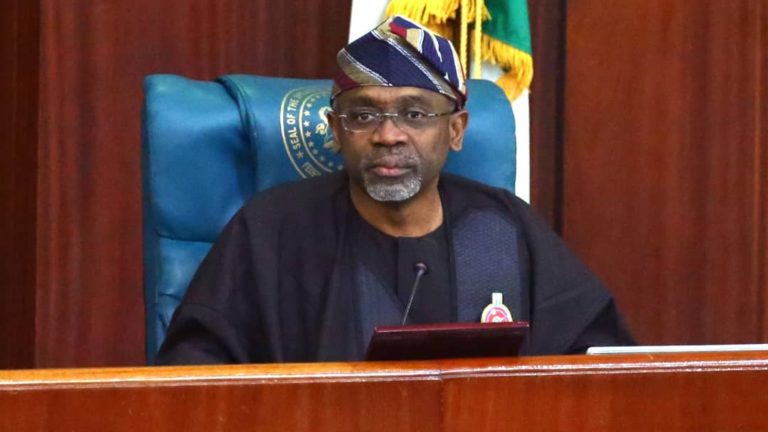
SPEAKER of the House of Representatives, Femi Gbajabiamila, Tuesday denied reports that the proposed Control of Infectious Disease Bill will infringe on people’s rights.
He said the bill meant to strengthen the Nigeria Centre for Disease Control (NCDC) was conceived in the public interest and would be subjected to public hearing before its final passage, contrary to popular concerns.
Addressing his colleagues at the resumption of a plenary session on the floor of the House, Gbajabiamila acknowledged that since the bill was introduced last week, there has been a barrage of criticisms against it, with allegations of sinister motives.
The lawmaker emphasised that draft copy of the bill would be made open for Nigerians to give their contributions and express their worries, adding that members of the House would never contemplate doing anything that would jeopardise the wellbeing of the citizens.
“This House of Representatives will never take any action that purposes to bring harm to any Nigerian here at home or abroad. As we have thus far shown by our conduct, the resolutions and actions we take in this 9th House of Representatives will always be in the best interests of the Nigerian people who elected us, and no one else,” Gbajabiamila said.
“In the recent uproar, certain fundamental truths have been lost and are worth remembering. Our current framework for the prevention and management of infectious diseases is obsolete and no longer fit for purpose.”
The infectious disease bill has been a subject of controversy among stakeholders, especially Civil Society Organisations (CSOs).
A coalition of over 40 NGOs also had accused the lawmakers of drafting a bill that could override functions of the security operatives, accord excess power to the Director-General of the Nigeria Centre for Disease Control (NCDC).
But the lawmakers insisted that bill was designed to help NCDC perform its duties as expected and to prevent likely reoccurrence of the outbreak.
According to the House members, Nigeria is still vulnerable to infectious diseases, while the laws it currently relies on to manage public health diseases such as the Coronavirus Disease (COVID-19) is obsolete.
The inability of the appropriate authorities to ensure compliance with the NCDC guideline, the lawmakers argued further led to the spread of the disease.
“….We have had people break out from isolation centres, and others, who fully aware of their status chose to travel across state lines on public transport,” he added.
In a statement by Lanre Lasisi, Special Adviser on Media and Publicity to the Speaker, the number of those currently infected by the coronavirus has continued to rise alongside the number of those who have died.
However, he noted that there is no timeline for when the disease would pass, “and nobody can predict when the next public health crisis will occur, just as nobody predicted the present predicament.”
“We cannot tie our own hands in the fight against this disease.”
ON SATURDAY, August 3rd, 2019, seven men of the State Security Service (SSS) in an SUV, dressed in usual black on black discreetly stormed a hotel in Lagos in the middle of the night and abducted Omoyele Sowore, the publisher of Sahara Reporters and convener of the RevolutionNow protests.
Remember Why?
In a video posted by Sahara TV on July 31st, 2019, the human rights activist was shown highlighting his reasons for coming up with the RevolutionNow protest bordering on human rights infringement, poor leadership and insecurity in Nigeria.
“Nigerians are frustrated, they are tired and they have reached a point of no return in terms of rejecting the lacklustre, mediocre, wicked, insensitive leadership in the country and the REVOLUTION has become inevitable,” he said in his characteristic fiery voice.
His proposed protest quickly gained public acceptance including support from Nobel laureate, Wole Soyinka, a radical musician, Eedirs AbdulKareem among others.
The Nigeria Police Force in an attempt to stop the proposed protest issued a press statement condemning it as an attempt to overthrow a democratically elected president which according to them is treasonable.
“The Force wishes to state unequivocally that the call amounts to treasonable felony and acts of terrorism and will therefore not stand idly by and watch any individual or group in the society causes anarchy in the land,” Frank Mba, the force’s spokesperson said in the statement.
PLANNED ‘‘REVOLUTION’’ MARCH, A TREASONABLE FELONY – IGP WARNS
The attention of the Nigeria Police Force has been drawn to a video circulating on the social media by the ‘Global Coalition for Security and Democracy in Nigeria and others’, inciting Nigerians, home and abroad,
It took the SSS two days before admitting that Sowore was in their custody after an outcry from the masses.
On Monday, August 5th, 2019, RevolutionNow protesters undeterred by the NPF statement staged protests in Lagos State.
Although reports stated that the protest was unable to hold due to police and military clamp down on some cities including Unity Fountain in Abuja and some places in Port Harcourt in Rivers state.
The Lagos RevolutionNow protest witnessed varieties of human right abuses bordering on brutality, illegal arrest among others as security agents were seen beating up and dispersing non-violent protesters infringing on the constitutional right of peaceful gathering.
Disruption of RevolutionNow protest in Lagos state Credit: SilverbirdtvPolice dispersing RevolutionNow protesters in Lagos state Source: Africanews
On August 8, 2019, Justice Taiwo Taiwo of the Federal High Court, Abuja granted the SSS a 45-day holding order against the activist.
Although the SSS had filed for a 90days holding order, the judge held that the order is only for 45 days which was renewable after it elapsed.
On September 8, 2019, the SSS arraigned Sowore in court on charges bordering on money laundering, treasonable felony and cyberstalking Nigeria President, Muhammadu Buhari.
On Friday, October 4th, 2019, a federal High court granted bail of 100 million naira to Sowore and Olawale Bakare aka Mandate but after fulfilling all bail conditions, the SSS refused to obey the court order. On December 5, Justice Ijeoma Ojukwu ordered the Federal government to pay a fine of N100,000 to Sowore and Bakare for failing to comply with the bail order.
Sowore and defence counsels in the courtroom
She said the trial would not commence if the SSS fail to release Sowore and Bakare within 24 hours, in compliance with Ojukwu’ order, the SSS released Sowore and Bakare on bail.
The Courtroom Show of Shame
Sowore and well-wishers celebrated his release from SSS custody after 124 days but little did they know the SSS had another plan.
Photo source: Sahara reporters Twitter
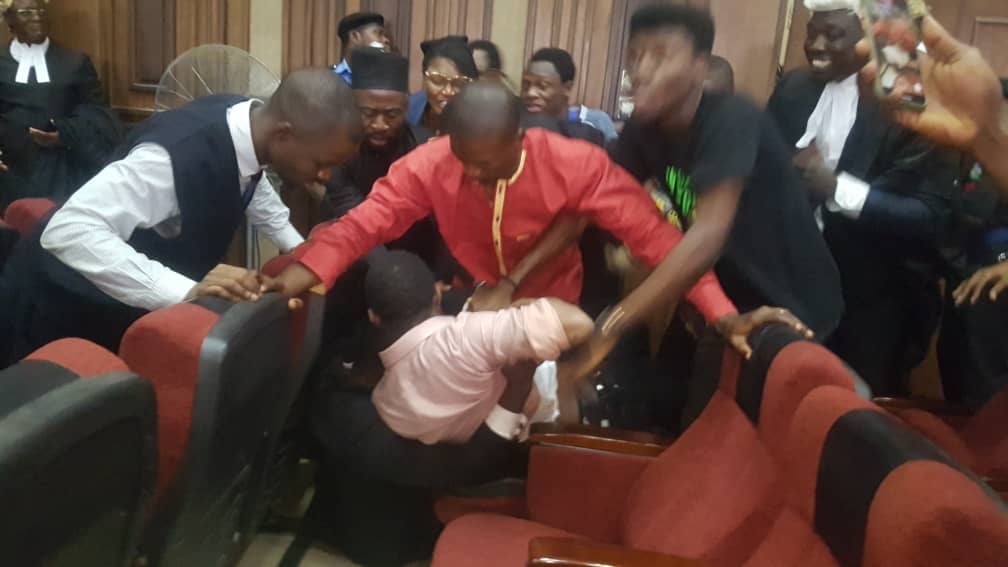
On December 6, Justice Ojukwu adjourned the case to a later date but men of the SSS grabbed and held Sowore inside the courtroom in the presence of the judge who had granted him bail creating raucous in the courtroom.
Eventually, the SSS re-arrested the duo of Sowore and Bakare against the order of the court, an action that caused wide criticism of the Buhari administration on disregard for rule of law.
Sowore about to be rearrested inside the courtroom
On December 24th, 2019, Sowore was finally released from illegal detention following the order of the Attorney General of the Federal (AGF) Abubakar Malami.
On February 12, Justice Ojukwu slammed another fine, this time, a sum of N200,000 against the SSS for delaying the trial of Sowore and Bakare and wasting the court’s time before she eventually struck out seven-count charges against Sowore and Bakare and amended the two-count charges presented by the prosecuting counsel.
Ojukwu further adjourned the case to March 11, 12 and 13 for definite trial.
A win for human rights
After more than six months of the clamped down on RevolutionNow protests in Lagos state, a federal high court sitting in the state has ordered the FG to pay a fine of one million naira to a Lagos-based lawyer, Olukoya Ogungbeje.
In the ruling delivered by Justice Maureen Onyetenu, he declared the disruption of the peaceful protest by the Nigerian Government through the police, as “illegal, oppressive, undemocratic and unconstitutional”.
The judge also condemned “the mass arrest, harassment, tear-gassing, and clamping into detention” of the protesters.
According to Ogungbeje, the disruption of the protest was a denial of his fundamental human right.
“I was tear-gassed by agents of the respondents and the peaceful protest was forcefully disrupted by the respondents.
“I have been denied my fundamental constitutional rights of peaceful assembly and association by the respondents without cause,” Ogungbeje said.
Apart from the N1m award, the court also ordered the Nigerian Government to tender a public apology to the applicant in three national daily newspapers.
The Osun State Government has finally commenced the arrest and prosecution of 27 illegal gold miners in the state, months after a two-part investigative report on unlicensed gold exploration was published by The ICIR.
The state said culprits would be prosecuted and made to pay compensations.
The ICIR report had exposed how traditional rulers engaged in arbitrary land grab, conniving with illegal gold miners to destroy the ecosystem and natural vegetation in several communities in the South-western state.
Aside from the issues of environmental degradation and health implication, the state government’s inability to check illegal mining was also reported.
Yesterday, the state has finally announced the arrests of suspected culprits including Chinese nationals.
Abdullahi Binuyo, the deputy chief of staff to the state governor, had earlier told The ICIR about the illegal mining activity and its effect on the state.
He also spoke about repeated efforts to summon the traditional rulers, engaging them on the security challenges involved in illegal mining within their communities.
On the 14th December 2019, The ICIR published a similar report on illegal gold mining in neighbouring Ondo state.
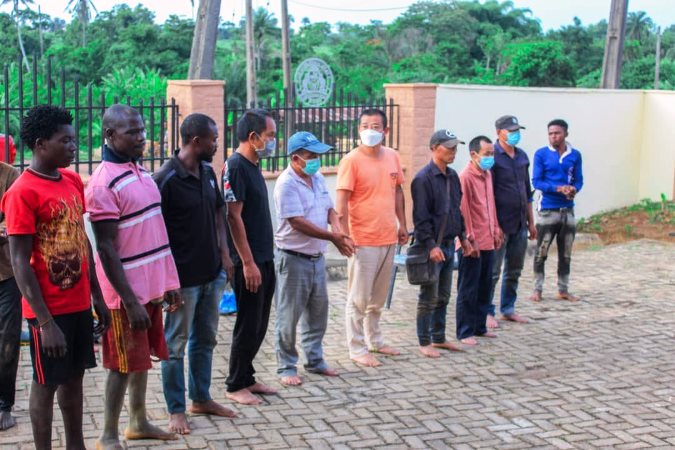
Speaking on the arrest, Binuyo said 17 Chinese nationals were among those arrested by the state Joint Task Force (JTF), inaugurated by the state governor, Adegboyega Oyetola.
Osun Govt arrests 27 illegal miners
…17 Chinese, 9 locals, traditional chief to be prosecuted
The Osun State Joint Task Force (JTF), recently inaugurated by Governor Adegboyega Oyetola, has apprehended 27 illegal miners, comprising 17 Chinese nationals and 10 locals, pic.twitter.com/jtZVM7elZu
The other 10 accused persons were locals which included a traditional ruler.
“The Osun State Joint Task Force (JTF), recently inaugurated by Governor Adegboyega Oyetola, has apprehended 27 illegal miners, comprising 17 Chinese nationals and 10 locals, including a local traditional chief (Baale),” he said.
They were arrested after a joint operation around Ilesa and Ife axis of the State.
He noted that aside from the economic leakages, the illegal miners also polluted the Osun River with poisonous metals, making it unsafe for human consumption and irrigation.
“As part of the government’s economic reforms, solid mineral is a major sector we are looking to explore. For these reforms to work, it has become imperative on the reforms to stop illegal mining and step up enforcement activities. The result is what we are witnessing today,” Binuyo said.
“The people you see here neither have genuine mining licences nor are they registered with the government. What they claim to have is Exploration Licences, which does not allow them to mine, the way they are doing. So we will be prosecuting them and make them pay damages.
“Apart from flouting government’s Covid-19 Order, by refusing to stay at home, they have created an environmental disaster for us, by poisoning our River which is a major public health concern for us, “Binuyo added.
Meanwhile, one of the accused persons, identified as May Zam claimed he was ignorant of the crime for which he was arrested.
THE National Bureau of Statistics (NBS) has reported that four in every ten Nigerians have real per capita expenditures below 137,430 Naira per year.
And that 40.1 per cent of the total population in Nigeria is classified as poor, excluding the people of Borno state.
This translates to over 82.9 million Nigerians considered poor by national standards.
Though the survey included Borno state, samples were not representative of the entire state since only households from accessible (safe to visit areas only) were interviewed.
Thus, the Borno sample is considered non-random and non-representative.
Three indicators used by the NBS include poverty headcount ratio, poverty gap and Gini index.
The headcount ratio defines the proportion of the population that is living in the households where the value of per capita total consumption expenditure is below or equal to the poverty line.
In economics, per capita expenditure means the market value or price at which goods are sold in the market of all the goods purchased by the consumers.
Between September of 2018 and October of 2019, the NBS conducted the latest round of the Nigerian Living Standards Survey (NLSS) after a decade.
It is represented at the state level with a sample size of 22,110 households, focusing on increasing the understanding of living conditions of the Nigerian population.
The survey gathered data on household and individual demographics (age, gender, marital status, among others), access toeducation, health and basic services, employment, assets, and income, the NBS disclosed.
The bureau showed that poverty is measured using consumption expenditures rather than income in Nigeria, the poor are defined as those who subsist below the poverty line, while the non-poor have consumption expenditures higher than the poverty threshold.
The world poverty clock has shown that from the history of Nigeria till date, Nigeria currently has 102 million citizens living in poverty which accounts for 50 per cent of citizens.
Also, recall that due to the COVID-19 pandemic, the federal government said it can only cater to 2.6 million poor Nigerians in the cash transfer intervention programme, which represents 29 per cent of the poorest of the poor with the cash transfer intervention programme.
A coalition of 41 Non-Governmental Organisations (NGOs) on Monday issued a warning that the Control of Infectious Disease Bill currently before the National Assembly (NASS) will promote wilful abuse of citizens’ rights.
The coalition said the bill, which already is being referred to as an ‘Act’, would accord excessive powers to the Director-General of the Nigerian Centre for Disease Control (NCDC), if eventually passed.
Members of the coalition include Global Rights, African Centre for Media and Information Literacy (AFRICMIL), Lawyers Alert, Women Advocates Research and Documentation Centre (WARDC), Enough is Enough, Community Life Project and Centre for Information Technology and Development (CITAD).
Others are Centre for Impact Advocacy, Concerned Nigerians, Lex Community NG, Centre For Liberty, Centre for Democracy and Development (CDD), Civil Society Legislative Advocacy Centre (CISLAC) and Say No Campaign.
In a document signed by the 41 organisations, they recognised the importance of legislation to contain the global Coronavirus Disease (COVID-19) but noted that there are irregularities in the bill such as overlapping functions of the security operatives, abuse of institutional powers guaranteed by the constitution, ambiguity as well as inadequate regard to accountability.
They observed that the speed at which the lawmakers are hurrying to pass the bill into law despite the concerns is worrisome.
“The Control of Infectious Diseases Bill vests overbearing discretionary powers on the DG of the NCDC, while making no provision for reviewing and controlling the exercise of such powers,” the groups stated.
“The Bill empowers the NCDC to restrict fundamental rights and freedoms at will, and abuse constitutionally established institutions and processes, without any form of accountability.”
For instance, the coalition cited as unacceptable Section 10 (3) of the bill, which gives the NCDC DG express powers to employ force to enter any premises without a warrant.
Aside this, the NGOs also expressed concerns about Section 19 of the bill. This confers the DG of NCDC powers to prohibit or restrict meetings, gatherings, and public entertainments. Another portion of the bill that worries the coalition is Section 15(3e), which allows the NCDC boss to authorise the destruction and disposal of any structure, goods, water supply, drainage etc.
“Section 47(1) confers discretionary powers on the Director-General to order any person to undergo vaccination or other prophylaxis. All these powers can be abused for political and economic reasons if not properly checked,” the coalition noted.
On Tuesday, April 28, 2020, the National Assembly resumed legislative activities after a month of recess, following the outbreak of the COVID-19 pandemic.
The House of Representatives after resumption, however, considered the controversial bill co-sponsored by the Speaker Femi Gbajabiamila, Pascal Obi and Tanko Sununu.
The ICIR earlier reported how the lawmakers plagiarised the bill originally prepared by the Singaporean lawmakers.
The development has provoked heated debate in the public space as to the rationale behind such an act, despite Nigeria being a democratic nation.
In order to avoid duplication of functions, the coalition charged the House to subject the bill to public scrutiny, by inviting relevant stakeholders to discuss the grey areas and proffer better solution or collective good.
They also advised the House to evaluate all provisions of the bill, they say fosters inter-agency conflicts and abuse of power and thus undermining constitutionally guaranteed rights and are contrary to the rule of law in the country and international human rights treaty which Nigeria is a signatory.
THE Development Control Department of the Federal Capital Territory Administration (FCTA) has released guidelines with regards to the easing of the Coronavirus disease (COVID-19) pandemic (Corona Virus) lockdown in the FCT.
Mukhtar Galadima, the Director, Development Control, in a press statement on Monday directed all owners of all construction sites (including public institution sites) to ensure full compliance with the guidelines in order to curb the spread of COVID-19 in the FCT.
The statement said the concerned entities are urged to be guided and ensure full compliance to the guidelines in order to avoid the relevant sanctions which include sealing of sites and possible prosecution.
The guidelines are stated below:
All construction sites must provide facilities for hand washing tor all
workers and visitors, this includes additional provision of alcohol- based
sanitizers.
All workers on construction sites must observe social/physical
distancing of not less than 2 meters, including other relevant safety measures.
All workers and visitors to construction sites are required to compulsory
wash and sanitize their hands prior to entering and leaving the sites.
Construction sites of a single structure (Residential Building) shall not
have more than 8 Numbers of workers.
Construction sites of a single structure (Commercial Building) shall not
have more than 15 Numbers of workers.
Construction sites of multiple structures (Major Commercial/ Residential
Estate) shall not have more than 35 Numbers of workers or as may be determined by the Council.
The Director however, urged the general public is to report any contravention of the provision(s) of this guidelines by any construction site(s) to the Department of Development Control for prompt action.
A GROUP of Civil Society Organisations in Nigeria has welcomed the approval of a $3.4billion loan in emergency support by the International Monetary Fund’s (IMF) to Nigeria, urging the government to use the facilities to grow the economy.
In a statement sighted by The ICIR, the group including Oxfam, BudgIt, Connected Development (CODE) and Civil Society Legislative Advocacy Centre (CISLAC) noted that Nigeria is facing its worst health, social and economic crisis in decades due to the coronavirus disease (COVID-19) pandemic.
The group pointed out that the pandemic has knocked life out of Africa’s largest economy and threatens to collapse the country’s fragile health systems.
It submitted that the crisis has led to a decline in tax revenues, collapse in commodity prices especially that of oil, Nigeria’s major source of revenue.
The crisis has also led to diminishing official development assistance, and rising debt obligations, disrupted supply chains and high inequality.
The group noted that the harsh realities are set to plunge the economy into deeper crisis.
In fact, IMF had forcast that the pandemic will trigger the worst economic recession since the Great Depression, and far worse than the 2008 financial crisis.
Given that the IMF has granted an emergency loan to Nigeria, the group urged the government to utilise the funds in the best way it will benefit the country and its citizens, stressing that the country was already struggling before the pandemic and the only way out of the worse situation is commitment to building the economy.
“Even before the ongoing pandemic, poverty and inequality levels were unacceptably high in Nigeria. Both the FGN and IMF therefore need to ensure that these funds are directed towards meeting the needs of the most vulnerable in society especially women, children, internally displaced persons and rural communities”, said Constant Tchona, Oxfam in Nigeria Country Director.
Recall that the IMF Executive Board on April 28, approved $ 3.4 billion in Emergency Support to Nigeria under the Rapid Financing Instrument to support the government’s efforts to cushion the severe economic impact of COVID-19 shock and the sharp fall in oil prices.
The ICIR had earlier reported that the loan facility is considered to be the largest loan allocation by the monetary fund to an African nation to fight the pandemic, and it is scheduled to be repaid in not more than five years.