The International Monetary Fund (IMF) has released a 25 countries list that will receive debt service relief.
They are Afghanistan, Benin, Burkina Faso, Central African Republic, Chad, Comoros, Congo, D.R., The Gambia, Guinea, Guinea-Bissau, Haiti, Liberia, Madagascar, Malawi, Mali, Mozambique, Nepal, Niger, Rwanda, São Tomé and Príncipe, Sierra Leone, Solomon Islands, Tajikistan, Togo, and Yemen.
Ms Kristalina Georgieva, Managing Director of the International Monetary Fund (IMF) in a statement, disclosed that the Executive Board of IMF has approved immediate debt service relief to 25 of the IMF’s member countries under the IMF’s revamped Catastrophe Containment and Relief Trust (CCRT) as part of the Fund’s response to help address the impact of the COVID-19 pandemic.
“This provides grants to our poorest and most vulnerable members to cover their IMF debt obligations for an initial phase over the next six months and will help them channel more of their scarce financial resources towards vital emergency medical and other relief efforts.
“The CCRT can currently provide about US$500 million in grant-based debt service relief, including the recent US$185 million pledge by the United Kingdom and US$100 million provided by Japan as immediately available resources”, she said.
In economics, a Special Drawing Right (SDR) is essentially an artificial currency instrument used by the IMF and is built from a basket of important national currencies.
SDRs are allocated by the IMF to its member countries and are backed by the full faith and credit of the member countries’ governments.
Others, including China and the Netherlands, are also stepping forward with important contributions.
The IMF boss urged other donors to help replenish the trust’s resources and boost further ability to provide additional debt service relief for a full two years to the poorest member countries.
Nigeria’s relationship with the IMF
According to the Central Bank of Nigeria (CBN), Nigeria joined the IMF after her independence in order to participate and benefit from the purposes of the Fund.
In their inter-relationships, the IMF focuses mainly on Nigeria’s macroeconomic policies.
These are policies that have to do with public sector budgets, the management of interest rates, money, and credit and exchange rate; and financial sector policies, particularly, the regulation of banks and other financial institutions (as agreed by the BIS-Bessel Agreements).
The Fund also pays attention to structural policies that affect the macroeconomic performance of Nigeria.
Recall that Nigeria’s former finance minister, Ngozi Okonjo Iweala, was on Friday named a member of the External Advisory Group constituted by the Managing Director of the IMF, Kristalina Georgieva.
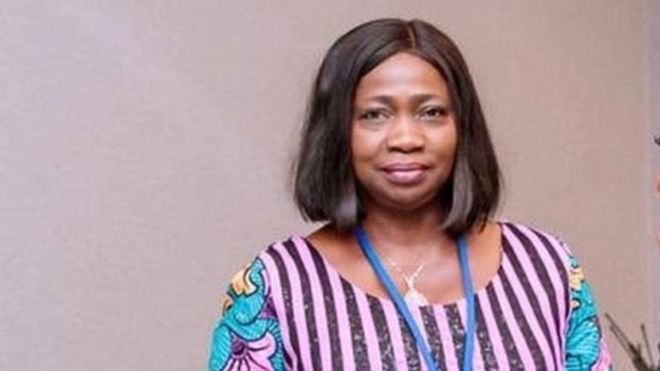
CHAIRMAN, Nigerians in Diaspora Commission (NIDCOM), Abike Dabiri-Erewa on Tuesday disclosed that ticket fare to evacuate Nigerians from the United Kingdom would be subsidised.
She disclosed this in a tweet in reaction to repeated concerns from Nigerians both home and abroad, particularly in the UK.
Some of the aggrieved persons had wondered why the Federal Government could not be responsible for the fare, stressing that intervention by Air Peace during the South Africa Xenophobic attacks could best be described as evacuation rather than the recent claim by the government.
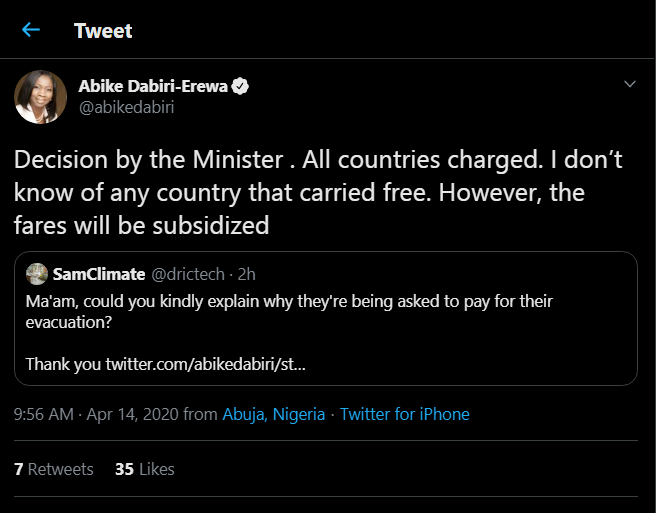
Abike Dabiri Erewa response to subsidizing fares on 14th April, 2020 via her verified twitter handle
But Dabiri insisted that the decision to subsidise the fares was not hers but a cabinet member. She argued that all countries charged their citizens abroad before any evacuation process.
“Decision by the Minister. All countries charged. I don’t know of any country that carried free. However, the fares will be subsidized,” she stated.
Dabiri-Erewa had on 3 April, announced the conditions that interested Nigerians abroad must satisfy before being eligible to be evacuated back home. These include that they must be COVID-19 negative and should be willing to stay under quarantine for 14 days after return.
They would as well shoulder the flight costs involved.
Nigerians won’t pay N160,000 for COVID-19 test – NIDCOM
It could be recalled that The ICIR earlier reported on how Nigerians in the UK were advised to patronise a private laboratory in order to have their COVID-19 tests and were subsequently charged £350 pounds until the firm backed out after alleged extortion.
The report also revealed how the UK government made the test free for all persons irrespective of status, either living in the UK illegally or otherwise.
However, Abdur-Rahaman Balogun, NIDCOM Head of Media and Public Relations debunked the claims.
In addition to his response to The ICIR, he maintained in a statement issued yesterday, April 13 that Nigerian nationals were at liberty to patronise either private or public laboratories for the test.
“…so it is totally wrong to assume that the Nigerian government has ordered citizens in the UK to pay N160,000 for COVID-19 test as precondition or evacuation.”
The COVID-19 pandemic since it broke out in Wuhan China has killed 10 persons in Nigeria, and 91 patients have been discharged from 343 confirmed cases.
A few Nigerians in the UK have also died as a result of the global pandemic.
Globally, 113,675 deaths have been recorded among 1,812,734 confirmed cases of Coronavirus infection in 213 countries.
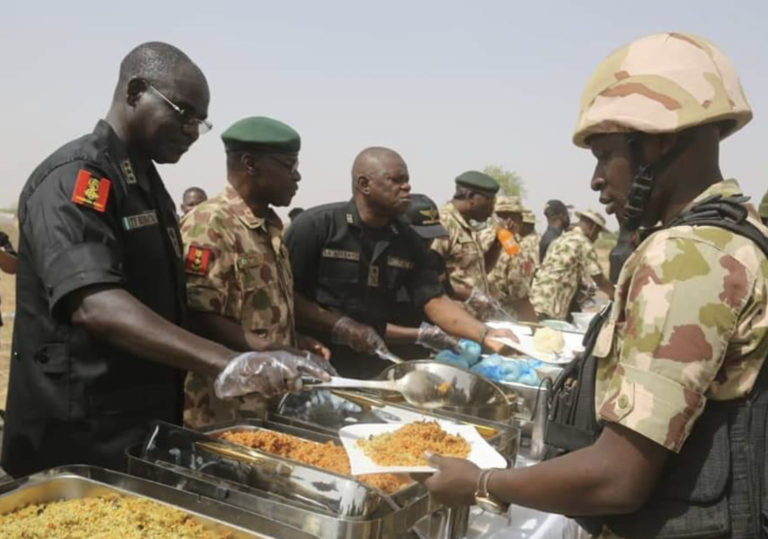
THE Chief of Army Staff (COAS), Tukur Buratai, was captured defying the social distancing rule on Monday, April 13, while serving food to his troops at an Easter luncheon held at Camp Ngamdu in Kaga Local Government Area of Borno State.
This is coming after the COAS announced his relocation to Borno State to intensify the fight against Boko Haram, promising that he will remain in the state till identifiable results are achieved.
However, while Buratai plans to tackle insurgency in the Northeast, his recent actions and that of other commanders may have exposed his troops to the deadly coronavirus infection.
In recent photos shared on the Nigerian Army official Twitter page, Buratai, accompanied by EO Udoh, the chief of training and operations Army; Corps Commander Engineers JS Malu; Theatre Commander Theatre Command OPLD F Yahaya; Commander Sector 2 LA Araba; Brigade Commanders and Commanding Officers, were seen serving the troops food with no face masks on.
The Army leadership could be seen flouting the social distancing rule effected as a measure to curb the spread of coronavirus, which has infected over 300 Nigerians and killed almost a dozen people in the country.
In similar vein, the Governor of Bauchi State, Bala Mohammed, also defied the social distancing protocol few hours after he recovered from COVID-19.
The governor was captured while attending Jumma’at prayers at Bauchi Central Mosque on Friday, April 10.
Mohammed tested positive to the virus and took ill for 16 days after which he recovered and almost immediately joined scores of worshippers in the mosque to pray.
Globally, the growing casualties of the COVID-19 pandemic has forced governments to enforce lockdown orders, travel bans and restrictions to curtail the spread of the virus that has infected over 1.8 million people and killed over 100,000 persons.
With no known cure or vaccine, countries including Nigeria have focused on a containment strategy which requires physical/social distancing in order to prevent further spread of the virus.
To enforce the lockdown in Nigeria, the government has directed the military, police and paramilitary to ensure people adhere to the rules.
The Nigeria Centre for Disease Control (NCDC) has also repeatedly announced that staying home and observing social distancing is the best form of prevention.
The African Centre for Media and Information Literacy (AFRICMIL) has called on Dr. Marilyn Amobi, MD/CEO of the Nigerian Bulk Electricity Trading (NBET) Plc, to comply with the judgment of the National Industrial Court in Abuja which ordered the immediate payment of the salaries, emoluments and accruable benefits of a whistleblower, Sambo Abdullahi, which she has withheld since December 2017.
Abdullahi, head of internal audit in NBET, is being punished for uncovering sundry acts of corruption at NBET.
In the last three years, AFRICMIL has been in the forefront of the campaign for protection of whistle blowers.
In a statement signed by its coordinator, Dr Chido Onumah, the organization reminded the NBET boss that the 30-day window given by Justice Oyejoju Oyewumi of the National Industrial Court for her to comply with the judgment expired on April 10, 2020.
According to Onumah, “Dr. Amobi should do the needful and not treat the judgment of a court of competent jurisdiction with contempt as she treated the directive of the former Minister of Power, Works and Housing, Babatunde Fashola, SAN.”
Onumah said at least on two separate occasions in 2018, Fashola had, following the report of a Ministerial Committee which investigated the crisis in NBET, directed Dr. Amobi to pay Abdullahi his salaries and allowances and treat him like other staff in NBET, but Dr. Amobi defied the Minister by flatly ignoring the directives.
The statement said Abdullahi had suffered enough, having gone without salary for more than two years. “Nobody, more so a whistleblower, deserves this kind of treatment. It is important to point out that Abdullahi has since been vindicated by the ICPC, EFCC, BPE and the office of the Auditor General of the Federation, all of which indicted Dr. Amobi. Government, therefore, has a duty to protect the whistleblower and ensure that he does not continue to be victimized for doing what is right,” Onumah said.
Abdullahi went to court in December 2018 when all efforts to resolve the crisis by the erstwhile Ministry of Power, Works and Housing under Babatunde Fashola, SAN, and the Office of the Secretary to the Government of the Federation proved abortive.
On March 11, 2020, Justice Oyewumi held that the stoppage of his salary, allowance, and other entitlements such as annual leave, was wrongful. She ordered the payment of all the salaries and the allowances within 30 days, failure of which will attract 21% annual interest.
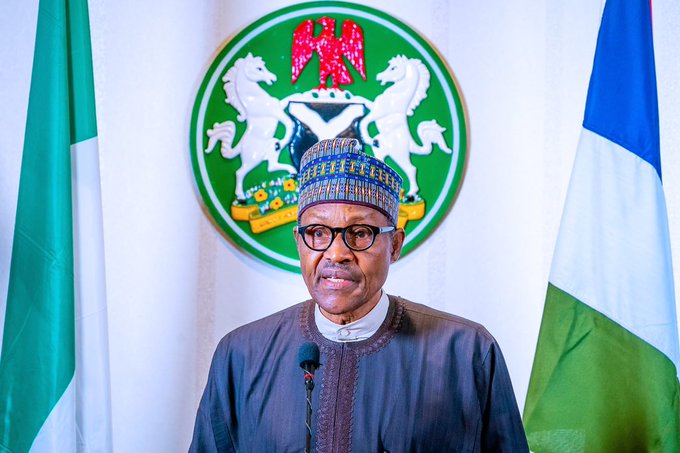
PRESIDENT Muhammadu Buhari has extended the lockdown imposed on Lagos and Ogun states as well as Federal Capital Territory (FCT), Abuja to contain the spread of Covid-19 by another 14 days with effect from 11:59 pm Monday April 13.
The president announced the extension of the lockdown down in a nationwide broadcast on Monday evening, saying “This is a difficult decision to take, but I am convinced that this is the right decision. The evidence is clear.”
This follows the expiration of the first 14-day lock down imposed on Lagos and Ogun states including FCT on March 29 when Nigeria had recorded only 131 confirmed cases of Covid-19.
In announcing the extension, president Buhari noted that the cessation of movement, physical distancing measures and the prohibition of mass gatherings remain the most efficient and effective way of reducing the transmission of the virus.
Countries with extended lockdown due to COVID-19
“By sustaining these measures, combined with extensive testing and contact tracing, we can take control and limit the spread of the disease,” he said.
He added that the government’s approach to the virus “remains in two steps,” which according to him was first to protect the lives of Nigerians and residents living here and second, to preserve the livelihoods of workers and business owners.
“With this in mind and having carefully considered the briefings and Report from the Presidential Task Force and the various options offered, it has become necessary to extend the current restriction of movement in Lagos and Ogun States as well as the FCT for another 14 days, effective from 11:59 pm on Monday, 13th of April, 2020. I am therefore once again asking you all to work with Government in this fight.”
While citing the examples of the Mosques in Makkah and Madina that have been closed due to the Covid-19 pandemic, president Buhari also noted that the Pope celebrated Mass on an empty St. Peter’s Square.
“The famous Notre Dame cathedral in Paris held Easter Mass with less than 10 people. India, Italy and France are in complete lockdown. Other countries are in the process of following suit. We can not be lax,” he said.
Speaking on the lock down, he added that the previously issued guidelines on exempted services shall remain.
According to the president during his broadcast on March 30, the lock down order did not apply to hospitals and all related medical establishments as well as organizations in health care related manufacturing and distribution.
He added that commercial establishments such as; food processing, distribution and retail companies;
petroleum distribution and retail entities, power generation, transmission and distribution companies; and private security companies are also exempted.
While noting that though these establishments are exempted, their access would be restricted and monitored.
Despite cries and hues that the first 14-day lock down has put a lot of people into hardship, President Buhari explained that ” the repercussions of any premature end to the lockdown action are unimaginable.
“We must not lose the gains achieved thus far. We must not allow a rapid increase in community transmission. We must endure a little longer.”
He said the government made this very difficult decision knowing that it would affect livelihoods of many Nigerians.
He added that such sacrifices were needed to limit the spread of Covid-19 in the coutry, and necessary to save lives.
“Our objective was, and still remains, to contain the spread of the Coronavirus and to provide space, time and resources for an aggressive and collective action.”
He expressed satisfaction with the level of compliance to the Covid-19 guidelines issued, which according to him has been generally good across the country.
The president commended what he described as the massive support from traditional rulers, the Christian Association of Nigeria (CAN) and the Nigerian Supreme Council for Islamic Affairs (NSCIA) during this pandemic.
He also acknowledged the support and contributions received from public spirited individuals, the business community and our international partners and friends.
“I must also thank the media houses, celebrities and other public figures for the great work they are doing in sensitizing our citizens on hygienic practices, social distancing and issues associated with social gatherings,” he said.
Buhari said due to the overwhelming support and cooperation received, the country was able to achieve a lot during the 14-day of initial lock down.
He stated that the government implemented comprehensive public health measures that intensified case identification, testing, isolation and contact tracing capabilities.
“To date, we have identified 92 per cent of all identified contacts while doubling the number of testing laboratories in the country and raising our testing capacity to 1,500 tests per day.
” We also trained over 7,000 healthcare workers on infection prevention and control while deploying NCDC teams to 19 states of the federation,” he said.
He further stated that Lagos and Abuja today have the capacity to admit some 1,000 patients each across several treatment centres.
The president recognised the incredible work being done by healthcare workers and volunteers across the country especially in front-line areas of Lagos and Ogun states as well as the Federal Capital Territory.
“You are our heroes and as a nation, we will forever remain grateful for your sacrifice during this very difficult time. More measures to motivate our health care workers are being introduced which we will announce in the coming weeks,”he said.
Though the president said Nigeria as a nation, was on the right track to win the fight against COVID-19, he expressed concerns about the increase in number of confirmed cases and deaths being reported across the world and in Nigeria specifically.
“On 30th March 2020, when we started our lock down in conforming with medical and scientific advice, the total number of confirmed cases across the world was over 780,000.
“Yesterday, the number of confirmed Covid-19 cases globally was over one million, eight hundred and fifty thousand. This figure is more than double in two weeks!
” In the last fourteen days alone, over 70,000 people have died due to this disease.
“In the same period, we have seen the health system of even the most developed nations being overwhelmed by this virus.”
While recalling that Nigeria had 131 confirmed cases of Covid-19 in 12 States on March 30 and two fatalities, he lamented that as of morning of Monday April 13 Nigeria had 323 confirmed cases in 20 States.
“Unfortunately we now have ten fatalities. Lagos State remains the center and accounts for 54% of the confirmed cases in Nigeria. When combined with the FCT, the two locations represent over 71% of the confirmed cases in Nigeria.”
Meanwhile. several other governments have also extended lockdown periods in their countries. They are South Africa, Rwanda, Italy, Spain, India, France, Germany, Belgium and Saudi Arabia.
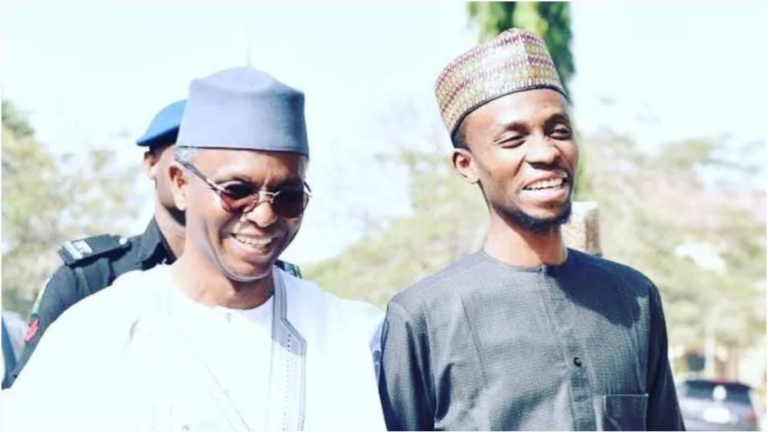
BELLO El-Rufai one of the sons of Kaduna State governor, Nasir El-Rufai has threatened to have a Premium Times’ journalist arrested after a report of him on rape comment.
Premium Times had earlier today published a report titled “Outrage as El-Rufai’s son threatens to gang rape Twitter user’s mother.”
During an argument on Twitter, a user by the handle name @Thanos_zer had blasted the present government, describing President Muhammadu Buhari’s alleged ineptitude as mind blowing.
He described Bello in his tweet as “Daddy boy, saying, “I don’t shield anyone who’s inept. I can’t say the same about you. You’re Daddy’s boy and of course, nobody attacks the finger that feeds them. Buhari’s ineptitude is mind blowing. Yes I said and you’re not going to make me disappear.”
“Tell your mother I’m passing her to my friends tonight,” El-Rufai said to his detractor in a private message after an argument on politics, before adding an ethnic diatribe: “No Igbo sounds please!”
This sparks outrage from many Nigerians on social media against El-Rufai, as anti-rape activists demanded a thorough investigation for probable violation of the Cybercrime Act.
Reacting to the post by Bello, former Minister of Education, Dr. Oby Ezekwesili took to her twitter handle, demanding that the Governor’s son retract the comment and apologise.
She wrote, “@B_ELRUFAI Did I just see horrific tweets from your handle threatening gang-rape? What was that?
Why the ethnic vitriol toward Igbos? What’s that, Bello? Too tragic.
“You need to not just immediately apologize for those vile tweets but get into an Anger Management program quickly.”
A Twitter user said, “Bello El-Rufai is clearly from a home where bad behaviour has been overlooked and enabled by parents who should have known better. He should have been reprimanded and trained in his earlier years . Today, he is a spoilt child with no decorum threatening to rape someone’s mother.”
Reacting to her son’s post on Twitter, Hadiza El-Rufai said, “All you people talking about @B_ELRUFAI Don’t @ me. Sow the wind, reap the whirlwind. All is fair in love and war.
“My belief: Respect everyone, but take no shit from anyone. I didn’t see any threats of rape. I would never condone that.”
This response doesn’t go well with the North Normal Nigeria movement group on sexual violence and hereby issued a statement to question her competence as Chair of Kaduna state sexual assault task force.
“This calls to question her competence to chair a panel seeking to fight sexual assault as the meanings and language of rape and violence is lost on her.
“Consequently we call for her immediate resignation as chair of the Kaduna state sexual assault task force, and a public apology. We also call on all people of good conscience to join us in condemning this behaviour,” the group said in the statement.
Shortly after the release by #NorthNormal movement, Hadiza issued an apology through her Twitter handle saying she’d never condone sexual abuse in any shape or form.
“I can see how my tweet may have come across, and I apologise to those who were offended by it. I say, once again, that I’d never condone sexual abuse in any shape or form,” she tweeted.
Meanwhile, Bello has refused to apologise, despite the fact that Nigerians are calling for his apology, he however threatened a Premium Times journalist, Samuel Ogundipe through his Twitter handle for his rape criticism report.
Bello wrote on Twitter, “Oh @SamuelOgundipe, our hired PDP columnist, you in particular were the last piece of the puzzle. I assure you that my lawyers will get to you to prove the usage/threat of rape. The onus is on you. I eagerly anticipate the #FreeSamuel hashtag. Thanks for completing the jigsaw.
THREE candidate vaccines for coronavirus, officially tagged COVID-19, have reached clinical evaluation stage, while 67 other vaccines are being developed globally, the World Health Organisation (WHO) has disclosed.
In a document titled : ‘Draft landscape of COVID-19 candidate vaccines’ published on the WHO website, a list of 70 vaccines were presented, with three being considered top as they are being tested in the human trials.
The top three vaccines in clinical trial stage as stated in the document include; an experimental vaccine developed by Hong Kong-listed CanSino Biologics Inc. and the Beijing Institute of Biotechnology, which is already in phase two, using the Non Replicating Viral Vector trial method.
The other two, which are being tested in humans (DNA), are developed differently by Moderna Inc. and Inovio Pharmaceuticals Inc, which are both United States drugmakers, Bloomberg reports.
While the news of vaccines being developed bring hope, the WHO, however issued a disclaimer, informing the public that the document remains only a source of information and that the organisation withdraws itself from any form of warranties regarding the accuracy, completeness, fitness of any of the products listed in the seven-page document, containing the list of 70 vaccines being developed globally.
Since its first outbreak in Wuhan, China, coronavirus has infected over 1.8 million people globally and killed over 116,000 persons, according to Worldometer.
In Nigeria, the Nigeria Centre for Disease Control (NCDC), has recorded 323 cases in different parts of the country and registered 10 death from coronavirus complications.
The COVID-19 pandemic which has spread to over 200 countries worldwide has forced governments to issue travel bans, border closures and effect lockdowns and movement restrictions in their nations – all in attempt to curb the spread of the deadly virus.
With the containment strategy implemented in most countries proving less effective daily, experts are racing to find a cure.
In the meantime, the world economy has grinded to a halt, and the WHO has announced that some African countries might hit peak of the virus, if testing capacity is not increased and care taken to curtail the spread of the virus.
LAFENWA market in Abeokuta, the Ogun state capital is usually rowdy and noisy whenever the residents stormed the market to purchase food and other essential materials during the one day break of the lockdown.
Nigerian President, Muhammadu Buhari had ordered a total lockdown in Abuja, Lagos and Ogun States following an advice from the Nigeria Centre for Disease Control (NCDC) and the Federal Ministry of Health that a ‘total lockdown be placed on the two states and the FCT.
Following Buhari’s directive, Ogun State governor, Dapo Abiodun said the state would need five days to prepare for the lockdown, shifting the lockdown to Saturday, April 4th.
The governor declared further that the state would observe a constant relaxation of the lockdown to enable residents of the state shop for essentials most especially food materials.
But, the relaxation of the lockdown as directed by Abiodun could be exposing residents to a higher risk of contracting coronavirus, The ICIR has observed.
The ICIR reporter’s visit to places shows that the residents are exposed to getting infected with Coronavirus.
Residents are seen traversing the length and breadth of the market: shopping for goods, calling prospective customers, hawking goods and haggling prices.
Oblivious of the importance of the importance of social distancing, use of face masks and other preventive measures as advised by the NCDC, the market men and women and their customers go about their business without worry.
The ICIR interviewed Opelope Olubiyi who sells fufu opposite the Lafenwa market. She said the government should not have allowed the relaxation because they are being exposed to contracting the disease.
Opelope Olubiyi, a market woman during an interview with The ICIR Photo Credit: Lukman Abolade
“They should have allowed us stay indoors for 14 days without relaxation, after the 14 days, we can now go out,” she said.
Speaking to another market woman, Suleiman Balikis, who sells food items in Lafenwa market, she also expressed concerns over the constant relaxation of the lockdown.
According to her, the government is toying with their lives. She said her husband did not want to allow her come to the market until she promised to keep distance from her customers.
“I dont allow people come close to me, I just stay inside my shop while they wait outside for me to pass their goods to them, anyone that cannot wait can go to another shop,” Balikis said.
When asked if the market is usually as full as this, Balikis said the market was only that full during new year, Christmas or Salah festivals.
The ICIR visited Lafenwa, Itoku, Panseke, Olomore and Omida markets in Abeokuta and the situation was not different. People were out enmass to either buy or sell without preventive measures.
Itoku Market in Abeokuta as residents go about their business during the relaxation hours of lockdown in Ogun State. Photo Credit: Lukman Abolade
Similarly, ATM stalls visited by The ICIR reporter also showed defiance to social distancing and other use of protective measures as many people were seen on queue to use the machine, standing close to each other while trying not to spend more than the stipulated seven hours as approved by the state government.
People on queue while trying to make withdrawals from the ATM machine. Photo Credit: Lukman Abolade
Supermaket and grocery stores in the city also had people on queue trying to shop for essentials during their seven hours free movement.
Residents on queue at a grocery store in Abeokuta. Photo credit: Lukman Abolade
Alt
Unlike the market women, Emmanuel Fasasi, father of four children and a Motorcycle (Okada) rider, said he is pleased with the relaxation.
He said it is an avenue for the residents of the state to quickly do what they cannot do during the lockdown.
“Bros, you see for me, I am happy, i am an Okada rider, I have no other job, if I sit at home for 14 days do you think my children won’t die of hunger,” he questioned The ICIR reporter.
Emmanuel Fasasi, a motorcycle rider speaking to The ICIR reporter on relaxation of lockdown
He said with the seven hours break, he has time to earn and give money to his wife to cook and keep the rest of the money for emergency purpose.
“During that time, I earn as much as N1500, I give Mama Dayo N1000 to cook soup and I keep the remaining N500 for emergency, you know how children can be sometimes,” he added.
When asked if he has benefitted from the relief package by the state government, Fasasi said, to him, ‘that is a radio package’.
“Some might be benefiting from it but for me, my family and people of Ago-Oko, I can tell you that we only hear it on radio,” he added.
Akinmosu Adedayo, (not real name) a sociology lecturer in Moshood Abiola Polytechnic, Abeokuta said the relaxation is “a policy of ignorance”.
According to Adedayo, the government does not have good knowledge of the disease hence the constant relaxation.
“How can you keep people at home for a day and half, later gather them together in hundreds and then tell them to go back home and say you are preventing coronavirus,” he questioned.
” I wonder the type of government we have in the country, you leave them to roam about for that long but you placed a ban on Mosques and churches that does short service for their congregations,” he added.
The lecturer faulted the directive and advised the state governor to rethink and do the right thing before there is a large outbreak of the disease in the state.
Abeokuta residents again gather today to exercise the relaxation of lockdown.
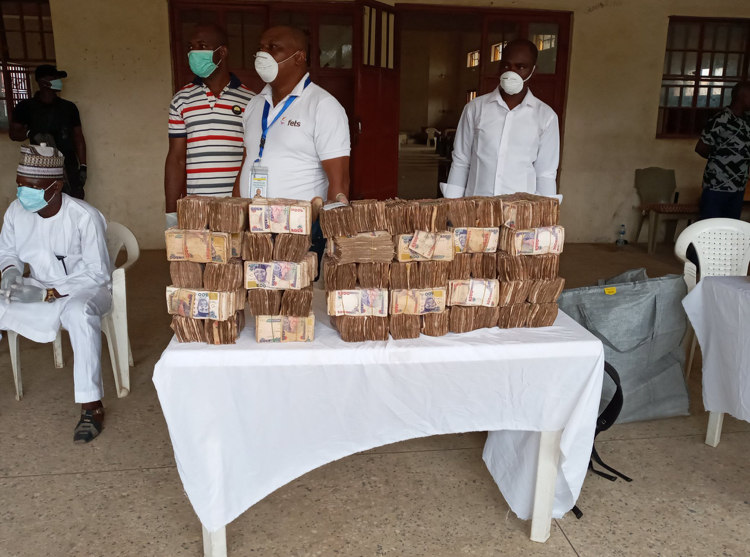
A POLICEMAN in the Okota axis of the Oshodi/Isolo Local Government Area of Lagos State has been arrested over collecting bribe from a motorist.
In a statement issued by the state Public Relations Officer Bala Elkana, the inspector identified as Taloju Martin is attached to Ago Police Station as Station Officer (SO).
In a video shared on Twitter by Ruggedman, a Nigerian entertainer, the incident happened on Friday, April 10 at Ago Palace Road Okota.
The inspector was seen counting N1000 notes said to be 40 pieces, a ‘ransom’ paid by an unidentified motorist to free his vehicle.
The motorist had allegedly violated the lockdown order of the government to curb the community transmission of coronavirus in Lagos.
The motorist, whose car was seized by the police, was told to pay N50,000 but he pleaded to pay N40,000.
But unknown to Martins, the motorist recorded the transaction.
Reacting to the incident, the state Commissioner of Police, CP Hakeem Odumosu psc has ordered the Deputy Commissioner of Police in Charge of Criminal Investigation to carry out an in depth investigation into the activities of Ago Police Station as a whole.
The complainant has been identified, and the money extorted is recovered and handed over to the driver by the Commissioner of Police.
Meanwhile, the Inspector arrested has been handed over to Provost Marshall for orderly room trials.
HORDES of customers besiege Yusuf Mohammed’s store because they are not allowed in through the main gate, which is opened only when customers, about two or three already inside the store, go out.
Abubakar whose job is to open and lock the gate to customers does not listen to customers’ pleas to allow them in until those inside leave.
Yusuf Mohammed Enterprises, a popular store in Bwari town, a suburb of Abuja, the nation’s capital is a preferred destination for residents and retailers.
It’s the ninth day of the 14-day lock down imposed by President Muhammadu Buhari on Abuja, Lagos and Ogun states where cases of COVID-19 are higher and many are running out of food and other household essentials.
The customers are those in desperate moves to get daily needs in the face of the lock down order—others are retailers who try to restock their shops as more and more people are demanding for daily needs due to the lockdown order.
Customers waiting in front Mohammed’s shop Photo Credit: YEKEEN Akinwale
With no hand gloves and without a face mask, Abubakar carries out the boss’ instruction of not allowing many people inside the supermarket at once.
That’s Mohammed’s own way of observing the social distancing guideline against the spread of Covid-19. Though, he did not provide hand sanitiser for his customers, yet he prevents too many of them in his store nevertheless.
Among those patronising the store, as well as workers there, only a few—one out of 10 wears a facemask—a lot are not worried about the possibility of contracting the deadly virus.
Items at Yusuf Mohammed Venture are cheaper compared to prices offered in the open market, especially now that traders have taken advantage of the pandemic to increase prices of goods. This is the real reason the store has been witnessing a surge in the number of customers.
According to the Centre for Disease Control and Prevention (CDC), limiting face-to-face contact with others is the best way to reduce the spread of coronavirus disease (COVID-19).
The centre defines social distancing as keeping space between yourself and other people outside of your home.
To practice social or physical distancing, it says, stay at least 6 feet (2 meters) from other people, do not gather in groups and stay out of crowded places and avoid mass gatherings.
These are however, not observed in many places visited by our reporter including Newspapers’ vendor stand and ATM galleries where people gather in groups and form crowds.
Pushed out by hunger—residents, okada riders ignore lockdown, social distancing
Okada riders who defy the lockdown order and the social distancing rule at Bwari town. Photo Credit: YEKEEN Akinwale
Yahaya Abdulqadir is a taxi driver but the lockdown order has compelled him to stay at home, with his Nissan taxi parked. But he comes out everyday to use his motorcycle for commercial purposes.
“Since we cannot drive around town, I have decided to use my bike to run around Bwari because I have to feed my family,” he says.
President Buhari announced the lockdown in Abuja, Lagos and Ogun states, in response to the public criticisms that he had been silent in the face of growing cases of Covid-19 in the country.
“All citizens in these areas are to stay in their homes. Travel to or from other states should be postponed. All businesses and offices within these locations should be fully closed during this period, Buhari said in a nationwide address on Sunday, March 30.
Despite this, many have found it difficult to observe the order especially peasants who earn their living daily.
“How can we stay at home when we cannot go out to find our daily bread,” Abdulqadir queries.
And like him, there are over hundreds of commercial motorcyclists within and around the town ferrying residents to and fro the market and other destinations.
While some of them wear a face mask and hand gloves, others are without any protective gear, and appeared unconcerned.
Francis Steven, a commercial motorcyclist said he earns his living daily from riding his ‘okada’. “By staying at home, it means no food for me and my family, so I can’t stay at home,” he says.
On the possibility of contracting the virus, Steven who does not wear a facemask or hand gloves believes God will protect him because he wants to provide for his family.
People who come to the Bwari main market say they cannot continue to stay at home while there is no food to feed on or to feed their family members with.
Markets in Abuja are allowed during the lock down to operate between 10 am and 2pm everyday by the FCT Administration which once announced that markets are only going to open three days in the week but later rescinded the decision.
A middle-aged woman who sells tubers of yam along SCC road in the market says the government had no plan for the ordinary Nigerians when it was announcing the lock down order.
“If they say make we sit down for us, wetin dem go give us to chop, abi my children no go eat,? asks the woman who says she has four children.
The president had said in his nationwide broadcast that food sellers and stores selling essential items such as groceries and medicine are exempted from the lockdown order.
He also announced that the government would provide palliatives to cushion the effect of the order on the poor and the vulnerable.
Shylock traders take advantage of Covid-19
Market women at the Bwari market: Many of them are taking advantage of the lock down to increase prices of food items. Photo Credit: YEKEEN Akinwale
Residents feel more frustrated by the lockdown order as Shylock traders take undue advantage of the situation to increase prices of commodities. From staple food items such as garri, local rice and even maize and millet, prices have gone up with more than 50 percent.
For instance, a measure of garri that was sold for N140 before the outbreak of the pandemic is now N300.
Madam Esther, a seller of the commodity in the Bwari market attributed the price increase to the lockdown order because according to her, it has become difficult to transport to where she buys garri.
“We no fit go to the market again, na okada we dey take now and dem dey charge us plenty of money to carry us,” she explains in Pidgin English.
In the market, a crate of fresh eggs now goes for N1000 as against N750 that it was before while a measure of local rice that was between N350 and N400 now sells for N600.
Kayode Oyelade, a resident who bought a crate of fresh eggs at N1000 per crate lamented the increase.
“This is going out of hand and I don’t understand why people are taking advantage of the situation,” Oyelade said.
Government’s palliatives are not getting to many vulnerable
Government’s conditional transfer: Only a few Nigerians are benefiting from it
As the Covid-19 pandemic forces many to stay at home and offices closed, Yemi Osinbajo, Nigerian Vice President, said the government was thinking of ways to provide succour for the period they are unable to work.
“Many of our citizens are daily wage workers and the President has expressed concerns about this. We are now thinking of ways to provide succour for the period they are unable to work,” Osinbajo said.
“There are many concerns associated with the lock down. We are concerned about how the economy will remain stable, how jobs can be protected and ways to create new jobs where possible. We believe that together, Nigeria will prevail.”
Shortly after the presidential broadcast, the Federal Government commenced the disbursement of the Conditional Cash Transfer (CCT) payments of four months to the beneficiaries in the Federal Capital Territory.
The disbursement kicked off in Kwali Area Council of the Territory.
Sadiya-Umar Farouq, Minister of Humanitarian Affairs, Disaster Management and Social Development, said the payment in advance was as a result of presidential directive to help ease the untold hardship the lockdown would cause to the vulnerable.
Each beneficiary was given N20,000 making N5,000 per month. The N20,000 covered month of March to June.
There are however, fears that the palliatives are not reaching the targets.
In Abuja, Ramatu Tijjani Aliyu, Minister of State for FCT, said last week that the administration was set to commence the distribution of palliative materials to the less privileged as part of measures to cushion the effect of the sit-at-home presidential order.
She made this disclosure during an inspection tour of storage facilities at the Kubwa NYSC Orientation Camp and maintained that the palliatives were targeted at the vulnerable residents and the physically challenged in rural communities.
Aliyu, also revealed that security measures have been put in place to safeguard the palliative materials, stressing that security personnel will be increased in addition to the establishment of a police post in the vicinity.
But many residents say they had not received any palliative from the government.
Okechukwu Nwanguma, Executive Director of Rule of Law and Accountability Advocacy Centre (RULAAC) in a press statement said that the Federal Government’s Social Intervention Policy known as conditional cash transfer is yet to address mass poverty, deprivation and hunger.
“The billions which the government announced that it has released and made available for conditional cash transfer to the poor and vulnerable in communities are not reaching the targets. There are still cries of woe and anguish in most communities,”Nwanguma said.
“We have seen videos of caricature of the ‘social intervention’, of food items shared to some communities. In one video, we saw a street in Lagos of over 30 families who said they were given two loaves of bread and a few cups of rice and garri and few condiments (tomato paste sachets) to share.
“And we see members of the community lamenting and asking how a whole street of over 30 families could be given such quantity of food items not enough to serve one family for two days to share!”
Indiscipline, ignorance fueling breaking of social distancing, lock down
Many still carry on with their activities unrestricted.
Security operatives daily disperse traders and buyers from the Bwari market, but indiscipline and ignorance, besides hunger, drive why more and more are violating the lockdown and social distancing order.
Residents still mill around stores, beer parlours and other relaxation joints in the Area Council without giving recourse to observing the social distancing guideline and the lock down order. .
To those in this category, Covid-19 is not seen as a life-threatening disease despite daily increase in the number of confirmed cases in the country. They also do not believe that social distancing has any way of preventing the spread of the disease.
At a drinking and fish grilling joint in Bwari, Uche Odogwu, a spare part dealer, says he does not believe there is any Covid-19, insisting that it’s just political warfare between world powers.
“Wetin be coronavirus? He queries, adding “No be the war between America and China dem they extend to us here.”
Odogwu said since he has not seen anyone who is infected with the virus or killed by it, he does not even believe it exists.
Nigeria had just 111 confirmed cases of Covid-19 when the president announced the 14-day lock down, now, it has recorded over 300 cases and 10 deaths.
Nwanguma corroborates this when he said some Nigerians believe that the lockdown is a deception by the government to achieve ulterior motives.
“Those who promote this narrative are mainly the apocalyptic pentecostal ‘Men of God’ who push arguments linking Covid-19 to G5 mobile technology which they argue is a part of the biblically ordained designs of the Anti-Christ,” he said.
According to him, there are some Nigerians who are simply lawless or lack discipline and just defy the lock down order.
“Just like when passengers are asked to switch off their phones prior to flight take off and you still find some people- seemingly ladies and gentlemen- fiddling with their phones.”
“To illustrate, a relative of mine called me yesterday to complain that he was arrested by the police somewhere in Lagos when he drove out to buy pap for his baby.
“I asked him whether he knew about the lock down order and whether there was nowhere around his neighbourhood he could walk down to buy the pap. He said ‘but other vehicles are on the road’. I told him that he has broken the law as much as those other people. Everybody may not be arrested at once.
“He wanted me to talk to the Police officers who arrested him and ordered him to drive to their station. I asked him what he wanted me to tell them,” he said.