Home Blog Page 213

Meta’s moderation gap: how AI misinformation from Africa goes unchecked

When Olayinka*, a fact-checker, was scanning Facebook for health-related misinformation, he noticed something odd. Two different wellness brands, Eco Puzzling and Laut Product, were running nearly identical ads.

He observed that both ads featured AI-generated visuals of public figures endorsing wellness brands: Laut Products, registered in India, and Eco Puzzling, which listed its address in Ajah, Nigeria. But while Meta swiftly removed Laut’s content, Eco Puzzling’s ad remained live for days, until the creator took it down themselves.

Screenshot of the AD from Laut Product

“I reported both accounts to Facebook, and I got no response. I also reported this year, but I never got any response. I noticed that Laut Products has stopped operating, but Eco Puzzling is still operating because Laut Products was targeting Europe, but Eco Puzzling is still operating because the website links are also operating,” Olayinka told The FactCheckHub.

Screenshot from Eco Puzzling Ad

It wasn’t the first time he had seen this pattern. And he’s not alone. Across Africa, digital rights advocates and fact-checkers have raised growing concerns about what they see as Meta’s gap in moderating AI-generated misinformation.

While the tech giant claims to be investing heavily in automated detection tools and human reviewers, African users say they are being left behind, with content takedowns slower, flags ignored, and scams left to circulate widely.

A review by The FactCheckHub revealed that both Eco Puzzling and Laut Products were inactive, with their last posts dating back to 2023 and 2022, respectively. Still, their content was resurfacing, often targeted at distinct audiences. Laut Products catered to a non-Nigerian base, while Eco Puzzling’s ads were directed at Nigerian users.

Screenshot of Eco Puzzling followers

This moderation gap is becoming more dangerous as AI-generated content floods platforms like Facebook and Instagram, often impersonating trusted figures and institutions. 

The discrepancy highlights a wider pattern of weak content moderation across Africa, where AI-generated misinformation and scam ads often go unchecked for extended periods.

Digital rights advocates say Meta’s approach points to a global moderation gap, where harmful content aimed at African users receives less scrutiny, slower response times.

Take, for instance, a Facebook video ad The FactCheckHub spotted in May (archived here) showed a TVC News anchor endorsing a trading platform Kai Traders while using CBex platform that had already collapsed months earlier, as an example of why people should trust Kai Traders. The presenter’s face and voice seemed real, but a closer look revealed signs of AI generation: unnatural eye movement, misaligned lip-syncing, and distorted transitions between frames. The FactCheckHub identified the presenter to be made to look like Olamide Odekunle.

The presenter’s face and voice seemed real, but a closer look revealed signs of AI generation

The video, posted on May 22, garnered over 18,000 views. Comments beneath it quickly identified the video as fake and flagged it as a financial scam. Yet, as of mid-July, the post remained online, unflagged by Meta’s moderation systems. It is pertinent to note that earlier in the same month, TVC launched it’s first AI news anchors as a new method of telling stories.

When The FactCheckHub reached out to Odekunle, she noted that she did not give her consent for her likeness to be used in the video in question.

“As you know, I am one of the AI anchors for TVC news, and when we launched this feat, there was immense pushback because of the fears surrounding AI. Please note that I did not give my consent to be used for the video [ad video] in question,” she stated.

In another instance, a video ( archived here) featuring Tony Elumelu, the CEO of the United Bank for Africa, circulated on Facebook in late May. In the clip, Elumelu appeared to be endorsing a government investment scheme that allegedly offered ₦1 million in weekly returns on a ₦400,000 deposit — a promise too good to be true.  The voice and mannerisms were synthetic, a product of AI voice cloning and facial synthesis. Yet, despite hundreds of comments calling it a scam and the link in the post returning an error page, the paid ad remained live.

In the clip, Elumelu appeared to be endorsing a government investment scheme that allegedly offered ₦1 million in weekly returns on a ₦400,000 deposit

The FactCheckHub and some other fact-checking organisations have previously flagged dozens of similar AI-generated ads, especially ones using the likenesses of public figures, influencers, celebrities, and government officials to promote fake investment platforms and crypto scams. Meta’s failure to act on many of these, even after reports, highlights a persistent accountability gap.

READ ALSO: How Meta’s policy change may boost fake death hoaxes on Facebook

The issue isn’t limited to financial scams

Beyond financial scams, AI-manipulated content is also being used to spread dangerous health misinformation, amplifying false medical claims under the guise of credibility. These doctored videos often feature trusted media personalities or fabricated experts, misleading vulnerable audiences.

In 2023, The FactCheckHub investigated a viral video claiming a Nigerian doctor had discovered a cure for high blood pressure. Findings revealed the footage was manipulated using AI, falsely featuring Kayode Okikiolu, a Channels TV presenter, and a fabricated testimonial.

Okikiolu, said he first became aware of the manipulated content when a colleague sent him a link. According to him, the impersonation began with sex enhancement drugs but quickly spread to include hypertension treatments and even Ponzi schemes. 

“It was a colleague that sent me a link to one of the posts. She said Kayode, have you seen this? She thought I had signed a deal or contract to advertise some sex enhancement drugs, and it graduated to hypertension drugs and then to games and Ponzi schemes. Quite a number of different schemes. 

“A top government official called me and said ‘Kayode, I saw this thing you did about the hypertension drug, ’ and he wanted it. That was when I discovered the hypertension one,” he said.

Just days after the death of former President Muhammadu Buhari on July 13, 2025, a fake X post surfaced online, allegedly from his widow, Aisha Buhari. The post falsely claimed that the former president had actually died in 2017 and that Nigerians had been deceived ever since. Despite several users calling out the post as fake in the comments, it remained visible.

The FactCheckHub’s investigation revealed that the screenshot of the post was generated by AI. The profile picture and username did not match any real accounts associated with Aisha Buhari. Searches across X, Facebook, and Instagram yielded no official pages linked to her — only parody accounts. Nonetheless, the manipulated image spread quickly, stoking confusion during an already sensitive national moment.

Experts say this failure to promptly remove harmful AI-generated misinformation is a systemic problem. While Meta says its moderation systems are improving and that it has invested in AI detection tools, critics argue these tools are not sufficiently adapted to African languages, cultural nuances, or political dynamics.

Reflecting on the first time he saw the manipulated videos, Okikiolu described a wave of confusion, fear, and anger.

“It was scary at first, and I was trying to ask myself if I said it. It looks and sounds like me. So maybe I actually said or did this. And it turned to anger that this is unfair, then someone mentioned at least people are seeing your face, there’s nothing like bad publicity, so I was almost thinking maybe it’s not bad,” Okikiolu noted

The emotional toll deepened as he grappled with the unfairness of being used to mislead others.

“I was more afraid at some point cause you had people saying, I saw what you advertised, I tried it, tried the game, and they almost want to blame you, particularly the ones that were cheated or swindled by it.”

Speaking with The FactCheckHub, the executive director of Human Rights Journalists Network of Nigeria, Kehinde Adegboyega, stated that Meta faced backlash for scaling back fact-checking in Africa, replacing verified systems with crowdsourced notes, despite warnings that this would weaken the fight against misinformation in countries like Nigeria and Kenya.

“In many African countries, Meta had already begun phasing out its third‑party fact‑checking partnerships in favour of a crowdsourced “Community Notes” system. That shift echoed a broader decision announced in early 2025, which experts and local coalitions warned would drastically weaken the region’s ability to counter misinformation.

In contrast, Meta’s operations in the Global North and countries like South Africa have remained comparatively robust,” Adegboyega stated.

He added that “Ahead of South Africa’s 2024 elections, Meta launched a dedicated Election Operations Centre, partnered closely with the Electoral Commission of South Africa (IEC), and backed multilingual fact-checking efforts with teams handling languages like English, Zulu, Sotho, Afrikaans, and Setswana. That infrastructure was complemented by digital literacy programmes and local civil society outreach

In many cases, the only barrier standing between users and digital deception are local fact-checkers and civil society groups, under-resourced, understaffed, and often ignored by the platforms they monitor.

Olayinka observed a noticeable gap in how Meta handles flagged content across regions. “There’s a clear disparity. Content flagged in Europe or the U.S. often gets reviewed and removed within hours. But here, we wait days or weeks, if anything happens at all.

“It often feels like Meta follows stricter laws in Europe, while in Africa, there’s little accountability for the digital manipulation happening on its platforms. I came across a report about scammers using Facebook, and it showed how authorities in Europe were able to communicate with Meta to get those pages taken down. But in Africa, it’s a constant struggle, reaching Meta or getting a response about harmful content targeting our region is incredibly difficult.” Olayinka said

He added that the only content he sees flagged on Facebook is content reviewed by third-party fact-checkers in partnership with Meta through the third-party fact-checking programme.

Okikiolu shares the same stance. He escalated the issue to his legal team. But what followed was a frustrating and disheartening journey. He reached out to the platforms, only to be met with silence or slow responses.

“A lot of them don’t have fact-checking departments and mostly have to rely on third-party fact-checking platforms. At least a lot of my videos were debunked or flagged as fake by some of these third-party fact-checking platforms. Facebook picked that and flagged some of them, but there were dozens more videos that they didn’t do anything and I still get these videos sent to me,” he stated.

This underscores Meta’s dependence on external partners for content moderation, especially in regions like Africa, where enforcement from the platform itself is often inconsistent. Yet, despite this reliance, Meta has begun phasing out these partnerships, starting with the U.S, signaling plans to eventually discontinue its Third-Party Fact-Checking Programme globally. 

Meta goes against its rules in Africa

According to Meta’s own AI Terms of Service, users are prohibited from using its AI tools to create or promote harmful, deceptive, or misleading content. Specifically, the terms ban:

  • Generating or disseminating content that causes emotional harm or discrimination.
  • Using AI to mislead, including scams, phishing, and disinformation.
  • Violating others’ rights, including privacy and intellectual property.

Meta also outlines in its Community Standards and Transparency Center for misinformation that it prohibits fake accounts, fraud, and coordinated inauthentic behavior, practices often tied to AI-driven misinformation.

With regard to manipulated media, Meta says it will remove AI-generated videos that falsely depict someone saying or doing things they never did, especially when such edits aren’t obvious to the average viewer. This includes technical deepfakes that blend or superimpose content in misleading ways.

However, a review of several AI-manipulated videos spreading scams or health misinformation on Facebook, many of which violate these terms, shows they remain online and unflagged. This raises concerns over Meta’s uneven enforcement, particularly in African countries where moderation infrastructure has been deprioritised or dismantled.

READ : How Facebook Ads fuel phishing scams in Nigeria

Adegboyega stated that  Meta’s response to AI-driven misinformation in Africa has been inconsistent and reactive, unlike its more robust approach in the U.S. and Europe.

He noted that while the platform showed some readiness during South Africa’s elections, its withdrawal of funding and moderation in other regions has allowed harmful content to spread unchecked.

“Where Meta withdrew funding or outsourced moderation, misinformation in African languages and contexts slipped through the cracks, with real consequences during elections, conflicts, and social unrest. To protect African users equally, Meta must rebuild fact-checking partnerships, invest in language-aware moderation, activate proactive election-centre contingency, improve labour conditions, and open its process to local oversight and transparency,” Adegboyega finalised.

This report was produced with support from the Centre for Journalism Innovation and Development (CJID) and Luminate

Ikeja Electric denies slipping into receivership claim

IKEJA Electric has dismissed media reports that the company has slipped into a receivership following a recent court ruling.

The company’s chief legal and regulatory officer, Babatunde Osadare, refuted this on behalf of management.

Some media reports had claimed that Kunle Ogunba, a senior advocate, has been appointed as receiver/manager over Ikeja Electric, and two other entities – Egbin Power Plc, and First Independent Power Limited (FIPL).

This followed rulings delivered on August 5, 2025, in Suit Nos. FHC/L/CS/1242, FHC/L/CS/1244, FHC/L/CS/1245 by Justice Akintayo Aluko.

Dismissing the media reports making the rounds, Osadare said the definitive court rulings at the Federal High Court in Lagos explicitly restrained the lenders and their purported receiver/manager from taking any adverse actions.

“We state unequivocally and for the record that Egbin Power Plc, First Independent Power Limited, and Ikeja Electric Plc are not in Receivership, and their assets, businesses, or undertakings are not under the management of any external Receiver/Manager whatsoever,” he said.

He maintained that the claims were not only false, but “represent a gross misrepresentation of facts and a malicious attempt at self-help designed to subvert the course of justice.”

According to Osadare, the rulings specifically prohibits the purported receiver/manager from accelerating the disputed loan facility before its maturity; interfering in any manner with the assets, businesses, or undertakings of the Power Entities, including operational accounts; enforcing any share security over the assets of the power rntities or their sponsors, based on the disputed debt; or unilaterally enforcing any finance documents related to the disputed debt.

“We therefore urge the general public, our valued customers, financial partners, regulators, and all stakeholders to completely disregard the falsehoods presented in the aforementioned This Day advertorials and any related, unfolding misleading press releases. The core matters referenced are actively being litigated, and the Lenders, represented by the purported Receiver/Manager, have formally submitted to the Court’s jurisdiction,” Osadare added.

Commenting on the development, the director/chief executive officer of the Centre for the Promotion of Private Enterprise (CPPE), Muda Yusuf, expressed concern that the report of Ikeja Electric receivership highlights the persistent challenges of the power sector, which he said has become a troubling conundrum.

He asserted these challenges stem from flawed privatisation processes, ageing equipment, limited technical and financial capacity of the power distribution firms.

It also stems from the problematic pricing and tariff structures, coupled with affordability concerns among the citizenry and an unsustainable subsidy regime.

He stressed that the result has been an acute liquidity crisis in the sector.

“There are additionally clear conflicts between the commercial objectives of private investors (DisCos and GenCos), the citizens’ desire for affordable electricity,  the quest by industrialists for an investment-friendly electricity tariff, and a politically acceptable tariff regime.

“The government’s obstruction and the citizens’ opposition to cost-reflective tariffs, despite demands from private investors in the sector, further complicate the situation.  This created numerous contradictions and conflicts that require careful and painstaking strategic resolution,” Yusuf stated.

According to the renowned economist, what has happened to the distribution companies (DisCos) is also partly a consequence of the prohibitive interest rate in the economy, given the high degree of leveraging of most of the DisCos.

“It is very difficult for any long-term project to survive the current excruciating lending rate in the economy,” the CPPE boss reflected.

He noted that Abuja, Benin, Kaduna, Kano, and Ibadan DisCos have slipped into receivership, urging that, given the power sector’s strategic importance, the government’s urgent intervention is imperative to prevent a complete collapse of the national power ecosystem.

“The power sector is not just a business; it is crucial for economic development, economic sustainability, and economic security.

“While a sustainable framework for power sector liquidity and subsidies is being developed, the government must take immediate steps to stabilise the sector,” Yusuf suggested.

Ghana loses Defence, Environment ministers to helicopter crash

GHANA’S Defence and Environment Ministers, Edward Omane Boamah and Ibrahim Murtala Muhammed, have died in a military helicopter which crashed on Tuesday morning in the Central Ashanti Region.

None of the eight people on board the aircraft, including three crew members, survived.

The helicopter had left Accra at 09:12 am and was heading to Obuasi when it suddenly went off radar.

Announcing the tragedy at a press conference, Julius Debrah, the Chief of Staff to President John Mahama, described the incident as a “national tragedy”.

Other passengers on the ill-fated aircraft include the Deputy National Security Coordinator and former Agriculture Minister, Muniru Mohammed, and Vice-Chairman of the governing National Democratic Congress party, Samuel Sarpong.

The helicopter’s crew were named as Squadron Leader Peter Bafemi Anala, Flying Officer Malin Twum-Ampadu and Sergeant Ernest Addo Mensah.

Earlier on Wednesday, Ghana’s Armed Forces reported losing contact with a Z9 helicopter that was travelling from the capital, Accra, to Obuasi, a mining town in southern Ghana.

The statement noted that three crew members and five passengers were on board the aircraft but did not initially disclose that the ministers were among them.

Trained as a medical doctor, Boamah held several key positions in government, including serving as Communications Minister during President Mahama’s 2012–2017 administration. Before then, he was Deputy Minister for the Environment.

He was leading Ghana’s Defence Ministry at a time when armed groups along the country’s northern border with Burkina Faso were growing increasingly active.

Boamah led a delegation to Ouagadougou in May, as Ghana intensified its diplomatic efforts with Burkina Faso, Mali, and Niger, now governed by military regimes that have distanced themselves from the Economic Community of West African States (ECOWAS) regional bloc.

He was preparing to release a book titled “A Peaceful Man in an African Democracy”, which chronicles the life of former President John Atta Mills, who passed away in 2012.

Meanwhile, President John Mahama cancelled all official engagements for the day and ordered all national flags to be flown at half-staff in honour of the late officials and others who died in the tragedy.

“The president and the government extend their condolences and solidarity to the families of our comrades and soldiers who fell in their service to the nation,” said Mahama’s Chief of Staff, Julius Debrah.

NCC tightens corporate governance rules for telcos

0

THE Nigerian Communications Commission (NCC) has stiffened the corporate governance guidelines for telecommunications (telcos) operators to enhance transparency, internal controls, and risk management across the industry.

The  Executive Vice-Chairman of NCC, Aminu Maida, hinted at this during the inauguration of the 2025 Guidelines on Corporate Governance on Wednesday, August 6, in Lagos.

According to Maida, the new framework is designed to ensure long-term sustainability for telcos’ businesses, networks, as well as instill investor confidence.

Under the new rules, telecommunications licensees must implement balanced board structures, enhance transparency, and establish more stringent internal control systems.

Board members are expected to include executive, non-executive, and independent directors with demonstrated expertise in information and communication technology (ICT) and cybersecurity.

He stressed further that NCC now formally recognises regulatory officers within licensees’ operations as key contacts for compliance monitoring.

“Corporate governance is no longer a soft requirement. It is now strategically imperative, especially in a sector that is central to Nigeria’s digital future and exposed to cybersecurity threats, climate risks, energy shocks, and rising consumer expectations.

“A major highlight of the new framework is the emphasis on internal audits and risk control,” Maida said.

With the new guidelines, operators are expected to conduct structured risk assessments and empower internal audit functions to ensure oversight.

“The guidelines mandate submission of mid-year and annual compliance reports, which must be certified by the board of directors.

“Our goal is simple, to ensure that telcos’ boards and management are properly structured to provide reliable services, protect infrastructure, and respond to the dynamic challenges of the industry,” Maida maintained.

He noted that companies with robust governance frameworks consistently outperformed others in areas of service delivery, financial management, and regulatory compliance.

He pointed out that the stiffer measures may initially disrupt some operators, but that the long-term benefits would outweigh any temporary challenges.

“With over 200 million active subscriptions, the telecoms sector is now considered essential to Nigeria’s economy, supporting digital infrastructure across finance, education, healthcare, and government services,” the NCC boss said.

He further noted that the guidelines will be rolled out in phases, depending on the category of licence held, stressing that enforcement would be rigorous.

“Operators must view this not as a regulatory burden but as a blueprint for long-term value creation.

“Where there is non-compliance, the commission will not hesitate to apply sanctions after remediation windows close,” Maida said.

On his part, Fabian Ajogwu, a senior advocate, said the review guidelines would reflect current realities, including Artificial Intelligence, cybersecurity, and environmental, social, and governance (ESG) priorities.

The ICIR reports that Ajogwu led the committee that produced the first Code of Corporate Governance for the telecoms sector in 2014.

An earlier report by The ICIR noted that the NCC has been embarking on some regulatory enforcement after it approved 50 per cent tariff hike for the telcos with most Nigerians still complaining about poor services despite the upward tariff review.

Tinubu orders free healthcare for low-income retirees

0

PRESIDENT Bola Tinubu has directed the urgent rollout of free healthcare access for low-income retirees under the Contributory Pension Scheme (CPS).

The presidency described the move as essential to restoring dignity and ensuring social protection for the country’s most vulnerable senior citizens.

According to a statement on Wednesday, August 6, by his Special Adviser on Information and Strategy, Bayo Onanuga, Tinubu issued the directive after receiving a detailed briefing from the Director General of the National Pension Commission (PenCom), Omolola Oloworaran.

The president described the healthcare initiative as a critical component of social protection and dignity in retirement and also ordered the immediate implementation of a long-overdue pension increase.

“He (the president) also called for the prompt implementation of long-overdue pension increases and a minimum pension guarantee, which would provide a safety net for the most vulnerable pensioners under the CPS,” the statement read in part.

The latest development came at a time when the country faces increasing concerns about inflation, hardships, and rising living costs, which have significantly affected the quality of life of many retired public servants. 

Several pensioners and experts have repeatedly called for comprehensive reform of the nation’s pension framework, especially for vulnerable groups whose benefits have eroded in value over the years.

The Contributory Pension Scheme was introduced in 2004 through the Pension Reform Act to replace the old defined-benefit system, with hope to ensure the regular and timely payment of retirement benefits. 

However, the scheme has seen notable progress, as many Nigerians have shown displeasure over Nigeria’s pension system, with some describing it as inequitable and unsustainable for thousands of retirees.

In March 2025, Mathew Fashagba, a Business Administration expert and a professor  at the Federal University, Lokoja, described Nigeria’s current contributory pension system as failing to meet the requirements to guarantee adequate retirement benefits.

“When an Act is passed but fails to achieve its objectives, it becomes necessary to review it urgently. In the case of Nigeria’s Contributory Pension Scheme, the Act has not successfully provided adequate retirement benefits,” he was quoted to have said.

The presidency stated that during the briefing, PenCom’s DG also informed the president of plans to introduce foreign currency-denominated pension contributions, allowing Nigerians in the diaspora to participate in the system. 

She highlighted ongoing efforts to safeguard the value of pension assets amid inflation and macroeconomic instability.

Police pension ‘crisis’

Following weeks of agitations by the retired police officers, the president also directed PenCom to urgently resolve the long-running issue of police pensions.

The ICIR reported that dozens of retired police officers have, in recent times, protested poor remuneration, demanding better welfare from the Nigerian Police Force.

The Nigerian Union of Retired Police Officers, on July 21, stormed the NPF headquarters with a demand for their immediate removal from the contributory pension scheme.

They described the pension scheme as ‘discriminatory’. The demonstrators, mostly elderly, stood in the rain, holding placards and chanting anti-government songs.

The retired police officers had debated that their low monthly pension could not meet their immediate needs.

Reacting to this in a statement on Wednesday, the presidency said “President Tinubu further mandated the PenCom DG to urgently resolve the longstanding police pension issue, emphasising that members of the Police Force who serve and protect the nation deserve to retire with dignity and peace of mind.”

Tinubu commends 3 Nigerian students for winning global English competition, debate awards

0

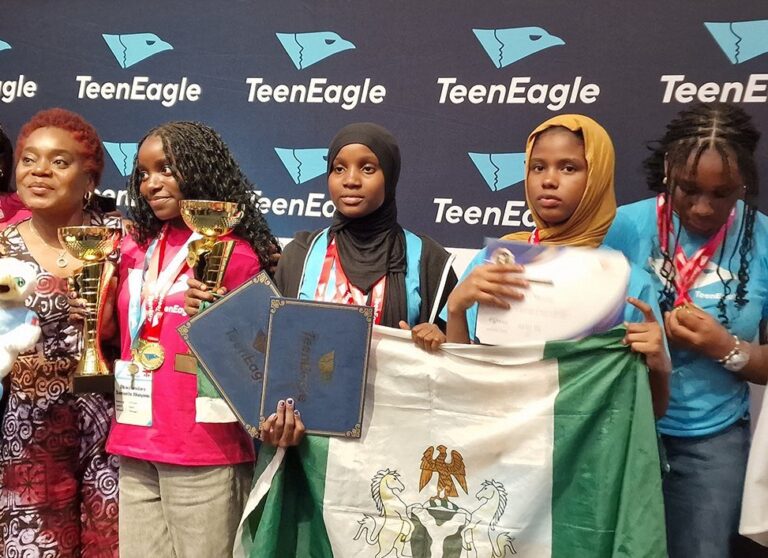
AMID widespread celebrations and calls for national recognition, President Bola Tinubu has congratulated three Nigerian students, Nafisa Abdullahi Aminu, Rukayya Muhammad Fema, and Hadiza Kashim Kalli, for their outstanding performance at the 2025 TeenEagle Global competition held in London, United Kingdom.

Seventeen-year-old Nafisa emerged the overall best in English language skills, beating over 20,000 participants from 69 countries, including native English-speaking nations.

Rukayya, 15, was named the best in debate, while Hadiza clinched the gold medal in the outstanding talent category.

In a statement on Wednesday, August 6, by the President’s Special Adviser on Information and Strategy, Bayo Onanuga, Tinubu described the trio as ‘exceptional young Nigerians’ and praised their triumph as a reflection of the nation’s bright future and the potential embedded in its youth.

The president commended the students’ institutions for nurturing what he called ‘some of the world’s brightest minds’ and reiterated his administration’s commitment to removing financial barriers in education through initiatives like the Nigerian Education Loan Fund (NELFUND).

“President Tinubu commends these exceptional young Nigerians for the feat and affirms that the nation’s future is much brighter with many of its youth as repositories of excellence.

“The president also commends the institutions of learning and states that these accomplishments are a testament to the quality and potential of Nigeria’s education system as a nurturer of some of the world’s brightest minds,” the statement read.

The congratulatory message came as many Nigerians celebrate the young girls’ victory, particularly on social media, where users have called for national honours, scholarships, and housing rewards for the students, in what similar to what was gifted to recent sports champions.

The ICIR earlier reported that the victory of Nafisa, a student at Nigerian Tulip International College (NTIC) in Yobe State, triggered a renewed discourse on Nigeria’s educational potential. 

Many Nigerians, including prominent figures, had urged the federal government to grant her a national honour similar to those awarded to the Super Falcons and D’Tigress teams after recent victories.

The Yobe State Governor Mai Mala Buni, whose scholarship scheme reportedly funded the education of Nafisa and Rukayya at NTIC, has already announced plans to host a grand reception in their honour. 

In a statement signed by his media aide, the governor said the students’ achievements ‘”justify the government’s investment in the education sector.”

Similarly, former Vice President Atiku Abubakar and former Minister of Communications Isa Ali Pantami both applauded Nafisa’s feat. 

Atiku described it as “a powerful testament to the limitless potential of the Nigerian girl-child when provided with quality education and a supportive environment,” while Pantami called for her to be awarded $100,000, a three-bedroom apartment, and the Officer of the Order of the Niger (OON) honour.

On July 28, the Nigerian government gifted each member of the Super Falcons $100,000, a flat, and national honours after their Women’s Africa Cup of Nations triumph in Morocco. A similar gesture was extended to the D’Tigress basketball team for their fifth consecutive AfroBasket title on August 4.

Meanwhile, the president encouraged Nafisa, Rukayya, and Hadiza to remain steadfast in their studies and wished them continued success.

FG warns of 5-day floods in 19 states, issues nationwide alert

0

THE Federal Government (FG) has predicted heavy rainfall over a five-day period that may trigger flooding in 19 states across 76 locations.

The FG issued the warning on Tuesday, August 5, through the National Flood Early Warning Systems Centre of the Federal Ministry of Environment.

This comes as severe floods hit Ogun and Gombe states, with Lagos, Plateau, Anambra, and Delta states also experiencing flood-related crisis.

The government urged stakeholders and residents to take urgent preventive measures to stay safe.

The flood prediction report indicates that certain areas will likely experience heavy rainfall leading to flooding between August 5 and August 9.

The flood prediction affects several states and locations, including Akwa-Ibom, Bauchi, Ebonyi, Cross River, Nasarawa, Benue, Kaduna, and Katsina, with specific areas listed in each state.

Other affected states and locations include Kebbi, Kano, Niger, Plateau, Taraba, Jigawa, Yobe, Zamfara, Sokoto, Borno, and Gombe, with multiple specific areas listed in each state.

Flooding in Nigeria is an annual disaster that results in loss of life and property damage.

Last year, 31 states were affected, causing hundreds of deaths, thousands of injuries, and impacting 1.2 million people.

Nigeria has experienced severe flooding this year, resulting in loss of life and property damage.

According to the National Emergency Management Agency (NEMA), 191 people have died, 94 are missing, and 134,435 have been affected across 20 states and 47 local government areas.

The ICIR reported that the Nigerian Meteorological Agency (NiMet) predicted three days of heavy downpours and thunderstorms across Nigeria from Monday, August 4, to Wednesday, August 6.

In its weather outlook released on Sunday, August 3, in Abuja, NIMET said early morning thunderstorms were expected on Monday with medium rains over parts of Sokoto, Adamawa, Kebbi, Zamfara, Jigawa, Kano, Katsina, and Taraba states in the northern region.

Veteran journalist Doyin Abiola dies at 82

0

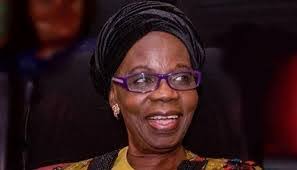
DOYIN Abiola, one of Nigeria’s most iconic media pioneers and the first Nigerian woman to become Editor-in-Chief of a national daily newspaper, has died at the age of 82.

A doctoral degree holder, she was one of the wives of the late business tycoon and politician, Moshood Kashimawo Abiola, the acclaimed winner of the annulled June 12, 1993, presidential election.

Her death was confirmed on Wednesday by Jamiu Abiola, one of Abiola’s sons, in a phone interview with Punch Online.

Media icon and barrier breaker

Abiola was widely revered for her groundbreaking achievements in journalism, her fearless advocacy for truth, and her leadership in the Nigerian media space, spanning more than three decades.

Born in 1943, she earned a degree in English and Drama from the University of Ibadan in 1969 and began her journalism career at Daily Sketch, where her column ‘Tiro’ gained popularity for addressing public and gender issues.

In 1970, she proceeded to the United States for postgraduate studies, culminating in a PhD in Communications and Political Science from New York University in 1979.

Upon returning to Nigeria, she joined Daily Times as a Features Writer, rising to Group Features Editor and later serving on the paper’s influential editorial board.

Her editorial acumen eventually led her to National Concord, where she made history as the paper’s first daily editor. In 1986, she was appointed Managing Director and Editor-in-Chief, which made her one of the most powerful media executives in Nigeria at the time.

Under her leadership, the Concord Group flourished, expanding its reach to publish 14 different newspapers and magazines.

Despite military clampdowns, including an 18 month proscription during General Sani Abacha’s regime, l Abiola remained committed to press freedom and ethical journalism.

A firm believer in merit over gender, she once turned down a “Woman Editor” role at Daily Times, arguing that the title underestimated her capabilities.

Her trailblazing stance would later pave the way for future generations of women in media.

Abiola also served the industry in numerous capacities, including chairing the Nigerian Media Merit Award’s nominating panel and sitting on Ogun State University’s advisory council.

She was named an Eisenhower Fellow in 1986 and later received the prestigious Diamond Awards for Media Excellence (DAME) Lifetime Achievement Award, becoming only the second woman to do so.

She also served as Chairperson of the CNN African Journalist of the Year Awards.

Throughout her career and personal life, she stood firmly by her husband during the years of political persecution and upheaval that followed the annulled 1993 election.

Funeral arrangements are expected to be announced by the family.

Bandits abduct 150 persons in Zamfara in four days

AT least 150 people, including 20 young girls and women, have been abducted by bandits in a series of attacks on several communities in Zamfara State over the past four days.

Residents of the affected communities confirmed the figures to journalists noting that heavily armed bandits launched attacks at night or during rainfall over a four-day period in several villages, including Moriki, Sabon Garin Damri, Dakko Butsa, Tungar Abdu Dogo, Tungar Sarkin Daji, Sadeda, and Tungar Labi.The 20 young girls and women were abducted in a fresh attack on Moriki town in Zurmi Local Government Area.

A resident of Moriki, Sufyanu Moriki, told journalists that the victims were abducted on Saturday while they were out gathering firewood on the outskirts of the town.

“The abduction actually happened on Saturday. They went out to fetch firewood at the outskirts of the town when they were kidnapped by the armed group. They are yet to contact anyone to demand ransom,” Moriki said. 

Similarly, the spokesperson for the Zamfara State Government, Mahmud Mohammed Dantawasa, confirmed the series of attacks but did not confirm or deny the number of people kidnapped, stating only that the government was working to rescue the victims.

The ICIR reported last month that 33 kidnapped victims of Banga village in Kaura Namoda Local Government Area of the state were allegedly forced by their abductors to kill one another, after their relations had paid ransoms on them.

The victims were among the 50 people, mostly women and children, abducted in February by a suspected notorious bandit, Bello Dansadiya, and his team during a raid, where three pregnant women delivered and all the babies died there.

Despite allegedly receiving N50 million ransom, paid in instalments, Dansadiya refused to release all the abductees, ignoring repeated pleas from their relatives.

Responding to the latest abduction, the Zamfara Police Command’s spokesperson, Yazid Abubakar, said he had yet to receive information about the abduction but promised to provide details once he is briefed on the incident.

The ICIR reports that organised armed gangs began to emerge in North-West Nigeria from 2011, where bandits levy taxes on farmers, rustle cattle and kidnapping became lucrative business.

The recent rise of the Lakurawa jihadist group in the region has further escalated violence in the region.

Many communities across the Zamfara State 14 LGAs have been displaced, with residents of Maru, Anka, Shinkafi, Maradun, Zurmi, Gusau, and Bungudu LGAs being the worst hit.

A member of the Zamfara State House of Assembly, Aminu Ibrahim, representing Kaura Namoda State Constituency, was arrested last year over alleged involvement in banditry and kidnapping in the state.

Another Nigerian found dead in UK residence 

THE United Kingdom’s Metropolitan Police have identified the victim of a fatal stabbing in Romford as 60-year-old Nigerian woman, Nkiru Chima, who was discovered dead in her apartment with multiple stab wounds.

The Metropolitan Police, in a statement published on its website on Tuesday disclosed that they were alerted by the British Transport Police around 7 p.m. on Sunday, prompting officers to visit the apartment.

“A report from the British Transport Police at around 19:00hrs following concerns for welfare of a woman at an address in Bushy Close, RM1.

“Officers located a woman at the address with multiple stab wounds, she was sadly pronounced dead at the scene. She has since been named as 60-year-old Nkiru Chima from Romford” the statement read.

The ICIR reported a similar incident on Monday, where two individuals were charged in connection with the fatal stabbing of 26-year-old Nigerian, Ayowale Aladejana, in New Cross, southeast London.

The Metropolitan Police reported that detectives investigating Ayowale Aladejana’s fatal stabbing had charged a man and a woman with murder.

Reacting to the latest cases, Detective Chief Inspector Joanna Yorke of the Met’s Specialist Crime Command said the police was confident that Nkiru’s tragic death was linked to the death of a 20-year-old man found on the train tracks at Romford station earlier that evening.

“As our enquiries have progressed, we are confident that Nkiru’s tragic death is connected to the death of a 20-year-old man on the train tracks at Romford station earlier that evening. This man was known to Nkiru and British Transport Police continue to investigate his death.

“I would like to thank the local community for their support with this investigation so far.”

Yorke noted that officers would continue their enquiries and urged anyone with information to contact the police on 101 or reach out on X @METCC, quoting reference CAD 6914/27JUL.

The ICIR reported in May that a nurse residing in Leeds, United Kingdom, Nnena Miriam, was found dead in her apartment.

The news was confirmed in a statement released by Fellow Nurses Africa, an organisation committed to promoting the nursing profession in Africa.

It revealed that police discovered Miriam’s body following a missing person report.