Home Blog Page 2149

Covid-19: FIRS discards rumour, says no staff tested positive  

By Uthman Samad


THE Federal Inland Revenue Service (FIRS) has debunked the news making round that an official of the service has been tested positive of Coronavirus in Abuja.

Media reports since the early hours of Saturday have disclosed that an official of FIRS has been confirmed positive together with two other Nigerians. The news claimed that the official was one of the passengers on the British Airways’ flight that landed on March 13, 2020.

In a statement obtained earlier this afternoon by TheICIR, signed by the Communications and Liaison Department director, Abdullahi Ismaila Ahmad, the board explained that a member of the staff of the service has only been observing self-isolation alongside his spouse for the past 5 days after he went to pick his wife from the airport.

The Service can confirm that a member of staff who went to pick his wife from the airport following her return from a trip abroad is currently and voluntarily observing the Federal Government advisory of self-isolation alongside his spouse at the couple’s home since Monday.

Both husband and wife have not visited any FIRS offices or events since the wife returned to Nigeria last Sunday.

A part of the statement reads that the agency has taken and directed all FIRS offices across the nation to take necessary precautions to protect both staff and taxpayers from Covid-19 through safety measures such as social distancing, temperature testing, disabling of the biometric sign in, and provision of hand sanitizers for staff and visitors at offices nationwide.

ICPC finally apprehends ex-presidential aide, Obono-Obla

THE Independent Corrupt Practices and Other Related Offences said it has apprehended the suspended Chairman of the Special Presidential Investigation Panel for the Recovery of Public Property (SPIP) Ekoi Obona Obla on Friday.

ICPC said before his apprehension, it had placed surveillance on Obona Obla having declared him wanted in October 2019.

He was eventually arrested along Aso Drive opposite Millenium Park in Abuja on Friday.

According to the commission, Obona Obla has refused to appear before the commission to answer questions bordering on certificate forgery, abuse of office among others.

ICPC added that medical profiling and other protocols have been put in place as Obona Obla has been taken into custody at the headquarters of the commission in Abuja.

In October 2019, ICPC said it received petitions from Nigerians against the ex-presidential aide alleging that he is living above his income and collection of gratification from suspects under the investigation of SPIP.

The presidential panel was eventually dissolved in September by President Muhammadu Buhari who said his action would give room for proper investigation on allegations against Obono-Obla.

It started as a tickle in my throat — Coronavirus patient talks about deadly virus

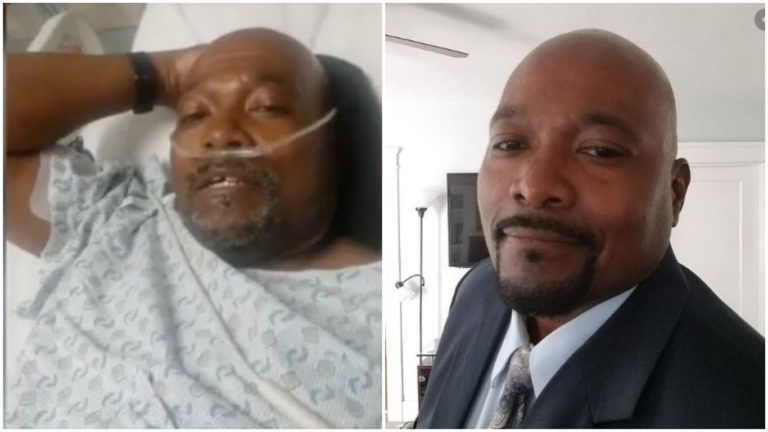
CORONAVIRUS has infected over 200,000 people globally according to World Health Organisation (WHO) and as patients battle with the deadly virus across the globe, one of them simply identified as Kevin Harris, has shared details about the virus which he iterated almost killed him.

Hospitalised in Ohio, a midwestern state in the United States (U.S), Harris is one of the people who has come down with COVID-19 but is gradually recovering.

However, before he ‘got out of the woods’ as his doctors described it, Harris explained in a recent interview that he thought he was going to die.

According to him, it all started on the evening of Monday, March 2, when he felt a strange tickle in his throat. Harris explains that it felt like something was stuck in his throat and didn’t want to get out.

After a long night of restless sleep, Harris recalls that by morning, it had graduated to what he thought was a flu and a fever

I started coughing,” he said.

“That was the first sign and it went downhill in 24 hours, like gangbusters. I woke up several times thinking I was gonna die,” 55-year-old Harris recounted on his hospital bed.

Harris had booked an appointment with a doctor and he said he visited the hospital and he was told he had a flu and the doctor prescribed something for the flu.

However, he said he felt ten times worse few days after constantly using the medication.

It was at that point the father of four said he called his friend, whose wife came to visit him and told him he had pneumonia and decided they should get to the hospital. As he hopped in the shower to take a bath, he passed out.

Harris was admitted at the Mercy Health St. Joseph Warren Hospital in Warren, U.S on March 8, where his sickness was declared unknown by the doctors until March 11, when he tested positive to coronavirus.

According to him, they had for three days told him he didn’t have coronavirus as he didn’t display the regular symptoms and he had attested to not being in contact with anybody for two weeks before he caught the virus.

“I hadn’t seen anyone in 10 days before I caught the virus,” he said.

The coronavirus patient recalls that his doctor had tears in her eyes when she broke the news to him despite initially informing him that he didn’t have coronavirus.

He said he was told that nothing could be done as there was no cure and all he could do was pray.

” They basically told me to pray,” Harris pointed out.

Having spent weeks in the hospital and now feeling slightly better, Harris is now preaching social distancing and advocating that people take the virus more seriously.

“Do not go in the crowds. Do not shake hands. Stop hugging each other,” he said. “Wash your hands continually. Do not kiss on your kids. There are thousands of people carrying this virus around. They may never get it.

“People need to stay away from other people. They call it social distancing — I say just be anti-social. Just stay away from other people,” Harris said.

Unlike Harris who appears lucky to have survived the fatality of the virus, over 8,000 people have been recorded dead after contracting COVID-19, according to WHO.

In Nigeria, twelve persons have tested positive to the deadly virus but no death as a result of coronavirus has been recorded in the country.

However, a lack of a known cure or vaccine leaves many people worried and in panic mode as the death toll rises daily.

Recently, president of the United States, Donald Trump endorsed chloroquine as possible treatment for coronavirus, submitting that the U.S Food and Drug Agency (FDA) had approved it.

However, his statement was disclaimed when the FDA said there are no “FDA-approved therapeutics or drugs to treat, cure or prevent COVID-19.”

Meanwhile, the National Agency for Food and Drug Administration and Control (NAFDAC) on Friday announced that it had approved the production of chloroquine for clinical trials in preventing the spread of  COVID-19.

FACT-CHECK: Claims that FG will conduct aerial disinfection due to COVID-19 is False

SINCE the World Health Organisation (WHO) declared the deadly COVID-19 disease pandemic, and prior to the declaration, several unproven claims have been made across the social platforms in Nigeria.

Some of these claims are exaggerated , others misleading.

Most recent among these assertions, however, include claims that the use of chloroquine is capable of curing COVID-19 disease.

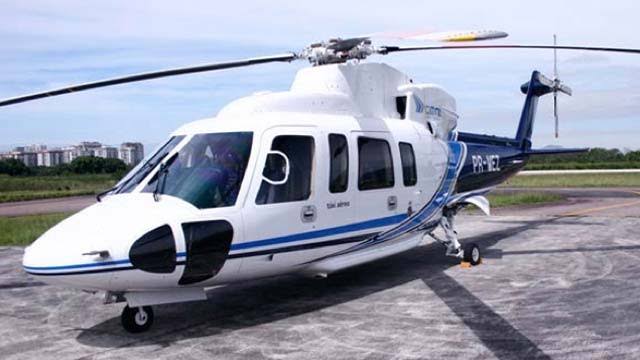
The second claim says the Federal Government would conduct an aerial containment of the virus.

These two claims have been shared on whatsapp platform and other social media groups.

“Breaking News: Warning, Warning, Warning. Please nobody should be outside by midnight today, lock up your door and window.

“Don’t leave your clothes or shoes outside. Federal Government have announce the plan to spray chemicals on air tonight with private jet to protect the country because of coronavirus.”

Findings

First, since outbreak of the coronavirus, up till date, the WHO is yet to recommend any particular anti-virus as cure for the pandemic.

Most of the recommendations suggested as precautionary measures includes maintaining proper hygiene, covering of mouth especially when coughing, the use of face mask and maintaining social distance particularly when in public space.

Though, Scientists in the United States and China have shown interests in the use of chloroquine tablet, but it remains questionable, as the US Food and Drug Administration agency was reluctant to accept the drug shortly after President Donald Trump made a declaration adopting the drug.

On Friday, the Minister of Health, Dr. Osagie Ehanire was also indifferent recognising chloroquine as a reliable cure.

Ehanire aligned the position of the Nigerian government with that of the WHO, including the anticipated outcome from the UN agency.

Prof. Akin Abayomi, Lagos State Commissioner for Health also dispelled the use of chloroquine as an effective preventive cure.

He questioned efficiency of the drug with much expectation on more proven scientific results.

The commissioner also warned against the drug usage without medical supervision considering its severe side-effects,stressing that the state government would conduct its clinical trial on the drug’s effectiveness for either prevention or management.

“Use of chloroquine in COVID-19 infection by Lagos State. We do not have any hard evidence that chloroquine is effective in preventing or managing the coronavirus.

“We are watching the global research space to clearly define its efficiency in COVID-19,” Abayomi stated.

In its pinned tweet, the Nigeria Centre for Disease Control (NCDC) also advised Nigerians against the use of chloroquine, as wrong usage could lead to death.

“WHO has not approved the use of chloroquine for COVID-19 virus,” NCDC tweeted on Friday.

“Scientists are working hard to confirm the safety of several drugs for this disease. Please do not engage in self medication. This will cause arm and can lead to death.”

Meanwhile, regarding the aerial containment through the use of helicopters in Nigeria to spray disinfectants, there is also no available record as part of Nigeria’s COVID-19 preparedness plan.

The Health Minister, during his briefing also did not mention the adoption of helicopter in containing the virus.

Moreover, the assertion is marred with typographical errors and grammatical mistakes.

Although, few nations have developed public measures to sanitise the public space by openly disinfecting streets and other public spaces, no such action has been carried out by the federal government.

The only similar activity is to subject airport passengers to test through handheld temperature measuring devices, mostly during arrivals. They are also encouraged to make use of hand sanitisers.

Verdict

Based on the available piece of evidences, the claim that chloroquine usage could cure the deadly COVID-19 virus is questionable, and by extension could be described as false.

No global authority such as the United Nations WHO has approved use of chloroquine. The FDA and National Agency for Food and Drug Administration and Control (NAFDAC) has only accepted the drug as clinical trial.

On the second claim, there is no available public evidence to proof the use of helicopter in sanitising public space over night in Nigeria.

NigComSat: Nigeria’s satellite company still not profitable 14 years after launch

Kunle ADEBAJO


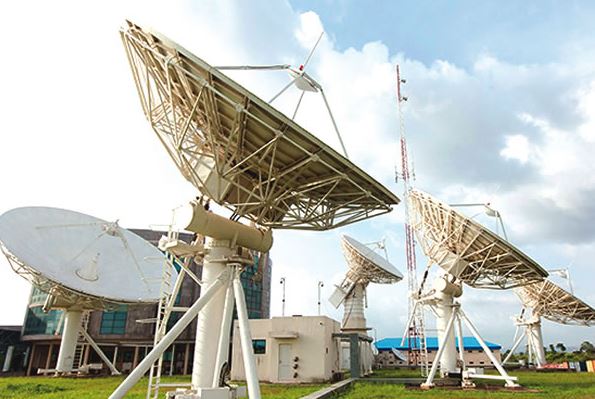
WHEN the Nigerian Communication Satellite company, NigComSat, was incorporated in 2006, the government had ambitious plans to make it world-class. The country’s excitement overflowed the following year with the launch of Sub-Saharan Africa’s first geostationary communication satellite. By April it will be 14 years since the journey started, but NigComSat’s scorecard remains unsatisfactory.

Domiciled under the Federal Ministry of Communications, its activities are expected to revolutionise information and communication technology in Nigeria, as well as improve national security, broadcast, internet access, and e-governance. Its services are also crucial in the health, education, and extractive sectors. 

NigComSat’s vision is to be “the leading satellite operator and service provider in Africa” by exploiting the commercial viability of the country’s communication satellite(s) for its socio-economic benefits. But that has not happened as the company continues to take from what little revenue is generated by the government rather than add to it.

This is more worrisome considering that the satellite under its control, NigComSat-1R, which was launched in 2011 has a lifespan of 15 years, out of which only six is left. And it is estimated that every year, digital mobile operators and telecommunications companies in Nigeria, spend over $2 billion in getting satellite services from foreign providers.

Isa Ali Pantami, who was appointed Minister of Communications and Digital Economy in August, appears to be especially concerned about the state of affairs at NigComSat.

A month after he assumed office, he directed the agency to get an International Standard Organisation (ISO) certification. 

That same week, at its strategic retreat, the minister said the only reason there have been arguments on whether to privatise or further commercialise the agency is because it is admittedly not “very viable”.

In December, new governing board members and executive directors were appointed for the company.

It is not only Pantami who is worried. The chairman, House Committee on ICT, Abubakar Lado Suleija, lamented during a visit to NigComSat’s Abuja headquarters last November that its potentials to generate revenue and create jobs have not been realised as we have in other countries.

Zero profits despite huge allocations

It did not take long for the NigComSat project to be described by telecoms experts as a debacle and “white elephant in space”.

It was so described in 2008 when NigComSat-1, the originally launched Chinese-built satellite which cost $340 million (then N40 billion), and was later shut down due to erratic power supply.

Indeed, relevant statistics shows that NigComSat continues to fail living up to expectations.

A study of Nigeria’s budgets from 2009 to 2020 reveals that up to N43.5 billion has been allocated to the centre.

Figures from the office of the accountant-general further show between 2011 and 2017, not lesser than N13.3 billion was released to it for capital expenditures, out of which it spent N12.6 billion.

Its wage bill, which started as N747 million in 2009, has jumped to N2.6 billion. With 397 employees as of 2016 and a personnel cost of N2.3 billion that year, the Federal Government must have paid the workers an average of N5.8 million per annum (or N480,000 a month).

Nigeria has also had to service debt owed to the Chinese government for many years.

Funding for the satellite launch had included $51 million from the Nigerian government and a $200 million loan from China’s Exim Bank.

Data from the Debt Management Office show that between 2011 and 2014, debt service payments for NigComSat amounted to $127 million, and between 2015 and 2017, the amount left to be paid for the project dropped from $50 million to $10 million.

But there is little to show for the huge investment, allocations, and salaries. 

According to a 2016 report by Punch Newspaper, the company generated only N584 million in revenue between 2011 and 2014. Put differently, its revenue in those four years constitutes only 3 per cent of its expenses on salaries and capital projects during the same period (N19 billion).

Responding to a Freedom of Information request asking for its updated client base, employee strength, and revenue figures, NigComSat’s secretary, Udevbure Unuigbe, said in an email on February 19 that the information would be provided “as soon as possible”. This promise has, however, not been kept.

Unuigbe also disclosed that, though it is fully owned by the Federal Government, the company does not yet have an establishment Act, though “efforts are being made in that direction”. 

Unaffordable, unreliable

As far back as 2008, there have been plans to launch additional communication satellites into space, but this has yet to materialise.

According to the former NigComSat Managing Director Timasaniyu Ahmed-Rufai,  having new satellites would demonstrate the company’s capacity to “develop into a huge commercial enterprise as well as compete in the international satellite market”.

But 12 years down the line, the agency is still managing only one communication satellite: the NigComSat-1R.

In January 2018, former communications minister Adebayo Shittu announced that China’s EXIM Bank and state-owned China Great Walls have agreed to fund the production of two new satellites for NigComSat expected to cost $550 million.

He said the satellites would be ready two years after the deal is sealed.

It is however uncertain if production is still ongoing,  or if the deal indeed was completed

At its 5th regular meeting held in 2017, one of the resolutions of the National Council on Communication Technology was that government MDAs and other organisations shall be made to buy satellite bandwidth from NigComSat “unless the required bandwidth is not available” on the company’s satellite(s). But this is not enough to reverse the trend of events.

President of the Association of Telecommunications Companies of Nigeria (ATCON), Olusola Teniola, explained in 2018 that most of the association’s members source satellite services from foreign companies simply because it is the cheaper option.

“The issue with NigComSat is the pricing. Service providers are taking capacities from foreign satellites because of that and this has been going on for quite some time,” he said. 

NigComSat’s inadequacies have continued to encourage foreign players to fill in the local supply gap.

In February alone, US-based operator Viasat announced plans to expand into the Nigerian market and Isreal-based Spacecom sealed a deal with PanAccess to provide Ku-band capacity for its broadcast operations in the country.

What Nigeria is missing 

Unlike with Nigeria’s NigComSat, the Fixed Satellite Services (FSS) business has proven lucrative in many other countries.

According to research conducted by Bryce Space and Technology, a 2016 estimate of the worth of the global space economy is as high as $344.5 billion (N126 trillion), and 75 per cent out of this comes from commercial revenue. 

“Telecommunications satellite operators traditionally have been the most profitable space companies, often recording double-digit margins year after year,” the study said.

In 2018, revenue from the global satellite industry was $277 billion, double the figure from a decade earlier.

But Nigeria, despite her pioneer status on the continent, is yet to get a slice of the pie.

Analysis by Space in Africa observes that one of the approaches that have worked for NigComSat’s major competitors is they are not entirely owned and managed by the government.

While 16.7 per cent are state-owned, 33.3 per cent are private companies, and 50 per cent are publicly traded.

Angola’s AngoSat and Algeria’s AlcomSat which are similarly operated by the government are also not economically viable.

Egypt’s NileSat, currently Africa’s largest satellite operator valued at over $586 million, used to be government-owned as well. But its fortunes improved after it was publicly traded.

In 2018, Space in Africa noted, it made a revenue of up to $145 million. 

TeleSat, which was previously owned by the Canadian government, has a similar history. Following its privatisation in 2007, its worth has more than doubled from $2.8 billion to $7 billion and the company is currently the world’s fourth-largest FSS provider.

The business model needs to change

Managing Director of Space in Africa and former African Regional Coordinator at the Space Generation Advisory Council, Temidayo Oniosun, believes NigComSat needs to admit its fundamental flaws. 

These, he said, include poor planning and management, unreliable and insufficient satellite assets, and unaffordable services. If the issues are not addressed, he added, then companies and even other government agencies will not trust the establishment enough to patronise it.

The House of Representatives has also accused the company’s leadership of being incompetent after discovering irregularities in its accounts. “We have to rescue this agency from you. In fact, if I had my way, I would recommend your sack,” Chairman of the House Committee on Finance, James Falake, told NigComSat’s Managing Director, Abimbola Alale, in February. 

Oniosun observed that NigComSat’s present model is not sustainable and needs to be treated as an actual business.

He identified it’s fielding of a Direct-to-Home (DTH) platform, NextTv, in 2019 as a reflection of its misguided leadership.

“NigComSat is supposed to be a service provider to other resellers, not the primary service provider. That means on their platform they can host satellite TVs like DSTv, StarTimes, and GoTV, but instead of selling to those people, they went ahead to launch their own DTH, Direct to Home, to compete with others,” he said.

“They should know that something like that is terrible for business. You can’t have your own DTH platform and expect other DTH platforms to buy services from you.”

Coronavirus: Analysts say America’s economic recession will hit Nigeria badly

THE Bank of America Chief Economist, Michelle Meyer has said in a note that America has officially fallen into recession, joining the rest of the world and it is a deep plunge in which jobs will be lost, wealth will be destroyed and confidence depressed.

The United States (US) is the largest foreign investor in Nigeria, with a foreign direct investment in stock of $5.6 billion in 2018 concentrated largely in the petroleum, mining and wholesale trade sectors.

According to Meyer,  the U.S economy is expected to “collapse” in the second quarter, shrinking by 12 per cent and Gross Domestic Product (GDP) for the full year will contract by 0.8 per cent.

Bilateral relations fact sheet showed that at $2.2 billion in 2017, Nigeria is the second-largest U.S. export destination in Sub-Saharan Africa.

The two-way trade in goods between the US and Nigeria totalled over $9 billion.

The fact sheet also showed that Nigeria is eligible for preferential trade benefits with the U.S under the African Growth and Opportunity Act (AGOA).

Nigerian exports to the US included crude oil, cocoa, cashew nuts, rubber, antiques, food waste and animal feed, while U.S. exports to Nigeria include wheat, vehicles, machinery, kerosene, lubricating oils, jet fuel, civilian aircraft, and plastics.

The U.S news reported businesses under shutdown orders to range from coal mines to building contractors to many types of manufacturers, plus professional offices including law firms and accounting offices.

Retailers ordered to close include car dealers, clothing stores, furniture stores, florists, office supply stores and lawn and garden stores.

How this will affect Nigeria’s economy

Financial economist, Daniel Marcus who spoke with The ICIR said: “If the U.S economy halts, Africa at large would also feel the heat strongly because the U.S is a major supporter of businesses in most African nations in terms of exports.”

“Expected revenue from businesses with the U.S is most likely to drop to the barest minimum”, Marcus added.

Research Analyst, Seyi Kolawole of NASD PLC who spoke with The ICIR said: ” A sluggish American economy also means a deficit in the trade balance between Nigeria and the US”.

According to Chetan Ahya, Chief Economist at Morgan Stanley, “the disruptions and dislocations in the economy and markets will trigger a year over year contraction in global growth in the first half of 2020.”

Ahya believes the U.S. government is undertaking a “strong monetary and fiscal policy response” that “will help revive global growth” in the third quarter of this year.

REPORT: Osun Govt. monetises recruitment into public service, drags JAMB into allegation

SINCE the Osun State Government announced plans to employ 2,500 new teachers into the state Ministry of Education as part of measures to increase workforce in the state secondary schools and primary education, the decision has provoked serious concerns, questioning why the recruitment should be monetised.

Each of the prospective employees is required to pay indirectly by purchasing a pin to access the job website at a sum of N3,000.

But the state government claimed its inability to shoulder the cost of engaging best hands for the vacant positions.

It says the proposed teachers would have to be graduates of English Language, Mathematics and Science, Humanities and Social Sciences.

The ICIR also gathered that the candidates are expected to own Nigerian Certificate in Education (NCE), and while 1,000 of the recruits would be fixed in primary schools, 1,500 would be engaged in secondary schools across the states.

As at the time of filing this report, the actual figure of interested candidates remained unknown while the offer is still ongoing.

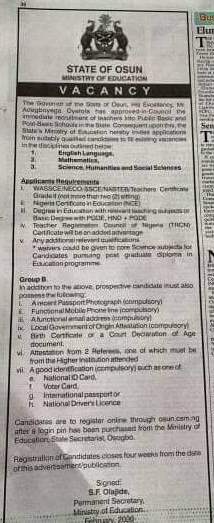
“The governor of the state of Osun, Adegboyega Oyetola, has approved in council, the immediate recruitment of teachers into the public basic and post-basic schools in the state,” an advert placed by the state education ministry showed.

Osun Advert on Recruitment
Photo Source: The ICIR

“Consequently upon this, the state’s ministry of education hereby invites applications from suitably qualified candidates to its existing vacancies in the disciplines outlined below – English Language, Mathematics and Science, Humanities and Social Sciences.”

The advert further encouraged interested candidates to “register online through osun.com.ng after a login pin has been purchased from the ministry of education, state secretariat, Oshogbo.”

The advert was signed in February by S.F Olajide, Permanent Secretary of the state education ministry.

But The ICIR went further to ascertain the N3000 claim.

Ismaila Omipidan, Oyetola’s Chief Press Secretary was contacted but he referred the reporter to Folorunso Bamisayemi, the state Commissioner for Education.

Yes, we charge the sum because State is in distress, we need the best  

Bamisayemi who later spoke with The ICIR in a phone interview affirmed the fixed sum. He said since the outbreak of the Coronavirus virus, the global oil price has been affected which could also affect the nation’s revenue, and by extension, the 36 states, as monthly allocation to states would be affected.

“Not just ours, every state in the country because Nigeria will earn less from oil, so if the country is earning less, that means Osun will still earn lesser as well in spite of our huge debt.”

He further shared insights on how the state had been in a dearth of English and Science teachers including teachers for primary school pupils.

The assessment, he noted, would be Computer Based Test (CBT).

He added that it is to be conducted by the Joint Admission Matriculation Examination (JAMB) at designated locations with supports from an Information Communication Technology (ICT) consultant and the state ministry of education.

“It is true because we will do a screening test, and we must get the best and the brightest,” Bamisayemi said.

“Substantial percentage of this (teachers) will go to English and the science subjects. It will be need-based. So, that’s why we have very serious shortages.  We have acute shortages in English, chemistry and mathematics.”

“The state is in distress. Government cannot fund it. Even when the state was buoyant in 2013, the form went for N2,500 and the substantial part of that went to JAMB. They conducted the screening tests.”

“This time around, they are conducting the screening test for us. They will take a substantial part of that N3000. And 70 per cent will go to JAMB, then it is one thing is to know the subject, it is another to be able to communicate the subject across to the students.”

Speaking on other activities aligned with the assessment, the commissioner revealed that shortlisted candidates who scaled through the yet-to-be-determined cut-off would as well be engaged in micro-teaching to measure the ability of candidates to articulate their knowledge.

This, he said, would be supervised by retired principals, teachers and headmasters.

However, he insisted the gesture was not to inflict hardship on the unemployed youths stressing that, “a dime of the money is not going into the Internally Generated Revenue (IGR).

“We are not that wicked,” he added.

It could be recalled that in 2013, similar recruitment was done in the state and the form was sold for N2, 500.

“Eight years after, the form went for N3,000. Considering inflation and the value of money now, you can see the difference. So I can assure you, a dime is not going into the government cover or anybody’s private purse.”

I am not aware of such an arrangement – JAMB

The ICIR reached out to JAMB through Fabian Benjamin, the body’s spokesperson but he said he was unaware of the arrangement.

Benjamin, who appeared ignorant of the development further asked if it was Osun State government. He wondered the kind of service JAMB would render, the amount involved and the level of partnership.

“Honestly, I don’t have that information. I’m not even aware we are doing anything of such with the Osun State government in that regard. So I don’t know,” Benjamin said.

“I am no saying what the government is saying is untrue but I don’t have the information. I don’t now to what extent we are partnering with them, what kind of service are we rendering? How much are they paying? I don’t know.”

Chloroquine: FDA punctures Trump’s claim, says no approved therapeutics, drugs to cure or prevent COVID-19

0
THE US Food and Drug Agency says there are currently  no ‘FDA-approved therapeutics or drugs to treat, cure or prevent COVID-19, contrary to claims by President Donald Trump on Thursday that the agency has approved chloroquine as a drug to cure the disease.
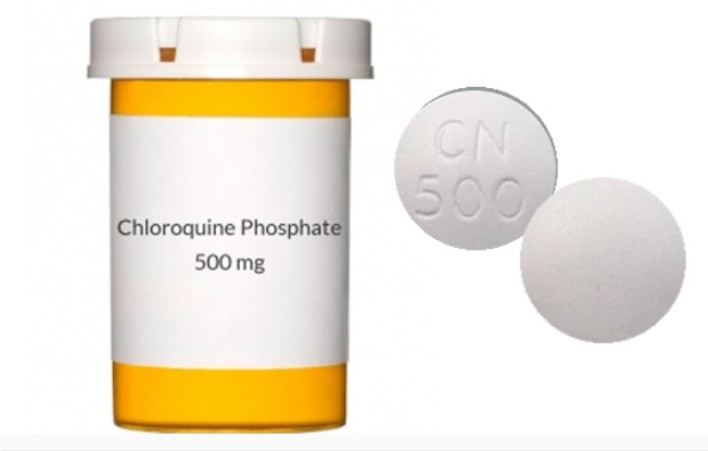
Chloroquine is used to treat malaria, lupus and rheumatoid arthritis but has now been claimed to be effective in the treatment and cure of the novel virus.
Trump claimed during a White House briefing on Thursday that the Food and Drug Administration had approved the “very powerful” drug chloroquine to treat coronavirus.

“It’s shown very encouraging — very, very encouraging early results. And we’re going to be able to make that drug available almost immediately. And that’s where the FDA has been so great. They — they’ve gone through the approval process; it’s been approved. And they did it — they took it down from many, many months to immediate. So we’re going to be able to make that drug available by prescription or states,” he  said.

However, the FDA in a press release titled “Coronavirus (COVID-19) Update: FDA Continues to Facilitate Development of Treatments,” noted that there are several of its-approved treatments that may help ease the symptoms from a supportive care perspective.

The agency disclosed that it was working closely with innovators in their work to expedite these efforts, including leveraging scientific information about the virus and trials currently being conducted in other countries such as China, Japan, South Korea and Italy as well as in the U.S.

“Quickly after the emergence of this virus, the FDA began working directly with partners and innovators to foster the development of medical countermeasures against COVID-19, and we are continuing to provide regulatory flexibility, advice, guidance, and technical assistance.

“The FDA continues to work with interested sponsors to help expedite any additional clinical trials for COVID-19 medical countermeasures that may be appropriate. The FDA is able to, and has been, turning around requests very quickly to assist in initiating clinical trials,” it said

Chloroquine was banned as a first line treatment drug for malaria in Nigeria in 2005.
The decision, based on the recommendation of the World Health Organisation, was taken by the Federal Ministry of Health due to high treatment failures resulting from drug resistance.
In 2002, the WHO recommended the ban of chloroquine for treatment of malaria when the Therapeutic Efficacy Testing conducted across the six geopolitical zones in Nigeria showed that the drug had an efficacy of 35 percent as against the standard 95 percent efficacy.
According to the report by WHO, in most countries of East Africa and Ethiopia, more than 50 percent of patients were not cured by chloroquine.
Moderate levels of resistance were found in Central and Southern Africa whereas in West Africa, report levels vary widely but tend to be lower than in Central and Southern Africa.
This led to the removal of chloroquine as a first line treatment for malaria in the National Antimalarial Treatment Policy 2005.
Fifteen years later, the COVID-19 outbreak is bringing back chloroquine into the market, although the ban has not been strictly adhered to over the year.
Meanwhile on Friday, National Agency for Food and Drug Administration and Control (NAFDAC) approved for the testing of chloroquine in the treatment of COVID-19.
Chloroquine was discovered in 1934 by Hans Andersag, an Italian scientist.
It is a synthetic form of quinine, which has been used to treat malaria since its discovery, while hydroxychloroquine shares a similar mechanism of action but is less toxic.

COVID-19: NAFDAC approves production of chloroquine for clinical trial

THE National Agency for Food and Drug Administration and Control (NAFDAC) on Friday has approved the production of chloroquine for clinical trials in preventing the spread of  COVID-19. 

Director-General of the agency, Mojisola Adeyeye, has disclosed this at the NAFDAC headquarters in Lagos.

Adeyeye, however, clarified that the approval of chloroquine for clinical trial does not equate its usage for the treatment of coronavirus in Nigeria.

“In the case of Chloroquine, it has been demonstrated in the literature and with clinical research which is still ongoing, that Chloroquine is superior to the Placebo.

“NAFDAC is not approving Chloroquine as a product that can be used for Coronavirus because there is no submission to us for registration but because it is under clinical trials, NAFDAC approves medicines meant for clinical trials.

“Therefore the medicine is being approved just for the clinical trials,” Adeyeye said, calling on experts and researchers interested in doing a clinical trial on Chloroquine to approach approved outlets. 

“Right now, we have asked one company to make a batch of Chloroquine for the purpose of a clinical trial.

“Nobody should use chloroquine as anti-malaria because of the resistance that has been proven to develop in the past after the use of chloroquine in the population,” the NAFDAC DG said.

On Wednesday, the World Health Organisation (WHO) reportedly listed chloroquine among four drugs identified for a multinational clinical trial as part of efforts to find a cure to the pandemic.

The trial is code-named Solidarity Trial.

“The drugs to be tested are antiviral drug remdesivir; a combination of two HIV drugs – lopinavir and ritonavir, lopinavir and ritonavir plus interferon beta and the antimalaria drug chloroquine,” report says.

“All show some evidence of effectiveness against SARS-CoV 2 virus, which causes Covid-19, either in vitro and/or animal studies.”

WHO said the four drugs or a combination of an existing drug used to cure other ailments would be tested while 10 nations already signified interest in the clinical trial.

However, the federal government had expressed indifference about the use of chloroquine as a cure for the novel coronavirus in Nigeria.

The Minister of Health, Osagie Enanire in a press conference earlier on Friday in Abuja, noted that although chloroquine had effectively yielded a positive outcome on the surface through on In-Vitro test that is conducted on the outside of the human surface, it has not been confirmed to effectively cure the COVID-19 when an In-Vivo test is done inside the human body.

FG not considering use of Chroloquine as cure for COVID-19— Minister

MINISTER of Health, Osagie Ehanire on Friday said the would wait for the recommendations by the World Health Organisation (WHO) as cure for the pandemic coronavirus, rather than adopting chloroquine that is purported to be the cure for the virus.

“We no longer use chloroquine in Nigeria. We look at what the World Health Organisation recommends and the scientists here, what their recommendation is,” Ehanire said during a press conference called to give update on the pandemic in the country.

“And so far, there are things that have been said about chloroquine, that it was active in In-Vitro test and not proven to have been active In- Vivo test.

“The situation might change, and that is the information we have so far. We may not necessarily look at that but we are not ignoring either the possibility or option,” he added.

He stated that the Federal Government might consider some elements of the drug, noting that its functionality is limited to external germs on the body rather than to cure the disease from within the body system.

The Minister reiterated that the WHO was  yet to make a valid position on the drug as a cure to the pandemic.

According to his explanation, in-vitro, is a test on the surface of the human body,  while invivo is a test carried out inside of the human body with the germs within inherent.

He said the use of chloroquine with an In-Vitro test appears to have had a positive outcome while the In-Vivo has not been proven to be active.

Ehanire however, noted that Nigeria has so far not witnessed any case that required the use of chloroquine or any other form of medication.

“As for hydroxychloroquine, we don’t generally use that for that purpose except for some immune situation,” he said.

The Federal Government stance on the use of chloroquine as cure for coronavirus came on the heels of the recent development in the United State (US) approving the use of the chloroquine to combat the spread of COVID-19.

The US President, Donald Trump on Thursday had approved the anti-malaria drug chloroquine for use as a treatment against coronavirus.

He stated that the drugs would be made available for prescription as successive inquiries on chloroquine had proven as effective to cure the coronavirus pandemic.

The US Food and Drug Administration (FDA) said it was working with the government and academic entities to investigate the holistic effectiveness of chloroquine in treating patients with mild-to-moderate COVID-19 to potentially reduce the duration of symptoms, as well as viral shedding, which can help prevent the spread of disease.