Home Blog Page 2162

FG recoups stolen N594b in less than 3 years through whistleblowing

ITSE SAGAY, the chairman of the Presidential Advisory Committee Against Corruption (PACAC) has revealed that the Federal Government of Nigeria has been able to recover N549.09 billion stolen funds in less than three years through its whistleblowing policy.

He disclosed this at the opening ceremony of a two-day workshop on Entrenching Whistleblowing Policy in Regulatory and Revenue Generating Agencies in Nigeria organised by the PACAC in collaboration with the African Centre for Media Information and Literacy, (AFRICMIL) in Abuja on Wednesday.

According to Sagay, the policy has been successful in terms of government assets recovery through whistleblowing as well as the revelation of the varieties of fraudulent ways through which some Nigerians steal from the country.

He added that although the policy has been successful, there is still a vital need to elevate it from being a policy to an Act  of the Parliament to encourage more whistleblowers.

“Leaving it as a policy will create the impression that the Federal Government is not bound to pay a reward for information leading to recoveries thus discouraging informants, secondly, a legal framework will contain provision not only for the protection of the informant’s identity but also in extreme cases for giving such informants new identities for their protection, ” Sagay noted.

Coordinator of AFRICMIL, Chindo Onumah while delivering his welcome remarks at the event said the government needs to adopt a strategic tool for reducing corruption if it intends to popularize whistleblowing.

He added that AFRICMIL has embarked on crucial activities in three years by creating awareness through media and civil society engagements, stakeholders’ forum, training for staff of the Presidential Initiative on Continuous Audit (PICA) among other things.

Speaking on the importance of eradicating corruption in the governance of Nigeria he said: “achieving that means greater transparency from government organisations responsible for government’s revenue or whose regulatory functions have a direct bearing on economic growth”.

In his remarks, the Deputy Director of MacArthur Foundation in Nigeria, Oladayo Olaide said if citizens were able to expose corrupt practices then the government owed them a duty to be able to take actions when they were exposed.

He noted the importance of accounting officers across Nigerian ministries and agencies to be accountable to the people on the public resources at their disposal.

It’s not cheery news that Nigeria is Africa’s biggest economy. Here is why

NIGERIA has surpassed South Africa as Africa’s largest economy in terms of Gross Domestic Product, GDP after South Africa slipped into its second recession in two years.

Data obtained from South Africa’s statistics office show that South Africa’s place as Africa’s biggest economy dropped as its GDP shrank by 1.4 per cent in the fourth quarter of 2019, following a revised 0.8 per cent contraction in the third quarter of last year.

Nigeria’s GDP grew by 2.55 per cent in the fourth quarter of 2019, its highest quarterly growth since the recession of 2016 which reflected that Nigeria’s economic growth rate in 2019 rose by 2.27 per cent compared to 1.91 per cent growth rate in 2018.

The GDP is a measure of total economic activity in a country in a specific period usually for one year and it is measured in the domestic currency of the country.

According to a Bloomberg report, Nigeria’s economic growth rate is attributed to its increasing oil output despite falling crude oil prices and steps taken by the Central Bank of Nigeria, CBN, to boost credit growth.

The report puts Nigeria’s GDP at $476 billion when compared to the official exchange rate of ₦306 and $402 billion against the market rate of ₦360 while South Africa’s GDP stands at $352 billion.

Despite boasting of a robust GDP, the country’s economy is not yet out of the woods. The country’s current Debt – GDP ratio currently stands at 31.35 per cent which increased from 29.78 per cent in 2019. Nigeria’s domestic debts account for $55 billion and its foreign debts are pegged at $25.6 billion which puts the total debt at over $80 billion, according to figures from the Debt Management Office, DMO.

Debt-GDP ratio compares the size of a country’s debt to its economy to determine the sustainability of the debt profile as well as the vulnerability of the economy to creditors and repayment obligations.

However, Nigeria spends about two-thirds of its revenue on debt servicing costs an estimated N8.2 trillion is to be spent on servicing debts based on projections from the approved 2020 Federal Government budget.

In 2018, Foreign Direct Investment into Nigeria was $2 billion generated mostly from the energy and telecom sector, compared to $5.6 billion in 2013 the decline was attributed to an unfavourable economic and tax system, according to data obtained from The Economist Intelligence Unit, EIU.

This is an indication that the Nigerian economy is not a destination for foreign investors despite the size of its consumer market and growing capital markets. Also, equity investment had fallen from $2.9 billion in 2013 to $139 million in 2018 at a time when there is high investor interest in Nigeria’s growth potential and expanding middle class.

Nigeria bests  South Africa in terms of nominal GDP compared to its GDP per capita which is measured as the income per person in a country indicating the standard of living shows that South Africa per capita GDP is twice that of Nigeria at $5,302 while Nigeria’s per capita GDP is $2,208.

This means that Nigeria still trails South Africa in basic infrastructure, power and roads required to lift its people out of poverty.

South Africa currently represents Africa at the G20, as well as in the “BRICS” group of the most powerful emerging economies, which also includes Brazil, Russia, India and China.

The International Monetary Fund, IMF, cut its forecast for Nigeria’s 2020 growth to two per cent from 2.5 per cent last month due to lower oil prices but with its major source of revenue obtained from proceeds of oil sale, the economy still stands on shaky ground due to the declining global oil prices since the coronavirus outbreak.


Coronavirus: 14 days after ICIR’s report, Senate president confirms Nigeria’s unpreparedness

Barely 14 days after The ICIR reported that Nigeria is unprepared to battle Coronavirus following findings that no single isolation ward or centre exists in the Federal Capital Territory (FCT), Senate President, Ahmad Lawan confirms the report.

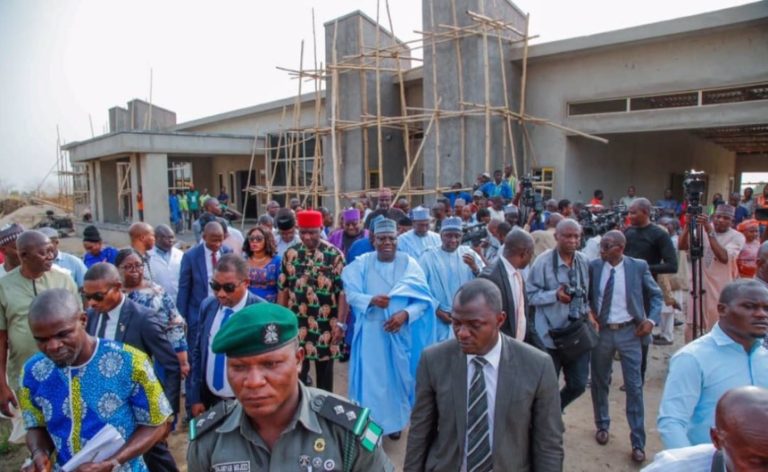
Lawan who led a delegation of the National Assembly leadership to the University of Abuja Teaching Hospital (UATH) on Wednesday, submitted in a series of tweet that Abuja and the six surrounding states in the whole of the North-Central has no isolation ward or centre which can be used to handle any case of Coronavirus.

“From the tour of facilities we undertook, the temporary isolation center is really not in good shape and doesn’t look ready to receive any patient, while the permanent one is yet to be completed.

“There’s no generator, no electricity, nothing. There were only two or three air conditioners brought in this morning, perhaps because we said yesterday that we are going to visit the place. That is absolutely not acceptable,” his tweet read in part.

This corroborates the findings of The ICIR in a report published 14 days ago.

In the report, it was found that two major hospitals in the FCT; UATH and the National Hospital are ill-equipped to handle even a single case of Coronavirus.

It was found that UATH had its proposed isolation centre under construction and had no equipments in the temporary earmarked area for handling infectious diseases.

While the National Hospital had only a two-bed isolation holding area, positioned at the end of a corridor in the Female Ward Centre.

The findings by The ICIR showed that the country’s capital is unprepared for COVID-19, the same submission of the senate president, who expressed disappointment that the N620 million approved to the health ministry for combatting Coronavirus was yet to be released.

It becomes a worry case given that Nigeria recorded its first Coronavirus last week, and while the patient, an italian citizen is said to be receiving treatment at the Infectious Disease Hospital (Mainland Hospital) in Yaba, Lagos, there are reports that most persons who came in contact with him are untraceable.

Recall that prior to the senate president’s submission, deputy Senate Leader, Ajayi Boroffice, sounded an alarm bell when he shared his experience while undergoing screening at the Nnamdi Azikwe International Airport, Abuja.

According to Boroffice, the screening was nothing compared to his experience outside the country. He said that travelers were only given a form to fill, quizzing them about their health status and travel history after which they were allowed into the country.

Policing voices in present-day Nigeria

0


Osai OJIGHO 


In recent times, Nigeria is battling with an information crisis where disinformation, misinformation and dangerous speech contribute to a communication dilemma in determining truth from fiction, accurate information from fake news.

One is faced with a dilemma about checking sources and determining what to believe and what level of authority to give to a statement based on who is stating it or sharing it. This cuts across all strata of society.

On one hand, there is a level of secrecy maintained by public office holders with information that should ordinarily be publicly available, but it is not.

On the other hand, there are persons who thrive on creating and sharing opinion as fact or at the worst instance, put out false information. 

The response to dealing with the ‘fake news’ era by the government has been dismal. Rather than dealing with the root causes which permit an environment for ‘fake news’ to thrive, the pattern appears to put the blame and shift responsibility to other social actors, NGOs and civil society, in general. 

A trend is emerging in Nigeria where the National Assembly seeks to pass laws on issues that affect the operation and management of non-governmental organisations (NGO), human rights defenders, journalists, activists and social movements.

Currently, there are three bills before the National Assembly in Nigeria, two at the Senate and one in the House of Representatives that seek to control what is said or shared on social media, determine hate speech and control civil society groups. These are the:

  1. Protection from Internet Falsehood and Manipulation Bill i.e. the Social Media Bill (SB152)
  2. National Commission for the Prohibition of Hate Speeches Bill i.e. Hate Speech Bill (SBI54); and 
  3. Civil Society Regulatory Commission and Connected Purposes Bill i.e. NGO Bill (HB673)

Since 2013, there have been at least five similar bills presented by the National Assembly that would target and restrict the civic space e.g. A bill for an Act to regulate the acceptance and utilization of financial/material contribution of donor agencies to voluntary organisations and for matters connected therewith, the Foreign Contributions (Regulations) Bill, 2013; Frivolous petitions (Prohibitions etc) Bill 2015; Civil Society Regulatory Commission (Establishment) Bill 2016; Civil Society Commission of Nigeria Bill 2016; and non-governmental organisations regulatory commission of Nigeria (Establishment, etc) 2016.

The National Assembly has continued to churn out bills despite the overwhelming arguments against proliferation of bills, which serve no purpose than to restrict the civic space and limit alternative voices from having a say on issues of national and public interest.

The Social Media bill is especially problematic because on the face of it, it appears to address the problem of false information and fake news. However, its provisions on what constitutes ‘false statements of facts’, ‘national security’, acts ‘prejudicial to public tranquility’ and many more phrases, for example, are not clearly defined or are ambiguous and so widely worded that they can be interpreted in so many ways. More shocking are the overreaching powers given to a law enforcement department to regulate and punish offenders. The powers of the court are limited to only as at when the law enforcement department has had an opportunity to review its own orders against the complainant (s.13 Social media bill). The bill referred to malicious falsehood and defamation, which already are covered by existing laws in Nigeria. 

The right to freedom of expression is guaranteed under Section 39(1) of the Nigerian Constitution, 1999 (as amended). Also, both Article 19 of the International Covenant on Civil and Political Rights and Article 9 of the African Charter on Human and Peoples’ Rights to which Nigeria is a state party provide that every person has the right to freely hold and express an opinion. This right includes the right to seek, receive and disseminate information. It also secures the right to freedom of expression and media freedom.

While International law recognizes that there can be limitations to the exercise of the right to freedom of expression, those limitations are only permitted where they pass a 3-part test: legality, legitimacy and proportionality. The provisions of the Social Media bill as currently presented would fail as it is cannot be applied clearly under the law and has not shown that this is essentially the least restrictive way to handle the problem of false information that it intends to solve.

If we are to evaluate the performance of a similar law in Singapore, the Protection of Online Falsehoods and Manipulation Bill (POFMA) which came into effect in October 2019, then we should be quite alarmed about the potential for abuse by the authorities against perceived and real opponents. Since the law was passed in Singapore, members of the opposition have been targeted, given the impression that the law is being used to silence dissenting voices. See Amnesty International Press release: Singapore: Social media companies forced to cooperate with abusive fake news law: https://www.amnesty.org/en/latest/news/2020/02/singapore-social-media-abusive-fake-news-law/

In Nigeria, there are many cases of persons particularly journalists and bloggers who have been targeted for exposing allegations of corruption, challenging abuse of power, documenting stories of victims and survivors of violence and using their platforms to express views considered.

This has been documented by Amnesty International in the report Endangered voices: Attack on freedom of expression in Nigeria (https://www.amnesty.org/en/documents/afr44/9504/2019/en/) and in recent statements on the repressive bill. See, Amnesty International, Bills on hate speech and social media are dangerous attacks on freedom of expression: https://www.amnesty.org/en/latest/news/2019/12/nigeria-bills-on-hate-speech-and-social-media-are-dangerous-attacks-on-freedom-of-expression/

The Senate’s attempt to pass the Protection from Internet Falsehoods and Manipulation and Other Related Matters Bill 2019 (SB132)  https://www.nassnig.org/documents/bill/10965 must be rejected. It would do more harm than good. Human rights belong to every person and must be protected from a process that erodes on the essential component of the rights itself. No one should be criminalized simply for expressing an opinion or dissemination of information. Instead, what Nigeria needs is an honest and holistic support to existing judicial and law enforcement institutions that is accountable and transparent and treats everyone equally before the law. 

Fake news, false information can be dealt with if the Nigerian government and its agencies adopt a policy of proactive public information delivery. Supporting and recognizing thought institutions and thought leaders rather than labelling them dissenters will also ensure that credible and authentic voices have a space in decisions which affect them and their communities. This is a desirable and inclusive way for progress in addressing information overload and to begin to reap the benefits of an information economy. Social media can be a tool for development. We only need to use it better.

Osai Ojigho

Country Director, Amnesty International Nigeria

NSE concludes public listing plans with authorised share capital of N1.25b

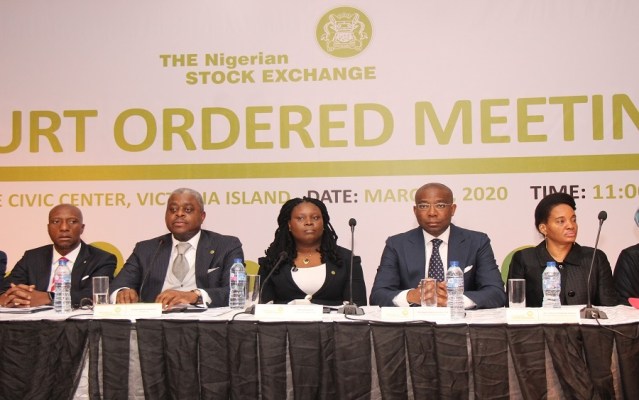
FOLLOWING a court-order, the Nigerian Stock Exchange (NSE) is going to be publicly listed with an authorized share capital of N1.25 billion consisting of 2.5 billion ordinary shares at 50k per share.

At an extraordinary general meeting, members have unanimously voted for the NSE to change its name to Nigeria Exchange Group Plc (NEXG), making it a publicly quoted company.

This makes it a holding company thereby separating its regulatory functions from its other business activities.

Recall that the NSE received a no-objection approval to its demutualization on January 15, 2020.

With NEXG having satisfied all requirements of being a public quoted company, according to the scheme, document for the demutualization would have 1.96 billion number of shares allotted.

Also a fully paid in split ownership of which 78 per cent would be for dealing while 22 per cent would be for ordinary members of the Exchange.

Conclusions in the meeting held showed that all assets, liabilities, and undertakings, including real property in relation to the trading business of the Exchange, are to be retained by NEXG.

The securities exchange license of NSE, along with all assets and existing contracts required to carry out securities and exchange functions would be transferred to NEXG.

Oscar Onyema OON, the CEO of the new NEXG, disclosed that the group would move from having a council to having a board of directors with about 5 to 6 independent directors coming on board.

“With the separation of the regulatory activities from the business activities, we would begin to see a different type of organization, an organization that is really driven for profit, hitting on all cylinders,” Oscar said.

“While the regulatory company will provide all the regulation that needs to happen to ensure that we are running according to global best practices which should be attractive to large corporates that are looking for a well ran exchange to list their companies,” Oscar added.

Otunba Abimbola Ogunbanjo chairman of the board of NEXG said: “When you operate as a profit entity the first thing that you are going to see is enhanced performance, competition, deepening of the market, foreign investors looking at the Nigerian Stock Exchange to invest, flexibility in the products and much more.

“We will be operating as a public entity now a for-profit entity so the first transformation that is going to happen will be the decoupling of the membership rights and ownership rights”.

“Prior to this demutualization, you had only the dealing members and the ordinary members, now that is going to be different.”

He said the report and result of the court-ordered meeting are to be filed with the Securities and Exchange Commission (SEC) in order to obtain the final copy of the scheme. Then the necessary petition will be made to the Federal High Court to sanction the scheme.

Once sanctioned by the court and registration is done with the Corporate Affairs Commission, demutualization is effective.

Court suspends Oshiomhole as APC Chairman

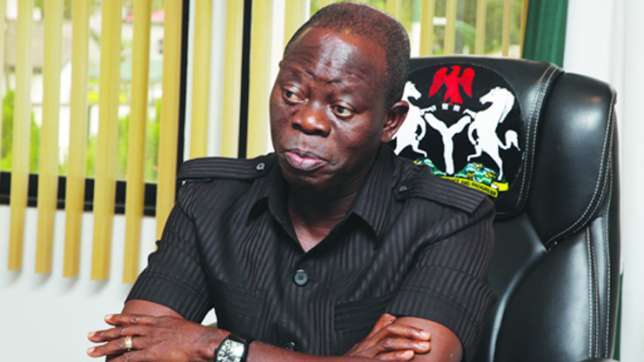
A FEDERAL Capital Territory (FCT) High Court sitting in Abuja has ordered the suspension of Adams Oshiomhole as the National Chairman of the All Progressive Congress (APC).

Oshiomole was suspended through an order of injunction restraining him from acting in the capacity of the National Chairman of the party and member of the National Working Committee (NWC).

Giving the application on Wednesday, Justice Danlami Senchi said Oshiomhole has been wrongfully parading himself as the chairman.

The judge also ordered that Oshiomhole be denied access into the party’s secretariat pending the hearing of the suit on April 7 and 8.

Senchi said the order is premised on Oshiomhole’s suspension by his ward in Edo State earlier in 2019.

Oshiomhole has been embroiled in party crises as some members of the party have continuously demanded his suspension with allegations that he is responsible for the crisis that has rocked the party.

He has also been at loggerheads with the governor of his state, Godwin Obaseki over the politics of Edo state.

Oshiomhole had in retaliation accused Obaseki of using violence to secure his party ticket for a second term bid in 2021.


Trans-fat is a slow poison in our food chain, food activists raise the alarm, call for regulation

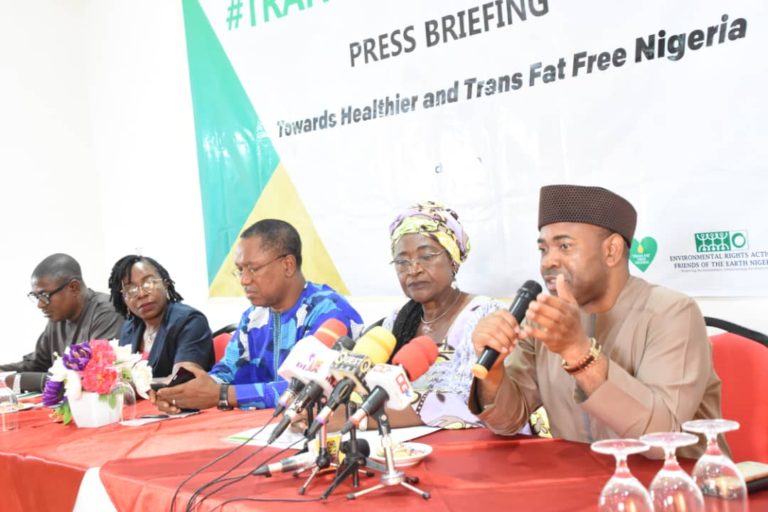
COALITION of Civil Society Organisations (CSOs) against trans-fat in Nigeria, particularly the industrially-produced trans-fatty acids has called on the general public to reject foods made with the hydrogenated oil.

The coalition consisting of the Environmental Rights Action/ Friends of the Health Nigeria (FoEN), Global Health Advocacy Incubator, Nigeria Heart Foundation and the Network for Health Equity and Development (NHED) said  hydrogenated fats could cause cardiovascular diseases and cancer if urgent actions were not taken to regulate the use, especially by fast food operators.

“In the last decade, we have watched with consternation and loathed how the food industry inundated our shores with industrially-produced trans fats to the detriment of the health of citizens of this nation,” Akinbode Oluwafemi, Deputy Executive Director of ERA/FoEN said.

He was speaking in Abuja on Wednesday at a briefing organised by the group.

“Cases of diabetes, cardiovascular diseases, obesity and other illnesses hitherto strange to our land have suddenly become rampant among Nigerians and particularly threatening the old who should be resting after putting their productive years into serving the nation, and the young and vibrant generation who are supposed to be on the drivers’ seat in nation building.”

According to him,  in 2010, about 1,300 Nigerians died from causes attributed to high trans-fat intake, stressing that except legislation is put in place to checkmate the food industry’s love and use of industrially-produced trans fats, another major public health crisis may berth.

“The issue of trans-fat is the story of a slow poison in our food chain. We can no longer fold our arms and watch our lives cut short by this deadly product. The government must wake up and act, the citizens also must act by rejecting foods with trans-fat.”

However, he noted that the coalition is putting pressure on the National Agency for Food Drug Administration and Control (NAFDAC) to approve the Fats and Oils Regulation 2019.

Jerome Mafeni, Project Adviser Trans fat, in his remarks listed ailments such as heart disease, hypertension, blockage of the arteries, kidney disease among others that could become serious medical issues for those consuming the industrialised trans-fats.

He explained that the Federal Government has already started the process by setting a two percent limit of trans-fat from total fat content in all foods.

“They convert the oil from the liquid state to a solid state so that it can have the capacity to withstand very deep fry and very long shelf life. Because they are industrially produced, they help industries to basically produce foods in large quantities and very efficiently. It has been going on for a while but we feel it needs to be stopped.”

“These trans fatty acids have the potential to cause heart disease, stroke, hypertension, blockage of the arteries. It also has the potential to cause kidney disease, diabetes, obesity, and cancers. They can cause so many damages, so really, we don’t have any reason to have them in our food supply,” Mafemi explained.

The coalition, however, demanded a need for the Federal Government to declare an emergency in the food sector and commence massive awareness of the dangers of industrially-produced trans fats intake

The food activists urged the NAFDAC to reflect the recommendations of civil societies and other critical stakeholders in the draft Fats and Oils Regulation 2019 and the Pre- Packaged Foods, Water and Ice Labeling Regulations 2019 to ensure they are in sync with the World Health Organisation (WHO) – recommended standards

Also, they tasked the NAFDAC Governing Council to finalise and speedily approve the regulation for gazetting.

Meanwhile, the NAFDAC has developed the draft of the Fats and Oils Regulation 2019 and the Pre- Packaged Foods, Water and Ice Labeling Regulations 2019, also currently hosted on the agency’s website for public input till 9th March, 2020.

“We support this process, and are ready to sustain our cordial relationship with the agency to see the regulations through to when we anticipate its Governing Council will approve them,” the coalition said.


World Bank group to support affected COVID-19 countries with $12b

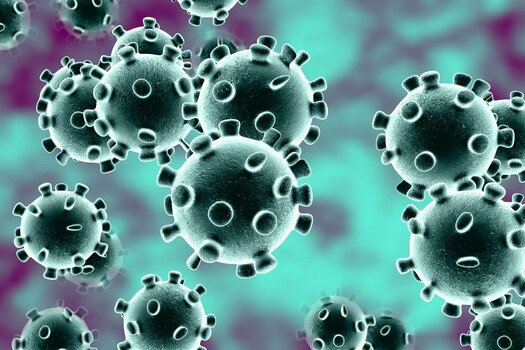
THE World Bank Group has said it would make available, an initial package of up to $12 billion in immediate support to assist countries coping with the health and economic impacts of the global outbreak of COVID-19 also known as coronavirus.

A statement by the group said this financing is designed to help member countries take effective action to respond to and, where possible, lessen the tragic impacts posed by the virus.

At the moment, COVID-19 has reached more than 60 countries,

Through this new fast track package, the World Bank Group will help developing countries strengthen health systems, including better access to health services to safeguard people from the epidemic, strengthen disease surveillance, bolster public health interventions, and work with the private sector to reduce the impact on economies.

International Development Association (IDA), International Bank for Reconstruction and Development (IBRD) and International Finance Corporation (IFC), are the institutions coordinated to support country-based responses.

The World Bank gave a breakdown of how the funds would be distributed  and said $8 billion of it is now on a fast track basis.

This comprises of up to $2.7 billion new financing from IBRD; $1.3 billion from IDA, complemented by reprioritisation of $2 billion of the Bank’s existing portfolio; and $6 billion from IFC, including $2 billion from existing trade facilities.

It will also include policy advice and technical assistance drawing on global expertise and country-level knowledge.

“We are working to provide a fast, flexible response based on developing country needs in dealing with the spread of COVID-19,” said World Bank Group President, David Malpass.

“This includes emergency financing, policy advice, and technical assistance, building on the World Bank Group’s existing instruments and expertise to help countries respond to the crisis,” he added.

According to the report, the financial package will provide grants and low-interest loans from IDA for low-income countries and loans from IBRD for middle-income countries, using all of the Bank’s operational instruments with processing accelerated on a fast track basis.

International Finance Corporation, the World Bank Group’s private sector arm, will provide its clients with the necessary support to continue operating and to sustain jobs.

These solutions will leverage the lessons learned from similar events in the past with a goal to minimize the negative economic and social impacts of COVID-19 globally

The World Health Organization (WHO) announced on Tuesday that the global death rate of the new coronavirus was 3.4 percent.

There are currently 94,201 cases of COVID-19 across 82 countries with 3,219 deaths. China where the first case was recorded has the highest number of cases, 80,282, followed by South Korea, 5,621 and Iran and Italy with 2,922 and 2,502 cases respectively.

On Thursday, February 27, Nigerians Federal Ministry of Health confirmed a coronavirus disease (COVID-19) case in Lagos State.

The case is the first case to be reported in Nigeria since the beginning of the outbreak in China in January 2020.


How FG deducted N359b from TETFund without official notice

A total of N359 billion is currently missing from coffers of the Tertiary Education Trust Fund (TETFUND) following a continuous withdrawal by the Federal Government of Nigeria since 2013 without official notice.

According to the Executive secretary of TETFund, Suleiman Bogoro, the Federal Government has continued to deduct money meant for the fund without notice.

Bogoro revealed this while responding questions raised by a member of the House Committee on TETFund chaired during an oversight visit on Tuesday in Abuja.

According to him, N263.9 billion was deducted in 2013 during former president Goodluck Jonathan’s administration, while N58 billion  and N40 billion were deducted  in in 2017 and 2018 respectively under the current administration.

Bogoro explained that a large part of the funds was deducted before his first term as the executive secretary of the Fund in 2014.

He added that findings revealed that a total of N359 billion has been deducted by the Federal government hampering the optimal performance of the Fund.

“A total of N128 billion out was deducted by the Federal Government for something completely unrelated to education”, Bogoro said, stressing that it has been a major challenge to the Tetfund.

He noted that the funds were deducted without an official communication or notice from the Federal Governmentto the Fund.

However, he thanked the National Assembly for flagging the issue at their respective plenary and disclosing that steps were already being taken to retrieve the deducted fund.

TETFund was established as an intervention agency to support tertiary institutions in Nigeria through a 2-percent tax deduction from all companies registered in Nigeria.


US announces N2.5b bounty for information on Boko Haram leader, Shekau

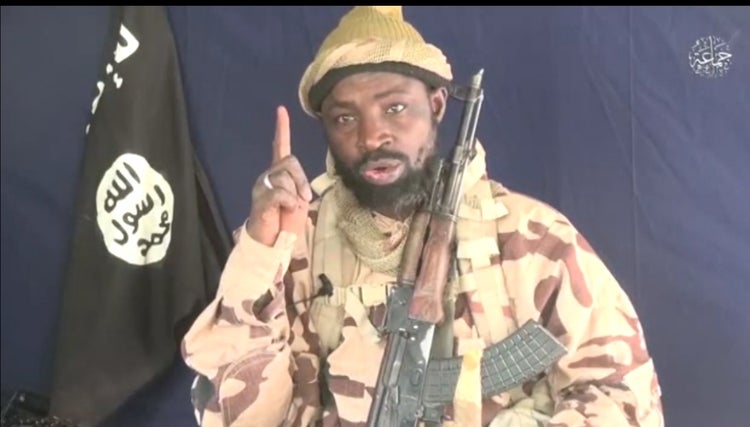
THE United States Department of State is offering a reward of up to $7 million (N2.5billion) for information that would lead to the arrest of Boko Haram leader, Abubakar Shekau.

Shekau, said to have been killed a number of times by Nigerian troops, is ranked number 8 on the wanted list  of the US government which also features other key leaders of several terrorist organisations.

The Rewards for Justice Program, which is the counter-terrorism rewards program of the US Department of State’s Diplomatic Security Service, revealed this development in a Twitter post on its official handle @RFJ_Francais.

“The United States Department of State offers a reward up to $7m for information leading to the arrest of the terrorist, Abubakar Shekau, leader of Boko Haram,” the tweet read.

Photo credit: US State Department Rewards for Justice Program

The message was originally written in French, but a Twitter user, posted its translation by Google to English indicates that the terrorist has N2.5billion bounty on his head.

Shekau is currently the leader of  Boko Haram, a Nigeria based extremist group seeking to overthrow the Nigerian government and establish territories governed based on a strict interpretation of Islamic law.

He assumed the leadership position of the group in July 2010, after the extrajudicial killing of its former leader, Mohammed Yusuf.

Other terrorists on the list include Ayman al-Zawahiri, who is the current emir of Al Qaeda and former leader of Egyptian Islamic Jihad with a $25 million reward on his head, Sirajuddin Haqqani, leader of the Haqqani Network based in Pakistan with $10 million, Abu Muhammad Al-Julani and Abdullah Abdullah are both wanted for their role on behalf of Al Qaeda in the 1998 US Embassy bombings with a reward of $10 million each.

According to the Global Terrorism Index, Boko Haram has killed tens of thousands and displaced 2.3 million from their homes, of which at least 250,000 have left Nigeria and fled into Cameroon, Chad or Niger which led to being branded as one of the world’s deadliest terror group.

Their past targets include a vehicle bomb attack on the United Nations headquarters in Abuja in August 2011 marking the group’s first deadly operation against Western interests, killing at least 23 people and injuring 80 others.

In April 2012, the group bombed a Nigerian newspaper office in Abuja and later threatened other local and international news outlets.

The group has also carried out mass abductions including the kidnapping of 276 schoolgirls from Chibok in April 2014 and two years ago, abducted some schoolgirls from Dapchi in Yobe State, releasing all of them except Leah Sharibu who refused to deny her Christian faith.

As part of measures to win the war against terrorism, the Federal Government of Nigeria has initiated a plan to give amnesty to repentant terrorists while the Senate is currently debating a bill to establish an agency that will cater to the repentant insurgents.

The government has claimed to have killed Shekau but the Boko Haram leader has resurfaced on several videos to show that he is still alive.